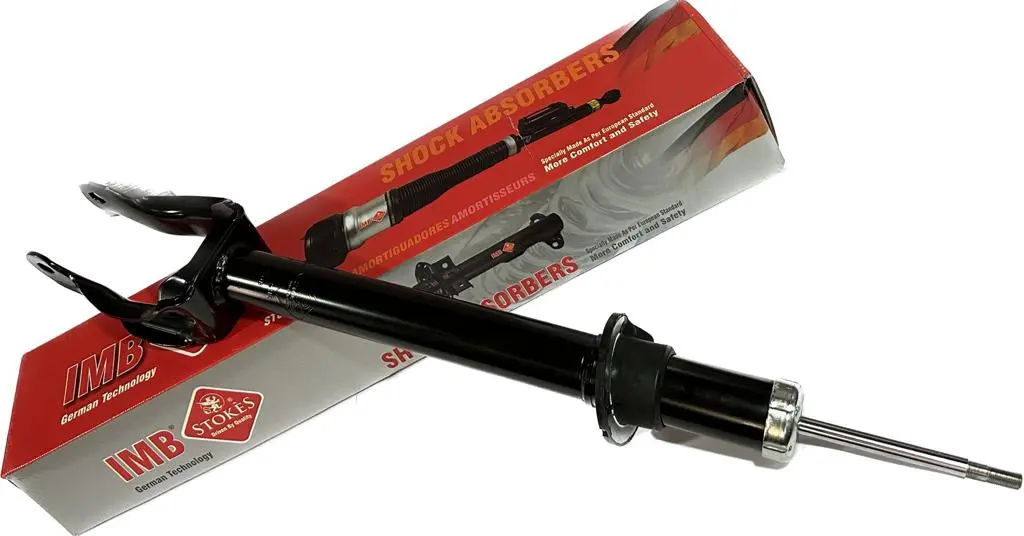
What is the Front Shock Absorber Set A1663231000 / A1663233290 for Mercedes Benz M Class W166?
The Front Shock Absorber Set A1663231000 / A1663233290 is specifically identified as a Set of 2 front shock absorbers for the stated Mercedes Benz M Class W166 application with the supplied 2011–2019 year range and is described as Normal Type, making the vehicle application, front axle position, suspension type, set quantity and exact supplied references important compatibility points before ordering or installation. These shock absorbers perform the damping function within the front suspension by controlling the rate at which suspension movement occurs when the wheels encounter bumps, depressions, road joints, uneven surfaces, braking forces and other changes in road conditions. When a front wheel moves upward over a raised surface, the suspension compresses, and as the wheel moves back toward its normal position, the suspension rebounds. The shock absorber regulates these movements so that the suspension can settle progressively instead of continuing through excessive repeated oscillations. This damping action is important during everyday driving because the front axle is continuously exposed to changing loads and road inputs. During braking, vehicle load transfers toward the front axle and increases the forces acting through the front suspension. During acceleration, the load distribution changes again, while cornering creates different forces between the left and right sides of the vehicle. The supplied product is identified as Normal Type and should therefore be matched with the corresponding suspension configuration already fitted to the vehicle rather than being confused with an Airmatic or another different suspension arrangement. The listing is also specifically identified as a Set of 2, making it suitable for servicing the stated front suspension application as a pair when compatibility is confirmed. Both supplied references A1663231000 and A1663233290 should be preserved exactly during identification and should not be altered or assigned to a specific left or right side unless appropriate vehicle-specific information confirms such an assignment. Before ordering, compare the existing shock absorbers with the replacement components for overall construction, upper and lower mounting arrangements, bracket positions and other relevant physical features. Where available, VIN-based parts information can provide an additional compatibility check. The surrounding front suspension should also be inspected because control arms, bushes, ball joints, mounts, sway bar links, sway links, anti roll link rods and stabiliser sway links can produce noise, looseness or handling symptoms that may initially be attributed to worn shock absorbers. Correct identification should therefore retain Mercedes Benz M Class W166, Normal Type, Front Shock Absorber, Set of 2, A1663231000 / A1663233290 and the supplied 2011–2019 application.
How do I confirm A1663231000 / A1663233290 Front Shock Absorbers fit my Mercedes Benz M Class W166?
To confirm whether the A1663231000 / A1663233290 Front Shock Absorber Set is suitable for the stated Mercedes Benz M Class W166, compatibility should be established from the exact vehicle application, supplied 2011–2019 year range, Normal Type suspension configuration, front axle position, set quantity, supplied references and physical mounting arrangement rather than relying only on the general appearance of the components. Begin by confirming that the vehicle requires the stated Normal Type front shock absorbers and does not use a different suspension configuration that requires another component. The product is specifically supplied as a Set of 2 for the front suspension, so the existing left and right front shock absorber arrangements should be inspected before ordering. Both exact references A1663231000 and A1663233290 should be checked against suitable vehicle-specific information and any accessible identification on the existing components. Preserve both references exactly and do not alter their digits or automatically assign one number to the left and the other to the right unless appropriate parts information confirms that relationship. Physical comparison should include the overall length and construction of the shock absorber, upper mounting arrangement, lower mounting arrangement, relevant brackets and any other interfaces required for installation. The replacement components should correspond naturally with the existing suspension without requiring drilling, welding, reshaping or improvised mechanical modification. Where available, VIN-based vehicle information can provide another compatibility check and can be particularly useful if more than one suspension configuration exists within the model range. If the vehicle has undergone previous suspension conversion, accident repair or modification, inspect what is physically installed rather than relying exclusively on general model information. The condition of the surrounding front suspension should also be checked before ordering because worn control-arm bushes, ball joints, mounts or related components can produce symptoms similar to deteriorated shock absorbers. Sway bar links, sway links, anti roll link rods and stabiliser sway links should be inspected when knocking is present. Tyre wear can also provide useful information about existing suspension or geometry concerns. Correct compatibility should therefore combine Mercedes Benz M Class W166, Normal Type suspension, Front Shock Absorber Set of 2, A1663231000 / A1663233290, physical mounting compatibility and the supplied 2011–2019 application.
What are the symptoms of worn Front Shock Absorbers on Mercedes Benz M Class W166?
Worn front shock absorbers on the stated Mercedes Benz M Class W166 can potentially be associated with excessive suspension movement after bumps, repeated bouncing, reduced control over uneven roads, increased front-end movement during braking, unusual body motion, knocking or other suspension noises, visible deterioration around a shock absorber, changes in steering response or irregular tyre wear, but these symptoms should be diagnosed systematically because several other front suspension components can create similar behaviour. One of the most useful observations is how quickly the front suspension settles after encountering a road disturbance. A properly functioning damping system is intended to control compression and rebound movement so that the vehicle returns progressively toward a stable condition. If the front end repeatedly moves after a bump has already passed, reduced damping performance may require closer investigation. Excessive forward body movement during braking can also justify inspection of the front shock absorbers, although braking behaviour is influenced by tyres, brakes, suspension geometry and other chassis components as well. Unusual movement during cornering should similarly trigger a complete suspension inspection rather than immediate shock replacement. Inspect the shock absorber bodies and surrounding mounting areas for visible signs of deterioration or damage. Mechanical noises should be diagnosed carefully because a knock over smaller road irregularities may originate from sway bar links, sway links, anti roll link rods or stabiliser sway links rather than the shock absorber itself. Control arms, bushes and ball joints should be inspected for wear or excessive movement. Mounting components should also be checked because deterioration at the mounting interface can produce noise even when the shock absorber's internal damping function is not the only concern. Tyres should be inspected for pressure, physical condition and unusual wear patterns. Compare the behaviour of both front suspension positions because a difference between sides can provide useful diagnostic information. Since this listing is supplied as a Set of 2, the condition of both front shock absorbers should be considered when planning the repair. If replacement is confirmed, verify the Normal Type suspension configuration, both exact references A1663231000 / A1663233290, the physical mounting arrangement and the supplied Mercedes Benz M Class W166 2011–2019 application before ordering.
What does Normal Type mean for Mercedes Benz M Class W166 Front Shock Absorber Set A1663231000 / A1663233290?
The Normal Type description in this Mercedes Benz M Class W166 Front Shock Absorber Set listing identifies the supplied product as the stated normal shock absorber configuration and is an important compatibility detail because the vehicle's existing suspension arrangement should be checked before ordering rather than assuming that every Mercedes Benz M Class W166 uses the same type of front suspension component. The product should therefore be matched to a vehicle that requires the corresponding Normal Type front shock absorber arrangement described in the supplied product information. It should not automatically be treated as interchangeable with an Airmatic shock absorber or another suspension configuration simply because the components are intended for the same broader vehicle family. Begin compatibility checking by inspecting the front suspension currently fitted to the vehicle. Compare the existing components with the replacement set and verify the overall construction, upper mounting interface, lower mounting arrangement, relevant brackets and other installation points. Both supplied references A1663231000 and A1663233290 should be retained exactly during this process. Where accessible, identification on the existing components can provide another useful comparison. The listing is supplied as a Set of 2, so both front suspension positions should be evaluated before installation. Do not automatically assign one supplied reference to the left side and the other to the right side unless suitable vehicle-specific parts information confirms such an assignment. Where available, VIN-based information can provide an additional compatibility check and may help identify the suspension configuration applicable to a particular vehicle. If the vehicle has previously undergone suspension conversion or modification, physical inspection becomes especially important because the currently installed system may differ from the original or expected arrangement. The surrounding control arms, bushes, ball joints and mounts should also be inspected while the front suspension is being evaluated. Sway bar links, sway links, anti roll link rods and stabiliser sway links should be checked if the vehicle has knocking or looseness. Correct product selection should ultimately preserve Normal Type, Front Shock Absorber, Set of 2, A1663231000 / A1663233290, Mercedes Benz M Class W166 and the supplied 2011–2019 application.
Should both front shock absorbers be replaced together on Mercedes Benz M Class W166?
When the condition and diagnosis indicate that the front shock absorbers on the stated Mercedes Benz M Class W166 require replacement, evaluating and servicing both front positions together can help maintain more consistent damping behaviour across the front axle, and this particular product is specifically supplied as a Set of 2 for the stated Normal Type suspension application. Shock absorbers operate continuously as the vehicle travels, meaning both front units experience repeated compression and rebound cycles during normal use. They are exposed to road irregularities, braking forces, cornering loads and other suspension movements throughout their service life. Even when one side appears to show more obvious symptoms, the condition of the opposite side should also be inspected rather than assumed to be unaffected. Differences in damping performance between the two front positions can potentially influence how the vehicle responds to bumps, braking and directional changes, so the front suspension should be considered as a complete axle system during diagnosis. This does not mean that every front suspension complaint automatically requires shock replacement because control arms, bushes, ball joints, mounts and other components can create similar symptoms. Sway bar links, sway links, anti roll link rods and stabiliser sway links should also be checked where knocking is present. Inspect the tyres for pressure, physical condition and irregular wear, and evaluate wheel geometry where appropriate. Before installing the supplied Set of 2, confirm that the vehicle uses the stated Normal Type suspension configuration and compare both replacement components with the existing front shock absorbers. Check upper and lower mounting interfaces and any relevant brackets. Both supplied references A1663231000 and A1663233290 should remain part of the compatibility verification process without automatically assigning either reference to a particular side unless suitable information confirms it. If one existing shock absorber has been replaced previously, compare the current components carefully because the left and right units may have different service histories. Professional diagnosis can help determine whether replacement of the pair is appropriate for the specific vehicle condition. Final product selection should preserve Mercedes Benz M Class W166, Front Shock Absorber, Normal Type, Set of 2, A1663231000 / A1663233290 and the supplied 2011–2019 application.
What should be checked before installing A1663231000 / A1663233290 Front Shock Absorbers on Mercedes Benz M Class W166?
Before installing the A1663231000 / A1663233290 Front Shock Absorber Set on the stated Mercedes Benz M Class W166, confirm the exact vehicle application, supplied 2011–2019 year range, Normal Type suspension configuration, front axle position, set quantity, supplied references, physical mounting arrangement and condition of surrounding suspension components so that an incorrect component or unresolved mechanical problem is not carried into the repair. Begin by confirming that the vehicle requires Normal Type front shock absorbers rather than another suspension configuration. Verify both supplied references A1663231000 and A1663233290 using suitable vehicle-specific information and compare them with accessible identification on the existing components where possible. Preserve the references exactly and do not assign them to individual sides unless appropriate information confirms such an assignment. Compare the replacement and removed components for overall construction, upper mounting interfaces, lower mounting arrangements, relevant brackets and other installation points. The components should correspond naturally without drilling, welding, reshaping or improvised modification. Inspect the upper mounting areas and associated hardware for wear or damage before installing the replacement shocks. Control arms and bushes should be checked for deterioration or excessive movement. Ball joints should be inspected according to an appropriate workshop procedure. Sway bar links, sway links, anti roll link rods and stabiliser sway links should be evaluated where the vehicle has knocking or looseness over uneven roads. Inspect steering-related joints where symptoms indicate that they may be involved. Both front tyres should be checked for pressure, physical damage and irregular wear because existing suspension or wheel-geometry problems may appear through tyre wear patterns. If one side has previously undergone suspension repair, compare both sides carefully for differences in components or mounting arrangements. Where available, VIN-based information can provide an additional compatibility check. Installation should follow an appropriate workshop procedure and all relevant mounting hardware should be secured correctly. After installation, verify that the suspension moves correctly and that no abnormal noise or interference is present. A suitable road or functional test should follow, and wheel alignment or suspension geometry should be evaluated where required. Final verification should preserve Mercedes Benz M Class W166, Normal Type, Front Shock Absorber Set of 2, A1663231000 / A1663233290 and the supplied 2011–2019 application.
How do the Front Shock Absorbers A1663231000 / A1663233290 work on Mercedes Benz M Class W166?
What happens when the Front Shock Absorbers become weak on Mercedes Benz M Class W166?
When the front shock absorbers on the stated Mercedes Benz M Class W166 become worn or lose damping effectiveness, the front suspension may take longer to settle after bumps, repeated vertical movement may become more noticeable, the vehicle may feel less controlled over uneven roads, front-end movement during braking may increase, body movement during directional changes may become more apparent or irregular tyre wear may develop, but these symptoms should be investigated through a complete suspension inspection because shock absorbers are not the only components capable of producing them. The primary function of a shock absorber is to control the speed of suspension compression and rebound, so reduced damping can allow the suspension to continue moving after the original road disturbance has passed. A vehicle that moves repeatedly after crossing a bump may therefore justify closer inspection of the damping system. Changes in front-end behaviour during braking can also indicate that the front suspension should be evaluated, although tyres, brakes, springs, suspension geometry and other components can influence braking behaviour as well. Steering response that feels different over uneven roads should similarly lead to a systematic chassis inspection rather than immediate replacement of one component. Inspect both front shock absorbers because this product is supplied as a Set of 2 and both positions experience repeated operating cycles during normal use. Visible deterioration around a shock absorber can provide useful diagnostic information, but external appearance alone should not be used to determine internal damping condition. Inspect upper and lower mounting areas for wear, looseness or damage. Control arms and bushes should be evaluated for excessive movement, and ball joints should be checked using an appropriate workshop procedure. Sway bar links, sway links, anti roll link rods and stabiliser sway links should be inspected when knocking occurs over smaller road irregularities. Front tyres should be checked for pressure, damage and unusual wear patterns. Compare the behaviour of the left and right front suspension positions and consider whether one component has been replaced previously. If replacement is confirmed, verify that the vehicle uses the stated Normal Type configuration and confirm both exact references A1663231000 / A1663233290. Final compatibility should preserve the supplied Mercedes Benz M Class W166 2011–2019 application.
How can I diagnose whether the Front Shock Absorbers or another suspension part is causing the problem on Mercedes Benz M Class W166?
Diagnosing whether the front shock absorbers or another suspension component is responsible for a problem on the stated Mercedes Benz M Class W166 requires separating reduced damping performance from mechanical looseness, mounting wear, steering-related concerns, tyre problems and suspension-geometry issues because several different components can create similar noises, handling changes or unusual movement. Begin by identifying the primary symptom and the driving condition in which it occurs. If the front end repeatedly moves after the vehicle passes over a larger bump or depression, damping performance should be investigated because controlling compression and rebound is the primary function of the shock absorbers. If the main symptom is a sharp knock over smaller road irregularities, inspect mechanical joints and mounting components before concluding that the shock absorbers are responsible. Control-arm bushes can deteriorate and allow unwanted movement, while ball joints can develop wear that affects suspension behaviour. Sway bar links, sway links, anti roll link rods and stabiliser sway links can also create knocking over uneven surfaces. Upper and lower shock mounting areas should be inspected for wear, damage or looseness because a mounting problem can create noise even when the shock absorber is not the only concern. Tyres should be checked for correct pressure, physical damage and unusual wear patterns because tyre-related issues can influence steering and ride behaviour. Compare both front suspension positions and observe whether one side behaves differently from the other. Review previous suspension repairs where possible because one side may contain a newer or different component. A road test can provide useful diagnostic information when performed appropriately, particularly when the technician can identify whether the complaint is related to vertical suspension movement, steering input, braking or a specific type of road disturbance. Physical inspection should follow the road test so the observed symptom can be connected with component condition. Where necessary, wheel geometry should also be evaluated. If diagnosis confirms that the Normal Type front shock absorbers require replacement, this supplied Set of 2 should be checked using the exact references A1663231000 and A1663233290 together with the physical mounting arrangement. Correct product identification should retain Mercedes Benz M Class W166, Front Shock Absorber, Normal Type, Set of 2 and the supplied 2011–2019 application.
What other suspension parts should be inspected when replacing A1663231000 / A1663233290 Front Shock Absorbers on Mercedes Benz M Class W166?
When replacing the A1663231000 / A1663233290 Front Shock Absorber Set on the stated Mercedes Benz M Class W166, the surrounding front suspension, steering-related joints, mounting components and tyres should also be inspected because new shock absorbers cannot correct an independent control-arm problem, deteriorated bush, loose ball joint, worn stabiliser link, damaged mounting component or existing wheel-geometry concern. Begin with the upper and lower shock absorber mounting areas and check for visible damage, deterioration or looseness that could affect correct installation. Compare both front suspension positions because this product is supplied as a Set of 2 and both sides should be assessed as part of the same front axle system. Inspect the control arms carefully and evaluate their bushes for cracking, deterioration, separation or excessive movement where applicable. Ball joints should be checked using an appropriate workshop procedure because looseness can influence steering precision, suspension movement and tyre wear. Sway bar links, sway links, anti roll link rods and stabiliser sway links should be inspected when the vehicle has knocking or rattling over smaller bumps and uneven surfaces. Relevant mounting components should be checked because worn interfaces can create noise that may be incorrectly attributed to the shock absorber itself. Inspect the front springs and other visible suspension components for physical damage or abnormal positioning where applicable. Steering-related joints should be evaluated if the vehicle has looseness, wandering or unusual steering response. Both front tyres should be inspected for correct pressure, physical condition and irregular wear because tyre patterns can provide clues about unresolved suspension or geometry concerns. If one side has undergone previous repair, compare the left and right suspension arrangements carefully for differences. Before fitting the replacement shocks, compare the existing and new components for overall construction, mounting points and relevant brackets. Preserve both exact references A1663231000 and A1663233290 during compatibility verification without automatically assigning either number to a specific side unless appropriate information confirms it. After installation, ensure all relevant hardware is secured correctly and check that suspension movement is free from abnormal interference. A suitable road test should be performed, and wheel alignment or suspension geometry should be evaluated where required. Final compatibility should retain the Normal Type configuration, Set of 2 and supplied Mercedes Benz M Class W166 2011–2019 application.
How do I know if the Front Shock Absorbers are bad on my Mercedes Benz M Class W166?


Reviews
There are no reviews yet.