What is the Valve Block Assembly for Mercedes-Benz M-Class W166 – A2123200358?
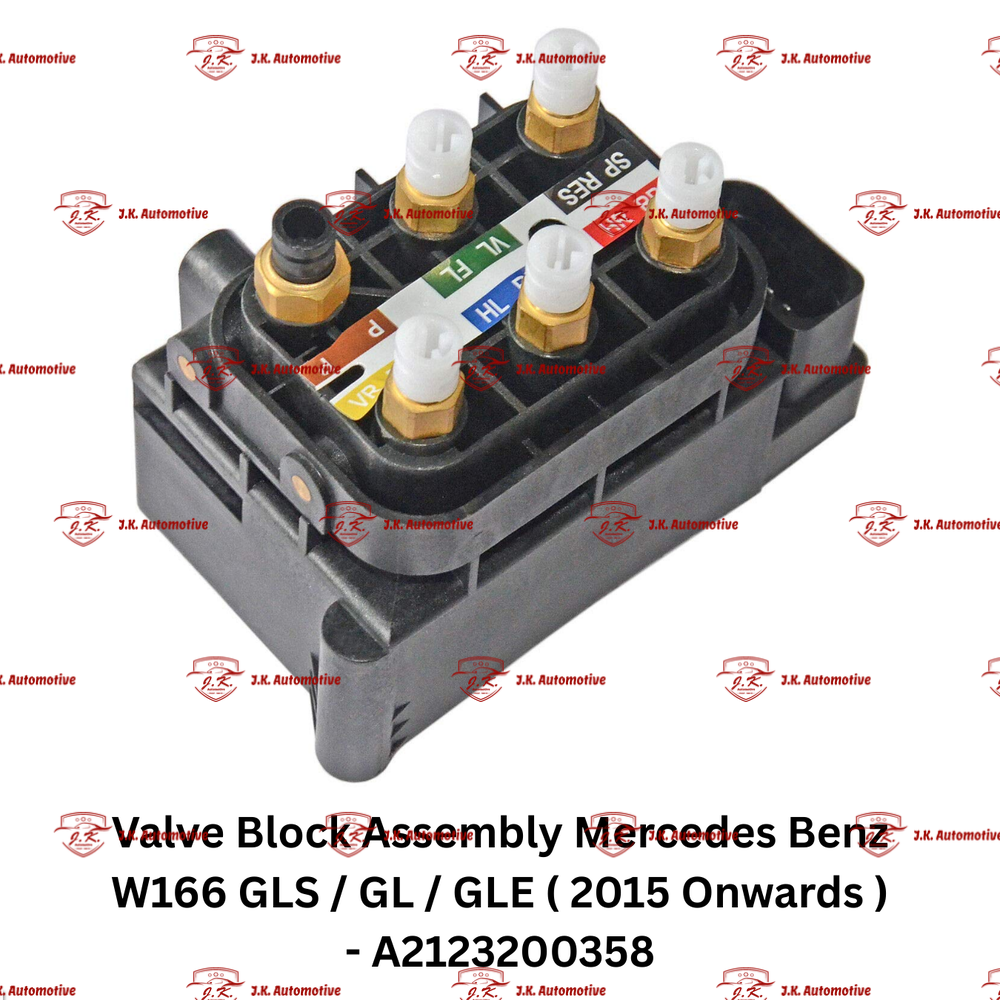
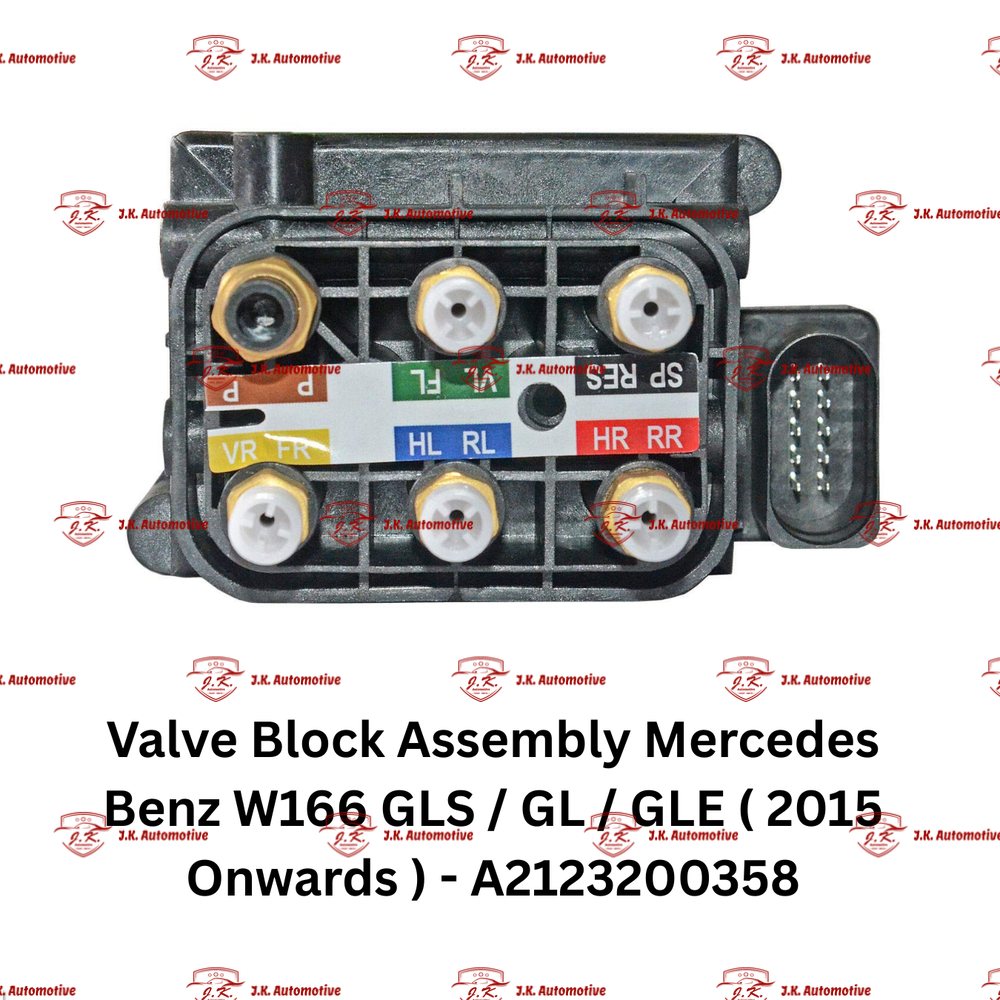
The Valve Block Assembly for Mercedes-Benz M-Class W166 with reference A2123200358 is a pneumatic distribution component used within the vehicle’s air suspension system for the supplied 2011–2019 application. The valve block acts as a central control point for compressed air moving between the air suspension compressor, pressure reservoir and individual suspension circuits. Its function is to direct air pressure toward or away from the required suspension circuit according to commands from the electronic suspension control system. This allows the suspension to make controlled height corrections as vehicle loading, passenger weight, luggage, road conditions and suspension requirements change. The system works together with air springs or air struts, pneumatic pipes, fittings, ride-height sensors, electrical connections and the suspension control electronics. When the vehicle needs to raise a particular section, compressed air can be directed through the appropriate pneumatic circuit. When lowering is required, airflow is controlled according to the suspension system’s operating strategy. Once the desired vehicle height has been reached, the relevant pneumatic circuits need to retain pressure so that the vehicle remains level. Reference A2123200358 is described in parts documentation as a valve block responsible for distributing air pressure through the suspension system. The internal solenoid valves and pneumatic passages repeatedly operate throughout normal vehicle use, which means they are exposed to pressure cycles, vibration and environmental conditions over time. If internal sealing deteriorates or a valve begins sticking, compressed air may not be distributed or retained correctly. The vehicle may then develop symptoms such as uneven suspension height, one axle or side sitting lower, suspension sagging after parking, slow raising or lowering or repeated compressor operation. Current technical information for A2123200358 also identifies overnight sagging as a commonly associated symptom when this valve block develops a fault. These symptoms do not automatically prove that the valve assembly is defective because leaking air springs, air struts, pneumatic lines, fittings, compressor problems and ride-height sensor faults can produce similar behaviour. Professional diagnosis is therefore recommended before replacement. The exact reference A2123200358 should be checked against the existing component, and the physical housing, pneumatic connections, electrical connector and mounting arrangement should be compared before installation. VIN verification is also recommended whenever exact compatibility remains uncertain. Once installed, the complete suspension system should be checked for correct raising and lowering, stable vehicle height, pneumatic pressure retention and normal compressor operation.
What does OEM reference A2123200358 mean for the Mercedes-Benz M-Class W166 valve block?
A2123200358 is the supplied OEM cross-reference for this Mercedes-Benz M-Class W166 Valve Block Assembly and is an important identification number when searching for, ordering and verifying the correct replacement component. Parts references identify 2123200358 and A2123200358 with the Mercedes-Benz air suspension valve block or distribution valve, including W166 applications. Customers searching online may encounter variations such as A2123200358, 2123200358, Mercedes W166 Valve Block, Mercedes M-Class Air Suspension Valve Block, Mercedes ML W166 AIRMATIC Valve, Mercedes W166 Pneumatic Valve Block, Mercedes Suspension Distribution Valve or Mercedes AIRMATIC Control Valve. Although these descriptions can refer to the same general type of component, the exact supplied reference should remain the primary identification point when confirming the product. A valve block from another Mercedes-Benz application may appear physically similar but can potentially differ in pneumatic configuration, mounting arrangement, electrical connection or application requirements. This is why visual similarity alone should not be used as the only fitment check. Before ordering, inspect the identification markings on the existing valve assembly wherever possible and compare the number directly with A2123200358. Parts listings for this reference also identify A2513200058 as an earlier or cross-referenced number, but the supplied product reference A2123200358 should not be silently replaced or altered during ordering. The vehicle application should then be checked using the Mercedes-Benz M-Class W166 information and the supplied 2011–2019 range. VIN verification is recommended when exact vehicle specification or original component identification remains uncertain. Before installation, compare the replacement and removed assemblies physically, paying attention to the housing design, pneumatic port positions, electrical connector and mounting points. Pneumatic pipes should reach their intended connections naturally without modification. The replacement should also mount correctly without drilling, grinding, bending or machining. If significant modification appears necessary, fitment should be checked again before installation continues. The air suspension system should also be diagnosed before ordering because a low vehicle or suspension warning does not automatically indicate a defective valve block. Air springs, air struts, lines, fittings, compressor performance and electronic components can cause overlapping symptoms. Therefore, A2123200358 should be used together with vehicle details, VIN confirmation where necessary, physical comparison and proper suspension diagnosis when selecting the correct replacement.
What are the symptoms of a faulty Mercedes-Benz M-Class W166 A2123200358 air suspension valve block?
Common symptoms that may indicate a problem with the Mercedes-Benz M-Class W166 air suspension valve block include the vehicle sitting unevenly, one side or axle becoming lower than the other, suspension sagging after several hours of parking, slow height adjustment, difficulty raising or lowering and unusually frequent operation of the air suspension compressor. A suspension-related warning can also occur depending on the nature of the fault and the condition of the complete system. The A2123200358 valve block controls the distribution of compressed air to the relevant suspension circuits, so an internal valve that no longer opens, closes or seals correctly can interfere with pressure distribution and retention. Current technical information for A2123200358 identifies sagging while parked, particularly overnight, as an important symptom associated with valve-block problems. For example, the vehicle may appear level immediately after driving but become visibly lower at one axle after being parked for several hours. When the vehicle is started again, the compressor may operate and restore the suspension to approximately its normal height. This pattern suggests that pressure is being lost somewhere within the pneumatic system, although it does not independently identify the valve block as the source. An air spring or air strut can leak and create similar symptoms. Pneumatic hoses, connectors, fittings and reservoir connections can also lose pressure. A weak compressor can cause slow suspension raising, while incorrect ride-height sensor information can make the vehicle appear to respond abnormally even when pneumatic components remain functional. Electrical wiring or suspension-control faults can additionally interfere with commands sent to the valve unit. Diagnosis should therefore examine the complete system rather than replacing A2123200358 solely because the vehicle is sitting low. A workshop can measure ride height at consistent points before and after an extended parking period to identify which part of the vehicle is losing height. Pneumatic leak testing can then be performed on the affected circuits. Compressor output and operating frequency should also be evaluated because repeated compressor cycling may indicate that the system is continuously compensating for pressure loss. Diagnostic equipment can help identify stored suspension faults and evaluate ride-height information. If external leakage and other components are checked and testing indicates that pressure cannot be correctly isolated or distributed through the pneumatic valve unit, A2123200358 becomes a stronger replacement candidate. Exact reference verification and professional installation should then be completed before returning the vehicle to normal use.
Why does my Mercedes-Benz M-Class W166 lower or sag overnight?
A Mercedes-Benz M-Class W166 that lowers or sags overnight is usually displaying a symptom of pressure loss somewhere within the air suspension system, and the valve block is one component that should be investigated during diagnosis. When the vehicle is parked at its correct ride height, compressed air needs to remain contained within the appropriate suspension circuits. If pressure gradually escapes, the affected corner, side or axle can become lower over several hours. A valve block associated with reference A2123200358 contains pneumatic passages and solenoid valves responsible for directing and isolating compressed air between different parts of the suspension system. If an internal valve fails to seal correctly, pressure may migrate or escape through a path that should normally remain closed. Technical information for W166/X166 applications specifically identifies overnight sagging as a common symptom considered during A2123200358 valve-block diagnosis. However, overnight sagging should never be used by itself to conclude that the valve assembly has failed. Air springs and air struts are also pressurised components and can develop small leaks that become noticeable only after the vehicle remains stationary for several hours. Pneumatic lines can become damaged, fittings may lose their seal and reservoir connections can also leak. The pattern of height loss can provide useful diagnostic clues. If one individual corner becomes lower, the air spring or air strut and its associated pneumatic circuit should receive particular attention. If an entire axle or multiple suspension circuits behave abnormally, the pneumatic distribution system may warrant closer investigation, although proper testing is still necessary. The vehicle can be parked on a level surface and measured at consistent reference points at all four corners. These measurements can be repeated several hours later or the following morning to document exactly where the height change occurred. Pneumatic leak testing and suitable diagnostic equipment can then be used to narrow down the cause. Compressor behaviour should also be monitored. If the vehicle loses pressure while parked and then repeatedly runs the compressor to recover the correct height, the compressor may experience unnecessary additional workload. This makes finding and repairing the underlying leak important rather than simply allowing the system to compensate repeatedly. If diagnosis confirms that internal leakage through the valve assembly is responsible, A2123200358 should be verified against the existing component and vehicle specification before replacement. After repair, the same overnight height test can be repeated to confirm that the vehicle now maintains stable suspension height.
Why does the air suspension compressor run frequently on a Mercedes-Benz M-Class W166?
Frequent air suspension compressor operation on a Mercedes-Benz M-Class W166 can indicate that the system is repeatedly attempting to restore pressure or vehicle height, and an internal leak within the pneumatic valve block is one possible cause that should be investigated. The compressor’s job is to generate compressed air, while the A2123200358 valve block acts as the distribution point that directs pressure to the appropriate suspension circuits. Parts documentation describes this valve block as responsible for distributing suspension air pressure according to commands from the suspension control system. Once the required vehicle height has been achieved, the pneumatic system should normally retain sufficient pressure without requiring the compressor to operate continuously. If an internal valve does not seal correctly, pressure can gradually be lost or redistributed and the electronic suspension system may detect the resulting change in vehicle height. The compressor may then be commanded to run again to restore the required position. This can create a repeating cycle of pressure loss followed by compressor operation. A driver may notice the compressor running soon after starting the vehicle, operating more frequently than expected or taking longer to restore the suspension after the vehicle has been parked. However, frequent compressor operation does not automatically prove that A2123200358 is defective. Leaking air springs or air struts are another possible source of pressure loss, while damaged pneumatic lines, fittings or reservoir connections can produce the same effect. A compressor that has itself become weak can also run for longer because it takes additional time to generate the required pressure. Professional diagnosis should therefore distinguish between a system that cannot generate pressure efficiently and one that generates pressure but cannot retain it. Pneumatic leak testing, compressor performance checks, ride-height monitoring and diagnostic fault-code scanning can help identify the cause. Excessive compressor cycling should not be ignored because repeated operation can increase thermal and mechanical stress on the compressor. Technical guidance for these systems also warns that unresolved valve-block or pneumatic problems can place additional demand on the compressor. Replacing the compressor without repairing the actual pressure leak can therefore leave the underlying problem unchanged. Likewise, replacing the valve block without confirming its failure may not correct the fault. Correct diagnosis should identify the pressure-loss source first, followed by replacement of the appropriate component and verification that normal compressor cycling has been restored.
How do I confirm fitment of Mercedes-Benz M-Class W166 Valve Block Assembly A2123200358 before ordering?
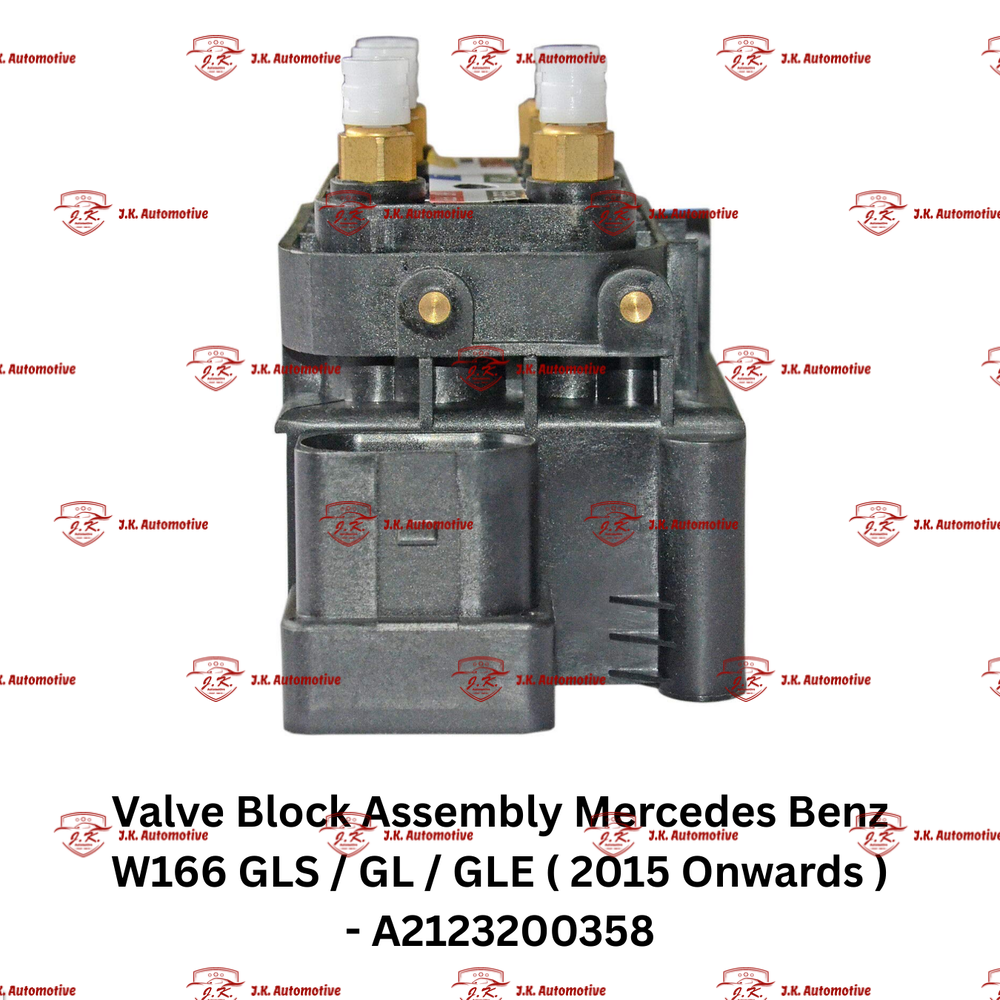
Fitment of the Mercedes-Benz M-Class W166 Valve Block Assembly A2123200358 should be confirmed by checking the exact supplied reference, vehicle application, existing component, pneumatic configuration and VIN information where required rather than ordering solely from a photograph or general model description. Begin with the part reference because A2123200358 is documented as an air suspension valve block used on Mercedes-Benz W166 applications. Check the identification information on the component currently installed on the vehicle wherever possible and compare it carefully with A2123200358. The complete reference should be checked character by character and should not be shortened or altered during compatibility verification. Your supplied application is Mercedes-Benz M-Class W166 for 2011–2019, and this information should remain part of the product listing exactly as provided. Independent parts references also associate A2123200358 with W166 air-suspension applications, although specific listings can show narrower model-year ranges, which is another reason VIN verification is useful before installation. Once the original component is accessible, compare it physically with the replacement. Check the overall housing shape, pneumatic port arrangement, electrical connector and mounting configuration. Each pneumatic line should correspond with the correct connection on the replacement unit and should not require stretching, rerouting or modification. The electrical connector should match naturally and lock securely. The replacement component should mount without drilling, grinding, bending or machining. If physical differences are found, compatibility should be reconfirmed before proceeding. Pneumatic line ends should also be inspected for damage, deformation and contamination because a damaged connection can create a new leak even when the valve block itself is correct. Open pneumatic connections should be protected from dirt, moisture and workshop contamination during replacement. VIN verification is recommended whenever the original reference is unreadable, multiple replacement numbers appear in catalogues or the vehicle’s exact suspension configuration is uncertain. The vehicle should also be confirmed as having the applicable air suspension system because the valve block is part of that pneumatic setup. Professional diagnosis before ordering is advisable because suspension sagging, uneven height or frequent compressor operation can originate from components other than the valve assembly. Using A2123200358 together with vehicle details, VIN verification where necessary, physical comparison and professional installation provides a more reliable method of confirming correct fitment than relying on model name or appearance alone.
Does Mercedes-Benz M-Class W166 Valve Block Assembly A2123200358 require programming or calibration after replacement?
The Mercedes-Benz M-Class W166 Valve Block Assembly with reference A2123200358 is primarily a pneumatic distribution component within the AIRMATIC suspension system, and replacement of the valve block itself typically does not require suspension-level recalibration simply because the valve block has been changed. Available technical guidance for Mercedes AIRMATIC valve-block replacement indicates that the system normally self-levels after installation and vehicle start-up, while calibration is more commonly associated with work involving ride-height sensors or other components that directly affect measured suspension height. However, this does not mean that the component should simply be installed without diagnostic checks. The valve block operates together with the air suspension compressor, pressure reservoir, air springs or air struts, pneumatic lines, ride-height sensors and electronic suspension control system, so correct operation depends on the complete system functioning properly. Before removing the existing assembly, relevant suspension fault codes should ideally be recorded because they may help identify whether the original problem involved pressure loss, compressor performance, sensor information or an electrical fault. During replacement, each pneumatic line must be returned to its correct port because the valve block controls different suspension circuits individually. Incorrectly connected pneumatic lines can cause abnormal or unpredictable suspension-height behaviour. The electrical connector should also be inspected for contamination, damaged pins, corrosion or insecure engagement. Once A2123200358 has been installed, the vehicle should be allowed to reach its intended ride height and the suspension should be observed for balanced operation. The front and rear suspension should respond normally to applicable height commands, and the compressor should not continue running excessively once sufficient pressure has been established. Stored fault codes should be rechecked after installation rather than simply being erased without investigating their cause. If the vehicle remains uneven after valve-block replacement, the technician should inspect the air springs or air struts, pneumatic lines, ride-height sensors, compressor and other relevant components rather than assuming that the replacement valve is defective. If another suspension component was replaced or disturbed during the same repair, applicable Mercedes-Benz diagnostic or calibration procedures should be followed for that component. The vehicle should also be monitored after an extended parking period to confirm that it maintains its ride height. Therefore, the valve block itself is generally not treated as a component that automatically requires ride-height calibration after replacement, but complete pneumatic and electronic diagnostic verification remains important for a successful repair.
Why can a faulty A2123200358 valve block make the Mercedes-Benz W166 air suspension compressor run frequently?
A faulty A2123200358 valve block can potentially cause frequent compressor operation when the pneumatic suspension system loses pressure internally and repeatedly commands the compressor to restore the required vehicle height. The compressor and valve block have different but closely connected functions within the Mercedes-Benz M-Class W166 AIRMATIC system. The compressor generates compressed air, while the valve assembly distributes that air between the individual suspension circuits and the pressure reservoir. Parts documentation describes A2123200358 as the distribution point responsible for routing suspension air pressure according to commands from the suspension control system. Once the vehicle reaches the required height, the relevant circuits need to retain pressure so that the compressor does not need to run continuously. If an internal valve fails to seal properly, pressure may gradually bleed away or migrate through the pneumatic system. The electronic suspension controller can detect the resulting height change and request additional compressor operation to restore the vehicle to its intended position. A driver may therefore notice that the compressor runs shortly after starting the vehicle, operates for longer than expected or repeatedly activates after the suspension has previously reached its normal height. The vehicle may also sag while parked and then raise again after the system becomes active. Technical information for W166/X166 AIRMATIC systems specifically notes that pneumatic leakage can cause the compressor to overwork and eventually contribute to compressor failure. However, frequent compressor operation does not automatically prove that A2123200358 is defective. A leaking air spring or air strut can cause the same pressure loss. Damaged pneumatic hoses, fittings or reservoir connections can also leak, while a weak compressor may simply take longer to generate the required pressure. Diagnosis should therefore determine whether the system has difficulty generating pressure or whether it generates pressure successfully but cannot retain it. Air-suspension leak testing, compressor-performance checks, ride-height monitoring and diagnostic fault-code scanning can help identify the actual cause. If an external pneumatic leak is found, it should be repaired rather than replacing the valve block unnecessarily. If no external leak is found and testing indicates that pressure is escaping internally through the distribution unit, A2123200358 becomes a stronger replacement candidate. After repair, compressor operation should be monitored again to confirm that the excessive cycling has stopped and that the vehicle can maintain its intended suspension height without repeatedly requesting additional pressure.
Why does my Mercedes-Benz M-Class W166 still sag after replacing Valve Block Assembly A2123200358?
If the Mercedes-Benz M-Class W166 continues to sag after replacing Valve Block Assembly A2123200358, the vehicle may have another pneumatic or electronic suspension fault that was not corrected by valve-block replacement. The AIRMATIC system contains several interconnected components, and replacing one component cannot repair leakage or malfunction elsewhere in the system. Air springs or air struts are particularly important to inspect because a leak in an individual suspension unit can allow one corner to lose height even when the valve assembly is operating correctly. Technical guidance for W166 AIRMATIC diagnosis notes that if sagging continues after valve-block replacement, air springs and the pneumatic lines leading to them are important areas to test for leakage. The pattern of suspension lowering can provide useful diagnostic information. If one individual corner becomes lower after parking, the air spring or air strut at that corner and its corresponding pneumatic line should receive careful inspection. If the entire front or rear axle lowers more evenly, the pneumatic distribution system and shared circuits may warrant closer investigation, although proper testing remains necessary before reaching a conclusion. Pneumatic connections around the replacement A2123200358 unit should also be checked because an incorrectly seated pipe, damaged line end or fitting can introduce a new leak during installation. Each line should be connected to its correct port because the valve block distributes pressure to specific suspension circuits. Ride-height sensors and their linkages should also be inspected because incorrect sensor information can cause the electronic suspension system to command an inappropriate height even when the pneumatic components are functioning normally. Compressor performance should be evaluated if the vehicle raises slowly or struggles to reach its required height. The pressure reservoir and associated connections should also be considered if the system cannot retain adequate pressure. A useful diagnostic method is to park the vehicle on a level surface and record measurements at consistent points around all four corners. The same measurements can then be repeated several hours later to determine exactly where height is being lost. Pneumatic leak testing can then focus on the affected circuit. Diagnostic equipment should also be used to inspect relevant suspension fault codes. If A2123200358 has already been replaced and confirmed to be correctly installed, the diagnostic process should continue through the remaining air suspension components rather than repeatedly replacing the same part.
What precautions should be followed when installing Mercedes-Benz M-Class W166 Valve Block Assembly A2123200358?
Installation of Mercedes-Benz M-Class W166 Valve Block Assembly A2123200358 should be performed carefully because the component controls multiple pressurised pneumatic circuits, and incorrect line routing, contamination or damaged connections can cause additional suspension faults. Before removing the existing unit, the vehicle should be secured using appropriate workshop procedures and the air suspension system should be treated as a pressurised system. Pneumatic lines should be identified before disconnection so that each line can be returned to its correct port on the replacement valve assembly. Technical information for these Mercedes AIRMATIC valve blocks notes that the air lines are identified so they can be connected to the correct circuits, and mixing the connections can result in abnormal suspension operation. Taking clear photographs or marking the connections before removal can help preserve the original routing. Open pneumatic lines and valve ports should be protected against dirt, moisture, oil and workshop contamination because debris entering the system may interfere with seals and internal pneumatic operation. Each pneumatic pipe end should be inspected for cracks, deformation, contamination or other damage before reconnection. Technical replacement guidance specifically recommends inspecting plastic air-line ends because damaged lines can themselves become a source of leakage. The electrical connector should also be examined for damaged pins, corrosion, moisture or insecure locking. Before installation, compare the replacement component directly with the removed valve block. Confirm reference A2123200358, housing configuration, pneumatic port arrangement, electrical connector and mounting points. The replacement should correspond naturally with the existing installation without requiring drilling, grinding, bending or machining. Pneumatic pipes should not be stretched or rerouted merely to accommodate a mismatched unit. Once installed, all connections should be checked carefully for leakage and secure seating. The vehicle should then be allowed to achieve its normal suspension height while compressor operation and suspension movement are monitored. Diagnostic fault codes should be checked and any unresolved pneumatic, sensor or electrical faults investigated. The vehicle should also be parked for an extended period and its height checked again to confirm that pressure is being retained. If the compressor previously operated excessively because of a long-standing leak, its condition should also be evaluated. Professional installation is recommended because correct pneumatic line routing, clean working practices, accurate reference matching and complete post-installation diagnosis are essential for dependable AIRMATIC operation.
How do I know if the Mercedes-Benz M-Class W166 AIRMATIC valve block is faulty?
A faulty Mercedes-Benz M-Class W166 AIRMATIC valve block may be suspected when the vehicle develops commonly searched air suspension symptoms such as sagging overnight, the front or rear suspension sitting lower than normal, uneven ride height, slow raising, repeated suspension-height correction or frequent compressor operation. Current diagnostic material for W166 AIRMATIC systems identifies sagging after parking as one of the major symptoms associated with valve-block problems, while the pattern of sagging can help distinguish a possible distribution-valve fault from leakage at an individual air spring. The A2123200358 assembly controls compressed-air distribution between the suspension circuits and pressure reservoir, so internal leakage can allow pressure to escape or move through the system even when no obvious external leak is visible. Internal valve leakage can therefore be silent, which means the absence of a noticeable hissing sound does not automatically rule out a pneumatic pressure-loss problem. One useful observation is how the vehicle changes height after being parked on a level surface for several hours. If one individual corner becomes lower, a leaking air spring or air strut at that wheel is an important possibility and should be checked before blaming the valve block. If an entire axle or multiple corners lower together, the pneumatic distribution unit becomes a more relevant diagnostic consideration, although testing is still required. Another warning sign is a compressor that repeatedly operates to restore suspension height after the vehicle has been parked. This can indicate that pressure is being lost somewhere within the system. However, compressor operation alone cannot identify the leak location because damaged air lines, fittings, air springs, air struts or reservoir connections can produce the same behaviour. A workshop can measure all four suspension corners, perform pneumatic leak testing and inspect the air springs and lines for external leakage. Diagnostic equipment can also be used to examine suspension-related fault codes and available ride-height information. If the external pneumatic components retain pressure but the system still loses height or cannot correctly isolate individual circuits, internal leakage within the valve assembly becomes a stronger possibility. The electrical connector and wiring should also be inspected because an electrical fault can interfere with solenoid operation. Once testing identifies the valve block as the likely source, reference A2123200358 should be checked against the existing component and vehicle specification before replacement. Parts references identify A2123200358 as a principal W166 AIRMATIC valve-block reference. After replacement, the vehicle should maintain a stable ride height after parking and the compressor should return to normal operating behaviour.



Reviews
There are no reviews yet.