What are Mercedes-Benz M Class W166 Front Lower Arms and what is their function?
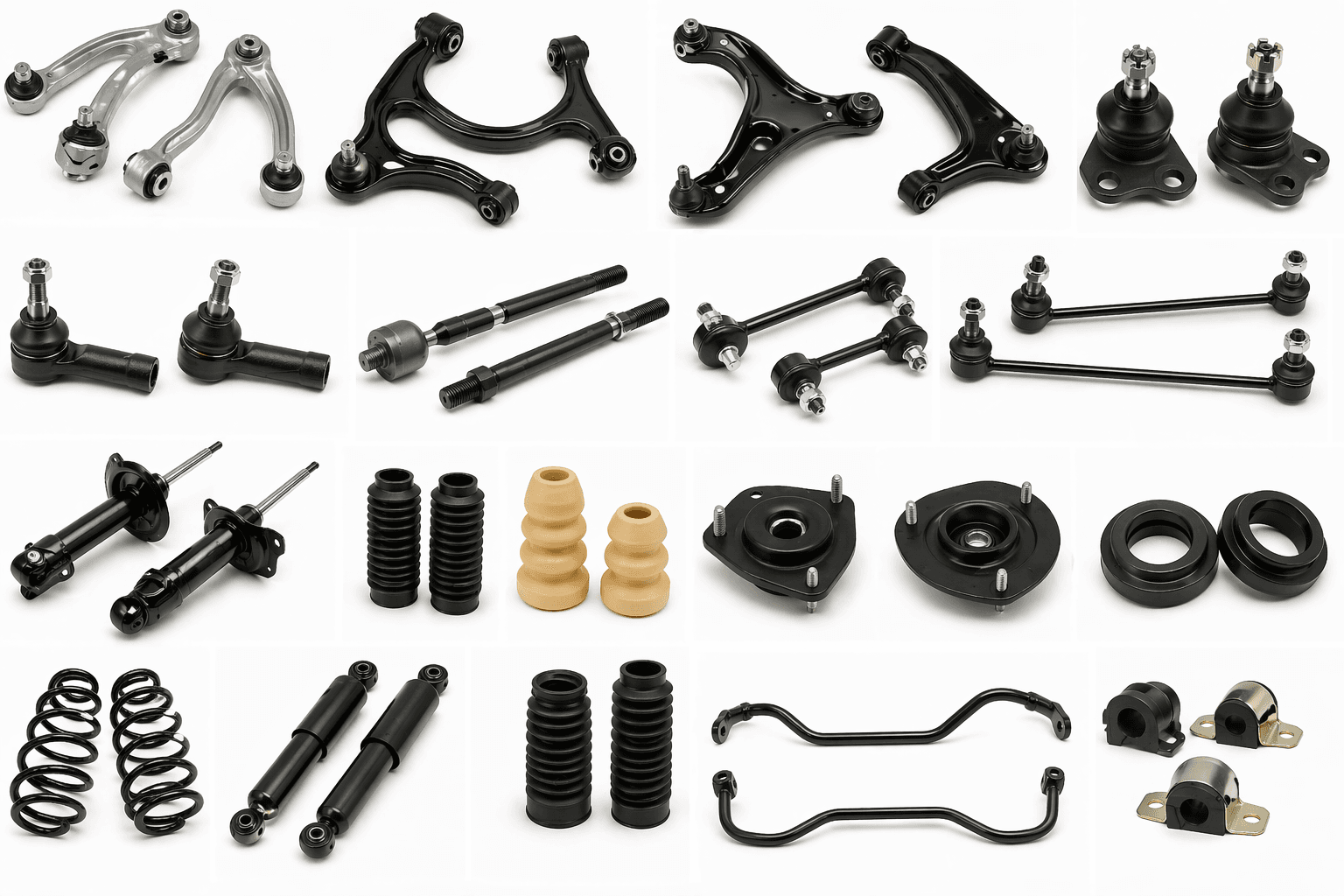
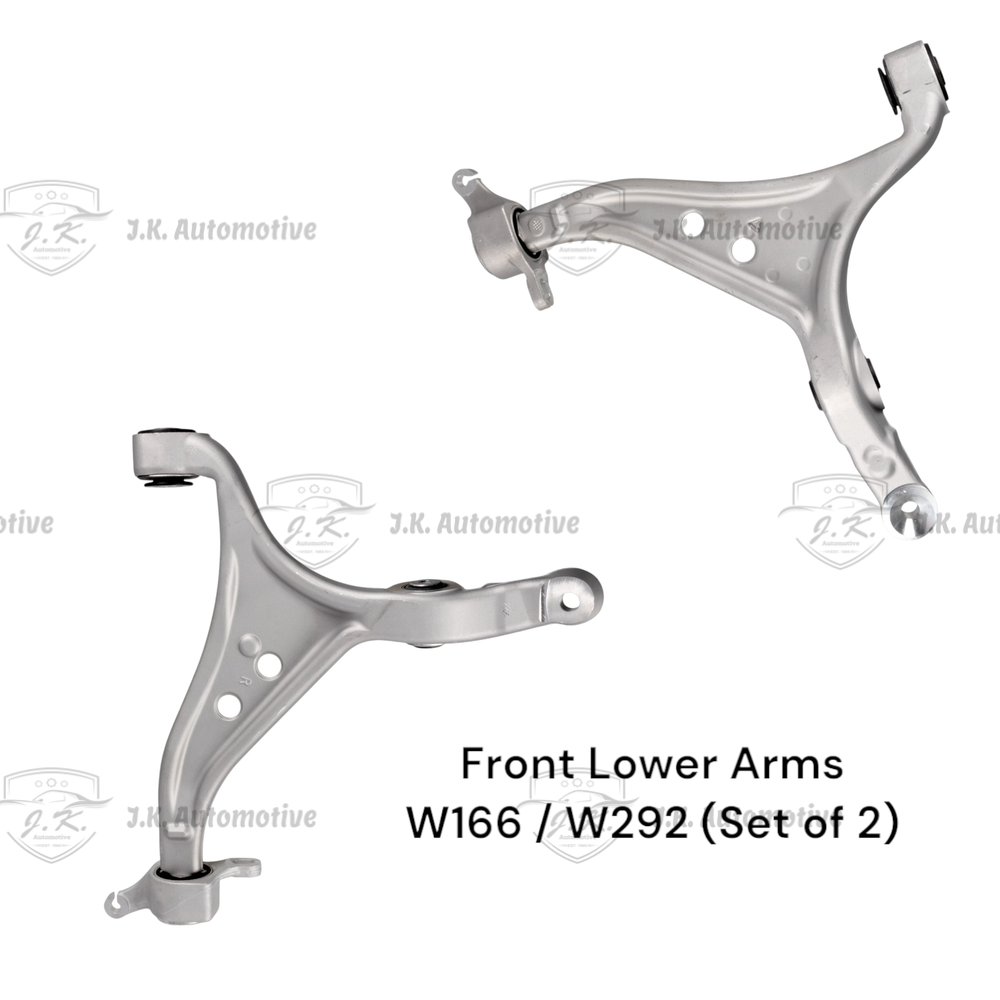
Mercedes-Benz M Class W166 Front Lower Arms are important parts of the front suspension because they help control the movement and position of the front wheels during everyday driving. This set of 2 corresponds with OEM numbers A1663300107 & A1663300207 for the stated Mercedes-Benz M Class W166 2011–2019 application. These suspension parts are also commonly known as lower control arms, lower wishbone arms or front suspension arms. They connect important parts of the front wheel and suspension assembly with the vehicle chassis and help guide wheel movement when the suspension moves up and down. When the vehicle travels over potholes, speed breakers, rough roads or highway joints, the front wheels move continuously and the lower arms help keep this movement controlled. The arms are also under load during braking, acceleration and cornering. During hard braking, more vehicle weight moves towards the front axle, increasing the forces acting through the suspension. During cornering, sideways forces also pass through the control arms and their bushes. For this reason, correctly functioning lower control arms are important for stable steering, predictable handling and controlled suspension movement. The lower arms work together with the upper control arms, ball joints, suspension bushes, shock absorbers, tie rod ends and other steering components. As the vehicle gains mileage, rubber bushes can gradually become hard, cracked, loose or damaged. Excessive movement in the lower arms can contribute to knocking or clunking sounds, steering vibration, loose handling, poor road stability or uneven tyre wear. If these symptoms appear, the suspension should be professionally inspected rather than replacing parts without diagnosis. Upper control arms, ball joints, tie rod ends, wheel bearings and shock absorbers can cause similar symptoms. Sway bar links, Sway links, Anti roll link rods and Stabiliser sway links should also be checked when knocking or rattling occurs over rough roads. Before ordering this set, compare OEM A1663300107 & A1663300207 with the existing parts and verify the vehicle VIN and exact suspension specification. Professional installation and a wheel alignment check are recommended after replacement.
Are A1663300107 & A1663300207 suitable for Mercedes-Benz M Class W166 models from 2011–2019?
A1663300107 & A1663300207 are the OEM references provided for this Mercedes-Benz M Class W166 Front Lower Arms set for the stated 2011–2019 application, with A1663300107 corresponding to the front lower left control-arm position and A1663300207 corresponding to the front lower right control-arm position. These two suspension arms form a corresponding pair for the front axle, but customers should always confirm exact vehicle compatibility before ordering because selecting a suspension component only from the vehicle model and year is not sufficient in every case. Mercedes-Benz M Class W166 vehicles can have differences related to production date, engine version, drivetrain, suspension configuration and other vehicle specifications. For this reason, the safest method is to compare OEM A1663300107 & A1663300207 with the references associated with the existing suspension components and verify the vehicle VIN before purchase. The lower control arms are important because they help guide the front wheel assemblies and maintain controlled suspension movement. Every time the vehicle travels over a pothole, speed breaker, rough road or uneven surface, the lower wishbone arms move as part of the suspension system. During braking, additional force is transferred towards the front axle, while cornering creates sideways forces through the suspension. These repeated loads mean that the control arms, bushes and related joints are continuously working whenever the vehicle is driven. Over time and mileage, rubber bushes may become hard, cracked, deformed or loose, while related joints and mounting areas can also develop excessive movement. When this happens, the driver may notice knocking or clunking noises from the front suspension, especially while travelling over uneven roads. Steering vibration, vague steering, poor stability or uneven tyre wear may also occur. However, these symptoms should not automatically be treated as proof that A1663300107 & A1663300207 require replacement. A professional mechanic should inspect the complete front suspension first. Upper control arms can develop bush or joint wear, ball joints can develop excessive play, and steering tie rod ends can affect steering precision. Shock absorbers can cause poor suspension control when worn, while wheel bearings can cause vibration, noise or unwanted wheel movement. Sway bar links, Sway links, Anti roll link rods and Stabiliser sway links can also cause knocking or rattling noises over smaller bumps and uneven surfaces. Tyres should be checked for incorrect pressure, damage and abnormal wear, and wheel balancing should be considered if vibration is present. Once the lower arms have been diagnosed as worn, the OEM numbers should be confirmed carefully. A1663300107 and A1663300207 should not be treated as two interchangeable parts because they correspond to opposite sides of the front suspension. Correct left and right installation is essential. If both components are worn, replacing the pair can provide a more complete front suspension repair. The workshop should also inspect all related bushes and mounting hardware during installation. After the correct lower control arms are installed, a professional wheel alignment check is recommended to help maintain correct suspension geometry, predictable steering, stable road handling and balanced tyre wear.
What is the difference between A1663300107 and A1663300207 in the Mercedes-Benz M Class W166 Front Lower Arms set?
The main difference between A1663300107 and A1663300207 is their position on the front suspension, because A1663300107 corresponds to the front lower left control arm while A1663300207 corresponds to the front lower right control arm, meaning the two components form a corresponding left-and-right suspension pair rather than being two identical interchangeable arms. Both components perform the same general function of helping guide and control front wheel movement, but their shape, mounting orientation and installation position correspond to opposite sides of the vehicle. This is important because suspension arms are designed around the geometry of the front axle and wheel assembly, so a left-side component should not be assumed to fit the right side simply because both parts look similar. The Mercedes-Benz M Class W166 Front Lower Arms work continuously as the vehicle travels over different road surfaces. When a front wheel moves upwards after hitting a bump, the suspension system allows the wheel to move while maintaining its controlled relationship with the chassis. The lower control arm is an important part of this movement. When the wheel moves back down, the arm continues guiding the suspension through its travel. During braking, substantial forces can pass through the front suspension as vehicle weight moves towards the front axle. During cornering, sideways loads act through the wheels and suspension components. Acceleration, road irregularities and changing vehicle loads also place stress on the lower wishbone arms and their bushes. Because both sides of the front suspension perform similar work, they may experience similar mileage and road conditions, although the left and right arms do not necessarily wear at exactly the same rate. Road impacts, potholes and driving conditions can cause one side to deteriorate faster than the other. Possible signs of wear include knocking or clunking noises, steering vibration, loose handling, reduced road stability or uneven tyre wear. If these symptoms are present, both sides of the suspension should be inspected even if the noise appears to come from only one side. The upper control arms, ball joints, tie rod ends, suspension bushes, shock absorbers and wheel bearings should also be examined because faults in these components can create similar symptoms. Sway bar links, Sway links, Anti roll link rods and Stabiliser sway links should also be inspected when there is rattling or knocking over small bumps. When ordering the replacement set, OEM A1663300107 & A1663300207 should be compared with the original parts and the VIN should be checked to confirm the exact application. During installation, each component must be fitted in its correct position and the suspension hardware must be installed and tightened according to the proper procedure. If the original lower arms have excessive bush movement or damage, replacing the correctly matched pair can help restore controlled suspension movement. A professional wheel alignment check should be completed after the repair because replacing major suspension arms can affect or reveal changes in wheel geometry. Correct alignment can help maintain predictable steering, stable road behaviour and even tyre wear.
What are the common symptoms of worn Mercedes-Benz M Class W166 Front Lower Arms?
Common symptoms of worn Mercedes-Benz M Class W166 Front Lower Arms can include knocking or clunking sounds from the front suspension, steering vibration, loose or vague steering, poor road stability, unusual movement during braking, changes in handling and uneven tyre wear, although these symptoms can also be caused by several other suspension or steering components and should therefore be professionally diagnosed before replacement parts are ordered. The front lower control arms corresponding with OEM A1663300107 & A1663300207 are constantly working whenever the vehicle is moving. They help guide the front wheels while allowing the suspension to travel over different road surfaces. Every pothole, speed breaker, broken road or highway joint causes forces and movement through the front suspension. During braking, additional weight is transferred to the front axle, placing more load through the suspension components. Cornering also produces sideways forces through the wheels, control arms and bushes. Over thousands of kilometres, this repeated movement can contribute to wear in the rubber bushes and related suspension components. Rubber bushes may gradually harden, crack, deform or separate, and excessive movement may eventually develop. One of the first noticeable symptoms can be a knocking or clunking noise from the front of the vehicle when driving over uneven roads. In some cases, the sound may become more noticeable when travelling slowly over speed breakers or rough surfaces. The driver may also feel vibration through the steering wheel or notice that the steering feels less precise than before. Excessive movement in worn suspension components can make the vehicle feel less settled during braking or cornering. Uneven tyre wear may develop when suspension wear contributes to changes in wheel position or alignment. However, diagnosing suspension noise only from the sound can be difficult because several components can create similar noises. Upper control arms can develop worn bushes or joints. Ball joints can develop excessive play and may create knocking. Steering tie rod ends can affect steering precision and may also develop unwanted movement. Worn shock absorbers can reduce suspension control, while wheel bearings can produce noise, vibration or movement. Sway bar links, Sway links, Anti roll link rods and Stabiliser sway links are another common area to inspect when knocking or rattling is present over smaller bumps. Tyres can also cause vibration when damaged, incorrectly inflated or unevenly worn, while wheel imbalance can produce steering vibration at particular speeds. A professional suspension inspection should therefore check the complete front axle rather than assuming that the lower arms are responsible. If the lower control arm bushes show cracking, excessive movement or physical damage and the arms are confirmed as the source of the problem, replacement may be required. Before ordering, compare OEM A1663300107 & A1663300207 with the existing components and verify the vehicle VIN. After professional replacement, a wheel alignment check is recommended to ensure that the suspension geometry is properly assessed and to help maintain stable steering and balanced tyre wear.
What are the benefits of replacing Mercedes-Benz M Class W166 Front Lower Arms as a set of 2?
Replacing Mercedes-Benz M Class W166 Front Lower Arms as a set of 2 can provide a more complete front suspension repair when both corresponding lower control arms have been professionally inspected and confirmed as worn, damaged or excessively loose, and this product includes the pair associated with OEM A1663300107 & A1663300207 for the stated 2011–2019 application. The front suspension has a lower control arm on each side, and both arms operate whenever the vehicle is being driven. They experience the same overall vehicle mileage and generally similar operating conditions, although individual road impacts can cause one side to wear faster than the other. If both lower arms have significant bush deterioration or excessive movement, replacing the pair during the same repair can help bring both sides of the front suspension to a more consistent condition. The lower arms help guide the wheel assemblies while the suspension moves over normal roads, potholes, speed breakers and rough surfaces. They also carry changing forces during braking, acceleration and cornering. When their bushes or related mounting areas become worn, the wheel assembly can develop more movement than intended. This can contribute to knocking or clunking noises, steering vibration, vague steering, poor stability and abnormal tyre wear. If both arms are worn, replacing only one side would leave the other worn component in service. For that reason, when inspection confirms wear on both sides, a set-of-2 replacement can be practical. It can also reduce the need to repeat similar workshop labour later if both components already require replacement. However, this does not mean that suspension arms should always be replaced in pairs regardless of condition. The decision should be based on a professional inspection. A mechanic should check the bushes, joints, mounting areas and physical condition of both lower arms. The upper control arms should also be inspected because they form another important part of the wheel control system. Ball joints and steering tie rod ends should be checked for excessive movement. Shock absorbers should be examined for leakage or poor damping, and wheel bearings should be checked for noise or play. Sway bar links, Sway links, Anti roll link rods and Stabiliser sway links should also be inspected when knocking or rattling is present. Tyres should be examined for abnormal wear because uneven wear patterns can provide useful clues about suspension or alignment problems. Before purchasing this set, confirm OEM A1663300107 & A1663300207 against the original suspension components and vehicle VIN. The two OEM references correspond to different sides of the vehicle, so each arm must be installed in its correct position. When professionally diagnosed worn components are replaced correctly, the repair can help remove excessive movement caused by the old arms and support more controlled wheel movement. After replacement, a wheel alignment check should be carried out to confirm the wheel geometry and help maintain predictable steering, stable handling and balanced tyre wear.
Can replacing worn Mercedes-Benz M Class W166 Front Lower Arms improve steering, handling and road stability?
Replacing worn Mercedes-Benz M Class W166 Front Lower Arms can help restore more controlled steering, handling and road behaviour when excessive movement in the original lower control arms or their bushes has been professionally diagnosed as the cause of the problem, because these components form an important part of the front suspension system and help guide the front wheels relative to the vehicle chassis. This set of 2 corresponds with OEM references A1663300107 & A1663300207 for the stated Mercedes-Benz M Class W166 2011–2019 application. During normal driving, the front lower control arms continuously move with the suspension. When the vehicle travels over smooth roads, the suspension still makes small movements to keep the tyres in contact with the road. When it encounters potholes, speed breakers or broken surfaces, considerably larger suspension movement occurs. The lower wishbone arms help guide this movement while the shock absorbers and other suspension components control how the vehicle responds. During braking, vehicle weight moves forward and creates additional load through the front suspension. During cornering, sideways forces act through the tyres, wheel assemblies and control arms. When the bushes and mounting areas are in good condition, the lower arms help keep this movement controlled. If the bushes become cracked, loose, deformed or excessively worn, unwanted movement can develop between the wheel assembly and chassis. The driver may then notice vague steering, vibration, knocking, unstable handling or an unsettled feeling during braking. Uneven tyre wear may also appear when suspension wear contributes to changes in wheel position. If worn lower control arms are correctly identified as the cause, replacing them can remove the excessive movement associated with those damaged components and help restore more predictable suspension behaviour. However, replacing the lower arms cannot repair faults elsewhere in the suspension. Upper control arms can also develop bush or joint wear and should be inspected. Ball joints and steering tie rod ends can affect steering response when excessive play develops. Shock absorbers influence suspension control and should be checked for leakage or reduced damping. Wheel bearings should be inspected if the vehicle has noise, vibration or unwanted wheel movement. Sway bar links, Sway links, Anti roll link rods and Stabiliser sway links should be examined if there are knocking or rattling sounds over small bumps. Tyres should be checked for correct pressure, damage and abnormal wear, while wheel balancing should be considered if vibration occurs at particular speeds. A complete professional inspection is therefore important before deciding which parts require replacement. If OEM A1663300107 & A1663300207 are confirmed for the vehicle, compare them with the existing components and verify the VIN before ordering. Correct installation is important because the pair contains position-specific left and right suspension arms. After the new components are fitted, a professional wheel alignment check is recommended. Correct wheel geometry can help maintain predictable steering, stable handling, proper suspension operation and even tyre wear.
Why are Mercedes-Benz M Class W166 Front Lower Arms important for the suspension and steering system?
Mercedes-Benz M Class W166 Front Lower Arms are important components of the front suspension system because they help guide the front wheels, control suspension movement and maintain a stable connection between the wheel assemblies and the vehicle chassis, and this set of 2 corresponds with OEM references A1663300107 & A1663300207 for the stated Mercedes-Benz M Class W166 2011–2019 application. These components are also commonly called front lower control arms, lower wishbone arms, suspension arms or lower suspension control arms. Every time the vehicle moves, the lower arms work together with other suspension components to control the position and movement of the front wheels. On smooth roads, the suspension makes small movements continuously, while potholes, speed breakers, broken roads and uneven surfaces create much larger suspension movement. The lower control arms help guide this movement so that the wheels can travel through their required suspension range while remaining connected to the chassis in a controlled manner. During braking, vehicle weight transfers towards the front axle and increases the forces acting through the front suspension. During cornering, sideways forces are transferred from the tyres through the wheel assemblies and suspension components. Acceleration and changing road surfaces also create additional loads. Because of these continuous forces, the lower arms and their bushes play an important role in the overall behaviour of the front suspension. The rubber bushes help allow controlled movement while reducing the direct transfer of vibration and harshness between suspension components. Over time, these bushes can become hard, cracked, deformed or loose because of mileage, road conditions, repeated suspension movement and general wear. When excessive movement develops, the front wheel assembly may no longer remain as controlled as intended. Possible symptoms can include knocking or clunking noises, steering vibration, vague or loose steering, poor road stability, unusual movement during braking or uneven tyre wear. However, similar symptoms can be produced by several other suspension and steering components. The upper control arms should therefore be checked for bush and joint wear, while ball joints and tie rod ends should be inspected for excessive movement. Shock absorbers should be checked for leakage or reduced damping, and wheel bearings should be inspected if noise, vibration or unwanted wheel movement is present. Sway bar links, Sway links, Anti roll link rods and Stabiliser sway links should also be checked when knocking or rattling is heard over uneven roads. Tyres should be checked for damage, correct pressure and abnormal wear. If the lower arms are professionally diagnosed as worn, replacing the damaged components can help remove unwanted suspension movement caused by those parts. Before ordering, OEM A1663300107 & A1663300207 should be compared with the original components and the vehicle VIN should be verified because exact fitment can depend on vehicle specification. Correct professional installation is important, and after the repair a wheel alignment check is recommended to help maintain correct suspension geometry, stable steering and balanced tyre wear.
Should wheel alignment be done after replacing Mercedes-Benz M Class W166 Front Lower Arms?
Yes, a professional wheel alignment check is strongly recommended after replacing Mercedes-Benz M Class W166 Front Lower Arms because the lower control arms are major parts of the front suspension system and their condition and installation can influence how the wheel assembly is positioned and controlled relative to the chassis, and this replacement set corresponds with OEM A1663300107 & A1663300207 for the stated Mercedes-Benz M Class W166 2011–2019 application. The purpose of wheel alignment is to measure important wheel angles and confirm that the front and rear wheels are positioned within the appropriate specification. When lower control arm bushes become worn, cracked or excessively loose, unwanted movement can develop in the front suspension. This movement can contribute to changes in steering feel, wheel position and tyre wear. When the worn arms are removed and correctly matched replacement components are installed, the unwanted movement associated with the damaged parts is reduced, but this does not automatically guarantee that the wheel alignment is correct. A professional alignment measurement should therefore be performed after suspension work. Incorrect alignment can cause several problems, including uneven tyre wear, steering pull, an off-centre steering wheel or reduced steering precision. Some alignment problems may not be immediately obvious to the driver, particularly when the difference is small. The vehicle may appear to travel straight while still having wheel angles outside the desired range. Checking alignment after suspension repairs is therefore more reliable than assuming everything is correct based only on a short road test. Before carrying out the alignment, the workshop should inspect the remaining suspension and steering components because accurate alignment is difficult when other parts have excessive movement. The upper control arms should be checked for damaged bushes or worn joints. Ball joints and steering tie rod ends should be inspected for excessive play. Shock absorbers should be checked for leakage, damage or reduced performance. Wheel bearings should be inspected if the vehicle has vibration, noise or excessive wheel movement. Sway bar links, Sway links, Anti roll link rods and Stabiliser sway links should also be checked if there are knocking or rattling noises from the front suspension. Tyres should have the correct pressure and should be inspected for uneven wear, damage or other problems. Wheel balancing should also be considered when vibration occurs at particular speeds because alignment and balancing solve different problems. Before installing the replacement lower arms, customers should compare OEM A1663300107 & A1663300207 with the original components and verify the vehicle VIN. Each arm must also be fitted in its correct suspension position. Correct installation procedures are important because suspension bushes and mounting hardware must be fitted and tightened properly. After installation, a professional alignment check can help confirm the suspension geometry and identify whether adjustments are required. Correct alignment can help maintain predictable steering, stable handling and balanced tyre wear, making it an important final step after replacing major front suspension components.
What problems can worn Mercedes-Benz M Class W166 Front Lower Arms cause if they are not replaced?
Worn Mercedes-Benz M Class W166 Front Lower Arms can contribute to a range of suspension, steering and tyre-related problems when their bushes, joints or mounting areas develop excessive movement, and if professional inspection confirms significant wear, continuing to use the damaged components can allow the symptoms associated with that wear to remain or become more noticeable. This set of 2 corresponds with OEM A1663300107 & A1663300207 for the stated Mercedes-Benz M Class W166 2011–2019 application. Lower control arms are continuously working while the vehicle is moving because they help guide the front wheel assemblies through the suspension travel. Every pothole, speed breaker, broken road and uneven surface creates movement and forces through the suspension. During braking, the front suspension experiences additional load as vehicle weight transfers forward. During cornering, sideways forces act through the tyres, wheel assemblies and suspension arms. Over time, the rubber bushes can deteriorate, crack, deform or become loose, while other areas of the arm assembly may also develop wear or damage. One common symptom is a knocking or clunking sound from the front suspension, particularly when driving over rough roads or speed breakers. If excessive movement becomes greater, the noise may become more frequent or noticeable. Steering can also begin to feel vague or less precise because worn suspension components can allow unwanted wheel movement. Some drivers may experience steering vibration or feel that the vehicle requires more correction to maintain its intended direction. The vehicle may also feel less settled during braking or cornering when suspension movement is not being controlled correctly. Uneven tyre wear can develop when worn suspension components contribute to changes in wheel positioning or alignment. Continued abnormal tyre wear can shorten tyre life and may make additional suspension or alignment problems more noticeable. However, it is important not to assume that every knocking noise, steering vibration or tyre-wear problem is caused by the lower control arms. Upper control arms, ball joints and steering tie rod ends can produce similar symptoms. Worn shock absorbers can affect suspension control, while wheel bearings can produce noise, vibration or excessive wheel movement. Sway bar links, Sway links, Anti roll link rods and Stabiliser sway links are also common components to inspect when knocking or rattling occurs over small bumps. Tyres, wheel balancing and wheel alignment should also be checked. A professional mechanic should inspect the complete front suspension and determine exactly which components require replacement. If the lower arms are confirmed as worn, compare OEM A1663300107 & A1663300207 with the existing components and verify the VIN before purchasing the replacement set. Replacing professionally diagnosed worn components at the appropriate time can help remove excessive movement caused by those parts and restore more controlled suspension behaviour. After installation, the workshop should check the wheel alignment to help maintain proper suspension geometry, stable steering and even tyre wear.
Why should Mercedes-Benz M Class W166 Front Lower Arms be replaced when excessive wear is found?
Mercedes-Benz M Class W166 Front Lower Arms should be replaced when a professional inspection confirms excessive bush wear, unwanted movement, physical damage or another condition that prevents the arms from controlling the front suspension correctly, because these components have an important role in guiding the wheel assemblies and maintaining controlled suspension movement. This set is supplied as a pair corresponding with OEM references A1663300107 & A1663300207 for the stated Mercedes-Benz M Class W166 2011–2019 application. Suspension arms do not normally require replacement simply because a vehicle has reached a particular age or mileage, because actual wear depends on many factors including road conditions, driving style, vehicle use, suspension condition and previous repairs. However, once excessive movement or physical damage is confirmed, replacement should not be unnecessarily delayed. The lower arms operate continuously as the front wheels move over different road surfaces. On rough roads, potholes and speed breakers, they experience repeated movement and impact-related loads. Braking transfers more vehicle weight to the front axle, while cornering creates sideways loads through the suspension. These forces are repeated thousands of times during normal vehicle use. Rubber suspension bushes are designed to accommodate movement, but they can gradually become hard, cracked, distorted or loose. When the bushes no longer control movement correctly, the wheel assembly can move more than intended. The driver may notice knocking or clunking noises, steering vibration, vague handling, reduced stability or abnormal tyre wear. If significant movement remains untreated, these symptoms can continue and may affect the overall driving behaviour of the vehicle. Replacing a worn lower control arm can remove the unwanted movement caused specifically by that component, but the complete suspension should be inspected because multiple parts can wear at the same time. Upper control arms should be checked for bush or joint wear. Ball joints and steering tie rod ends should be examined for excessive play. Shock absorbers should be inspected for leakage, damage or reduced damping performance. Wheel bearings should be checked if noise or vibration is present. Sway bar links, Sway links, Anti roll link rods and Stabiliser sway links should also be inspected because wear in these components can cause knocking or rattling over rough roads. Tyres should be examined for uneven wear, incorrect pressure or physical damage. Wheel balancing should be checked if vibration is speed-related. When replacement of the lower arms is required, OEM A1663300107 & A1663300207 should be compared with the original components and the VIN should be verified before ordering. The corresponding left and right arms must be installed in their correct positions. Professional installation is recommended because correct mounting and tightening procedures are important for suspension components. Once the replacement is complete, a professional wheel alignment check should be performed to confirm the wheel geometry and help maintain stable steering, predictable handling and balanced tyre wear.
Why is Stokes Germany a European-quality alternative to Lemförder, FEBI, Meyle and other established brands for Mercedes-Benz M Class W166?
Stokes Germany provides an aftermarket replacement option for customers searching for Mercedes-Benz M Class W166 Front Lower Arms and comparing available suspension components with established brands such as Lemförder, FEBI, Meyle and other aftermarket manufacturers, and for this product the important starting point is correct vehicle fitment using OEM references A1663300107 & A1663300207 for the stated Mercedes-Benz M Class W166 2011–2019 application. When choosing replacement lower control arms, customers should not make the decision only from a brand name because several factors are important when purchasing suspension components. The first consideration should be whether the supplied suspension arms correctly correspond with the vehicle, OEM references, installation positions and exact vehicle specification. The vehicle VIN should be checked wherever possible, and the OEM numbers associated with the existing components should be compared before ordering. After fitment is confirmed, customers can compare Stokes Germany with Lemförder, FEBI, Meyle and other available brands based on product specification, construction, included components, price, warranty terms, availability and after-sales support. Different aftermarket manufacturers can offer replacement products for the same OEM application, but this does not mean that every product is technically identical. Manufacturing methods, materials, rubber bush compounds, ball-joint construction where applicable, corrosion protection, tolerances, testing procedures, quality-control systems and warranty conditions can differ between manufacturers and even between individual product ranges from the same manufacturer. For this reason, claims that one aftermarket product is automatically identical to or better than another should not be made without specific technical evidence. Customers considering Stokes Germany can instead evaluate it as another replacement option for the required OEM application and compare the complete value offered for their repair. The lower control arms are important because they help guide the front wheels and work continuously with the rest of the suspension. When the existing arms or bushes develop excessive movement, the vehicle may experience knocking or clunking noises, steering vibration, vague handling, reduced road stability or uneven tyre wear. If professional inspection confirms that the lower arms require replacement, correctly matched components should be selected. At the same time, the workshop should inspect the remaining suspension because replacing the lower arms cannot correct faults caused by other worn components. Upper control arms should be checked for worn bushes or joints. Ball joints and steering tie rod ends should be inspected for excessive movement. Shock absorbers should be checked for leakage or reduced damping, while wheel bearings should be examined if noise or vibration is present. Sway bar links, Sway links, Anti roll link rods and Stabiliser sway links should also be inspected if knocking or rattling occurs over uneven roads. Tyres should be checked for abnormal wear, correct pressure and physical condition. Customers should confirm OEM A1663300107 & A1663300207 against the original components and VIN before purchasing the Stokes Germany set. Professional installation is recommended, followed by a wheel alignment check. This provides customers with a practical way to consider Stokes Germany alongside Lemförder, FEBI, Meyle and other established aftermarket brands based on correct OEM fitment, specification, pricing, availability, warranty and support while avoiding unsupported claims that different brands are identical in construction, manufacturing or service life.
Reviews
There are no reviews yet.