What are Mercedes-Benz M Class W166 Front Upper Arms and what is their function?
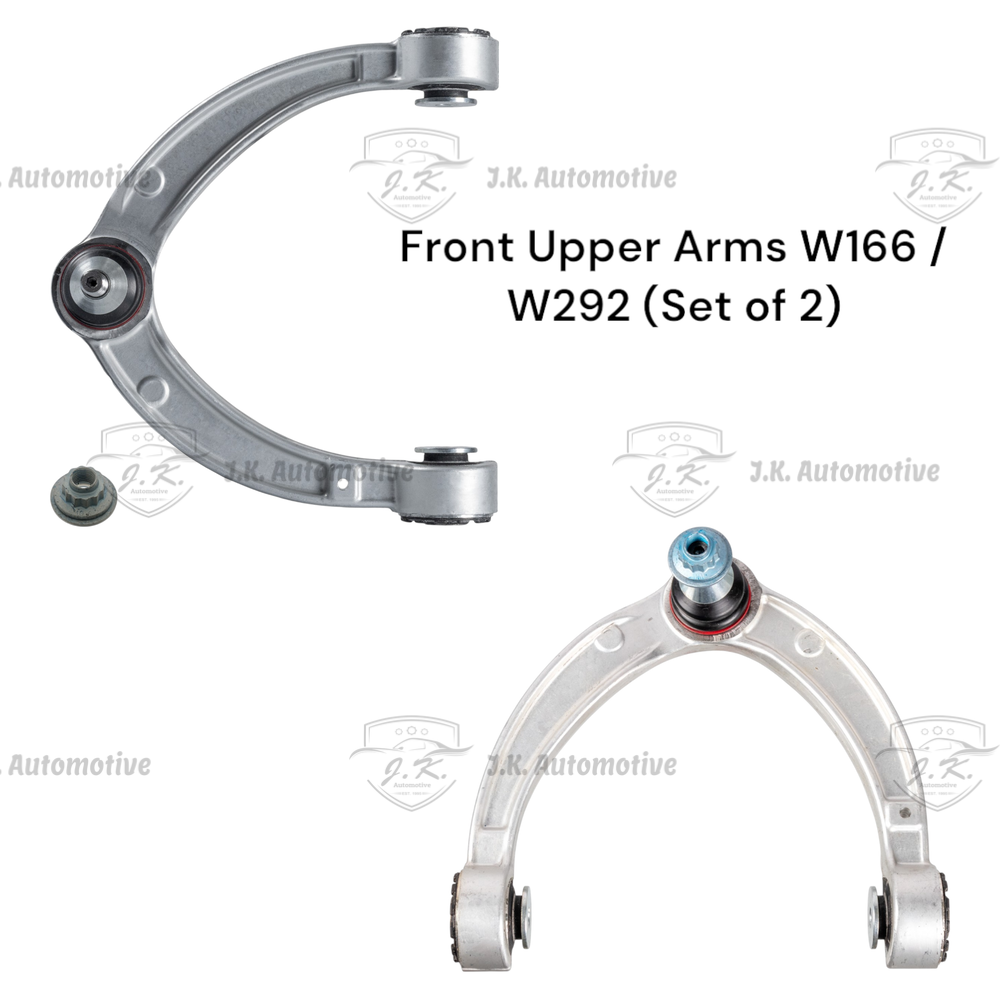
Mercedes-Benz M Class W166 Front Upper Arms are important components of the front suspension system that help guide the front wheels and maintain controlled suspension movement while the vehicle is being driven, and this product is supplied as a set of 2 for the stated Mercedes-Benz M Class W166 2011–2019 application with OEM references A1663301707 & A1663301807. These suspension components are commonly known as upper control arms, upper wishbone arms, front upper suspension arms or wishbone control arms. Their main function is to help maintain the correct relationship between the front wheel assemblies and the vehicle chassis while allowing the suspension to move through its required range. When the Mercedes-Benz M Class travels over normal roads, potholes, speed breakers, broken surfaces or highway joints, the front wheels continuously move up and down, and the upper control arms help guide this movement. The arms also experience changing forces during braking, acceleration and cornering. During braking, vehicle weight transfers towards the front axle and places additional load through the suspension system. During cornering, sideways forces from the tyres are transferred through the wheel assemblies and suspension components. The upper arms therefore work continuously with the lower control arms, ball joints, suspension bushes, shock absorbers, tie rod ends and other steering components. The bushes and related joints help allow controlled suspension movement while reducing unwanted movement between components. With increasing mileage and repeated road impacts, these parts can gradually become worn. Rubber bushes may become hard, cracked, deformed or loose, while related joints may develop excessive movement. When this happens, drivers may notice knocking or clunking noises from the front suspension, steering vibration, loose or vague steering, reduced road stability or uneven tyre wear. These symptoms can become more noticeable while travelling over rough roads or speed breakers. However, similar symptoms can also be caused by other suspension parts, so professional diagnosis is important. The lower control arms should be inspected for worn bushes, while ball joints and steering tie rod ends should be checked for excessive play. Shock absorbers should be examined for leakage or reduced damping, and wheel bearings should be checked when noise or vibration is present. Sway bar links, Sway links, Anti roll link rods and Stabiliser sway links should also be inspected when knocking or rattling occurs over uneven roads. Before ordering this upper control arm set, compare OEM A1663301707 & A1663301807 with the original suspension components and verify the vehicle VIN and exact suspension specification. Correct professional installation is recommended, followed by a wheel alignment check to help maintain proper suspension geometry, predictable steering and even tyre wear.
Are A1663301707 & A1663301807 suitable for Mercedes-Benz M Class W166 models from 2011–2019?
A1663301707 & A1663301807 are the OEM references supplied for this set of Mercedes-Benz M Class W166 Front Upper Arms for the stated 2011–2019 application, but exact compatibility should always be confirmed through the vehicle VIN, existing OEM references and suspension specification before ordering. These two OEM references correspond with the two sides of the front upper suspension and should be treated as position-specific components rather than identical interchangeable arms. Vehicle model and year provide an important starting point for identifying suspension parts, but they should not be the only information used when ordering. Mercedes-Benz M Class W166 vehicles can have differences related to production date, engine, drivetrain, suspension configuration and other equipment specifications. This is why comparing the OEM numbers with the existing components is particularly important. The front upper control arms form part of the suspension geometry that guides the wheel assemblies while the vehicle travels over different road surfaces. When the front wheels encounter a pothole, speed breaker or uneven surface, the suspension moves vertically and the upper wishbone arms help control the path of this movement. During braking, additional load is transferred towards the front axle, while cornering creates sideways forces through the suspension. These repeated movements mean that the upper control arms, bushes and related joints are continuously working throughout the life of the vehicle. With increasing mileage, the bushes can become cracked, hardened, deformed or loose. Related suspension joints can also develop unwanted movement. Possible symptoms can include knocking or clunking noises, steering vibration, loose handling, reduced stability and uneven tyre wear. However, these symptoms are not unique to the upper control arms. Lower control arms can develop worn bushes, ball joints can develop excessive movement and tie rod ends can affect steering precision. Shock absorbers can cause poor suspension control when worn, while wheel bearings can create vibration or noise. Sway bar links, Sway links, Anti roll link rods and Stabiliser sway links can also create knocking or rattling over smaller bumps. Tyres should also be checked for incorrect pressure, damage and uneven wear. If professional inspection confirms that the upper control arms require replacement, verify A1663301707 & A1663301807 against the existing components and VIN before purchasing. Each arm must be fitted to its correct suspension position. After professional installation, a wheel alignment check is recommended to confirm suspension geometry and help maintain stable steering, predictable handling and balanced tyre wear.
What is the difference between A1663301707 and A1663301807 in this Mercedes-Benz M Class W166 Front Upper Arms set?
The main difference between A1663301707 and A1663301807 is their installation position on the front suspension because these two OEM references correspond with opposite sides of the Mercedes-Benz M Class W166 front upper suspension and form a matching left-and-right pair rather than two identical interchangeable components. Both arms perform the same general function of helping guide the front wheel assemblies, but their design, orientation and mounting geometry correspond with their intended sides of the vehicle. This is why the two OEM numbers should be retained separately when checking fitment or ordering replacement components. Suspension arms can sometimes appear very similar when viewed separately, but even small differences in shape, mounting points, bush orientation or ball-joint positioning can determine whether a component fits the left or right side. The upper control arms work as part of a larger suspension system that includes the lower control arms, ball joints, suspension bushes, shock absorbers, steering tie rod ends and wheel assemblies. Every time the vehicle travels over a road irregularity, the front suspension moves and the upper wishbone arms help guide the wheel assemblies through this movement. During braking, increased load is transferred towards the front axle, while cornering creates sideways forces through the tyres and suspension. The upper arms therefore experience continuous movement and changing loads. Their bushes and related joints can gradually wear as mileage increases. One side may also deteriorate faster because of repeated pothole impacts or different road conditions, so both arms do not necessarily wear at exactly the same rate. Possible symptoms of wear include knocking or clunking noises, steering vibration, vague steering, poor road stability and uneven tyre wear. If one upper arm is diagnosed as worn, the corresponding arm on the other side should also be inspected carefully. The complete suspension should be checked because lower control arms, ball joints and tie rod ends can produce similar symptoms. Shock absorbers should be checked for leakage or reduced damping, while wheel bearings should be inspected for noise or excessive movement. Sway bar links, Sway links, Anti roll link rods and Stabiliser sway links should also be inspected when rattling or knocking occurs over small bumps. Before ordering this set, compare A1663301707 & A1663301807 with the original parts and verify the vehicle VIN. Correct left-and-right installation is essential. Professional fitting followed by a wheel alignment check is recommended after replacement.
What are the common symptoms of worn Mercedes-Benz M Class W166 Front Upper Arms?
Common symptoms of worn Mercedes-Benz M Class W166 Front Upper Arms can include knocking or clunking noises from the front suspension, steering vibration, loose or vague steering, reduced road stability, changes in handling, unusual movement during braking and uneven tyre wear, although these symptoms should always be professionally diagnosed because several other suspension and steering components can produce similar problems. The upper control arms corresponding with OEM A1663301707 & A1663301807 form part of the front suspension system and work continuously whenever the vehicle is moving. Even on relatively smooth roads, the suspension is constantly making small movements to respond to changes in the road surface. Potholes, speed breakers, broken roads and uneven surfaces create larger movements and additional loads through the suspension. Braking transfers vehicle weight towards the front axle, while cornering creates sideways forces through the tyres, wheel assemblies and suspension arms. Over time, repeated movement can cause the upper control arm bushes and related joints to wear. Rubber bushes can gradually become hard, cracked, deformed or loose, allowing more movement than intended. A knocking or clunking noise can be one of the first noticeable signs, particularly when travelling slowly over rough roads or speed breakers. Steering may begin to feel less precise if excessive movement develops around the wheel assembly. The driver may also experience vibration through the steering wheel or notice that the vehicle feels less settled during braking or cornering. Uneven tyre wear may develop when worn suspension components contribute to changes in wheel position or alignment. However, a knocking sound does not automatically mean that the upper control arms require replacement. Lower control arms can develop worn bushes, while ball joints and steering tie rod ends can develop excessive play. Shock absorbers can affect suspension control when worn or leaking, and wheel bearings can produce noise, vibration or unwanted wheel movement. Sway bar links, Sway links, Anti roll link rods and Stabiliser sway links are also important components to inspect when knocking or rattling occurs over smaller bumps. Tyre damage, incorrect tyre pressure, wheel imbalance and incorrect wheel alignment can create additional steering or tyre-wear symptoms. A professional workshop should therefore inspect the complete front suspension rather than replacing parts based only on a noise or vibration. If the upper control arms are confirmed as worn, compare OEM A1663301707 & A1663301807 with the existing components and verify the VIN before ordering. After correct professional installation, get the wheel alignment checked to help maintain proper suspension geometry, predictable steering and even tyre wear.
What are the benefits of replacing Mercedes-Benz M Class W166 Front Upper Arms as a set of 2?
Replacing Mercedes-Benz M Class W166 Front Upper Arms as a set of 2 can provide a more complete front suspension repair when both corresponding upper control arms have been professionally inspected and confirmed as worn, damaged or excessively loose, and this replacement pair corresponds with OEM references A1663301707 & A1663301807 for the stated Mercedes-Benz M Class W166 2011–2019 application. The front suspension uses corresponding upper arms on the two sides of the vehicle, and both components operate continuously whenever the suspension moves. Because both sides generally experience the same overall vehicle mileage and similar driving conditions, both should be inspected when one side shows significant wear, although they do not necessarily deteriorate at exactly the same rate. Potholes, road edges and other impacts can cause one side to experience more severe loads than the other. If inspection confirms that both arms have worn bushes, damaged joints or excessive movement, replacing the pair during the same repair can help bring both sides of the front suspension to a more consistent condition. The upper control arms help guide the wheel assemblies while working together with the lower control arms, ball joints, suspension bushes and shock absorbers. When the upper arm bushes or related joints become worn, the wheel assembly may develop more movement than intended. This can contribute to knocking or clunking noises, steering vibration, vague handling, poor road stability or uneven tyre wear. Replacing professionally diagnosed worn components can remove the excessive movement associated with those parts and support more controlled suspension operation. A set-of-2 replacement can also be practical when both sides require attention because the workshop can complete the corresponding left and right repairs during the same visit. However, suspension arms should not automatically be replaced simply because they are sold as a pair. Their actual condition should determine whether replacement is required. The workshop should also inspect the lower control arms, ball joints, steering tie rod ends, shock absorbers and wheel bearings. Sway bar links, Sway links, Anti roll link rods and Stabiliser sway links should be inspected if knocking or rattling is present. Tyres should be examined for abnormal wear because tyre-wear patterns can provide useful information about suspension and alignment condition. Before purchasing this set, compare A1663301707 & A1663301807 with the original suspension components and verify the vehicle VIN. Correct professional installation is important because the arms are position-specific. After replacement, a wheel alignment check should be completed to help maintain stable steering, proper suspension geometry and balanced tyre wear.
Can replacing worn Mercedes-Benz M Class W166 Front Upper Arms improve steering, handling and road stability?
Replacing worn Mercedes-Benz M Class W166 Front Upper Arms can help restore more controlled steering, handling and road behaviour when excessive movement in the original upper control arms, bushes or related joints has been professionally identified as the cause of the problem, because these components help guide the front wheels and maintain controlled suspension movement relative to the vehicle chassis. This set of 2 corresponds with OEM A1663301707 & A1663301807 for the stated Mercedes-Benz M Class W166 2011–2019 application. During normal driving, the upper wishbone arms continuously move as the front suspension responds to changes in the road surface. Small road imperfections create small suspension movements, while potholes, speed breakers and broken roads create larger movements and greater forces. During braking, additional vehicle weight moves towards the front axle, and during cornering, sideways forces act through the tyres and wheel assemblies. Correctly functioning upper control arms help guide these movements together with the lower control arms, ball joints, suspension bushes and shock absorbers. When the upper arm bushes or joints become worn, excessive movement may develop around the wheel assembly. The driver may then notice loose or vague steering, knocking noises, steering vibration, reduced stability or an unsettled feeling during braking and cornering. Uneven tyre wear may also appear if suspension wear contributes to changes in wheel position or alignment. If professional diagnosis confirms that worn upper arms are responsible for these symptoms, replacing the affected components can remove unwanted movement caused by those worn parts and help restore more predictable suspension behaviour. However, replacing the upper arms will not correct problems caused by other damaged components. Lower control arms should be inspected for worn bushes or excessive movement. Ball joints and steering tie rod ends should be checked for play. Shock absorbers should be examined for leakage, damage or reduced damping performance. Wheel bearings should be inspected if the vehicle has vibration, noise or unwanted wheel movement. Sway bar links, Sway links, Anti roll link rods and Stabiliser sway links should also be checked when knocking or rattling is present. Tyres should be inspected for correct pressure, damage and uneven wear, while wheel balancing may be necessary if vibration occurs at particular speeds. Before ordering the replacement upper arms, verify OEM A1663301707 & A1663301807 against the existing components and confirm the vehicle VIN. Correct installation of the position-specific arms is essential. After professional replacement, a wheel alignment check is recommended to help maintain correct suspension geometry, predictable steering, stable handling and balanced tyre wear.
Why are Mercedes-Benz M Class W166 Front Upper Arms important for the suspension and steering system?
Mercedes-Benz M Class W166 Front Upper Arms are important parts of the front suspension because they help guide the front wheel assemblies, maintain controlled suspension movement and support predictable steering while the vehicle is travelling over different road surfaces, and this set of 2 corresponds with OEM references A1663301707 & A1663301807 for the stated Mercedes-Benz M Class W166 2011–2019 application. These components are commonly known as upper control arms, upper wishbone arms or front upper suspension arms, and the supplied OEM references correspond with the left and right upper positions of the W166 front suspension. The upper control arms work continuously whenever the vehicle is moving because the wheels and suspension are constantly responding to changes in the road surface. Even on a smooth highway, the suspension makes small movements, while potholes, speed breakers, rough roads and broken surfaces create much larger movement through the wheel assembly. The upper wishbone arms help guide this movement while working with the lower control arms, ball joints, suspension bushes and shock absorbers. During braking, more vehicle weight is transferred towards the front axle, increasing the forces acting through the suspension. During cornering, sideways forces pass through the tyres, wheel assemblies and control arms. Acceleration and changes in road surface also place changing loads through the suspension system. Because of this continuous movement, the condition of the upper control arms, bushes and joints is important for maintaining controlled front wheel movement. When these components become worn, excessive movement may develop around the wheel assembly. A driver may begin to hear knocking or clunking noises from the front suspension, particularly while travelling over rough roads or speed breakers. Steering can begin to feel loose or vague, and vibration may sometimes be felt through the steering wheel. The vehicle may also feel less settled during braking or cornering, while abnormal tyre wear can develop when worn suspension components contribute to changes in wheel position or alignment. However, these symptoms should not automatically be blamed on the upper control arms because several other parts can create similar problems. Lower control arms should be checked for worn bushes or damage, while ball joints and steering tie rod ends should be inspected for excessive movement. Shock absorbers should be checked for leakage and reduced damping, and wheel bearings should be inspected if noise or vibration is present. Sway bar links, Sway links, Anti roll link rods and Stabiliser sway links should also be inspected when knocking or rattling occurs over uneven roads. Tyres should be checked for correct pressure, physical damage and unusual wear. If professional diagnosis confirms that the upper arms require replacement, OEM A1663301707 & A1663301807 should be compared with the existing components and the VIN should be verified before ordering. Correct professional installation is important, and a wheel alignment check is recommended after replacement to help maintain proper suspension geometry, stable steering and balanced tyre wear.
Should wheel alignment be done after replacing Mercedes-Benz M Class W166 Front Upper Arms?
Yes, a professional wheel alignment check is recommended after replacing Mercedes-Benz M Class W166 Front Upper Arms because the upper control arms form part of the front suspension geometry that guides the wheel assemblies, and replacing major suspension components can change or reveal conditions that affect wheel positioning. This set corresponds with OEM references A1663301707 & A1663301807, which are catalogued as the front upper left and front upper right control arms for the W166 platform. Wheel alignment is important because the wheels need to operate within the correct geometry for predictable steering behaviour and balanced tyre wear. When the original upper control arm bushes or joints become worn, excessive movement can develop around the front wheel assembly. This movement may contribute to changes in steering feel, road stability and tyre wear. After worn suspension arms are replaced, the excessive movement associated with those damaged components may be removed, but this does not automatically mean that the wheel alignment is within specification. A professional alignment measurement allows the workshop to check the relevant wheel angles and determine whether adjustment or further inspection is necessary. Incorrect alignment can contribute to uneven tyre wear, steering pull, an off-centre steering wheel or reduced steering precision. Some alignment problems may be small enough that the vehicle still appears to drive reasonably straight, making a proper measurement more useful than relying only on a road test. Before performing an alignment, the workshop should inspect the remaining suspension and steering components because worn parts can make accurate alignment difficult. Lower control arms should be checked for bush wear or excessive movement. Ball joints and steering tie rod ends should be examined for play. Shock absorbers should be checked for leakage, damage or reduced damping performance, while wheel bearings should be inspected when noise, vibration or unwanted wheel movement is present. Sway bar links, Sway links, Anti roll link rods and Stabiliser sway links should also be checked when knocking or rattling is heard from the front suspension. Tyres should be inspected for abnormal wear, damage and correct pressure, and wheel balancing should be considered when vibration occurs at specific speeds. Before installing the replacement arms, verify A1663301707 & A1663301807 against the original components and vehicle VIN. The two arms are position-specific, so correct left and right installation is essential. Once the components have been professionally fitted, a wheel alignment check is an important final step that can help maintain proper suspension geometry, predictable steering, stable road handling and even tyre wear.
What problems can worn Mercedes-Benz M Class W166 Front Upper Arms cause if they are not replaced?
Worn Mercedes-Benz M Class W166 Front Upper Arms can contribute to several suspension, steering and tyre-related problems when their bushes, ball joints or other areas develop excessive movement, and if professional inspection confirms significant wear, continuing to drive without addressing the worn components may allow the related symptoms to remain or become more noticeable. The upper arm pair associated with OEM A1663301707 & A1663301807 corresponds with the front upper left and right positions, and aftermarket technical catalogues describe these upper wishbone assemblies as including a ball joint. During normal driving, these arms are continuously working because they help guide the front wheel assemblies as the suspension moves. When the vehicle passes over a pothole, speed breaker, rough road or highway joint, the wheel moves relative to the chassis and the upper arm helps maintain the intended suspension path. During braking, vehicle weight moves forward and increases load through the front suspension. During cornering, sideways forces act through the tyres, wheel assemblies and control arms. Because these forces occur repeatedly throughout the life of the vehicle, bushes and joints can gradually deteriorate. One possible symptom is a knocking or clunking noise from the front suspension, particularly when driving over uneven roads. As wear develops, steering may begin to feel vague or less precise because unwanted movement is occurring around the wheel assembly. The driver may also experience steering vibration or feel that the vehicle is less settled during braking or cornering. Uneven tyre wear may appear when worn suspension components contribute to changes in wheel positioning or alignment. If significant play exists in a joint or bush, the affected component should be professionally assessed rather than ignored. However, it is equally important to avoid replacing upper arms without diagnosis because many other components can produce similar symptoms. Lower control arms can develop worn bushes, ball joints can develop play, and steering tie rod ends can affect steering response. Shock absorbers can reduce suspension control when worn, while wheel bearings can create noise, vibration or unwanted movement. Sway bar links, Sway links, Anti roll link rods and Stabiliser sway links can also produce knocking or rattling over smaller road imperfections. Tyre damage, incorrect tyre pressure, wheel imbalance and incorrect alignment can create additional symptoms. A complete front suspension inspection is therefore the best approach. If the upper arms are confirmed as worn, compare OEM A1663301707 & A1663301807 with the original components and verify the VIN before ordering. Replacing professionally diagnosed worn components can help remove excessive movement caused by those parts and restore more controlled suspension behaviour. Professional installation followed by a wheel alignment check is recommended to help maintain stable steering, correct suspension geometry and balanced tyre wear.
Why should worn Mercedes-Benz M Class W166 Front Upper Arms be replaced at the correct time?
Worn Mercedes-Benz M Class W166 Front Upper Arms should be replaced when professional inspection confirms excessive bush wear, ball-joint play, physical damage or unwanted suspension movement because the upper control arms help guide the front wheel assemblies and maintain controlled suspension operation, and this set of 2 corresponds with OEM A1663301707 & A1663301807 for the stated Mercedes-Benz M Class W166 2011–2019 application. The two OEM references are position-specific, with A1663301707 corresponding with the front upper left and A1663301807 with the front upper right. Suspension arms should not automatically be replaced simply because a vehicle reaches a certain age or mileage because actual wear depends on road conditions, vehicle use, driving style, suspension condition and previous repairs. However, once excessive movement or physical deterioration has been confirmed, replacing the worn component at the appropriate time is important for restoring the suspension condition. The upper arms work whenever the front suspension moves. Potholes, speed breakers and rough roads create repeated movement through the control arms and bushes. Braking increases the load on the front axle, while cornering creates lateral forces through the tyres and suspension. Over thousands of kilometres, the bushes and joints experience repeated movement and can gradually deteriorate. Rubber bushes may become hard, cracked, distorted or loose, while a joint may develop excessive play. The first noticeable symptom may be a small knocking or clunking sound over uneven roads. As wear increases, the driver may notice vague steering, vibration, reduced stability or unusual tyre wear. Replacing a professionally diagnosed worn upper arm can remove the excessive movement caused by that component, but the repair should not stop there if other suspension parts are also worn. The lower control arms should be inspected for bush deterioration or damage. Ball joints and steering tie rod ends should be checked for excessive movement. Shock absorbers should be inspected for leakage, physical damage and reduced damping. Wheel bearings should be checked if there is noise or vibration. Sway bar links, Sway links, Anti roll link rods and Stabiliser sway links should also be inspected if knocking or rattling is present. Tyres should be checked for abnormal wear, correct pressure and physical damage. If replacement is required, verify OEM A1663301707 & A1663301807 against the original components and vehicle VIN before ordering. Correct left and right installation is essential. Professional fitting should then be followed by a wheel alignment check to help maintain correct suspension geometry, predictable steering and even tyre wear.
Why is Stokes Germany a European-quality alternative to Lemförder, FEBI, Meyle and other established brands for Mercedes-Benz M Class W166?
Reviews
There are no reviews yet.