
Cart0items

Cart

Hello GuestFor better experience login
Login

Buy Toyota Parts, Volkswagen Parts, Honda Parts, Jaguar Parts, BMW Parts, Audi Parts, Skoda Parts, Volvo Parts, Mahindra Parts, Mini Parts and more - Buy Car Parts Online!

  • 00
  • 00
  • 00
  • 00
0
0
Cart0items

Cart

HomeShopFiltersAir FiltersAudi A4 B8 (8K2) 1.8 TFSI Air Filter – 8K0 133 843 E / 8R0 133 843 C / 8R0 133 843 K / 8K0 133 843 M / 8K0 133 843 A / 8R0 133 843 D (2008 – 2016)

Description

Buy Audi A4 B8 1.8 TFSI Air Filter Online | Premium OEM | JK Automotive

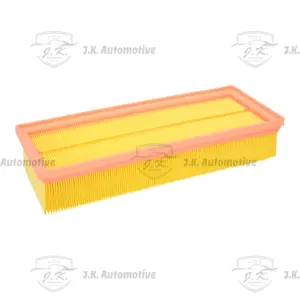
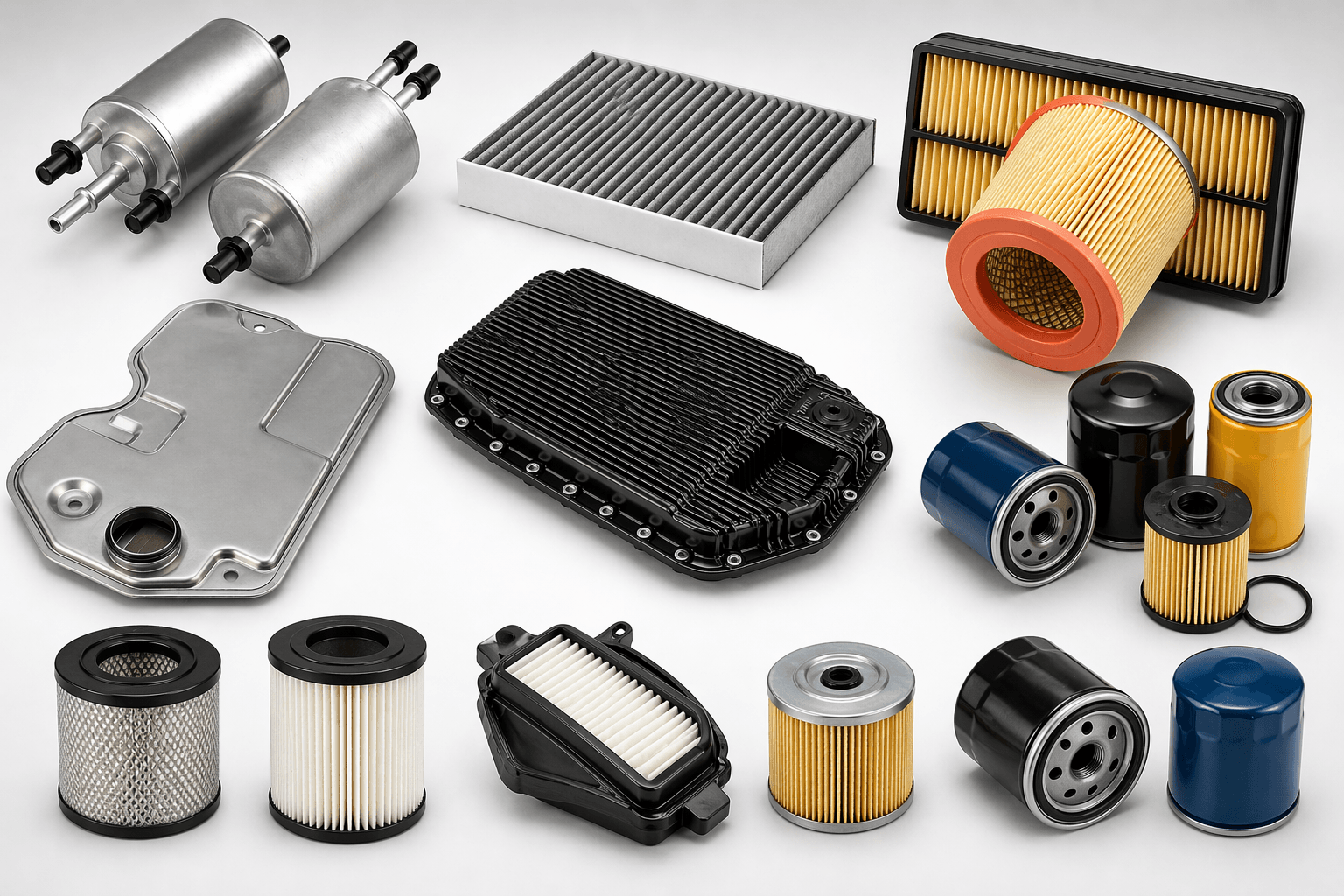
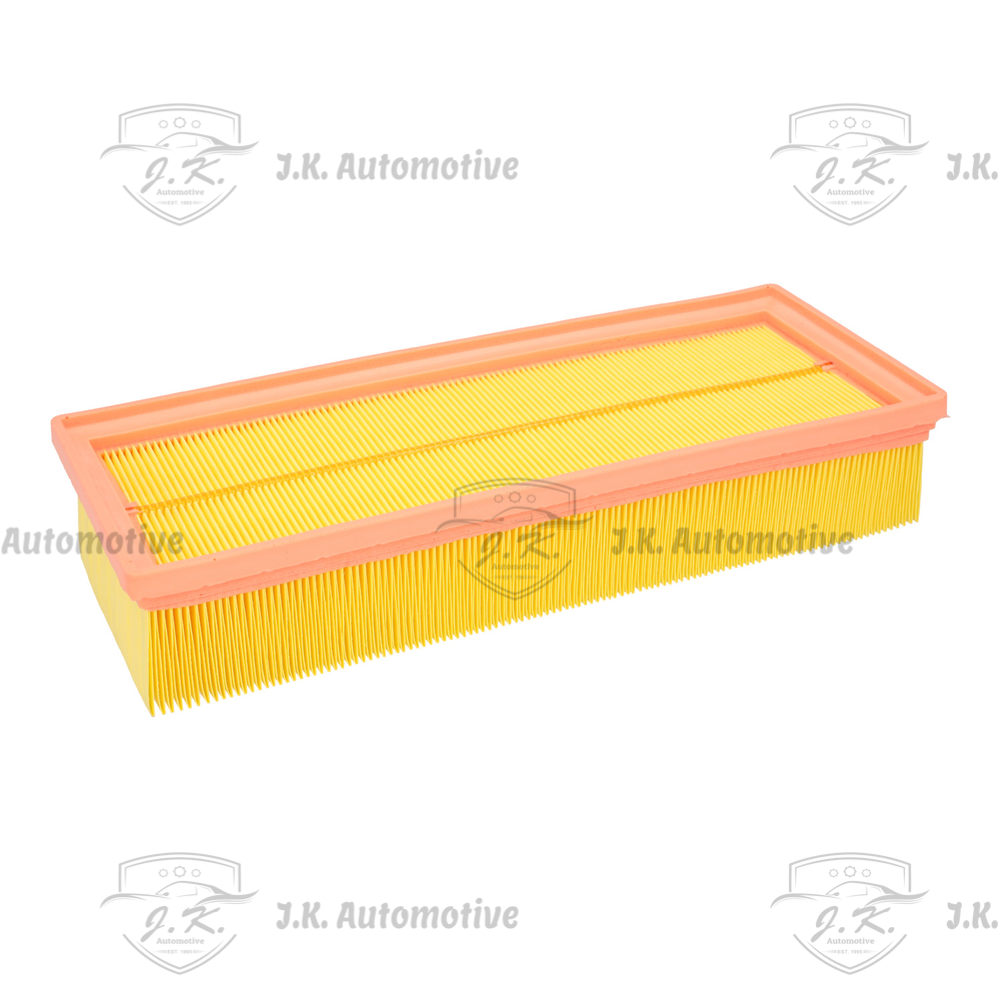
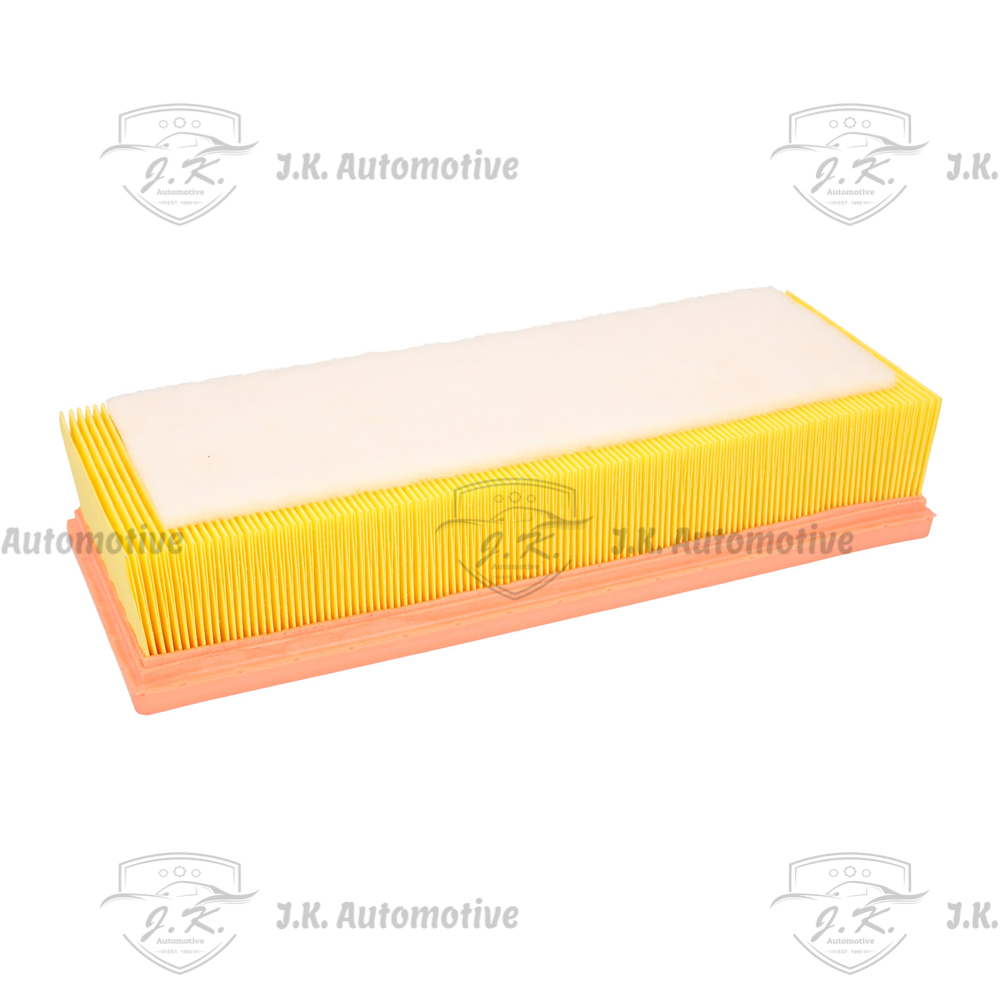
Audi A4 B8 1.8 TFSI Air Filter is a premium OEM replacement engine air filter engineered specifically for Audi A4 B8 (8K2) 1.8 TFSI models manufactured between 2008 and 2016. Compatible with OEM part numbers 8K0 133 843 E, 8R0 133 843 C, 8R0 133 843 K, 8K0 133 843 M, 8K0 133 843 A and 8R0 133 843 D, it supplies clean, filtered air to the engine, helping maintain efficient combustion, smooth acceleration, improved fuel economy and reliable turbocharged petrol engine performance.

Manufactured using premium OEM-grade filter media, this replacement air filter effectively captures dust, dirt, sand, pollen and other airborne contaminants before they enter the engine intake system. The advanced filtration media maintains unrestricted airflow while protecting the turbocharger, intake manifold, Mass Air Flow (MAF) sensor, throttle body and internal engine components from premature wear. Built to Audi factory specifications, it provides precise fitment, excellent sealing and long-lasting filtration performance.

A dirty or clogged air filter can reduce airflow, decrease engine efficiency, increase fuel consumption and affect throttle response. Replacing the air filter at the recommended service interval helps restore engine performance, improve combustion efficiency and extend the lifespan of important engine components while maintaining smooth and dependable driving.

During installation, inspect the air filter housing, intake ducts, intake hoses, air box seals and the Mass Air Flow (MAF) sensor for dust accumulation, cracks or air leaks. Ensure the air filter housing is properly secured after installation to prevent unfiltered air from entering the engine and maintain maximum filtration efficiency.

Choose Audi A4 B8 1.8 TFSI Air Filter from JK Automotive India for guaranteed fitment, premium filtration quality, reliable engine protection, expert compatibility assistance and fast pan-India delivery.
Compatible vehicles

ManufacturerModelYear-Range
AudiA4 B8 (8K)2008–2016

Reviews

There are no reviews yet.

Be the first to review “Audi A4 B8 (8K2) 1.8 TFSI Air Filter – 8K0 133 843 E / 8R0 133 843 C / 8R0 133 843 K / 8K0 133 843 M / 8K0 133 843 A / 8R0 133 843 D (2008 – 2016)”

Your email address will not be published. Required fields are marked *

Questions and Answers

How does the longitudinal intake geometry of the Audi A4 B8 (8K2) engine bay influence the aerodynamic airflow distribution across the surface of panel filter 8K0 133 843 E?

The Audi A4 B8 chassis utilizes a longitudinal engine layout, which inherently dictates the packaging and aerodynamic routing of the cold-air intake system. Unlike transverse engine layouts where the airbox is often mounted directly above the hot engine block, the longitudinal EA888 1.8 TFSI intake airbox is positioned on the passenger side of the engine bay, drawing fresh ambient air directly from a dedicated duct integrated into the front upper radiator support. This specific geometry creates a unique aerodynamic challenge because incoming high-velocity air must make a sharp turn as it enters the lower airbox housing before passing upward through the filter element. To manage this airflow turbulence, the OEM air filter under part number 8K0 133 843 E and its cross-references is engineered with a specific pleat depth and spacing designed to equalize differential pressure across the entire media surface. The deep synthetic pleat valleys act as individual flow straighteners, converting turbulent incoming air into a smooth, laminar flow column before it reaches the Mass Air Flow sensor mounted on the upper airbox lid. If an inferior aftermarket filter with incorrect pleat counts or shallow media depth is installed, the uneven pressure distribution causes localized areas of extreme suction on the filter face. These localized high-flow areas load up with dirt significantly faster than the rest of the filter, prematurely restricting airflow and causing erratic, turbulent air to strike the hot-wire sensor, leading to inaccurate fuel mixture calculations.

What is the direct relationship between air filter media degradation and the calibration accuracy of the hot-film Mass Air Flow sensor on the EA888 1.8 TFSI engine?

The EA888 1.8 TFSI engine relies on a highly sensitive hot-film Mass Air Flow sensor positioned immediately downstream of the air filter housing to continuously measure the exact mass and temperature of the incoming air charge. The Engine Control Unit uses this real-time data to calculate the precise mass of fuel required to achieve the optimal stoichiometric air-fuel ratio for combustion. Genuine OEM filter 8K0 133 843 E plays a critical dual role in protecting this sensor by stopping microscopic silica dust from striking the delicate heated film element and preventing the migration of synthetic filtration fibers. As low-quality or degraded aftermarket filters age under heavy turbocharger suction, their raw cellulose fibers or loose synthetic strands can detach and flow downstream, baking directly onto the superheated sensor film. This microscopic layer of burned dust and fiber acts as a thermal insulator on the sensor element. Consequently, the sensor takes longer to cool down as air rushes past it, causing the engine computer to interpret the artificially high temperature reading as a lower total air mass. This skewed calibration forces the system to inject less fuel, resulting in a dangerous lean-burn condition, elevated combustion chamber temperatures, severe loss of turbocharger boost response, and the eventual triggering of lean fuel trim diagnostic fault codes. While the high-quality stabilization beads on genuine part number 8K0 133 843 E are robust enough to withstand this increased physical suction without collapsing, the accelerated volume of air means the filter media will trap its maximum capacity of airborne silica dust, soot, and particulate matter much faster than on a stock vehicle. Drivers operating tuned 1.8 TFSI engines must cut the factory recommended filter replacement interval completely in half, inspecting and replacing the panel filter every 20,000 to 30,000 kilometers to prevent intake restriction from choking the turbocharger and negating the performance gains of the software calibration.

How does a severely restricted air filter under part number 8K0 133 843 E accelerate engine oil degradation and fuel dilution in the EA888 1.8 TFSI engine?

The EA888 1.8 TFSI engine operates with tight piston-to-cylinder wall clearances and relies on a balance of air intake mass and high-pressure fuel injection to achieve optimal combustion. When the primary air filter element becomes heavily restricted by road grime and silica dust, the engine management system encounters intake air starvation under boost. To maintain target power demands, the Engine Control Unit compensates by adjusting fuel injection strategies, which often leads to localized rich air-fuel mixture zones within the cylinders during rapid acceleration. Unburned raw fuel from these rich combustion cycles coats the cylinder walls, washing away the protective engine oil film intended to lubricate the compression rings. As this liquid fuel washes down the cylinder walls, it slips past the piston ring lands into the oil sump—a phenomenon known as fuel dilution. Excessive fuel dilution lowers the viscosity of the motor oil, reducing its film strength under high thermal loads and accelerating wear on camshaft lobes, timing chains, and crankshaft bearings. Furthermore, unburned fuel vapors drawn through the crankcase ventilation system create soot sludge that prematurely oxidizes the oil. Installing a fresh OEM air filter under part number 8K0 133 843 E ensures complete volumetric airflow, prevents rich-mixture fuel wash down, and preserves engine oil viscosity over the complete service interval.

What structural role do hot-melt adhesive beads play in preventing media pleat flutter and structural deformation under high boost conditions?

During wide-open throttle acceleration, the turbocharger on the Audi A4 B8 1.8 TFSI generates high differential pressure across the surface of the engine air filter. Air filter part number 8K0 133 843 E features specialized hot-melt adhesive beads applied continuously across the crests of the synthetic pleat pack to maintain structural integrity under intense intake suction. Without these stabilization beads, the high velocity of incoming air causes individual pleats to flex, flutter, and collapse against one another—a condition known as pleat bunching. When pleats bunch together, the effective surface area of the filter drops dramatically because air can no longer pass through the restricted folds. This sudden reduction in surface area causes localized high-pressure spikes that can tear inferior media paper, allowing unfiltered raw air and debris to bypass the filter element entirely. The hot-melt adhesive lines on genuine part number 8K0 133 843 E lock each pleat into a fixed position, maintaining uniform airflow channels and preventing structural media collapse even when the turbocharger is operating at maximum boost pressure. Over time, pitted valve seats lose their gas-tight seal, resulting in combustion gas blow-by, erratic cylinder compression readings, and rough idle misfires. Additionally, fine dust that migrates past the intake valves enters the engine oil stream, causing abrasive scoring on variable camshaft adjuster spools and hydraulic timing actuators. Maintaining a genuine OEM air filter under part number 8K0 133 843 E provides particle retention down to 3 microns, keeping abrasive dust out of the intake valves and protecting delicate valvetrain components from early mechanical wear.


Still have questions?

Ask a question