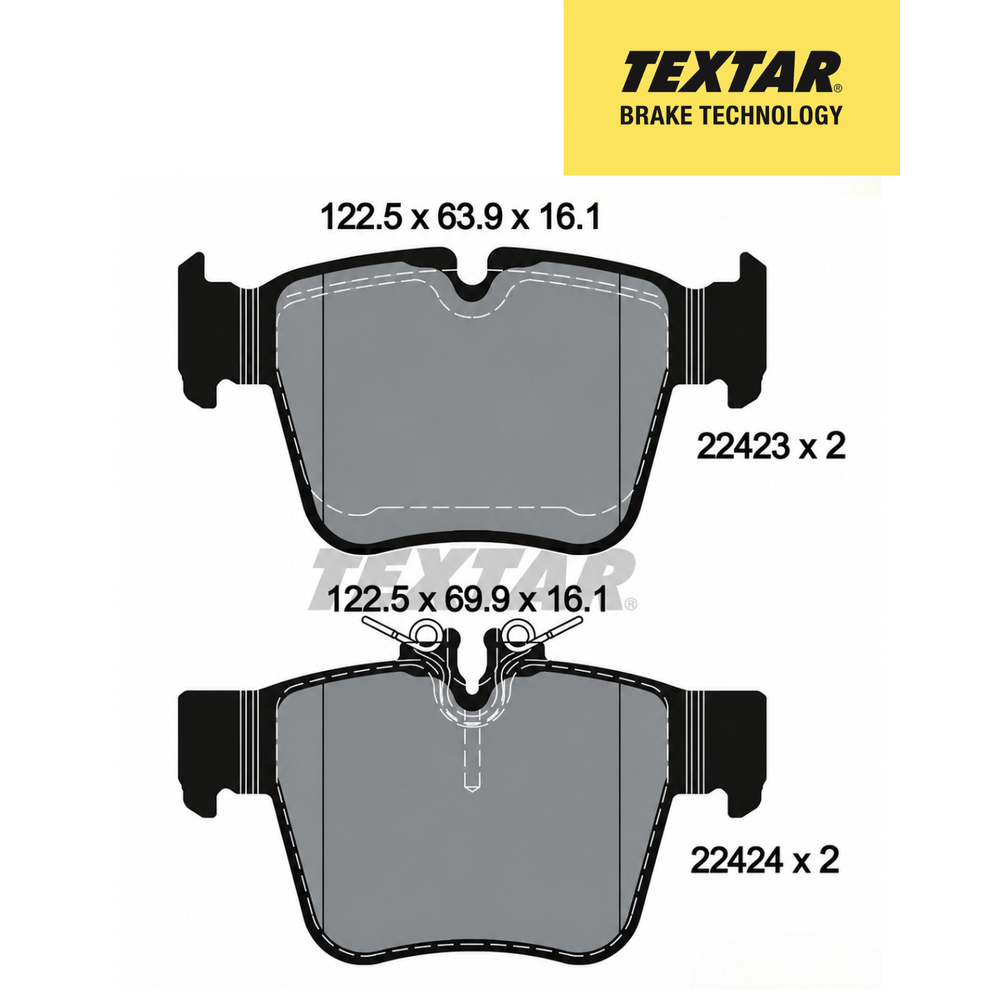
What are Textar 2242301 rear brake pads for Mercedes-Benz GLC X253?
Textar 2242301 rear brake pads are a premium-quality rear axle brake pad set designed for compatible Mercedes-Benz GLC X253 applications requiring the corresponding braking specification and OEM references A0004208703, A0004208300, A0004207803 or A0004205900. This product is supplied as a complete set of four rear brake pads, which is normally sufficient for replacing the brake pads on both sides of the rear axle when the vehicle uses the matching brake system. Textar is a specialist braking brand with a strong reputation in the European automotive market and is widely selected for premium German vehicles where braking consistency, pedal feel, friction stability and dependable stopping performance are important. The Mercedes-Benz GLC X253 is a premium SUV with substantial vehicle weight and performance capability, making the condition and quality of its braking components especially important. Rear brake pads work together with the rear brake discs, brake calipers and the vehicle’s electronic braking systems to slow and stabilize the vehicle during everyday driving and emergency braking situations. Using a correctly matched brake pad is important because dimensions, friction characteristics, backing-plate design and caliper compatibility must correspond with the vehicle’s braking system. Textar 2242301 is intended to provide controlled friction and predictable braking behavior when installed in the correct application. The pads are designed to withstand the repeated heating and cooling cycles that occur during urban driving, highway use and stop-and-go traffic. Good-quality brake pads can also contribute to more consistent pedal response and smoother braking when combined with serviceable brake discs and properly operating calipers. Customers replacing Mercedes-Benz GLC X253 rear brake pads should avoid selecting parts only by vehicle name because different brake configurations may exist depending on production specification, engine, equipment package or chassis configuration. The Textar number 2242301 and the associated OEM references should therefore be checked carefully before installation. Comparing the old brake pad shape, dimensions and OE number is useful, but VIN verification remains one of the safest methods for confirming fitment. The condition of the brake discs should also be inspected whenever rear brake pads are replaced because badly worn, scored, cracked or excessively lipped discs can adversely affect new-pad performance. Brake caliper guide pins, pistons, seals and related hardware should also be inspected during installation. A professional brake service should include proper cleaning of the pad contact areas and inspection for uneven wear that could indicate a sticking caliper or another braking-system issue. After installation, the new brake pads should be bedded in appropriately so the friction surfaces can establish even contact with the brake discs. Heavy braking immediately after replacement should generally be avoided unless required for safety. Correct bedding can support more consistent friction performance and reduce the possibility of uneven pad deposits. For Mercedes-Benz GLC X253 owners looking for a premium replacement rear brake pad set from a recognized German braking specialist, Textar 2242301 is a strong option when the part number and OEM references match the vehicle.
Which Mercedes-Benz vehicle is compatible with Textar 2242301 rear brake pads?
The Textar 2242301 rear brake pad set is intended for compatible Mercedes-Benz GLC X253 models that use the corresponding rear braking system and match OEM references A0004208703, A0004208300, A0004207803 or A0004205900. The X253 designation refers to the SUV body generation of the Mercedes-Benz GLC, and accurate model-code identification is important when purchasing replacement brake components because Mercedes-Benz may use more than one braking configuration within the same model family. Two vehicles that are both marketed as a Mercedes-Benz GLC X253 may use different brake pads depending on engine variant, drivetrain specification, equipment package, production date, brake package or market specification. For this reason, customers should not assume compatibility solely because the vehicle is called a GLC. The Textar 2242301 number should be compared with the required replacement part specification before the brake pads are ordered or installed. The OEM references listed with this product provide an additional cross-reference for identifying compatible applications. If the Mercedes-Benz electronic parts catalogue, existing brake component or VIN-based lookup identifies one of these OE references for the rear brake pads, Textar 2242301 can be evaluated as the corresponding replacement. VIN checking is especially useful with premium European vehicles because manufacturers regularly revise part numbers or supersede older OE references during the production life of a model. A newer OEM number may replace an older number even though the physical brake application remains related. This is why several OE references can sometimes appear against one Textar brake pad number. Customers should also establish that they are replacing the rear pads rather than the front pads because front and rear braking components differ considerably in size, load, friction requirements and caliper design. Textar 2242301 is specifically described here as a rear brake pad set. Visual comparison with the existing brake pads can provide an additional confirmation but should not replace reliable catalogue or VIN verification. The brake caliper type and brake disc specification can also help identify the correct application where multiple brake systems were supplied. Before installation, a technician should confirm that the new pad backing plates, friction surface dimensions and mounting points correspond correctly with the removed pads. Brake wear indicator provisions, where applicable, should also be checked. If the vehicle uses a separate electronic or mechanical brake pad wear sensor, its condition should be inspected and it should be replaced where required. Rear brakes on modern Mercedes-Benz vehicles also interact with systems such as ABS, electronic stability control and electronic parking brake functions where fitted, which makes correct installation particularly important. The parking brake service procedure may require diagnostic or service-mode steps depending on the exact vehicle configuration. Professional installation is therefore recommended. Owners purchasing Textar 2242301 for a Mercedes-Benz GLC X253 should provide the chassis number or VIN whenever there is uncertainty so the rear brake system can be checked before dispatch or installation. Correct fitment verification helps prevent unnecessary returns, workshop delays and the safety risk of installing an unsuitable braking component.
Which Mercedes-Benz OEM numbers cross-reference with Textar 2242301?
The Textar 2242301 rear brake pad set is associated with Mercedes-Benz OEM references A0004208703, A0004208300, A0004207803 and A0004205900 as listed for this product. These OEM references are important because OE part numbers provide one of the most reliable ways of cross-referencing replacement braking components for premium European vehicles. Mercedes-Benz may revise, replace or supersede component numbers over time because of engineering revisions, supplier changes or catalogue updates, which is one reason several OEM numbers may correspond with a single aftermarket brake pad reference. A vehicle may therefore originally show one Mercedes-Benz number while a later replacement catalogue lists another superseding reference. Textar consolidates compatible applications under its own aftermarket part numbering system, with 2242301 identifying this particular brake pad specification. When checking fitment, customers should compare the Mercedes-Benz OE reference required for their vehicle with the references listed for Textar 2242301. A match can be a strong indication of compatibility, although the VIN, brake configuration and production specification should still be verified where necessary. OEM numbers are particularly useful for Mercedes-Benz GLC X253 vehicles because simply searching for “GLC rear brake pads” may return several visually similar but technically different products. Incorrect brake pads may differ in width, height, thickness, backing-plate geometry, friction area or mounting arrangement. Even small dimensional differences can prevent correct installation or adversely affect braking operation. A correct OE cross-reference greatly reduces this risk. The reference A0004208703 should therefore be treated as one of the key identifiers for this Textar set, together with A0004208300, A0004207803 and A0004205900. Customers may occasionally encounter Mercedes-Benz part numbers written with spaces or without the initial letter formatting depending on the catalogue being used, so the numerical sequence should also be checked carefully. A workshop can use the vehicle identification number to confirm the exact Mercedes-Benz rear brake pad reference originally specified for the vehicle. If one of the listed OEM numbers is confirmed, the Textar number can then be checked against a professional catalogue before installation. The old brake pad itself may also carry a manufacturer or OE marking, although these markings can become difficult to read after extended use because of heat, corrosion and brake dust. Vehicle service invoices or previous workshop records may provide another reference, but they should not replace current fitment verification because an incorrect component may have been installed previously. It is also important not to confuse brake pad numbers with brake disc, caliper or wear-sensor numbers. Every braking component has a separate reference. When replacing the pads, the technician should inspect the rear brake discs for minimum thickness, surface scoring, heat damage and excessive edge lips. The overall brake system should be evaluated rather than assuming that new pads alone will correct every braking complaint. By using the Textar 2242301 number together with Mercedes-Benz OEM references A0004208703, A0004208300, A0004207803 and A0004205900, buyers can make a much more accurate purchasing decision for compatible Mercedes-Benz GLC X253 applications.
Why should Mercedes-Benz GLC X253 owners choose Textar rear brake pads?
Mercedes-Benz GLC X253 owners should consider Textar rear brake pads when they want a high-quality braking component from a specialist manufacturer with extensive experience in friction technology for European vehicles. Brake pads are safety-critical components, and their performance affects stopping distance, pedal consistency, braking refinement, noise characteristics and the way the vehicle behaves during repeated braking. The GLC X253 is a premium SUV, so replacement components should ideally be selected with the vehicle’s weight, braking system and performance characteristics in mind rather than simply choosing the lowest-priced option available. Textar focuses heavily on braking products and develops friction materials for a wide range of European passenger vehicles. The Textar 2242301 pad set is designed for compatible Mercedes-Benz GLC X253 rear brake systems corresponding with the applicable OEM references. A correctly specified friction compound is important because the rear brakes contribute not only to stopping the vehicle but also to overall brake balance and stability. Modern vehicles use electronic systems such as ABS and stability control that work through the hydraulic braking system, making predictable friction behavior across all four wheels important. Good-quality rear pads should provide consistent braking as temperatures change through repeated stops. They should also maintain structural stability through normal thermal cycles experienced in everyday traffic. Another reason to choose a recognized brake specialist is product consistency. Brake pads must be manufactured within controlled dimensional tolerances so they sit correctly in the caliper carrier and contact the brake disc properly. Pads that are too tight can bind, while excessive movement can contribute to noise or uneven wear. Proper backing plates, friction bonding and compound formulation are therefore important aspects of brake pad quality. Textar brake pads are commonly selected by workshops and premium-car owners seeking OE-oriented replacement quality. Nevertheless, the performance of even a premium pad depends greatly on the condition of the other braking components. Installing new Textar pads against severely worn or damaged discs can result in poor bedding, vibration, noise or reduced contact area. The rear brake discs should therefore be measured and inspected at every brake-pad replacement. Caliper pistons and guide mechanisms should move freely, and corrosion or debris should be removed from the relevant contact surfaces. Where brake pad hardware or wear sensors require replacement, suitable new components should be installed. Correct fitting procedures and manufacturer-specified torque values should be followed. After installation, the braking system should be checked carefully before the vehicle returns to normal road use. Initial brake pedal travel should be verified and the pads should be bedded against the discs in a controlled manner. Drivers should avoid unnecessary aggressive braking during the initial bedding period because excessive heat before even transfer layers have developed can contribute to uneven performance. For owners who value controlled braking, premium construction and a brand specializing in friction technology, Textar 2242301 offers a suitable replacement option for the relevant Mercedes-Benz GLC X253 rear brake application when confirmed by OEM number or VIN.
How many brake pads are included in the Textar 2242301 set?
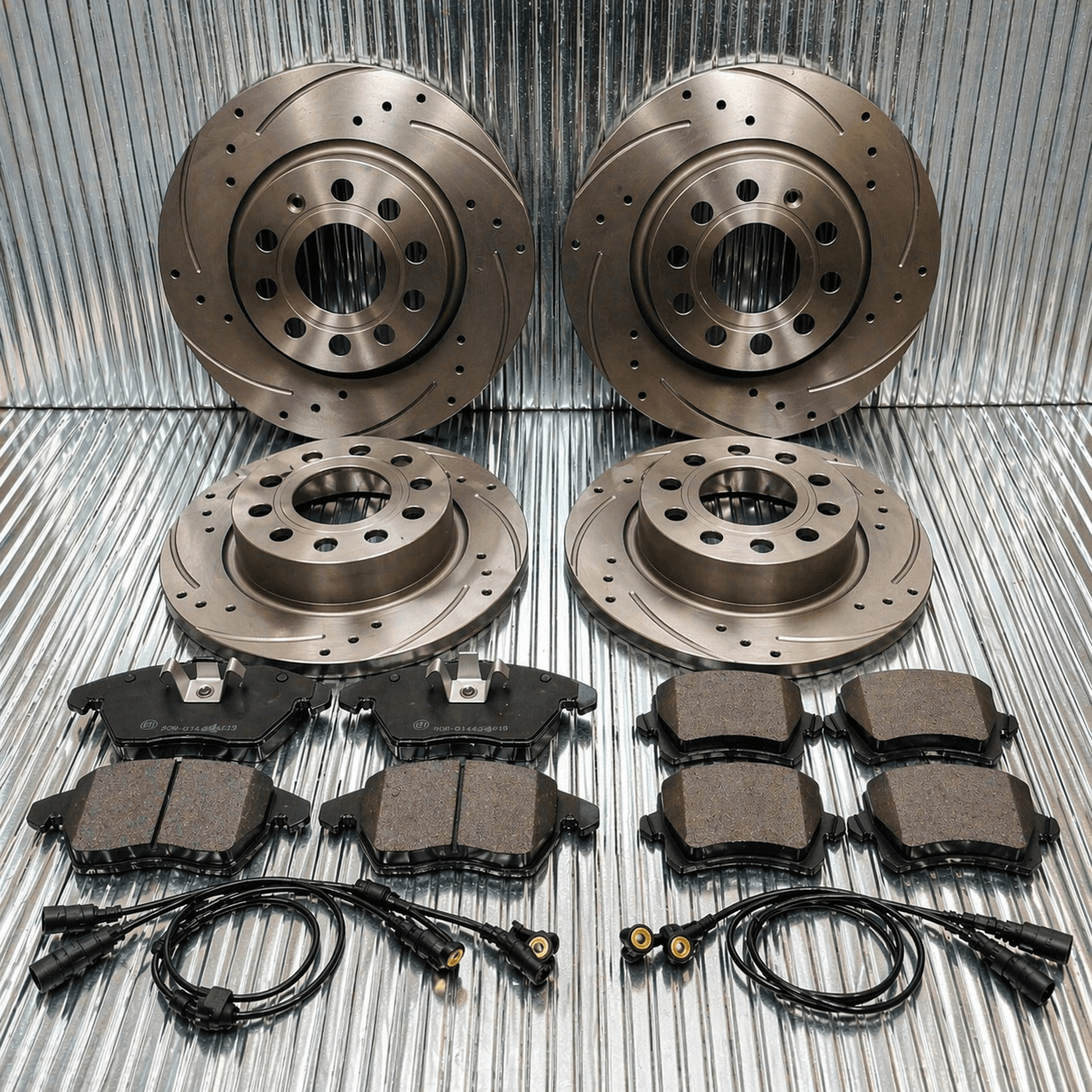
The Textar 2242301 package described here contains a set of four rear brake pads for the compatible Mercedes-Benz GLC X253 braking application. Four pads are normally required because a conventional disc-brake caliper uses an inner and an outer friction pad on each side of the brake disc, meaning two pads are used on the left rear wheel and two pads are used on the right rear wheel. Together, these four pads provide a complete rear-axle pad replacement where Textar 2242301 is the correct application. Replacing brake pads as a complete axle set is important because braking components on the left and right sides of the same axle should operate with comparable friction characteristics and remaining material thickness. Replacing only one or two pads could create uneven braking performance, especially if the remaining pads are already worn or have undergone different heat cycles. When a rear brake service is performed, all four existing pads should be removed and examined. Uneven wear patterns can provide useful diagnostic information about the condition of the calipers and related hardware. For example, one pad being considerably thinner than its opposite pad can indicate restricted caliper movement, a sticking piston or another mechanical problem. Simply installing new pads without correcting the underlying issue may result in rapid or uneven wear of the new set. The brake discs should also be inspected on both sides of the axle. Their thickness should be compared with the applicable minimum specification, and technicians should look for deep scoring, cracks, heat spots, corrosion or a large outer lip. Where the discs require replacement, they should generally be renewed in axle pairs so both sides provide comparable braking surfaces. New pads installed with new discs should also undergo a suitable bedding procedure. Buyers should understand that “set of 4” refers to four brake pads and does not automatically mean that brake discs, wear sensors, fitting hardware or other brake components are included unless those items are specifically mentioned in the product package. If the Mercedes-Benz GLC X253 uses a brake wear sensor for the relevant axle, the sensor should be inspected separately and replaced if worn, damaged or triggered. Some sensors are designed for one-time use once the wear circuit has been activated. Customers should therefore confirm the required sensor before beginning the repair. It is also important to verify the exact rear brake configuration because a different GLC X253 specification may require a different brake pad number even though the vehicle belongs to the same model family. Textar 2242301 should be matched using OEM references A0004208703, A0004208300, A0004207803 or A0004205900 together with appropriate vehicle identification information. Once compatibility is confirmed, the set of four pads provides the components required for a normal rear-axle brake pad replacement. Professional fitting is recommended because correct brake installation directly affects vehicle safety. After installation, the brake pedal, braking response and electronic parking brake operation where applicable should be checked before normal driving resumes.
When should the rear brake pads on a Mercedes-Benz GLC X253 be replaced?
Rear brake pads on a Mercedes-Benz GLC X253 should be replaced when their friction material approaches the manufacturer’s wear limit, when the vehicle displays a brake-pad wear warning, when inspection shows excessive or uneven wear, or when braking symptoms indicate that the pads or related components require attention. Brake-pad service life cannot be determined accurately from mileage alone because wear varies significantly according to driving conditions, traffic density, vehicle loading, driving style, brake-disc condition and the operation of the calipers. A vehicle used heavily in Mumbai-style stop-and-go traffic, for example, may experience substantially different brake wear from the same vehicle driven mainly on open highways. Frequent braking converts kinetic energy into heat, gradually wearing the friction material. Mercedes-Benz vehicles may use electronic pad wear monitoring on relevant brake applications, and a dashboard warning should not be ignored. Once a wear indicator is activated, the braking system should be inspected as soon as practical rather than continuing to drive until grinding noise develops. A grinding or metal-on-metal sound can indicate that the friction material has been worn away sufficiently for the backing plate or another metal component to contact the brake disc. Continuing to operate the vehicle in this condition can damage the discs and reduce braking safety. Other symptoms that justify inspection include squealing, vibration during braking, reduced braking response, unusual pedal feel, pulling to one side or excessive brake dust associated with abnormal pad wear. However, not every noise necessarily means the pads require replacement. Brake noise can also result from contaminated surfaces, worn discs, loose hardware, caliper issues or poor previous installation. A physical inspection is therefore important. During servicing, technicians should measure the remaining friction material and compare it with accepted service limits rather than relying only on visual estimation through the wheel. Both inner and outer pads must be checked because the inner pad can sometimes wear differently from the outer pad. The left and right sides of the axle should also be compared. Major differences in thickness may indicate a caliper or guide-pin problem requiring correction before new pads are fitted. If Textar 2242301 is confirmed for the vehicle through OEM references A0004208703, A0004208300, A0004207803 or A0004205900, the pads should be replaced as a complete set of four across the rear axle rather than individually. The rear brake discs should be inspected at the same time because new pads require a suitable braking surface for proper contact and bedding. If discs are below minimum thickness or have severe scoring, cracks, heat damage or excessive runout, disc replacement may also be necessary. The technician should inspect the brake-fluid condition according to the vehicle’s service requirements and check for fluid leaks or damaged brake hoses while the vehicle is being serviced. Any electronic parking brake service procedure required for the exact GLC X253 configuration must also be followed correctly. Once the new Textar pads are installed, the brake pedal should be operated as required to restore normal pad-to-disc contact before the vehicle is moved. A controlled bedding-in procedure should then be followed to establish stable friction between the new pads and brake discs. Regular brake inspection during routine Mercedes-Benz servicing is the best way to identify wear before it becomes a safety concern or causes additional component damage. For Indian buyers looking for Textar 2242301 rear brake pads for the Mercedes-Benz GLC X253, J.K. Automotive can be used as a source for the product with fitment verification based on the required Textar number, OEM references and vehicle details.
Are Textar 2242301 rear brake pads suitable for daily driving and highway use in Mercedes-Benz GLC X253?
Yes, Textar 2242301 rear brake pads are designed to provide dependable braking performance for compatible Mercedes-Benz GLC X253 models used in normal city driving, highway travel, long-distance touring and mixed driving conditions. A premium SUV such as the Mercedes-Benz GLC requires brake pads that can maintain stable friction characteristics across different speeds and temperatures because the braking system regularly experiences changing loads. During city driving, especially in heavy stop-and-go traffic, rear brake pads are subjected to repeated low- and medium-speed braking cycles that continuously generate heat. During highway driving, the brakes may remain relatively cool for extended periods and then suddenly need to provide strong braking from higher speeds. A good brake pad therefore needs to perform predictably across a broad operating range. Textar focuses on friction-material development and manufactures brake components for European vehicles, making the brand a common choice for owners seeking OE-oriented replacement brake parts. The Textar 2242301 rear brake pad set is intended for the correct Mercedes-Benz GLC X253 rear braking application when the required OEM cross-reference corresponds with A0004208703, A0004208300, A0004207803 or A0004205900. When correctly installed with serviceable brake discs and properly operating calipers, the pads are designed to deliver smooth and progressive braking rather than an unpredictable or excessively aggressive response. This characteristic is particularly useful for daily driving because smooth brake modulation contributes to passenger comfort as well as vehicle control. During highway use, consistent friction performance becomes important because repeated braking from higher speeds can increase brake temperatures quickly. The pad material must remain stable enough to provide dependable braking without excessive fade under normal road-use conditions. Drivers should still understand that no brake pad can compensate for worn brake discs, contaminated braking surfaces, seized calipers, degraded brake fluid or incorrect installation. Proper brake maintenance remains essential regardless of the brand selected. If the vehicle is frequently driven with heavy loads, used in mountainous areas or subjected to repeated aggressive braking, the braking system should be inspected more frequently because thermal and mechanical stress increases considerably under those conditions. The brake discs should be checked for thickness, surface condition and runout, while the caliper guide mechanisms and pistons should move freely. Brake fluid should also be maintained according to the recommended service interval because degraded fluid can adversely affect hydraulic braking performance under high temperature. Another factor influencing daily-driving comfort is brake noise. High-quality pads are engineered to control vibration and friction behavior more effectively than many low-cost alternatives, although brake squeal can still occur if discs are worn, components are contaminated or installation surfaces are not properly prepared. Correct bedding after installation is also essential because the new pad and disc surfaces need to establish a consistent contact pattern. During the initial bedding period, unnecessary emergency-style braking should be avoided unless required for safety. Progressive moderate braking allows the friction surfaces to stabilize more evenly. For Mercedes-Benz GLC X253 owners who want a rear brake pad suitable for routine commuting, family use, highway driving and normal premium-SUV operation, Textar 2242301 can be an appropriate option when verified for the vehicle’s exact rear brake system.
Do Textar rear brake pads provide low noise and smooth braking for the Mercedes-Benz GLC X253?
Textar rear brake pads are designed with braking refinement in mind, making them suitable for premium vehicles such as the Mercedes-Benz GLC X253 where owners generally expect braking to feel smooth, controlled and quiet during normal operation. Brake noise is one of the most common complaints after pad replacement, but noise does not depend solely on the friction material. Squeal, vibration and other sounds can arise from the interaction between the pads, discs, calipers, shims, guide surfaces and fitting hardware. A high-quality brake pad can help reduce unwanted vibration by using carefully developed friction materials and properly manufactured backing plates, but correct installation remains equally important. Textar 2242301 should therefore be installed only after confirming compatibility with the specific Mercedes-Benz GLC X253 rear brake system. The listed OEM references A0004208703, A0004208300, A0004207803 and A0004205900 can be used as part of the fitment verification process. Before new pads are fitted, the rear brake discs should be examined carefully for deep scoring, uneven wear, heat marks, corrosion and excessive lips. If the disc surface is badly damaged, fitting new pads alone may not eliminate noise or vibration. The pad contact points in the caliper carrier should also be cleaned so the pads can move freely without excessive resistance. If the pads bind in the carrier, they may remain in contact with the disc and create heat, noise or accelerated wear. Caliper guide pins should operate smoothly and damaged boots or seals should be replaced where required. The friction surfaces must remain free from grease, oil and other contaminants because contaminated pads or discs can create both noise and reduced braking effectiveness. A proper installation procedure helps the new Textar pads operate as intended. Bedding is another important factor. New pads initially contact the discs across surfaces that have not yet fully adapted to each other. Controlled braking during the bedding period helps develop more even contact and stable friction behavior. Repeated heavy braking immediately after fitting can generate localized heat and uneven deposits, which can later contribute to vibration or noise. Textar pads are designed to provide controlled friction characteristics, but even premium pads may produce occasional brake sounds under certain conditions such as very low-speed operation, cold mornings, high humidity, light surface corrosion after the vehicle has been parked or accumulated brake dust. Some minor brake noises are therefore not automatically evidence of defective pads. Owners should focus on whether the vehicle provides consistent braking, correct pedal feel and even pad wear. Persistent loud squealing, grinding or vibration should always be investigated rather than ignored. Grinding can indicate worn friction material or another mechanical problem, while pulsation during braking may point toward disc runout or uneven disc thickness. With the correct brake-system condition and professional fitting, Textar 2242301 rear brake pads can provide the smooth and refined braking characteristics expected from a Mercedes-Benz GLC X253. Their suitability for premium European applications makes them a strong choice for customers who value not just stopping power but also braking comfort and predictable pedal response.
Do Textar 2242301 brake pads create less brake dust on Mercedes-Benz GLC X253?
Textar 2242301 rear brake pads are engineered as premium friction components, but the amount of visible brake dust on a Mercedes-Benz GLC X253 can vary depending on multiple factors including the exact friction formulation, driving style, brake-disc condition, vehicle load, traffic conditions and how frequently the brakes are used. Brake dust is a normal by-product of the braking process because both the friction material and the brake disc experience microscopic wear every time the brakes are applied. When the brake pads clamp against the rotating disc, friction converts the vehicle’s kinetic energy into heat and a small amount of material is naturally released as wear particles. Premium brake pads are generally engineered to balance stopping performance, noise, wear rate, pedal feel and dust generation rather than optimizing only one characteristic. This balance is particularly important for vehicles such as the Mercedes-Benz GLC X253 because braking performance and stability must remain the primary priorities. A pad that produces extremely little dust but sacrifices consistent friction or heat stability would not necessarily be the best choice for a heavy premium SUV. Textar develops friction materials specifically for automotive braking systems, and its products are commonly used by owners looking for quality that is closer to the behavior expected from European OE-style braking components. Textar 2242301 should be selected primarily for its correct application, braking consistency and quality rather than purely as a low-dust cosmetic product. The condition of the brake discs also influences dust generation. Rough, heavily scored or corroded discs can increase abrasion and may cause faster pad wear, which can result in more brake dust. A sticking caliper can also keep one pad partially applied against the disc, generating excessive heat and unusually high dust accumulation on one wheel. If one rear wheel becomes significantly dirtier than the other, the braking system should therefore be inspected rather than assuming that the pad compound itself is responsible. Driving style has a major impact as well. Frequent aggressive braking, rapid acceleration followed by hard stops and heavy urban traffic generally increase both pad and disc wear. Smooth progressive braking usually reduces unnecessary frictional wear and can help extend brake component life. Vehicle weight and load also matter because additional mass requires the brakes to absorb more kinetic energy during deceleration. Owners who frequently carry heavy luggage or passengers may therefore experience different wear and dust levels compared with lightly loaded vehicles. Brake dust should also be cleaned from alloy wheels periodically because prolonged accumulation can become difficult to remove. Wheel-cleaning products should be selected carefully so they do not damage painted, polished or diamond-cut wheel finishes. During brake servicing, technicians should assess whether the amount of dust appears normal relative to pad wear. Excessive black dust accompanied by rapid pad consumption, overheating or uneven wear may indicate a mechanical issue. Textar 2242301 rear brake pads can provide a good balance of braking performance, refinement and normal wear characteristics for compatible Mercedes-Benz GLC X253 vehicles, but buyers should avoid selecting any brake pad solely on the promise of completely dust-free operation because friction brakes naturally generate wear particles. Correct fitment using OEM references A0004208703, A0004208300, A0004207803 or A0004205900, combined with healthy brake discs, properly functioning calipers and sensible driving habits, will provide the best overall braking result.
Should Textar 2242301 rear brake pads be installed with new brake discs on the Mercedes-Benz GLC X253?
Textar 2242301 rear brake pads do not automatically require new brake discs every time they are installed, but the existing Mercedes-Benz GLC X253 rear brake discs must be inspected carefully before deciding whether they can safely remain in service. Brake pads and discs operate as a matched friction pair, so the condition of the disc directly affects how well the new pads can bed in and perform. If the existing discs remain within the manufacturer’s minimum thickness specification and the braking surfaces are smooth, evenly worn and free from serious damage, it may be acceptable to replace only the pads. However, if the discs are below minimum thickness, deeply scored, cracked, severely corroded, distorted, heat damaged or unevenly worn, they should be replaced together with the new pads. Installing premium Textar pads against badly worn brake discs can compromise braking refinement and may result in poor contact between the friction surfaces. A heavily lipped disc can prevent the new pad surface from contacting evenly, while deep grooves can accelerate irregular pad wear. Disc thickness should therefore be measured with suitable equipment rather than estimated visually. Minimum-thickness information is normally marked on the disc or available in the vehicle service information. If a rear brake disc requires replacement, both rear discs should normally be replaced as a pair so the braking surfaces on the left and right sides remain comparable. Similarly, brake pads should be replaced as the complete four-pad axle set. Mixing heavily worn and new braking components across the same axle is not recommended. When new discs are installed, their protective coating or transport film should be handled according to the manufacturer’s instructions. The hub mounting surface must be clean because rust, debris or contamination between the hub and disc can introduce lateral runout. Excessive runout can later create brake judder or uneven disc thickness. Caliper carriers and pad contact points should also be cleaned carefully before the new Textar 2242301 pads are installed. Guide pins and pistons must move correctly, and damaged seals should be addressed before the braking system is reassembled. Where the Mercedes-Benz GLC X253 uses an electronic parking brake, the correct service procedure must be followed before pushing the rear caliper pistons back. Incorrect handling of an electronic parking brake mechanism can damage the caliper or actuator. After installation, the brake pedal should be operated until normal pressure and pad-to-disc contact are restored before moving the vehicle. A proper bedding procedure should then be followed. New pads and discs require an initial period of controlled braking to establish an even friction interface. Excessive heat during the first few kilometres can create uneven deposits and compromise the quality of the bedding process. If the old discs are retained, technicians should ensure that their surfaces are sufficiently even to allow the new pads to establish full contact. Textar 2242301 should therefore be viewed as one part of the complete rear braking system rather than an isolated component. Correct fitment should be verified using the vehicle VIN, the installed brake system and OEM references A0004208703, A0004208300, A0004207803 or A0004205900. When the rear discs are in good condition, pad-only replacement may be practical; when disc condition is poor or the discs have reached their service limit, replacing pads and discs together is the better technical approach.
Why are Textar brake pads considered a strong choice for Mercedes-Benz GLC X253 compared with Brembo brake pads?
Textar and Brembo are both well-known names in the braking industry, and both manufacture braking components used across premium European vehicles, but the most suitable choice for a Mercedes-Benz GLC X253 depends on the exact brake system, the product specification and what the owner values most from the replacement. Textar is particularly recognized as a friction-material specialist with a strong focus on brake pads, brake linings and related friction technologies, while Brembo is globally associated with complete high-performance braking systems including calipers, discs, pads and motorsport-oriented products. For a Mercedes-Benz GLC X253 owner looking specifically for an OE-style rear brake pad replacement, Textar 2242301 can be a particularly strong option because it is engineered around the requirements of the matching European vehicle application and can be cross-referenced with Mercedes-Benz OEM numbers A0004208703, A0004208300, A0004207803 and A0004205900. Textar’s strength lies in creating friction compounds intended to provide a balanced combination of braking response, temperature stability, wear characteristics, noise control and everyday drivability. This makes Textar particularly suitable for customers who want braking behavior that feels progressive and refined rather than unnecessarily aggressive. The Mercedes-Benz GLC X253 is a luxury SUV, and in normal road use the ideal brake pad needs to provide predictable braking at low speeds, smooth response in traffic, good stability on highways and consistent performance during repeated braking. Textar products are often chosen for this type of application because the brand’s focus is closely aligned with OE-style European braking requirements. Brembo also offers excellent braking products and has a very strong engineering reputation, particularly in high-performance braking systems. Many enthusiasts associate Brembo with sports cars, performance brake kits and motorsport technology, although the company also produces standard replacement brake pads for everyday vehicles. A correctly specified Brembo replacement pad can therefore also be a high-quality option. The comparison should not be simplified into saying that one brand is universally better than the other because individual product lines and vehicle applications differ. For a customer whose priority is an OE-oriented brake pad with controlled pedal feel, comfort and everyday refinement, Textar can be particularly attractive. For a driver specifically seeking a performance-oriented braking setup, Brembo’s broader performance ecosystem of discs, pads and calipers may have greater appeal depending on the vehicle configuration. It is also important to distinguish between replacing only a set of rear pads and upgrading the entire braking system. Installing a more performance-oriented pad alone does not automatically transform braking performance if the discs, tyres, brake fluid, calipers and front brake system remain unchanged. The Mercedes-Benz GLC braking system has been engineered as a complete system, so replacement pads should preserve appropriate brake balance and electronic stability-control behavior. Textar 2242301 is designed to work as a replacement component for compatible rear applications rather than as an aggressive motorsport upgrade. This characteristic is often preferable for owners using their GLC for daily commuting, family travel and highway driving. Brake noise is another consideration. Both Textar and Brembo invest heavily in controlling noise and vibration, but real-world brake noise is influenced by installation quality, disc condition, pad bedding, caliper movement and environmental conditions. A premium pad from either brand can still become noisy if installed on damaged discs or if the caliper hardware is not serviced correctly. Dust generation also varies between individual compounds rather than simply between brand names. Some drivers may experience more or less visible dust depending on their braking habits and specific pad formulation. Longevity likewise depends on driving style, vehicle weight, road conditions and disc condition. Textar therefore should not be selected merely because it is expected to last a certain fixed mileage; it should be chosen because it offers a professionally engineered friction solution matched to the intended application. Another advantage of using Textar 2242301 for the GLC X253 is the ability to identify the product through specific Mercedes-Benz OEM cross-references. Accurate cross-referencing is extremely important because Mercedes-Benz may use several brake configurations within the same vehicle generation. Purchasing a pad simply because it is advertised as suitable for “Mercedes GLC” is insufficient. The Textar number, OEM reference, VIN and brake dimensions should all be checked. Brembo products require the same level of fitment verification. From the perspective of a premium road vehicle owner, Textar can therefore be considered an excellent alternative to Brembo when the goal is to maintain smooth OE-style braking characteristics, controlled friction response and European-vehicle compatibility. Brembo remains an excellent brand and may be particularly attractive when the owner is looking toward a broader performance braking package. For a standard Mercedes-Benz GLC X253 rear brake pad replacement, however, Textar 2242301 is a highly relevant option when the required OEM reference matches because it combines specialized friction-material expertise with the type of braking refinement expected from a luxury Mercedes-Benz SUV. The final decision should always be based on exact fitment, authentic product sourcing and the condition of the entire braking system rather than brand name alone.

Reviews
There are no reviews yet.