What are Textar 2203102 front brake pads for Mercedes-Benz E-Class W213 Type 1?
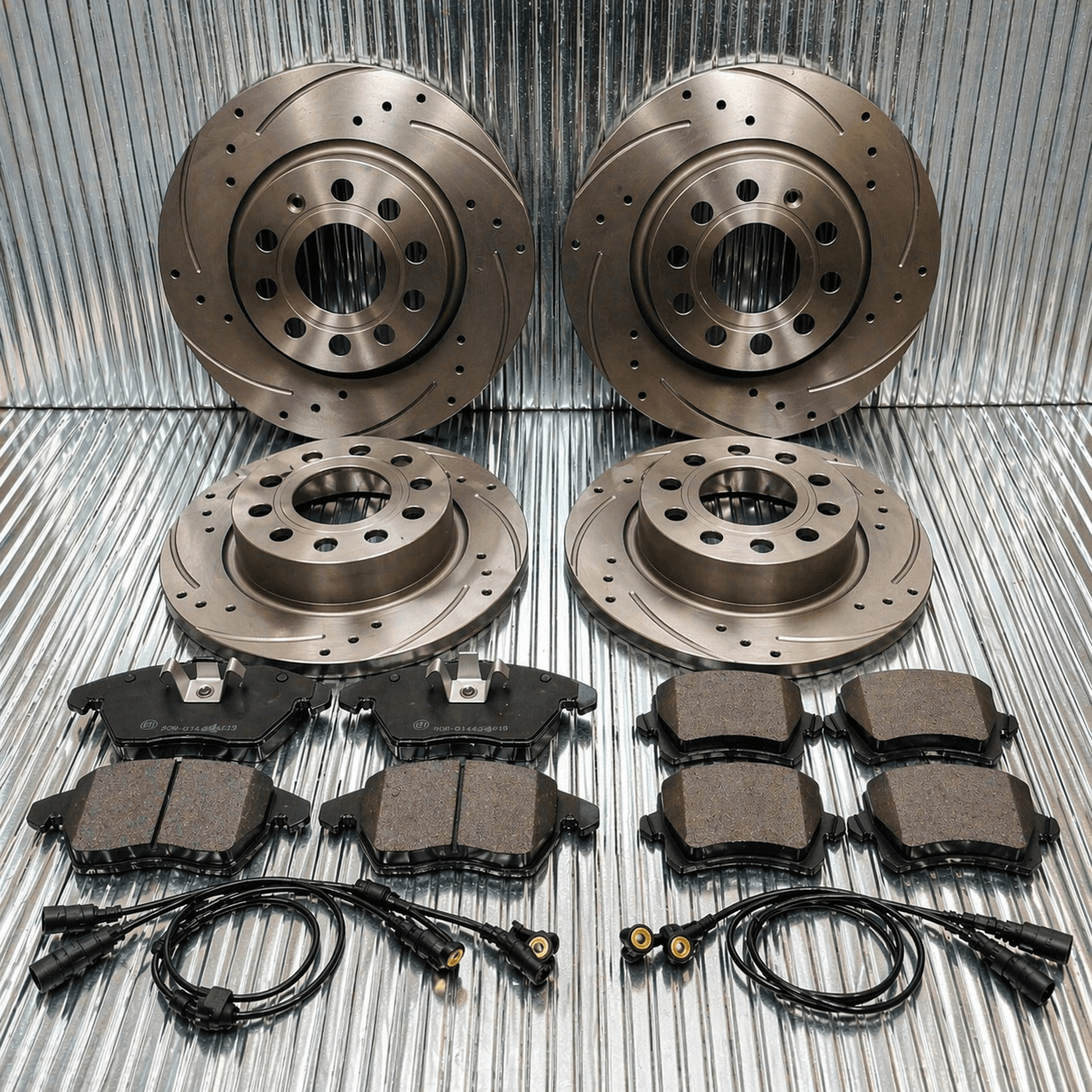
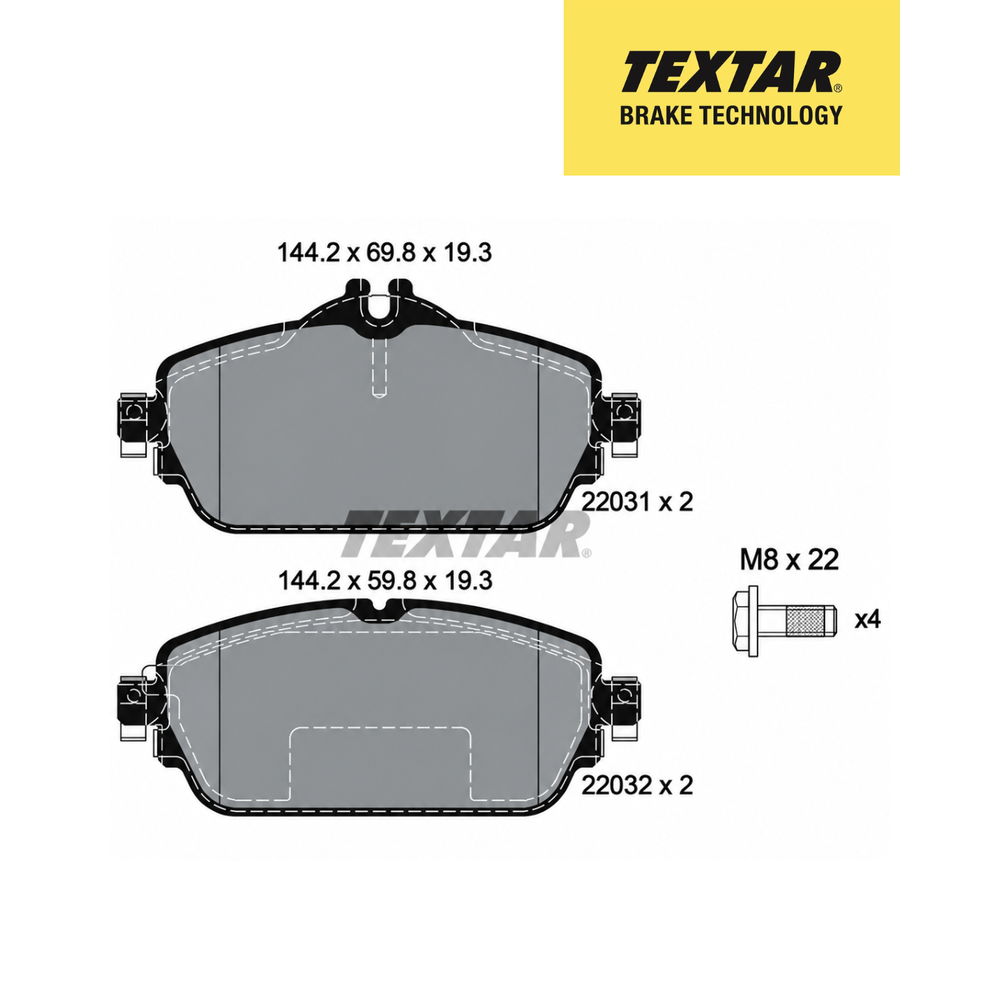
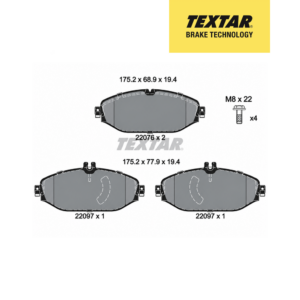
Textar 2203102 front brake pads are a premium set of four front brake pads designed for compatible Mercedes-Benz E-Class W213 Type 1 applications using the corresponding front braking system. This product is associated with Mercedes-Benz OEM reference A0084203620 and should be selected only where the vehicle’s brake specification matches this OE number. The Mercedes-Benz E-Class W213 is a premium executive vehicle that combines comfort, performance and advanced electronic braking systems, so correct front brake pad selection is important for maintaining dependable stopping performance and refined road behavior. During braking, a significant portion of vehicle weight transfers toward the front axle, which means the front brakes handle a major share of the total stopping force. Textar specializes in automotive friction technology and develops braking components for premium European vehicles where stable friction, smooth pedal response and braking refinement are important. Textar 2203102 is designed to provide controlled and progressive braking during normal city traffic, highway driving and long-distance use when correctly fitted with suitable brake discs and properly functioning calipers. The package contains four front brake pads, normally providing the components required for the left and right front wheels. Replacing all four pads together helps maintain balanced braking characteristics across the complete front axle. Mercedes-Benz E-Class W213 vehicles can use different front brake configurations depending on engine, production date, equipment level and braking package, so customers should not select pads only by model name. The vehicle VIN, existing brake pad number or Mercedes-Benz OEM reference should be checked before purchase. The front brake discs should also be inspected whenever the pads are replaced because excessive wear, deep grooves, cracks or heat damage can affect braking performance and pad bedding. Caliper pistons, guide mechanisms and pad contact areas should operate correctly, while brake wear sensors should be inspected where fitted. After installation, the brake pedal should be restored to normal operating pressure before the vehicle is moved, and the new pads should undergo an appropriate bedding-in procedure. For compatible Mercedes-Benz E-Class W213 Type 1 vehicles requiring OEM A0084203620, Textar 2203102 provides a premium front brake pad replacement designed around smooth braking, consistent friction and dependable everyday performance.
Which Mercedes-Benz vehicles are compatible with Textar 2203102 front brake pads?
Textar 2203102 front brake pads are intended for compatible Mercedes-Benz E-Class W213 Type 1 models fitted with the corresponding front braking system and matching Mercedes-Benz OE reference A0084203620. Although this product is listed for the E-Class W213 Type 1, exact fitment should always be verified because different brake configurations can exist within the same vehicle generation. Engine variant, production date, vehicle weight, optional equipment and brake package can all influence which front brake pad is required. Two W213 vehicles may therefore use different front pads even though they belong to the same E-Class generation. The safest method of confirming compatibility is to use the vehicle VIN and compare the required Mercedes-Benz OE number with A0084203620. The existing brake pad markings can also provide useful information where readable, although heat, corrosion and brake dust can make older markings difficult to identify accurately. A professional workshop can additionally compare the caliper design, pad dimensions and brake disc size, but visual similarity alone should not replace OE or VIN verification.Textar 2203102 compatibility should be confirmed using Mercedes-Benz OEM reference A0084203620 together with the VIN or exact brake specification. Once fitment is verified, the four-pad set provides the normal components required for a complete front axle brake pad replacement. Textar 2203102 is specifically intended for the front axle and should not be confused with the rear brake pad specification used on the same vehicle. Front brake pads generally experience higher braking loads because vehicle weight transfers forward during deceleration. Correct friction characteristics, dimensions and backing-plate geometry are therefore important for maintaining braking balance and predictable stopping response. Mercedes-Benz may also revise or supersede part numbers during a vehicle’s service life, which means current parts data should always be checked before installation. Once OEM A0084203620 is confirmed for the exact vehicle, Textar 2203102 can be evaluated as the corresponding premium replacement. Accurate fitment verification helps prevent incorrect orders, workshop delays and the risk of installing an unsuitable braking component.After installation, the brake pedal should be restored to normal operating pressure before the vehicle is moved, and the new pads should undergo an appropriate bedding-in procedure.
Which Mercedes-Benz OEM number cross-references with Textar 2203102?
Textar 2203102 front brake pads are associated with Mercedes-Benz OEM reference A0084203620 for compatible E-Class W213 Type 1 applications. This OEM number provides one of the most useful ways of confirming the correct replacement brake pad because Mercedes-Benz can use several front braking configurations within the W213 range. Selecting brake pads only because the vehicle is described as an E-Class W213 is therefore not sufficiently precise. Textar uses the part number 2203102 to identify the corresponding front brake pad specification for vehicles requiring the matching OE reference. If a VIN-based Mercedes-Benz parts lookup identifies A0084203620 as the required front brake pad number, Textar 2203102 can then be checked as the appropriate replacement. Customers may also find the OE reference on previous workshop invoices, service documentation or the old pad itself, although VIN confirmation remains preferable because previously installed parts may not always have been correct. Buyers should also avoid confusing the brake pad number with references used for brake discs, calipers or wear sensors because each braking component has its own separate part number. A brake pad that appears visually similar can still differ in dimensions, thickness or mounting geometry and may therefore not fit correctly. During replacement, technicians should inspect the front brake discs for minimum thickness, deep scoring, cracks, heat damage and uneven wear. Caliper pistons and guide mechanisms should also be checked because restricted movement can cause one pad to wear much faster than the others. If uneven pad wear is found, the underlying problem should be corrected before the new Textar pads are installed. Brake wear sensors should also be inspected and replaced where necessary. Using Textar 2203102 together with Mercedes-Benz OEM A0084203620 provides a reliable basis for identifying the correct premium front brake pad application for compatible Mercedes-Benz E-Class W213 Type 1 vehicles. Textar 2203102 compatibility should be confirmed using Mercedes-Benz OEM reference A0084203620 together with the VIN or exact brake specification. Once fitment is verified, the four-pad set provides the normal components required for a complete front axle brake pad replacement.
Why should Mercedes-Benz E-Class W213 owners choose Textar front brake pads?
Mercedes-Benz E-Class W213 owners should consider Textar front brake pads when they want a premium braking component designed around European vehicle requirements and refined road use. The E-Class W213 is engineered to combine comfort, stability and responsive performance, so replacement brake components should ideally preserve that balance. Textar specializes in automotive friction technology and produces brake pads for a wide range of premium European vehicles. Textar 2203102 is designed to provide a balanced combination of braking performance, friction stability, wear characteristics and smooth pedal response for compatible Mercedes-Benz E-Class W213 Type 1 applications. Front brakes handle a substantial proportion of the total stopping load, particularly during stronger deceleration when vehicle weight shifts forward. This means the quality of the front pads directly influences braking feel, consistency and overall stopping performance. A suitable replacement pad should provide progressive friction rather than an unnecessarily harsh initial response. Textar products are well suited to owners looking for OE-oriented braking behavior and refined everyday operation. During city driving, the front brake pads experience repeated heating and cooling because of frequent stop-and-go use, while highway driving can involve stronger braking from higher speeds. A premium brake pad therefore needs to remain predictable across changing temperatures and operating conditions. Textar’s focus on friction development makes the brand a strong option for this type of application. Braking comfort is also important in the E-Class because excessive squealing, vibration or harsh engagement can reduce the premium driving experience. However, final brake behavior depends on the complete system and not only the pad itself. Worn brake discs, restricted calipers, contaminated surfaces or poor installation can create noise or uneven wear even with premium pads. The front discs should therefore be inspected carefully whenever Textar 2203102 is installed. Pad contact surfaces and caliper guide mechanisms should be cleaned and checked, while wear sensors should be replaced where necessary. Proper bedding after installation helps establish even friction between the new pads and discs. Compatibility should be confirmed using Mercedes-Benz OEM A0084203620 and preferably the vehicle VIN. When correctly matched and professionally installed, Textar 2203102 offers a strong combination of premium friction engineering, braking refinement and dependable performance for compatible Mercedes-Benz E-Class W213 Type 1 models.
Are Textar 2203102 front brake pads suitable for daily driving and highway use in Mercedes-Benz E-Class W213 Type 1?
Yes, Textar 2203102 front brake pads are well suited for compatible Mercedes-Benz E-Class W213 Type 1 models used for everyday city driving, regular highway travel and long-distance touring because they are designed to deliver a balanced combination of braking performance, comfort, friction stability and predictable pedal response under normal road-use conditions. The Mercedes-Benz E-Class W213 is a premium executive vehicle that combines substantial vehicle weight, refined road manners and strong performance, which means the front braking system must operate consistently across a wide variety of speeds and driving environments. During city driving, the brake pads are subjected to frequent stop-and-go operation, repeated low- and medium-speed braking and continuous heating and cooling cycles that can place considerable stress on the friction material. During highway driving, the braking system may remain relatively cool for extended periods and then suddenly be required to slow the vehicle from much higher speeds, generating significantly more heat during each braking event. A suitable front brake pad therefore needs to provide dependable friction when cold, maintain consistent braking response as temperatures rise and continue to feel progressive rather than unpredictable during repeated use. Textar specializes in automotive friction technology and develops braking products for premium European vehicles where stopping performance must be combined with driving comfort and refinement. Textar 2203102 is designed for compatible Mercedes-Benz E-Class W213 Type 1 applications corresponding with OEM A0084203620 and provides an OE-oriented replacement option for customers who want braking behavior that remains close to the characteristics expected from the original vehicle. The front brakes carry a major proportion of the braking load because vehicle weight transfers toward the front axle during deceleration, so front pad quality can have a direct influence on pedal feel, stopping consistency and overall confidence during braking. Textar 2203102 is designed to provide progressive braking rather than an unnecessarily aggressive initial bite, which can be particularly beneficial in daily traffic where smooth modulation contributes to passenger comfort and vehicle control. During highway use, stable friction behavior becomes increasingly important because braking from higher speeds requires the front pads and discs to absorb considerably more kinetic energy. The condition of the brake discs also plays an important role in overall performance, so they should be inspected for minimum thickness, deep scoring, heat damage, excessive lips and uneven wear whenever the pads are replaced. Caliper pistons and guide mechanisms should move freely because a sticking caliper can cause one pad to remain in contact with the disc, generating excess heat and premature wear. Brake wear sensors should also be inspected where fitted and replaced if activated or damaged. Brake fluid condition should be maintained according to Mercedes-Benz service requirements because deteriorated fluid can affect hydraulic performance at elevated temperatures. The new pads should also be bedded correctly after installation so that the friction surfaces establish even contact with the brake discs. Excessively aggressive braking immediately after replacement should generally be avoided unless required for safety because excessive early heat can contribute to uneven pad deposits and compromised refinement. Customers should verify the vehicle VIN and Mercedes-Benz OEM A0084203620 before installation because different W213 variants can use different front brake configurations. When correctly matched, professionally installed and combined with healthy discs and calipers, Textar 2203102 front brake pads provide a strong combination of smooth daily drivability, highway braking confidence, predictable pedal response and premium European braking refinement for the Mercedes-Benz E-Class W213 Type 1.
Do Textar 2203102 front brake pads provide smooth and low-noise braking for Mercedes-Benz E-Class W213 Type 1?
Textar 2203102 front brake pads are designed to provide smooth, progressive and refined braking behavior for compatible Mercedes-Benz E-Class W213 Type 1 applications, making them particularly suitable for owners who expect their vehicle to maintain the premium braking comfort associated with the E-Class. Brake noise, pedal smoothness and vibration control are important considerations in an executive vehicle because even minor squealing or harsh engagement can negatively affect the overall driving experience. Textar focuses heavily on automotive friction technology and develops brake pads with the aim of balancing stopping performance, friction stability, wear characteristics, vibration behavior and acoustic comfort rather than optimizing only one characteristic. When Textar 2203102 is installed on the correct Mercedes-Benz E-Class W213 Type 1 application corresponding with OEM A0084203620, the pads are designed to deliver a controlled and progressive response during normal braking. However, brake noise depends on the complete braking system and not solely on the pad compound itself. The condition of the brake discs, caliper carriers, guide mechanisms, shims, pad contact surfaces and related hardware can all influence whether the brakes operate quietly. Even a high-quality premium brake pad can develop squeal or vibration if it is installed against severely scored, uneven or heat-damaged discs. Before fitting Textar 2203102, the front brake discs should therefore be inspected for deep grooves, corrosion, excessive lips, cracks, heat spots and minimum-thickness limits. If the disc surface is badly damaged, replacing the pads alone may not restore smooth braking. The pad contact surfaces in the caliper carrier should also be cleaned thoroughly so that the pads can move correctly without binding. A brake pad that becomes tight in the carrier can remain partially applied to the disc and create excessive heat, rapid wear and unwanted noise. Caliper guide pins and pistons should operate smoothly, while damaged seals or boots should be repaired where necessary. The friction surfaces of the pads and discs must remain free from grease, oil and other contamination because contaminated braking surfaces can reduce braking effectiveness and create abnormal noise. Bedding-in is another major factor influencing smooth operation. New pads initially need to establish an even contact pattern with the existing brake-disc surface, and controlled braking during the early period helps the friction materials settle correctly. Repeated hard braking immediately after installation can create excessive localized heat and uneven deposits on the disc surface, potentially contributing to judder or vibration. Some minor brake noise can still occur under certain environmental conditions such as high humidity, cold starts, light surface rust after parking or very low-speed manoeuvring, and this does not necessarily indicate a defective product. Persistent grinding, strong pulsation or continuous loud squealing should nevertheless be investigated because these symptoms can indicate worn discs, uneven pad wear, caliper issues or other mechanical problems. A brake wear sensor should also be checked and replaced where necessary because a damaged or incorrectly installed sensor can occasionally contribute to noise around the braking assembly. Correct wheel bolt torque and proper wheel-hub condition also contribute to overall braking smoothness. Textar 2203102 should be selected only after confirming Mercedes-Benz OEM A0084203620 or the correct VIN-based application because incorrect pad dimensions can prevent proper operation. When installed professionally with serviceable brake discs, properly functioning calipers and correct bedding procedures, Textar 2203102 front brake pads are well suited to providing the smooth, progressive and refined braking characteristics expected from a Mercedes-Benz E-Class W213 Type 1.
Do Textar 2203102 front brake pads produce less brake dust on Mercedes-Benz E-Class W213 Type 1?
Textar 2203102 front brake pads are premium friction components designed to balance braking performance, comfort, wear characteristics and friction stability, but brake dust remains a normal consequence of the braking process and should not be used as the only measure of brake pad quality. Every time the driver applies the brakes, the pad friction material presses against the rotating brake disc and converts the vehicle’s kinetic energy into heat. This process naturally produces microscopic wear particles from both the brake pads and the discs, and these particles accumulate on the wheel surfaces as visible brake dust. The amount of dust generated can vary considerably depending on driving style, traffic conditions, vehicle weight, disc condition, braking frequency and the specific operating environment. The Mercedes-Benz E-Class W213 is a premium executive vehicle with substantial mass, and its front brakes handle a large proportion of the vehicle’s total stopping workload. As a result, the front pads can naturally generate more wear particles than lightly loaded braking systems, particularly when the vehicle is frequently driven in dense urban traffic. Textar 2203102 is designed with braking performance and predictable road behavior as primary considerations rather than simply being engineered to produce the minimum possible visible dust. This is important because a brake pad that prioritizes cosmetic wheel cleanliness over friction stability, pedal response or stopping consistency would not necessarily be the best choice for a premium Mercedes-Benz application. Driving habits have a significant influence on dust levels. Frequent aggressive braking, rapid acceleration followed by heavy braking and repeated high-energy stops can increase both pad and disc wear. Smooth and progressive braking generally reduces unnecessary frictional wear and may therefore help limit dust accumulation. Brake disc condition is equally important. Rough, deeply scored, heavily corroded or uneven discs can act more abrasively against the pad material and cause faster wear. A sticking caliper can also keep one brake pad partially applied against the disc even when the brake pedal is released, producing excessive heat and unusually heavy dust on one wheel. If one front wheel becomes noticeably dirtier than the other, the braking system should be inspected rather than assuming that the brake pad compound itself is responsible. Caliper pistons, guide mechanisms and pad contact surfaces should all be checked for free movement. The quality and condition of the discs can also affect the appearance and quantity of brake dust because disc material contributes to the particles deposited on the wheels. Regular alloy-wheel cleaning can prevent brake dust from becoming difficult to remove, but wheel-cleaning products should be selected carefully for the specific wheel finish, especially on polished or diamond-cut Mercedes-Benz wheels. Customers should also avoid comparing brake dust levels between different vehicles without considering driving conditions because two identical W213 models can show very different wheel contamination if one is used mainly in urban traffic and the other predominantly on highways. Textar 2203102 should primarily be selected because it matches the correct brake application and provides premium friction performance. Fitment should be confirmed through Mercedes-Benz OEM A0084203620 or the vehicle VIN. When installed on healthy brake discs with correctly functioning calipers, Textar 2203102 provides a strong balance of braking performance, comfort, durability and normal wear characteristics. While no conventional friction brake pad can realistically be expected to operate completely dust-free, Textar’s emphasis on controlled friction technology makes 2203102 a strong premium replacement option for compatible Mercedes-Benz E-Class W213 Type 1 vehicles where braking performance and refinement are more important than simply minimizing visible dust.
Should Textar 2203102 front brake pads be installed with new brake discs on Mercedes-Benz E-Class W213 Type 1?
Textar 2203102 front brake pads do not automatically require new front brake discs every time they are replaced, but the existing Mercedes-Benz E-Class W213 Type 1 brake discs should always be inspected carefully before new pads are installed because the pads and discs function together as a matched friction pair. If the existing discs remain above the manufacturer’s minimum thickness specification, have a reasonably smooth and even braking surface and show no serious signs of damage, it may be technically acceptable to replace only the brake pads. However, if the discs are below minimum thickness, deeply scored, cracked, heavily corroded, distorted, excessively lipped or damaged by overheating, replacing the discs together with the new Textar pads is the better technical decision. Installing premium new brake pads against badly worn discs can prevent the friction surfaces from making even contact and may result in poor bedding, vibration, noise, reduced braking refinement or premature pad wear. The disc thickness should therefore be measured using suitable equipment rather than estimated only by visual inspection. A significant outer lip can provide an indication that the disc has experienced substantial wear, but actual thickness measurement remains necessary. If one front disc requires replacement, both front brake discs should normally be renewed as a pair so that the left and right sides have comparable braking surfaces and thermal characteristics. When fitting new discs, the wheel hub mounting surfaces should be cleaned carefully because rust, dirt or debris trapped between the hub and disc can introduce lateral runout. Excessive runout can later contribute to brake judder, steering-wheel vibration or uneven disc thickness. The new Textar 2203102 pads should then be installed as a complete four-pad front axle set. The caliper carriers and pad contact points should be cleaned so the new pads can move freely, while caliper guide pins and pistons should be checked for correct operation. Any abnormal wear found on the removed pads should be investigated before installing new components because a sticking caliper can quickly damage both the new pads and discs. Brake wear sensors should also be inspected and replaced if activated or damaged. The braking surfaces must remain free from oil, grease and other contaminants during installation. After the new pads are fitted, the brake pedal should be operated as required until normal pad-to-disc contact and pedal pressure are restored before the vehicle is moved. If new discs are fitted at the same time, an appropriate bedding procedure becomes particularly important because both friction surfaces are new and need to establish a stable working interface. Excessive high-energy braking should generally be avoided during the initial bedding period unless required for safety. Textar 2203102 should only be used where the vehicle requires the corresponding specification associated with Mercedes-Benz OEM A0084203620. The vehicle VIN should be checked where there is any uncertainty because other W213 variants may use different brake pads or discs. Therefore, replacing the discs is not mandatory every time Textar 2203102 pads are fitted, but disc condition must always determine the decision. Reusing healthy discs can be perfectly acceptable, while reusing discs that are worn beyond their service limit can compromise the benefits of installing premium new brake pads and may increase the total repair cost later.
Why are Textar 2203102 brake pads considered a strong choice for Mercedes-Benz E-Class W213 Type 1 compared with Brembo brake pads?
Textar and Brembo are both highly respected names in automotive braking, and both manufacture premium braking components for European vehicles, but their brand strengths and product portfolios differ in ways that can influence which option is most appropriate for a Mercedes-Benz E-Class W213 Type 1. Textar is particularly well known as a friction-material specialist with extensive experience in brake pads, linings and OE-oriented braking technology, while Brembo is internationally recognized for a much broader portfolio that includes brake pads, brake discs, calipers, high-performance systems and motorsport components. For an E-Class W213 owner looking specifically for a premium replacement front brake pad that emphasizes smooth road behavior, predictable braking response and European OE-style refinement, Textar 2203102 can be a particularly strong choice when Mercedes-Benz OEM A0084203620 matches the vehicle. Textar’s main strength in this type of application is its focus on developing friction compounds that balance stopping performance, pedal feel, wear characteristics, temperature stability and acoustic comfort. The Mercedes-Benz E-Class W213 is designed to provide a refined executive driving experience, so the ideal replacement brake pad should offer confident stopping capability without unnecessarily harsh engagement during normal traffic. Textar 2203102 is designed around this type of balanced road use and is therefore well suited to city commuting, highway travel and long-distance touring. Brembo also manufactures excellent replacement brake pads, and the company has an exceptional reputation for performance braking technology. Drivers interested in a more comprehensive braking upgrade involving performance discs, specialized pads or upgraded calipers may find Brembo’s broader performance ecosystem particularly attractive. However, a performance-oriented product is not automatically superior for every road car application. A pad designed with a stronger emphasis on high-performance braking may offer different initial bite, dust characteristics, noise levels or temperature behavior compared with an OE-oriented replacement pad. For a standard Mercedes-Benz E-Class W213 used primarily for daily road driving, smooth modulation and predictable behavior may be more desirable than an aggressive pedal response. Textar 2203102 therefore represents a particularly logical choice for customers who want braking characteristics closer to the refined behavior expected from a premium European executive car. Both Textar and Brembo products still depend heavily on correct installation and the condition of the surrounding braking components. A high-quality pad from either manufacturer can perform poorly if installed against badly worn discs, restricted calipers or contaminated friction surfaces. Brake noise and visible dust should also not be judged solely by brand name because these characteristics depend on the specific compound, installation quality, disc condition and driving environment. Accurate fitment is equally important. The W213 generation can use different braking configurations, so buyers should verify Mercedes-Benz OEM A0084203620 and preferably the VIN rather than purchasing a pad simply because it is advertised for an E-Class. The condition of the front discs and calipers should be checked during installation, and any uneven wear should be investigated before the new pads are fitted. For owners who prioritize smooth OE-style braking, progressive pedal response, European friction engineering and dependable everyday performance, Textar 2203102 is an excellent choice for compatible Mercedes-Benz E-Class W213 Type 1 applications. Brembo remains an excellent alternative, especially for drivers who want a broader performance-focused braking setup, but Textar is particularly compelling where the goal is to preserve the refined, balanced and predictable braking character of the Mercedes-Benz E-Class.

Reviews
There are no reviews yet.