What are Textar 2206101 front brake pads for Mercedes-Benz GLC X253?
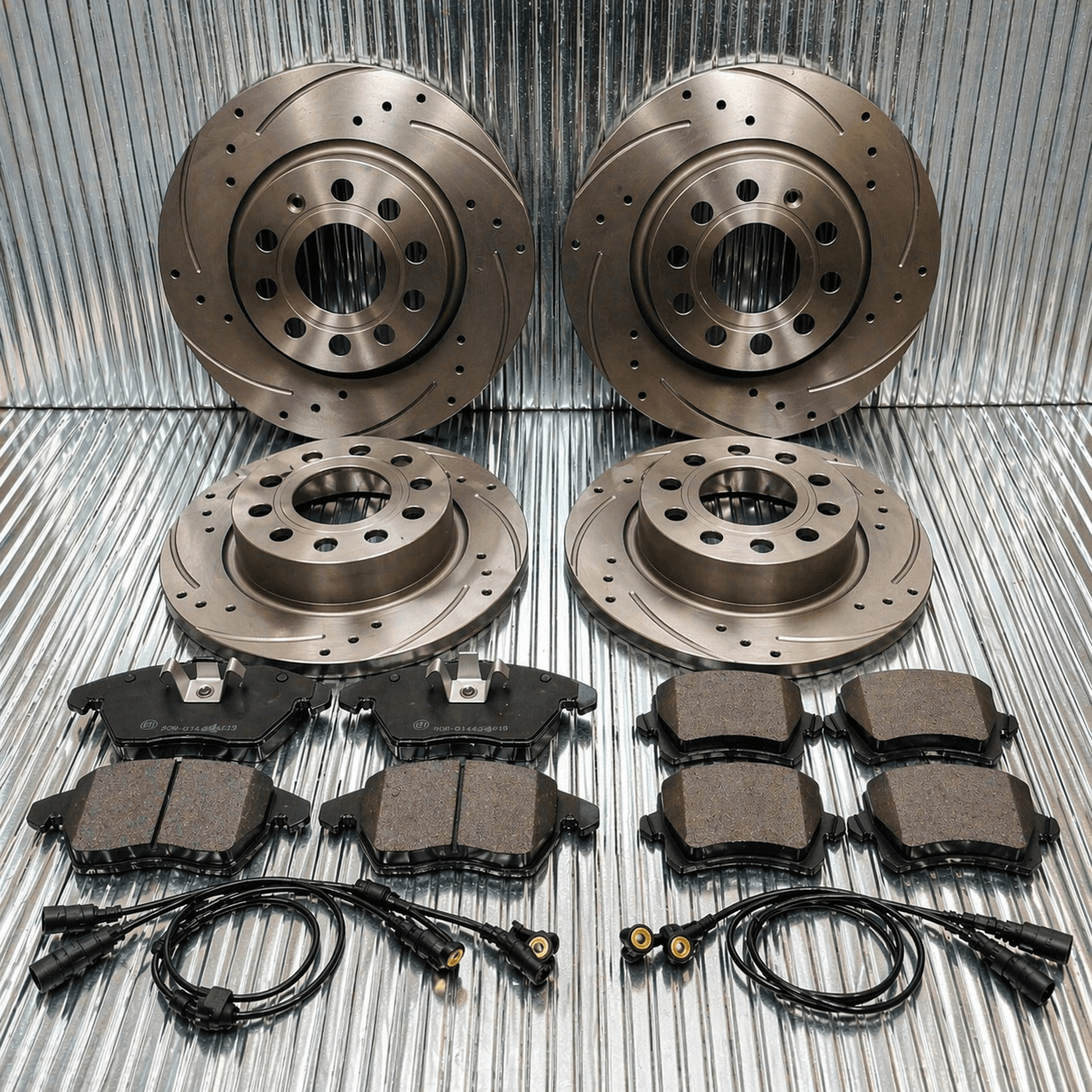
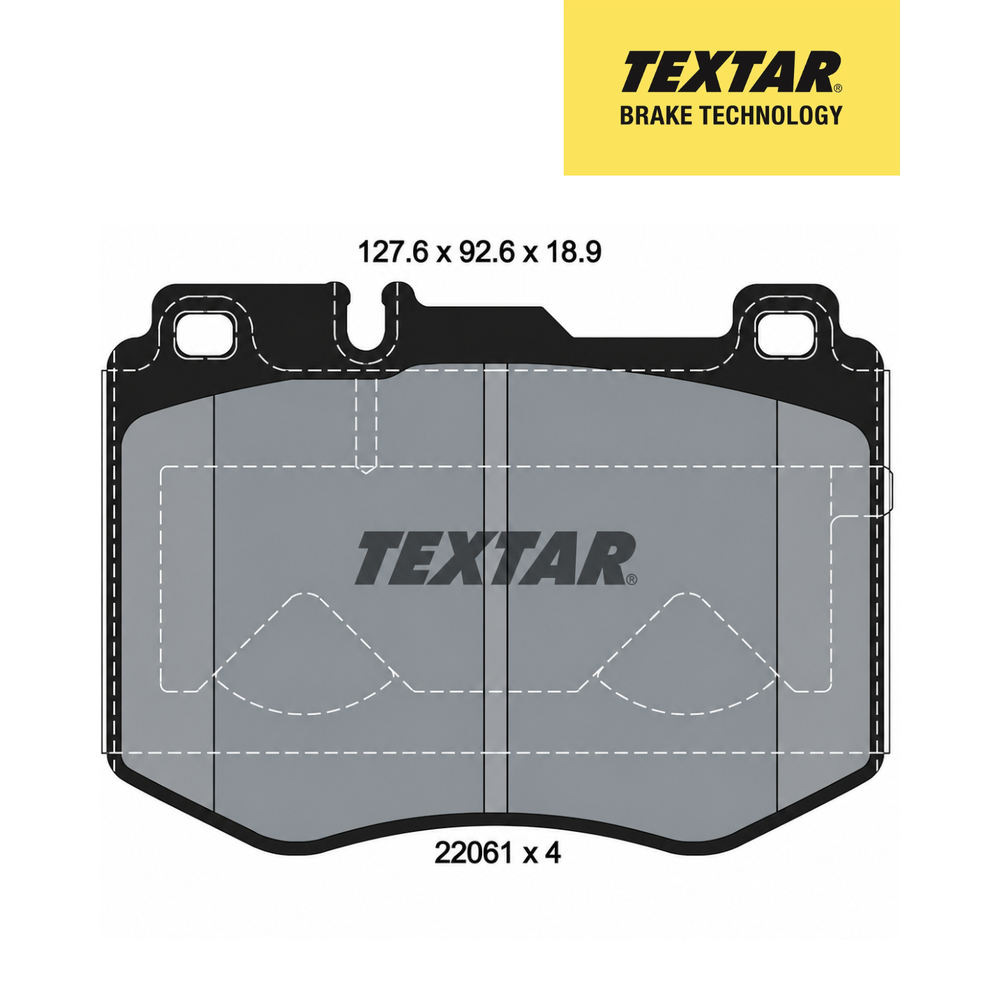
Textar 2206101 front brake pads are a premium set of four front brake pads designed for compatible Mercedes-Benz GLC X253 models using the corresponding front braking system and matching Mercedes-Benz OEM references A0084201920, A008420182064, A0084201820 or A0004208803. This set is intended for the front axle, where braking loads are typically higher because the front brakes handle a substantial portion of the vehicle’s stopping force during deceleration. The Mercedes-Benz GLC X253 is a premium SUV with significant vehicle weight, strong engine performance and advanced electronic braking systems, making correct brake pad selection especially important. Textar is a specialist braking brand known for friction technology and European vehicle applications, and the 2206101 pad set is engineered to provide controlled braking response, consistent friction characteristics and dependable everyday braking when correctly matched to the vehicle. The set contains four front brake pads, normally providing the required pads for both front wheels where this exact reference is applicable. Each front wheel typically uses an inner and outer pad, so both sides of the front axle are replaced together as a complete set. This helps maintain balanced braking characteristics from left to right. The front braking system works together with the rear brakes, ABS, electronic stability control and other vehicle safety systems, which means the pad dimensions, backing plate geometry, friction characteristics and caliper compatibility must be correct. Textar 2206101 should therefore be selected using accurate fitment information rather than simply by searching for “Mercedes GLC brake pads.” Different GLC X253 versions may use different brake packages depending on engine, production date, equipment specification or brake system. The OEM references A0084201920, A008420182064, A0084201820 and A0004208803 provide important cross-reference information and should be checked against the vehicle VIN, existing pad number or Mercedes-Benz parts data before installation. The condition of the front brake discs should also be inspected whenever the pads are replaced because worn, scored, cracked or heat-damaged discs can affect the performance and bedding of new pads. Caliper pistons, guide pins and pad contact points should be checked for smooth operation and corrosion. If the vehicle uses a brake wear sensor, the sensor should also be inspected and replaced where necessary. Correct installation is essential because braking components are safety-critical. After fitting the pads, the brake pedal should be restored to normal operating pressure before driving, and a proper bedding-in procedure should be followed so the new friction surfaces can establish even contact with the brake discs. For compatible Mercedes-Benz GLC X253 owners seeking a premium front brake pad replacement from a recognized European braking specialist, Textar 2206101 is a strong option when the OEM reference and brake system are correctly verified.
Which Mercedes-Benz vehicle is compatible with Textar 2206101 front brake pads?
Textar 2206101 front brake pads are intended for compatible Mercedes-Benz GLC X253 models fitted with the corresponding front braking system and matching OE references A0084201920, A008420182064, A0084201820 or A0004208803. The X253 designation identifies the SUV body version of the Mercedes-Benz GLC generation, but this model family can use more than one front brake configuration. Differences can arise from engine size, drivetrain, production year, trim level, brake package or market specification, which is why the vehicle name alone should not be used as the sole basis for selecting replacement pads. Two Mercedes-Benz GLC X253 vehicles that look almost identical can potentially use different front brake pads because of differences in caliper design or brake disc dimensions. The safest approach is to verify the VIN and compare the Mercedes-Benz OE number required for the vehicle against the references associated with Textar 2206101. The existing brake pad number may also be checked where readable, although old components can lose markings because of heat, corrosion and brake dust. A workshop can also compare the physical pad shape and dimensions, but visual similarity alone is not enough because different pads can look very similar while differing in thickness, mounting points or friction area. Textar 2206101 is specifically a front brake pad set and should not be confused with the rear brake pad set used on the same vehicle. Front and rear braking components perform different roles and normally use different pad sizes and friction specifications. The front brakes generally carry a greater share of the braking load because weight transfers toward the front axle during deceleration. As a result, front brake pads can experience higher thermal and mechanical loads than rear pads. Correct front pad fitment is therefore particularly important. The OEM references A0084201920, A008420182064, A0084201820 and A0004208803 help identify the relevant Mercedes-Benz applications and can be used together with VIN-based lookup for greater accuracy. Before installation, the brake caliper type, disc diameter and wear sensor arrangement should also be checked where there is any uncertainty. Mercedes-Benz may revise or supersede part numbers over time, so an older OE number can sometimes be replaced by a newer one even when the underlying application remains related. This is one reason several Mercedes-Benz OEM numbers may cross-reference with one Textar part number. Customers purchasing Textar 2206101 should ideally provide their chassis number or VIN if they are unsure about compatibility. This reduces the risk of ordering the wrong brake pads and avoids unnecessary workshop delays. Professional fitment is recommended so the brake system can be inspected as a complete assembly rather than treating the pads as an isolated part. Correct fitment helps ensure that the new Textar pads operate safely and provide the braking performance expected from the Mercedes-Benz GLC X253.
Which Mercedes-Benz OEM numbers cross-reference with Textar 2206101?
Textar 2206101 front brake pads are associated with Mercedes-Benz OEM references A0084201920, A008420182064, A0084201820 and A0004208803 for compatible applications. These OEM numbers are important because they provide a more accurate basis for identifying the correct replacement brake pad than the vehicle model name alone. Mercedes-Benz can use several different braking systems across one model generation, and part numbers may change during the production life of the vehicle because of engineering revisions, supplier changes or parts-catalogue supersessions. The Textar part number 2206101 groups compatible applications under one replacement reference, while the associated Mercedes-Benz OE numbers help confirm whether this pad set is suitable for the specific vehicle. If the Mercedes-Benz electronic parts catalogue or a VIN-based lookup identifies A0084201920, A008420182064, A0084201820 or A0004208803 as the required front brake pad reference, Textar 2206101 can then be checked as the corresponding replacement. Customers should still verify the exact application before installation because brake components are safety-critical and incorrect fitment can result in poor contact, excessive movement or complete incompatibility with the caliper. The OEM number can often be found in previous workshop records, parts invoices or the old brake pad markings, but VIN confirmation remains the most reliable method when there is any doubt. Mercedes-Benz part numbers may also appear in catalogues with different formatting, including spaces or without the leading letter structure, so the numerical sequence should be compared carefully. One OE number may supersede another, which is why several numbers can be listed for the same replacement pad set. This does not automatically mean that every GLC X253 uses Textar 2206101; it means that these references belong to applications associated with this particular pad specification. Customers should not confuse these pad numbers with brake disc, caliper or wear sensor numbers because each braking component has its own reference. When replacing the pads, the technician should also inspect the front brake discs for minimum thickness, grooves, cracks, heat spots and runout. If the discs are below service limits or badly damaged, they should be replaced in pairs. The front calipers should also be inspected to ensure that the pistons and guide mechanisms operate freely. A sticking caliper can cause one pad to wear much faster than the others and may generate excessive heat. Brake wear sensors, where fitted, should be checked at the same time. By cross-referencing Textar 2206101 against Mercedes-Benz OEM A0084201920, A008420182064, A0084201820 and A0004208803, buyers can significantly improve fitment accuracy for the correct GLC X253 front braking application.
Why should Mercedes-Benz GLC X253 owners choose Textar front brake pads?
Mercedes-Benz GLC X253 owners should consider Textar front brake pads when they want a premium replacement from a manufacturer that specializes in braking friction technology and European vehicle applications. Front brake pads are among the most important wear components in the braking system because the front axle typically carries a large proportion of the braking load. During deceleration, vehicle weight shifts toward the front, increasing the amount of braking force required from the front wheels. This makes pad quality, heat stability and consistent friction characteristics especially important on a premium SUV such as the Mercedes-Benz GLC X253. Textar 2206101 is designed for compatible front brake systems and is intended to provide smooth, predictable braking behavior in normal road use. A good front brake pad should deliver reliable stopping performance when cold, remain stable as temperatures rise and provide a progressive pedal feel rather than inconsistent or sudden friction. These characteristics are important during city driving, highway travel and repeated braking. Textar is widely associated with European braking applications and focuses strongly on friction-material development, which is one reason the brand is often selected by premium-car owners and workshops looking for OE-oriented replacement parts. The Mercedes-Benz GLC is designed to provide both performance and comfort, so replacement brake pads should ideally preserve that balance rather than introducing excessive harshness or noise. Textar pads are developed with braking refinement in mind, although final noise levels also depend heavily on disc condition, caliper operation, hardware and installation quality. A premium pad cannot compensate for a badly worn brake disc or seized caliper. The front discs should therefore be inspected carefully during replacement. Deep scoring, severe corrosion, heat damage or minimum-thickness issues can all reduce the effectiveness of new pads. Pad contact points and caliper carriers should be cleaned correctly, and the caliper guide pins should move freely. If the pad is unable to move correctly in the carrier, it can drag against the disc and generate heat, noise or premature wear. Brake fluid condition also influences braking performance, particularly under high temperature, so maintenance of the hydraulic system should not be ignored. Where the vehicle uses an electronic brake wear sensor, the sensor should be replaced if it has been triggered or damaged. After installation, the new pads should be bedded in correctly to establish an even friction interface with the brake discs. Excessive hard braking immediately after installation can create uneven deposits and compromise refinement. For Mercedes-Benz GLC X253 owners seeking a high-quality front braking replacement that emphasizes controlled response, friction consistency and European application expertise, Textar 2206101 is a strong option when confirmed through the correct OEM reference and VIN.
How many brake pads are included in the Textar 2206101 set?
Textar 2206101 is supplied as a set of four front brake pads for the compatible Mercedes-Benz GLC X253 front braking application. Four pads are normally required because each front wheel uses two pads: one inner pad and one outer pad positioned on either side of the brake disc. This means the left front wheel uses two pads and the right front wheel uses another two pads, providing a total of four pads for a complete front axle replacement. Replacing brake pads as a complete axle set is important because both sides of the vehicle should have comparable friction material, wear characteristics and braking response. Replacing only one side or only one individual pad can create uneven braking and should not be treated as normal practice. The front axle plays a major role in vehicle deceleration, so balanced pad replacement is particularly important. When Textar 2206101 is confirmed as the correct application, the complete four-pad set should be used to replace the worn pads across both front wheels. During removal, the old pads should be inspected carefully because their wear pattern can reveal problems elsewhere in the braking system. If one pad is significantly thinner than the others, the cause should be investigated before installing the new set. Uneven wear can be caused by a sticking caliper piston, seized guide pin, contaminated contact surface or another mechanical issue. Installing new pads without correcting the underlying problem can result in rapid and uneven wear of the replacement set. The front brake discs should also be examined for condition and thickness. If one disc requires replacement because it is below the service limit or badly damaged, both front discs should generally be replaced as a pair so that both sides have comparable braking surfaces. Buyers should also understand that “set of 4” refers specifically to four brake pads. Brake discs, wear sensors and additional fitting hardware are not automatically included unless clearly stated in the product listing. If the Mercedes-Benz GLC X253 requires a separate wear sensor for the front axle, that sensor should be checked separately and ordered if necessary. Some brake sensors are designed to be replaced once activated. Correct fitment of Textar 2206101 should be verified using the listed Mercedes-Benz OEM references A0084201920, A008420182064, A0084201820 or A0004208803, together with VIN or brake-system information. Once compatibility is confirmed, the four-pad set provides the normal components required for a complete front axle pad replacement. Professional installation is recommended because correct front brake assembly directly affects vehicle safety, stopping performance and braking balance.
When should the front brake pads on a Mercedes-Benz GLC X253 be replaced?
Front brake pads on a Mercedes-Benz GLC X253 should be replaced when the friction material reaches or approaches the manufacturer’s minimum wear limit, when the vehicle displays a brake pad warning, when inspection reveals excessive or uneven wear, or when braking symptoms indicate that the front braking system needs attention. Front brake pads often wear faster than rear pads because the front brakes handle a larger share of the braking force during deceleration. However, pad life cannot be predicted accurately from mileage alone because wear depends heavily on driving conditions, traffic, vehicle load, driving style, brake disc condition and caliper operation. A Mercedes-Benz GLC driven mainly in heavy stop-and-go traffic may wear front pads more quickly than one driven primarily on open highways. Frequent braking generates repeated heat cycles and gradually removes friction material from the pads. A dashboard brake wear warning should therefore be treated as a prompt for inspection rather than ignored. If the pads continue to wear beyond their safe limit, the friction material can become too thin and the metal backing plate may eventually contact the brake disc. This can create a grinding noise, damage the disc and reduce braking safety. Other warning signs include squealing, vibration during braking, pulling to one side, reduced braking response or unusual pedal feel. However, not every brake noise automatically means the pads are worn out. Noise can also result from scored discs, rust, contaminated surfaces, sticking calipers or poor installation. A physical inspection is therefore necessary. Both inner and outer front pads should be measured because one pad can wear faster than the other if the caliper is not operating correctly. The left and right sides should also be compared. A significant difference in pad thickness can indicate a mechanical issue that must be corrected before fitting new parts. If Textar 2206101 is confirmed for the vehicle through OEM A0084201920, A008420182064, A0084201820 or A0004208803, the pads should be replaced as a complete set of four across the front axle. The front brake discs should be inspected at the same time for minimum thickness, heat cracks, scoring, excessive lips and runout. Brake hoses, fluid condition and visible hydraulic components should also be checked during service. The wear sensor should be replaced where necessary, particularly if it has already been activated. After installation, the brake pedal should be restored to normal operating pressure before the vehicle is moved, and the new pads should be bedded properly against the discs. Controlled braking during the initial period helps establish consistent surface contact and stable friction. Regular brake inspections during routine servicing are the best way to identify wear before it causes additional damage or safety concerns. For compatible Mercedes-Benz GLC X253 applications, Textar 2206101 provides a premium front brake pad replacement when the vehicle’s exact braking specification has been properly verified.
Are Textar 2206101 front brake pads suitable for daily driving and highway use in Mercedes-Benz GLC X253?
Yes, Textar 2206101 front brake pads are suitable for compatible Mercedes-Benz GLC X253 models used in everyday city traffic, highway driving and long-distance journeys. The front braking system carries a major share of the vehicle’s stopping load, particularly during stronger deceleration when weight transfers toward the front axle. For this reason, the quality and consistency of the front brake pads are especially important on a premium SUV such as the Mercedes-Benz GLC X253. Textar 2206101 is designed to provide smooth and predictable friction characteristics under normal road-use conditions, helping the vehicle maintain a controlled braking response during both low-speed urban use and higher-speed highway driving. In city traffic, frequent stop-and-go operation repeatedly heats and cools the brake components, which can place significant thermal stress on the friction material. On highways, the brakes may remain relatively cool for longer periods before being required to slow the vehicle from considerably higher speeds. A good brake pad must therefore offer stable behavior over a broad operating range. Textar specializes in friction technology and produces braking components intended for European vehicles, making the brand a suitable choice for customers looking for an OE-oriented braking replacement. Textar 2206101 should be used only where the exact brake system and OEM references match the vehicle. Relevant Mercedes-Benz OE numbers include A0084201920, A008420182064, A0084201820 and A0004208803. Correct fitment is important because the Mercedes-Benz GLC X253 can use different brake configurations depending on the exact vehicle specification. Brake pads should therefore be confirmed through the VIN, OE reference or existing part number rather than selected only by vehicle model. Highway driving places additional importance on braking consistency because the pads may need to absorb large amounts of kinetic energy when the vehicle slows from higher speeds. Textar pads are designed to provide progressive braking behavior rather than an unpredictable or excessively aggressive response, which is beneficial for passenger comfort and vehicle control. The condition of the brake discs also affects overall performance. Severely scored, overheated or excessively worn discs can compromise even premium brake pads. Caliper operation, brake fluid condition and wear sensors should also be checked during replacement. When the complete braking system is properly maintained and Textar 2206101 is correctly installed, these front brake pads can provide the dependable braking characteristics required for regular city, highway and mixed driving in the Mercedes-Benz GLC X253.
Do Textar 2206101 front brake pads provide smooth and low-noise braking for Mercedes-Benz GLC X253?
Textar 2206101 front brake pads are designed to provide refined, controlled braking characteristics that suit the premium driving experience expected from a Mercedes-Benz GLC X253. Brake noise and harshness can significantly affect driving comfort, particularly in luxury vehicles, which is why friction-material design and pad construction are important factors when choosing replacements. Textar focuses specifically on braking technology and develops friction products for European vehicle applications where smooth engagement, predictable pedal feel and braking refinement are important considerations. However, brake noise depends on more than the brake pad itself. The interaction between the brake pad, disc, caliper, backing plate, shims, carrier surfaces and fitting hardware can all contribute to vibration or squealing. Even a premium pad can become noisy if fitted to badly worn brake discs or installed in a caliper that is not operating correctly. Before installing Textar 2206101, the front brake discs should therefore be inspected for deep grooves, uneven surfaces, excessive lips, corrosion, heat damage and minimum thickness. The brake pad contact areas in the caliper carrier should also be cleaned properly so the pads can move freely. A pad that becomes tight or stuck in the carrier may remain partially applied against the disc, leading to overheating, rapid wear and unwanted noise. Caliper guide pins should move freely and damaged rubber boots or seals should be replaced where necessary. Brake friction surfaces must remain clean and free from oil, grease or other contamination because contamination can reduce braking effectiveness and create noise. Correct installation of the pad hardware is equally important. Where the vehicle uses a separate wear sensor, it should be checked and replaced if damaged or activated. Bedding-in is another major factor in achieving smooth and quiet braking. New pads need time to establish even contact with the brake-disc surface. Excessively aggressive braking immediately after installation may generate localized heat and uneven pad deposits, which can later contribute to judder or noise. Controlled moderate braking during the initial bedding period usually helps the friction surfaces establish a more uniform relationship. Some minor brake sound can still occur under particular conditions such as cold starts, high humidity, light surface rust after parking or very low-speed braking, and this does not necessarily indicate a defective product. Persistent grinding, severe squealing or vibration should nevertheless be investigated. When Textar 2206101 is correctly matched using Mercedes-Benz OEM references A0084201920, A008420182064, A0084201820 or A0004208803 and installed professionally with healthy brake discs and calipers, it can provide the smooth, progressive and refined braking response expected from a Mercedes-Benz GLC X253.
Do Textar 2206101 front brake pads produce less brake dust on Mercedes-Benz GLC X253?
Textar 2206101 front brake pads are premium friction components, but brake dust is a natural result of normal braking and should not be treated as the only measure of brake pad quality. Every time the front brake pads contact the brake discs, friction converts the vehicle’s kinetic energy into heat and microscopic amounts of pad and disc material are released. These particles accumulate on the wheels as brake dust. The quantity of visible dust depends on several factors including the friction compound, driving style, traffic conditions, vehicle weight, disc condition and the frequency and intensity of braking. The Mercedes-Benz GLC X253 is a relatively heavy premium SUV, and its front brakes normally handle a significant share of the stopping force. This naturally means that the front braking system may generate more wear particles than lighter-duty systems, especially when the vehicle is driven frequently in city traffic. Textar designs its friction compounds to balance stopping performance, pedal feel, wear, noise and thermal stability rather than focusing solely on reducing visible brake dust. This balance is important because excessively prioritizing low dust could compromise other characteristics that are more critical to safe braking. Textar 2206101 is therefore better evaluated as a premium OE-oriented brake pad rather than simply as a low-dust product. Driving style has a large influence on dust generation. Frequent hard braking, aggressive acceleration followed by heavy braking and stop-and-go traffic generally increase pad and disc wear. Smooth and progressive braking can reduce unnecessary wear and may help keep wheel contamination lower. Brake disc condition also matters. A rough, heavily scored or corroded disc can act more abrasively on the pad surface and increase wear. Likewise, a sticking caliper can keep one pad partially applied against the disc and produce unusually high amounts of dust on one wheel. If one front wheel consistently becomes much dirtier than the other, the braking system should be inspected for uneven wear or caliper problems. Brake dust should be cleaned from alloy wheels regularly because prolonged accumulation can become difficult to remove. Suitable wheel-cleaning products should be used, especially on painted or diamond-cut wheels. Textar 2206101 should be selected primarily for correct fitment and dependable braking characteristics. Mercedes-Benz OEM references A0084201920, A008420182064, A0084201820 and A0004208803 should be checked before installation. When fitted to a properly maintained brake system, Textar 2206101 can provide a strong balance of braking performance, refinement, durability and normal dust characteristics for compatible Mercedes-Benz GLC X253 applications.
Should Textar 2206101 front brake pads be replaced together with new brake discs on Mercedes-Benz GLC X253?
Textar 2206101 front brake pads do not always require new brake discs at the same time, but the existing front discs must be carefully inspected before the new pads are installed. Brake pads and discs operate together as a friction pair, so the condition of the disc has a direct effect on how well the new brake pads can bed in and perform. If the existing Mercedes-Benz GLC X253 front brake discs remain above the manufacturer’s minimum thickness specification and their surfaces are smooth, even and free from serious damage, it may be technically acceptable to replace only the brake pads. However, if the discs are deeply scored, cracked, heavily corroded, distorted, heat damaged or below the minimum allowable thickness, replacing them together with the new pads is the better approach. Fitting premium new Textar pads against badly worn discs can result in poor contact between the pad and disc surfaces. This may cause uneven bedding, vibration, noise or accelerated pad wear. Disc thickness should therefore be measured using suitable equipment rather than estimated visually. Any significant outer lip should also be assessed because it can indicate considerable disc wear. If one front brake disc requires replacement, both front discs should normally be replaced as a pair to maintain consistent braking characteristics across the axle. The new Textar 2206101 pads should then be fitted as the complete four-pad set. Before installing new discs, the wheel hub mounting surfaces should be thoroughly cleaned because corrosion or debris between the hub and disc can create lateral runout, which may later cause brake judder. Caliper carriers and pad contact surfaces should also be cleaned, and the caliper guide pins and pistons should be checked for free movement. Brake wear sensors should be replaced if required. Following installation, the brake pedal must be operated until normal pad-to-disc contact is restored before the vehicle is moved. New pads and discs should also undergo an appropriate bedding process so the friction surfaces can establish a stable and even interface. Textar 2206101 should be used only where the GLC X253 requires the corresponding front pad specification associated with OEM numbers A0084201920, A008420182064, A0084201820 or A0004208803. In summary, new discs are not automatically mandatory every time the pads are replaced, but worn or damaged discs should not be reused simply to reduce repair cost. Correctly assessing the complete braking system helps ensure that the new Textar pads can deliver the braking performance and refinement for which they are designed.
Why are Textar 2206101 brake pads considered a strong choice for Mercedes-Benz GLC X253 compared with Brembo brake pads?
Textar and Brembo are both highly recognized names in automotive braking, and both produce quality braking components for premium European vehicles. The better choice for a Mercedes-Benz GLC X253 depends on the exact application, driving requirements and the specific product range being compared. Textar is particularly well known as a friction-material specialist, with a strong focus on brake pads, linings and other braking friction components. Brembo, on the other hand, is known globally for a broad braking portfolio that includes brake pads, discs, calipers, complete performance systems and motorsport applications. For a Mercedes-Benz GLC X253 owner looking for a standard premium replacement front brake pad that emphasizes OE-style braking characteristics, Textar 2206101 can be an excellent choice. The pad can be cross-referenced against Mercedes-Benz OEM numbers A0084201920, A008420182064, A0084201820 and A0004208803 for compatible applications. Textar’s strength lies in developing friction materials that balance braking performance, comfort, noise control, wear and predictable pedal response. These characteristics are particularly relevant for a Mercedes-Benz GLC because the vehicle is designed to combine premium comfort with strong braking performance. In normal city and highway use, most owners want a brake pad that provides smooth engagement, consistent braking force and confidence without making the braking system unnecessarily aggressive. Textar is well suited to this type of requirement because its products are strongly oriented toward premium European road cars and OE-style replacement behavior. Brembo also offers excellent replacement brake pads, and its reputation in braking engineering is exceptional, particularly in performance and motorsport applications. For drivers looking to upgrade several components of the braking system together, such as pads, discs and calipers, Brembo may be especially appealing because of the company’s extensive performance product range. However, choosing a more performance-oriented product does not automatically make it better for every Mercedes-Benz GLC owner. A pad optimized for stronger performance characteristics may deliver a different pedal feel, temperature requirement or dust and noise profile compared with a product designed primarily for refined everyday road use. For normal GLC X253 driving, a balanced friction compound can often be more appropriate than an aggressive performance formulation. Textar 2206101 is designed as an application-specific replacement rather than a motorsport upgrade, making it suitable for customers who want to preserve the Mercedes-Benz braking character. Both Textar and Brembo pads still depend on correct installation and healthy brake discs. A premium pad from either brand can perform poorly if fitted to worn discs, sticking calipers or contaminated surfaces. Brake noise and dust levels also cannot be judged purely by brand name because they vary according to individual compounds, installation quality and driving conditions. Accurate fitment is another key consideration. Buyers should not simply order a product because it is advertised for “Mercedes GLC.” The exact Textar or Brembo reference, OE numbers, brake dimensions and VIN should be checked because several braking configurations can exist within the GLC X253 generation. For customers prioritizing smooth road manners, progressive pedal response, European friction expertise and OE-oriented replacement quality, Textar 2206101 is a particularly strong choice. Brembo remains an excellent alternative and may appeal more strongly to drivers looking toward a broader performance braking setup. For a standard compatible Mercedes-Benz GLC X253 front brake replacement, however, Textar 2206101 offers a compelling balance of braking performance, refinement and application-specific engineering.

Reviews
There are no reviews yet.