What are steering ball joints and tie rod ends for BMW X1 F48?
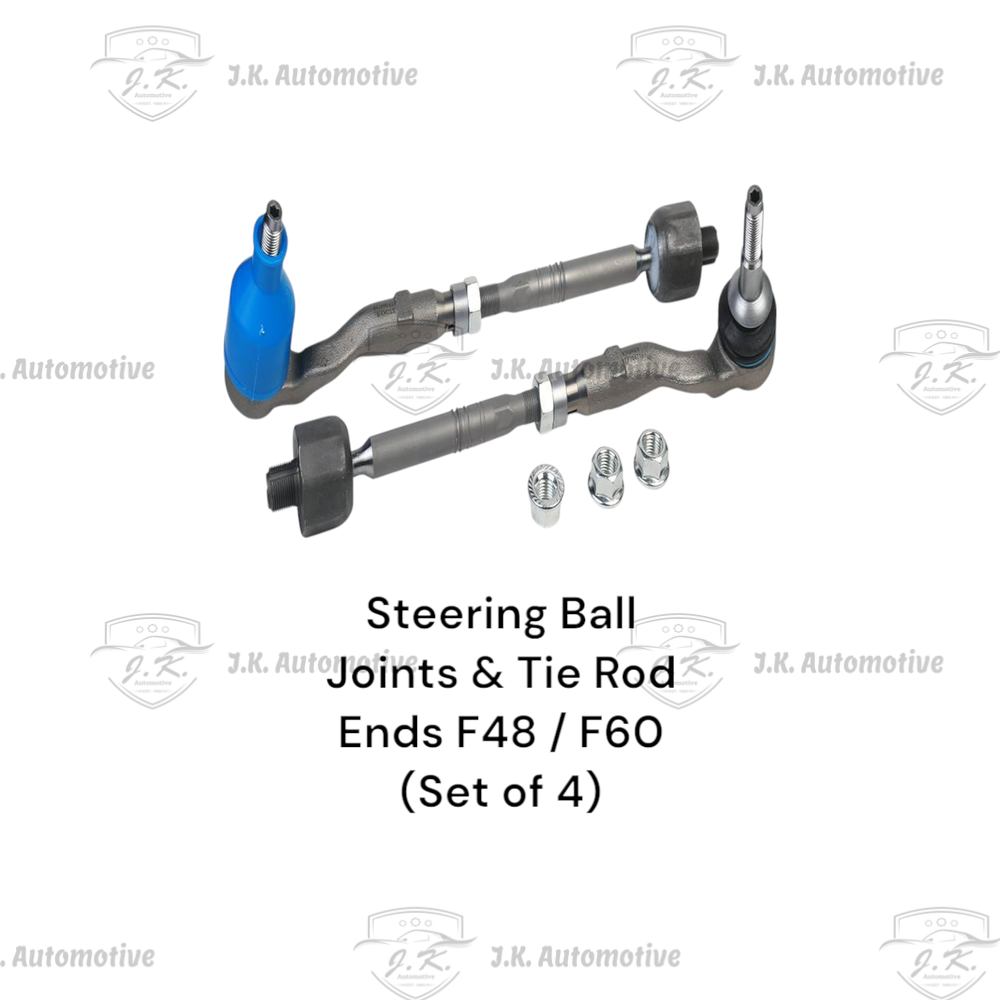
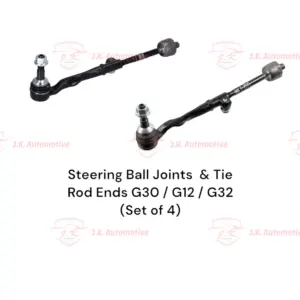
Steering ball joints and tie rod ends for the BMW X1 F48 are important front steering components that help transfer the driver's steering input toward the front wheels while allowing the controlled articulation required as the wheels turn and the suspension moves. This Set of 4 is listed for BMW X1 F48 models from 2015–2022 with supplied OEM references 32106899815 and 32106899816. The steering linkage operates continuously whenever the driver parks, changes lanes, negotiates corners, turns at junctions or makes small directional corrections during normal driving. At the same time, the front suspension moves vertically as the wheels travel over changing road surfaces, requiring the steering joints to operate through different angles while maintaining a controlled mechanical connection. BMW F48 steering components are therefore subjected to repeated steering forces, suspension movement, road vibration, braking loads, cornering forces and impacts transmitted through the tyres and wheels. Potholes, broken roads, uneven surfaces and speed breakers can increase the mechanical loads reaching these parts. Over time and mileage, internal joint surfaces can gradually wear and develop unwanted clearance. Protective boots around the joints help retain lubrication while reducing the entry of water, dust, dirt and abrasive road contamination. If a boot becomes cracked, torn or displaced, contamination may reach the internal moving surfaces and potentially accelerate deterioration. Worn BMW F48 tie rod ends or steering joints may contribute to steering free play, vague directional response, wandering, front-end knocking or irregular tyre wear. These symptoms can also originate from other steering and suspension components, so professional diagnosis is recommended before replacement. When selecting this Set of 4, OEM 32106899815 and 32106899816 should be checked against the specific vehicle. The F48 chassis designation and supplied 2015–2022 application provide useful initial identification, while VIN or OEM verification can provide stronger fitment confirmation. Before installation, the replacement parts should be compared with the removed components for dimensions, threads, ball-stud configuration, mounting taper and joint geometry. Control arms, suspension bushes, wheel bearings, steering-rack connections, shock absorbers and struts should also be inspected where necessary. Sway bar links, Sway links, Anti roll link rods and Stabiliser sway links should be checked separately when front-end knocking is present. Professional wheel alignment is recommended after tie rod replacement because tie rod adjustment directly influences front-wheel toe.
Which BMW X1 models are compatible with this steering joint and tie rod end Set of 4?
This steering joint and tie rod end Set of 4 is listed for BMW X1 F48 models from 2015–2022 with supplied OEM references 32106899815 and 32106899816. The F48 chassis designation is particularly important when selecting replacement steering parts because the BMW X1 has been produced on different chassis platforms with different steering and suspension configurations. A component should therefore not be selected simply because the vehicle carries the BMW X1 model name. The supplied 2015–2022 year range provides an initial application guide for this product, but the year alone should not be treated as definitive compatibility confirmation. Differences may exist according to exact vehicle specification, drivetrain, production information, market application and component revisions. OEM-number verification provides a more specific method of identifying the required steering parts. Customers should compare 32106899815 and 32106899816 with references obtained from the existing components, appropriate BMW parts information, workshop records or a VIN-based parts lookup. If another OEM reference is found on the vehicle, it should be investigated for possible supersession, revision or another application rather than assuming that visually similar components are interchangeable. Steering joints can differ in overall dimensions, thread diameter, thread pitch, ball-stud taper, mounting geometry or intended installation position. Customers searching for BMW X1 F48 steering parts online in India can therefore improve product identification by combining the F48 chassis designation with the applicable OEM references rather than relying on a broad BMW X1 steering-parts search. VIN verification is recommended whenever compatibility remains uncertain. Before final installation, each replacement component should also be physically compared with its corresponding removed part. The Set of 4 configuration can be useful where professional inspection identifies deterioration across multiple related steering components, although actual replacement requirements should be determined according to the condition of the vehicle. During the repair, surrounding front steering and suspension components should also be inspected for excessive free play, damaged bushes, worn joints, boot deterioration or impact damage. Once the correctly specified components have been installed, steering movement should be checked for smooth operation and unwanted looseness. Professional wheel alignment should then be completed because tie rod replacement or adjustment can affect front-wheel toe and steering-wheel position.
What are OEM numbers 32106899815 and 32106899816 for BMW X1 F48?
OEM numbers 32106899815 and 32106899816 are the supplied reference numbers associated with the steering components included in this Set of 4 listed for BMW X1 F48 models from 2015–2022. These references provide useful product-identification information when searching for replacement steering parts because OEM-number searches are generally more specific than broad searches such as BMW F48 tie rod ends, BMW X1 steering parts or BMW F48 steering joints. Customers who already have reference 32106899815 or 32106899816 from an existing component, workshop quotation, parts information or previous repair documentation can use these numbers to narrow their replacement-parts search. Useful search variations include BMW 32106899815, BMW 32106899816, BMW F48 32106899815, BMW F48 32106899816, 32106899815 tie rod end and 32106899816 tie rod end. These OEM-specific terms also provide useful SEO relevance without requiring excessive repetition of the complete main focus keyword. However, an OEM reference appearing in an online product listing should still be checked against the specific vehicle before purchase or installation. BMW vehicles can have differences according to production information and configuration, making the combination of chassis, OEM reference and VIN particularly useful when confirming parts. If another reference is found on the existing component, it should be investigated for possible supersession, revision or another application rather than automatically assuming interchangeability. Physical comparison between the replacement and removed components is also recommended before installation. Overall dimensions, thread specifications, ball-stud configuration, mounting taper, joint construction and intended installation position should correspond correctly. This is especially important with steering parts because components that look similar may have important dimensional or mounting differences. Once the applicable BMW F48 steering components have been confirmed, professional installation is recommended. Related front suspension components should also be inspected because steering play or front-end noise can originate from several different locations. Control-arm bushes, suspension joints, wheel bearings, steering-rack connections, shock absorbers and struts can all influence front-end behaviour. After replacement of the required tie rod components, professional wheel alignment should be completed to verify front-wheel toe and steering-wheel position.
What are the symptoms of worn tie rod ends and steering joints on a BMW X1 F48?
Worn tie rod ends and steering joints on a BMW X1 F48 can contribute to symptoms such as excessive steering free play, vague directional response, wandering, front-end knocking or clunking, an off-centre steering feel and irregular tyre wear, although these symptoms should be professionally diagnosed because several other front suspension components can create similar behaviour. As internal joint surfaces deteriorate, unwanted clearance may develop within the steering linkage. This can reduce the precision with which movement from the steering wheel is transferred toward the front wheels, potentially making the vehicle feel less controlled during cornering, lane changes and straight-line driving. The driver may notice that frequent small steering corrections are required to maintain the intended direction. Knocking, tapping or clunking can also become noticeable when steering or suspension loads change direction through a worn joint, particularly while travelling over potholes, broken roads, rough surfaces or speed breakers. Tyre wear may also be affected because tie rod adjustment directly influences front-wheel toe. Excessive movement within a worn BMW F48 steering joint can interfere with stable wheel geometry, while incorrect toe may cause sections of the tyre tread to scrub against the road and wear more rapidly. However, these symptoms do not automatically confirm that the components associated with OEM 32106899815 or 32106899816 are defective. Control-arm bushes, suspension joints, wheel bearings, steering-rack connections, shock absorbers, struts, damaged wheels, tyre problems and incorrect wheel alignment can produce overlapping symptoms. Sway bar links, Sway links, Anti roll link rods and Stabiliser sway links are especially relevant when investigating front-end knocking because worn stabiliser-link components can generate similar noises. Protective boots around the steering joints should also be inspected for cracks, tears, displacement or contamination. A professional workshop can physically check the steering linkage for excessive free play and determine the actual source of the problem. If wear is confirmed in the applicable F48 steering components, OEM 32106899815 and 32106899816 should be verified before replacement. Surrounding steering and suspension parts should also be inspected so that additional sources of looseness are not overlooked. After the required repair, professional wheel alignment should be performed to check front-wheel toe, steering-wheel centring and overall steering geometry.
Should BMW X1 F48 tie rod ends and steering joints be replaced as a complete Set of 4?
Whether BMW X1 F48 tie rod ends and steering joints should be replaced as a complete Set of 4 depends on the actual condition of the individual components, vehicle mileage, service history, road usage and findings from a professional steering and suspension inspection. This product is supplied as a Set of 4 with OEM references 32106899815 and 32106899816, making it suitable where the corresponding steering components have been diagnosed as requiring replacement. Parts working across the same front axle are exposed to similar mileage, steering movements, suspension articulation, road vibration, braking forces, cornering loads and impacts from road irregularities. For this reason, when significant wear is found in one steering joint, the related components should also be inspected carefully. This does not mean that every component must automatically be replaced simply because one joint has deteriorated. Replacement decisions should be based on physical findings such as excessive free play, damaged protective boots, contamination, corrosion, impact damage or abnormal joint movement. However, where multiple corresponding components show similar deterioration, replacing the required parts together can provide a more comprehensive steering repair and may reduce the possibility of repeated dismantling and wheel-alignment work shortly afterwards. Before installing the complete set, OEM 32106899815 and 32106899816 should be checked against the specific BMW X1 F48. VIN verification can provide additional fitment confirmation whenever required. Each new component should also be compared with the corresponding removed part for dimensions, thread specifications, ball-stud configuration, mounting geometry and intended installation position. While the steering system is being repaired, surrounding front suspension components should also be inspected because new tie rod ends cannot correct looseness originating elsewhere. Control arms, bushes, suspension joints, wheel bearings, steering-rack connections, shock absorbers and struts should be checked according to their condition. Stabiliser links should also be inspected separately when front-end knocking is present. Tyres should be examined for irregular wear patterns that may indicate an existing alignment or suspension issue. Once the required F48 steering components have been installed, the linkage should be checked for smooth operation and unwanted free play. Professional wheel alignment should then be completed because replacement or adjustment of tie rod components can alter front-wheel toe.
Is wheel alignment necessary after replacing BMW X1 F48 tie rod ends?
Yes, professional wheel alignment is strongly recommended after replacing BMW X1 F48 tie rod ends because tie rod adjustment directly affects front-wheel toe and therefore plays an important role in steering geometry. During removal of an existing tie rod end, the previous adjustment position is disturbed. Installing a replacement component at approximately the same threaded position can provide a useful initial reference, but it cannot guarantee that the final wheel geometry will remain within the applicable specification. Differences in component dimensions, manufacturing tolerances, previous adjustments and wear in the removed joint can influence the effective tie rod length. Even a relatively small change can affect front-wheel toe. Incorrect toe can cause the tyres to scrub against the road rather than rolling in their intended directional relationship, potentially producing accelerated or uneven tread wear. An off-centre steering wheel, undesirable straight-line behaviour or a need for unnecessary steering corrections may also occur when alignment is incorrect. For BMW F48 steering components associated with OEM 32106899815 and 32106899816, wheel alignment should therefore be considered an important final stage of the replacement procedure. Before alignment is performed, the workshop should confirm that the new components have been installed correctly and that the threads, mounting points and locking arrangements are secure. The remaining front steering and suspension system should also be inspected because accurate alignment can be difficult when another component has excessive free play. Control-arm bushes, suspension joints, wheel bearings, steering-rack connections, shock absorbers and struts should be checked where appropriate. Tyre pressures and tyre condition should also be inspected before final geometry measurements. Professional alignment equipment can then be used to measure and adjust front-wheel toe according to the applicable vehicle specification while checking steering-wheel centring. If the required geometry cannot be achieved, the technician should investigate for worn, bent, damaged or incorrectly installed steering and suspension components rather than compensating improperly through adjustment. A final road test can then be used to assess steering response and straight-line behaviour. Completing professional wheel alignment after BMW X1 F48 tie rod replacement helps protect the tyres and properly completes the steering repair.
Why are good-quality steering joints and tie rod ends important for BMW X1 F48?
Good-quality steering joints and tie rod ends are important for the BMW X1 F48 because these components form a critical mechanical connection within the front steering system and help transfer the driver's steering input toward the front wheels while allowing the articulation required as the suspension moves. This Set of 4 is listed for BMW X1 F48 models from 2015–2022 with supplied OEM references 32106899815 and 32106899816. During normal driving, the steering linkage operates whenever the vehicle is parked, turned through corners, moved between lanes or subjected to small directional corrections. At the same time, the front wheels move vertically as the suspension responds to potholes, uneven roads, speed breakers and changing road surfaces. The steering joints must therefore accommodate movement through different angles while maintaining controlled connection without excessive unwanted clearance. Correct dimensions, thread specifications, mounting geometry, ball-stud configuration and joint construction are important when selecting BMW F48 steering replacement parts. Protective boots around the joints also help retain lubrication and reduce the entry of water, dirt, dust and abrasive road contamination. A cracked, torn or displaced protective boot can expose the internal joint surfaces to contaminants and potentially accelerate wear. As internal clearance increases, symptoms can include vague steering response, steering play, wandering, knocking or irregular tyre wear. Component quality alone is not sufficient if the replacement does not correspond correctly with the vehicle, so OEM 32106899815 and 32106899816 should be checked against the specific BMW X1 F48. VIN-based confirmation should be used whenever compatibility remains uncertain. Before installation, the new parts should also be compared physically with the removed components. Surrounding steering and suspension parts should be inspected because new tie rod ends cannot correct looseness originating from control-arm bushes, suspension joints, wheel bearings, steering-rack connections or other worn components. Sway bar links, Sway links, Anti roll link rods and Stabiliser sway links should also be inspected when front-end knocking is present. After correctly matched steering components are installed, professional wheel alignment should be completed because tie rod adjustment directly influences front-wheel toe and steering-wheel position.
What causes BMW X1 F48 tie rod ends and steering joints to wear out?
BMW X1 F48 tie rod ends and steering joints can gradually wear because they operate under continuous steering movement, suspension articulation, road vibration and changing mechanical loads throughout normal vehicle operation. Every steering-wheel movement creates corresponding movement through the steering linkage, whether the vehicle is performing a large steering manoeuvre during parking or making a minor directional correction at higher speeds. Simultaneously, the front suspension moves vertically as the wheels follow the road surface, requiring the joints to articulate repeatedly through changing angles. Over thousands of kilometres, these movement cycles can gradually contribute to internal joint wear. Road conditions can also significantly influence the service life of BMW F48 steering parts. Potholes, broken roads, uneven surfaces, sharp road edges and speed breakers can transmit additional impact forces through the tyres, wheels, steering knuckles and connected suspension components. Repeated exposure to these forces may increase mechanical stress on the steering linkage. Protective-boot condition is another important factor because the boot helps retain lubrication and protect internal surfaces from water, dirt, dust and abrasive contamination. If a boot cracks, tears or becomes displaced, contamination can reach the internal joint and potentially accelerate deterioration. Moisture entering an inadequately protected joint may also contribute to corrosion. Vehicle age and mileage influence component condition because the steering linkage accumulates a large number of movement cycles over time, although there is no universal mileage at which every F48 tie rod end must automatically be replaced. Severe pothole impacts, kerb strikes or accident damage can also affect a steering component or wheel geometry regardless of mileage. A professional technician should therefore inspect the actual condition of the joints rather than replacing them based solely on age. Excessive free play, boot deterioration, contamination, corrosion and abnormal joint movement should be checked. Other front suspension components must also be inspected because worn control-arm bushes, suspension joints, wheel bearings, shock absorbers, struts and steering-rack connections can produce similar symptoms. If replacement is required, OEM references 32106899815 and 32106899816 should be verified against the specific BMW X1 F48 before installation. Professional wheel alignment should then be completed because tie rod replacement or adjustment can affect front-wheel toe.
How can I confirm whether OEM 32106899815 and 32106899816 fit my BMW X1 F48?
To confirm whether OEM 32106899815 and 32106899816 fit a BMW X1 F48, the supplied OEM references should be checked together with the F48 chassis designation, vehicle production information and VIN before installation. This Set of 4 is listed for BMW X1 F48 models from 2015–2022, but the model name and year range should be treated as initial application information rather than the only compatibility criteria. BMW vehicles can have differences according to exact production specification, drivetrain, market application and component revisions, making OEM-number verification particularly important when selecting steering parts. Customers should compare 32106899815 and 32106899816 with references obtained from the existing components, appropriate BMW parts information, workshop records or a VIN-based parts lookup. If a different OEM reference appears on the vehicle, it should be investigated for possible supersession, revision or another application instead of assuming interchangeability. Steering components may look almost identical while differing in overall length, thread diameter, thread pitch, ball-stud taper, mounting geometry or intended installation position. Physical comparison between the replacement and removed components is therefore recommended before final fitting. Search variations such as BMW 32106899815, BMW 32106899816, BMW F48 32106899815, BMW F48 32106899816, 32106899815 tie rod end and 32106899816 tie rod end can also help identify the required replacement parts online. These OEM-based terms provide strong product relevance without unnecessarily repeating the complete focus keyword. If compatibility remains uncertain, a VIN-based parts check should be used rather than relying only on visual appearance, model name or production year. A professional technician can additionally confirm that the threads, mounting taper, dimensions and intended installation positions correspond correctly. Related steering and suspension components should also be inspected during the repair because front-end symptoms can originate from more than one worn component. After correctly matched parts are installed, professional wheel alignment should be performed to verify front-wheel toe and steering-wheel position.
Can worn BMW X1 F48 tie rod ends cause steering play, knocking and uneven tyre wear?
Yes, worn BMW X1 F48 tie rod ends can contribute to steering play, knocking and uneven tyre wear because these components form part of the mechanical steering linkage responsible for controlling the directional position of the front wheels. A steering joint is designed to articulate through its required operating range while maintaining controlled movement without excessive internal clearance. As the internal surfaces deteriorate, unwanted free play may gradually develop. This movement can reduce the precision with which steering-wheel input reaches the front wheels, potentially making the vehicle feel vague or less responsive during cornering, lane changes and straight-line driving. The driver may notice that frequent small steering corrections are required to maintain the intended direction. Knocking, tapping or clunking can also occur when mechanical loads change direction through a worn joint, particularly while travelling over potholes, broken surfaces, rough roads or speed breakers. Tyre wear can be affected because tie rod adjustment directly influences front-wheel toe. Excessive movement within the steering linkage or incorrect wheel geometry can cause the front tyres to operate outside their intended directional relationship, potentially producing tyre scrub and accelerated tread wear. An off-centre steering wheel or altered straight-line behaviour may also indicate a steering or alignment problem. However, these symptoms do not automatically prove that components associated with OEM 32106899815 or 32106899816 are defective. Control-arm bushes, suspension joints, wheel bearings, steering-rack connections, shock absorbers, struts, damaged wheels, tyre defects and incorrect wheel alignment can produce overlapping symptoms. Sway bar links, Sway links, Anti roll link rods and Stabiliser sway links should be inspected when front-end knocking is present because deterioration in these components can generate similar noises. A professional inspection should therefore check for actual joint free play, protective-boot damage, contamination and abnormal movement. If the applicable BMW F48 steering components are confirmed as worn, the required OEM references should be verified before replacement. The remaining front suspension should also be inspected for additional deterioration. After installation, professional wheel alignment should be carried out to check front-wheel toe, steering-wheel centring and overall steering geometry.
Why is Stokes Germany a European-quality alternative to Lemförder, FEBI, Meyle and other established brands for BMW X1 F48 steering ball joints and tie rod ends?



Reviews
There are no reviews yet.