What is the Stokes Germany Front Stabilizer Link Rod Set of 2 for Land Rover Range Rover Sport L461 LR173205 / LR152801?
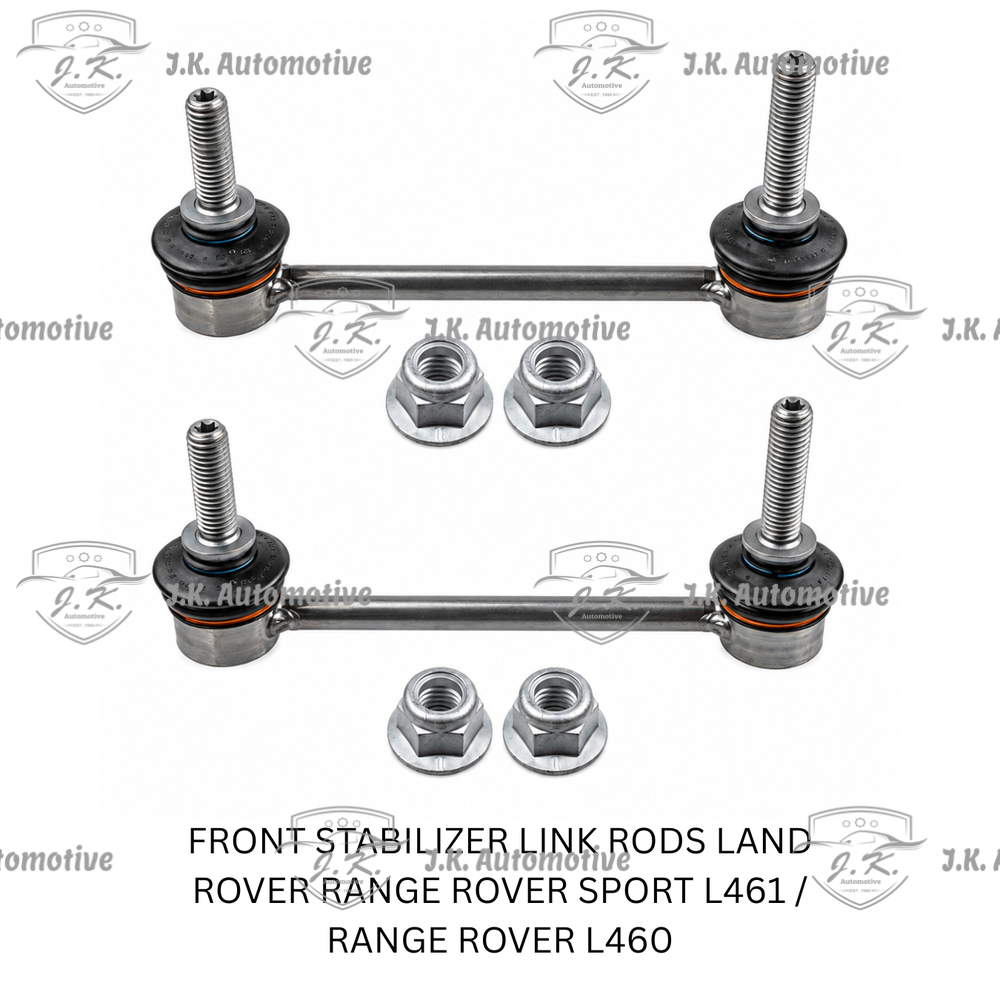
The Stokes Germany Front Stabilizer Link Rod Set of 2 for Land Rover Range Rover Sport L461 LR173205 / LR152801 is a premium aftermarket front suspension replacement set designed for compatible Range Rover Sport III L461 applications and supplied as a complete pair containing two front stabilizer links, one for each side of the front suspension. For this application, LR173205 is the newer OEM reference and LR152801 is the earlier reference that it replaces, meaning LR173205 / LR152801 should be understood as one reference family rather than two separate left- and right-hand part numbers. OEM-oriented parts information specifically records LR173205 as replacing LR152801 and identifies the component position as Left, Right and Front. Teknorot independently cross-references both LR173205 and LR152801 to its LA-286 front suspension stabilizer-bar link and lists the Range Rover Sport L461 from 2022 onward, with quantity per vehicle stated as 2. These components are commonly known as Sway bar links, Sway links, Anti roll link rods, Stabiliser sway links, front drop links, anti-roll-bar links, coupling rods or stabilizer end links, so customers and workshops may use several different names when searching for the same type of suspension component. The links provide mechanical connections within the front stabilizer or anti-roll-bar arrangement and repeatedly articulate as the Range Rover Sport L461 suspension responds to differences in vertical movement between the front wheels. If one front wheel enters a pothole while the opposite wheel remains on comparatively smooth pavement, the two sides of the suspension experience different vertical movement and the Sway bar links articulate as part of the stabilizer arrangement. Crossing a speed breaker diagonally creates another common example because one front wheel reaches the raised surface before the opposite wheel. Broken roads, expansion joints, uneven parking ramps, damaged road edges and repeated road irregularities create additional articulation during everyday driving. During cornering, the Anti roll link rods also work within the anti-roll-bar arrangement as part of the overall suspension system that helps manage body movement and differences in loading between the two sides. Because the Stabiliser sway links repeatedly articulate, their joints complete a very large number of movement cycles as mileage accumulates. They are also positioned underneath the vehicle and experience continuous road vibration as well as exposure to dirt, dust, moisture and road water. Over extended service, deterioration may gradually develop within the joints or protective components and eventually create excessive unwanted mechanical clearance. A worn front Sway link can then contribute to tapping, rattling, knocking or clunking noises from the front suspension, particularly over uneven roads. However, front suspension noise should not automatically be attributed to the stabilizer links because stabilizer-bar bushes, suspension-arm bushes, ball joints, dampers and related mounting hardware can create similar symptoms. Both front links and the surrounding suspension should therefore be inspected properly before replacement. For compatible vehicles, the Stokes Germany set supplies two LR173205 / LR152801-equivalent front links together, providing the complete pair required for both sides. Your current JK Automotive catalogue also lists this exact Stokes Germany set for the Range Rover Sport L461 with OEM Cross Reference LR173205 / LR152801.
What do the LR173205 / LR152801 front Sway bar links do on the Land Rover Range Rover Sport L461?
The LR173205 / LR152801 front Sway bar links on the Land Rover Range Rover Sport L461 provide the corresponding mechanical connections within the vehicle's front stabilizer or anti-roll-bar arrangement, allowing the stabilizer system to work together with the front suspension as the wheels move vertically over changing road surfaces and as the vehicle experiences differences in suspension loading during cornering. LR173205 is the newer reference replacing LR152801, and the component is catalogued for the Front of the Range Rover Sport III L461. Teknorot lists both LR173205 and LR152801 against the same LA-286 stabilizer-bar link, identifies the position as Front, specifies quantity 2 per vehicle and lists the Range Rover Sport L461 from 2022 onward. These components are commonly described as Sway links, Sway bar links, Anti roll link rods, Stabiliser sway links, front drop links, coupling rods, anti-roll-bar links or stabilizer end links. During normal driving, the Range Rover Sport L461 front wheels do not always move vertically by exactly the same amount. When one wheel encounters a pothole while the opposite wheel remains on smoother pavement, one side of the front suspension may compress or extend differently from the other side. The Sway links articulate during this differential wheel movement while maintaining the required mechanical connections within the stabilizer arrangement. A similar situation occurs when the vehicle crosses a speed breaker diagonally because one front wheel reaches the raised surface before the opposite wheel. Uneven parking ramps, road depressions, expansion joints, broken roads and damaged road edges can repeatedly create similar suspension movement. During cornering, the anti-roll-bar arrangement operates together with the remaining suspension components to help manage body roll. The Anti roll link rods themselves do not independently determine the complete handling characteristics of the vehicle because springs or air-suspension components, dampers, suspension arms, bushes, tyres, wheel alignment and other systems also influence vehicle behaviour. Instead, the links provide the required mechanical connection through which the stabilizer arrangement can operate. The joints within the Stabiliser sway links repeatedly articulate during normal vehicle operation and therefore complete a substantial number of movement cycles throughout their service life. Their position underneath the vehicle also subjects them to continuous road vibration and environmental exposure. If excessive joint clearance develops through wear, unwanted movement may occur under changing suspension loads and can contribute to tapping, rattling, knocking or clunking sounds. A particularly useful feature of this L461 application is that LR173205 is catalogued for both Left and Right front positions rather than requiring separate handed OEM references. OEM-oriented parts information explicitly describes LR173205 as Left, Right and Front, while Lemförder application data states that its LR173205 replacement fits the left or right side and requires two per vehicle. Therefore, the Stokes Germany set provides two corresponding LR173205 / LR152801 front links for the applicable Range Rover Sport L461.
What are the common symptoms of worn front stabilizer links on the Range Rover Sport L461?
Common symptoms that may be associated with worn front stabilizer links on the Range Rover Sport L461 include tapping, clicking, rattling, knocking or clunking noises from the front suspension, especially when the vehicle travels slowly across potholes, speed breakers, broken roads, expansion joints, uneven parking ramps and repetitive smaller road irregularities, although these symptoms should always be properly diagnosed because several other front suspension components can create similar noises. The applicable Sway bar link reference family for the conventional front stabilizer application is LR173205 / LR152801, with LR173205 superseding LR152801. OEM-oriented parts information identifies LR173205 as a front link suitable for the left and right positions, while Teknorot specifies two of the corresponding front links per vehicle for the Range Rover Sport L461. When the Sway links remain mechanically serviceable, their joints accommodate the necessary suspension articulation while maintaining the required stabilizer connections without excessive unwanted clearance. As vehicle mileage accumulates, however, repeated articulation, changing suspension loads, continuous vibration and environmental exposure can gradually contribute to deterioration within the joints or protective components of the Anti roll link rods. During an early stage of wear, a driver may notice only a relatively light tapping or rattling sound when travelling slowly over repetitive smaller road irregularities. The same vehicle may appear comparatively quiet on a smooth road because there is less abrupt differential suspension movement and ordinary tyre or road noise may conceal smaller mechanical sounds. If unwanted joint clearance becomes greater, the light tapping may develop into a more noticeable knocking or clunking noise. Unequal vertical movement between the front wheels can make the symptom easier to reproduce because the Stabiliser sway links articulate when one side of the suspension moves differently from the opposite side. For example, if the Front Left wheel enters a pothole while the Front Right wheel remains on comparatively smooth pavement, the difference in wheel movement creates articulation through the stabilizer arrangement. Crossing a speed breaker diagonally can create a similar condition. Because the links operate underneath the vehicle, deterioration of a protective boot can also expose the joint to dirt, moisture and road contamination, potentially accelerating wear depending on operating conditions. Nevertheless, a front suspension knock should never automatically be diagnosed as worn Sway bar links. Stabilizer-bar bushes, control-arm bushes, ball joints, dampers, damper mounts and loose or deteriorated mounting hardware can produce similar symptoms. A technician should therefore physically inspect both LR173205 / LR152801 front links for excessive joint play, looseness, damaged protective components and abnormal movement while simultaneously checking the surrounding front suspension. Both links should be inspected whenever stabilizer-link deterioration is suspected because they operate on the same vehicle and accumulate the same overall mileage, although one side can wear earlier because the two front wheels do not necessarily encounter identical road impacts. When both links require replacement, the Stokes Germany set of 2 supplies the complete front pair.
Are LR173205 and LR152801 the correct front stabilizer link references for the Land Rover Range Rover Sport L461?
Yes, LR173205 and LR152801 are supported front stabilizer-link references for applicable Land Rover Range Rover Sport III L461 configurations, but there is an important detail customers and workshops should understand: LR173205 and LR152801 are not two separate references representing the Front Left and Front Right links. Instead, LR173205 is the newer part reference that replaces LR152801, and the same applicable stabilizer-link design can be used on both front sides. OEM-oriented parts data explicitly states that Land Rover LR173205 replaces LR152801 and identifies LR173205 with the positions Left, Right, Front. Teknorot independently cross-references LR173205 and LR152801, together with M8E23B438BC and M8E23B438BD, to its LA-286 Suspension Stabilizer Bar Link. Its technical catalogue identifies the position as Front, specifies quantity per vehicle as 2 and lists the Land Rover Range Rover Sport L461 from 2022 onward among the compatible applications. Teknorot's March 2025 new-product catalogue separately lists Range Rover Sport L461 2022 onward, Front, OEM LR173205, providing additional application support. Lemförder aftermarket information also lists LR173205 and LR152801 as alternate references for a front Sway bar link and explicitly describes the product as fitting the left or right side, with two required per vehicle. Formpart similarly lists LR152801 and LR173205 for the Range Rover Sport III L461 from April 2022 onward and describes the stabilizer link as Front, both sides. Therefore, the correct way to understand this product is LR173205 — current/later reference, LR152801 — earlier reference, Position — Front, and Quantity — 2 per vehicle for the applicable conventional stabilizer configuration. These components may be called Sway bar links, Sway links, Anti roll link rods, Stabiliser sway links, front drop links, anti-roll-bar links, coupling rods or stabilizer end links. Including both LR173205 and LR152801 in the product title is useful because a customer may find either number on a previous invoice, workshop quotation, aftermarket catalogue or parts database. A customer searching Range Rover Sport L461 LR152801 should therefore still be able to locate the newer LR173205-equivalent product. There is also an important suspension-specification consideration: OEM-oriented listings describe LR173205 for vehicles without active stabilizer/active roll-control configurations, while active-stabilizer applications can use different components. For that reason, final compatibility should always be confirmed using the vehicle VIN and suspension specification before installation.
Is LR173205 the same as LR152801 for the Range Rover Sport L461 front stabilizer link?
LR173205 and LR152801 belong to the same front stabilizer-link reference lineage for the applicable Land Rover Range Rover Sport L461 application, with LR173205 being the newer reference that supersedes or replaces LR152801, so a customer searching for LR152801 may correctly encounter LR173205 as the later replacement reference rather than assuming that the two numbers represent separate Front Left and Front Right components. OEM-oriented parts information explicitly states LR173205 and Replaces: LR152801, while identifying LR173205 as a front suspension stabilizer-bar link for the Left and Right positions. This distinction is important for accurate product information because it prevents a common misunderstanding when a product title contains two OEM numbers separated by a slash. In this case, LR173205 / LR152801 means later/reference replacement relationship rather than LR173205 = left and LR152801 = right. Teknorot supports this interpretation by placing LR173205 and LR152801 together under the same LA-286 Suspension Stabilizer Bar Link and specifying a quantity of 2 per vehicle for Range Rover Sport L461 applications from 2022 onward. Lemförder replacement data also lists OEM LR173205 with LR152801 as an alternate reference and states that the front Sway bar link fits either the left or right side, with two per vehicle. These components may be referred to as Sway bar links, Sway links, Anti roll link rods, Stabiliser sway links, front drop links, coupling rods or anti-roll-bar links. A vehicle owner may have LR152801 recorded in an older catalogue or repair estimate, while a newer database may return LR173205. Both references are therefore useful in online product information because including them improves identification for customers using either number. The later LR173205 reference does not mean that a vehicle originally associated with LR152801 automatically requires only one component; the applicable front stabilizer arrangement still uses one link on each side, which is why the Stokes Germany product is supplied as a set of 2. Another important point is suspension configuration. Available OEM-oriented data describes LR173205 in connection with the conventional front stabilizer arrangement and specifically distinguishes vehicles without active stability control or active stabilizer from applications using active roll-control hardware. Consequently, the fact that LR173205 supersedes LR152801 should not be used as the only compatibility check for every L461. Before ordering, the VIN and the vehicle's actual suspension/stabilizer specification should be checked. For the applicable configuration, however, LR173205 is the later replacement reference for LR152801 and two matching front Stabiliser sway links are used, one on each side.
Why is the Range Rover Sport L461 LR173205 / LR152801 front stabilizer link supplied as a set of 2?
When should the LR173205 / LR152801 front stabilizer links be replaced on the Range Rover Sport L461?
The LR173205 / LR152801 front stabilizer links on the Land Rover Range Rover Sport L461 should be considered for replacement when a proper suspension inspection identifies excessive ball-joint play, looseness, abnormal movement, damaged or deteriorated protective boots, excessive clearance, corrosion-related deterioration, damaged mounting points or another confirmed mechanical defect affecting one or both front links, rather than replacing them automatically at one predetermined mileage because the actual service life of Sway bar links depends heavily on road conditions, driving environment, vehicle usage, suspension condition, wheel and tyre configuration and how frequently the vehicle encounters potholes, speed breakers, broken roads and uneven surfaces. LR173205 is the newer reference replacing LR152801, and this is particularly important when identifying the product because the two numbers are not separate Front Left and Front Right references. OEM-oriented parts information identifies LR173205 as a Front stabilizer link suitable for both Left and Right positions, while Teknorot lists LR173205 and LR152801 against the same front stabilizer link and specifies a quantity of 2 per vehicle for the Range Rover Sport L461. These components are commonly known as Sway bar links, Sway links, Anti roll link rods, Stabiliser sway links, front drop links, anti-roll-bar links, coupling rods or stabilizer end links. During everyday driving, both front links repeatedly articulate as the Range Rover Sport L461 suspension responds to differences in vertical movement between the two front wheels. If the Front Left wheel enters a pothole while the Front Right wheel remains on comparatively smooth pavement, one side of the suspension compresses or extends differently from the opposite side and the stabilizer arrangement responds to this difference. Crossing a speed breaker diagonally creates another common situation because one front wheel reaches the raised portion before the other. Broken roads, expansion joints, damaged road edges, uneven parking ramps and repetitive smaller road irregularities create additional articulation throughout normal driving. During cornering, the front stabilizer arrangement operates as part of the overall suspension system to help manage body movement and differences in loading between the two sides of the vehicle. Because the Anti roll link rods repeatedly articulate under these conditions, their joints complete a very large number of movement cycles over the service life of the vehicle. The Stabiliser sway links also operate underneath the Range Rover Sport, where they experience continuous road vibration as well as exposure to dirt, dust, moisture and road water. Over extended use, deterioration may gradually develop within a joint or its protective components and eventually permit excessive unwanted mechanical clearance. A relatively light tapping or rattling sound over small road irregularities can be one reason to inspect the links. If wear progresses, the noise may become a more noticeable knocking or clunking sound. However, these symptoms do not automatically prove that the front Sway links are defective because stabilizer-bar bushes, control-arm bushes, ball joints, dampers, damper mounts and mounting hardware can produce similar noises. Both LR173205 / LR152801 links should therefore be physically inspected together with the surrounding suspension. If only one side has excessive joint play, the opposite side should also be inspected because both links have accumulated approximately the same vehicle mileage, although the second component should not automatically be declared defective. When both links require renewal, the Stokes Germany set of 2 provides the complete matching front pair. It is also essential to confirm the suspension configuration because OEM catalogue data distinguishes LR173205 for vehicles without active stabilizer/active roll control from versions equipped with active stabilizer hardware.
Can worn LR173205 / LR152801 front Sway bar links cause knocking or rattling noises in the Range Rover Sport L461?
Yes, worn LR173205 / LR152801 front Sway bar links can be one possible cause of tapping, clicking, rattling, knocking or clunking noises from the Range Rover Sport L461 front suspension when excessive mechanical clearance develops within their joints or mounting interfaces, although the presence of these sounds alone should never be treated as definite proof that the stabilizer links are defective because several other front suspension components can create very similar symptoms. The LR173205 / LR152801 reference family is used for the applicable conventional front stabilizer arrangement, with LR173205 being the later reference replacing LR152801. OEM-oriented catalogue data describes LR173205 as a Left, Right, Front stabilizer link, and Teknorot specifies two per vehicle for the Range Rover Sport L461. These components are commonly called Sway links, Anti roll link rods, Stabiliser sway links, front drop links, anti-roll-bar links, coupling rods or stabilizer end links. When mechanically serviceable, the joints within the Sway bar links accommodate the required suspension articulation while maintaining the corresponding stabilizer connections without excessive unwanted movement. During everyday operation, however, the links continuously respond to differences in vertical movement between the Front Left and Front Right wheels. If one front wheel enters a pothole while the opposite wheel remains on smoother pavement, one side of the front suspension compresses or extends differently from the other side and the Sway links articulate as part of the stabilizer arrangement. Crossing a speed breaker diagonally produces another common condition because one wheel reaches the raised surface before the other. Broken roads, road depressions, expansion joints, uneven parking ramps and damaged road edges can repeatedly produce similar differential suspension movement. Over many thousands of kilometres, the joints within the Anti roll link rods therefore complete a substantial number of articulation cycles while also experiencing continuous road vibration and environmental exposure. If wear gradually creates excessive joint clearance, a small amount of unintended movement can occur when suspension load or direction changes. This movement may produce a tapping, rattling, clicking, knocking or clunking sound. Early deterioration may produce only a light sound at relatively low speeds over repetitive small bumps, whereas greater clearance can produce a stronger knock over potholes or abrupt road-surface changes. The symptom may also be intermittent because the amount of Stabiliser sway link articulation depends on the road surface and the relative movement of the two front wheels. The Range Rover Sport may therefore remain comparatively quiet on a smooth highway even when some link wear is present. Nevertheless, a technician should not diagnose LR173205 / LR152801 Sway bar links solely according to the sound reported by the driver. Stabilizer-bar bushes, control arms, control-arm bushes, ball joints, dampers, damper mounts and loose mounting hardware can produce similar noises. Both links should therefore be physically checked for excessive play, abnormal joint movement, deterioration of protective boots and looseness at the mounting points. Since the same applicable LR173205 design is used on both front sides, the Stokes Germany set contains two matching links. When both components are confirmed worn, replacing them together renews both corresponding front stabilizer connections. Before ordering, however, the VIN and suspension configuration should be checked because active stabilizer/active roll-control L461 applications can use different components.
Are LR173205 and LR152801 the correct front stabilizer link references for the Land Rover Range Rover Sport L461?
Yes, LR173205 and LR152801 are supported front stabilizer-link references for the applicable Land Rover Range Rover Sport III L461, but the relationship between these two OEM numbers must be understood correctly because they do not represent separate Front Left and Front Right links. LR173205 is the newer replacement reference for LR152801, and the applicable conventional front stabilizer arrangement uses the corresponding link on both front sides. OEM-oriented parts data specifically identifies Land Rover LR173205 as a suspension stabilizer-bar link, records that it replaces LR152801 and lists its positions as Left, Right and Front. Teknorot provides independent technical support by cross-referencing both LR173205 and LR152801 to its LA-286 Suspension Stabilizer Bar Link, identifying its position as Front, specifying quantity per vehicle as 2 and listing the Range Rover Sport L461 from 2022 onward among the compatible vehicles. Formpart also lists LR152801 and LR173205 for the Range Rover Sport III L461 from 04/2022 onward and describes the stabilizer link as a front component for both sides. Therefore, the correct practical interpretation is LR173205 — newer/current reference, LR152801 — earlier reference, Position — Front Left & Front Right, and Quantity — 2 per vehicle for the applicable suspension configuration. These components may also be known as Sway bar links, Sway links, Anti roll link rods, Stabiliser sway links, front drop links, anti-roll-bar links, coupling rods or stabilizer end links. Keeping both LR173205 and LR152801 in the product title is useful because customers, mechanics and workshops may encounter either number depending on the age of the parts catalogue, workshop quotation, previous invoice or number printed on an existing component. A customer searching for Range Rover Sport L461 LR152801 should therefore be able to find a product catalogued under the later LR173205 reference. Likewise, a customer searching LR173205 front Sway link, L461 Anti roll link rods or Range Rover Sport L461 Stabiliser sway links should be able to identify the same applicable product. Another important fitment consideration is the stabilizer configuration. OEM catalogue information describes LR173205 for Range Rover Sport applications without active stability control/active stabilizer and with the conventional stabilizer bar, while active roll-control configurations have separate stabilizer-link hardware. This means the model name and chassis code alone should not be treated as sufficient compatibility confirmation for every L461. The VIN and suspension specification should be checked before ordering. For the applicable conventional stabilizer configuration, however, LR173205 / LR152801 is the supported front stabilizer-link reference family, and two corresponding links are used per vehicle.
Is the LR173205 / LR152801 front stabilizer link the same for the left and right sides of the Range Rover Sport L461?
Yes, for the applicable Range Rover Sport L461 conventional front stabilizer configuration, LR173205 / LR152801 is catalogued for both the Front Left and Front Right positions rather than using one unique OEM reference for the left side and another unique OEM reference for the right side, which is why the Stokes Germany product is supplied as two matching front stabilizer links. OEM-oriented parts information identifies LR173205 with the positions Left, Right, Front and records LR152801 as the earlier reference replaced by LR173205. Teknorot independently lists LR173205 and LR152801 against the same LA-286 Suspension Stabilizer Bar Link, identifies the position simply as Front and specifies quantity per vehicle as 2 for the Range Rover Sport L461 from 2022 onward. Formpart likewise describes its LR152801 / LR173205 replacement for the Range Rover Sport III L461 as a front stabilizer link for both sides. Therefore, unlike a stabilizer-link application where the customer must identify separate LH and RH OEM numbers, the applicable L461 conventional stabilizer arrangement uses the corresponding LR173205 / LR152801 design on each front side. The practical arrangement can therefore be understood as Front Left — LR173205 / LR152801 and Front Right — LR173205 / LR152801, with two links required for a complete pair replacement. These components are commonly called Sway bar links, Sway links, Anti roll link rods, Stabiliser sway links, front drop links, coupling rods, anti-roll-bar links or stabilizer end links. Although the same applicable component is used on both sides, each individual link operates with its respective side of the suspension. When the Front Left wheel enters a pothole while the Front Right wheel remains on smoother pavement, the left-side Sway link articulates according to that suspension movement while the right-side component remains connected to the corresponding opposite side. When the Front Right wheel encounters the greater road irregularity, the relationship is reversed. Both Anti roll link rods therefore repeatedly articulate as the vehicle travels over changing road surfaces. During cornering, both Stabiliser sway links also operate within the front stabilizer arrangement as the suspension experiences different loading between the two sides. Both links accumulate the same overall vehicle mileage but may not deteriorate at exactly the same rate because the two front wheels can encounter different potholes and impacts. If one link develops excessive joint clearance, the opposite link should also be inspected, but it should not automatically be considered defective without inspection. When both require replacement, the Stokes Germany set of 2 provides two matching LR173205 / LR152801 front Sway bar links together. This same-left-and-right fitment should not, however, be generalized to every L461 suspension specification. OEM catalogue information distinguishes conventional-bar vehicles from active stabilizer/active roll-control vehicles, which can use different components. VIN confirmation is therefore recommended before installation.
Why is Stokes Germany a European-quality alternative to Lemförder, FEBI, Meyle and other established brands for Range Rover Sport L461?
Stokes Germany provides a premium aftermarket replacement option for Land Rover Range Rover Sport L461 owners, workshops, mechanics and automotive spare-parts buyers searching for front Sway bar links, Sway links, Anti roll link rods or Stabiliser sway links corresponding to LR173205 / LR152801, particularly when comparing replacement choices with established European aftermarket brands such as Lemförder, FEBI, Meyle and other recognised steering and suspension manufacturers. When choosing replacement stabilizer links for a premium SUV such as the Range Rover Sport L461, important considerations include accurate OEM-reference matching, correct suspension configuration, component dimensions, joint construction, material quality, protective sealing, manufacturing consistency, warranty support, product availability and overall replacement value rather than choosing a component solely according to the brand name printed on the packaging. Accurate reference identification is especially important for this application because LR173205 and LR152801 should not be interpreted as separate left- and right-hand references. LR173205 is the newer replacement reference for LR152801, and the applicable link is used on both front sides, with two required per vehicle. Teknorot cross-references LR173205 and LR152801 to one front stabilizer-link design and specifies two per Range Rover Sport L461, while OEM-oriented parts information identifies LR173205 for the Left, Right and Front positions and confirms that it replaces LR152801. There is also direct aftermarket evidence that Lemförder offers a replacement front anti-roll-bar link for the Range Rover L460 and Range Rover Sport L461 under product code 602123550, cross-referenced to LR173205 and LR152801. This provides customers with a useful reference point when comparing Stokes Germany with an established European suspension brand for the same OEM-reference family. The front Sway bar links repeatedly articulate as the Range Rover Sport suspension responds to cornering, potholes, speed breakers, broken roads, uneven surfaces and differences in vertical movement between the front wheels, making joint integrity, material construction and protective sealing important considerations for replacement components. The links also operate underneath the vehicle and experience continuous road vibration, dirt, dust, moisture and road water throughout normal service. The Stokes Germany set-of-2 configuration provides both corresponding front links together, making it convenient when both sides require replacement and avoiding the need to order two individual pieces separately. Stokes Germany can therefore be positioned as a premium aftermarket alternative for customers comparing fitment, component quality, warranty support, availability and replacement cost with brands such as Lemförder, FEBI and Meyle. However, any specific marketing claim that this exact Stokes Germany LR173205 / LR152801 product is manufactured in the same factory, on the same production line or to exactly the same specification as Lemförder, FEBI, Meyle or another named manufacturer should only be published when documentary evidence exists for that specific manufacturing relationship. Another important point is that LR173205 applies to the applicable conventional stabilizer-bar configuration; OEM catalogue information separately identifies different hardware for Range Rover Sport L461 vehicles equipped with active stabilizer or active roll control. Therefore, VIN and suspension-specification verification should be performed before ordering. For the applicable configuration, the Stokes Germany Front Stabilizer Link Rod Set of 2 provides two matching LR173205 / LR152801 front stabilizer links for the Range Rover Sport L461.
When should the LR173205 / LR152801 front stabilizer links be replaced on the Land Rover Range Rover Sport L461?
The LR173205 / LR152801 front stabilizer links on the Land Rover Range Rover Sport L461 should be considered for replacement when a proper front suspension inspection identifies excessive ball-joint play, looseness, abnormal movement, deterioration or splitting of the protective joint boots, excessive mechanical clearance, corrosion-related damage, damaged mounting points or another confirmed defect affecting one or both links, rather than replacing the components automatically at one fixed mileage because the actual service life of Sway bar links depends on many operating factors including road quality, driving environment, vehicle usage, suspension condition, wheel and tyre configuration, environmental exposure and how frequently the vehicle travels across potholes, speed breakers, broken roads and uneven surfaces. LR173205 is the newer reference associated with and replacing the earlier LR152801 reference for the applicable front stabilizer-link application, so LR173205 / LR152801 should be understood as a reference lineage rather than two different numbers representing the Front Left and Front Right sides. The applicable conventional front arrangement uses two matching links, with one installed on the Front Left and one on the Front Right. These components are commonly described as Sway bar links, Sway links, Anti roll link rods, Stabiliser sway links, front drop links, anti-roll-bar links, coupling rods or stabilizer end links. During everyday driving, both front links repeatedly articulate as the Range Rover Sport L461 suspension responds to differences in vertical wheel movement. If the Front Left wheel enters a pothole while the Front Right wheel remains on comparatively smooth pavement, the two sides of the suspension experience different amounts of compression or extension and the stabilizer arrangement responds to this differential movement. Crossing a speed breaker diagonally creates another common situation because one front wheel reaches the raised surface before the opposite wheel. Broken roads, expansion joints, uneven parking ramps, damaged road edges and repeated smaller road irregularities produce additional articulation throughout normal vehicle operation. During cornering, the front anti-roll-bar arrangement also operates as part of the complete suspension system to help manage body movement and differences in loading between the two sides. The Anti roll link rods therefore complete a substantial number of articulation cycles as vehicle mileage accumulates. The Stabiliser sway links are also positioned underneath the vehicle, where they experience continuous road vibration and exposure to dirt, dust, moisture, road water and changing environmental conditions. Over extended service, wear can gradually develop within a joint and may eventually permit excessive unwanted mechanical clearance. One possible early symptom is a relatively light tapping or rattling sound from the front suspension while travelling slowly across repetitive smaller road irregularities. If joint clearance becomes greater, the sound may develop into a more noticeable knocking or clunking noise. However, a suspension noise alone does not prove that the Sway links are defective because stabilizer-bar bushes, control-arm bushes, ball joints, dampers, damper mounts and loose mounting hardware can create similar symptoms. Both LR173205 / LR152801 links should therefore be physically inspected before replacement. If one front link shows excessive play, the link on the opposite side should also be checked because both have accumulated approximately the same overall vehicle mileage, although one defective component does not automatically mean the opposite component has also failed. When both links are worn, replacing them with the Stokes Germany set of 2 renews the corresponding front stabilizer connections together. For the Range Rover Sport L461, compatibility should additionally be checked against the VIN and suspension specification because active roll-control or different stabilizer configurations may require different components.
Can worn LR173205 / LR152801 front Sway bar links cause knocking or rattling noises in the Range Rover Sport L461?
Yes, worn LR173205 / LR152801 front Sway bar links can be one possible source of tapping, clicking, rattling, knocking or clunking noises from the Land Rover Range Rover Sport L461 front suspension when excessive mechanical clearance develops within their joints or mounting interfaces, although these noises should never be treated as definite proof of stabilizer-link failure without a physical suspension inspection because several other front suspension components can produce very similar symptoms. The applicable LR173205 / LR152801 components are also commonly called Sway links, Anti roll link rods, Stabiliser sway links, front drop links, anti-roll-bar links, coupling rods or stabilizer end links. LR173205 represents the newer reference associated with the earlier LR152801 number, and the applicable standard front arrangement uses two matching links, one on each side of the vehicle. When mechanically serviceable, the ball joints within the Sway bar links allow the required angular movement while maintaining the mechanical connections within the stabilizer arrangement without excessive unwanted clearance. During everyday driving, however, these joints repeatedly articulate as the front wheels encounter changing road surfaces. If one front wheel enters a pothole while the opposite wheel remains on relatively smooth pavement, the two sides of the suspension move vertically by different amounts and the stabilizer arrangement responds accordingly. A similar condition occurs when the Range Rover Sport crosses a speed breaker diagonally because one front wheel reaches the raised portion before the other wheel. Broken roads, expansion joints, road depressions, uneven parking ramps and damaged road edges repeatedly create similar differences in wheel movement. During cornering, the Anti roll link rods also operate within the front stabilizer arrangement as suspension loading changes from one side of the vehicle to the other. Over thousands of kilometres, the Stabiliser sway links therefore complete a very large number of articulation cycles while simultaneously experiencing continuous road vibration and environmental exposure. If internal joint wear develops and excessive clearance appears, the link may move slightly when suspension loading changes direction, potentially creating an audible tapping, rattling or knocking sound. Early-stage deterioration may produce only a light intermittent noise when driving slowly across smaller bumps, while more advanced clearance can create a more noticeable clunk when travelling over potholes or abrupt road irregularities. The symptom may not be present continuously because the amount of Sway link articulation varies according to the road surface and relative movement of the two front wheels. Consequently, a vehicle can remain comparatively quiet on a smooth highway while producing noticeable noises on broken city roads. A technician should therefore inspect both front links for excessive ball-joint movement, looseness, damaged protective boots, corrosion and abnormal movement at the mounting points. Stabilizer-bar bushes, suspension control-arm bushes, ball joints, dampers, damper mounts and associated hardware should also be checked because deterioration in these areas can create similar sounds. If one LR173205 / LR152801 Sway bar link is found defective, the opposite link should also be inspected, but it should not automatically be replaced unless the workshop determines that replacement is appropriate. When both components show wear, the Stokes Germany set of 2 provides two matching front links for the applicable L461 stabilizer arrangement. Final compatibility should always be checked using the VIN and actual suspension specification.
Are LR173205 and LR152801 the correct front stabilizer link references for the Land Rover Range Rover Sport L461?
Yes, LR173205 and LR152801 are supported front stabilizer-link references for applicable Land Rover Range Rover Sport L461 configurations, but it is important to understand the relationship between these two numbers correctly because they do not identify separate Front Left and Front Right stabilizer links. LR173205 is the newer replacement or superseding reference associated with the earlier LR152801 reference, meaning a customer searching for LR152801 can encounter LR173205 as the later replacement number for the applicable front stabilizer-link application. Technical aftermarket catalogue information cross-references both LR173205 and LR152801 to the same front stabilizer-link application for the Range Rover Sport L461, with two links required per vehicle. Therefore, the correct practical interpretation is LR173205 — newer/current reference, LR152801 — earlier reference, Position — Front, and Quantity — 2 links per applicable vehicle. These suspension components may also be described as Sway bar links, Sway links, Anti roll link rods, Stabiliser sway links, front drop links, anti-roll-bar links, coupling rods or stabilizer end links. The reference relationship is particularly important for an online automotive product listing because customers often search using the number available on an old invoice, workshop quotation, aftermarket catalogue or existing component rather than the latest replacement number. One customer may therefore search for Range Rover Sport L461 LR152801, another may search for LR173205 stabilizer link, while another may search for L461 front Sway bar links. Including both LR173205 and LR152801 in the product title allows customers using either reference to identify the corresponding product. It is equally important not to describe LR173205 as one side and LR152801 as the opposite side because this would incorrectly interpret the supersession relationship. For the applicable conventional stabilizer configuration, two matching LR173205 / LR152801-equivalent links are used, with one installed on the Front Left and one on the Front Right. The links repeatedly articulate as the vehicle responds to potholes, speed breakers, uneven surfaces and cornering, providing the corresponding mechanical connections within the front anti-roll-bar arrangement. When replacement is required, the Stokes Germany product is supplied as a set of 2 so that both matching front components are available together. However, the L461 can have different suspension and roll-control specifications, so the vehicle model and chassis alone should not be treated as the final compatibility check for every individual vehicle. A VIN check should be performed to confirm that LR173205 / LR152801 corresponds to the actual stabilizer configuration installed on the vehicle. This is particularly important on premium Land Rover platforms where equipment level and suspension specification can influence component selection. Therefore, for an applicable Range Rover Sport L461 using this front stabilizer-link arrangement, LR173205 / LR152801 is the correct reference family and the Stokes Germany set provides two matching front Sway links.
Is the LR173205 / LR152801 front stabilizer link the same for both left and right sides of the Range Rover Sport L461?
Yes, for the applicable Range Rover Sport L461 conventional front stabilizer configuration associated with LR173205 / LR152801, the same stabilizer-link reference family is used for both the Front Left and Front Right positions, with two matching links required per vehicle, which is why the Stokes Germany product is supplied as a set of 2 rather than using one separate OEM reference for the left side and another separate OEM reference for the right side. This is an important product-detail distinction because many premium vehicle suspension applications use handed Sway bar links with different part numbers for each side, whereas the applicable LR173205 / LR152801 application uses the corresponding same-type link on both front sides. LR173205 is the newer replacement reference associated with LR152801, so the slash between these numbers should be understood as a reference or supersession relationship rather than an indication that LR173205 belongs to one side and LR152801 belongs to the other side. In practical terms, one matching LR173205 / LR152801-equivalent Sway link is installed on the Front Left and another matching component is installed on the Front Right. These components are also commonly called Sway bar links, Anti roll link rods, Stabiliser sway links, front drop links, anti-roll-bar links, coupling rods or stabilizer end links. Although the same reference family can be used on both sides, each individual link operates on its own side of the suspension and repeatedly articulates as that wheel moves vertically. When the Front Left wheel enters a pothole while the Front Right wheel remains on smoother pavement, the left suspension experiences a different amount of vertical movement from the right suspension and the stabilizer arrangement responds to that difference. If the right wheel later encounters a pothole while the left wheel remains on a smoother surface, the opposite side experiences greater articulation. Crossing speed breakers diagonally, travelling over broken roads and entering uneven parking ramps repeatedly create these differences in wheel movement. During cornering, both Stabiliser sway links operate within the anti-roll-bar arrangement as suspension loading changes across the front axle. Because both links are the same application, supplying them together as a set of 2 simplifies ordering when both components require renewal. However, the fact that the same link fits both sides does not mean both links will necessarily wear at exactly the same rate. One side can encounter more potholes, damaged road edges or other impacts than the opposite side, so one Sway bar link may develop excessive joint clearance earlier. If one link is diagnosed as worn, both should be inspected, but the opposite link should not automatically be declared defective without examination. Another important consideration is that not every Range Rover Sport L461 necessarily uses the same front stabilizer arrangement. Vehicles equipped with different active roll-control or stabilizer systems may require different components. Therefore, the correct statement is that LR173205 / LR152801 is used on both Front Left and Front Right for the applicable configuration that specifies this link, with two required per vehicle, and final compatibility should be verified using the VIN and the vehicle's actual suspension specification before ordering or installation.
Why is Stokes Germany a European-quality alternative to Lemförder, FEBI, Meyle and other established brands for Range Rover Sport L461?
Stokes Germany provides a premium aftermarket replacement option for Range Rover Sport L461 owners, workshops, mechanics and automotive spare-parts buyers searching for front Sway bar links, Sway links, Anti roll link rods or Stabiliser sway links corresponding to LR173205 / LR152801, particularly when comparing replacement choices with established European aftermarket brands such as Lemförder, FEBI, Meyle and other recognised steering and suspension manufacturers. When selecting replacement stabilizer links for a premium SUV such as the Range Rover Sport L461, important considerations include correct OEM-reference matching, vehicle and suspension compatibility, component dimensions, joint construction, material quality, protective sealing, manufacturing consistency, mounting configuration, warranty support, product availability and overall replacement value rather than selecting a part solely according to the brand name printed on the packaging. Accurate reference identification is especially important for this L461 application because LR173205 and LR152801 should not be interpreted as separate left- and right-hand references. LR173205 is the newer reference associated with the earlier LR152801 number, while the applicable conventional front stabilizer arrangement uses two matching links, one on the Front Left and one on the Front Right. This allows the Stokes Germany set of 2 to provide both corresponding front components together rather than requiring the customer to purchase two individual links separately. These front Sway bar links repeatedly articulate as the Range Rover Sport suspension responds to cornering, potholes, speed breakers, broken roads, uneven surfaces and differences in vertical movement between the two front wheels. The Sway links also operate underneath the vehicle and experience continuous road vibration, dirt, dust, moisture and road water, making consistent joint construction and protective sealing important considerations for a replacement suspension component. Stokes Germany can therefore be considered as a premium aftermarket alternative for customers who may also be evaluating Lemförder, FEBI, Meyle and other established brands, particularly where the buyer wants the correct OEM-reference application, a complete set of 2, warranty support and competitive overall replacement value. Supplying the Anti roll link rods as a pair also simplifies workshop ordering because both front components are available in the same package when both require replacement. The Stabiliser sway links should still be installed only after the vehicle's suspension configuration has been confirmed because the Range Rover Sport L461 can use different stabilizer or active roll-control arrangements depending on specification. A VIN-based compatibility check is therefore important before ordering. Stokes Germany products can be positioned as a European-quality aftermarket replacement option when their applicable specifications, quality-control standards and warranty support meet the requirements of the intended application. However, any specific marketing claim stating that this exact LR173205 / LR152801 Stokes Germany product is manufactured in precisely the same factory, on the same production line or to exactly the same specification as Lemförder, FEBI, Meyle or another named European manufacturer should only be published where documentary evidence exists for that particular manufacturing relationship. For the applicable Range Rover Sport L461 configuration, the essential product identification remains Stokes Germany Front Stabilizer Link Rod Set of 2 corresponding to LR173205 / LR152801, with two matching front links supplied for the Front Left and Front Right positions.

Reviews
There are no reviews yet.