What is the Stokes Germany Rear Stabilizer Link Rod Set of 2 for Mercedes-Benz C-Class W204 A2043200589 & A2043200489?
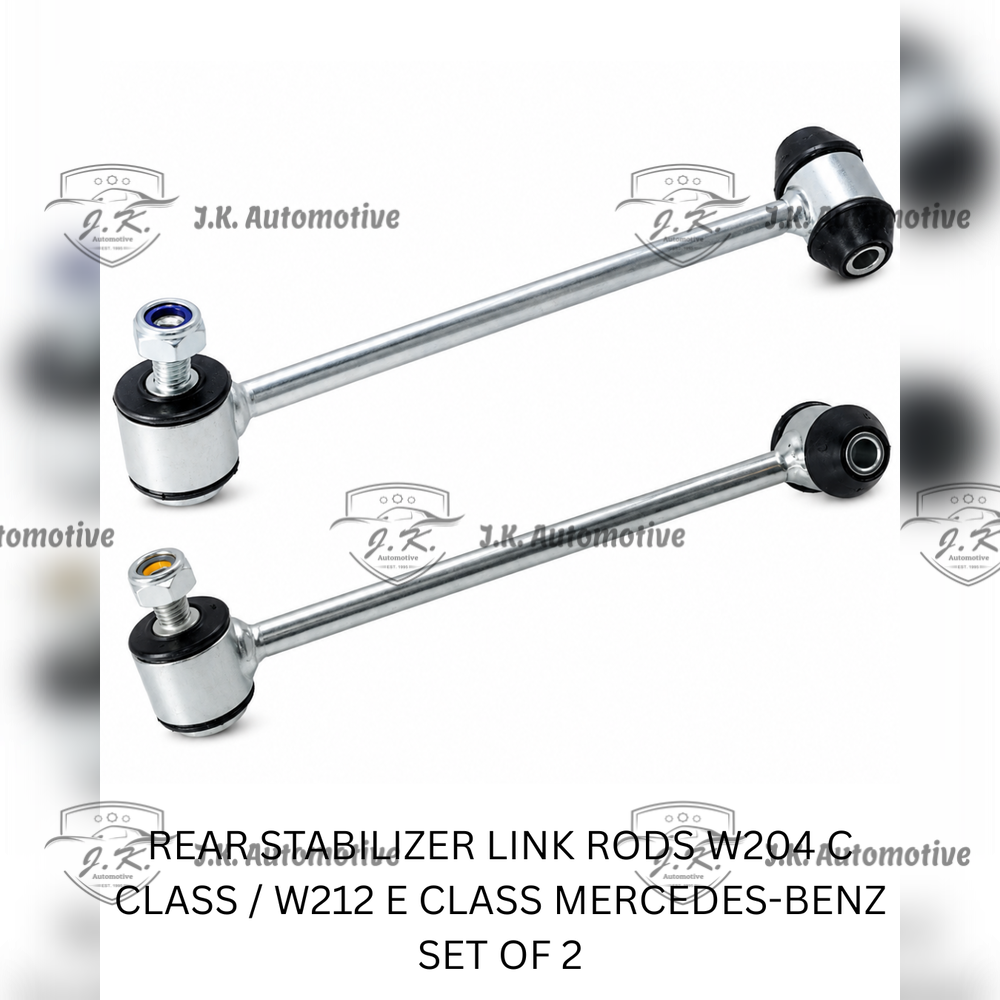
The Stokes Germany Rear Stabilizer Link Rod Set of 2 is a premium aftermarket suspension replacement designed for compatible Mercedes-Benz C-Class W204 models requiring OEM references A2043200589 and A2043200489. This product is supplied as a set of two rear stabilizer link rods so the corresponding rear suspension links can be replaced together when inspection confirms that the original components are worn, loose or damaged. These parts are commonly known as Sway bar links, Sway links, Anti roll link rods and Stabiliser sway links, while workshops may also call them stabilizer rods, coupling rods or drop links. All these names describe the same general type of suspension component used as part of the rear stabilizer or anti-roll bar system. During normal driving, the Mercedes-Benz C-Class W204 rear suspension continuously responds whenever the vehicle turns, accelerates, brakes, travels over potholes, crosses speed breakers, enters parking ramps or moves across uneven roads. The Sway bar links work repeatedly with these suspension movements and provide the required mechanical connection within the stabilizer system. Although stabilizer links are relatively small compared with shock absorbers or suspension arms, their joints operate continuously during everyday driving. Repeated movement, road vibration, pothole impacts, water, dust, dirt and normal ageing can gradually contribute to wear. When the Sway links begin developing excessive joint clearance or looseness, unwanted movement can occur at the stabilizer connection points. Worn Anti roll link rods may contribute to knocking, tapping, rattling or clunking sounds from the rear suspension, particularly while travelling slowly over rough roads, broken surfaces, potholes or speed breakers. The Stokes Germany rear link set is intended to replace worn Stabiliser sway links and renew these specific mechanical connection points. Supplying two links together provides a convenient solution when both corresponding rear components require replacement during the same suspension repair. The purpose of installing new stabilizer links is to restore serviceable suspension linkage rather than change the original ride height or unnecessarily alter the factory suspension characteristics of the Mercedes-Benz C-Class W204. Correct part identification is important because W204 suspension configurations can vary according to vehicle version and production specification. Therefore, A2043200589 and A2043200489 should be checked against the exact vehicle VIN or existing components before ordering. When these OEM references match the vehicle and the existing links are diagnosed as worn, the Stokes Germany Rear Stabilizer Link Rod Set of 2 provides a practical replacement for the Mercedes-Benz C-Class W204 rear Sway bar links, Sway links, Anti roll link rods and Stabiliser sway links.
What do the rear stabilizer link rods do on the Mercedes-Benz C-Class W204?
The rear stabilizer link rods on the Mercedes-Benz C-Class W204 provide an important mechanical connection within the rear stabilizer or anti-roll bar system and operate whenever the rear suspension responds to vehicle movement or changing road conditions. In simple words, the Sway bar links connect the relevant stabilizer and suspension points so the stabilizer system can perform its intended function while the rear wheels move. During everyday driving, the left and right rear wheels do not always move in exactly the same way. One wheel may travel through a pothole or over a raised section while the opposite wheel remains on a smoother surface. The suspension also moves when the C-Class W204 turns, brakes, accelerates, enters a parking ramp or crosses a speed breaker. The Sway links operate with these movements and maintain the necessary mechanical connection within the rear stabilizer system. These components may also be called Anti roll link rods, Stabiliser sway links, coupling rods, drop links or stabilizer rods depending on the workshop or spare-parts catalogue. When the links remain in serviceable condition, their joints allow the required suspension movement while maintaining a controlled connection. Because these joints move repeatedly throughout normal vehicle operation, they can gradually develop wear. Road vibration, potholes, speed breakers, rough surfaces, dirt, water and normal ageing can contribute to this deterioration. Once excessive clearance develops inside the Sway bar links, the joints may begin moving more than intended. This unwanted movement may contribute to knocking, tapping, rattling or clunking sounds from the rear suspension. Such noises can become easier to notice when travelling slowly over uneven roads because suspension movement is greater and other vehicle noises are lower. Replacing confirmed worn Sway links renews these specific mechanical connection points within the stabilizer system. However, a rear suspension noise should not automatically be treated as proof that the stabilizer links have failed. Stabilizer bushes, suspension bushes, shock absorbers, mounts and other suspension joints can produce similar noises. A professional technician should therefore inspect the complete rear suspension before deciding which parts require replacement. Correct OEM matching is equally important because different W204 versions may use different suspension components. A2043200589 and A2043200489 should therefore be verified against the exact vehicle before installation. When these references match the individual Mercedes-Benz C-Class W204 and the original links have excessive wear, the Stokes Germany set provides the corresponding rear Sway bar links, Sway links, Anti roll link rods and Stabiliser sway links needed to renew the affected stabilizer linkage.
What are the common symptoms of worn rear Sway bar links on a Mercedes-Benz C-Class W204?
Common symptoms of worn rear Sway bar links on the Mercedes-Benz C-Class W204 can include knocking, tapping, rattling or clunking sounds from the rear suspension, particularly while travelling slowly over potholes, speed breakers, broken roads, parking ramps, road joints or other uneven surfaces. These noises can develop because the joints inside the Sway links move repeatedly whenever the rear suspension compresses and extends. When these joints remain in good mechanical condition, they allow the necessary movement while maintaining a controlled connection within the stabilizer or anti-roll bar system. After extended vehicle use, repeated suspension movement, road vibration, pothole impacts, dirt, water and normal ageing can gradually contribute to wear inside the Anti roll link rods. Once excessive clearance develops inside a joint, the link may begin moving more than intended. Early wear may produce only a light tapping or rattling sound, and the driver may not hear anything unusual when travelling on a smooth highway. The noise can become easier to notice on rough roads where the rear suspension moves more frequently. As joint wear increases, a light tapping sound can develop into a more noticeable knock or clunk. Worn Stabiliser sway links may also become more noticeable when one rear wheel moves over a pothole or raised section while the opposite wheel remains relatively level. A similar noise may be heard when crossing a speed breaker diagonally or entering a parking ramp at an angle. However, these symptoms do not automatically mean that the Sway bar links are defective. The Mercedes-Benz C-Class W204 rear suspension contains several other components that can create similar noises, including stabilizer bushes, suspension bushes, shock absorbers, mounts and suspension joints. For this reason, physical inspection is important before purchasing replacement parts. A technician can check the Sway links for excessive joint play, loose connections, deterioration or damaged joint protection. If one link is badly worn, the corresponding link on the opposite side should also be inspected because both generally experience similar mileage and road conditions. When A2043200589 and A2043200489 are confirmed for the exact vehicle and excessive play is found in the existing components, the Stokes Germany set provides two replacement rear links for the repair. Replacing genuinely worn Sway bar links, Sway links, Anti roll link rods or Stabiliser sway links removes unwanted movement from those particular stabilizer connection points and can help eliminate associated knocking or rattling when the links are the actual source of the noise.
Why should the rear Sway links on the Mercedes-Benz C-Class W204 be replaced as a set of 2?
Replacing the rear Sway links as a set of two can be a practical approach when both corresponding components on the Mercedes-Benz C-Class W204 are worn because both Sway bar links work within the same rear stabilizer system and generally experience similar vehicle mileage, age and road conditions. Every time the C-Class W204 turns, crosses a pothole, passes over a speed breaker, enters a parking ramp or travels across an uneven surface, the rear suspension responds and the Anti roll link rods operate with that movement. Because both Stabiliser sway links perform the same general function throughout the vehicle's service life, both components are exposed to repeated suspension movement and road vibration. This does not mean that both links will always wear at exactly the same rate. One side can experience stronger pothole impacts, more contamination or different operating loads than the opposite side. However, when one Sway link has developed significant joint play or deterioration after substantial mileage, the corresponding component on the other side should also be inspected. If both links are worn, replacing them together provides serviceable components at both corresponding rear stabilizer connection points. This avoids fitting one new Sway bar link while leaving another heavily used and already deteriorated component in service. Replacing both worn links during the same repair may also reduce the possibility of another workshop visit shortly afterward if the remaining old Sway link starts producing knocking, tapping, rattling or clunking noises. The Stokes Germany product is supplied as a set of two, making this replacement convenient when inspection confirms that both rear links require attention. However, the fact that a product is supplied as a pair does not mean that a serviceable suspension component must automatically be replaced. Both Sway links should be inspected individually and their mechanical condition should determine whether replacement is required. The stabilizer bushes, suspension bushes, shock absorbers, mounts and other rear suspension components should also be inspected because replacing the Anti roll link rods cannot correct unrelated suspension wear. Correct part identification is another important part of the repair. A2043200589 and A2043200489 should be checked against the exact Mercedes-Benz C-Class W204 VIN or existing components before ordering. When these references match the vehicle and both original links require replacement, the Stokes Germany set provides two rear Stabiliser sway links for renewing the corresponding stabilizer linkage during the same suspension repair.
Are A2043200589 and A2043200489 the correct rear stabilizer link references for the Mercedes-Benz C-Class W204?
A2043200589 and A2043200489 are supplied as the OEM references for this Stokes Germany Mercedes-Benz C-Class W204 rear stabilizer-link set, but the exact references should still be checked against the individual vehicle VIN or original components before ordering because Mercedes-Benz W204 suspension specifications can vary according to model, production date, drivetrain and suspension package. These numbers are particularly useful when identifying the correct Sway bar links because stabilizer links that look similar externally can have different lengths, joint arrangements, thread sizes or mounting positions. The product should therefore not be selected only by looking at a photograph. OEM-number matching is a much stronger method of identifying the correct Sway links. A2043200589 and A2043200489 should be compared directly with the vehicle's parts information or the references associated with the original components. When the numbers match, they can be used to identify the corresponding rear Anti roll link rods required for the specified W204 application. It is also important to understand that Mercedes-Benz part numbers can be revised or superseded during a vehicle's production life. An older reference may sometimes be replaced by a later reference while the basic component application remains related, so VIN-based parts information is useful when multiple numbers appear in different catalogues. These components may be described by different names depending on the seller or workshop. One catalogue may call them rear stabilizer links, another may use Sway bar links, while a workshop may call them Sway links, Anti roll link rods, Stabiliser sway links, coupling rods or drop links. These different names should not create confusion because correct fitment depends on the actual component specification and OEM reference rather than the terminology used. Customers should also remember that having the correct part number does not automatically mean the component needs replacement. The existing links should be inspected for excessive joint movement, looseness, deterioration or damage. Knocking and rattling from the rear suspension can also come from stabilizer bushes, suspension bushes, shock absorbers, mounts or other joints. A technician should therefore identify the source of the problem before replacing parts. If A2043200589 and A2043200489 match the exact Mercedes-Benz C-Class W204 and the original rear links are diagnosed as worn, the Stokes Germany set provides the corresponding replacement linkage. Checking the VIN before purchase remains the safest method when there is any uncertainty regarding vehicle specification. This helps avoid ordering a visually similar but mechanically different component. Once fitment is confirmed, the Stokes Germany set provides two rear Sway bar links, Sway links, Anti roll link rods or Stabiliser sway links for renewing the specified Mercedes-Benz C-Class W204 rear stabilizer linkage.
How can replacing worn rear Anti roll link rods help the Mercedes-Benz C-Class W204 suspension?
Replacing worn rear Anti roll link rods on a compatible Mercedes-Benz C-Class W204 can help restore serviceable mechanical connections within the rear stabilizer system when the original components have developed excessive joint play, looseness, deterioration or physical damage. The rear stabilizer system works whenever the suspension responds to vehicle movement and changing road conditions. Every time the C-Class W204 turns, crosses a speed breaker, travels through a pothole, enters a parking ramp or passes over an uneven road, the rear suspension moves and the Sway bar links operate with this movement. When these links remain in serviceable mechanical condition, their joints allow the required suspension movement while maintaining the necessary connection within the stabilizer or anti-roll bar system. After extended mileage, repeated suspension movement, road vibration, pothole impacts, dirt, moisture and normal ageing can gradually contribute to wear inside the Sway links. Once excessive clearance develops inside the joints, they may begin moving more than intended. This unwanted movement can contribute to knocking, tapping, rattling or clunking noises from the rear suspension, particularly while travelling slowly over potholes, speed breakers or broken roads. Replacing confirmed worn Stabiliser sway links removes excessive movement from those particular connection points and renews serviceable linkage within the stabilizer system. The purpose of replacement is not to change the original ride height of the Mercedes-Benz C-Class W204, make the suspension unnecessarily hard or fundamentally alter the vehicle's factory suspension design. New Sway bar links simply replace worn mechanical linkage so the existing stabilizer system can continue operating through serviceable components. The Stokes Germany product is supplied as a set of two rear links, making it convenient to renew both corresponding Sway links when inspection confirms that both components require replacement. During installation, the workshop should also inspect stabilizer bushes, suspension bushes, shock absorbers, mounts and other surrounding suspension parts because replacing the Anti roll link rods cannot correct noise or looseness caused by another worn component. Correct fitment should also be established before installation by checking A2043200589 and A2043200489 against the exact vehicle VIN or original parts. When these references are confirmed for the exact Mercedes-Benz C-Class W204 and the existing links are diagnosed as worn, replacing them with the Stokes Germany set can restore serviceable rear Stabiliser sway links, remove excessive movement from the affected stabilizer connection points and help maintain quiet, controlled and dependable operation of the rear suspension system.
When should the rear stabilizer link rods be replaced on a Mercedes-Benz C-Class W204?
The rear stabilizer link rods on the Mercedes-Benz C-Class W204 should be inspected and replaced when they develop excessive joint play, looseness, physical damage or wear that prevents them from working correctly within the rear stabilizer system. These Sway bar links operate every time the rear suspension moves, so they are constantly working during normal driving. When the C-Class W204 turns around a corner, travels over a pothole, crosses a speed breaker, enters a parking ramp or passes over an uneven road, the rear suspension moves and the Sway links move with it. Over thousands of kilometres, repeated suspension movement, road vibration, pothole impacts, dirt, moisture and normal ageing can gradually wear the joints inside the Anti roll link rods. There is no single fixed mileage at which every Mercedes-Benz C-Class W204 requires new rear stabilizer links because component life depends heavily on vehicle usage and road conditions. A vehicle that is regularly driven on rough city roads, broken surfaces and large speed breakers can place greater repeated loads on its Stabiliser sway links than a vehicle mainly driven on smooth highways. One of the most common reasons to inspect the links is a new knocking, tapping, rattling or clunking noise coming from the rear suspension. The sound may be most noticeable at low speeds while travelling over small potholes or repeated uneven surfaces. A worn joint can develop additional clearance, allowing the Sway bar link to move more than intended as the suspension changes position. During the early stages of wear, this may create only a light tapping sound. As the joint becomes progressively looser, the noise may become stronger and more noticeable. A technician should physically inspect the links rather than replacing them only because a noise is present. Stabilizer bushes, shock absorbers, suspension bushes, mounts and other rear suspension joints can produce similar sounds. If one Sway link has substantial wear, the corresponding link on the opposite side should also be inspected because both normally experience similar mileage and road conditions. If both links show excessive movement or deterioration, replacing them together can provide serviceable linkage at both rear stabilizer connection points. The Stokes Germany set contains two rear links, making it convenient when both components require replacement. A2043200589 and A2043200489 should also be checked against the exact Mercedes-Benz C-Class W204 VIN or existing components before ordering because suspension specifications can vary. When the OEM references are confirmed and the original links are genuinely worn, replacing the rear Sway bar links, Sway links, Anti roll link rods or Stabiliser sway links can remove excessive movement from the affected stabilizer connection points and help restore quieter, controlled operation of the rear suspension.
Can worn rear Sway bar links cause knocking or rattling noises in the Mercedes-Benz C-Class W204?
Yes, worn rear Sway bar links can be one possible cause of knocking, tapping, rattling or clunking noises from the rear suspension of the Mercedes-Benz C-Class W204, especially when the vehicle travels slowly over potholes, speed breakers, broken roads, road joints, parking ramps or other uneven surfaces. The Sway links contain moving joints that operate repeatedly as the rear suspension compresses and extends. When these joints are in serviceable condition, they allow the required movement while maintaining a controlled mechanical connection within the stabilizer or anti-roll bar system. After extended vehicle use, repeated suspension movement, road vibration, pothole impacts, dirt, water and normal mechanical ageing can gradually increase the clearance inside these joints. When an Anti roll link rod becomes loose, the joint may move more than intended as the rear suspension changes position. This unwanted movement can initially create a light tapping or rattling sound. If the wear continues, the sound can develop into a stronger knock or clunk. Worn Stabiliser sway links can sometimes be easier to hear at lower vehicle speeds because engine, tyre and wind noise are reduced. The noise may also become more noticeable when one rear wheel travels through a pothole while the opposite wheel remains on a smoother road surface. Another common situation is crossing a speed breaker diagonally because the two rear wheels move at different times, causing movement through the stabilizer linkage. However, hearing a rear suspension noise does not automatically mean that the Sway bar links have failed. The C-Class W204 rear suspension contains many moving components, and worn stabilizer bushes, suspension bushes, shock absorbers, mounts or other joints can create very similar noises. For this reason, professional inspection is recommended before purchasing replacement parts. A technician can check both Sway links for excessive joint movement, looseness, deterioration or physical damage. The mounting points and surrounding components should also be inspected. If one link has developed significant wear, the link on the opposite side should be checked because both components normally operate under similar conditions. When A2043200589 and A2043200489 are confirmed for the exact Mercedes-Benz C-Class W204 and excessive play is found in the original links, replacing them with the Stokes Germany set can renew the corresponding stabilizer connection points. If the worn links were responsible for the noise, installing serviceable rear Sway bar links, Sway links, Anti roll link rods or Stabiliser sway links can help reduce or eliminate the unwanted knocking or rattling and restore quieter operation of the rear stabilizer system.
Are A2043200589 and A2043200489 the correct rear stabilizer link references for the Mercedes-Benz C-Class W204?
A2043200589 and A2043200489 are the OEM references supplied for this Stokes Germany Rear Stabilizer Link Rod Set of 2 for the Mercedes-Benz C-Class W204, and they should be used as the primary reference numbers when checking this particular product application. However, because the Mercedes-Benz C-Class W204 was produced with different engines, model variants, production dates and suspension configurations, the safest approach is to confirm A2043200589 and A2043200489 against the exact vehicle VIN or the original components before ordering. OEM-number verification is important because Mercedes-Benz suspension components can look very similar even when their dimensions, mounting arrangements or intended positions are different. A customer should therefore not select a rear stabilizer link only because the photograph appears identical to the component fitted to the vehicle. The number on the original component, VIN-based Mercedes-Benz parts information or a reliable professional parts catalogue provides a much stronger fitment check. The two supplied numbers should also be kept exactly as A2043200589 and A2043200489 when creating the product listing because changing even one digit could identify a completely different suspension component. These rear suspension components may be described as Sway bar links, Sway links, Anti roll link rods, Stabiliser sway links, stabilizer rods, coupling rods or drop links. These different terms can sometimes make online product searches confusing, but they all describe the same general type of linkage in this product category. The important point is that the actual reference and vehicle application must match. Mercedes-Benz can also introduce revised or superseding part numbers during a vehicle's production life, which means a replacement catalogue may sometimes show more than one related reference for the same general component family. This is another reason why VIN verification is useful when multiple OEM numbers appear. Correct parts identification should also be separated from mechanical diagnosis. Even if A2043200589 and A2043200489 are correct for the vehicle, this does not automatically mean that the existing links need replacement. A technician should check the original Sway bar links for excessive joint movement, looseness, deterioration or damage. Knocking or rattling noises can also originate from stabilizer bushes, suspension bushes, shock absorbers, mounts or other suspension joints. When A2043200589 and A2043200489 match the exact Mercedes-Benz C-Class W204 and inspection confirms that the original rear links are worn, the Stokes Germany set provides two replacement links for renewing the corresponding stabilizer linkage. Checking the VIN or existing OEM references before ordering is therefore recommended for maximum fitment accuracy. Once compatibility is confirmed, the product can be used as the specified rear Sway bar links, Sway links, Anti roll link rods or Stabiliser sway links for the compatible Mercedes-Benz C-Class W204 application.
Why should the rear Anti roll link rods be replaced as a set of 2 on the Mercedes-Benz C-Class W204?
Replacing the rear Anti roll link rods as a set of two can be a practical maintenance approach when both corresponding components on the Mercedes-Benz C-Class W204 are worn because both links work within the same rear stabilizer system and generally experience similar mileage, age and road conditions. The left and right Sway bar links repeatedly operate whenever the rear suspension responds to cornering, potholes, speed breakers, road joints, parking ramps and uneven surfaces. Because both Sway links perform the same general function throughout the vehicle's service life, they are exposed to repeated movement and road vibration over thousands of kilometres. This does not mean that both links will always become worn at exactly the same time. One side may receive stronger pothole impacts, more water or dirt contamination or different road loads than the opposite side. However, if one Anti roll link rod has developed significant joint play after considerable mileage, the corresponding component on the other side should also be inspected carefully. If both components show wear, replacing them together provides serviceable Stabiliser sway links at both corresponding rear stabilizer connection points. This avoids installing one new link while leaving another heavily used and already deteriorated link in service. Replacing both worn links during the same repair may also reduce the chance of the vehicle returning to the workshop shortly afterward because the remaining old component has begun producing a similar knocking, tapping, rattling or clunking sound. The Stokes Germany Rear Stabilizer Link Rod Set is supplied as a pair of two for convenient replacement when both corresponding components require attention. However, supplying two components together does not mean that a mechanically serviceable part should automatically be replaced without inspection. A technician should examine both rear Sway bar links individually and determine their condition. The stabilizer bushes, suspension bushes, shock absorbers, mounts and surrounding suspension joints should also be inspected during the repair because new Sway links cannot correct unrelated wear elsewhere in the suspension. Correct parts identification remains equally important. A2043200589 and A2043200489 should be verified against the exact Mercedes-Benz C-Class W204 VIN or original components before ordering. Once the supplied references are confirmed and both original links are diagnosed as worn, the Stokes Germany set provides the corresponding rear Anti roll link rods for replacement. Installing both serviceable Stabiliser sway links can renew the affected connection points within the rear stabilizer system while maintaining the vehicle's intended suspension arrangement. The replacement does not aim to change the original ride height or make the suspension unnecessarily hard; it simply replaces worn mechanical linkage with serviceable components. Therefore, when both links genuinely require attention, replacing the rear Sway bar links, Sway links, Anti roll link rods or Stabiliser sway links as a set of two is a convenient and practical repair approach for the Mercedes-Benz C-Class W204.
Why is Stokes Germany a European-quality alternative to Lemförder, FEBI, Meyle and other established brands for Mercedes-Benz C-Class W204 rear stabilizer links?
Stokes Germany offers an aftermarket replacement option for Mercedes-Benz C-Class W204 owners and professional workshops looking for rear stabilizer links corresponding to OEM references A2043200589 and A2043200489, while established manufacturers such as Lemförder, FEBI Bilstein and Meyle are also well-known names within the European steering and suspension aftermarket. When comparing these brands, customers should first concentrate on correct fitment, component specification and quality rather than choosing a Sway bar link only because of the name printed on the packaging. For the C-Class W204, the replacement Sway links must match the required dimensions, mounting points, joint design and vehicle suspension configuration. The same components may be described as Anti roll link rods, Stabiliser sway links, coupling rods, drop links or rear stabilizer links depending on the catalogue being used. Regardless of terminology, a replacement component must fit correctly and maintain a dependable mechanical connection within the rear stabilizer system. Stokes Germany positions its suspension products as European-quality aftermarket replacement components intended to provide a balance between fitment, durability, availability and value. When comparing a Stokes Germany component with Lemförder, FEBI, Meyle or another established brand, useful factors include joint construction, material quality, dimensional accuracy, manufacturing consistency, protective sealing, mounting specifications, warranty support and overall value. Automotive aftermarket supply chains are international, and components sold by European brands may be manufactured or sourced through production networks involving countries such as Germany, Poland, Turkey, England and other automotive manufacturing regions. However, a claim that Stokes Germany and a specific competing brand use exactly the same factory or the same production line for A2043200589 or A2043200489 should only be made when documented product-specific evidence is available. The safer and stronger comparison is to focus on the actual quality specification, fitment accuracy, warranty and value of the Stokes Germany product. Customers should also remember that an expensive brand name does not remove the need for correct OEM verification. A2043200589 and A2043200489 should still be checked against the exact Mercedes-Benz C-Class W204 VIN or original components before installation. The existing rear Sway bar links should also be inspected to confirm that they are actually responsible for the suspension problem because stabilizer bushes, shock absorbers, mounts and other suspension components can produce similar symptoms. When compatibility is confirmed and the original links are diagnosed as worn, the Stokes Germany set can be considered as an aftermarket replacement option alongside established European brands for the Mercedes-Benz C-Class W204 rear Sway bar links, Sway links, Anti roll link rods and Stabiliser sway links. The final purchase decision can therefore be based on correct application, product specification, manufacturing quality, warranty support, availability and overall value rather than brand recognition alone.

Reviews
There are no reviews yet.