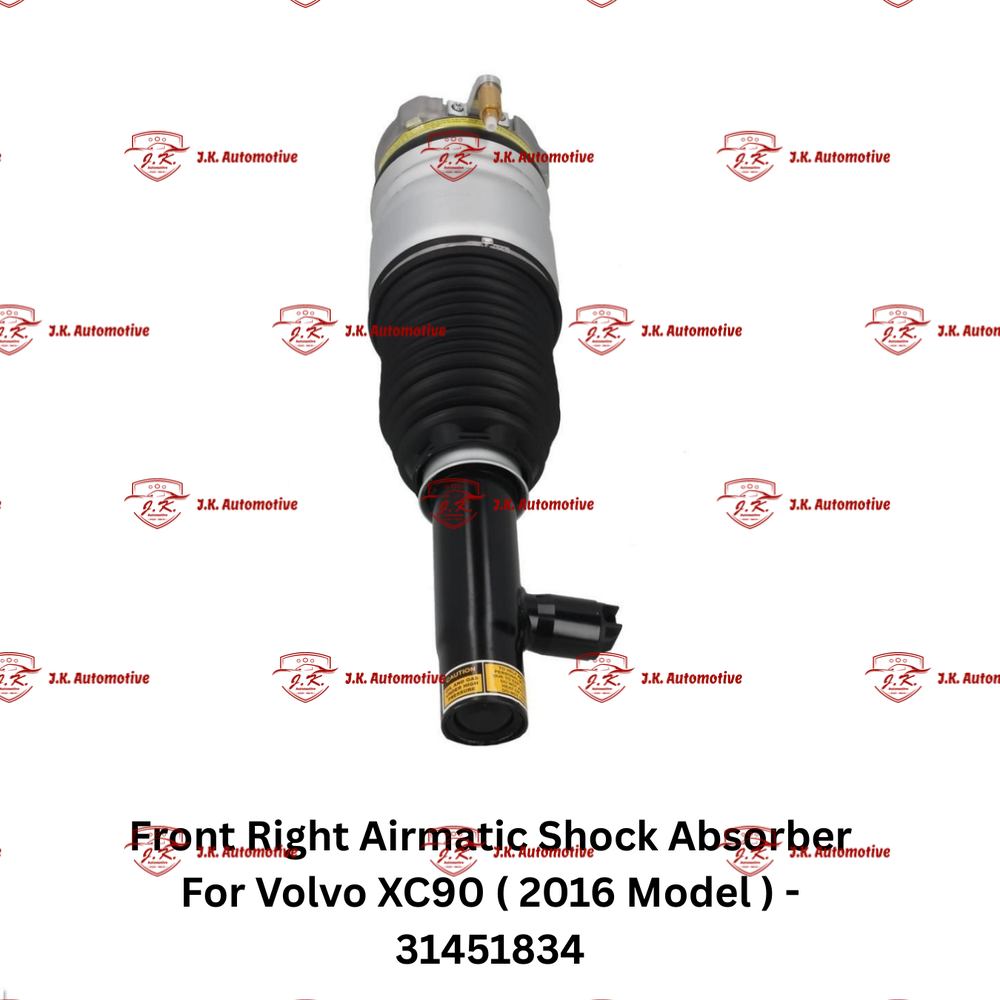
What is Front Right Airmatic Shock Absorber 31451834 for Volvo XC90?
Front Right Airmatic Shock Absorber 31451834 is intended for the stated Volvo XC90 front-right suspension position with the supplied year range 2015–2026, while the supplied product information also specifically states 2016 Model, and the unit operates as part of the applicable air suspension system by combining pneumatic suspension support with controlled compression and rebound damping at the front-right wheel. The pneumatic section uses compressed air supplied through the applicable suspension circuit, while the damping section controls the speed and continuation of vertical suspension movement as the front-right wheel travels over bumps, depressions, road joints and uneven surfaces. During everyday driving, the front suspension continuously responds to braking, acceleration, steering, cornering, road conditions and changing vehicle loads. When the front-right wheel encounters a raised road surface, the suspension compresses and the damper controls the speed of this movement. As the wheel moves back toward its normal position, rebound damping regulates the return movement so the suspension can settle progressively instead of continuing to oscillate unnecessarily. Braking creates particularly important changes at the front suspension because vehicle load transfers toward the front axle as speed decreases. Cornering also changes load distribution between the left and right sides of the vehicle, requiring controlled suspension movement. The air suspension compressor performs a separate function by generating compressed air whenever additional pneumatic pressure is required. Pneumatic pressure lines carry this air through the suspension circuit, while the applicable valve block participates in controlling pressure distribution. Once the intended suspension position is reached, the suspension unit and related pneumatic connections must retain pressure correctly. If pressure escapes from the front-right suspension unit, its pneumatic connection or another part of the circuit, the front-right corner may gradually lower while the vehicle is parked. The compressor may then operate to restore lost pressure when the system becomes active. Frequent compressor operation can therefore sometimes indicate a pressure-retention problem rather than compressor failure itself. Damping deterioration can produce different symptoms, including increased bouncing or slower settling even when vehicle height remains stable. Pneumatic pressure retention and damping condition should therefore be diagnosed separately. Reference 31451834 should remain unchanged during product identification. Because this component is specifically identified as Front Right, do not assume interchangeability with a Front Left suspension unit. The supplied Volvo XC90, Front Right position, 2016 Model wording, reference 31451834 and 2015–2026 year range should remain unchanged throughout compatibility verification.
How can I confirm 31451834 Front Right Airmatic Shock compatibility with my Volvo XC90?
Compatibility of Front Right Airmatic Shock Absorber 31451834 with the stated Volvo XC90 should be confirmed using the exact supplied reference, Front Right installation position, vehicle identification, existing suspension-unit information, pneumatic connection, mounting arrangement and any applicable electrical connection rather than relying only on the Volvo XC90 model name, production year or external appearance of the suspension component. The supplied product information specifically states Volvo XC90, 2016 Model and separately provides the year range 2015–2026, so these details should remain unchanged during product identification. Begin by comparing reference 31451834 directly with the existing front-right suspension component and appropriate vehicle-specific parts information. Because the product is identified specifically for the Front Right position, verify the installation side carefully rather than assuming that a visually similar front-left component uses the same reference. Compare the existing and replacement suspension units for overall construction, upper and lower mounting arrangements, pneumatic connection location, applicable brackets and any electrical connector present on the existing configuration. The replacement component should correspond naturally with the existing arrangement without forced mounting, modified brackets, improvised pneumatic fittings or altered electrical connections. VIN-based or vehicle-specific reference verification should be used whenever compatibility cannot be established confidently from the existing component information. The surrounding pneumatic system should also be inspected because replacing the front-right suspension unit will not correct pressure loss located in an air line, fitting, valve block or another suspension component. If the vehicle has been lowering while parked, pressure-retention testing should be performed before replacement. If the compressor has been operating frequently, the reason for repeated pressure demand should also be investigated. When the primary complaint is bouncing, poor suspension settling or unwanted front movement rather than vehicle lowering, damping condition and surrounding mechanical suspension components should be assessed separately. Control arms, bushes and ball joints should be inspected where applicable. Sway bar links, sway links, anti roll link rods and stabiliser sway links should also be considered when diagnosing knocking or unwanted front suspension movement. Tyres should be checked for correct pressure, physical condition and irregular wear. Reference 31451834, the Front Right position, supplied 2016 Model wording and 2015–2026 year range should all be verified without changing the supplied product information.
What are the symptoms of a bad Front Right Airmatic Shock Absorber on Volvo XC90?
Possible symptoms associated with a deteriorated Front Right Airmatic Shock Absorber on the stated Volvo XC90 can include the front-right corner lowering while the vehicle is parked, uneven standing height, slow suspension-height recovery, frequent compressor operation, increased front suspension movement, excessive bouncing, slower settling after bumps, unusual suspension noise, changes in steering or ride behaviour, irregular tyre wear or an applicable suspension warning, although these symptoms should be diagnosed carefully because pneumatic pressure loss and deterioration of damping performance are separate conditions and similar symptoms can originate from other suspension components. If the pneumatic portion associated with the front-right suspension position cannot retain pressure correctly, that corner may gradually lower after the vehicle remains stationary for several hours. When the suspension system becomes active again, the compressor may operate to restore the pressure that was lost. Repeated pressure loss can therefore increase compressor operating demand. However, a lowering front-right corner does not automatically prove that reference 31451834 itself is leaking because the pneumatic connection, pressure line, applicable valve block and other pressure-retention points should also be inspected. Damping deterioration produces a different group of symptoms. If the damping section is worn, the front-right suspension may move excessively after a bump, take longer to settle or feel less controlled as road conditions change. Front suspension damping is particularly important during braking because vehicle load transfers toward the front axle, increasing the forces acting on the front suspension. Cornering and steering also create changing loads between the left and right sides. Physical inspection should include the suspension unit, pneumatic connection, mounting areas and surrounding suspension components. Pneumatic leak testing should be performed when standing-height loss is present. Compressor operation and the applicable valve block should be evaluated as part of the complete pneumatic system. Control arms, bushes and ball joints should be inspected when front suspension looseness or noise is present. Sway bar links, sway links, anti roll link rods and stabiliser sway links should be checked where applicable. Tyres should be inspected for correct inflation, condition and irregular wear. Wheel geometry should also be considered where directional behaviour or abnormal tyre wear is present. Reference 31451834 should be compared directly with the existing Front Right component before replacement, while the supplied Volvo XC90, 2016 Model and 2015–2026 year information should remain unchanged.
Why does the front-right side of my Volvo XC90 lower after parking overnight?
If the front-right side of a Volvo XC90 lowers after the vehicle has been parked overnight or for several hours, the applicable air suspension circuit may be losing pneumatic pressure associated with that suspension position, but the lowering condition alone does not confirm that Front Right Airmatic Shock Absorber 31451834 is defective because compressed air can potentially escape through the suspension unit, pneumatic connection, pressure line, fitting, applicable valve block or another relevant component in the pneumatic system. Begin diagnosis by positioning the vehicle on a suitable level surface and observing its standing height before it is parked. Check the vehicle again after an appropriate period and determine whether only the front-right corner has lowered, whether both front positions have changed or whether multiple suspension positions are affected. A localised front-right height change can help narrow the diagnostic area, but proper pneumatic leak testing is still required before deciding which component requires replacement. The front-right suspension unit should be assessed for pneumatic pressure retention using an appropriate diagnostic procedure. The pneumatic connection at the suspension unit should be inspected for correct seating and condition. The pressure line should be checked for abrasion, physical damage, leakage, incorrect routing or compromised fittings. The applicable valve block should also be considered because it participates in pneumatic pressure distribution and control. If the vehicle returns to its expected height after startup but lowers again after standing, the system may be capable of generating pressure while failing to retain it correctly. The compressor may consequently operate more frequently because it is repeatedly replacing lost pressure. If the vehicle also raises slowly or cannot achieve its expected suspension height, compressor pressure-generation performance should be evaluated separately. Applicable electrical and suspension-height control components may require diagnosis when suspension behaviour is inconsistent. If the vehicle maintains its standing height but displays excessive bouncing or poor settling, damping condition should receive greater attention. Reference 31451834 should be verified against the existing front-right suspension unit before replacement. The supplied Front Right position, Volvo XC90 application, 2016 Model wording and 2015–2026 year range should remain unchanged during product identification and diagnosis.
Can a leaking Volvo XC90 Front Right Airmatic Shock cause the air suspension compressor to run frequently?
A pneumatic leak associated with the Volvo XC90 front-right suspension circuit can cause the air suspension compressor to operate more frequently because compressed air that escapes from the system must be regenerated when the vehicle attempts to restore or maintain the required suspension pressure and height, although frequent compressor operation should not automatically be attributed specifically to Front Right Airmatic Shock Absorber 31451834 until the suspension unit, pneumatic line, fittings, connections, applicable valve block and other pressure-retention points have been inspected. The compressor is responsible for generating compressed air when additional pneumatic pressure is required by the suspension system. Once that pressure has been generated and distributed, the suspension circuit should retain it appropriately. If the front-right suspension position gradually loses pressure while the vehicle is standing, the affected corner can sit lower than intended. When the system becomes active, the compressor may then be requested to restore the pressure that has escaped. If the leak remains unresolved, this process can repeat and increase compressor operating demand. Frequent compressor activity can therefore be a secondary symptom of pneumatic pressure loss rather than proof that the compressor itself is defective. Diagnosis should include observation of standing height before and after the vehicle remains parked. The front-right suspension unit should be checked for pressure retention, while the pneumatic connection and pressure line should be inspected for leakage, physical damage, abrasion or compromised fittings. The applicable valve block should also be considered because it participates in pressure distribution through the system. Other suspension positions should be checked if more than one corner changes height. Compressor pressure-generation performance should be evaluated separately if the vehicle raises slowly or struggles to reach its intended suspension position. Electrical diagnosis may also be required when compressor operation is intermittent or absent. If the vehicle maintains suspension height but shows excessive front bouncing or slower settling, damping deterioration should be investigated separately. Reference 31451834 should be compared directly with the existing Front Right unit before replacement. Correcting any external pneumatic leak is important so the compressor is not repeatedly required to compensate for lost pressure after installation.
What should be checked before installing 31451834 Front Right Airmatic Shock on Volvo XC90?
Before installing Front Right Airmatic Shock Absorber 31451834 on the stated Volvo XC90, confirm the exact supplied reference, Front Right installation position, existing suspension-unit construction, pneumatic connection, upper and lower mounting arrangements, applicable brackets and any electrical connector present on the existing configuration, while also inspecting the surrounding air suspension and mechanical suspension components so an unresolved pressure leak, compressor problem, valve-control concern or related front suspension fault does not remain after installation. Begin by comparing reference 31451834 directly with the existing front-right component and appropriate vehicle-specific parts information. Because the component is specifically identified as Front Right, do not assume that a front-left suspension unit is interchangeable simply because its external construction appears similar. Compare the existing and replacement components for overall construction, mounting locations, pneumatic connection position, applicable brackets and any electrical connection present on the vehicle. The replacement should correspond naturally with the existing arrangement without forced installation, modified mounting points, improvised pneumatic fittings or altered electrical connections. Pneumatic lines should be inspected for damage, abrasion, leakage and correct routing before installation. Connection points should be checked carefully because an external leak can remain even after the suspension unit itself is replaced. The applicable valve block should be considered if the vehicle previously displayed uneven suspension height or repeated pressure loss. Compressor operation should also be evaluated if it has been running frequently or taking unusually long to restore suspension height. Control arms, bushes, ball joints, sway bar links, sway links, anti roll link rods and stabiliser sway links should be inspected where applicable when the original complaint includes noise, looseness or poor suspension control. Tyres should also be checked for condition, correct pressure and irregular wear. After installation, the pneumatic connection should be secured correctly and tested for leakage. Suspension-height response should be observed to confirm that the front-right corner reaches and retains its intended position. Damping behaviour should also be evaluated so compression and rebound remain controlled without abnormal noise or binding. The supplied Volvo XC90, Front Right position, 2016 Model wording, reference 31451834 and 2015–2026 year range should remain unchanged throughout identification, diagnosis and installation.
How does Front Right Airmatic Shock Absorber 31451834 work on Volvo XC90?
Front Right Airmatic Shock Absorber 31451834 works on the stated Volvo XC90 front-right suspension position by combining pneumatic suspension support with controlled compression and rebound damping, allowing the front-right wheel and suspension to respond progressively to changing road surfaces, braking forces, steering inputs, acceleration, cornering and vehicle-load conditions while operating as part of the applicable air suspension system. The pneumatic portion operates using compressed air supplied through the vehicle's suspension circuit, while the damping portion controls how quickly the suspension compresses and rebounds as the front-right wheel moves vertically. When the wheel encounters a bump, raised road surface or road joint, the suspension compresses and the damper regulates the speed of this movement rather than allowing uncontrolled suspension travel. As the wheel moves back toward its normal position, rebound damping controls the return movement so the suspension and vehicle body can settle progressively. These compression and rebound cycles occur continuously during normal driving because the road surface and forces acting on the suspension are constantly changing. Braking is particularly important for the front suspension because vehicle load transfers toward the front axle as speed decreases, increasing the forces acting on the front suspension units. Steering and cornering also change load distribution between the left and right sides of the vehicle. Passenger and luggage loads can further influence suspension operating conditions. The air suspension compressor performs a different function by generating compressed air whenever additional pneumatic pressure is required. Pneumatic lines carry this pressure through the applicable suspension system. The valve block participates in controlling how pneumatic pressure is distributed to the relevant suspension positions. Once the intended suspension position is reached, the suspension unit, pneumatic lines and connections must retain pressure correctly. If the front-right pneumatic circuit develops a leak, the affected corner may gradually lower while the vehicle is parked. The compressor may subsequently operate to restore the pressure that has been lost. Frequent compressor operation can therefore be caused by pressure loss elsewhere rather than compressor failure itself. Damping deterioration can produce a different symptom pattern because the vehicle may maintain its standing height but display excessive bouncing or slower settling after road disturbances. Pneumatic pressure retention and damping performance should therefore be diagnosed separately. Reference 31451834 should be verified against the existing Front Right suspension unit before replacement. The supplied Volvo XC90 application, Front Right position, 2016 Model wording and 2015–2026 year range should remain unchanged throughout compatibility verification and installation.
Can Front Right Airmatic Shock Absorber 31451834 cause uneven suspension height on Volvo XC90?
Front Right Airmatic Shock Absorber 31451834 can potentially be associated with uneven suspension height on the stated Volvo XC90 if the pneumatic circuit at the front-right suspension position cannot retain compressed air correctly, but uneven vehicle height should not automatically be attributed to the suspension unit because pressure loss can also occur through the pneumatic pressure line, fitting, connection, applicable valve block or another relevant component within the air suspension system. Begin diagnosis by positioning the vehicle on a suitable level surface and observing the standing height at each suspension position. Determine whether only the front-right corner appears lower, whether both front positions are affected or whether multiple suspension positions have changed. The vehicle can then be left stationary for an appropriate period so any gradual height change becomes easier to identify. A localised front-right change can help narrow the diagnostic area but should not be treated as confirmation that the suspension unit itself is leaking. The front-right pneumatic suspension unit should be checked for pressure retention using an appropriate leak-testing procedure. The pneumatic connection should be inspected carefully because leakage from a fitting can produce symptoms similar to leakage from the suspension unit itself. The pressure line should be checked for abrasion, physical damage, incorrect routing, loose fittings or other conditions that could allow compressed air to escape. The applicable valve block should also be considered because it participates in pneumatic pressure distribution through the suspension system. If the vehicle reaches its expected suspension height after startup but gradually lowers again while parked, the system may be capable of generating pressure while failing to retain it correctly. The compressor may therefore operate more frequently because it is replacing pressure that has been lost elsewhere. If the vehicle also raises slowly, compressor pressure-generation performance should be evaluated separately. Applicable electrical and suspension-height control components may require diagnosis when vehicle-height behaviour is inconsistent. If the vehicle maintains the correct standing height but shows excessive bouncing or poor suspension settling, damping condition should receive greater attention than pneumatic pressure loss. Control arms, bushes and ball joints should also be inspected when front suspension behaviour is abnormal. Sway bar links, sway links, anti roll link rods and stabiliser sway links should be checked where applicable. Tyres should be inspected for correct inflation, condition and irregular wear. Reference 31451834 and the Front Right position should be verified against the existing component before replacement, while the supplied 2016 Model wording and 2015–2026 year range should remain unchanged.
Can a worn Volvo XC90 Front Right Airmatic Shock Absorber affect steering, braking and ride comfort?
A worn Volvo XC90 Front Right Airmatic Shock Absorber can potentially affect ride behaviour, suspension control and the way the front suspension responds during steering, braking and cornering because the unit controls compression and rebound movement at the front-right wheel while also operating within the applicable pneumatic suspension system, although any change in vehicle behaviour should be diagnosed across the complete front suspension rather than automatically attributed to reference 31451834. During normal driving, the front-right wheel continuously moves vertically as it follows bumps, depressions, road joints and uneven surfaces. The damping portion of the suspension unit controls the speed and continuation of this movement so the wheel and vehicle body can settle progressively after each road disturbance. If damping performance deteriorates, the suspension may continue moving for longer after a bump, resulting in increased bouncing or slower settling. Braking places significant changing forces on the front suspension because vehicle load transfers toward the front axle as speed decreases. The front suspension units therefore participate in controlling movement as these forces change. During steering and cornering, load distribution changes between the left and right sides, and controlled damping helps manage suspension movement during these transitions. Pneumatic pressure performs a different function by supporting the applicable air suspension operation and helping maintain the intended suspension position. If pneumatic pressure is lost, the front-right corner may lower even if the damping portion remains functional. If damping has deteriorated while pressure is retained correctly, the vehicle may maintain its standing height while still showing increased suspension movement. These conditions should therefore be diagnosed independently. Control arms and bushes should be inspected when front suspension movement or noise is present. Ball joints should also be checked for wear where applicable. Sway bar links, sway links, anti roll link rods and stabiliser sway links should be inspected when knocking or unwanted suspension movement occurs. Tyres should be checked for inflation pressure, tread condition and irregular wear because tyre-related conditions can influence steering response and ride behaviour. Wheel geometry should also be considered if the vehicle shows abnormal tyre wear or directional concerns. Pneumatic lines, fittings, the applicable valve block and compressor operation should be checked when suspension-height symptoms accompany ride concerns. Reference 31451834 should be verified against the existing Front Right unit before replacement, while the exact supplied product details should remain unchanged.
What should be checked after installing 31451834 Front Right Airmatic Shock Absorber on Volvo XC90?
After installing Front Right Airmatic Shock Absorber 31451834 on the stated Volvo XC90, the mounting arrangement, pneumatic connection, applicable electrical connection, suspension-height response, pressure retention, damping behaviour, compressor operation, surrounding mechanical suspension components and wheel geometry where appropriate should be checked carefully so the replacement unit operates correctly and an unresolved problem elsewhere in the suspension system does not continue affecting vehicle behaviour. Begin by confirming that reference 31451834 has been installed specifically at the intended Front Right position. The upper and lower mounting arrangements should be checked for correct positioning and secure attachment according to the appropriate vehicle-specific installation procedure. Applicable brackets and mounting hardware should sit naturally in their intended positions without forced alignment or unnecessary modification. The pneumatic pressure line should be routed correctly and should not be kinked, twisted, excessively stretched or positioned where contact with surrounding components could damage it. The pneumatic connection should be secured correctly and checked for leakage after the suspension system becomes operational. If the applicable suspension configuration includes an electrical connection at the unit, the connector should be correctly seated and its wiring should be securely routed without unnecessary strain. Suspension-height response should then be observed to confirm that the front-right corner reaches the expected operating position. The vehicle should also be allowed to stand for an appropriate period so pneumatic pressure retention can be evaluated. If the front-right corner gradually lowers again, the complete pneumatic circuit should be inspected because compressed air may still be escaping from a line, fitting, valve block or another component. Compressor operation should be monitored because unusually frequent or extended operation can indicate continuing pressure loss. Damping performance should be evaluated separately to confirm controlled compression and rebound without excessive bouncing or prolonged movement. Control arms, bushes, ball joints and related front suspension components should be inspected if abnormal movement or noise remains. Sway bar links, sway links, anti roll link rods and stabiliser sway links should also be checked where applicable. Tyres should be inspected for condition, inflation pressure and irregular wear. Wheel alignment or suspension geometry should be checked where appropriate after front suspension work. A controlled road test can then help confirm suspension settling, steering behaviour, ride response and absence of abnormal noise. The supplied Volvo XC90, Front Right position, 2016 Model wording, reference 31451834 and 2015–2026 year range should remain unchanged throughout final verification.
How do I know if the Front Right Airmatic Shock Absorber is bad on my Volvo XC90?
The Front Right Airmatic Shock Absorber on a Volvo XC90 may require detailed inspection if the front-right corner gradually lowers while the vehicle is parked, the vehicle develops uneven standing height, suspension-height recovery becomes unusually slow, the compressor operates frequently or for extended periods, the front suspension bounces excessively, the vehicle body takes longer to settle after bumps, unusual front suspension noises develop, steering or braking behaviour changes, irregular tyre wear appears or an applicable suspension warning is displayed, but these symptoms should not automatically be treated as confirmation that reference 31451834 has failed because pneumatic leaks, compressor concerns, valve-control problems, electrical issues, tyre conditions and mechanical suspension wear can produce similar or overlapping symptoms. The first useful diagnostic distinction is between pneumatic pressure-retention symptoms and damping-related symptoms. If the front-right corner gradually lowers after the vehicle remains parked for several hours, pressure retention should be investigated because compressed air may be escaping through the suspension unit, pneumatic connection, pressure line, fitting or another relevant part of the pneumatic circuit. Observe whether only the front-right corner changes height, whether both front positions are affected or whether additional corners also lower. This pattern can help guide diagnosis but should not replace proper pneumatic leak testing. The front-right suspension unit should be checked for pressure retention using an appropriate diagnostic procedure. The pneumatic connection and pressure line should be inspected for leakage, abrasion, physical damage, loose fittings or incorrect routing. The applicable valve block should also be considered because it participates in controlling pneumatic pressure distribution. If the vehicle returns to its expected height after startup but lowers again after standing, the system may be capable of generating pressure while failing to retain it. Compressor operation should be evaluated separately because frequent compressor activity can result from repeated pressure loss rather than compressor failure itself. If the vehicle raises slowly or fails to reach its expected suspension height, pressure-generation performance should also be investigated. If the Volvo XC90 maintains its standing height but the front-right suspension bounces excessively or takes longer to settle after road disturbances, damping deterioration may deserve greater attention. Control arms, bushes, ball joints and mounting components should be inspected because mechanical wear can produce noises and handling symptoms that may initially appear to come from the Airmatic shock absorber. Sway bar links, sway links, anti roll link rods and stabiliser sway links should also be checked where applicable. Tyres should be inspected for inflation pressure, physical condition and irregular wear, while wheel geometry should be considered where appropriate. Reference 31451834 should be compared directly with the existing Front Right component before replacement. A complete diagnosis covering pressure generation, pneumatic distribution, pressure retention, damping behaviour, mounting condition and related suspension components provides the strongest basis for determining whether the Front Right Airmatic Shock Absorber actually requires replacement.

Reviews
There are no reviews yet.