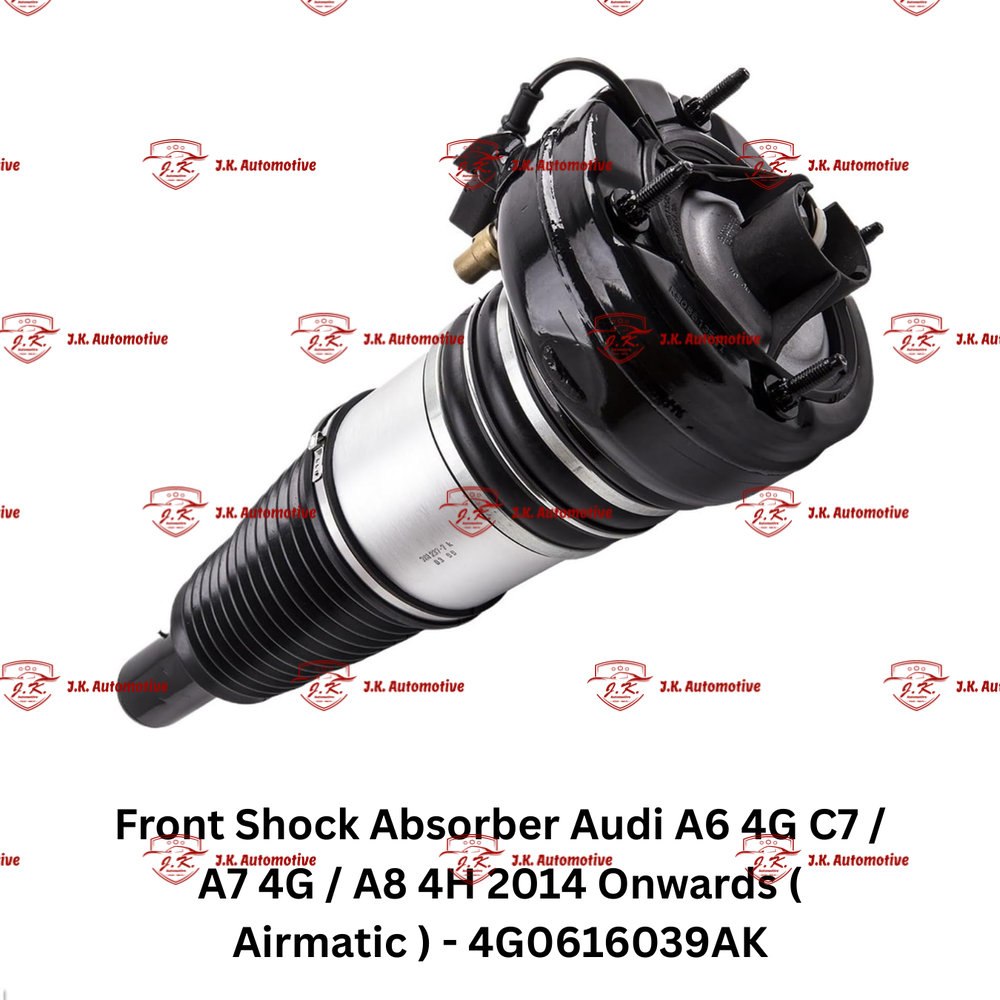
What is the Front Airmatic Shock Absorber 4G0616039AK for Audi A7 4G C7 and what does it do?
The Front Airmatic Shock Absorber 4G0616039AK for Audi A7 4G C7 is a front suspension component for the stated Audi A7 4G C7 application that works as part of the applicable pneumatic suspension system to support vehicle height while helping control suspension and wheel movement during normal driving. In an applicable air suspension arrangement, compressed air works together with the suspension unit, air compressor, valve block, pneumatic pressure lines, ride-height sensors, electrical connections and electronic suspension controls to provide the required suspension operation. The compressor produces compressed air, while the pneumatic network distributes that pressure toward the applicable suspension circuits according to system requirements. The front Airmatic shock absorber uses the available pneumatic pressure as part of supporting the relevant front position, while its damping function helps control suspension movement when the wheel encounters bumps, dips, uneven surfaces, braking forces and changing road conditions. Damping is important because suspension movement needs to be controlled rather than allowing the vehicle body and wheel to continue moving excessively after a road disturbance. Reference 4G0616039AK provides an important identification point when searching for, ordering or checking the required component for the stated Audi A7 4G C7 application. A pneumatic leak from an applicable front suspension unit may allow one front position to gradually lower while the vehicle is parked and can result in the compressor operating more frequently to restore lost pressure. Damping deterioration can produce a different set of symptoms, including excessive suspension movement, increased bouncing or changes in ride behaviour. These conditions should be diagnosed separately because a pressure-retention problem does not automatically mean the damping function has failed, and abnormal damping does not necessarily mean that the pneumatic section is leaking. Other components can also create similar symptoms, including pneumatic lines, connectors, fittings, the valve block, compressor, ride-height sensors or electrical connections. Diagnosis should therefore include observation of vehicle standing height, pneumatic leak testing, inspection of the relevant front suspension unit and associated pressure connections, compressor evaluation where necessary and assessment of suspension movement. Before replacement, reference 4G0616039AK should be compared with the installed component wherever readable, while VIN-based compatibility verification should be used whenever exact fitment remains uncertain. Physical construction, mounting arrangement, pneumatic connection and electrical configuration where applicable should also correspond before professional installation and complete suspension-function testing.
Is 4G0616039AK the correct Front Airmatic Shock Absorber for Audi A7 4G C7?
4G0616039AK is the exact reference supplied for this Front Airmatic Shock Absorber for the stated Audi A7 4G C7 application and should therefore be retained as the primary identification reference when searching for, cataloging or checking the required front pneumatic suspension component, although exact compatibility with an individual vehicle should still be verified before installation. Generic searches such as Audi A7 C7 front air shock, Audi A7 4G front Airmatic shock absorber, Audi A7 front air suspension strut, Audi A7 pneumatic shock absorber or Audi A7 front suspension unit can return several products that may have similar descriptions or physical appearances while potentially differing in mounting arrangement, pneumatic connection, electrical connector configuration where applicable, bracket locations, physical dimensions or intended suspension specification. More specific search variations include Audi A7 4G C7 4G0616039AK, Audi A7 C7 4G0616039AK, Audi A7 4G 4G0616039AK, Audi A7 4G0616039AK, Audi 4G0616039AK, 4G0616039AK Front Airmatic Shock Absorber, 4G0616039AK Front Air Shock, 4G0616039AK Air Suspension Strut, 4G0616039AK Air Suspension Shock and 4G0616039AK Front Suspension Unit. The complete supplied reference should remain exactly as written during online searches, catalog entry, inventory management and compatibility checking because changing, omitting or transposing any character can increase the possibility of incorrect component identification. If readable identification remains on the existing suspension unit, compare it directly with the proposed replacement. VIN-based verification should be used whenever precise compatibility cannot be established confidently from available information. Physical comparison should include overall suspension-unit construction, upper and lower mounting points, pneumatic connection, electrical connector where applicable, bracket positions and other visible installation features. The replacement component should correspond naturally with the existing suspension arrangement without drilling, grinding, forced mounting or improvised modification. Compatibility verification should remain separate from fault diagnosis because confirming 4G0616039AK as the required reference does not prove that the installed suspension unit is responsible for the vehicle's symptoms. Vehicle lowering, uneven front height, slow suspension response, excessive compressor activity or abnormal ride behaviour can originate from other pneumatic or mechanical suspension components. Once the actual fault and exact component compatibility have both been established, professional installation should be followed by pneumatic leak testing, suspension-function checks and standing-height observation.
What are the common symptoms of a faulty Front Airmatic Shock Absorber on an Audi A7 4G C7?
Common symptoms that may justify investigating a Front Airmatic Shock Absorber on an Audi A7 4G C7 include one front position gradually lowering while the vehicle is parked, uneven front standing height, difficulty maintaining the intended suspension position, slow suspension-height recovery, repeated height corrections, unusually frequent compressor operation, excessive suspension movement, abnormal bouncing, reduced damping control or noticeable changes in ride behaviour, although these symptoms should be treated as diagnostic clues rather than automatic confirmation that the front suspension unit has failed. The front air suspension unit performs both pneumatic-support and damping-related functions, so different internal conditions can create different symptoms. If the pneumatic section develops a leak, compressed air may escape from the associated front suspension circuit and allow that position to gradually lower while the vehicle remains stationary. The compressor may subsequently operate to replace the lost pressure and restore the required vehicle position. If damping performance deteriorates, the vehicle may exhibit excessive movement after bumps, less controlled suspension response or increased bouncing even if the pneumatic portion continues to retain pressure correctly. Pneumatic leakage and damping deterioration should therefore be diagnosed separately. A lowering front position does not automatically prove that the shock absorber is leaking because pressure can also escape through pneumatic lines, connectors, fittings or another component within the same circuit. A valve-block condition can potentially influence pressure distribution or isolation, while reduced compressor output can cause slow suspension-height recovery. A useful diagnostic procedure is to record the vehicle's standing height at the relevant front positions before parking and compare the measurements after several hours under similar conditions. If the same front position repeatedly lowers, the associated pneumatic circuit should be inspected carefully. The suspension unit, pressure line, connector and accessible fittings should be checked systematically for leakage. Damping behaviour should be evaluated independently to determine whether excessive suspension movement remains present. Compressor performance, valve-block operation, ride-height sensors, electrical connections and relevant suspension-control information should also be investigated where appropriate. If systematic diagnosis identifies the front suspension unit as the source of pneumatic leakage or abnormal damping, reference 4G0616039AK should be verified against the stated Audi A7 4G C7 application before professional replacement.
Why does the front of my Audi A7 4G C7 lower after parking, and can the Airmatic Shock Absorber be responsible?
The front of an Audi A7 4G C7 may lower after parking when compressed air is being lost from an applicable front pneumatic suspension circuit, and the Front Airmatic Shock Absorber can potentially be responsible if its pneumatic section is no longer retaining pressure correctly, although the suspension unit should not be replaced solely because the vehicle loses height while stationary. When the vehicle is parked, the applicable pneumatic suspension circuit must retain sufficient pressure to maintain the intended standing height. If compressed air escapes through the suspension unit, a pneumatic line, connector, fitting, valve assembly or another sealing point, the associated area of the vehicle may gradually move downward. The pattern of lowering can provide useful diagnostic information. If one front position repeatedly drops more than the opposite side, the pneumatic circuit associated with that position deserves careful investigation. If both front positions change height in a similar pattern, shared pneumatic components or system-level conditions may also need to be considered. Standing height can be measured before the vehicle is parked and compared again after several hours under similar conditions to establish whether the pressure loss is repeatable. The applicable front suspension unit should then be inspected for visible deterioration, physical damage and possible pneumatic leakage. Pressure lines, connectors and accessible fittings should also be checked because even a relatively small leak elsewhere in the same circuit can produce symptoms similar to a leaking air suspension unit. Compressor behaviour after the vehicle becomes active again should be observed because prolonged or repeated compressor operation can indicate that pressure lost while parked is being replenished. Frequent compressor activity, however, does not identify the exact leaking component. Valve-block operation should also be considered because incorrect pressure isolation can potentially contribute to standing-height changes. Ride-height sensors, electrical connections and relevant suspension-control information should be investigated where appropriate. If systematic testing identifies the front suspension unit as the source of pressure loss, reference 4G0616039AK should be confirmed against the stated Audi A7 4G C7 application before professional replacement. Following installation, disturbed pneumatic connections should be leak-tested and another controlled standing-height test should be performed to determine whether the original lowering condition has been resolved.
What does reference 4G0616039AK mean when searching for an Audi A7 4G C7 Front Airmatic Shock Absorber?
Reference 4G0616039AK provides a highly specific identification and online search term for the stated Audi A7 4G C7 Front Airmatic Shock Absorber, making it useful when buyers, workshops or automotive parts professionals need to distinguish the required front pneumatic suspension component from other air suspension units that may have similar descriptions or physical appearances. Broad searches such as Audi A7 air suspension, Audi A7 C7 front air shock, Audi A7 4G front suspension, Audi A7 front pneumatic shock or Audi A7 air suspension strut can return numerous suspension-related products, whereas searches containing the complete supplied reference can narrow results toward the intended component. Useful search combinations include Audi A7 4G C7 4G0616039AK, Audi A7 C7 4G0616039AK, Audi A7 4G 4G0616039AK, Audi A7 4G0616039AK, Audi 4G0616039AK, 4G0616039AK Front Airmatic Shock Absorber, 4G0616039AK Front Air Shock, 4G0616039AK Air Suspension Strut, 4G0616039AK Air Suspension Shock and 4G0616039AK Front Suspension Unit. The complete reference should remain exactly as supplied because changing, omitting or transposing individual characters can increase the possibility of incorrect component identification. Reference-number matching, however, should not be the only compatibility check before installation. The exact Audi A7 4G C7 application should also be considered, with VIN-based verification used whenever precise fitment remains uncertain. If identification remains readable on the installed component, compare it directly with the proposed replacement. Physical comparison should include overall construction, upper and lower mounting points, pneumatic connection, electrical connector where applicable, bracket arrangement and other visible installation features. The replacement should correspond naturally with the vehicle's existing suspension configuration rather than requiring forced installation or modification. Reference 4G0616039AK is also useful for inventory management, workshop documentation, product-page optimization and online parts searches because it creates a much more specific identification path than generic suspension terms alone. Nevertheless, identifying the correct component should remain separate from diagnosing the actual suspension problem. Vehicle lowering, poor pressure retention, frequent compressor operation or abnormal damping can originate from several different pneumatic or mechanical suspension components. Correct diagnosis should therefore be completed before replacement, followed by professional installation and complete suspension-function testing.
What should be checked before replacing the 4G0616039AK Front Airmatic Shock Absorber on an Audi A7 4G C7?
Before replacing the 4G0616039AK Front Airmatic Shock Absorber on an Audi A7 4G C7, the relevant front pneumatic and mechanical suspension system should be inspected systematically because several other components can produce symptoms similar to a worn, leaking or malfunctioning air suspension shock absorber, and replacing the unit without identifying the actual fault may leave the original problem unresolved. Begin by observing the vehicle's standing height and determining whether one front position consistently lowers more than the other or whether a larger section of the vehicle changes height. If the vehicle lowers while parked, record the standing height before leaving it stationary and compare the measurements after a controlled period under similar conditions. The applicable front suspension unit should then be inspected for visible deterioration, physical damage and possible pneumatic leakage. Pressure lines, connectors, fittings and accessible sealing points should also be checked because leakage from these areas can imitate a leaking suspension unit. Compressor behaviour should be evaluated if suspension-height recovery is unusually slow or the compressor operates repeatedly, as reduced compressor output can affect system response even when the front suspension unit itself is capable of retaining pressure. The valve block should also be considered because incorrect pressure distribution or isolation can contribute to suspension-height changes. Mechanical damping behaviour should be assessed separately because the suspension unit can potentially experience damping deterioration even when obvious pneumatic leakage is not present. Relevant suspension arms, bushes, joints, wheel bearings and other front suspension components should also be visually inspected where appropriate because unrelated mechanical wear can influence ride quality, noise and vehicle control. Electrical connectors, ride-height sensors and relevant suspension-control information should be evaluated when necessary. If diagnosis identifies the front suspension unit as the relevant fault, reference 4G0616039AK should be checked carefully against the stated Audi A7 4G C7 application. Identification on the existing component should be compared wherever readable, while VIN-based verification should be used whenever precise compatibility remains uncertain. Before installation, compare the overall physical design, pneumatic connection, electrical connector where applicable, upper and lower mounting locations and bracket arrangement. Following professional replacement, disturbed pneumatic connections should be leak-tested, suspension operation should be checked through its applicable functions and vehicle standing height should be monitored to confirm that the original problem has been resolved.
How can a faulty Front Airmatic Shock Absorber affect the ride and air suspension of an Audi A7 4G C7?
A faulty Front Airmatic Shock Absorber can affect both pneumatic suspension operation and ride behaviour on an Audi A7 4G C7 because the applicable front suspension unit performs two important functions: it participates in supporting the relevant front position through the pneumatic suspension system and helps control suspension movement through its damping function. During normal operation, the air compressor generates compressed air that travels through the pneumatic network, including the valve block and pressure lines, toward the applicable suspension circuits. The front air suspension unit must retain the required pneumatic pressure so the vehicle can maintain its intended standing height and perform applicable suspension-height adjustments. At the same time, the damping mechanism helps control the speed and extent of suspension movement when the wheel travels over bumps, dips, expansion joints and uneven road surfaces or when vehicle weight transfers during braking and cornering. If the pneumatic section develops a leak, the associated front position may gradually lower while the vehicle is parked, the system may perform repeated height corrections and the compressor may operate more frequently to replenish lost pressure. If the damping section deteriorates, symptoms may include excessive suspension movement, increased bouncing, reduced control after road disturbances or noticeable changes in ride behaviour even when the pneumatic portion continues to retain pressure. These different failure patterns make proper diagnosis important. A lowering front position does not automatically prove that the shock absorber is leaking because pneumatic pressure can also escape through air lines, connectors, fittings or another component within the same circuit. Valve-block pressure-isolation problems can also influence standing height, while reduced compressor output may cause slow suspension adjustment. The vehicle's standing height should therefore be recorded and compared after a controlled parking period, and the applicable front suspension unit, pressure lines, connectors and fittings should be checked systematically for leakage. Damping performance should be evaluated separately by observing suspension response after road disturbances. Compressor performance, valve-block operation, ride-height sensors, electrical connections and relevant suspension-control data should also be investigated where appropriate. If systematic testing identifies the front suspension unit as the source of pneumatic leakage or abnormal damping behaviour, reference 4G0616039AK should be verified against the stated Audi A7 4G C7 application before professional replacement and complete post-installation suspension testing.
How can I confirm whether 4G0616039AK is the correct Front Airmatic Shock Absorber for my Audi A7 4G C7?
To confirm whether 4G0616039AK is the correct Front Airmatic Shock Absorber for a particular Audi A7 4G C7, the complete supplied reference should be checked together with the stated vehicle application, identification information from the currently installed suspension unit wherever readable, VIN-based compatibility information whenever necessary and a detailed physical comparison before installation. Reference-number matching is particularly important because generic searches such as Audi A7 C7 front air shock, Audi A7 4G front Airmatic shock, Audi A7 front air suspension strut, Audi A7 pneumatic shock absorber or Audi A7 front suspension unit can return several components that may look generally similar while potentially differing in mounting points, pneumatic connections, electrical connector configuration where applicable, bracket locations, physical dimensions or intended suspension specification. Useful search variations include Audi A7 4G C7 4G0616039AK, Audi A7 C7 4G0616039AK, Audi A7 4G 4G0616039AK, Audi A7 4G0616039AK, Audi 4G0616039AK, 4G0616039AK Front Airmatic Shock Absorber, 4G0616039AK Front Air Shock, 4G0616039AK Air Suspension Strut, 4G0616039AK Air Suspension Shock and 4G0616039AK Front Suspension Unit. The complete reference should remain exactly as supplied during online searches, catalog entry, inventory management and compatibility checking because changing, omitting or transposing individual characters can increase the possibility of incorrect component identification. If readable identification remains on the suspension unit currently installed on the vehicle, compare it directly with the proposed replacement. VIN-based verification should be used whenever precise compatibility cannot be established confidently from the available information. Physical comparison should include the overall unit construction, upper and lower mounting points, pneumatic connection, electrical connection where applicable, bracket positions and other visible installation features. The replacement component should correspond naturally with the existing suspension arrangement without drilling, grinding, forced mounting or improvised modification. Compatibility verification should remain separate from fault diagnosis because confirming reference 4G0616039AK does not prove that the installed suspension unit is responsible for the vehicle's symptoms. Once both the actual fault and exact component compatibility have been established, professional installation should be followed by pneumatic leak testing, suspension-function checks and observation of vehicle standing height.
Can a leaking 4G0616039AK Front Airmatic Shock Absorber cause frequent compressor operation on an Audi A7 4G C7?
A leaking 4G0616039AK Front Airmatic Shock Absorber can potentially contribute to frequent air-compressor operation on an Audi A7 4G C7 because compressed air lost from an applicable front suspension circuit may need to be replenished by the pneumatic system to restore or maintain the intended vehicle position, although frequent compressor activity alone does not prove that the front suspension unit is leaking. When the pneumatic portion of an applicable front suspension unit retains pressure correctly, the system should not need to repeatedly replace a significant amount of compressed air simply to maintain the intended standing height. If a pressure leak develops within the suspension unit, compressed air may gradually escape while the vehicle is parked or during suspension operation. The associated front position can then lower, and the compressor may subsequently operate to rebuild the required pressure when the system becomes active. This relationship means that frequent compressor activity combined with repeatable front height loss can provide useful diagnostic information. However, pressure can also escape through damaged pneumatic lines, loose connectors, leaking fittings or other sealing points within the same suspension circuit. Internal pressure movement through the valve block can potentially contribute to standing-height changes even when the front suspension unit remains capable of retaining pressure. Reduced compressor output creates another possible condition in which the compressor operates for an extended period because it takes longer to build the required pressure. For these reasons, compressor operation should be evaluated together with pneumatic leak testing rather than being used as an isolated diagnosis. Record the vehicle's front standing height before parking and compare it after several hours under similar conditions. If the same front position repeatedly lowers, inspect the pneumatic circuit associated with that area carefully. The suspension unit, pressure line, connector and accessible fittings should be checked systematically for leakage. Compressor output and general performance should be evaluated if suspension recovery becomes unusually slow. Valve-block operation, ride-height sensors, electrical connections and relevant suspension-control information should also be investigated where appropriate. If systematic testing identifies the front suspension unit as the source of pressure loss, reference 4G0616039AK should be confirmed against the stated Audi A7 4G C7 application before professional replacement. Following installation, disturbed pneumatic connections should be leak-tested and compressor behaviour should be monitored again to determine whether the excessive operating pattern has been resolved.
How should the Audi A7 4G C7 Front Airmatic Shock Absorber 4G0616039AK be installed and checked after replacement?
The Audi A7 4G C7 Front Airmatic Shock Absorber 4G0616039AK should be installed professionally because the component forms part of a pneumatic and mechanical suspension system in which correct component identification, safe suspension handling, clean pneumatic connections, correct mounting, appropriate electrical engagement where applicable and thorough post-installation testing are important for reliable operation. Before removal of the existing suspension unit, the original fault should already have been diagnosed so that leakage from a pressure line, connector, valve block or another pneumatic component is not incorrectly attributed to the front shock absorber. Reference 4G0616039AK should be verified against the stated Audi A7 4G C7 application, with identification on the existing component compared wherever readable and VIN-based verification used whenever precise compatibility remains uncertain. Before installation, compare the replacement unit with the removed component and inspect the overall construction, upper and lower mounting arrangement, pneumatic connection, electrical connector where applicable, bracket positions and other visible fitment features. Open pneumatic connections should remain protected from dirt, moisture and foreign material during the repair because contamination can interfere with proper sealing and pneumatic operation. The replacement component should mount naturally in its intended position without drilling, grinding, forced alignment or improvised modification. Pneumatic lines should be connected correctly and securely without inappropriate bending, twisting or forced routing. Any applicable electrical connection should engage securely and remain properly positioned. After installation, disturbed pneumatic joints and accessible connections should be checked carefully for leakage. The suspension should then be operated through its applicable functions while observing vehicle response, front standing height and compressor behaviour. Relevant suspension-control information should be checked where appropriate, particularly if warning messages or abnormal height behaviour remain present. A controlled parking test can also be useful after replacement by recording the front standing height and checking it again after the vehicle has remained stationary for several hours. If the vehicle continues to lower after installation, additional investigation should focus on pneumatic lines, connectors, valve-block operation and other pressure-retention points rather than assuming that the newly installed suspension unit is responsible. Final inspection should confirm secure mounting, correct pneumatic routing, appropriate electrical engagement where applicable and consistent suspension behaviour before the repair is considered complete.
How do I know if the Front Airmatic Shock Absorber is bad on my Audi A7 4G C7?
A Front Airmatic Shock Absorber on an Audi A7 4G C7 may require investigation when one front position repeatedly lowers after the vehicle has been parked, the front develops an uneven standing height, the suspension struggles to maintain its intended position, the compressor operates more frequently than expected, suspension-height adjustment becomes unusually slow, ride quality changes noticeably, excessive front suspension movement occurs or the vehicle continues bouncing more than expected after road disturbances, but these symptoms should be treated as diagnostic clues rather than automatic confirmation that the front suspension unit has failed. The first important diagnostic distinction is whether the suspected problem is pneumatic, damping-related or caused by another component. If the vehicle loses front height while parked, pneumatic pressure leakage is a logical area to investigate. Record the standing height at the relevant front positions before parking and compare the measurements after several hours under similar conditions. If the same front position repeatedly lowers, inspect the associated suspension unit and pneumatic circuit carefully. A leak within the pneumatic section of the shock absorber can allow compressed air to escape, but damaged pressure lines, connectors or fittings can produce almost identical behaviour. Valve-block pressure-isolation problems can also contribute to standing-height changes, meaning a lowering vehicle does not automatically identify the suspension unit as the failed component. If the vehicle maintains its standing height but exhibits excessive bouncing, poor control after bumps or abnormal suspension movement, the damping function deserves closer inspection. Compressor behaviour should also be considered because repeated operation can indicate ongoing pressure loss somewhere within the pneumatic system, while unusually slow height recovery can indicate significant leakage or reduced compressor output. Visual inspection should look for physical damage, deterioration and other abnormalities around the applicable front suspension unit, while pneumatic leak testing should include the suspension unit, pressure line, connector and accessible fittings. Relevant electrical connections, ride-height sensors and suspension-control information should also be investigated where appropriate. If systematic diagnosis identifies the front suspension unit as the source of pneumatic leakage or abnormal damping behaviour, reference 4G0616039AK should be verified against the stated Audi A7 4G C7 application before replacement. Physical construction, mounting points, pneumatic connection and electrical arrangement where applicable should correspond with the removed component. Professional installation should then be followed by pneumatic leak testing, suspension-operation checks, compressor observation and a controlled standing-height test to confirm that the original suspension problem has actually been resolved.



Reviews
There are no reviews yet.