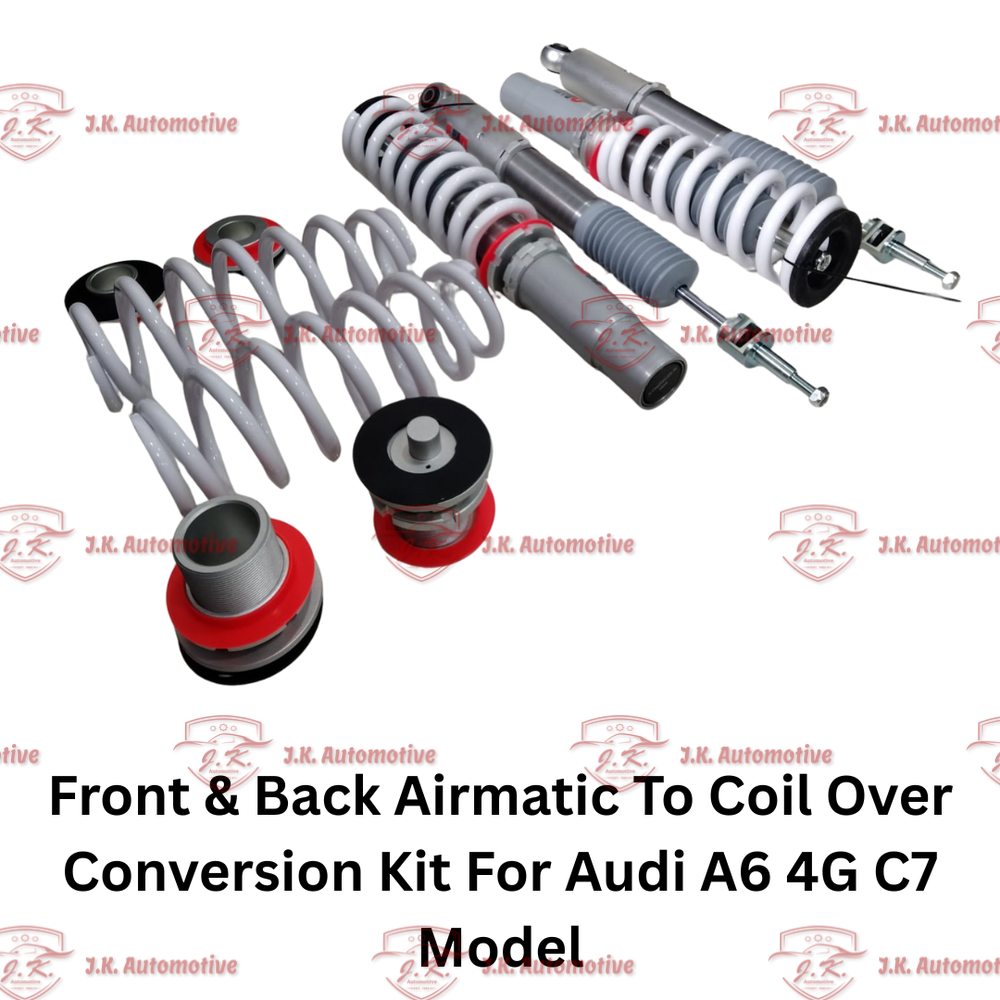
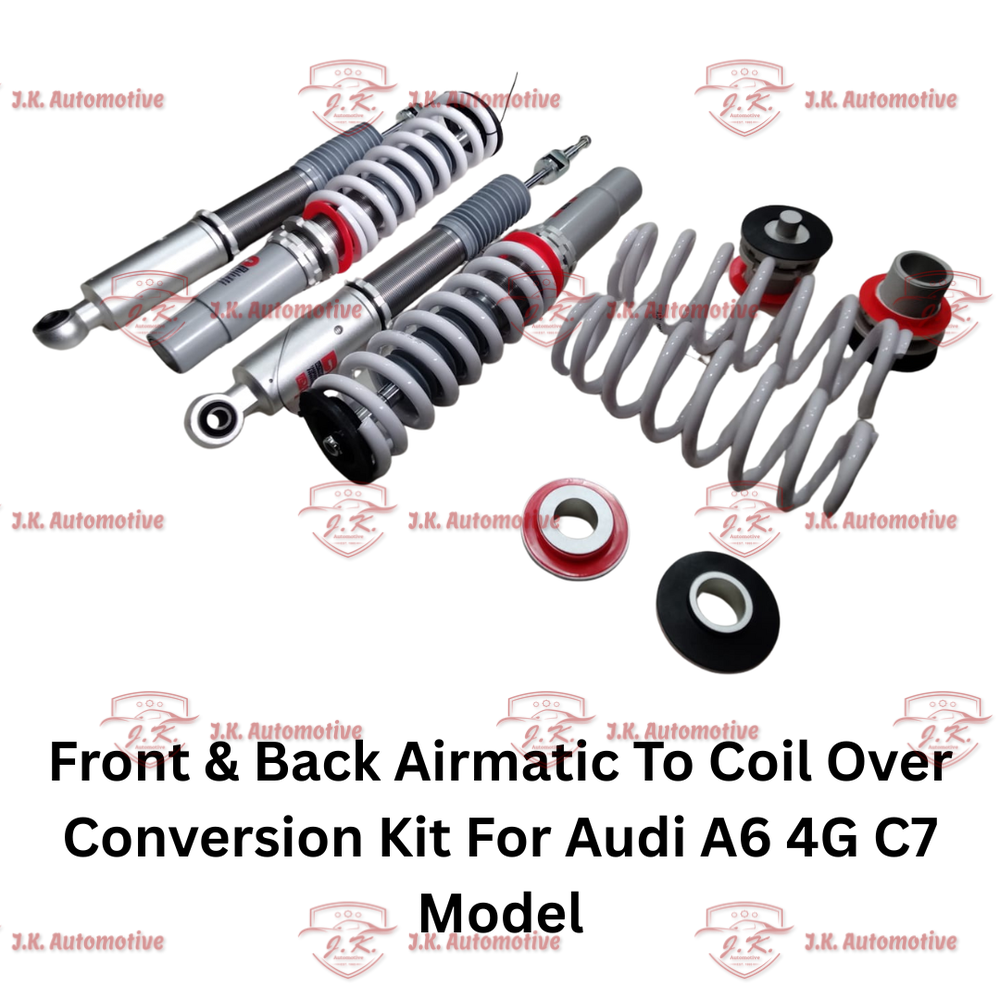
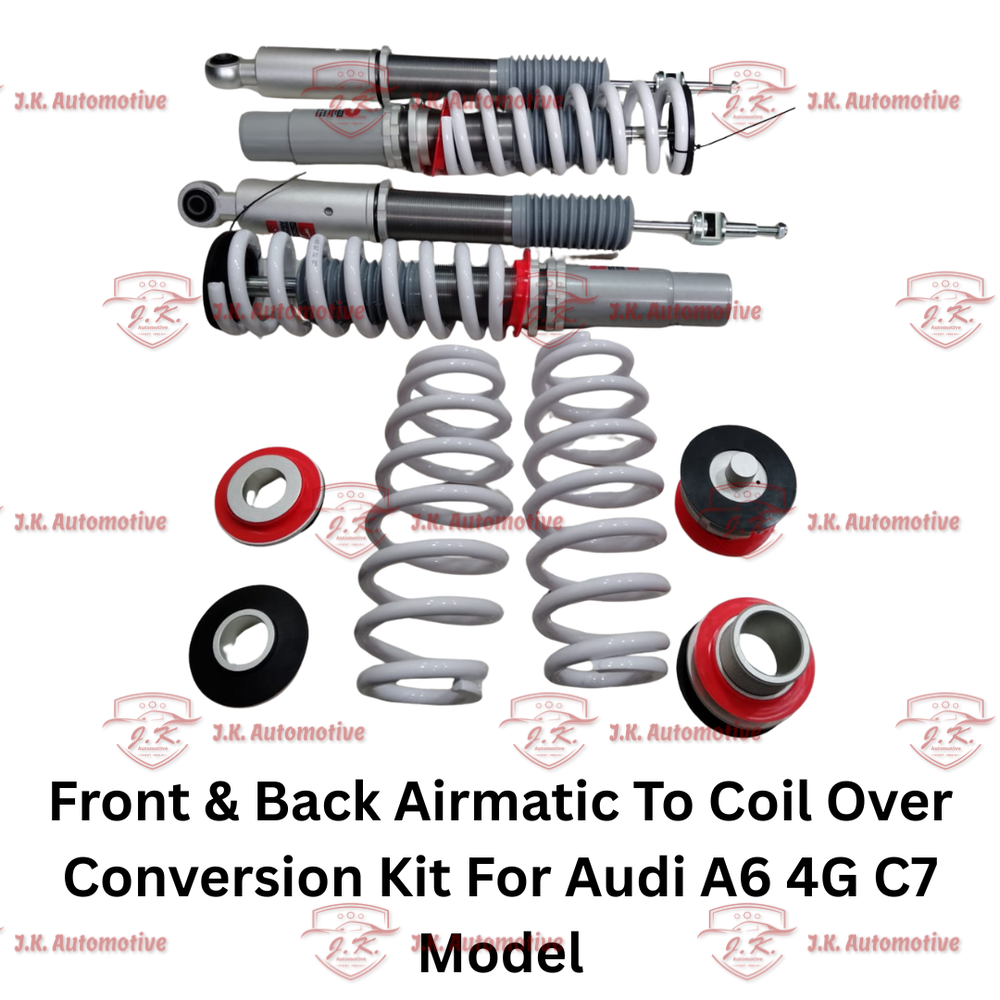
What is the Front And Back Airmatic To Coil Over Conversion Kit for Audi A6 4G C7?
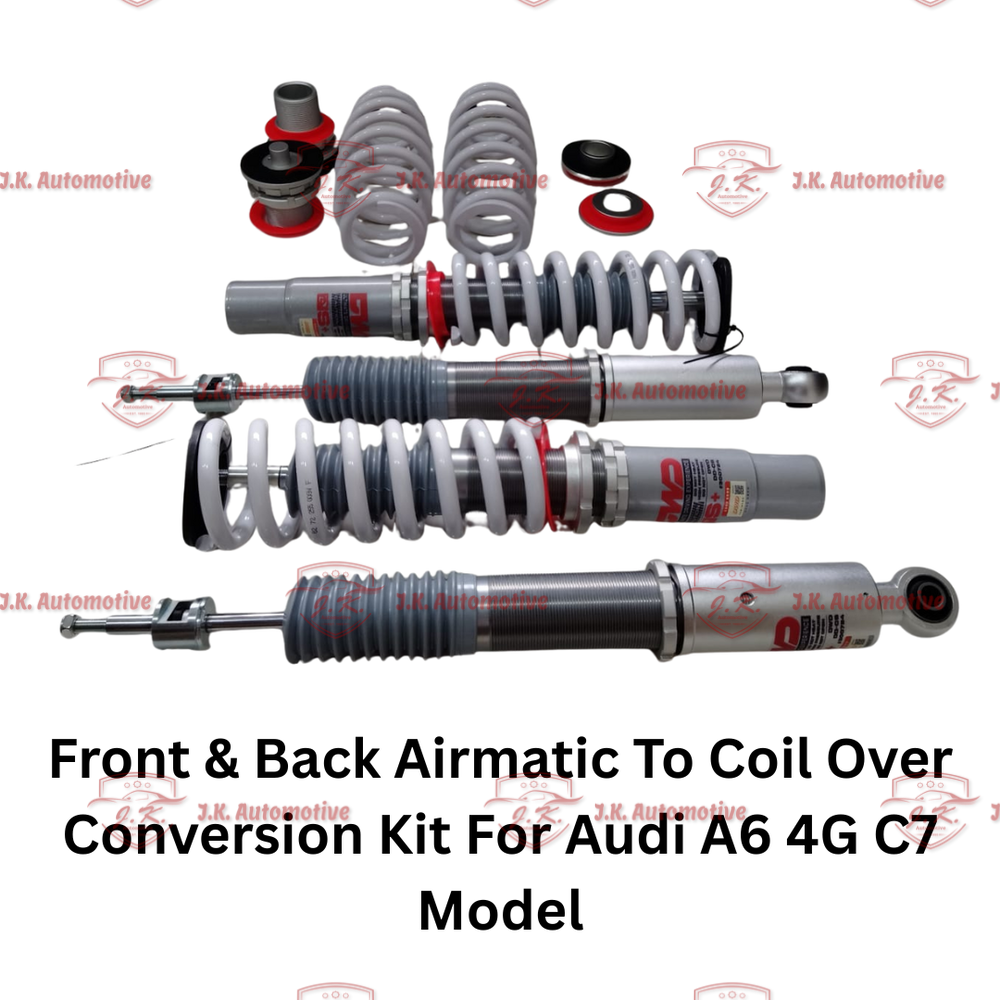
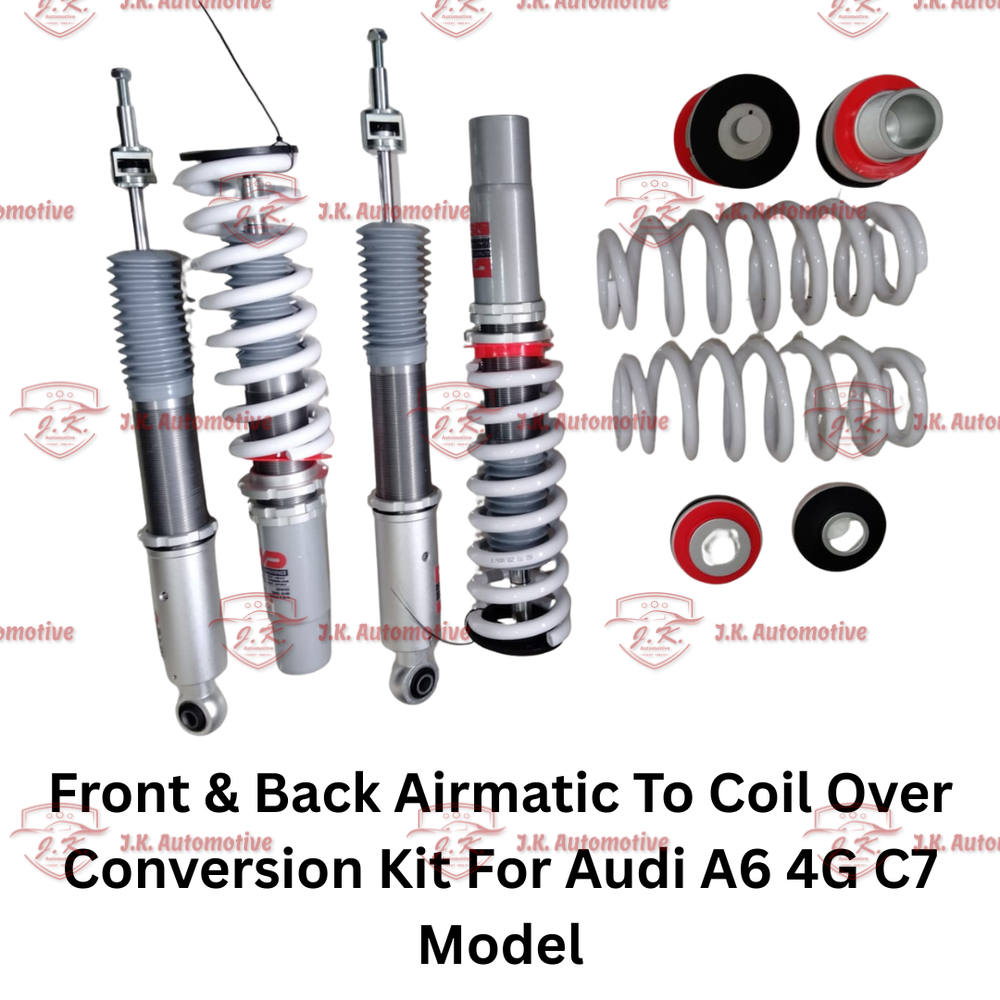
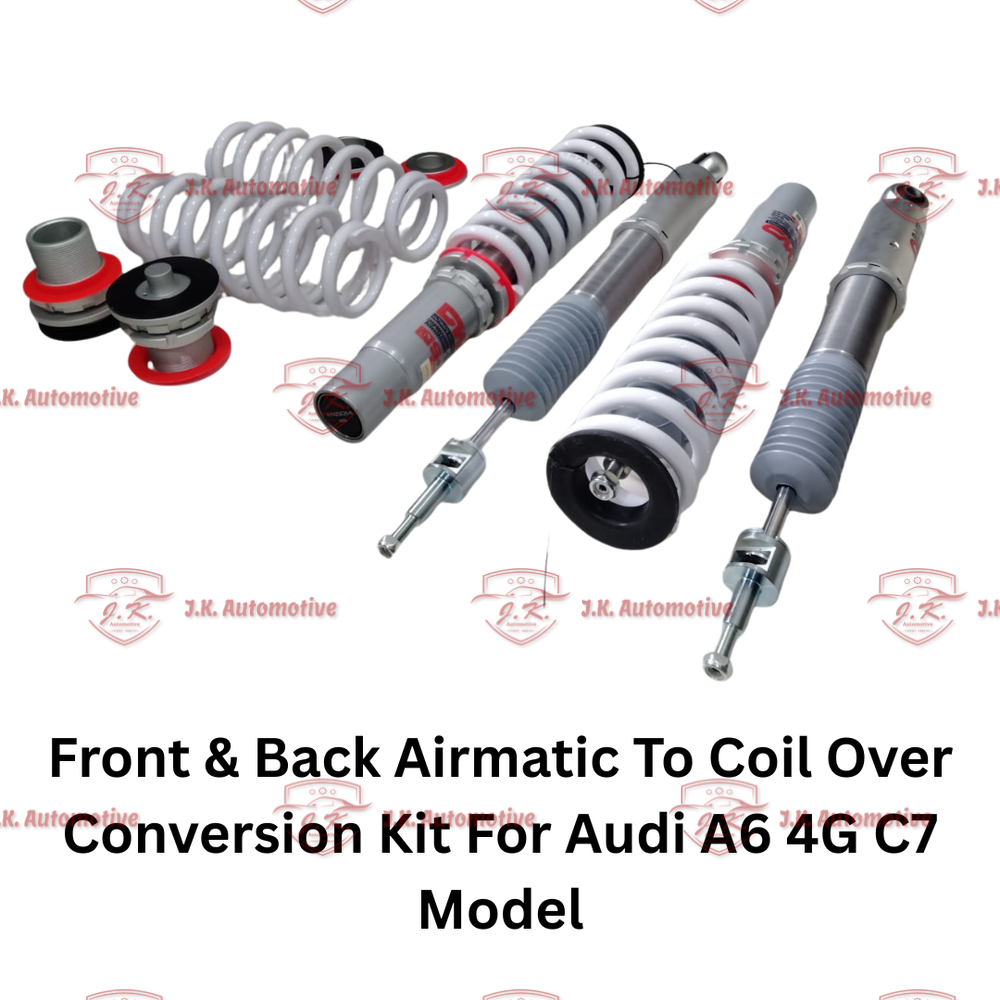
The Front And Back Airmatic To Coil Over Conversion Kit for the stated Audi A6 4G C7 2011–2018 application is a suspension conversion package intended to replace the applicable front and rear Airmatic or air-suspension arrangement with a coil-based suspension configuration, making it fundamentally different from replacing an individual air strut, air spring or electronically connected shock absorber while retaining the original pneumatic suspension system. The supplied references are 4G0616039AK / 4G0616031L / 4G0616001T / 4G0616002T, and all four references should remain unchanged during product identification, compatibility checking and ordering. The purpose of an Airmatic-to-coil conversion is to change the way the vehicle supports its weight and manages suspension movement by moving away from the applicable pneumatic spring arrangement and using coil-based suspension components included in the conversion package. In an air-suspension arrangement, pressurized air and related pneumatic components form part of vehicle-height support and suspension operation. In a coil-based arrangement, mechanical coil springs provide the spring-support function, while the associated dampers control compression and rebound movement. This means the conversion changes an important part of the suspension architecture rather than simply replacing a worn component with another component of the same type. Because this product is described as a Front And Back kit, compatibility should be evaluated across both axles rather than treating it as a single-corner repair component. The existing front and rear suspension arrangement should be inspected before installation, including mounting interfaces, relevant brackets, suspension geometry and any electrical or pneumatic connections associated with the components being removed. The four supplied references should be checked against the stated application and actual installed suspension configuration. A conversion should not be selected solely because an air-suspension warning is present because warnings can originate from different pneumatic, electrical or control-related concerns. The effect of the conversion on vehicle functions associated with the original suspension arrangement should also be understood before installation. Any warning-management or electronic compatibility requirements should be verified from the actual conversion kit instructions rather than assumed. Professional installation is particularly important because the work affects both front and rear suspension positions and may require subsequent suspension-geometry checks. Correct product identification should therefore preserve Audi A6 4G C7, Front And Back Airmatic To Coil Over Conversion Kit, all four references 4G0616039AK / 4G0616031L / 4G0616001T / 4G0616002T and the supplied 2011–2018 application.
What does an Airmatic to Coil Over Conversion Kit change on Audi A6 4G C7?
An Airmatic to Coil Over Conversion Kit changes the applicable Audi A6 4G C7 suspension from its air-based spring-support arrangement to a coil-based configuration, which means the conversion affects how the vehicle mechanically supports its weight and responds to suspension movement rather than functioning as a simple direct replacement of one original air-suspension component. In the applicable pneumatic arrangement, pressurized air is used as part of the spring-support function, while related air lines, pressure-generation components and pressure-control components participate in the operation of the system. With a coil conversion, mechanical coil springs take over the relevant spring-support role and the associated dampers control compression and rebound movement. When a wheel travels upward over a bump, the suspension compresses, and when it moves back toward its normal position, the suspension rebounds. The damper regulates the speed of these movements while the coil spring supports the relevant vehicle load and responds to suspension displacement. Because this product is described as a Front And Back conversion package, the change applies to both the front and rear suspension rather than only one corner. That distinction is important because converting only part of a suspension arrangement without following the intended kit configuration could create an incorrect combination of components. The exact supplied references 4G0616039AK / 4G0616031L / 4G0616001T / 4G0616002T should be retained during identification because they help distinguish the stated product application. Before conversion, inspect the existing suspension arrangement and determine whether the vehicle currently has the configuration expected by the kit. The physical mounting points, suspension interfaces and included conversion components should be compared carefully. Electronic considerations should also be reviewed because removing components from an electronically monitored air-suspension arrangement may affect system monitoring or warning behaviour depending on the vehicle and kit design. Do not assume that every conversion kit automatically eliminates every suspension warning unless that functionality is explicitly included and verified for the supplied kit. Similarly, do not assume that unrelated pneumatic or electrical components must be removed or disabled without following the correct conversion procedure. After installation, the suspension should be checked for correct seating, clearance, fastener security and vehicle stance. Wheel alignment or suspension geometry should also be evaluated as appropriate. The conversion therefore represents a change in suspension configuration and should be treated as a complete front-and-rear suspension project rather than a basic air-strut replacement.
Why would an Audi A6 4G C7 owner convert Airmatic suspension to coil suspension?
An Audi A6 4G C7 owner may consider an Airmatic-to-coil conversion when the objective is to move from the applicable pneumatic suspension arrangement to a mechanically coil-supported configuration, particularly when repeated air-suspension repairs, pressure-loss concerns or a preference for a different long-term suspension setup make a complete conversion more suitable for the owner's requirements, but the decision should be based on understanding the functional differences rather than assuming that a coil conversion is automatically preferable in every vehicle or every situation. Air suspension and coil suspension support the vehicle through different mechanisms. An applicable air-suspension system uses pressurized air as part of the spring-support function and relies on pneumatic components to generate, distribute and retain pressure. A coil-based configuration uses mechanical springs for the relevant spring-support function and therefore does not depend on an air spring to provide that same support. An owner experiencing repeated pressure-loss concerns may investigate conversion as an alternative to continuing pneumatic repairs, but the original problem should still be properly diagnosed before deciding on the repair strategy. A dropping vehicle corner, frequent compressor operation or a suspension warning does not automatically prove that every air-suspension component requires replacement. Air lines, connections, pressure-control components, electrical wiring and individual suspension units can produce different faults. A conversion also changes the vehicle from its applicable original air-based suspension configuration, so differences in suspension operation and available original functions should be understood beforehand. If the original arrangement provides electronically controlled functions associated with the air suspension, the effect of conversion on those functions should be verified for the specific kit rather than assumed. This product is described as a Front And Back Airmatic To Coil Over Conversion Kit and should therefore be evaluated as a complete suspension conversion package. The exact supplied references 4G0616039AK / 4G0616031L / 4G0616001T / 4G0616002T should be checked together with Audi A6 4G C7 and the supplied 2011–2018 application. Existing mounting interfaces, suspension condition and wheel geometry should be inspected before installation. Any required electronic or warning-management solution should be confirmed from the kit specification. Professional installation is recommended because both axles are involved and incorrect suspension assembly can affect ride height, wheel geometry, tyre wear and vehicle behaviour. The decision should therefore be based on the desired suspension configuration, correct compatibility and an understanding of what functions change after conversion.
Does the Audi A6 4G C7 Airmatic To Coil Over Conversion Kit eliminate the need for air suspension components?
The Audi A6 4G C7 Airmatic To Coil Over Conversion Kit changes the applicable front and rear spring-support arrangement from air-based suspension to the coil-based configuration provided by the conversion package, so the converted suspension positions no longer depend on their original air spring function in the same way, but it would be incorrect to assume without inspecting the specific kit and installation instructions that every pneumatic or electronic component on the vehicle can simply be removed, disconnected or ignored. A complete conversion must be understood as an engineered change in suspension configuration rather than an instruction to indiscriminately remove air-suspension hardware. The exact components replaced, retained, disconnected or electronically addressed depend on the actual conversion package and vehicle configuration. The supplied references for this product are 4G0616039AK / 4G0616031L / 4G0616001T / 4G0616002T and should remain unchanged when verifying the application. Before beginning the conversion, identify every component included in the package and compare it with the existing front and rear suspension. Confirm which air-supported components are being replaced and how the new coil-based components mount to the vehicle. Inspect the relevant upper and lower mounting interfaces, brackets and surrounding suspension parts. Pneumatic lines and connections associated with the components being removed should be handled according to the proper conversion procedure rather than cut, blocked or modified arbitrarily. Electronic system behaviour should receive equal attention because removing electronically monitored suspension components may produce warnings or stored faults depending on the vehicle and conversion design. Do not claim that a conversion automatically removes dashboard warnings unless the supplied kit explicitly provides and verifies a suitable solution for the stated application. The original compressor and other pneumatic components should not be diagnosed as defective merely because a conversion is being performed. Similarly, a functioning component does not necessarily need to be discarded unless the conversion procedure specifically requires its removal. After the mechanical conversion is complete, the vehicle should be checked for correct stance, spring seating, damper installation, suspension clearance and secure mounting. A functional road test and appropriate suspension-geometry inspection should follow. Therefore, the kit changes the relevant suspension support method, but the exact treatment of the remaining pneumatic and electronic system must follow the specific kit configuration and professional installation procedure.
Will an Airmatic to Coil Over Conversion Kit affect the ride height and driving behaviour of Audi A6 4G C7?
Changing the stated Audi A6 4G C7 from its applicable Airmatic suspension arrangement to a coil-based configuration can change aspects of suspension operation because the vehicle is moving from pneumatic spring support to mechanical coil spring support, so ride height, suspension response and any functions associated with the original air-suspension configuration should be considered before installation rather than assuming that the converted vehicle will behave exactly the same as it did with the original system. The final static ride height depends on the design and specification of the actual conversion components supplied for the vehicle. It should not be assumed that the kit raises, lowers or exactly duplicates a particular original suspension setting unless the product specification explicitly states that characteristic. During normal driving, coil springs support the relevant vehicle load mechanically while the dampers control compression and rebound movement. When the wheels encounter bumps or depressions, the springs compress and extend while the dampers regulate the speed of suspension movement. This fundamental arrangement differs from a pneumatic spring-support system where air pressure forms part of vehicle support. The resulting driving behaviour depends on the spring rates, damping characteristics, vehicle load, tyre condition, suspension geometry and condition of surrounding chassis components. If the vehicle previously had an air-suspension fault, comparing the converted vehicle directly with the behaviour of the faulty system may also be misleading. The conversion should instead be evaluated for correct installation, stable stance, appropriate suspension movement and absence of abnormal interference or noise. Because this product is described as a Front And Back conversion package, both axles should use the intended matched components rather than mixing an incomplete selection of conversion and air-suspension parts. Verify all supplied references 4G0616039AK / 4G0616031L / 4G0616001T / 4G0616002T and the stated Audi A6 4G C7 2011–2018 application. Inspect control arms, bushes, ball joints, sway bar links and other suspension components because existing wear can influence the driving behaviour after conversion. Tyres should also be checked for pressure and abnormal wear. After installation, ride height and left-to-right stance should be inspected on an appropriate level surface. Wheel alignment or suspension geometry should be evaluated where required. Any original electronic functions affected by removing the air-supported components should be checked according to the specific conversion solution supplied.
What should be checked before installing the Front And Back Airmatic To Coil Over Conversion Kit on Audi A6 4G C7?
Before installing the Front And Back Airmatic To Coil Over Conversion Kit on the stated Audi A6 4G C7, the actual suspension configuration, supplied 2011–2018 application, all included conversion components, exact references 4G0616039AK / 4G0616031L / 4G0616001T / 4G0616002T, front and rear mounting interfaces, surrounding suspension condition and any pneumatic or electrical requirements should be verified carefully because this procedure changes the suspension architecture across both axles rather than replacing one isolated component. Begin by confirming that the vehicle has the suspension arrangement for which the conversion package is intended. Do not rely only on the Audi A6 model name because equipment can vary and previous owners may have modified or repaired the suspension. Where available, VIN-based information can provide an additional application check, but the actual components installed on the vehicle should also be physically inspected. Lay out the complete conversion package before disassembly and identify which components are intended for each front and rear position. Compare the relevant mounting interfaces, dimensions and attachment arrangements with the components currently installed. Inspect the upper and lower mounting points for damage, corrosion, deformation or previous repair that could prevent correct installation. Review the pneumatic arrangement and determine how the air lines and related connections should be handled according to the conversion procedure. Do not arbitrarily cut, seal, remove or modify pneumatic components without following the correct installation method. Electronic considerations should also be reviewed before mechanical work begins because the original suspension arrangement may include monitored components. Confirm whether the specific conversion package includes any solution intended to address suspension-system warnings and never assume that such functionality is included unless it is explicitly provided. Inspect control arms and bushes for deterioration or excessive movement and check ball joints using an appropriate workshop procedure. Sway bar links, sway links, anti roll link rods and stabiliser sway links should also be inspected where wear or knocking is present. Examine tyres for physical condition and irregular wear because pre-existing geometry concerns can remain after conversion. Both front and rear suspension positions should be serviced according to the intended kit configuration. After installation, inspect coil seating, damper mounting, clearances, fastener security and vehicle stance. Perform an appropriate road test and evaluate suspension geometry or wheel alignment where required. Final verification should preserve Audi A6 4G C7, Front And Back Airmatic To Coil Over Conversion Kit, 4G0616039AK / 4G0616031L / 4G0616001T / 4G0616002T and the supplied 2011–2018 application.
How does the Airmatic To Coil Over Conversion Kit work on Audi A6 4G C7?
The Airmatic To Coil Over Conversion Kit for the stated Audi A6 4G C7 2011–2018 application works by changing the applicable front and rear suspension from an air-based spring-support arrangement to a mechanical coil-based suspension configuration, meaning the relevant coil springs take over the vehicle-support function previously performed through the applicable pneumatic spring arrangement while the associated dampers control compression and rebound movement as the wheels respond to changing road conditions. In an applicable air-suspension configuration, pressurized air forms part of the spring-support function, and pneumatic components participate in generating, distributing and retaining the pressure required for suspension operation. With a coil conversion, mechanical springs provide the relevant spring-support function without relying on air pressure for that same task. As each wheel encounters a bump, depression, road joint or uneven surface, the suspension compresses and rebounds. The coil spring responds mechanically to the change in wheel position and vehicle load, while the damper controls the speed of suspension movement so the vehicle does not continue through excessive repeated oscillations after the original road disturbance has passed. Because this product is described as a Front And Back conversion package, the intended change covers the relevant suspension positions on both axles rather than only one corner. The supplied references 4G0616039AK / 4G0616031L / 4G0616001T / 4G0616002T should remain unchanged during compatibility verification and should be checked together with the stated Audi A6 4G C7 2011–2018 application. Mechanical installation requires the conversion components to correspond with the relevant upper and lower suspension mounting interfaces and surrounding chassis arrangement. The existing suspension should therefore be physically inspected before disassembly. Electronic considerations must also be evaluated because removing components from an electronically monitored air-suspension arrangement can potentially affect system monitoring or warning behaviour depending on the vehicle and conversion kit design. A conversion kit should not automatically be assumed to eliminate every warning unless an appropriate solution is explicitly supplied and verified. Pneumatic lines and other components associated with the original arrangement should be handled according to the correct conversion procedure rather than modified arbitrarily. Surrounding control arms, bushes, ball joints and mounting areas should also be inspected because existing wear can continue to influence vehicle behaviour after conversion. After installation, coil seating, damper mounting, suspension clearance, ride stance and fastener security should be checked. Wheel alignment or suspension geometry should also be evaluated where appropriate.
What are the benefits and important considerations of converting Audi A6 4G C7 Airmatic suspension to coil suspension?
Converting the applicable Audi A6 4G C7 Airmatic suspension to a coil-based configuration changes the vehicle from a pneumatic spring-support arrangement to a mechanically supported suspension system, which can be considered when the owner specifically wants a different long-term suspension configuration, but the conversion should be evaluated in terms of mechanical compatibility, suspension operation, electronic implications, ride characteristics and installation requirements rather than presented as universally better than the original arrangement. One practical difference is that the converted suspension positions no longer rely on an air spring to provide the same spring-support function because mechanical coil springs perform that role. This changes the type of components responsible for supporting the relevant vehicle load. A coil arrangement also does not require pneumatic pressure to provide that same spring-support function at the converted positions. However, this should not be interpreted as meaning that every original pneumatic or electronic component can simply be removed without considering the specific conversion design. The actual installation procedure should define which original components are replaced, retained or addressed. Another important consideration is suspension behaviour. A pneumatic arrangement and a mechanical coil arrangement do not necessarily produce identical operating characteristics, and the resulting ride and suspension response depend on the design of the supplied springs and dampers, vehicle load, tyre condition and surrounding suspension geometry. Original functions associated with the applicable air-suspension system may also be affected after conversion, and these differences should be understood before proceeding. The supplied references 4G0616039AK / 4G0616031L / 4G0616001T / 4G0616002T should be checked together with the stated Audi A6 4G C7 2011–2018 application. Electronic compatibility deserves particular attention because removing monitored suspension components may lead to warning indications unless the specific conversion solution appropriately addresses them. Do not assume warning elimination unless the kit explicitly includes and verifies the required solution. Mechanical inspection should include front and rear mounting points, control arms, bushes, ball joints and related components. Sway bar links, sway links, anti roll link rods and stabiliser sway links should also be inspected when wear or noise is present. Existing tyre wear and wheel geometry should be evaluated because a conversion will not automatically correct unrelated suspension or alignment problems. The conversion is therefore best considered as a complete suspension-configuration change requiring correct parts, proper installation and appropriate post-installation checks.
Will the Audi A6 4G C7 show a suspension warning after an Airmatic To Coil Over Conversion?
Whether the stated Audi A6 4G C7 displays a suspension warning after an Airmatic To Coil Over Conversion depends on the vehicle's applicable electronic monitoring arrangement and the specific design and contents of the conversion package, so it should not be assumed that replacing the air-supported components with coil-based suspension automatically prevents or removes dashboard warnings. The original suspension arrangement may monitor electrical signals or operating conditions associated with components that are changed or removed during conversion. If the vehicle's control system expects information from those components and the conversion does not appropriately address that expectation, a warning or stored fault may remain. For this reason, electronic compatibility should be investigated before the mechanical conversion begins rather than after the vehicle has already been disassembled. Review the exact contents and instructions supplied with the conversion package and determine whether any components intended specifically for electronic compatibility or warning management are included. If such components are not explicitly supplied, do not claim or assume that the kit automatically prevents suspension warnings. Suitable vehicle diagnostic equipment can be useful before conversion to record existing suspension-related faults and again after installation to identify any remaining or newly detected issues. Existing faults should not automatically be attributed to the conversion kit because the vehicle may already have pneumatic, electrical or wiring concerns. Inspect relevant connectors and wiring for damage, contamination, loose engagement or previous modification. The supplied references 4G0616039AK / 4G0616031L / 4G0616001T / 4G0616002T should remain unchanged when confirming the stated Audi A6 4G C7 2011–2018 application. Mechanical compatibility and electronic compatibility should be treated as separate checks because a conversion component can physically fit while the vehicle still requires an appropriate strategy for the original electronic monitoring arrangement. Likewise, an electronic solution does not compensate for incorrect mechanical installation. After conversion, the vehicle should undergo a complete functional inspection, including suspension stance, component clearance, spring seating, damper mounting and any relevant dashboard indications. Diagnostic fault information should be reviewed where appropriate. The road test should confirm that there is no abnormal suspension noise or interference. Wheel geometry should also be evaluated as required. Therefore, a suspension warning after conversion is not something that should be promised to disappear without verifying the actual conversion kit's electronic provisions.
What should be inspected after installing the Front And Back Airmatic To Coil Over Conversion Kit on Audi A6 4G C7?
After installing the Front And Back Airmatic To Coil Over Conversion Kit on the stated Audi A6 4G C7, the complete front and rear suspension should be inspected for correct component seating, mounting security, suspension clearance, vehicle stance, electronic behaviour, tyre condition and wheel geometry because successful installation involves considerably more than simply placing the coil conversion components into the vehicle. Begin with a visual inspection of every converted suspension position and confirm that each component is installed on the intended side and axle according to the specific conversion-kit configuration. Check the seating of the coil springs and confirm that they are positioned correctly at their relevant mounting interfaces. Inspect the dampers and associated mounting hardware for correct positioning and secure attachment. Check surrounding areas for unintended contact, interference or insufficient clearance throughout the normal suspension operating range. The vehicle should then be placed on an appropriate level surface so that its stance can be evaluated. Compare left-to-right height and inspect both front and rear positions for obvious abnormalities. Do not assume a particular final ride-height specification unless it is stated for the actual conversion kit. The supplied references 4G0616039AK / 4G0616031L / 4G0616001T / 4G0616002T should remain documented as part of the stated product application. Review how the original pneumatic connections were handled and ensure the conversion procedure has been followed rather than leaving improvised modifications. Electronic system behaviour should also be checked. Inspect the instrument display for relevant warnings and use suitable diagnostic equipment where appropriate. If the conversion package includes any components intended to address electronic compatibility, verify that they are installed according to the applicable instructions. Surrounding suspension parts should receive another inspection after the conversion. Check control arms, bushes, ball joints and relevant mounting points. Sway bar links, sway links, anti roll link rods and stabiliser sway links should be checked where looseness or noise exists. Inspect all four tyres for pressure, condition and abnormal wear patterns. A suitable road test should evaluate suspension movement, steering behaviour, braking stability and any abnormal noise or interference. After major suspension work, wheel alignment or suspension geometry should be evaluated and corrected where required. Final inspection should confirm the stated Audi A6 4G C7 2011–2018 application and that the complete front-and-back conversion has been installed as intended.
Can I replace Audi A6 4G C7 air suspension with a coil conversion kit?
The applicable air suspension on the stated Audi A6 4G C7 can be changed to a coil-based suspension configuration when a compatible Front And Back Airmatic To Coil Over Conversion Kit is selected and installed correctly, but the conversion should be treated as a complete suspension-system modification rather than a simple direct replacement of one faulty air strut because it changes the method used to provide the relevant spring-support function and may also affect pneumatic and electronically monitored suspension functions. The first step is to verify that the vehicle's actual suspension configuration corresponds with the conversion package rather than relying only on the Audi A6 model name. This product is stated for the Audi A6 4G C7 2011–2018 application and carries the supplied references 4G0616039AK / 4G0616031L / 4G0616001T / 4G0616002T, all of which should remain unchanged during product identification. Because the package is described as Front And Back, it should be evaluated as a complete conversion across the relevant front and rear suspension positions rather than as an isolated single-corner replacement. Before installation, inspect the existing air-supported components, mounting points, pneumatic connections, control arms, bushes, ball joints and other surrounding suspension parts. Determine exactly which components the conversion kit replaces and how the remaining pneumatic hardware should be handled according to the specific installation procedure. Electronic compatibility should be investigated before conversion because the vehicle may monitor suspension components that are being removed or changed. Do not assume that every conversion kit automatically removes dashboard warnings or stored suspension faults. Any electronic or warning-management solution should be confirmed from the actual kit contents and specifications. The replacement coil components should fit their intended mounting locations without drilling, welding, forcing or improvised modification unless a specific approved installation procedure explicitly requires otherwise. After installation, inspect spring seating, damper mounting, suspension clearance and vehicle stance. Check the instrument display and relevant diagnostic information where appropriate. A road test should be performed to identify abnormal noise, interference or handling concerns. Wheel alignment or suspension geometry should also be evaluated following the suspension work. Customers looking for an Audi A6 C7 air suspension conversion kit online should therefore verify the exact vehicle configuration, supplied 2011–2018 application, all four references and the complete contents of the conversion package before ordering.

Reviews
There are no reviews yet.