Cart0items

Cart

Hello GuestFor better experience login
Login

Buy Toyota Parts, Volkswagen Parts, Honda Parts, Jaguar Parts, BMW Parts, Audi Parts, Skoda Parts, Volvo Parts, Mahindra Parts, Mini Parts and more - Buy Car Parts Online!

  • 00
  • 00
  • 00
  • 00
0
0
Cart0items

Cart

HomeShopFiltersAir FiltersMercedes-Benz S-Class (W220, V220) S 320 CDI (220.025, 220.125) Air Filter – A 646 094 01 04 (1998 – 2005)

Description

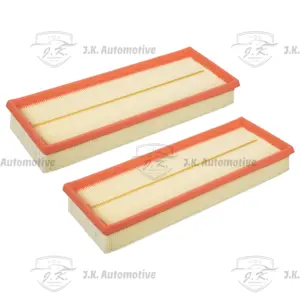
Buy Mercedes S320 CDI Air Filter A6460940104 Genuine OEM | JK Automotive.

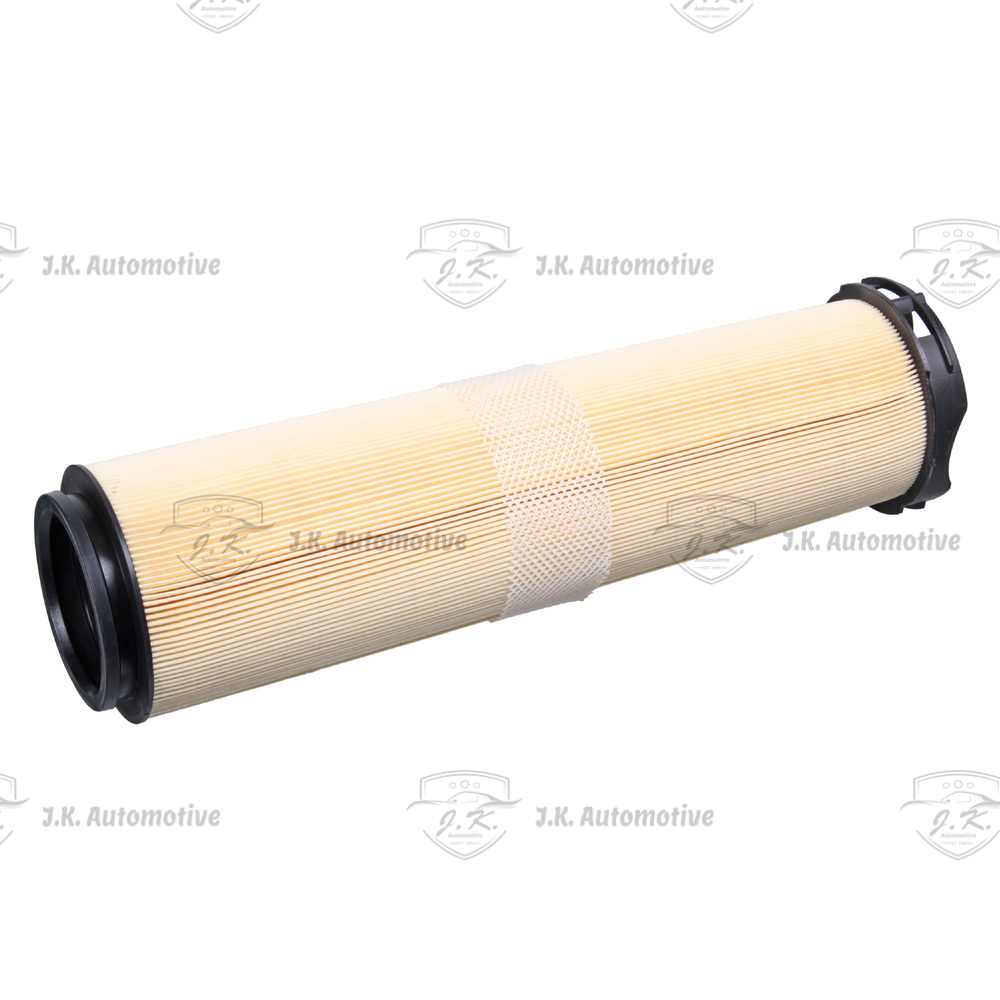
Mercedes S320 CDI Air Filter A6460940104 is a genuine Mercedes-Benz OEM replacement air filter specifically designed for Mercedes-Benz S-Class (W220, V220) S 320 CDI (220.025, 220.125) (1998 – 2005). It is fully compatible with OEM part number A 646 094 01 04, ensuring precise fitment and reliable factory-level performance.

The premium multi-layer filtration media effectively captures dust, dirt, pollen, sand and other airborne contaminants before they enter the engine intake system. It maintains unrestricted airflow for cleaner combustion while protecting critical engine components from premature wear.

Mercedes S320 CDI Air Filter A6460940104 improves combustion efficiency, turbocharger response, throttle response and fuel economy. It supports smoother acceleration, consistent engine performance and optimum power delivery while protecting the OM646 turbo diesel engine.

Routine replacement of the air filter helps safeguard the turbocharger, mass airflow sensor, intake manifold, intake valves and cylinders from harmful contaminants. Clean intake air contributes to improved engine reliability, lower maintenance costs and extended engine life.

Choosing a Genuine Mercedes-Benz OEM air filter guarantees factory-quality fitment, excellent filtration efficiency and long-lasting durability. It is engineered to Mercedes-Benz specifications to provide dependable performance under all driving conditions.

Buy Mercedes S320 CDI Air Filter A6460940104 from JK Automotive for 100% genuine Mercedes-Benz OEM spare parts, competitive pricing, expert technical support, secure packaging and fast shipping across India.
Compatible vehicles

ManufacturerModelYear-Range
Mercedes-BenzS-Class LWB (V220)1999–2005

Reviews

There are no reviews yet.

Be the first to review “Mercedes-Benz S-Class (W220, V220) S 320 CDI (220.025, 220.125) Air Filter – A 646 094 01 04 (1998 – 2005)”

Your email address will not be published. Required fields are marked *

Questions and Answers

Why is an electronic Air Filter Adaptation Reset strongly recommended after replacing air filter A 646 094 01 04 on an S 320 CDI?

Performing a digital Air Filter Adaptation Reset using a Mercedes-Benz STAR or XENTRY diagnostic computer or a professional OBD2 scanner is a vital technical step after installing a new air filter on a W220 S 320 CDI. The engine control unit governing the OM648 3.2-liter inline-six diesel engine utilizes adaptive, self-learning software routines that continuously track and adjust for the gradual, natural restriction of the air filter as dirt accumulates over time. As air intake resistance slowly climbs across thousands of kilometers, the computer incrementally modifies its stored compensation memory tables for Mass Air Flow sensor baseline thresholds, turbocharger boost pressure control, and exhaust gas recirculation rates to maintain smooth operation. If a brand-new, completely unrestricted air filter is installed without clearing these stored adaptation values from memory, the engine computer briefly continues operating under out-of-date high-restriction parameters. This mismatch between physical fresh airflow and old electronic calibration data can cause rough engine idling, delayed automatic transmission gear shifts, and momentary power surges during acceleration. In many cases, the sudden jump in fresh air volume detected by the sensitive Mass Air Flow sensor exceeds the computer learned variance limits for aged filters, causing the computer to register an airflow implausibility error and illuminate the check engine light. Resetting the air filter adaptation clears these outdated memory tables, allowing the computer to immediately re-establish accurate baseline reference values for maximum fresh airflow and optimize fuel combustion right away.

What is the recommended service interval for air filter A 646 094 01 04 on the W220 S 320 CDI, and how do driving conditions affect replacement timing?
The standard factory-recommended replacement interval for air filter A 646 094 01 04 on the Mercedes-Benz W220 S 320 CDI under normal driving conditions is every 60,000 kilometers or every 3 to 4 years, typically aligned with a major Service B maintenance schedule. However, because air filter service life depends directly on ambient environmental quality and the total volume of air processed by the turbocharged engine, replacement intervals should be adjusted based on real-world driving conditions. Operating the vehicle regularly in dry, dusty climates, on unpaved gravel roads, or through construction zones accelerates dust saturation within the synthetic media, reducing airflow capacity much sooner than the standard interval. Similarly, frequent commuting in dense urban stop-and-go traffic laden with airborne diesel soot, tire dust, and industrial particulates will clog the filter pleats prematurely. Under severe or dusty operating conditions, it is strongly advised to visually inspect the cylindrical air filter element every 15,000 to 20,000 kilometers and replace the filter every 30,000 kilometers to preserve uninhibited engine breathing. Regularly inspecting and replacing the air filter is one of the most cost-effective preventive maintenance practices for preserving the longevity of the OM648 diesel engine. Maintaining clean airflow keeps turbocharger operating temperatures lower, minimizes carbon soot accumulation in the intake system, and maximizes fuel economy over the lifespan of your S-Class diesel.
Can a clogged air filter affect the fuel economy and emissions output of my Mercedes S 320 CDI flagship saloon?
Yes, a severely clogged or heavily contaminated engine air filter will drastically degrade your vehicle's fuel economy while simultaneously increasing harmful tailpipe emissions due to altered air-to-fuel ratios inside the combustion chamber. When air intake flow is constricted by trapped dirt and debris, the inline-six common-rail diesel engine is forced to work substantially harder to draw in the necessary volume of oxygen required for clean, complete fuel combustion cycles. This restriction induces a richer fuel mixture, meaning the engine burns more diesel than necessary, which rapidly decreases your miles per gallon and causes unburnt hydrocarbons and excessive black soot to accumulate in the exhaust tract. Over time, running a vehicle without a pristine Mercedes-Benz S-Class (W220, V220) S 320 CDI (220.025, 220.125) Air Filter - A 611 094 02 04 (1998 – 2005) setup places excessive strain on the oxygen sensors and can prematurely foul or clog your expensive catalytic converter system due to excessive soot loading. Regularly replacing your filtration element ensures a crisp, clean burn that lowers environmental emissions, maximizes fuel efficiency, protects auxiliary exhaust electronics, and prevents unexpected diagnostic trouble codes or check engine lights from illuminating on your dashboard. [1]
What is the recommended service interval for changing the W220 S 320 CDI air filter?
The standard manufacturer recommendation for replacing the air filter element on a W220 Mercedes-Benz S 320 CDI generally falls between every fifteen thousand to thirty thousand miles, or approximately every two years under ordinary highway driving environments. However, if you frequently operate your executive luxury sedan in severe driving conditions, such as heavily congested urban commuter traffic, dusty rural roads, or high-mileage long-distance highway travel, you should inspect and replace the filter much sooner, potentially every ten thousand miles. Neglecting this simple preventative maintenance task causes the filter media to become saturated with fine atmospheric dust particles, which slowly chokes off the engine's oxygen supply and reduces the vehicle's operational efficiency. A good rule of thumb for luxury vehicle care is to visually inspect the condition of your filtration system to determine if you need to install a new Mercedes-Benz S-Class (W220, V220) S 320 CDI (220.025, 220.125) Air Filter - A 611 094 02 04 (1998 – 2005) unit to clear out excessive dark discoloration or trapped physical debris within the deep pleats. Replacing this inexpensive component proactively protects your precision-engineered OM648 powertrain from accelerated internal wear and guarantees that the engine always operates under optimal thermodynamic and mechanical conditions.
What are the common symptoms that indicate my Mercedes-Benz W220 diesel engine air filter needs urgent replacement?
When your Mercedes-Benz S-Class air filter becomes overly saturated with contaminants, your vehicle will exhibit several distinct physical warning signs that indicate an immediate replacement is required to prevent further mechanical degradation. You will likely notice a sluggish or delayed throttle response when pressing the gas pedal, as the heavy-duty OM648 turbocharger struggles to pull enough fresh atmospheric oxygen through the blocked filtration media to accelerate efficiently. The engine may also exhibit a rough, unstable idle or produce unusual muffled coughing sounds from the intake tract when starting the car up cold in the morning. In more severe cases of air starvation, you might notice dark smoke or a strong smell of unburnt diesel exiting the exhaust pipe, accompanied by a noticeable drop in overall fuel economy, smooth shifting transitions, and smooth power delivery under load. For those maintaining their vehicles regularly, swapping old parts for a fresh Mercedes-Benz S-Class (W220, V220) S 320 CDI (220.025, 220.125) Air Filter - A 611 094 02 04 (1998 – 2005) avoids triggering the mass airflow sensor to send error signals to the primary engine control module, ultimately illuminating the check engine light on your dashboard. 
Why is part number A 646 094 01 04 specifically specified for the OM648 inline-six diesel engine in late-model W220 S 320 CDI vehicles?

The Mercedes-Benz W220 S 320 CDI produced during the facelift production years (2002 to 2005) is equipped with the updated OM648 3.2-liter second-generation common-rail inline-six turbo diesel engine. Air filter part number A 646 094 01 04 features a cylindrical cartridge design engineered specifically to fit the updated side-mounted airbox housing assembly used with the OM648 engine management system. Unlike earlier M112 and M113 petrol engines that feature dual flat panel filters inside the top engine cover, the turbocharged OM648 diesel engine draws fresh air through a dedicated single cylindrical filter element with a 360-degree filtration area. The synthetic micro-fiber media utilized in part number A 646 094 01 04 is calibrated to match the exact intake vacuum pressures and mass airflow rates required by the variable-geometry turbocharger. Internal radial support banding and hot-melt pleat stabilization prevent the media from deforming or collapsing under sudden acceleration spikes. Furthermore, the flexible elastomeric end caps form an airtight radial compression seal inside the cylindrical airbox housing, preventing unfiltered ambient air from bypassing the filter element. Installing this precise OEM-specified air filter ensures that incoming fresh air is thoroughly cleaned of abrasive dust before entering the turbocharger compressor, preserving low-end torque, fuel efficiency, and long-term engine reliability over thousands of kilometers.

What structural design advantages does cylindrical air filter A 646 094 01 04 offer over standard flat air filter panels?

The tubular cylindrical construction of air filter A 646 094 01 04 provides distinct structural and aerodynamic advantages for heavy-duty turbo diesel applications like the W220 S 320 CDI. By wrapping high-density filtration media around a central tubular core, the filter provides maximum surface area within a compact side-mounted engine bay footprint, distributing incoming suction vacuum evenly across all 360 degrees of the filter body. This uniform pressure distribution eliminates high-velocity hot spots that could otherwise tear flat filter media during sudden high-boost acceleration. Furthermore, the synthetic-blend filter media is treated with moisture-resistant compounds to retain structural rigidity even when driving through dense fog, heavy rainfall, or humid ambient conditions that could cause cheap paper filters to soften and collapse. The molded end seals and internal support sleeve keep the pleat geometry perfectly spaced, preventing pleat bunching and ensuring consistent airflow velocity into the intake ducting. Protecting the turbocharger compressor wheel from fine silica dust is crucial, as abrasive particles impact the aluminum compressor blades at high speeds, leading to blade erosion, turbocharger imbalance, and lost boost efficiency over time. Utilizing a genuine specification cylindrical filter ensures that clean air flows uninhibited into the intake tract, keeping the turbocharger compressor blades smooth and ensuring consistent power delivery across all driving conditions.

What are the primary symptoms of a clogged or contaminated air filter on a W220 S 320 CDI, and what mechanical risks occur if replacement is delayed?

When air filter A 646 094 01 04 on a Mercedes-Benz W220 S 320 CDI becomes saturated with road dust, soot, and environmental debris, the OM648 turbo diesel engine experiences severe intake air starvation that leads to clear operational symptoms and mechanical risks. The most immediate symptom experienced by the driver is a loss of throttle responsiveness and low-end torque, causing the heavy luxury sedan to feel sluggish during initial acceleration and creating noticeable turbo lag during highway passing maneuvers. Because the engine control unit calculates fuel injection quantities based on real-time mass airflow measurements, restricted air intake causes incomplete fuel combustion inside the combustion chambers. Incomplete combustion produces excessive unburned carbon soot, which manifests as dark exhaust smoke under load and accelerates soot accumulation in the catalytic converter and exhaust gas recirculation system. If a severely clogged air filter is left unserviced, the intense vacuum generated by the turbocharger can cause low-quality or aged filter media to tear or separate from its end seals. Once the filter element breaks down, raw, unfiltered air carrying fine sand is drawn directly into the turbocharger compressor inlet, causing severe abrasive erosion on the compressor wheel blades. Additionally, fine dust bypassing compromised filter media coats the delicate hot-film element of the downstream Mass Air Flow sensor, causing erratic sensor signals, stalling, and false check engine light illumination.


Still have questions?

Ask a question