Cart0items

Cart

Hello GuestFor better experience login
Login

Buy Toyota Parts, Volkswagen Parts, Honda Parts, Jaguar Parts, BMW Parts, Audi Parts, Skoda Parts, Volvo Parts, Mahindra Parts, Mini Parts and more - Buy Car Parts Online!

  • 00
  • 00
  • 00
  • 00
0
0
Cart0items

Cart

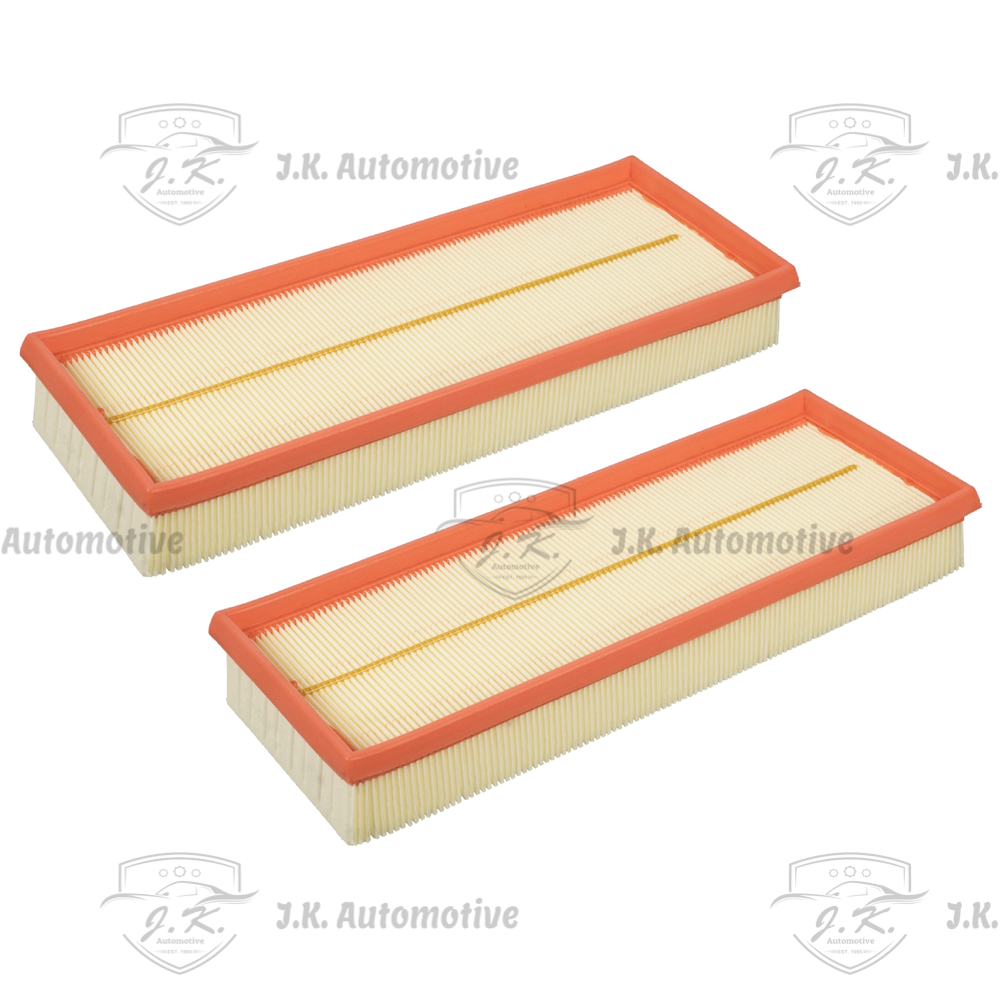
HomeShopFiltersAir FiltersMercedes-Benz S-Class (W220, V220) S 320 (220.065, 220.165) Air Filter – A 112 094 06 04 / A 112 094 00 04 / A 273 094 04 04 / A 273 094 02 04 (1998 – 2005)

Description

Buy Mercedes S320 Air Filter A1120940604 Genuine OEM | Jk Automotive

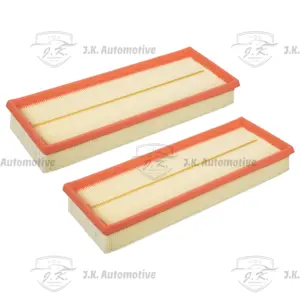
Mercedes S320 Air Filter A1120940604 is a genuine Mercedes-Benz OEM replacement air filter specifically designed for Mercedes-Benz S-Class (W220, V220) S 320 (220.065, 220.165) (1998 – 2005). It is compatible with OEM part numbers A 112 094 06 04, A 112 094 00 04, A 273 094 04 04 and A 273 094 02 04, ensuring precise fitment and reliable performance.

The premium multi-layer filtration media efficiently captures dust, dirt, pollen and other airborne contaminants before they enter the engine intake system. It maintains unrestricted airflow while delivering excellent filtration efficiency for cleaner combustion and optimum engine performance.

Mercedes S320 Air Filter A1120940604 improves combustion efficiency, throttle response, fuel economy and engine performance. It also provides smoother acceleration and helps reduce engine wear by supplying clean air to the M112 V6 petrol engine.

Regular replacement of the air filter protects vital engine components including the mass airflow sensor, intake manifold, intake valves, pistons and cylinders. Clean intake air helps extend engine life while maintaining factory performance and driving comfort.

Using a Genuine Mercedes-Benz OEM air filter guarantees factory-quality fitment, superior durability and long-lasting filtration performance. It is engineered to meet Mercedes-Benz quality standards for dependable everyday driving and long service life.

Buy Mercedes S320 Air Filter A1120940604 from JK Automotive for 100% genuine Mercedes-Benz OEM spare parts, competitive pricing, expert technical support, secure packaging and fast shipping across India.
Compatible vehicles

ManufacturerModelYear-Range
Mercedes-BenzS-Class LWB (V220)1999–2005

Reviews

There are no reviews yet.

Be the first to review “Mercedes-Benz S-Class (W220, V220) S 320 (220.065, 220.165) Air Filter – A 112 094 06 04 / A 112 094 00 04 / A 273 094 04 04 / A 273 094 02 04 (1998 – 2005)”

Your email address will not be published. Required fields are marked *

Questions and Answers

Why are there multiple OEM part numbers (A 112 094 06 04, A 112 094 00 04, A 273 094 04 04, A 273 094 02 04) cross-referenced for this single S 320 air filter set?

The existence of multiple original equipment part numbers for this air filter set is the direct result of Mercedes-Benz’s ongoing engineering updates, factory production revisions, and component cross-sharing between engine families across different chassis generations. The Mercedes-Benz W220 S 320 is powered by the naturally aspirated 3.2-liter M112 E32 V6 engine, which utilizes a dual airbox intake assembly integrated into the plastic engine cover housing. Initially, Mercedes-Benz assigned base part numbers such as A 112 094 00 04 to designate early production filter elements, which were later updated to supersession part number A 112 094 06 04 as material upgrades and sealing media enhancements were introduced. Furthermore, because Mercedes-Benz designed standardized air filter panel dimensions for several V6 and V8 naturally aspirated engine families, part numbers under the M273 series like A 273 094 02 04 and A 273 094 04 04 share identical physical dimensions, frame geometry, and mounting tolerances with the M112 filter housings. All of these referenced part numbers correspond to direct-fit rectangular panel elements that drop into both the left-hand and right-hand intake channels on the W220 S 320 chassis produced from 1998 through 2005. Whether your workshop catalog or vehicle owner manual lists the original M112 series numbers or the newer M273 cross-reference codes, purchasing this filter set guarantees exact fitment without modification or air leaks. Installing a filter set that complies with these exact factory dimensions protects the engine from drawing unfiltered air around the frame edges, preserving downstream electronics and air measurement sensors. Auto repair facilities and parts suppliers can safely use all four of these part numbers interchangeably to verify stock compatibility across global Mercedes-Benz electronic parts catalog databases. Ultimately, adhering to these verified cross-references maintains original equipment airflow standards, ensuring consistent power output, quiet intake resonance, and optimal fuel efficiency for your S-Class.

Why does the W220 S 320 M112 engine use a dual panel air filter setup, and why must both filters be replaced together as a pair?

The M112 3.2-liter V6 engine powering the Mercedes-Benz W220 S 320 features a dual-intake engine cover housing that requires two identical rectangular air filter elements to supply air to the throttle body. Mercedes-Benz engineers implemented this twin-intake architecture to maximize total filter surface area within a compact engine bay design while minimizing overall air intake velocity and restriction. By drawing ambient air simultaneously through two separate left and right filter tracks, the engine receives a steady, low-resistance volume of clean air, which enhances low-end torque, throttle response, and high-rpm breathing capacity. Replacing only one air filter panel or failing to replace both filters at the same time creates an unequal airflow resistance between the two intake channels of the engine cover housing. In a modern fuel-injected engine, unbalanced air intake paths can disrupt smooth airflow convergence at the central Mass Air Flow sensor, leading to turbulent air readings and erratic signal inputs sent to the engine control unit. The computer relies on clean, steady air mass signals to calculate precise fuel injection quantities; unequal filter clogging causes subtle air-fuel ratio fluctuations across cylinder banks, resulting in rough engine idling and hesitation during acceleration. Furthermore, leaving a dirty filter on one side forces the new filter on the opposite side to handle an excessive proportion of incoming air and dirt, accelerating media clogging on the fresh unit. Replacing both filter panels as a matched set during every routine maintenance service ensures equal intake suction resistance across both banks, stabilizes sensor readings, and prolongs the service life of internal intake tract components.

What are the primary symptoms of clogged air filters on an S 320, and what mechanical risks occur if replacement is delayed?

When the dual air filter panels on a Mercedes-Benz W220 S 320 become heavily saturated with road dust, soot, and organic debris, the engine suffers from intake starvation that produces clear operational symptoms and potential mechanical issues. The initial symptom noticed by the driver is a gradual loss of engine power and sluggish throttle response, particularly when trying to accelerate briskly from a stop or maintain speed on highway climbs. Because the M112 engine relies on precise air mass measurements to calculate fuel metering, restricted airflow forces the engine control unit to adjust fuel injection timing, leading to decreased fuel efficiency and noticeable increases in gasoline consumption. As filter restriction worsens, incomplete combustion can cause rough engine idling, engine misfires under load, and carbon soot accumulation on spark plugs and oxygen sensors. If dirty air filters are left unserviced for extended periods, the high vacuum suction generated by the engine can pull fine silica dust straight through worn or collapsed filter media. Abrasive dust particles entering the intake tract act like sandpaper on internal engine surfaces, causing scoring on cylinder walls, piston ring wear, and gradual erosion of the aluminum throttle valve flap. Additionally, fine dust bypassing compromised air filters settles onto the delicate hot-wire element of the downstream Mass Air Flow sensor, leading to corrupted airflow voltage signals, false check engine light illumination, and stalling. Inspecting and replacing clogged air filter sets promptly prevents premature sensor failures and maintains smooth, quiet performance worthy of an S-Class luxury sedan.

How does a clean air filter set protect the Mass Air Flow (MAF) sensor and throttle body on the W220 S 320 M112 engine?

The Mass Air Flow sensor on the Mercedes-Benz W220 S 320 is mounted centrally directly downstream of the dual airbox housing, making it highly vulnerable to fine dust and particulate contamination if air filters are degraded or ill-fitting. The MAF sensor utilizes a delicate platinum hot-film element heated to a specific temperature; as incoming air passes over the element, it cools the wire, and the current required to maintain its temperature is measured by the engine computer to determine air mass. When low-quality or worn-out air filters allow microscopic dust or oil residue to enter the intake stream, contaminants bake onto the heated sensor wire, forming an insulating crust that corrupts sensor accuracy. A contaminated MAF sensor relays incorrect low-airflow signals to the engine control unit, causing the computer to lean out the fuel mixture, which results in engine hesitation, flat spots during acceleration, and diagnostic trouble codes. Furthermore, fine dirt that passes through degraded air filters accumulates inside the electronic throttle body housing, coating the throttle plate and idle control passages with sticky black sludge. Sludge buildup around the throttle plate restricts fine air adjustments during idling, causing unstable engine idle speeds, stalling when coming to a stop, and sticky accelerator pedal feel. Using premium synthetic-blend air filter panels with high micro-particle capture efficiency keeps the intake air stream clean, preventing contaminant buildup on the MAF sensor wire and throttle valve body. Keeping these critical intake components free of contamination avoids expensive sensor replacements and maintains smooth, responsive engine operation throughout the vehicle's lifespan.

What is the recommended service interval for replacing air filter set A 112 094 06 04 on the W220 S 320, and how do driving conditions affect it?
The standard factory-recommended replacement interval for the dual air filter set on a Mercedes-Benz W220 S 320 under normal driving conditions is every 60,000 kilometers or every 3 to 4 years, typically aligned with a major Service B maintenance schedule. However, because air filter longevity depends directly on the ambient environment and total volume of air processed by the engine, service intervals should be adjusted based on real-world operating conditions. Driving in dry, dusty climates, on unpaved gravel roads, or through construction zones significantly accelerates the rate at which dust and sand particles fill the filter pleats, reducing effective airflow much earlier than expected. Similarly, frequent commuting in dense urban stop-and-go traffic where airborne soot, rubber dust, and industrial exhaust particulates are prevalent will saturate the filter media quickly. Under severe or dusty driving conditions, it is strongly advised to inspect the air filter panels every 15,000 to 20,000 kilometers and replace both units every 30,000 kilometers to ensure uninhibited engine breathing. Regularly inspecting and replacing air filter panels is one of the most cost-effective preventive maintenance practices for preserving the longevity of the M112 V6 engine. Maintaining clean airflow optimizes fuel combustion, reduces strain on internal intake components, and ensures that your W220 S-Class continues to deliver smooth, refined performance.
Why are there multiple OEM part numbers (A 112 094 06 04, A 112 094 00 04, A 273 094 04 04, A 273 094 02 04) cross-referenced for this single S 320 air filter set?

The existence of multiple original equipment part numbers for this air filter set is the direct result of Mercedes-Benz’s ongoing engineering updates, factory production revisions, and component cross-sharing between engine families across different chassis generations. The Mercedes-Benz W220 S 320 is powered by the naturally aspirated 3.2-liter M112 E32 V6 engine, which utilizes a dual airbox intake assembly integrated into the plastic engine cover housing. Initially, Mercedes-Benz assigned base part numbers such as A 112 094 00 04 to designate early production filter elements, which were later updated to supersession part number A 112 094 06 04 as material upgrades and sealing media enhancements were introduced. Furthermore, because Mercedes-Benz designed standardized air filter panel dimensions for several V6 and V8 naturally aspirated engine families, part numbers under the M273 series like A 273 094 02 04 and A 273 094 04 04 share identical physical dimensions, frame geometry, and mounting tolerances with the M112 filter housings. All of these referenced part numbers correspond to direct-fit rectangular panel elements that drop into both the left-hand and right-hand intake channels on the W220 S 320 chassis produced from 1998 through 2005. Whether your workshop catalog or vehicle owner manual lists the original M112 series numbers or the newer M273 cross-reference codes, purchasing this filter set guarantees exact fitment without modification or air leaks. Installing a filter set that complies with these exact factory dimensions protects the engine from drawing unfiltered air around the frame edges, preserving downstream electronics and air measurement sensors. Auto repair facilities and parts suppliers can safely use all four of these part numbers interchangeably to verify stock compatibility across global Mercedes-Benz electronic parts catalog databases. Ultimately, adhering to these verified cross-references maintains original equipment airflow standards, ensuring consistent power output, quiet intake resonance, and optimal fuel efficiency for your S-Class.

Why does the W220 S 320 M112 engine use a dual panel air filter setup, and why must both filters be replaced together as a pair?

The M112 3.2-liter V6 engine powering the Mercedes-Benz W220 S 320 features a dual-intake engine cover housing that requires two identical rectangular air filter elements to supply air to the throttle body. Mercedes-Benz engineers implemented this twin-intake architecture to maximize total filter surface area within a compact engine bay design while minimizing overall air intake velocity and restriction. By drawing ambient air simultaneously through two separate left and right filter tracks, the engine receives a steady, low-resistance volume of clean air, which enhances low-end torque, throttle response, and high-rpm breathing capacity. Replacing only one air filter panel or failing to replace both filters at the same time creates an unequal airflow resistance between the two intake channels of the engine cover housing. In a modern fuel-injected engine, unbalanced air intake paths can disrupt smooth airflow convergence at the central Mass Air Flow sensor, leading to turbulent air readings and erratic signal inputs sent to the engine control unit. The computer relies on clean, steady air mass signals to calculate precise fuel injection quantities; unequal filter clogging causes subtle air-fuel ratio fluctuations across cylinder banks, resulting in rough engine idling and hesitation during acceleration. Furthermore, leaving a dirty filter on one side forces the new filter on the opposite side to handle an excessive proportion of incoming air and dirt, accelerating media clogging on the fresh unit. Replacing both filter panels as a matched set during every routine maintenance service ensures equal intake suction resistance across both banks, stabilizes sensor readings, and prolongs the service life of internal intake tract components.

What are the primary symptoms of clogged air filters on an S 320, and what mechanical risks occur if replacement is delayed?
When the dual air filter panels on a Mercedes-Benz W220 S 320 become heavily saturated with road dust, soot, and organic debris, the engine suffers from intake starvation that produces clear operational symptoms and potential mechanical issues. The initial symptom noticed by the driver is a gradual loss of engine power and sluggish throttle response, particularly when trying to accelerate briskly from a stop or maintain speed on highway climbs. Because the M112 engine relies on precise air mass measurements to calculate fuel metering, restricted airflow forces the engine control unit to adjust fuel injection timing, leading to decreased fuel efficiency and noticeable increases in gasoline consumption. As filter restriction worsens, incomplete combustion can cause rough engine idling, engine misfires under load, and carbon soot accumulation on spark plugs and oxygen sensors. If dirty air filters are left unserviced for extended periods, the high vacuum suction generated by the engine can pull fine silica dust straight through worn or collapsed filter media. Abrasive dust particles entering the intake tract act like sandpaper on internal engine surfaces, causing scoring on cylinder walls, piston ring wear, and gradual erosion of the aluminum throttle valve flap. Additionally, fine dust bypassing compromised air filters settles onto the delicate hot-wire element of the downstream Mass Air Flow sensor, leading to corrupted airflow voltage signals, false check engine light illumination, and stalling. Inspecting and replacing clogged air filter sets promptly prevents premature sensor failures and maintains smooth, quiet performance worthy of an S-Class luxury sedan.

Still have questions?

Ask a question