How does OEM air filter 13712247444 / PHE000040 specifically interact with the M57N / M57N2 3.0L inline-6 turbodiesel engine in the BMW 7 Series (E65, E66, E67) 730d / 730Ld?
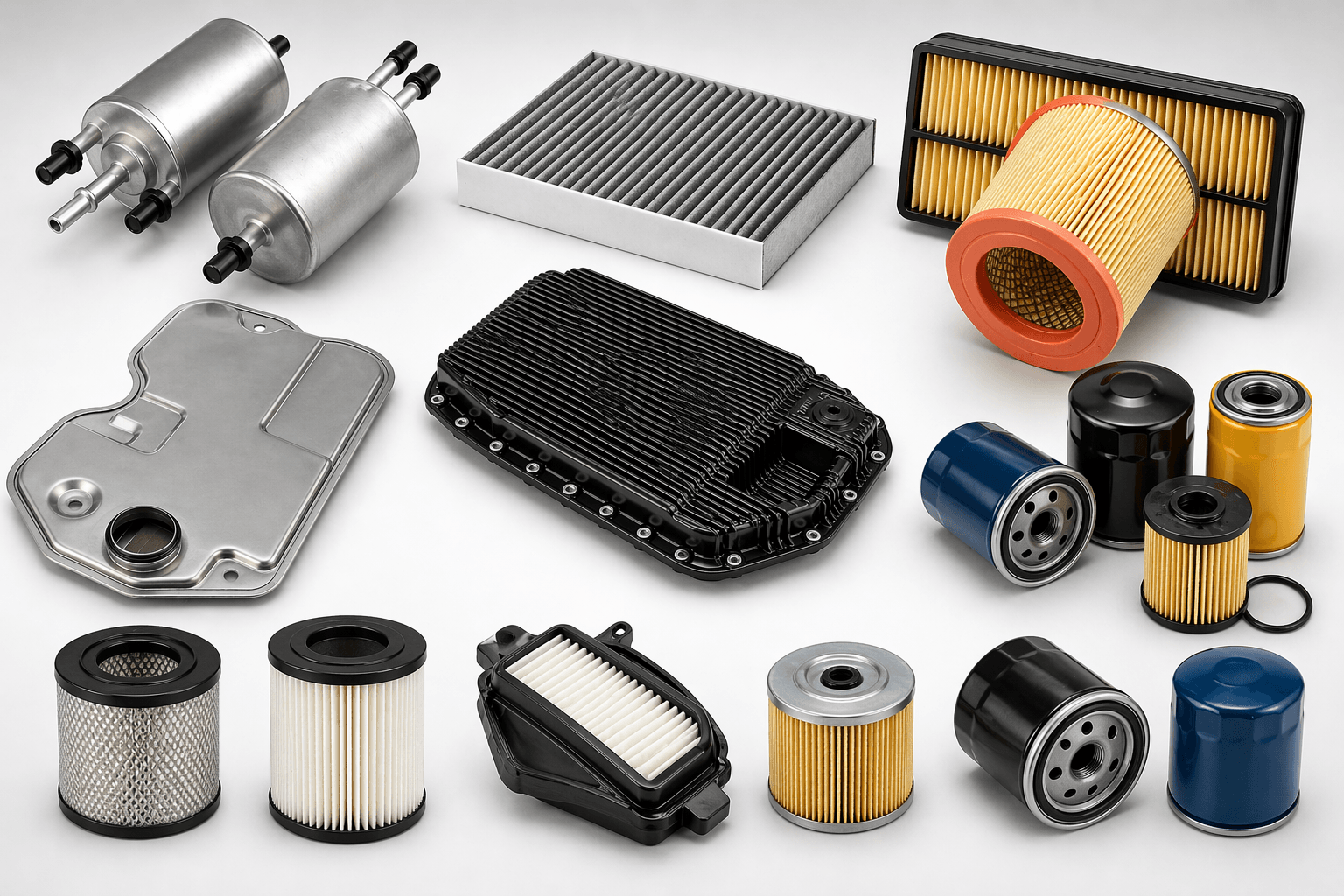
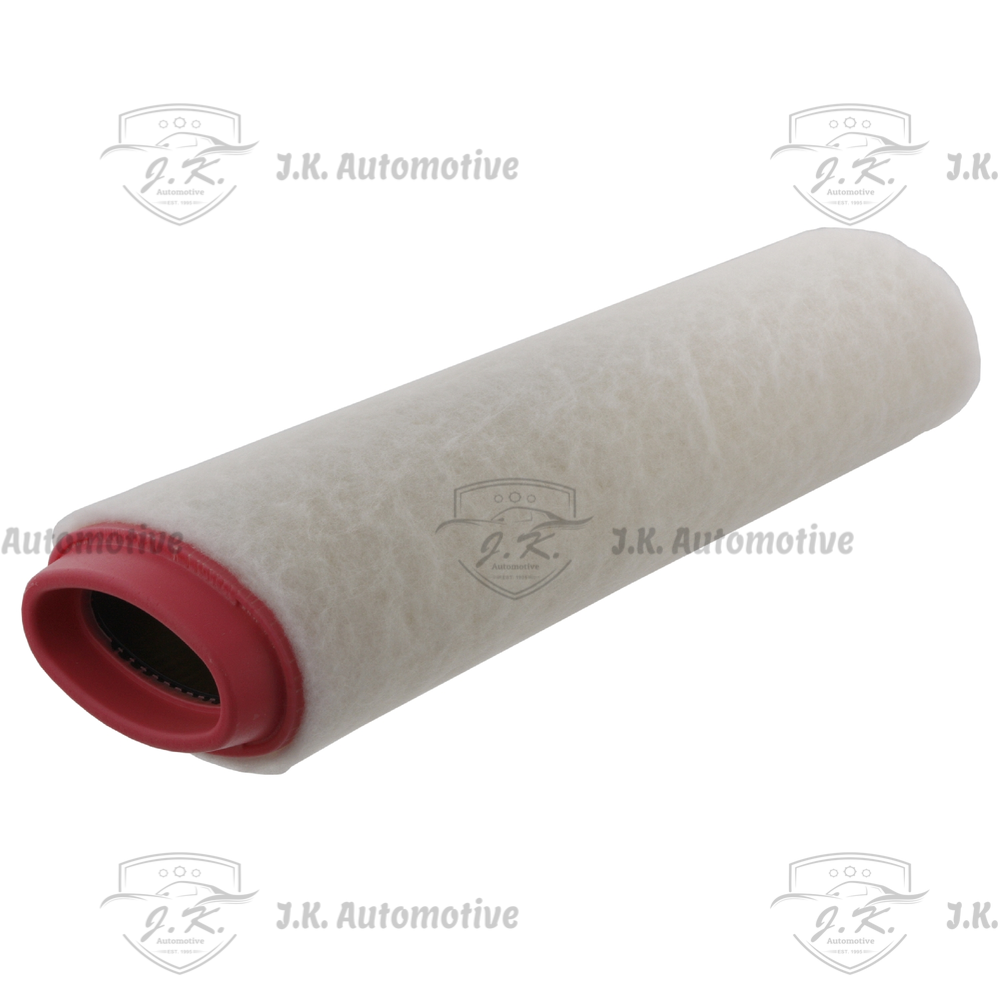
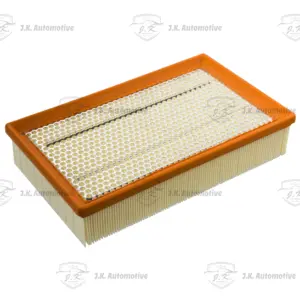
The BMW 7 Series (E65, E66, E67) produced between 2002 and 2008 featuring the 730d and 730Ld models is powered by the M57 3.0-liter straight-6 common-rail turbodiesel engine (M57D30TÜ producing 218 PS / 500 Nm and M57D30TÜ2 producing 231 PS / 520 Nm). Utilizing a variable-geometry turbocharger (VGT/VNT), common-rail direct injection operating at up to 1,600 bar, and a swirl-flap intake manifold, this high-torque diesel powertrain demands a heavy volume of uninhibited, highly filtered induction air. OEM air filter part numbers 13712247444 and PHE000040 specify the heavy-duty cylindrical cartridge element engineered to fit inside the acoustic housing mounted along the side of the M57 engine cylinder head cover. Under high boost demand, the VGT turbocharger pulls severe suction vacuum through the radial filter media. Part number 13712247444 features a multi-layer synthetic micro-fiber media wrapped over an internal structural steel mesh cage to prevent pleat implosion or media collapse under high differential pressure. Furthermore, the specialized elastomeric polyurethane end-caps form an airtight, vibration-dampened radial seal against the intake housing spigot, preventing unmetered, unfiltered raw air from bypassing the media and entering the variable-geometry turbocharger compressor inlet. The shared engineering specification features exact physical dimensions (approximately 302 mm length, 148 mm outer diameter, and 85 mm inner sealing diameter) alongside an integrated hydrophobic wrap layer designed to trap heavy airborne moisture. This structural identity allows complete drop-in interchangeability across all 2002–2008 BMW 7 Series (E65, E66, E67) 730d / 730Ld models, 5 Series (E60/E61 530d), 3 Series (E46 330d), X5 (E53 3.0d), and Range Rover L322 3.0 Td6 vehicles.
What is the relationship, cross-reference origin, and interchangeability between BMW part number 13712247444 and Land Rover code PHE000040 for the 730d/730Ld?
The cross-reference relationship between BMW part number 13712247444 and Land Rover part number PHE000040 stems from the historical powertrain sharing agreement during BMW ownership of the Rover Group and Land Rover brands in the late 1990s and early 2000s. During this era, the BMW 3.0-liter M57 inline-six diesel engine architecture was utilized across multiple luxury platforms, including the BMW 7 Series E65/E66 730d and the Range Rover L322 3.0 TD6. As a result, both vehicle manufacturers shared identical intake filtration engineering, leading to interchangeable component specifications across different original equipment catalog numbers. Whether sourced under BMW code 13712247444 or Land Rover cross-reference PHE000040, the physical cylindrical dimensions, end-cap sealing inner diameter, filter media surface area, and structural cage strength remain 100 percent identical. Workshop technicians, parts suppliers, and vehicle owners can safely utilize either part number interchangeably when servicing E65, E66, and E67 730d or 730Ld models. Verifying compatibility across both part codes guarantees factory-level filtration, ensures an airtight seal within the airbox housing, protects the delicate downstream intake sensors, and preserves original equipment induction capacity without risking unmetered air leaks. Cowl and Strut Brace Removal: Remove the cabin microfilter housings, cowl partition panels, and the passenger-side aluminum strut tower brace to gain clear vertical access to the rear of the engine valve cover.
What operational symptoms indicate a clogged air filter on an E65/E66 730Ld diesel, and what mechanical risks arise if replacement is delayed?
When air filter 13712247444 / PHE000040 on a BMW 7 Series 730d or 730Ld becomes saturated with fine dust, road grime, and environmental debris, the 3.0L M57 turbo diesel engine suffers from severe air starvation that manifests in distinct operational symptoms. The most prominent symptom experienced by the driver is a noticeable loss of low-end torque and increased turbo lag, causing the large luxury sedan to feel heavy and unresponsive when pulling away from stops or accelerating for highway overtakes. Because the Digital Diesel Electronics ECU regulates fuel injection quantities based on real-time Mass Air Flow sensor inputs, restricted intake air forces the computer to curtail fuel delivery, lowering engine horsepower while increasing overall fuel consumption. Incomplete combustion caused by oxygen starvation creates heavy carbon soot, leading to visible dark exhaust smoke under load and accelerated soot accumulation inside the Exhaust Gas Recirculation valve and Diesel Particulate Filter. If a clogged filter is left unserviced, the extreme vacuum pulled by the turbocharger can cause aged filter media to tear or pull away from its end caps. Once the filter element breaks down, raw abrasive silica enters the intake tract, causing severe compressor wheel blade dusting, erosion of the variable-geometry turbine mechanism, and premature Mass Air Flow sensor failure. Unscrew the Allen/Torx bolts securing the integrated airbox cover along the top of the cylinder head cover. Carefully unclip the intake pipe connection and breather hoses connected to the housing.
How does maintaining a clean air filter protect the turbocharger, Mass Air Flow sensor, and EGR/DPF systems on the E65 730d M57 engine?
The variable-geometry turbocharger, Mass Air Flow sensor, and emissions control components on the BMW E65 730d M57 diesel engine are positioned directly downstream of the air filter housing, making their operational longevity dependent on clean intake air. The Mass Air Flow sensor utilizes a delicate heated film element to calculate incoming air mass; when low-quality or degraded air filters allow microscopic particles through, dust bakes onto the heated element, corrupting airflow signals to the DDE ECU and causing engine hesitation or fault codes. Directly downstream, the aluminum compressor wheel of the M57 turbocharger rotates at speeds exceeding 100,000 RPM under boost pressure. At these extreme rotational velocities, fine silica dust acts like an abrasive blasting agent, eroding blade edges, disrupting dynamic rotor balance, and accelerating shaft bearing wear. Beyond protecting the induction hardware, maintaining clean air filtration is crucial for downstream emissions components like the EGR valve and DPF. Oxygen starvation from a restricted filter prevents complete diesel fuel combustion, generating excessive soot that clogs the EGR valve mechanism and rapidly fills the DPF channels. Using high-efficiency air filter 13712247444 / PHE000040 capturing particles down to 3 microns maintains MAF sensor calibration, prevents turbo compressor wheel dusting, reduces EGR soot loading, and extends the operational life of the exhaust filtration assembly. Inspect the new filter 13712247444 / PHE000040 to verify the polyurethane end seals are soft and pliable. Slide the cylindrical filter into the housing, pushing firmly until the end-cap seats fully over the inner airbox spigot. Reassemble the airbox cover, strut brace, and cowl panels, torquing all fasteners to factory specifications.
What structural engineering advantages does cylindrical air filter 13712247444 offer over flat panel filters and low-cost aftermarket alternatives for the E65 730Ld M57 diesel engine?
The cylindrical structural geometry of air filter part number 13712247444 offers specific engineering advantages over flat panel filters and budget aftermarket options when installed in the high-vacuum environment of the M57 diesel engine. Radial cylindrical filters provide a significantly larger effective surface area within a compact engine bay footprint, allowing high volumes of atmospheric air to enter 360 degrees around the circumference. The premium synthetic-blend micro-fiber media used in part number 13712247444 is treated with hydrophobic, moisture-resistant resins that prevent the pleats from absorbing atmospheric moisture when driving through heavy rain, coastal mist, or dense fog. Cheap aftermarket paper filters lack this specialized resin treatment, causing their pleats to soften, swell, and collapse inward under the intense suction vacuum pulled by the variable-geometry turbocharger. When filter media collapses, the usable surface area plummets, creating severe induction restriction and starving the engine of oxygen. Furthermore, part number 13712247444 incorporates an inner reinforced structural cage that holds the pleat pack perfectly rigid under high boost pressure differentials. The heavy-duty elastomeric rubber end-caps maintain structural elasticity across thousands of thermal expansion and contraction cycles, ensuring a soft, airtight seal against the housing endplates that never shrinks, cracks, or allows raw unmetered air bypass. Utilizing a genuine cylindrical specification air filter guarantees maximum dirt-holding capacity, uninhibited airflow, and complete protection for sensitive turbocharger compressor blades.
What specific step-by-step service techniques are required when replacing cylindrical air filter 13712247444 on the E65 730d to avoid damaging the housing or contaminating the clean intake tract?
Replacing the cylindrical air filter element under part number 13712247444 on a BMW E65 730d or E66 730Ld requires careful, systematic service techniques because the cylindrical filter sits tightly within a recessed canister housing near the bulkhead. Begin by allowing the M57 diesel engine to cool down completely, preventing accidental burns from nearby exhaust heat shields and ensuring plastic airbox tabs remain pliable. Carefully undo the retaining screws or metal tension clamps securing the cylindrical airbox cap, taking care not to strain adjacent vacuum lines, wiring harnesses, or the Mass Air Flow sensor housing. Gently pull the end cap away and slide the old cylindrical filter straight out of the housing chamber without twisting or shaking it, which prevents accumulated road sand, dried leaves, and engine bay grit from dropping off into the clean intake tube leading to the turbocharger. Once the old element is out, use a shop vacuum equipped with a narrow nozzle to clean out all loose debris settled at the bottom of the canister. Wipe down the internal sealing faces and inner housing walls using a clean, lint-free microfiber cloth dampened with isopropyl alcohol to remove accumulated oil vapors and fine dust film. Inspect the flexible rubber intake ducting for dry-rot cracking or loose hose clamps before unboxing fresh filter 13712247444. Verify that the elastomeric end-cap gaskets on the new filter are immaculate and unmarred, then slide the element squarely into the canister, applying firm, even pressure until the end cap seats completely flush into its alignment groove without pinching. Reinstall the housing cover securely to complete the job, guaranteeing a 100 percent airtight seal across the entire service interval. Remove the cabin microfilter housings, cowl partition panels, and the passenger-side aluminum strut tower brace to gain clear vertical access to the rear of the engine valve cover.
How do heavy urban stop-and-go driving, high-sulfur fuel environments, and high-load towing affect the functional lifespan of air filter 13712247444 on an E65 730Ld?
While factory service guidelines generally suggest replacing the air filter on the BMW E65 730Ld every 30,000 to 40,000 kilometers, real-world operational environments often require much earlier replacement to preserve engine power and fuel efficiency. Luxury saloons operated predominantly in congested urban traffic encounter high ambient concentrations of diesel exhaust soot, unburned hydrocarbons, and tire dust that adhere to the synthetic filter fibers, forming a sticky, dark film that restricts airflow long before standard mileage intervals are reached. Similarly, vehicles driven in arid, dusty regions, near active construction zones, or on unpaved agricultural roads ingest dense concentrations of microscopic silica dust that rapidly fills the deep pleat folds of the cylindrical media. In regions where fuel quality varies or high-sulfur diesel is used, incomplete combustion inherently produces higher volumes of soot; when combined with a restricting air filter, the Exhaust Gas Recirculation (EGR) valve quickly becomes choked with heavy carbon deposits. Furthermore, using the 730Ld for heavy high-speed autobahn runs or towing increases total engine air intake volume per minute, drawing a significantly higher total mass of airborne contaminants through the filter over a shorter period. Drivers operating under these demanding conditions should visually inspect the cylindrical air filter element every 15,000 kilometers or during every annual oil service. If the filter media appears heavily discolored, clogged with soot, or distorted by humidity, replacing it early guarantees optimal turbocharger response, prevents unburned fuel smoke, and protects expensive emissions hardware.
How does a clean air filter prevent severe oil contamination, crankcase pressure spikes, and turbo oil seal failures on the BMW E65 730d M57 diesel engine?
Maintaining a clean air filter under part number 13712247444 / PHE000040 plays a direct, critical role in regulating crankcase ventilation pressures and preserving turbocharger oil seals on the BMW E65 730d M57 diesel engine. When an air filter becomes severely clogged or restricted, the variable-geometry turbocharger continues attempting to build requested boost pressure, creating a powerful vacuum in the intake ducting between the air filter box and the turbo compressor inlet. This elevated induction vacuum places extreme suction on the engine crankcase breather hose connected directly to the intake boot behind the Mass Air Flow sensor. As a result, excessive oil vapors and liquid engine oil are pulled out of the valve cover oil separator and sucked directly into the turbocharger intake tract. This excess oil coats the inside of the intercooler, degrades flexible rubber charge-pipe seals, and forms heavy carbon sludge on the intake manifold valves and swirl flaps. Furthermore, the extreme pressure differential created between the intake suction side and the pressurized turbo bearing housing places severe mechanical stress on the dynamic internal turbo oil seals. Over time, this pressure imbalance forces engine oil past the turbo compressor seals, leading to visible blue exhaust smoke, rapid oil consumption, intercooler oil pooling, and in extreme cases, dangerous diesel engine runaway conditions. Installing a fresh OEM specification air filter every 30,000 kilometers maintains proper intake pressures, prevents excessive oil vapor draw through the PCV system, preserves turbo bearing seal integrity, and keeps the entire intercooler and charge-pipe system free of oil accumulation.

Reviews
There are no reviews yet.