How does OEM air filter set 13717514832 specifically interact with the dual airbox intake system and Valvetronic architecture of the 6.0L N73B60 V12 engine in the BMW E65/E66 760i?
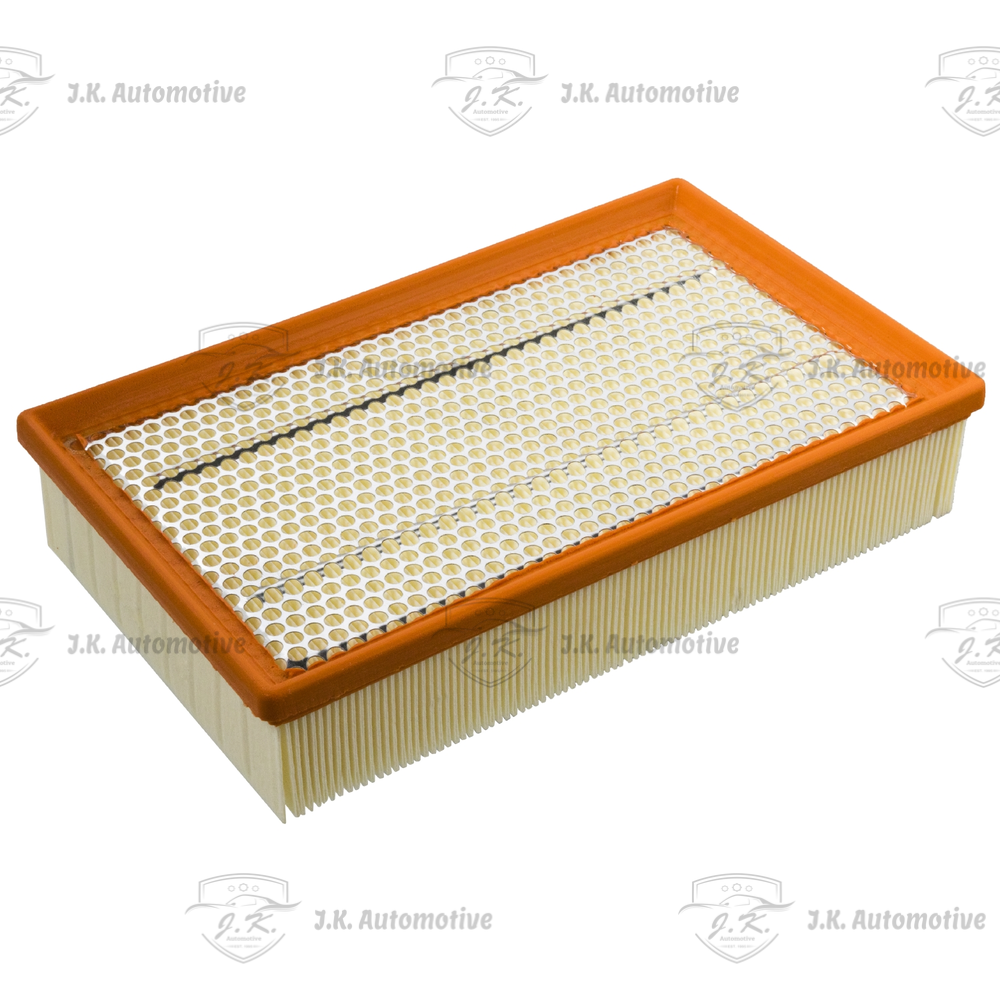
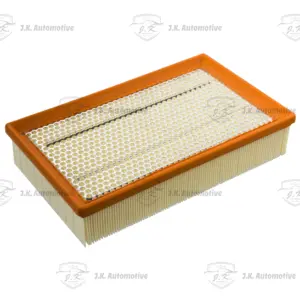
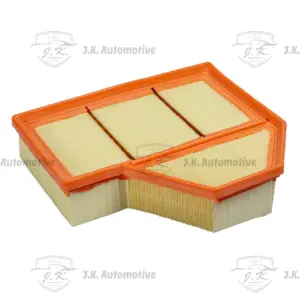
The flagship 6.0-liter N73B60 V12 engine powering the BMW E65 760i and E66 760Li represents the pinnacle of naturally aspirated Bavarian engineering, featuring direct gasoline injection, double-VANOS camshaft timing, and dual Valvetronic variable valve lift mechanisms. To feed this massive 444-horsepower V12 powerplant, BMW designed a symmetrical dual air intake system utilizing two separate air filter boxes, each requiring one air filter element under part number 13717514832 for a total quantity of two filters per vehicle. This high-displacement engine pulls immense volumes of atmospheric air, requiring perfectly balanced intake velocity across both cylinder banks to maintain smooth operation. Standard paper air filters often exhibit inconsistent pleat density or structural deformation under heavy induction vacuum, which introduces localized turbulence across the twin intake plenums and disrupts air mass distribution. When intake airflow becomes unstable or restricted due to inferior filter media, the Engine Management System detects an airflow discrepancy between cylinder Bank 1 and Bank 2. To prevent engine knock or lean-burn conditions across individual cylinder banks, the computer actively retards ignition timing and modifies the double-VANOS camshaft phase angles. This protective adaptation dampens immediate throttle response, reduces mid-range torque delivery, and leads to power lag during aggressive acceleration. Furthermore, the Valvetronic system, which regulates engine load by altering intake valve lift from 0.18 mm to 9.8 mm, becomes far more susceptible to intake manifold vacuum fluctuations when air filtration is constrained. By installing a fresh pair of genuine specification air filters under part number 13717514832, you preserve smooth, laminar airflow straight into both intake plenums. This maintains optimal fluid dynamics, preserves exact VANOS response timing, eliminates unwanted ECU torque-reduction strategies, and ensures that the V12 engine operates with its intended factory smoothness, sharp throttle modulation, and maximum power output across all driving conditions.
What advanced diagnostic fault codes, live data parameters, and physical engine behaviors indicate severe restriction or seal degradation of air filter 13717514832 on an E65 760i V12?
Recognizing a compromised or severely clogged air filter element under part number 13717514832 on a BMW 7 Series E65 760i V12 requires observing both physical driving symptoms and digital diagnostic parameters through factory diagnostic software like INPA or ISTA. When the synthetic filtration media becomes saturated with fine airborne silica, road soot, or environmental organic debris, the engine control unit struggles to maintain the ideal stoichiometric 14.7:1 air-fuel mixture across all twelve cylinders. Mechanically, the driver will experience a delayed off-the-line throttle response, minor engine surging at steady highway cruising speeds, a pronounced decrease in fuel economy, and occasional rough idling when bringing the luxury flagship to a complete stop. Diagnostically, as air filter restrictions increase, the dual MED9 engine management computers will continuously store additive and multiplicative fuel trim adaptations beyond acceptable factory tolerances. Technicians monitoring live DME data will observe short-term fuel trims (STFT) and long-term fuel trims (LTFT) shifting significantly positive as the computer attempts to add extra fuel to compensate for unmetered air or trim fuel back due to restricted intake breathing on a specific cylinder bank. If the condition persists, the instrument cluster will illuminate the check engine light, storing specific diagnostic trouble codes such as P0171 and P0174 (System Too Lean Bank 1 and Bank 2) or P0101 and P0102 relating to Mass Air Flow circuit performance range issues. Additionally, if the perimeter polyurethane sealing gasket on low-quality aftermarket filters shrinks or cracks due to thermal degradation inside the engine bay, unmetered air bypasses the filter media entirely. This creates a secondary vacuum leak condition behind the air filter box, causing erratic idle speed hunting, ionic misfire codes across multiple cylinders, and potential drivetrain fault warnings on the iDrive screen. Inspecting live MAF sensor air mass flow readings at hot idle provides definitive proof of whether air filter 13717514832 is performing correctly or choking the V12 engine intake tract.
How does the high thermal stress inside the BMW E65/E66 760i engine compartment affect air filter perimeter seals, and why is structural material integrity so critical for the N73 V12?
The engine compartment of the BMW 7 Series E65 760i and E66 760Li is an exceptionally crowded, highly insulated thermal environment where operating temperatures regularly reach extreme thresholds due to the massive 6.0-liter N73 V12 engine block and extensive exhaust manifold routing. Under standard operating conditions, ambient air temperatures inside the sealed engine bay can easily exceed 95 to 110 degrees Celsius, especially during prolonged low-speed urban driving, heavy traffic idling, or post-shutdown heat soaking. This intense thermal environment places exceptional physical demands on the elastomeric perimeter seal and synthetic pleat pack of air filter part number 13717514832. Cheaper, non-OEM replacement filters frequently utilize low-grade rubber, recycled PVC, or cheap open-cell foam for their perimeter sealing gaskets. Under continuous exposure to extreme engine heat cycles, these inferior materials rapidly lose their elasticity, becoming brittle, hardened, and prone to cracking or shrinking away from the plastic airbox perimeter channel. Once the sealing frame loses its structural tension, a permanent micro-gap forms between the filter housing and the filter element. This gap allows hot, turbulent, dirty engine bay air to bypass the filter media entirely, pulling fine road sand, microscopic dust, and engine bay oil vapors directly into the intake tract. Furthermore, low-cost paper filter media lacks the hot-melt synthetic adhesive stabilization strands that hold the pleat geometry rigid in genuine filters. Heat and engine vibration cause low-grade filter pleats to sag, curl, and press against one another, effectively blinding off up to 40 percent of the total filter surface area. Part number 13717514832 features a specialized heat-stabilized polyurethane perimeter frame specifically formulated to maintain its elasticity, structural memory, and sealing pressure across thousands of severe thermal cycles. This ensures a 100 percent airtight perimeter barrier throughout the entire service life of the filter, safeguarding sensitive internal V12 engine components from thermal bypass leakage and fine particle ingestion.
What exact step-by-step cleaning, inspection, and installation procedures should be followed during the replacement of air filter set 13717514832 to ensure absolute intake system longevity on the E65 760i?
Replacing the engine air filter set under part number 13717514832 on a BMW E65 760i or E66 760Li is a critical preventative maintenance task that requires systematic attention to detail across both airboxes to prevent unintended contamination of the dual intake tract. Begin the procedure by allowing the N73 V12 engine to cool down completely, preventing thermal discomfort and ensuring the plastic airbox housing snaps remain flexible. Carefully release the heavy-duty metal retaining clips surrounding the perimeter of both upper air filter housing lids, taking care not to place excessive stress on the attached flexible intake ducting or Mass Air Flow sensor electrical connectors. Lift the upper housing lids gently to expose the old filter elements, and carefully extract the used filters straight up without shaking them, which prevents accumulated leaves, dead insects, and loose dirt from falling into the clean side of the lower airbox chambers. Once the old filters are removed, use a shop vacuum equipped with a soft brush attachment to thoroughly clean out all settled grit, sand, and organic debris trapped in the bottom basins of both lower airbox housings. Follow this by wiping down all inner housing surfaces, sealing channels, and perimeter lip grooves with a clean, lint-free microfiber cloth dampened with a mild solvent or isopropyl alcohol to remove oil film and fine dust. Inspect the flexible rubber intake boots and crankcase breather hose connections leading to the throttle bodies for signs of dry-rot cracking, split seams, or loose hose clamps, replacing any compromised rubber components immediately. Unbox the fresh OEM air filters under part number 13717514832 and visually verify that both polyurethane gaskets are pristine, free of manufacturing defects, and completely intact. Gently press each new filter into its respective lower airbox housing, working your way around all four corners to confirm that the perimeter polyurethane seals sit completely flat and fully seated within the designated airbox channels without any pinching, binding, or curling. Finally, lower the upper airbox lids squarely onto the filter frames, apply firm downward pressure to compress the perimeter gaskets uniformly, and resecure all metal latching clips tightly on both housings. Performing this meticulous installation routine guarantees an airtight seal across both cylinder banks, preserves downstream sensor calibration, and keeps your 7 Series V12 running cleanly for tens of thousands of kilometers.
What structural engineering advantages does panel air filter set 13717514832 offer over low-cost aftermarket alternatives for the high-demand 6.0L N73 V12 engine?
The structural engineering of genuine panel air filter 13717514832 provides critical operational advantages over budget aftermarket filters when installed in the high-demand N73 V12 engine environment. Premium synthetic-blend filtration media utilized in this OEM specification is treated with specialized hydrophobic compounds that allow the filter pleats to retain full structural integrity even when driving through heavy rainstorms, dense fog, or high-humidity coastal climates. Cheaper aftermarket paper filters lack this moisture resistance, causing their pleats to absorb atmospheric water vapor, swell, and buckle inward under heavy engine bay suction. When low-grade filter paper collapses, the available surface area for air passage drops drastically, starving the engine of clean air. Furthermore, the rigid polyurethane perimeter frame on part number 13717514832 maintains its precise elasticity and dimensional memory across thousands of extreme thermal expansion and contraction cycles. This ensures that the frame gasket does not shrink, crack, or harden over time, preventing dangerous high-vacuum air leaks along the perimeter channels of both airboxes. Preventing unmetered, unfiltered silica dust from bypassing the air filters is paramount for protecting the twelve individual cylinder walls, piston rings, and intake valve guides from accelerated mechanical wear under high-RPM operation. Utilizing authentic OEM specification filters guarantees balanced, uninhibited airflow into both intake banks, maintaining silky-smooth V12 power delivery and ensuring consistent engine performance across all driving environments.
How do open-top driving conditions, high-altitude travel, and severe duty cycles alter the actual replacement interval for air filter set 13717514832 on the E65/E66 760i?
While factory maintenance schedules generally recommend replacing the air filter elements on the BMW E65 760i and E66 760Li every 30,000 to 40,000 kilometers, real-world operational demands frequently necessitate earlier replacement to preserve engine performance. Flagship V12 sedans operated regularly in dusty arid regions, rural agricultural areas, or heavy urban construction zones ingest high concentrations of airborne particulate matter, fine silica sand, and diesel soot that fill the deep pleat valleys much faster than standard highway cruising. Similarly, vehicles driven in mountainous regions or high-altitude environments place unique volumetric demands on the induction system; because high-altitude air is less dense, the N73 V12 engine must pull significantly higher volumes of ambient air to achieve equivalent oxygen mass for combustion, drawing a higher total mass of airborne debris through the filtration pack over a given distance. Additionally, frequent high-speed autobahn runs or aggressive driving styles increase total engine air consumption per minute, accelerating debris accumulation across the synthetic micro-fiber media. To safeguard the intricate Valvetronic mechanisms and direct-injection fuel systems, drivers subjecting their V12 flagship to severe duty conditions should visually inspect both filter elements every 15,000 kilometers or during every annual oil service. If the filter media exhibits heavy discoloration, packed debris in the pleat folds, or signs of moisture distortion, replacing both elements immediately restores uninhibited engine breathing, protects valvetrain components, and preserves maximum top-end horsepower.
Why is maintaining perfectly matched airflow across both cylinder banks with fresh air filters critical for preventing uneven engine wear on the N73 V12?
The 6.0-liter N73 V12 engine in the BMW 760i utilizes two separate engine management computers (MED9 DMEs) to control Cylinder Bank 1 (cylinders 1 through 6) and Cylinder Bank 2 (cylinders 7 through 12) independently. Each cylinder bank relies on its own air filter box, Mass Air Flow sensor, electronic throttle body, and Valvetronic actuator assembly to manage air induction. If one air filter becomes significantly dirtier or more restricted than the other—which frequently occurs when technicians replace only one filter or use mismatched aftermarket brands—the intake air velocity and volumetric efficiency between the two cylinder banks become unequal. This airflow imbalance forces the two DME units to calculate divergent fuel injection pulse widths, ignition timing maps, and camshaft phase adjustments to equalize power delivery. Operating the engine with asymmetric cylinder bank loading creates microscopic torsional vibrations across the forged steel crankshaft, placing uneven mechanical stress on main crank bearings, connecting rod bearings, and timing chain tensioners. Furthermore, the cylinder bank receiving less oxygen burns fuel less efficiently, leading to carbon buildup on its respective intake valves, spark plugs, and catalytic converters. Installing a fresh, identical pair of OEM air filters under part number 13717514832 guarantees perfectly symmetrical air resistance, equalizes mass airflow readings between Bank 1 and Bank 2, eliminates unwanted crankshaft torsional stress, and ensures smooth, balanced V12 operation.
How does clean air filtration directly protect the high-pressure direct injection system and catalytic converters on the BMW 760i E65/E66?
The BMW 760i was among the earliest luxury production vehicles to feature high-pressure direct gasoline injection, spraying fuel directly into the combustion chambers at pressures up to 120 bar. This direct injection system relies on ultra-precise fuel spray patterns and exact air-fuel mixture homogenization to achieve complete, clean combustion. When a restricted or dirty air filter set under part number 13717514832 limits fresh oxygen intake into the cylinders, the combustion process becomes incomplete, producing dense unburned hydrocarbon soot inside the cylinder chambers. This carbon soot coats the tip of the high-pressure fuel injectors, distorting their multi-hole spray patterns and causing localized hot spots on the piston crowns. Furthermore, unburned fuel and heavy soot particles escape through the exhaust valves directly into the primary catalytic converters. Over time, excessive soot loading overheats the delicate honeycomb substrate inside the catalytic converters, causing structural breakdown, melting, or complete internal blockage of the exhaust system. Replacing clogged air filters promptly ensures full oxygen saturation in the intake charge, promoting complete fuel combustion, keeping direct injector nozzles free of carbon fouling, and extending the operational lifespan of the expensive catalytic converter assemblies on the V12 flagship. This airflow imbalance forces the two DME units to calculate divergent fuel injection pulse widths, ignition timing maps, and camshaft phase adjustments to equalize power delivery.

Reviews
There are no reviews yet.