How does OEM air filter 4G0 133 843 K / 4GD 133 843 A specifically interact with the EA188 / EA288 2.0 TDI Common Rail engine, variable-geometry turbocharger, and DPF emissions dynamics in the Audi A6 C7 (4G2, 4GC)?
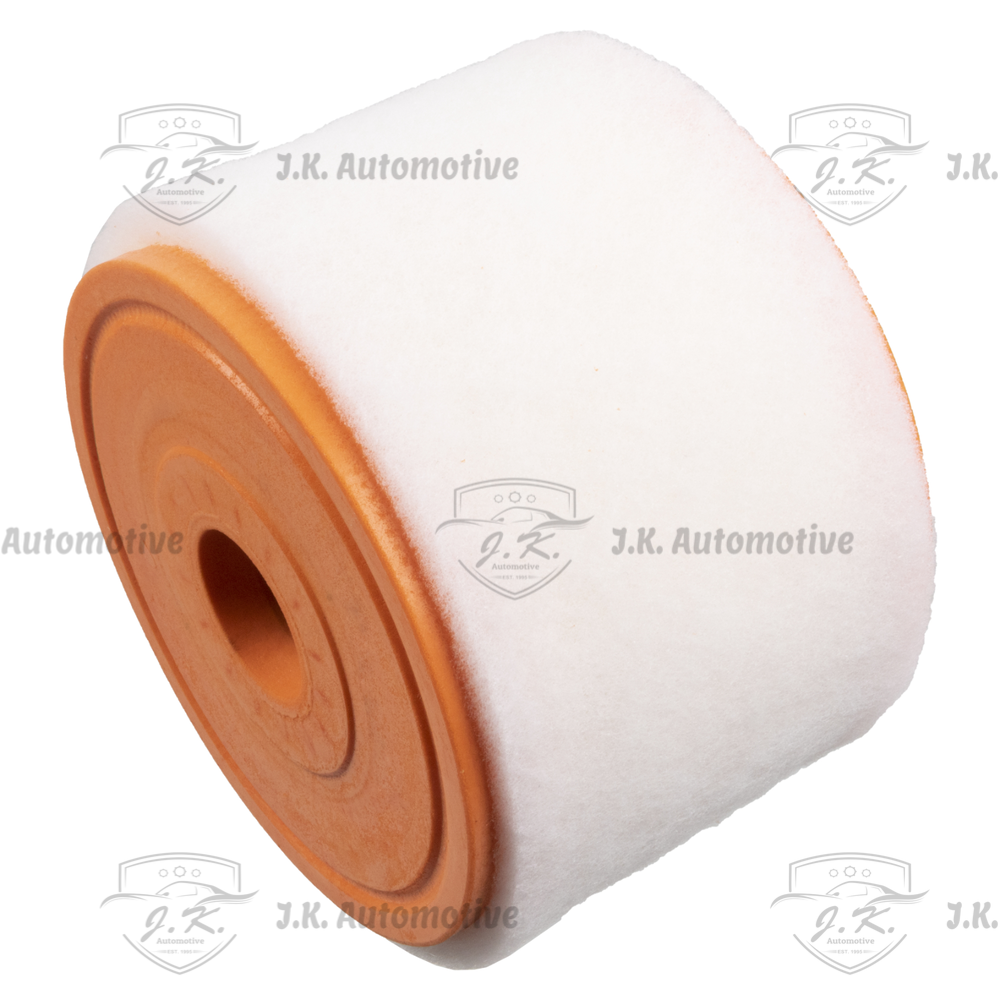
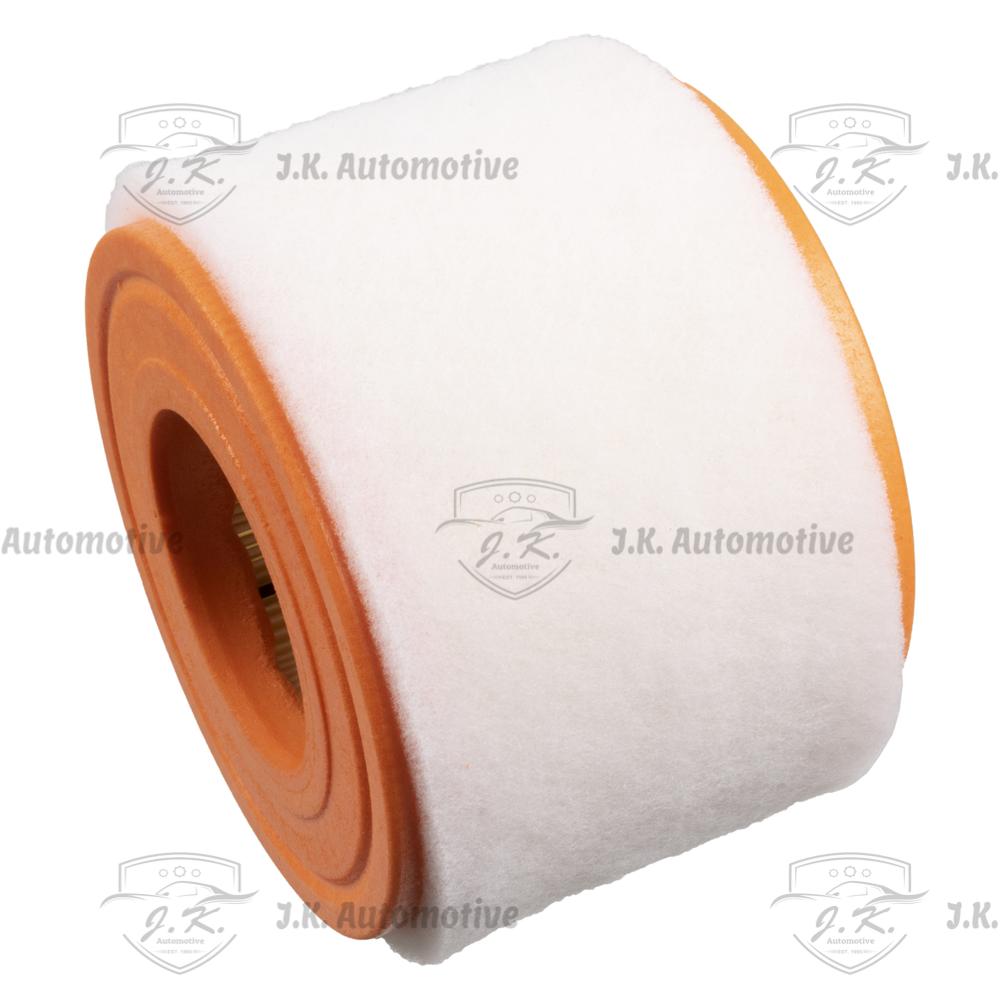
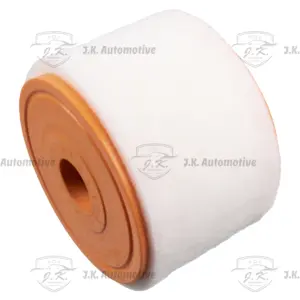
The Audi A6 C7 (4G2, 4GC) produced from 2011 through 2018—featuring the 2.0-liter TDI inline-four common-rail turbodiesel engines (EA188/EA288 family producing 136 PS, 150 PS, 177 PS, or 190 PS Ultra variants)—depends on a dense, non-turbulent, and uninterrupted column of induction air to feed its variable-geometry turbocharger (VGT) and high-pressure common-rail injection system operating at pressures up to 2,000 bar. Maintaining precise intake airflow mass and static airbox pressure is essential for optimal stoichiometry during both light-load urban commuting and high-speed highway cruising. OEM air filter part numbers 4G0 133 843 K, 4GD 133 843 A, 4G0 133 843 H, and L4GD 133 843 A specify the heavy-duty cylindrical/panel element tailored specifically for the C7 longitudinal engine bay airbox assembly. Built with multi-layered synthetic microfiber media supported by transverse hot-melt stabilization lines and a protective pre-filter wrap where applicable, this element prevents pleat flexing, structural deformation, or media collapse under intense differential suction pressure when the VGT turbocharger spools up to deliver peak boost pressure. Furthermore, its specialized elastomeric polyurethane sealing frame compresses uniformly inside the airbox housing tray, forming a 100 percent dust-tight, vibration-isolated compression seal that prevents unmetered road grit, silica sand, and environmental soot from bypassing the media. By maintaining clean, non-turbulent airflow into the turbocharger compressor inlet, filter 4G0 133 843 K protects the delicate aluminum compressor wheel blades from high-speed particle erosion, prevents thermal sensor drift on the downstream hot-film Mass Air Flow (MAF) sensor, preserves charge air cooler heat transfer efficiency, and ensures that the Bosch EDC17 engine management system can execute precise closed-loop fuel injection, active DPF regeneration cycles, and EGR modulation across all engine load demands.
What advanced diagnostic trouble codes, live parameter shifts, and driving symptoms signal severe intake air restriction on air filter 4G0 133 843 K / 4GD 133 843 A in the Audi A6 C7 2.0 TDI?
Diagnosing a restricted, saturated, or physically compromised air filter element under part number 4G0 133 843 K or 4GD 133 843 A on an Audi A6 C7 2.0 TDI requires evaluating physical vehicle performance alongside real-time live parameter logs using VCDS, ODIS, or advanced diagnostic scan tools. As airborne silica sand, highway soot, fine pollen, and organic road debris progressively pack the synthetic microfiber pleats, static suction resistance across the airbox increases dramatically, forcing the electronically controlled variable-geometry turbocharger to work significantly harder and spin at elevated shaft speeds to achieve target manifold boost pressures requested by the ECU. Mechanically, the driver will notice off-the-line throttle hesitation, pronounced turbo lag during mid-range transient acceleration, delayed boost buildup when overtaking, a loss of top-end torque, and elevated diesel fuel consumption as the ECU attempts to compensate for airflow starvation. Diagnostically, the Bosch EDC engine control unit continuously monitors measured airflow mass via the hot-film MAF sensor grid relative to Manifold Absolute Pressure (MAP) sensor readings, VGT vane position, throttle valve angle, and engine RPM. When measured air mass falls below expected theoretical targets during turbocharger spooling, the ECU automatically scales back diesel fuel injection pulse widths to prevent rich combustion and excessive soot creation, directly trimming engine torque output. Sustained intake restriction will illuminate the Glow Plug indicator, EPC lamp, or Check Engine Light (MIL) and store diagnostic trouble codes such as P0101 (Mass Air Flow Sensor Signal Implausible), P0299 (Turbocharger Underboost Regulation Limit Not Reached), P2279 (Intake Air System Leak), or P2002 (Diesel Particulate Filter Efficiency Below Threshold), signaling the technician to inspect and replace filter element 4G0 133 843 K immediately to restore factory performance.
How does maintaining a fresh air filter under part number 4G0 133 843 K / 4GD 133 843 A protect the Diesel Particulate Filter (DPF), EGR valve cooler, and Positive Crankcase Ventilation (PCV) system in the Audi A6 C7 2.0 TDI?
Maintaining an unrestricted, high-flow air filter under part number 4G0 133 843 K directly safeguards the complex emissions control systems and forced-induction components on the Audi A6 C7 2.0 TDI. In modern common-rail turbodiesel engines, severe air restriction starves the combustion chambers of vital oxygen molecules, resulting in an overly rich air-fuel mixture that generates excessive black carbon soot during power strokes. This surplus soot travels directly through the Exhaust Gas Recirculation (EGR) valve and gas cooler assembly before passing into the Diesel Particulate Filter (DPF), causing premature soot loading of the ceramic DPF matrix, rapid differential pressure spikes, and frequent, high-temperature active regeneration cycles that dilute engine oil with unburned diesel fuel. Furthermore, when the air filter is severely clogged, the variable-geometry turbocharger generates an abnormally high intake depression vacuum inside the intake pipe between the airbox and compressor inlet during acceleration. This extreme vacuum places an unnatural suction load on the Positive Crankcase Ventilation (PCV) pressure-regulating diaphragm integrated within the valve cover assembly, tearing internal rubber membranes and pulling liquid engine oil mist straight out of the crankcase into the charge air piping and intercooler. Excess oil coating the intercooler fins degrades thermal heat transfer efficiency, degrades rubber boost hoses, and bakes into sticky sludge when mixed with recirculated EGR gas vapors, emphasizing the critical importance of timely replacement of filter 4G0 133 843 K. When lowering filter 4G0 133 843 K into place, the technician must ensure the polyurethane perimeter frame drops evenly into the sealing alignment track without pinching, twisting, or forcing the corners. Finally, the upper airbox cover must be lowered horizontally and secured by tightening the perimeter Torx fasteners in a diagonal, cross-pattern sequence to ensure uniform compression force across the elastomeric seal.
How do acoustic dampening, cabin refinement, and cold-air intake charge density differ between genuine OEM panel filter 4G0 133 843 K / 4GD 133 843 A and aftermarket open-element intake kits on the Audi A6 C7 2.0 TDI?
The Audi A6 C7 (4G2, 4GC) 2.0 TDI is engineered as a refined luxury executive saloon designed to isolate cabin occupants from unrefined 4-cylinder diesel clatter, high-frequency turbocharger spool whistle, diverter valve discharge noise, and low-frequency induction boom while delivering smooth, linear torque. OEM air filter part numbers 4G0 133 843 K and 4GD 133 843 A are specifically calibrated by VAG acoustic engineers to act as primary noise-dampening elements inside the sealed factory airbox, where high-density synthetic microfiber pleats and an elastomeric polyurethane perimeter frame absorb high-frequency compressor blade flutter, intake pulsation waves, and valvetrain resonance. In stark contrast, replacing the factory airbox with an aftermarket open-element intake or conical filter removes the sealed acoustic housing completely, introducing loud, unrefined diesel induction roar, harsh turbocharger spooling sounds, and engine bay vibration directly into the passenger cabin—a major contributor to driver fatigue during long highway journeys. Furthermore, open-element filters lack the thermal shielding provided by the sealed factory airbox housing, drawing warm, stagnant air directly from inside the crowded 2.0 TDI engine compartment rather than cool ambient air channeled straight through the front grille cold-air ducting. Ingesting heated engine bay air significantly reduces intake charge density, causing the Bosch EDC ECU to retard injection timing and reduce turbocharger boost targets to prevent excessive combustion thermal loads, which results in severe thermal heat-soak power losses during warm weather or heavy traffic driving conditions. Choosing genuine filter 4G0 133 843 K ensures optimal cabin quietness, maximum cold-air charge density, and consistent engine torque output under all operating conditions. Following this procedure guarantees a 100 percent airtight perimeter seal, preventing unmetered air leaks, protecting downstream turbocharger components, and ensuring precise MAF sensor calibration.
What is the role of the integrated snow foam pre-filter layer on specific revisions of part number 4G0 133 843 K / 4GD 133 843 A, and how does it prevent liquid water hydro-lock and premature media blinding in cold or heavy-rain climates?
Certain regional and climate-specific variants of OEM air filter part numbers 4G0 133 843 K and 4GD 133 843 A feature an auxiliary, open-cell polyurethane snow foam pre-filter wrap bonded directly to the primary dirty-air face of the synthetic microfiber media. In cold-weather, high-altitude, or heavy monsoon environments, the front cold-air intake ducting situated behind the radiator grille frequently ingests liquid road spray, heavy slush, fine snow particles, and large organic debris (such as leaves and insects) at high highway velocities. Without this specialized sacrificial foam barrier, fine snow flakes and liquid water droplets pass directly onto the delicate microfiber pleats. As water saturates paper or untreated synthetic media, surface tension causes the pleats to swell and stick together, severely restricting effective filtration surface area and creating massive static suction resistance across the airbox. Under extreme freezing conditions, moisture trapped inside wet pleats freezes solid, completely blinding the intake tract and triggering immediate ECU power limp mode. The open-cell snow foam pre-filter layer acts as a primary mechanical separator, trapping heavy slush, liquid water spray, and coarse debris before they reach the main microfiber matrix. Moisture captured within the coarse foam layer evaporates harmlessly via continuous engine bay heat soak or drains out through the automatic flutter valve at the base of the lower airbox tray, ensuring uninterrupted volumetric airflow, preventing engine hydro-lock risk, and extending the operational lifespan of the core filtration media. When servicing the unit, technicians must fully detach the airbox lid, inspect and clear the bottom water drain valve, and thoroughly vacuum or wipe out all dirt debris from the lower tray using a lint-free cloth before inserting the new filter.
How does precise pleat spacing and hot-melt bead geometry in filter 4G0 133 843 K / 4GD 133 843 A stabilize upstream air velocity profiles entering the Mass Air Flow (MAF) sensor grid in the Audi A6 C7 2.0 TDI?
The hot-film Mass Air Flow (MAF) sensor (positioned immediately downstream of the airbox housing in the EA188 / EA288 2.0 TDI engine) relies on a smooth, laminar, and non-turbulent column of air to accurately measure intake air mass per millisecond. Substandard aftermarket filters often suffer from uneven pleat count, loose pleat distribution, or flexible pleat folds that shift dynamically under variable intake vacuum. When pleat geometry fluctuates during acceleration, the airflow exiting the airbox develops turbulent eddies, local velocity spikes, and severe air recirculation zones directly across the delicate platinum heating element of the MAF sensor grid. This erratic airflow profile causes the sensor to transmit highly unstable, fluctuating voltage signals to the Bosch EDC17 engine management system. Confused by implausible mass airflow readings relative to engine RPM and manifold absolute pressure (MAP), the ECU continuously recalculates target EGR recirculation ratios, variable-geometry turbocharger (VGT) vane positions, and main fuel injection pulse widths. Drivers experience this sensor miscalibration as erratic engine surging under mid-range throttle, rough idle transitions, delayed DPF regeneration triggers, and sluggish low-end torque delivery. OEM air filter part number 4G0 133 843 K solves this through computer-optimized pleat spacing locked into position by rigid, transverse hot-melt stabilization lines running across the pleat crests. This rigid structural architecture forces the incoming air to expand uniformly across every pleat valley, eliminating local pressure drops and guaranteeing a perfectly laminar airflow velocity profile across the MAF sensor wire for flawless ECU signal telemetry. Simply dropping a fresh filter element into an uncleaned airbox risks trapping loose sand particles along the elastomeric polyurethane sealing groove, creating localized gaps that allow unfiltered air to bypass the filter element under high turbocharger vacuum.
How does a compromised air filter 4G0 133 843 K / 4GD 133 843 A contribute to premature EGR cooler clogging and intake manifold carbon buildup on the Audi A6 C7 2.0 TDI?
The EA188 / EA288 2.0 TDI engine in the Audi A6 C7 utilizes a sophisticated Exhaust Gas Recirculation (EGR) system—combining high-pressure and low-pressure EGR circuits—to route inert exhaust gases back into the intake tract to suppress combustion temperatures and reduce nitrogen oxide (NOx) emissions. When air filter 4G0 133 843 K becomes heavily restricted, the reduced fresh air volume forces the Bosch EDC17 ECU to increase the duty cycle of the EGR control valve to satisfy mass-flow torque models during partial-load driving. Pushing higher percentages of hot, soot-laden exhaust gas into an oxygen-starved intake stream drastically alters combustion stoichiometry, causing incomplete diesel fuel burn and generating excessive wet carbon particulate matter. This dense, sticky soot mixture travels through the EGR gas cooler core, where volatile unburned hydrocarbons condense onto the narrow heat-exchanger channels, building up thick tar-like carbon deposits that restrict gas flow and cause premature EGR cooler bypass valve failure. Furthermore, when this dense carbon soot mixes with oily crankcase vapors pulled from the Positive Crankcase Ventilation (PCV) valve—which operates under elevated vacuum due to air filter restriction—it forms heavy carbon sludge that bakes onto the intake manifold runners, intake swirl flaps, and cylinder head intake valve stems. Replacing air filter 4G0 133 843 K at recommended intervals ensures optimal fresh-air-to-recirculated-gas ratios, preventing severe carbon restriction across the entire EGR cooler and intake manifold assembly. Replacing air filter element 4G0 133 843 K / 4GD 133 843 A on the Audi A6 C7 2.0 TDI requires strict adherence to proper installation protocols to prevent accidental dirt ingestion or seal deformation. Over thousands of kilometers, heavy sand grains, small gravel, dried leaves, and road grit collect in the dirty-side lower housing tray of the airbox.


Reviews
There are no reviews yet.