How does OEM air filter 8K0 133 843 specifically interact with the 3.0 TFSI supercharged V6 engine in the Audi A4 B8 (8K2) S4 Quattro, and why is uninhibited airflow critical for supercharger performance?
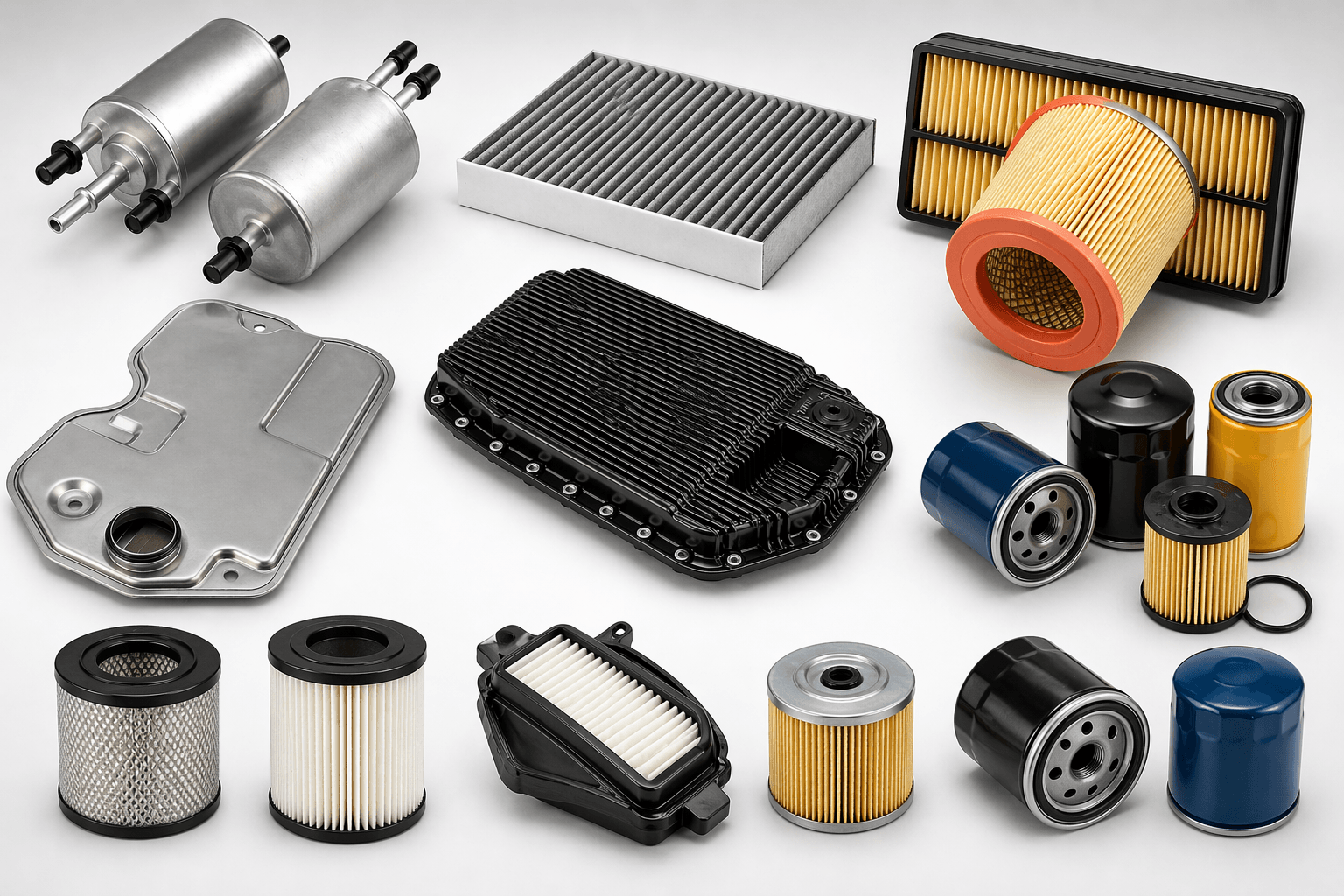
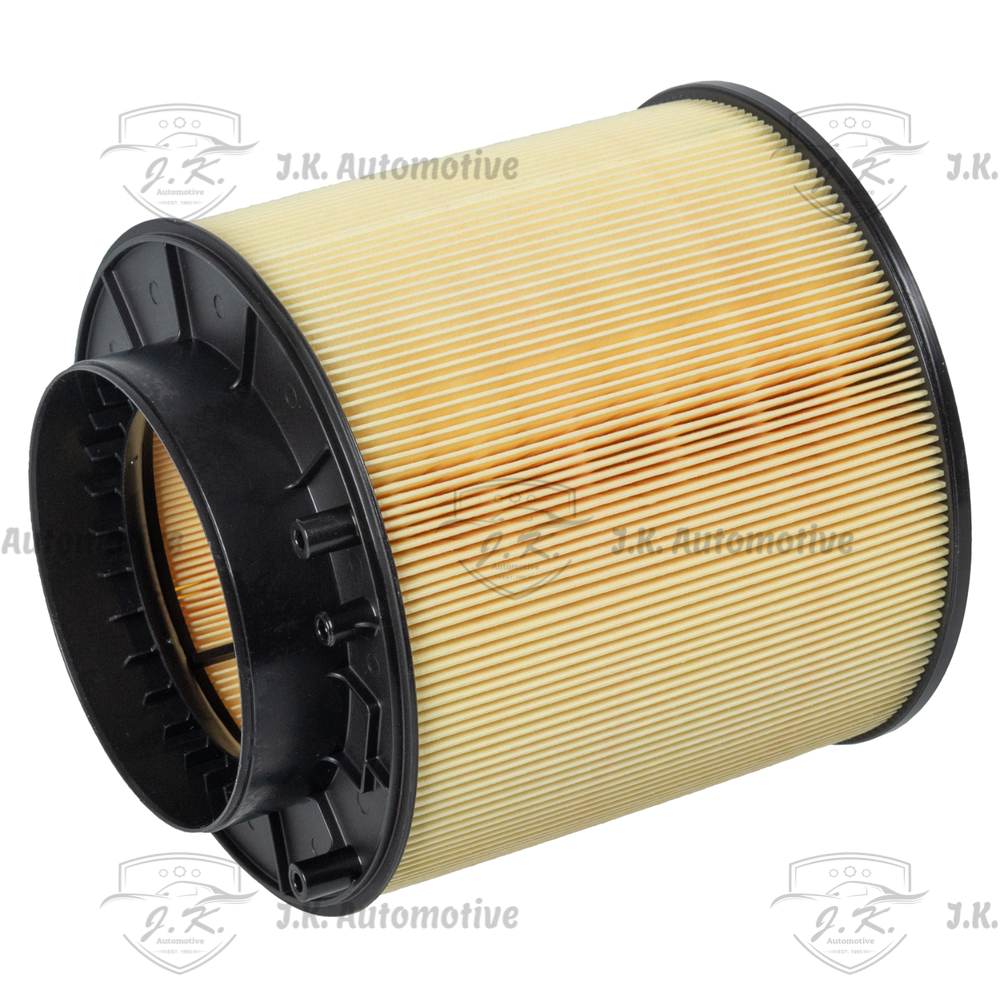
The Audi A4 B8 (8K2) S4 Quattro produced between 2008 and 2016 is powered by the 3.0 TFSI V6 engine (producing 333 PS / 245 kW and 440 Nm of torque), which utilizes a Roots-type Eaton TVS twin-vortex positive-displacement supercharger mounted directly inside the engine V-valley. Unlike exhaust-driven turbochargers that build boost progressively as exhaust gas volume increases, the mechanical supercharger on the 3.0 TFSI is belt-driven directly off the engine crankshaft, delivering instant manifold boost pressure from low engine speeds. Because positive-displacement superchargers pull massive instantaneous air volumes the exact millisecond the mechanical throttle body opens, any intake restriction or pressure drop upstream of the supercharger inlet rotors severely impairs boost generation, increases mechanical parasitic drag on the belt drive, and elevates charge air temperatures leaving the intercooler cores. Genuine OEM air filter element 8K0 133 843 is engineered with high-density synthetic micro-fiber media featuring hot-melt stabilization beads running across the pleat pack to prevent pleat flutter or structural collapse under extreme instantaneous vacuum draw. Furthermore, its specialized elastomeric polyurethane perimeter frame compresses snugly inside the longitudinal B8 airbox channel, forming a 100 percent airtight, vibration-isolated seal that prevents unmetered, unfiltered road grit from entering the twin four-lobe supercharger rotors where abrasive dust could score the delicate teflon rotor coatings and cause premature boost leakage.
What advanced diagnostic fault codes, live data parameters, and physical driving symptoms indicate severe restriction or seal failure of air filter 8K0 133 843 on an Audi A4 B8 S4 Quattro?
Diagnosing a restricted or compromised air filter element under part number 8K0 133 843 on an Audi A4 B8 S4 Quattro requires analyzing both physical vehicle dynamics and live engine parameter logs using VCDS or ODIS factory diagnostic equipment. When the synthetic filtration media becomes clogged with environmental silica sand, road soot, or organic debris, the supercharged 3.0 TFSI engine suffers from acute airflow starvation under load. Mechanically, the driver will observe sluggish off-the-line throttle response, a noticeable loss of top-end supercharged pulling power, increased mechanical supercharger whine under acceleration as the rotors work against intake vacuum, and a reduction in fuel economy. Diagnostically, the Simos 8.x Engine Control Unit monitors live intake air mass via the hot-film Mass Air Flow (MAF) sensor and dual Manifold Absolute Pressure (MAP) sensors located after the integrated charge air coolers. When actual intake airflow falls below expected values relative to engine RPM and throttle angle, the ECU applies positive fuel trim adaptations to compensate for starvation, shifting short-term fuel trims (STFT) and long-term fuel trims (LTFT) positive. Persistent restriction will trigger the Check Engine Light (MIL or EPC) and log diagnostic trouble codes such as P0171 (System Too Lean Bank 1), P0174 (System Too Lean Bank 2), P0101 (Mass Air Flow Sensor Signal Implausible), or P0234 (Engine Overboost / Boost Pressure Control Limit Exceeded due to bypass valve compensation). Additionally, if a degraded perimeter frame gasket allows unfiltered air to bypass the filter media, unmetered air causes erratic idle speeds and dirty MAF sensor wire contamination.
How does maintaining an optimal air filter under part number 8K0 133 843 impact supercharger intercooler efficiency, charge air temperatures, and ignition timing advancement in the Audi A4 B8 S4 Quattro?
The 3.0 TFSI supercharged V6 engine in the Audi A4 B8 S4 relies on two water-to-air intercooler cores integrated directly inside the intake manifold assembly to cool compressed intake air before it enters the cylinder combustion chambers. When air filter 8K0 133 843 becomes restricted, the Eaton TVS supercharger rotors are forced to pull air against high static vacuum resistance, which dramatically increases kinetic heat generation during the air compression phase inside the rotor housing. This artificially high intake restriction causes charge air leaving the supercharger outlets to reach significantly elevated temperatures before reaching the dual intercooler cores. Over sustained aggressive driving, this excessive heat load exceeds the thermal dissipation capability of the front-mounted auxiliary radiator cooling circuit, driving up intake air temperatures (IATs) entering the intake valves. High intake air temperatures lower total oxygen charge density and greatly increase the risk of harmful engine knock in high-compression direct-injection engines. To protect the forged pistons and valvetrain, the Siemens/Continental Simos ECU detects knock activity via sensors on the engine block and instantly retards ignition timing while opening the internal supercharger bypass valve to spill off boost pressure. This safety intervention results in a severe, instantaneous loss of horsepower and sluggish acceleration response. Installing a fresh OEM air filter under part number 8K0 133 843 minimizes intake vacuum resistance, preserves lower charge air temperatures, allows the ECU to advance ignition timing safely, and ensures maximum supercharged performance under all driving conditions.
How does maintaining a clean air filter under part number 8K0 133 843 preserve the protective Teflon coating on the Eaton TVS supercharger rotors in the Audi A4 B8 S4 Quattro?
The Eaton TVS four-lobe Roots-type supercharger utilized in the 3.0 TFSI V6 engine of the Audi A4 B8 S4 relies on precise microscopic clearances between its counter-rotating aluminum rotors to build instantaneous boost without internal air slippage. To maximize volumetric efficiency, the rotor lobes are factory-coated with a specialized abradable Teflon thermal barrier material that creates an ultra-tight seal between the lobes and the rotor housing walls. When an inferior, damaged, or poorly seated air filter allows fine airborne silica sand and abrasive road dust to bypass the intake airbox, these hard mineral grains are drawn directly into the high-speed rotor pack spinning at up to 20,000 RPM. The violent impact of silica particles against the high-speed rotors strips away the delicate Teflon coating, causing abrasive scoring on the rotor lobes and internal housing walls. As the protective Teflon coating wears away, internal air slippage increases significantly, forcing the supercharger to spin faster and generate excess thermal heat to achieve target boost pressure, which directly reduces top-end engine horsepower and accelerates mechanical wear on the rotor shaft bearings. Installing a genuine OEM panel air filter under part number 8K0 133 843 guarantees total particle retention down to 3 microns, preserving the abradable rotor coating and ensuring long-term supercharger compression efficiency. However, Stage 2 software tuning combined with a smaller supercharger pulley or larger crank pulley spins the supercharger rotors significantly faster, elevating peak boost pressures from the stock 0.8 bar up to 1.3 bar or higher. To achieve these higher boost pressures, the supercharger must inhale a drastically larger total volume of ambient air per minute, placing severe differential suction pressure across the synthetic pleats of the OEM filter element.
How do crankcase ventilation (PCV) vacuum dynamics and oil consumption change when running a severely clogged air filter on the Audi A4 B8 S4 3.0 TFSI?
The Positive Crankcase Ventilation system on the 3.0 TFSI V6 engine is integrated directly inside the engine V-valley beneath the supercharger, maintaining a calibrated negative pressure inside the crankcase by routing blow-by gases through a multi-stage fine oil separator before returning clean crankcase vapors into the intake tract upstream of the supercharger throttle body. When the engine air filter becomes severely clogged with environmental debris, the supercharger throttle body creates an unnaturally high level of intake vacuum inside the intake pipe during acceleration as the twin rotors attempt to pull sufficient air for target boost. This excessive intake vacuum places an extreme suction load on the internal PCV pressure regulating valve diaphragm located deep within the engine V-valley. Over extended driving cycles, this abnormal suction force can cause the rubber PCV diaphragm to stretch, crack, or stick in an open position. Once the PCV regulator valve fails, liquid engine oil mist is pulled straight out of the crankcase, through the breather channel, and directly into the supercharger rotor housing and charge air coolers. Vehicle owners will experience rapid oil consumption between service intervals, blue exhaust smoke during sudden acceleration, oil pooling inside the intake manifold, and accelerated carbon fouling on the spark plugs and intake valves. Replacing the air filter at recommended service intervals eliminates extreme intake vacuum spikes, protecting the PCV regulator diaphragm and keeping engine oil consumption within factory specifications. Standard factory calibration requests a moderate boost pressure target from the Eaton TVS supercharger, which draws a predictable volume of ambient air through filter 8K0 133 843.
How do acoustic dampening, cabin refinement, and intake noise suppression differ between genuine OEM panel filter 8K0 133 843 and aftermarket open-element intake systems on the Audi A4 B8 S4 Quattro?
As a high-performance luxury sports sedan, the Audi A4 B8 S4 Quattro is engineered to deliver high performance while isolating cabin occupants from harsh mechanical whine, intake induction resonance, and air turbulence. OEM air filter part number 8K0 133 843 is specifically engineered by Audi acoustic engineers to function as a noise dampening element within the sealed factory airbox, where its dense synthetic micro-fiber pleat structure and polyurethane perimeter frame absorb high-frequency supercharger rotor whine and pressure pulsation waves that would otherwise travel through the HVAC air intakes and engine firewall into the interior cabin. In contrast, aftermarket open-element intake systems remove the sealed factory airbox completely in favor of exposed conical filters, introducing loud mechanical supercharger whine, harsh induction roar, and unrefined engine bay vibration into the cabin workspace—a frequent source of driver fatigue during long road trips. Furthermore, open-element filters lack the thermal isolation of the sealed factory airbox, frequently drawing hot, stagnant air from directly inside the V6 engine compartment rather than cool ambient air channeled straight from the front grille ducts. Drawing heated engine bay air raises intake charge temperatures, triggering thermal heat-soak power losses under sustained aggressive driving. Utilizing the factory-engineered panel air filter 8K0 133 843 preserves the refined acoustic balance expected of an Audi S-model while maintaining true cold-air induction performance directly from the front bumper air ducts. Modifying the Siemens/Continental Simos Engine Control Unit software on the Audi A4 B8 S4 3.0 TFSI via Stage 1 tuning or Stage 2 performance pulley upgrades dramatically increases the volumetric efficiency and induction airflow demands placed on the factory air filter system.


Reviews
There are no reviews yet.