How does the specific micro-fiber pore matrix density of OEM air filter 8K0 133 843 E protect the hot-film Mass Air Flow (MAF) sensor grid from oil mist contamination and thermal sensor drift in the Audi A4 B8 2.0 TDI?
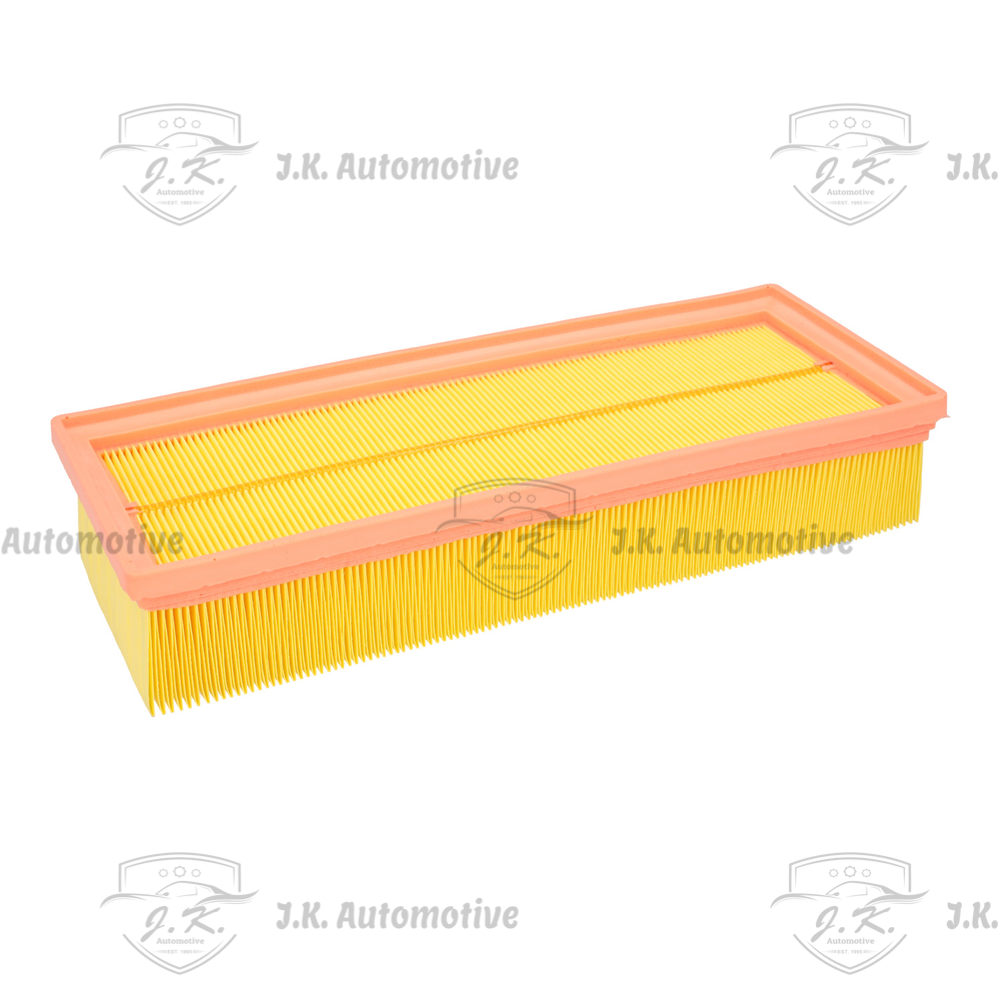
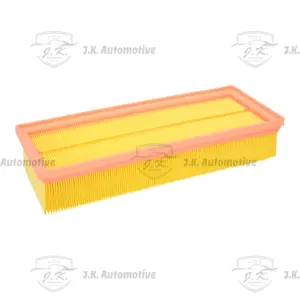
The hot-film Mass Air Flow (MAF) sensor (Bosch HFM6 series) mounted inline between the airbox lid and turbocharger inlet pipe on the Audi A4 B8 2.0 TDI relies on a delicate, heated platinum element operating at a precise temperature differential relative to incoming ambient air to calculate instantaneous air mass intake per millisecond. Installing inferior or unreinforced air filters under part number 8K0 133 843 E allows fine silica dust, microscopic road debris, and oily atmospheric vapors to pass through coarse media fibers, forming a insulating film over the micro-hotplate sensor element. This microscopic contamination layer acts as a thermal barrier, slowing down the sensor's thermal response time and causing it to report falsely low mass airflow values to the Bosch EDC17 ECU. Falsely low airflow readings cause the ECU to under-calculate required diesel injection quantities under transient throttle demands, resulting in flat spots during acceleration, sluggish power delivery, and delayed VGT turbocharger boost spooling. Furthermore, genuine OEM filter element 8K0 133 843 E / 8R0 133 843 K utilizes a specialized non-woven synthetic microfiber matrix with a graduated pore structure that captures fine particles down to 3 microns while utilizing oleophobic and hydrophobic surface treatments that prevent airborne oil mist and atmospheric moisture from wicking through the media. Maintaining a clean OEM filter preserves the factory calibration curve of the hot-film MAF sensor, ensuring rapid, precise signal transmission for flawless engine management and emissions compliance.
How does severe air intake restriction from a dirty filter 8K0 133 843 E accelerate Exhaust Gas Recirculation (EGR) valve carbonization and cooler clogging on the Audi A4 B8 2.0 TDI?
In the common-rail EA188 and EA288 2.0 TDI engines powering the Audi A4 B8, the Exhaust Gas Recirculation (EGR) system routes a precise percentage of cooled exhaust gas back into the intake manifold to lower peak combustion temperatures and reduce nitrogen oxide ($NO_x$) emissions. When the engine air filter under part number 8K0 133 843 E becomes heavily restricted with road dirt, the vacuum pressure inside the intake manifold drops significantly relative to exhaust backpressure, causing an uncalibrated, excessive volume of raw exhaust gas to be drawn through the EGR valve and gas cooler. Because air starvation prevents full, clean combustion of diesel fuel inside the cylinders, the exhaust gas entering the EGR circuit contains extremely high concentrations of wet, unburned carbon soot and unburned hydrocarbon vapors. When these sticky, soot-laden exhaust gases mix with oil vapors entering the intake tract from the crankcase ventilation system, they form a thick, tar-like carbon sludge that bakes directly onto the internal pintle valve of the EGR module and coats the fine gas-passage fins inside the EGR cooler core. Over time, this sticky carbon accumulation causes the EGR valve to stick open or shut, triggering Check Engine Light codes such as P0401 (EGR Flow Insufficient) or P0402 (EGR Flow Excessive), while clogging the EGR cooler matrix and leading to engine overheating, reduced thermal efficiency, and expensive emissions component replacements.
What chemical and physical degradation mechanisms affect the synthetic media and polyurethane frame of air filter 8K0 133 843 E when exposed to extreme seasonal thermal cycling in the Audi A4 B8 engine bay?
The engine compartment of the longitudinal Audi A4 B8 2.0 TDI subjects internal components to severe thermal cycling, with ambient temperatures fluctuating from below freezing in winter up to 100 degrees Celsius during extended summer driving or heavy traffic idling. Engine air filter 8K0 133 843 E / 8R0 133 843 K is engineered using high-grade, thermosetting polyurethane for its perimeter sealing frame and synthetic, thermally bonded micro-fibers for its filtration media pack to withstand these aggressive environmental stressors. Over extended service intervals exceeding factory recommendations, continuous thermal expansion and contraction cycles cause lower-quality elastomeric seals to undergo compression set—a permanent loss of elasticity where the polyurethane frame hardens, shrinks, and loses its spring force against the airbox sealing channels. Once compression set occurs, microscopic gaps form around the perimeter of the airbox housing, allowing unfiltered raw air to bypass the filter media entirely during high-boost suction events. Simultaneously, long-term exposure to engine bay heat, atmospheric ozone, and fuel/oil vapors breaks down the chemical binders bonding the synthetic filter fibers, causing the pleat matrix to become brittle, lose its burst strength, and develop micro-fissures under heavy turbocharger boost. Replacing filter 8K0 133 843 E on schedule ensures the perimeter frame maintains its dynamic sealing memory and the media pack retains its structural integrity through all seasonal temperature swings. By installing a fresh, high-flow OEM air filter 8K0 133 843 E, the engine receives an optimal oxygen charge that ensures rapid, complete combustion within the cylinder bore, keeping exhaust gas temperatures within safe thermal limits and extending the lifespan of the turbocharger and downstream exhaust catalysts.
How does an unrestricted air filter 8K0 133 843 E maintain optimal combustion chamber swirl ratios, cylinder charge homogeneity, and noise refinement in the Audi A4 B8 2.0 TDI engine?
The 16-valve cylinder head of the 2.0 TDI engine in the Audi A4 B8 utilizes dual intake ports per cylinder—a tangential intake port and a helical swirl port—equipped with electronically controlled intake manifold flap valves (tumble/swirl flaps) to generate precise intake air turbulence inside the combustion chambers. This controlled air swirl motion is essential for rapidly mixing high-pressure diesel fuel mist (injected at up to 1,800 bar) with oxygen molecules to achieve homogeneous charge distribution and complete fuel burn before ignition. When an air filter under part number 8K0 133 843 E / 8R0 133 843 K becomes clogged, the overall volumetric airflow velocity entering the intake manifold drops significantly, weakening the kinetic energy of the intake air swirl motion inside the cylinders. Weak air swirl results in poor fuel atomization, localized rich zones inside the combustion chambers, and delayed flame front propagation, which causes harsh combustion knock (diesel clatter), elevated engine vibration transmitted into the cabin, and high soot formation. By maintaining an unrestricted, high-flow air supply through fresh OEM filter 8K0 133 843 E, intake air velocity remains high enough to preserve factory-designed cylinder swirl dynamics, ensuring quiet combustion, smooth engine idling, maximum engine torque, and low exhaust smoke opacity under all load conditions. Sustained, abnormally high EGTs subject the cast-iron turbine housing, variable vane mechanism, and stainless steel exhaust manifold to intense thermal stress, leading to microscopic metal warping, hair-line cracks in the turbine housing, and thermal sintering of the delicate ceramic catalyst substrates inside the emissions system.
How does severe intake air restriction on filter 8K0 133 843 E alter manifold absolute pressure (MAP) dynamics, variable boost actuator response, and turbocharger overspeed conditions in the Audi A4 B8 2.0 TDI?
On the Audi A4 B8 2.0 TDI, the electronic Variable Geometry Turbocharger (VGT) actuator dynamically adjusts turbine vane angles based on real-time boost pressure feedback from the manifold absolute pressure (MAP) sensor to maintain precise target boost maps stored in the Bosch EDC17 ECU. When the primary engine air filter element under part number 8K0 133 843 E / 8R0 133 843 K becomes heavily clogged, the turbocharger compressor inlet experiences severe depression vacuum during rapid throttle demands. To compensate for this intake starvation and meet the driver's requested engine torque, the ECU forces the VGT actuator to close the turbine vanes more aggressively, driving the turbocharger shaft to significantly higher rotational speeds (often exceeding 180,000 RPM) to achieve requested intake manifold boost pressures. Operating the turbocharger under continuous high-depression conditions pushes the compressor wheel close to its surge limit and causes dangerous shaft overspeed scenarios that severely overheat internal journal bearings, degrade dynamic oil seals, and risk catastrophic turbine shaft fatigue failure. Installing a fresh, unrestricted OEM filter element under part number 8K0 133 843 E restores proper intake manifold pressure dynamics, reduces VGT duty cycle stress, and prevents costly turbocharger overspeed damage. Consequently, fuel continues to burn late into the exhaust stroke as the exhaust valves open, causing a sharp spike in exhaust gas temperatures entering the turbocharger turbine housing and oxidation catalytic converter.
What specific structural and filtration role does the auxiliary pre-filter synthetic fleece (snow flap fleece) play on winter-specification iterations like 8R0 133 843 K for the Audi A4 B8 2.0 TDI?
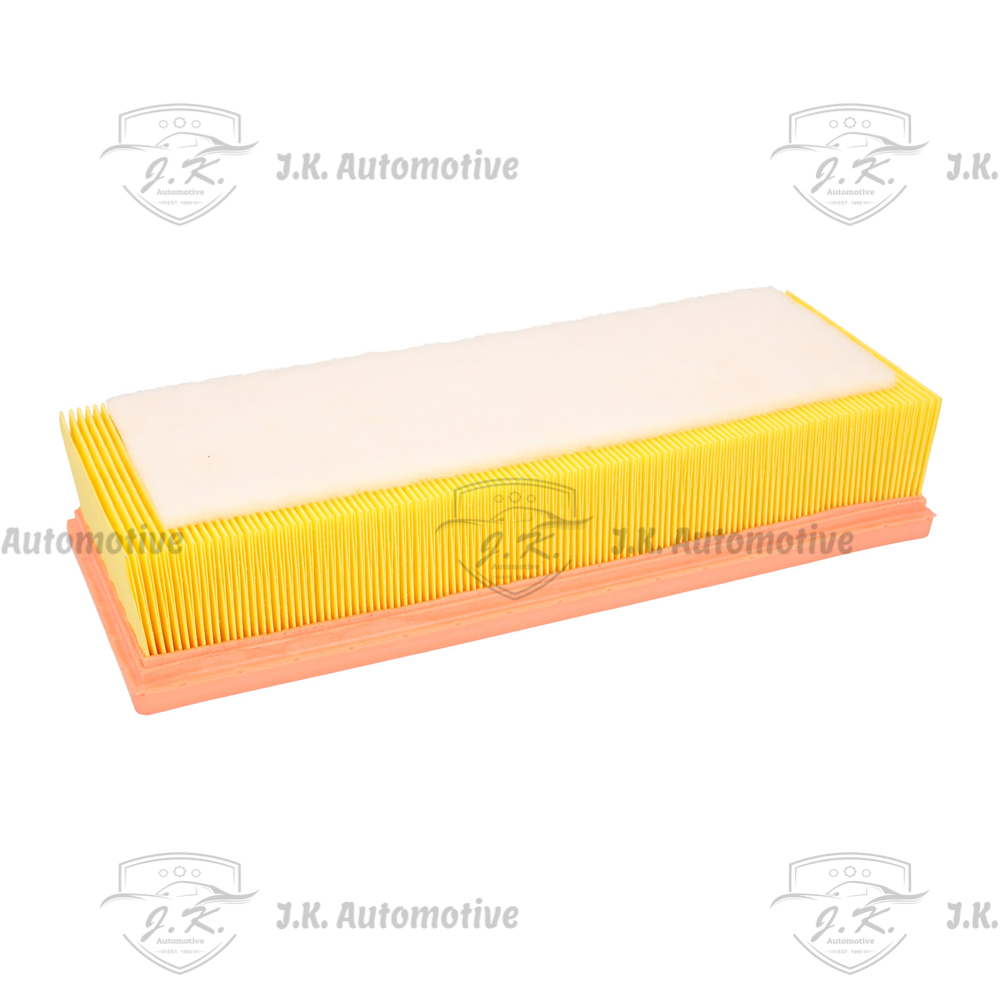
Winter-specification and cold-climate OEM part numbers within this family—most notably 8R0 133 843 K and 8R0 133 843 C—feature a specialized white auxiliary pre-filter synthetic fleece (often called a snow flap or coarse particulate fleece) thermally bonded directly to the primary intake side of the synthetic pleat pack. In northern climates or harsh winter conditions, vehicles driving behind other traffic ingest heavy amounts of road salt spray, liquid slush, fine snow crystals, and coarse road sand through the front cold-air intake ducting. If these dense, wet contaminants land directly on a standard paper or synthetic filter pleat face, the moisture dissolves the salt and forms a thick, sticky slush barrier that rapidly blinds the microscopic media pores, causing sudden engine air starvation or ice formation across the filter surface. The auxiliary open-cell fleece layer on 8R0 133 843 K acts as a sacrificial depth filter that captures heavy salt crystals, slush, and organic leaves while allowing air to pass through its open fibrous structure into the main pleated element underneath. As the engine bay warms up, trapped snow and slush melt off the hydrophobic fleece layer and drain harmlessly out of the lower airbox water discharge valve, preserving the primary filtration pleats and preventing sudden air filter blinding during severe winter driving. When the engine is starved of intake oxygen due to a restricted air filter under part number 8K0 133 843 E / 8R0 133 843 D, the air-fuel mixture inside the combustion chambers becomes rich, which significantly slows down the combustion burn rate during the expansion stroke.
How does an aging, clogged air filter 8K0 133 843 E increase crankcase blow-by gas velocity, accelerate oil degradation, and reduce the operational lifespan of motor oil in the Audi A4 B8 2.0 TDI?
In the common-rail EA188 and EA288 2.0 TDI engines powering the Audi A4 B8, a precise balance of crankcase pressure is maintained to route blow-by gases through internal oil separators and back into the intake stream. When intake air filter 8K0 133 843 E / 8K0 133 843 M becomes severely clogged, the high vacuum generated in the intake pipe between the airbox and the turbocharger compressor inlet pulls heavily against the Positive Crankcase Ventilation (PCV) system. This artificial high-vacuum environment pulls an excessive volume of oil mist and acidic blow-by vapors directly out of the engine crankcase at high velocity before the internal centrifugal oil separator can clear the air. The resulting oil-starvation dynamics and excessive crankcase vapor circulation pull volatile light-end hydrocarbon fractions out of the motor oil sump, leading to accelerated oil oxidation, viscosity increase, and rapid thermal breakdown of the engine oil additive package. Furthermore, because air starvation causes incomplete combustion and elevated soot creation inside the cylinders, a higher concentration of unburned carbon soot washes past the piston rings into the crankcase, turning the engine oil dark and abrasive prematurely. Replacing filter 8K0 133 843 E on schedule preserves normal PCV vacuum dynamics, protects oil viscosity, and ensures that motor oil lasts its full intended service interval. During heavy acceleration, highway towing, or high-speed driving in the Audi A4 B8 2.0 TDI, exhaust gas temperatures (EGTs) exiting the cylinder head exhaust ports can reach up to 800 degrees Celsius under normal operating parameters.

Reviews
There are no reviews yet.