What is the Pierburg Rheinmetall Germany EGR Valve 7.10334.01.0, and what is its function in Mercedes-Benz OM651 diesel engines?
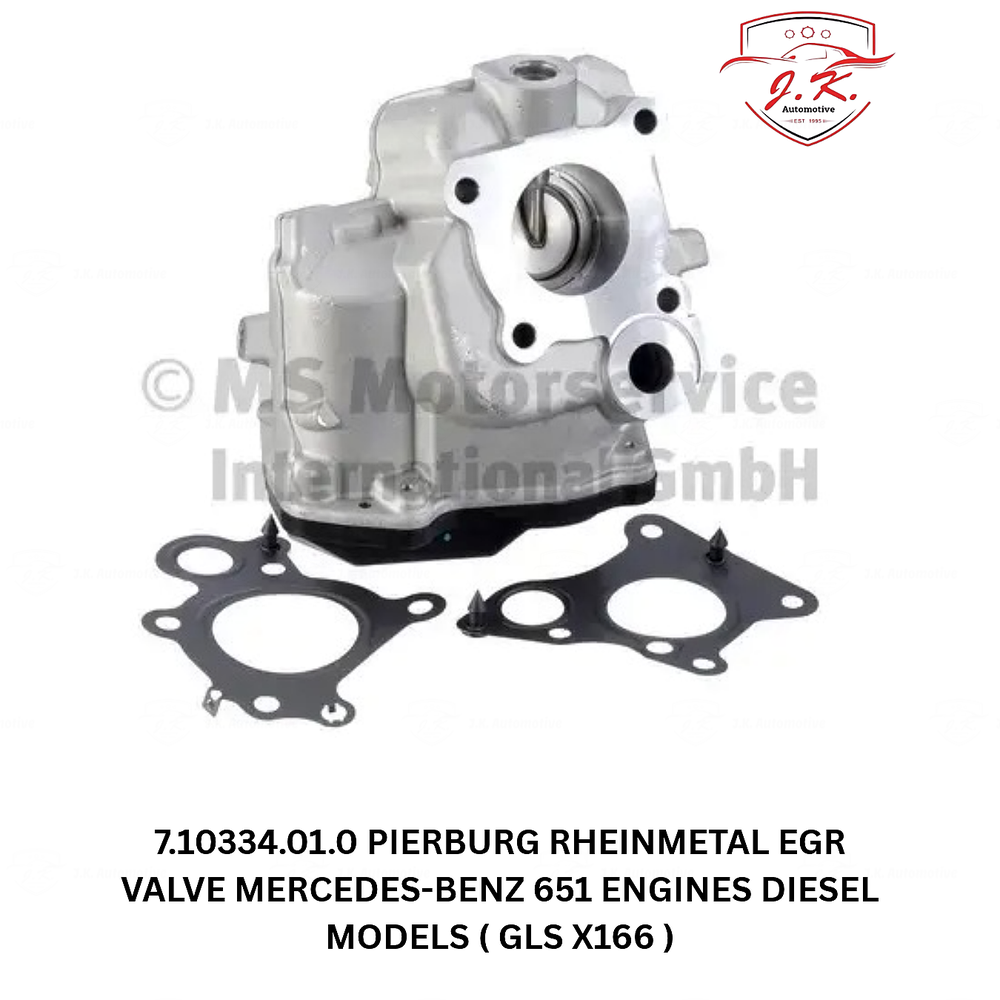
The Pierburg Rheinmetall Germany EGR Valve 7.10334.01.0 is an electrically controlled exhaust gas recirculation component designed for compatible diesel engine applications, including certain Mercedes-Benz vehicles equipped with the OM651 engine family. EGR stands for Exhaust Gas Recirculation, a system used to control combustion temperatures and reduce the formation of nitrogen oxide emissions during selected engine operating conditions. The valve allows a controlled quantity of exhaust gas to return to the engine's intake system rather than sending all exhaust gases directly through the exhaust outlet. The engine control unit determines when recirculation is required based on operating conditions such as engine temperature, speed, load, and emissions-control requirements. When the EGR valve receives an electrical command, its internal control mechanism adjusts the valve position to regulate exhaust gas flow. This adjustment allows the engine management system to maintain the intended balance between fresh intake air and recirculated exhaust gases. The correct balance is important because excessive exhaust gas recirculation can interfere with combustion, while insufficient recirculation can increase nitrogen oxide emissions. A properly functioning EGR valve therefore contributes to the operation of the wider diesel emissions-control system. The OM651 engine family uses several interconnected systems to manage combustion efficiency, exhaust emissions, and engine performance. These may include the turbocharger, air-mass measurement system, intake controls, exhaust gas recirculation cooler, and diesel particulate filter. The EGR valve works as part of this larger arrangement rather than as an isolated performance component. If it sticks open, excessive exhaust gas may enter the intake system at an unsuitable time. If it sticks closed, the engine may not receive the recirculated gas expected by the control system. Either condition can generate diagnostic faults and affect normal operation. Common symptoms may include reduced engine response, warning lights, unstable running, or emissions-related fault codes. However, the same symptoms can also arise from sensors, wiring, intake restrictions, or other engine components. For that reason, diagnosis should identify the actual cause before replacement. Pierburg 7.10334.01.0 is listed as a 12V electrically operated control valve with a seal supplied. Its correct use depends on the exact OE reference and engine installation. Although this product is associated with OM651 applications, compatibility with a Mercedes-Benz GLS (X166) OM651 configuration has not been established in the catalogues checked. Buyers should not rely solely on the vehicle name or engine-family designation when selecting this part. The vehicle VIN, installed engine, and original EGR reference must be checked before ordering. When installed on a confirmed compatible vehicle and functioning correctly, the valve helps the diesel engine management system regulate exhaust gas flow as intended.
Is Pierburg EGR Valve 7.10334.01.0 compatible with the Mercedes-Benz GLS (X166) OM651 diesel engine, and which OEM numbers should be checked?
Pierburg EGR Valve 7.10334.01.0 has documented Mercedes-Benz OE comparison references, but its compatibility with the Mercedes-Benz GLS (X166) OM651 application stated in this product title is not currently verified. This distinction is important because a manufacturer's part number may be suitable for several vehicles sharing an engine family while remaining unsuitable for another vehicle with different exhaust or intake hardware. The principal Mercedes-Benz OE comparisons identified for this part include 651 140 08 60, A 651 140 08 60, 651 140 14 60, and A 651 140 14 60. These references are useful starting points for identifying the correct replacement EGR valve. The presence or absence of the letter A in a Mercedes-Benz part number is part of the manufacturer's numbering convention and should be considered when checking the complete reference. However, an OE comparison number does not establish that every vehicle fitted with an OM651 diesel engine uses this exact valve. Engine production changes, emissions specifications, engine management revisions, and installation configurations may influence the required part. The GLS (X166) presents an additional concern because commonly referenced vehicle catalogues list the GLS 350 d 4MATIC diesel with the OM642.826 engine. The OM642 is a different engine family from the OM651, so its EGR components must not be treated as interchangeable simply because both are Mercedes-Benz diesel engines. A Mercedes-Benz GLS owner should first confirm the actual engine identification through the VIN or manufacturer diagnostic records. The original EGR assembly should then be compared against the replacement using the OE number, electrical connector, mounting arrangement, and relevant catalogue notes. The engine number may also be required where the manufacturer specifies a production change. A correct physical appearance is not sufficient evidence of compatibility. Two valves can look similar yet have different operating characteristics or mounting dimensions. The electrical connector must correspond to the vehicle's harness, and the valve must match the intended exhaust gas pathway. Any applicable sealing surface and pipe connection must also be checked. If the existing part number differs from the references listed for 7.10334.01.0, the difference should be resolved through a reliable manufacturer catalogue before purchase. An experienced technician or parts specialist can help identify superseded OE numbers where appropriate. Customers purchasing from JK Automotive should supply their VIN and original EGR number for a compatibility check. Until a specific GLS (X166) OM651 vehicle and matching OE reference are established, this item should be described as an OM651 EGR valve rather than a confirmed GLS replacement.
How does the Pierburg electrically operated EGR Valve 7.10334.01.0 work with the Mercedes-Benz OM651 diesel engine management system?
The Pierburg 7.10334.01.0 EGR valve operates through an electrically controlled mechanism that responds to commands from the engine management system in compatible applications. The purpose of this system is to regulate how much exhaust gas returns to the intake air stream during operating conditions when exhaust gas recirculation is required. A diesel engine normally draws in fresh air, compresses it, injects fuel, and produces power through combustion. Combustion also creates exhaust gases, including nitrogen oxides under certain high-temperature conditions. By reintroducing an appropriate quantity of exhaust gas into the intake mixture, the engine can reduce combustion temperatures and limit nitrogen oxide formation. The engine control unit coordinates this function using information from multiple sensors. Depending on the specific engine configuration, these inputs can include engine speed, accelerator demand, coolant temperature, air-mass readings, and intake pressure. The electrical control system moves the EGR valve toward the requested position to adjust gas flow. This movement is not necessarily a simple fully open or fully closed action. Instead, the valve can be commanded to different positions according to the operating strategy. Under certain driving conditions, the engine may require a relatively high proportion of recirculated exhaust gas. At other times, the system may restrict recirculation to maintain the necessary air supply and engine response. The EGR cooler, where fitted, can help lower the temperature of recirculated gases before they enter the intake system. Intake controls and turbocharger operation may also influence the available pressure difference and EGR flow. All these components must operate together for the emissions-control strategy to function correctly. If carbon deposits interfere with valve movement, its actual position may differ from the commanded position. Electrical faults can also prevent the actuator from operating correctly. Poor wiring connections, damaged connectors, or control-system faults may produce similar symptoms. Diagnostic software can often compare the requested EGR behavior against measured engine responses or available position information. This helps distinguish valve problems from faults elsewhere in the system. A technician should also check for exhaust leaks, intake restrictions, and sensor errors where relevant. Replacing an EGR valve without investigating these conditions may leave the original fault unresolved. Pierburg 7.10334.01.0 is specified as a 12V electric control valve, so the vehicle electrical system and OE application must correspond with its design. The described operating principle applies to compatible OM651 EGR systems; it should not be interpreted as confirmation of this part on the GLS (X166) without a VIN-based fitment check.
What are the common symptoms of a faulty EGR valve in a Mercedes-Benz OM651 diesel engine?
A faulty EGR valve in a compatible Mercedes-Benz OM651 diesel application can produce several symptoms, although no single symptom proves that the valve requires replacement. One common indication is the illumination of the engine warning light after the engine management system detects an unexpected emissions-control condition. The vehicle may also display an engine-related fault message or store diagnostic trouble codes. Reduced acceleration can occur if the EGR system does not deliver the airflow conditions expected by the engine control unit. Some drivers may notice hesitation when accelerating from low engine speeds or a generally sluggish response during normal driving. Unstable engine idle may occur if an EGR valve allows excessive exhaust gas into the intake system while the engine is operating at low load. In more severe cases, the vehicle may enter a reduced-power operating mode intended to protect the engine or emissions-control system. Black exhaust smoke may be visible in some fault conditions, particularly where the available fresh-air supply becomes insufficient for the injected fuel quantity. However, smoke can also result from turbocharger problems, injector faults, air leaks, or restrictions in the intake system. Increased fuel consumption may be noticed, but this is not a reliable standalone indicator of EGR failure. An emissions-related inspection may identify excessive exhaust pollutants if the system is not operating as designed. A valve that has become restricted by carbon deposits may respond slowly or fail to reach its commanded position. A valve stuck open may interfere with normal airflow and combustion at operating points when recirculation should be limited. A valve stuck closed may increase nitrogen oxide production under conditions when exhaust gas recirculation should occur. Electrical faults within the actuator or its control circuit can produce additional error codes. Damaged wiring or corroded terminals can sometimes imitate a failed valve. Faults involving the EGR cooler, differential pressure sensors, air-mass sensor, or exhaust temperature sensors may also cause similar diagnostic complaints. For this reason, technicians should begin with a full diagnostic scan rather than automatically replacing the EGR valve. Stored fault codes should be interpreted alongside live operating data and the vehicle's service history. The intake and exhaust pathways may require inspection for excessive deposits or restrictions. The electrical supply, connector, and relevant control commands should also be checked. If inspection confirms that the EGR valve is defective and the OE reference matches, a suitable Pierburg replacement may be installed. The Mercedes-Benz GLS (X166) requires particular care because its commonly catalogued diesel engine is OM642 rather than OM651. The exact engine and required part must therefore be verified before associating these symptoms with Pierburg 7.10334.01.0 on that vehicle.
When should Pierburg EGR Valve 7.10334.01.0 be replaced, and does the Mercedes-Benz OM651 engine have a fixed EGR replacement interval?
An EGR valve is generally replaced when inspection and diagnosis establish that it is defective, damaged, or no longer operating correctly, rather than at a universal fixed mileage. The correct maintenance approach for a Mercedes-Benz OM651 diesel engine depends on the particular vehicle, service schedule, operating conditions, and fault history. There is no single verified replacement interval that can be applied to every vehicle potentially using Pierburg 7.10334.01.0. The valve operates in an environment exposed to exhaust gases and combustion byproducts, so carbon and soot accumulation may develop over time. The rate of accumulation depends on factors such as engine condition, driving patterns, fuel quality, and the operation of related emissions-control components. Vehicles used predominantly for short journeys may experience different exhaust and intake conditions from vehicles regularly driven over long distances. However, short-distance driving alone does not establish that an EGR valve needs replacement. Replacement becomes more relevant when the valve fails to respond correctly to electrical commands or cannot regulate exhaust gas flow as intended. A recurring EGR-related fault code may indicate a problem, but the cause must still be confirmed. The electrical connector and wiring should be inspected because an interruption in the control circuit can prevent normal operation. Carbon deposits may sometimes be addressed through appropriate service procedures if the valve and surrounding components remain mechanically sound. Cleaning is not a guaranteed repair, particularly if an actuator, internal motor, or position-control component has failed. Excessive mechanical wear, corrosion, broken components, or a damaged housing may make replacement necessary. Seal failure or exhaust leakage can also require corrective work. Before fitting a new valve, technicians should inspect the intake and exhaust passages for restrictions that may affect the replacement component. The condition of related EGR components should also be evaluated to avoid repeated faults. Diagnostic test results should be recorded before and after replacement where possible. The correct replacement must be selected using manufacturer parts information and the original OE reference. A valve with the same voltage or similar external appearance may not be interchangeable with the installed unit. Pierburg 7.10334.01.0 should only be fitted after the vehicle application has been confirmed. This is especially important for a Mercedes-Benz GLS (X166), where the OM651 engine description in the supplied listing does not match the commonly documented GLS diesel configuration. Preventive maintenance and timely diagnosis can help protect the wider emissions system, but an EGR replacement should be based on evidence of the actual fault.
Can a faulty EGR valve affect engine performance, fuel consumption, and exhaust emissions in a Mercedes-Benz OM651 diesel engine?
A faulty exhaust gas recirculation valve can affect engine performance, fuel consumption, and emissions in a Mercedes-Benz OM651 diesel engine when the vehicle uses a compatible EGR system. The EGR valve helps regulate the quantity of exhaust gas returned to the intake system during operating conditions selected by the engine control unit. When the valve operates correctly, the control system can manage combustion conditions according to its original calibration. If the valve becomes stuck open, more exhaust gas than intended may enter the engine at certain operating points. This can reduce the proportion of fresh oxygen available for combustion. The driver may experience hesitation, reduced power, unstable idling, or difficulty obtaining smooth acceleration. Depending on the severity of the fault, the engine management system may also restrict available performance. If the valve remains closed when exhaust gas recirculation is required, combustion temperatures may be higher than intended. This can increase nitrogen oxide formation under the relevant operating conditions. Some vehicles may record emissions-control faults even when there is no immediately noticeable driving problem. A valve that operates intermittently may cause symptoms that appear only during particular temperature or load conditions. The relationship between EGR operation and fuel consumption is more complicated than a simple increase or decrease. A defective valve can contribute to inefficient operation, but fuel consumption is also influenced by injectors, turbocharger performance, driving style, vehicle condition, and numerous other factors. Therefore, higher fuel consumption alone is not proof that the EGR valve has failed. Excessive exhaust gas recirculation may also contribute to combustion irregularities and increased particulate formation in some circumstances. That can place additional demands on the engine's particulate-control systems. However, a diesel particulate filter fault should not automatically be attributed to the EGR valve. The technician must examine diagnostic codes, engine operating data, and the condition of related components. An air-mass sensor problem can create incorrect readings that resemble an EGR flow issue. Intake leaks, clogged passages, and electrical faults may have similar consequences. Replacing an EGR valve without identifying these causes may not resolve the original complaint. If the installed valve is confirmed to be defective, fitting the correctly specified replacement can help restore the engine's intended emissions-control operation. Pierburg 7.10334.01.0 may be considered for vehicles with matching OE requirements. It should not be advertised as a confirmed GLS (X166) replacement until the engine installation and VIN are verified. Restoring correct EGR function means returning the system toward its original design behavior rather than promising additional horsepower, better mileage, or a performance upgrade.
How can I verify the exact Mercedes-Benz GLS (X166) engine and VIN before ordering Pierburg EGR Valve 7.10334.01.0?
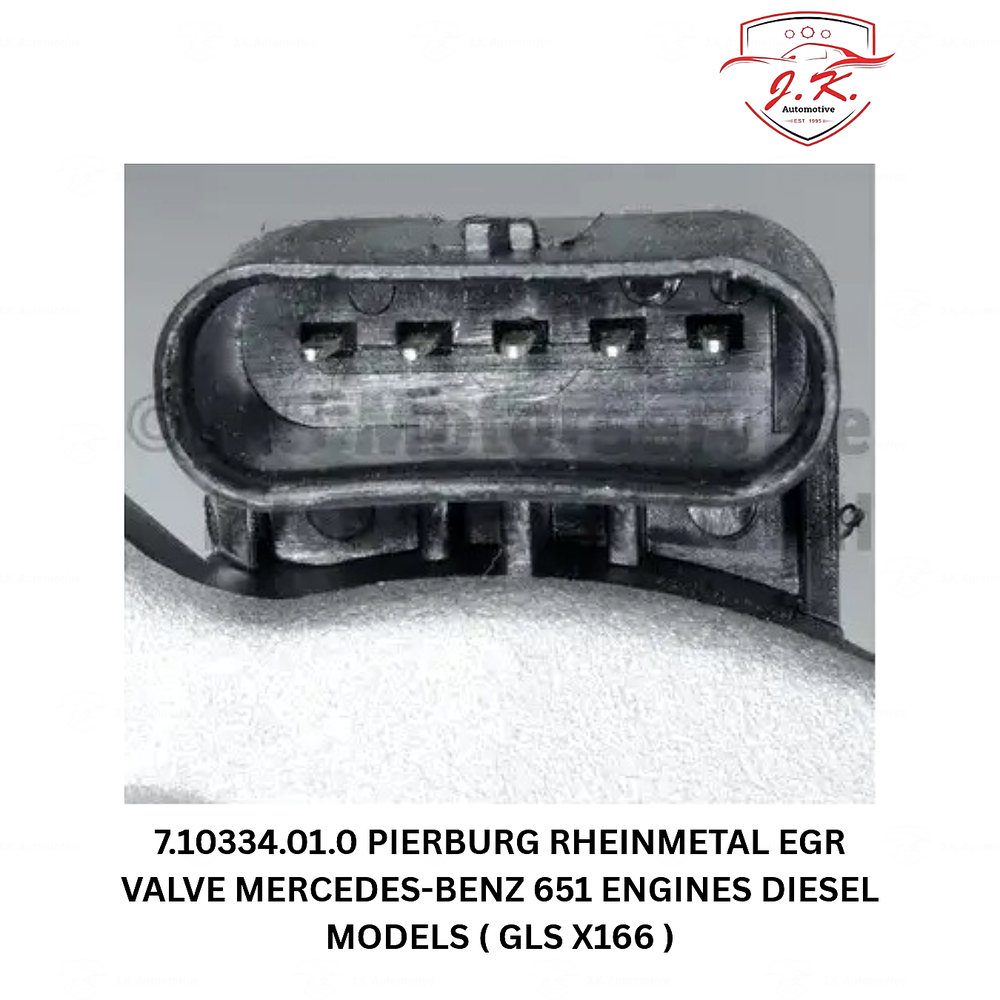
The safest way to verify an EGR replacement for a Mercedes-Benz GLS (X166) is to begin with the vehicle identification number, commonly called the VIN. The VIN is a unique vehicle identifier that can be used with manufacturer parts information to establish the original vehicle configuration. It helps identify details such as the model series, production information, installed engine, and applicable parts catalogue records. The exact engine is particularly important for this product because the title describes an OM651 diesel engine, while commonly available GLS (X166) catalogues identify the diesel model as the GLS 350 d 4MATIC with an OM642 engine. The OM651 and OM642 are different engine families and should not be assumed to use the same EGR valve. Before purchasing Pierburg 7.10334.01.0, obtain the VIN from the registration documents or the identification label fitted to the vehicle. A workshop or parts specialist should use the VIN with reliable Mercedes-Benz parts information to determine the engine code and the original EGR assembly reference. The next step is to compare that original reference with the documented OE numbers associated with Pierburg 7.10334.01.0. Examples of those comparison numbers include 651 140 08 60 and 651 140 14 60, along with their Mercedes-Benz A-prefixed forms. These numbers should not be treated as automatic proof of compatibility unless the original vehicle catalogue supports the substitution. If the installed valve is accessible, the part number printed or stamped on its housing may provide additional information. The technician should record that number carefully without changing any digits. The connector shape and electrical terminals should also be checked. The mounting arrangement, flange design, and sealing surfaces must correspond to the original installation. The physical location of the EGR system can differ between engine families and vehicle configurations. Production changes may also affect the part required, even within one model series. In some cases, a manufacturer may have replaced an older OE number with a newer one. Such supersession must be confirmed through an appropriate parts catalogue rather than guessed. It is also important to distinguish the EGR valve from the EGR cooler or bypass flap, because these are related but different components. A photograph can support identification, but it cannot replace a correct OE comparison. Customers ordering through JK Automotive should provide the VIN and, if available, the original EGR valve number. If those details identify an OM642-equipped GLS, the correct OM642 EGR reference should be investigated instead of ordering this OM651-associated part. This verification reduces the likelihood of an incorrect purchase, installation delays, and unnecessary workshop costs.
What precautions should be followed when installing Pierburg EGR Valve 7.10334.01.0 on a compatible Mercedes-Benz OM651 diesel engine?
Installation of Pierburg EGR Valve 7.10334.01.0 should begin only after confirming that the vehicle's original equipment reference matches this replacement. This is particularly important when the intended vehicle has been described as a Mercedes-Benz GLS (X166) with an OM651 diesel engine, because that application has not been established through the catalogues reviewed. Once compatibility is confirmed for a particular vehicle, the work should be performed by a technician familiar with Mercedes-Benz diesel engine systems. The vehicle should be parked securely, and the engine should be allowed to cool before work begins. EGR components are connected to hot exhaust gas passages, so attempting removal immediately after driving may cause burns. The technician should follow the vehicle manufacturer's workshop instructions for removing covers, ducts, connectors, and other components that obstruct access. Electrical connectors should be released carefully to avoid damaging their locking mechanisms or wiring. The surrounding area should be inspected for soot deposits, oil contamination, damaged hoses, or signs of exhaust leakage. The existing valve should be removed without allowing loose carbon deposits or foreign objects to enter open engine passages. The mating surfaces must be examined for damage and cleaned using a method approved for the relevant components. Incorrect cleaning methods can scratch sealing surfaces or introduce debris into the engine. Where the replacement includes a suitable seal, the technician should confirm that it corresponds to the required installation. Old sealing material should not be reused when the manufacturer's procedure requires replacement. The new valve must be installed in the correct orientation, and fasteners must be tightened to the manufacturer's specified torque. Guessing tightening values can damage the housing or produce sealing problems. The electrical connector must fit securely and should not be forced into place. Nearby hoses and wiring should be refitted in their original routing positions. The technician should also inspect related EGR passages and cooler components if the original fault suggests a restriction or leak. After installation, suitable diagnostic equipment should be used to review existing fault codes and operating data. Depending on the vehicle's specific engine management system, a learned-value reset, adaptation, or functional test may be required. It is not appropriate to claim that every OM651 installation requires exactly the same adaptation procedure. The engine should then be checked for exhaust leaks, abnormal noises, warning lights, and correct operating behavior. A road test and subsequent diagnostic scan may help confirm that the original fault has been resolved. If fault codes remain, the technician should continue diagnosis rather than assuming that the replacement valve is defective. Correct identification, careful installation, and proper post-repair checks are essential for reliable operation.
Why should customers consider Pierburg Rheinmetall Germany EGR Valve 7.10334.01.0 for a compatible Mercedes-Benz OM651 diesel application?
Pierburg Rheinmetall Germany is an established automotive component brand associated with engine management, emissions-control systems, and other vehicle technologies. Its EGR components are intended to support the controlled recirculation of exhaust gas in compatible engine applications. Pierburg 7.10334.01.0 is a specific electrically operated EGR control valve rather than a universal diesel replacement part. Its documented specification includes 12V electrical operation and a supplied seal. The main reason to consider this product is its identifiable manufacturer reference, which allows buyers and technicians to check the replacement against established OE comparison numbers. A clearly defined part number is especially useful when several visually similar EGR assemblies are available. Mercedes-Benz OM651 engines have been installed in numerous vehicle applications, and the relevant EGR configuration can vary. Using the original part number helps avoid selecting a valve on the basis of vehicle appearance or engine size alone. Pierburg components are also associated with the wider Rheinmetall automotive aftermarket business. This provides a recognizable manufacturer identity for workshops and replacement-parts purchasers. However, brand recognition should not replace application verification. The correct valve must match the intended electrical operation, mounting arrangement, and manufacturer reference. Customers should inspect the product packaging and part identification when receiving the item. The article number should correspond to 7.10334.01.0 and should agree with the invoice or order details. The valve should be checked for visible shipping damage before installation. Any applicable manufacturer instructions should be followed. A supplied seal may simplify replacement, but the installer must still ensure that the correct sealing arrangement is used. A new EGR valve can help resolve a diagnosed valve-related fault when the original component is defective. It cannot automatically repair wiring problems, sensor failures, clogged EGR passages, or unrelated engine faults. Therefore, a proper diagnostic inspection remains important even when selecting a recognized brand. Buyers should also distinguish the valve from associated components such as an EGR cooler and bypass flap. These may require separate diagnosis or replacement, depending on the vehicle. When ordering from JK Automotive, customers can use the manufacturer number and original OE reference to request a fitment check. For the GLS (X166), confirming the installed engine is a necessary additional step. The product should only be purchased for that vehicle if a manufacturer-supported application is found. Choosing a known component manufacturer, verifying the OE number, and following the correct installation process are more reliable than relying on unsupported promises about universal performance or durability.
How does Pierburg Rheinmetall EGR Valve 7.10334.01.0 compare with EGR valves from Valeo, Delphi, and BorgWarner for Mercedes-Benz diesel engines?
Pierburg Rheinmetall, Valeo, Delphi, and BorgWarner are recognized automotive component manufacturers whose product ranges may include exhaust gas recirculation and other engine-management technologies. When comparing their EGR valves for a Mercedes-Benz diesel vehicle, the most important factor is whether each specific article number is approved or catalogued for the same vehicle installation. A brand name alone does not establish interchangeability. Pierburg 7.10334.01.0 is identified as a 12V electrically operated EGR control valve with particular OE comparison references. A competing EGR valve should only be considered an alternative if its catalogue explicitly identifies the same application or an appropriately verified replacement reference. The first comparison should therefore be the original Mercedes-Benz part number. The second should be the vehicle's exact engine code, production information, and VIN-based catalogue result. The third should be the valve's operating principle and electrical configuration. Some EGR assemblies use electric control, while other designs may employ different actuation arrangements. Even two electrically operated valves may not have identical electrical characteristics or internal control systems. Their connector design, mounting points, gas passage dimensions, and sealing configuration may also differ. Consequently, visual similarity is not sufficient to determine whether a Valeo, Delphi, or BorgWarner valve can replace Pierburg 7.10334.01.0. Material construction, supplied accessories, warranty terms, local availability, and manufacturer documentation can be useful secondary comparison points. Those factors should be assessed using the actual products being offered rather than general assumptions about the brands. A more expensive valve is not necessarily the correct one. Similarly, a lower-priced valve should not be accepted solely because its seller describes it as compatible with Mercedes-Benz diesel engines. Product authenticity and traceable part identification are important for every manufacturer. Customers should also consider whether the replacement includes the seals or mounting components required by the workshop procedure. A correctly specified valve fitted professionally is more likely to resolve the diagnosed problem than an incompatible part from any brand. There is no reliable basis for claiming that Pierburg is universally superior to Valeo, Delphi, or BorgWarner across all EGR applications. Each manufacturer may have suitable products for particular vehicles. For an OM651-equipped vehicle with an OE reference matching Pierburg 7.10334.01.0, Pierburg is a valid option to evaluate. For the Mercedes-Benz GLS (X166), however, the diesel engine commonly listed is OM642, which means an OM651-associated valve must not be assumed to fit. Customers should establish the correct Mercedes-Benz OE number before comparing competing brands. JK Automotive can then help identify an appropriate replacement based on the confirmed application rather than an unverified vehicle-engine combination.

Reviews
There are no reviews yet.