What is the Pierburg Rheinmetall Germany EGR Valve 7.10334.01.0 for Mercedes-Benz GLE (W166) OM651 diesel engines?
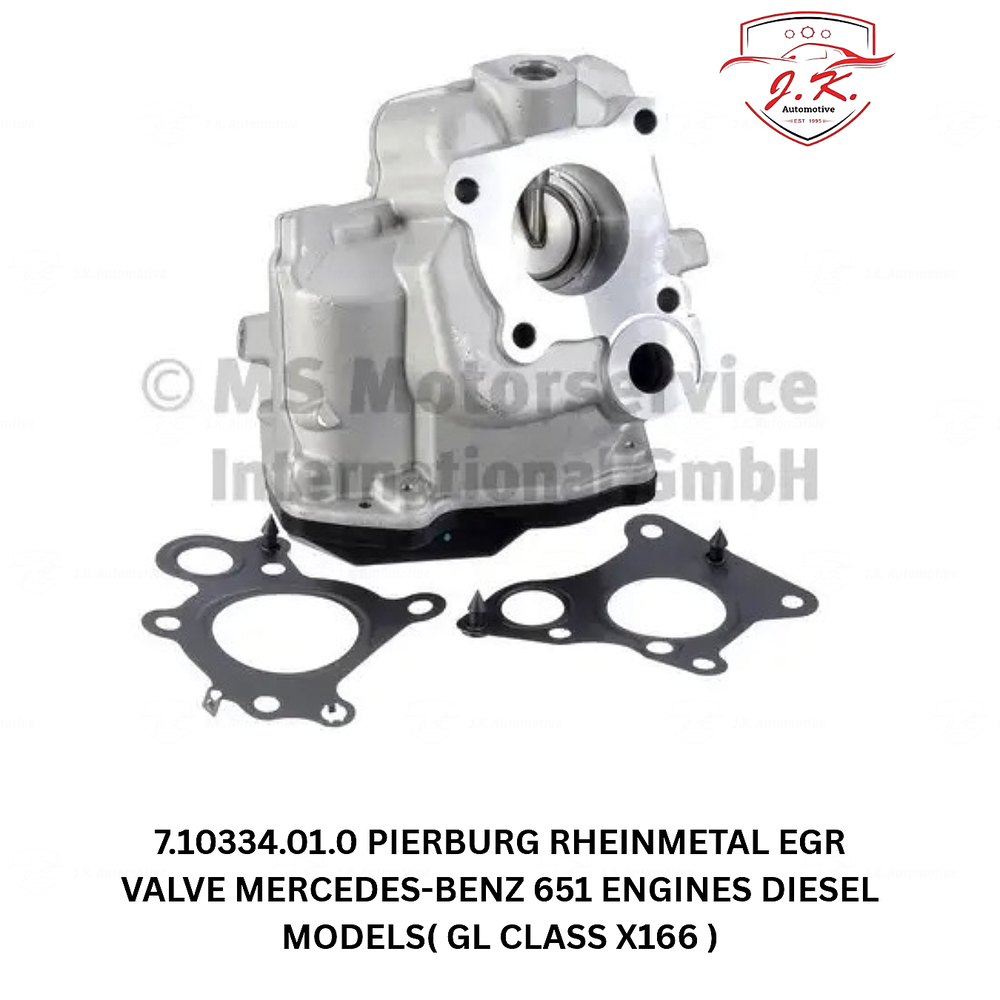
The Pierburg Rheinmetall Germany EGR Valve 7.10334.01.0 is an electrically operated exhaust gas recirculation component intended for compatible Mercedes-Benz diesel engines, including selected GLE (W166) models equipped with the OM651.960 engine. The EGR valve forms part of the engine's emissions-control system. Its main function is to regulate the quantity of exhaust gas returned to the intake system under specific operating conditions. Exhaust gas recirculation is used primarily to control combustion temperatures and reduce the formation of nitrogen oxides. These emissions can increase when diesel combustion occurs at high temperatures. The engine control unit determines the required EGR operation by monitoring relevant engine conditions. It may consider factors such as engine speed, temperature, load, intake-air measurements, and emissions-control requirements. The EGR valve responds to electrical commands by adjusting the exhaust gas flow. This allows the engine to maintain the intended mixture of fresh air and recirculated gases during the applicable operating conditions. In the Mercedes-Benz GLE 250 d, correct EGR operation is part of the overall diesel engine management strategy. It works alongside the air intake system, turbocharging system, sensors, and exhaust aftertreatment equipment. The valve is not designed to increase horsepower or change the manufacturer's original engine performance. Instead, its role is to help the vehicle maintain normal emissions-related operation. If the valve becomes stuck open, excessive exhaust gas may enter the intake when it is not required. This can interfere with smooth combustion and cause noticeable drivability problems. If the valve becomes stuck closed, the required recirculation may not occur. This may lead to emissions-control faults and increased nitrogen oxide formation under certain operating conditions. A faulty electric actuator or control circuit can also prevent the valve from responding correctly. The engine management system may detect unexpected EGR behavior and store diagnostic trouble codes. Symptoms can include engine warning lights, hesitation, reduced acceleration, or irregular running. However, these symptoms are not exclusive to EGR faults. Problems involving sensors, wiring, the turbocharger, or intake restrictions may produce similar complaints. Therefore, the valve should be replaced only after appropriate diagnosis. Pierburg part number 7.10334.01.0 is a 12V electric control valve supplied with a seal according to published parts catalogues. Its OE comparison references include Mercedes-Benz numbers beginning with 651 140. These references help establish the correct replacement for a particular vehicle. For GLE (W166) models, compatibility should be confirmed using the VIN and original component number. When correctly selected and professionally installed, the valve supports the intended operation of the OM651 diesel emissions-control system.
Is Pierburg EGR Valve 7.10334.01.0 compatible with Mercedes-Benz GLE 250 d and GLE 250 d 4MATIC (W166) models?
Pierburg EGR Valve 7.10334.01.0 is listed in replacement-parts catalogues for selected Mercedes-Benz GLE (W166) diesel applications, including the GLE 250 d and GLE 250 d 4MATIC models fitted with the OM651.960 engine. These applications are important because not every GLE model uses the same diesel engine or EGR system. The GLE 250 d is associated with vehicle designation 166.006 in catalogue listings. The GLE 250 d 4MATIC is associated with designation 166.004. Both are identified with the 2.1-litre OM651.960 diesel engine and a rated output of 150 kW, equivalent to approximately 204 horsepower. The available application catalogues identify the relevant vehicle range from April 2015 to October 2018. These dates describe the catalogue application period and should not be interpreted as confirmation for every vehicle produced during that period. The actual EGR assembly may depend on production details and manufacturer equipment specifications. The original equipment part number is therefore an essential part of the compatibility check. Pierburg 7.10334.01.0 is associated with Mercedes-Benz OE comparison numbers 651 140 08 60 and 651 140 14 60. The corresponding A-prefixed references are also listed. A buyer should compare these numbers with the original EGR component or Mercedes-Benz parts information obtained from the VIN. The presence of a compatible engine family is useful, but it does not replace the need for confirmation. Some engines may use different EGR components depending on the arrangement of their emissions equipment. Mounting points, electrical connectors, and valve specifications must match the original installation. A valve that looks similar may not be suitable for the same application. Customers should also distinguish the EGR valve from the EGR cooler and EGR bypass flap. These components work together but perform different functions. The original fault may involve one of the related components rather than the valve itself. A technician should verify the failed component before ordering a replacement. The exact model designation can be checked through the vehicle VIN. The existing valve's identification number can provide another useful reference. Customers purchasing from JK Automotive can share both details for a more precise fitment review. For a verified GLE 250 d or GLE 250 d 4MATIC OM651.960 application, Pierburg 7.10334.01.0 is a relevant replacement to consider. It should not automatically be applied to GLE 350 d or other OM642-equipped versions.
How does the Pierburg electrically operated EGR Valve 7.10334.01.0 function in the Mercedes-Benz GLE (W166) OM651 diesel engine?
The Pierburg 7.10334.01.0 EGR valve functions by regulating exhaust gas recirculation in response to the engine management system's electrical commands. The Mercedes-Benz OM651 diesel engine uses controlled intake airflow and fuel injection to generate power efficiently. During combustion, high temperatures can contribute to the formation of nitrogen oxides. The EGR system addresses this by returning a measured quantity of exhaust gas to the intake system under appropriate operating conditions. The recirculated exhaust gas reduces the oxygen concentration of the intake mixture and helps moderate combustion temperatures. The engine control unit calculates the desired EGR operation using information from different sensors and operating parameters. Engine speed and load are relevant because the amount of recirculation required changes with driving conditions. Coolant temperature and intake-air readings can also affect the control strategy. The valve receives electrical instructions from the vehicle's control system. Its internal mechanism then adjusts the valve opening to regulate exhaust gas flow. This control is more precise than a permanently open or closed passage. At some operating points, the system requires more recirculated exhaust gas. At others, the valve may reduce or interrupt recirculation to support the required fresh-air supply. The EGR cooler, where fitted as part of the system, can reduce the temperature of the recirculated exhaust gas. The intake system and turbocharger also influence engine airflow conditions. The engine management system must coordinate these functions for normal operation. If the EGR valve sticks because of deposits or internal wear, its movement may no longer correspond to the requested position. If an electrical problem prevents correct operation, the control system may detect a malfunction. An EGR fault can affect the relationship between commanded airflow and measured engine response. Diagnostic equipment can help identify these differences. A technician may inspect relevant live data, stored trouble codes, and electrical connections. The intake and exhaust passages should also be checked where necessary. An EGR problem may originate from a restriction elsewhere in the system. Replacing the valve without checking related components can result in the same symptoms remaining after installation. Pierburg 7.10334.01.0 is specified as an electric 12V EGR control valve for relevant applications. Its design must correspond to the original Mercedes-Benz EGR assembly. On a compatible GLE 250 d OM651.960 engine, the valve helps maintain the original exhaust gas recirculation strategy. Proper operation supports emissions management rather than increasing the engine's rated performance.
What are the common symptoms of a faulty EGR valve in a Mercedes-Benz GLE (W166) OM651 diesel engine?
A faulty EGR valve in a Mercedes-Benz GLE (W166) equipped with the OM651 diesel engine may produce several symptoms affecting drivability and emissions-control operation. One common indication is the illumination of the engine warning light. The engine control unit may store diagnostic trouble codes related to EGR flow, valve control, or expected engine operating conditions. A driver may notice reduced acceleration or slower throttle response. Hesitation can occur when the engine's intake airflow does not match the amount required for normal combustion. Some vehicles may develop an unstable idle if excessive exhaust gas enters the intake system at an unsuitable operating point. An EGR valve stuck open may contribute to this condition. A valve stuck closed can prevent the engine from receiving the amount of recirculated gas expected by the emissions-control strategy. This may trigger a fault even when the vehicle appears to drive normally. Reduced engine power can occur if the control system activates a protective operating mode. Some drivers may notice increased exhaust smoke, depending on the fault and other engine conditions. However, black smoke is not a reliable indicator of an EGR problem by itself. Turbocharger faults, injector problems, intake leaks, and restricted air filters may produce similar symptoms. Increased fuel consumption is another possible complaint, but it should not automatically be attributed to the EGR valve. Diesel fuel consumption is affected by driving conditions, engine temperature, fuel injection, vehicle load, and numerous other variables. A damaged electrical connector may interrupt valve operation. Wiring faults can create diagnostic symptoms similar to those of a failed electric actuator. Carbon and soot deposits may restrict movement or reduce the effective flow through the EGR system. Problems involving the EGR cooler or associated passages can also interfere with normal operation. A technician should therefore begin with a diagnostic scan and inspection rather than replacing the valve immediately. The stored fault codes should be compared with live engine data. The original EGR component may need to be checked for mechanical sticking or electrical failure. Where appropriate, the intake and exhaust passages should be inspected for deposits. If the actual valve has failed, a replacement should be selected using the correct OE reference. Pierburg 7.10334.01.0 is catalogued for selected GLE 250 d OM651.960 applications. The VIN and original part number should still be checked before purchase. A correctly specified replacement can help resolve a confirmed EGR valve fault, but it cannot repair unrelated problems elsewhere in the engine.
When should the Pierburg EGR Valve 7.10334.01.0 be replaced in a Mercedes-Benz GLE 250 d OM651 diesel engine?
The EGR valve in a Mercedes-Benz GLE 250 d equipped with the OM651 diesel engine should generally be replaced when diagnosis confirms that the installed component is defective or no longer operates within the manufacturer's requirements. There is no universal EGR replacement mileage that applies to all vehicles using this engine family. The valve is exposed to exhaust gases, soot, and varying temperatures during operation. These conditions can contribute to deposit accumulation and wear over time. The amount of buildup depends on engine condition, driving patterns, and the operation of associated emissions-control components. Some vehicles experience problems earlier than others. Therefore, mileage alone is not a reliable basis for deciding whether an EGR valve requires replacement. A persistent engine warning light may prompt an inspection. Reduced acceleration, unstable running, and EGR-related fault codes are additional reasons to investigate the system. However, such symptoms are not proof that the valve itself has failed. A full diagnostic procedure should examine relevant electrical and mechanical conditions. The wiring and connector should be checked for damage or corrosion. The technician should review available fault codes and operating data. Carbon deposits may sometimes be removed using an approved service procedure if the component remains otherwise functional. Cleaning is not guaranteed to restore a valve with a damaged motor, failed electronics, or excessive mechanical wear. A valve that repeatedly sticks or fails its required functional checks may need replacement. Damage to the housing, mounting surfaces, or sealing arrangement can also require corrective work. Before installing a replacement, the condition of related EGR passages should be considered. Restrictions elsewhere in the system can affect the operation of a new valve. If a replacement is needed, Pierburg 7.10334.01.0 should be compared with the original Mercedes-Benz part reference. Its documented OE comparisons include 651 140 08 60 and 651 140 14 60. These references should be confirmed against the vehicle's VIN. The GLE (W166) includes different engine variants, so the model name alone is insufficient for precise selection. After installation, relevant diagnostic checks should be completed. Any required adaptations or learned-value procedures should follow the vehicle manufacturer's instructions. A post-repair inspection can help establish whether the original fault has been corrected. Correct maintenance, timely diagnosis, and suitable replacement parts can help maintain the operation of the emissions-control system without unnecessary component changes.
How can a faulty Pierburg EGR valve affect engine performance, fuel efficiency, and emissions in the Mercedes-Benz GLE 250 d OM651?
The EGR valve in a Mercedes-Benz GLE 250 d with the OM651.960 diesel engine plays an important role in controlling exhaust gas recirculation, which can influence engine operation and exhaust emissions. When the EGR valve is functioning correctly, the engine management system controls the amount of exhaust gas returning to the intake system. This process helps regulate combustion temperatures during selected operating conditions. Controlling combustion temperatures is important for reducing nitrogen oxide emissions. If the valve becomes stuck open, the engine may receive excessive exhaust gas when a higher proportion of fresh air is required. This can interfere with efficient combustion. The driver may notice sluggish acceleration or hesitation when pressing the accelerator. The engine may also idle unevenly because the intake mixture is not being controlled as intended. A more severe fault may cause the engine management system to limit available power. If the valve becomes stuck closed, exhaust gas recirculation may not occur when the engine control unit requires it. This can increase nitrogen oxide formation under certain conditions. The control system may detect the abnormal operation and activate the engine warning light. Fault codes can remain stored until the underlying issue has been addressed and the appropriate diagnostic procedure completed. Fuel efficiency may also be affected by an EGR malfunction. However, there is no fixed percentage by which fuel consumption increases when the valve fails. The actual effect depends on engine operating conditions and the nature of the problem. A faulty air-mass sensor or an intake leak may cause similar symptoms. The turbocharger, fuel injection equipment, and diesel particulate filter can also influence engine performance and emissions. These components must not be overlooked during diagnosis. Carbon deposits can restrict the EGR gas passage or prevent the valve from moving freely. Electrical faults may cause the actuator to respond incorrectly or stop working. Diagnostic equipment should be used to determine whether the valve follows its commanded operation. A technician should examine stored trouble codes alongside relevant live data. If the EGR valve is confirmed to be defective, replacing it with the correct component may help restore normal engine management behavior. Pierburg 7.10334.01.0 is a relevant replacement for catalogued GLE 250 d OM651.960 applications with matching OE requirements. It should not be expected to provide an engine performance upgrade. Its purpose is to restore the intended operation of the original EGR system. Correct diagnosis and installation remain essential for achieving that result.
How can I verify the correct Pierburg EGR Valve 7.10334.01.0 using the VIN and OEM number of my Mercedes-Benz GLE (W166)?
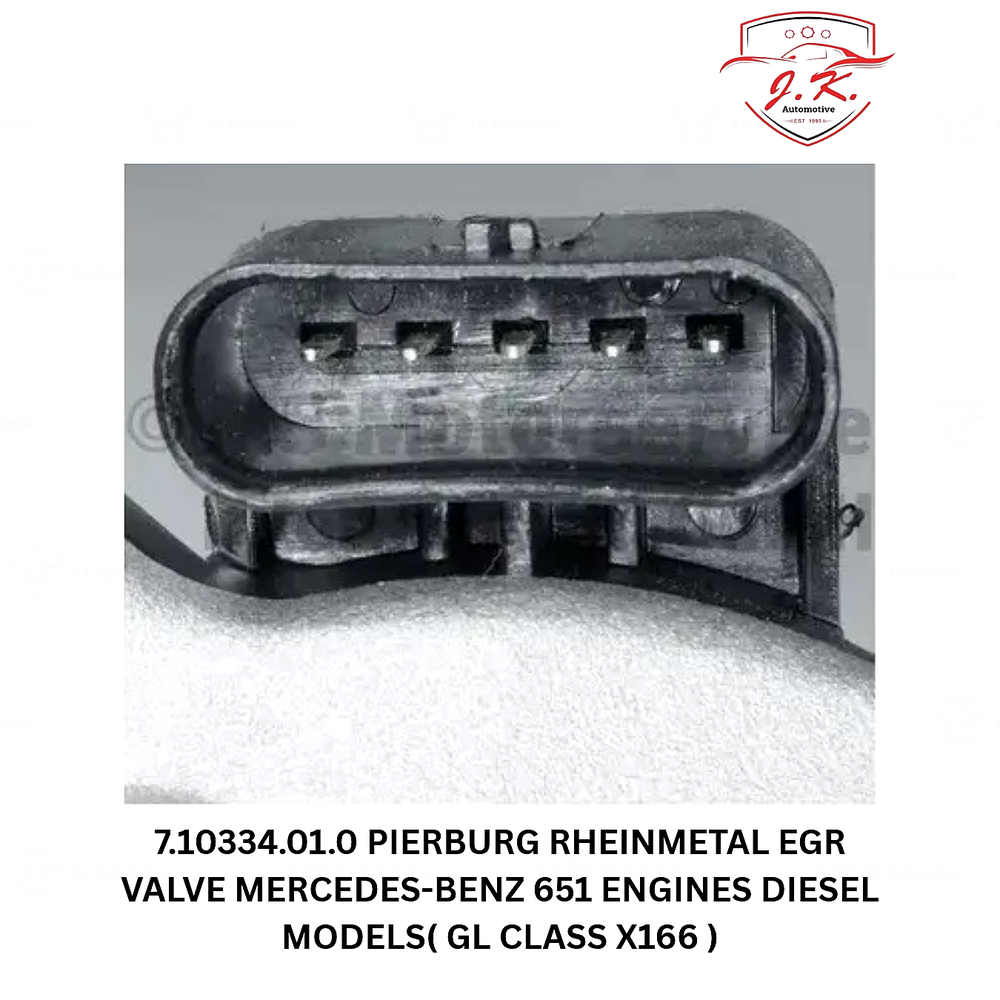
The most reliable way to identify the correct EGR valve for a Mercedes-Benz GLE (W166) is to verify the vehicle VIN and original equipment part number before placing an order. The vehicle identification number provides a way to retrieve detailed manufacturer information about the vehicle's original configuration. It can help establish the model designation, engine type, production information, and relevant spare parts. This is especially important because the GLE (W166) was available with different diesel engines. The GLE 250 d and GLE 250 d 4MATIC applications are associated with the OM651.960 engine in the relevant catalogues. Other GLE diesel variants may use the OM642 engine family. These different engines should not be assumed to share the same EGR valve. Pierburg 7.10334.01.0 is listed for selected GLE 250 d OM651.960 applications. However, the replacement must still match the specific vehicle's original equipment. The buyer should obtain the VIN from the vehicle documents or identification plate. A workshop or parts specialist can then use the VIN in appropriate Mercedes-Benz parts information. The original EGR valve reference should be identified from that catalogue. It can also be helpful to inspect the part number printed or stamped on the existing component. Pierburg 7.10334.01.0 has published comparison references including Mercedes-Benz 651 140 08 60 and 651 140 14 60. The A-prefixed forms of these numbers are also listed. These references should be compared with the original component rather than assumed to apply to every OM651 engine. It is important to inspect the electrical connector type because the replacement valve must connect correctly to the vehicle wiring. The mounting arrangement must also correspond to the original installation. Sealing surfaces and exhaust gas connections must be suitable for the vehicle. A similar-looking valve may have different internal characteristics or fitment requirements. Manufacturer supersessions can sometimes affect the applicable replacement reference. Such supersessions should be confirmed through reliable parts information. Customers should not select an EGR valve based only on engine capacity or vehicle registration year. The original fault should also be checked to establish whether the EGR valve, EGR cooler, or another related component requires replacement. Providing the VIN and original valve number to JK Automotive can make the identification process more precise. Once the correct OE reference has been established, Pierburg 7.10334.01.0 can be evaluated as the replacement for that particular vehicle. This process helps reduce incorrect orders and unnecessary workshop delays.
What installation precautions should be followed when replacing the EGR valve on a Mercedes-Benz GLE (W166) OM651 diesel engine?
Replacing an EGR valve on a Mercedes-Benz GLE (W166) equipped with the OM651.960 diesel engine requires careful identification, preparation, and inspection. The first step is to confirm that Pierburg 7.10334.01.0 matches the original Mercedes-Benz EGR valve reference. The replacement should not be installed simply because it is listed for the same engine family. Once compatibility has been established, the vehicle should be prepared according to the manufacturer's workshop instructions. The engine and exhaust components should be allowed to cool before removal begins. EGR system components can become very hot during normal driving. Attempting to remove them while hot may cause serious burns. The technician should remove any necessary covers, ducts, or other components carefully to gain access to the valve. Electrical connectors should be disconnected without damaging their retaining clips. The existing wiring should be inspected for corrosion, broken insulation, or loose terminals. These problems may create symptoms similar to a defective valve. The surrounding engine area should also be checked for exhaust leakage and excessive soot buildup. During valve removal, care should be taken to prevent loose deposits from entering open passages. Old seals or gaskets should be removed when replacement is specified. The mating surfaces should be cleaned without damaging them. Pierburg 7.10334.01.0 is catalogued as being supplied with a seal. The installer should confirm that the supplied seal is suitable for the specific application and replace any additional sealing components required by the service instructions. The new valve must be positioned correctly against the original mounting surfaces. Fasteners should be tightened using the manufacturer's specified procedure and torque. Incorrect tightening can cause leaks or damage to the component. The electrical connector should fit securely without being forced. Any removed hoses, ducts, or brackets must be reinstalled correctly. Related EGR passages should be inspected if the original valve failed because of severe deposit accumulation. A new valve may not resolve a restriction elsewhere in the system. After installation, the technician should use suitable diagnostic equipment to examine the relevant fault codes and valve operation. Some engine management configurations may require an adaptation, initialization, or learned-value procedure. The exact requirement should be determined from the manufacturer's service information. The engine should then be checked for exhaust leaks, unusual noises, and warning messages. A road test and post-repair diagnostic check can help confirm that the repair has addressed the original complaint. Professional installation is recommended because the EGR valve is part of the wider engine and emissions-control system.
Why should customers choose Pierburg Rheinmetall Germany EGR Valve 7.10334.01.0 for the Mercedes-Benz GLE 250 d OM651 diesel engine?
Pierburg Rheinmetall Germany is an established automotive component manufacturer with experience in engine management and emissions-control systems. Pierburg EGR Valve 7.10334.01.0 is a specifically identified replacement component for compatible applications rather than a universal EGR valve. The exact manufacturer reference helps customers compare the part with their vehicle's original equipment. This is particularly important for the Mercedes-Benz GLE 250 d and GLE 250 d 4MATIC models equipped with the OM651.960 diesel engine. Both applications appear in parts catalogues associated with Pierburg 7.10334.01.0. The valve is electrically operated and specified for a 12V vehicle electrical system. Its design is intended to support the controlled movement of exhaust gases through the engine's EGR system. Accurate exhaust gas recirculation is important for normal emissions-control operation. A defective valve can interfere with that process and contribute to engine-related warning messages or drivability complaints. Replacing the valve with a properly matched component may restore the intended EGR function. However, choosing a recognized brand does not eliminate the need for diagnosis. Faults involving sensors, wiring, blocked passages, or EGR cooling components may require different repairs. One advantage of selecting a clearly identified Pierburg part is that the manufacturer number can be checked against published OE references. The comparison numbers associated with this valve include Mercedes-Benz 651 140 08 60 and 651 140 14 60. These references can help a parts specialist establish whether the replacement corresponds to the original installation. A clearly documented part number can also help workshops avoid confusion between similar-looking components. Customers should ensure that the product received is correctly identified as Pierburg 7.10334.01.0. Packaging and visible part markings should be inspected before installation. The component should also be checked for transit damage. Any required installation instructions should be followed. A supplied seal may assist with replacement, subject to the complete vehicle-specific sealing requirements. The valve should be installed professionally and checked through appropriate diagnostic procedures. Buyers should not expect automatic improvements in horsepower or fuel economy from replacing a normally functioning component. The objective is to restore proper operation where a fault has been confirmed. For a compatible GLE 250 d OM651 application, Pierburg is a suitable manufacturer to consider. Customers purchasing from JK Automotive should provide their VIN and original OE number. This helps confirm that the selected part corresponds to the vehicle rather than relying solely on its model name.
Why is Pierburg considered a suitable EGR valve brand for Mercedes-Benz GLE (W166) OM651 diesel engines compared with Valeo, Delphi, and BorgWarner?
Pierburg Rheinmetall is a recognized automotive component manufacturer offering products associated with engine management and exhaust gas recirculation systems. Valeo, Delphi, and BorgWarner are also established automotive suppliers with products in various powertrain and emissions-control categories. When comparing EGR valve brands for a Mercedes-Benz GLE (W166) equipped with the OM651.960 diesel engine, the most important factor is the exact vehicle application rather than the general reputation of the manufacturer. Pierburg 7.10334.01.0 is listed in relevant parts catalogues for selected GLE 250 d applications. Its known specification includes 12V electric operation and a supplied seal. These details provide a useful starting point when comparing available replacement components. However, a competing valve should only be considered interchangeable if its exact article number is documented as suitable for the same original equipment reference. Similar appearance is not enough to establish compatibility. EGR valves may differ in electrical configuration, actuator operation, mounting points, and internal gas-flow characteristics. Even small differences can make a component unsuitable for a particular engine installation. The original Mercedes-Benz OE number should therefore be checked first. The VIN should then be used to confirm the engine and applicable part requirements. For Pierburg 7.10334.01.0, published comparison references include 651 140 08 60 and 651 140 14 60. A Valeo, Delphi, or BorgWarner alternative should be evaluated against the same confirmed vehicle application rather than selected solely by brand. Buyers may also consider the supplied accessories, installation information, product authenticity, warranty conditions, and seller support. Availability of technical documentation can be important for workshops carrying out the repair. A valve supplied with the correct sealing arrangement may simplify installation, although the complete vehicle-specific requirements must still be followed. Price can be considered after compatibility and product authenticity have been established. A lower purchase price does not make an incompatible valve suitable for the vehicle. Likewise, a higher price does not automatically prove better quality or longer service life. There is no reliable basis for stating that Pierburg is universally superior to Valeo, Delphi, or BorgWarner in every EGR application. Each manufacturer may offer appropriate components for particular vehicles. For the GLE 250 d OM651.960, Pierburg 7.10334.01.0 is a documented replacement option that deserves consideration when the original OE reference matches. The buyer should still establish whether the EGR valve is actually responsible for the diagnosed fault. Replacing an EGR component cannot correct unrelated wiring, sensor, or intake problems. Once the required part has been identified, JK Automotive can assist with selecting the relevant replacement. The best choice is a genuine, correctly specified EGR valve installed according to the manufacturer's repair procedure.

Reviews
There are no reviews yet.