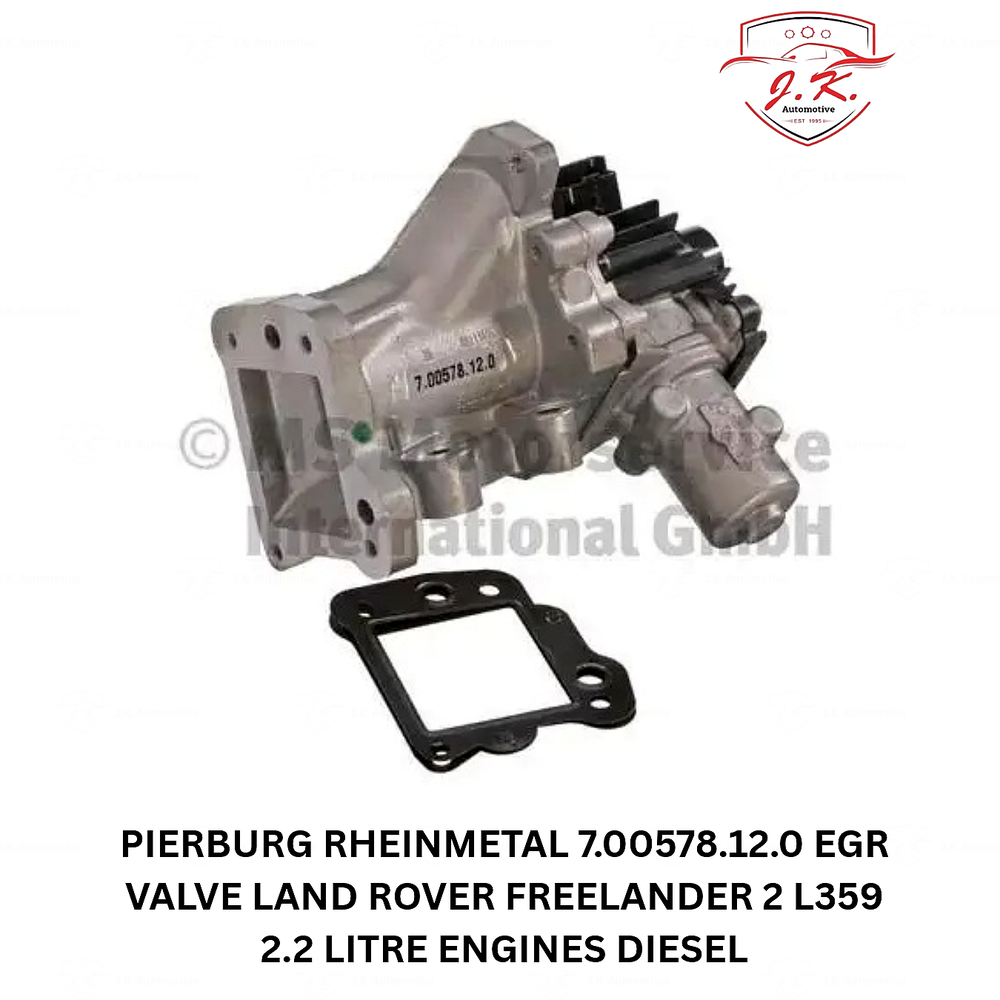
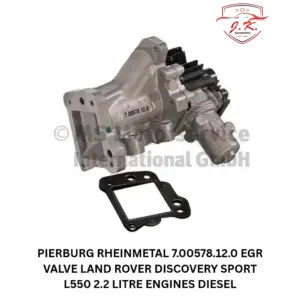
What is the Pierburg Rheinmetall Germany EGR Valve for Land Rover Freelander 2 (L359) 2.2-Litre Diesel Engines – 7.00578.12.0?
The Pierburg Rheinmetall Germany EGR Valve for Land Rover Freelander 2 (L359) 2.2-Litre Diesel Engines – 7.00578.12.0 is an engine emissions-control component listed for compatible Land Rover Freelander 2 (L359) vehicles equipped with 2.2-litre diesel engines. The supplied Pierburg manufacturer part number is 7.00578.12.0. EGR stands for Exhaust Gas Recirculation. The EGR system is designed to help control nitrogen oxide emissions produced during engine combustion. Nitrogen oxides are commonly referred to as NOx. Diesel engines operate using controlled fuel injection and compressed intake air. During combustion, high temperatures can contribute to nitrogen oxide formation. An EGR system redirects a measured quantity of exhaust gas into the engine's intake system under suitable operating conditions. This process helps reduce peak combustion temperatures. The EGR valve regulates the amount of recirculated exhaust gas according to the engine-management system's requirements. Its operation may vary according to engine speed, temperature and load. Properly functioning EGR equipment supports the intended emissions-control strategy. The valve works alongside other engine-management components. These may include airflow sensors, intake components and related emissions equipment. A malfunctioning EGR valve can affect engine operation under certain conditions. Symptoms may include rough idling, hesitation or an illuminated engine-management warning light. However, these symptoms do not automatically confirm EGR valve failure. Electrical faults and other engine-related problems may produce similar behaviour. Diesel exhaust contains particles and combustion by-products that can contribute to deposits. Carbon accumulation may interfere with EGR valve movement or exhaust gas flow. Such restrictions should be investigated during diagnosis. Pierburg is an established manufacturer of engine-management and automotive emissions-control components. Its products are used across various vehicle applications. The supplied reference 7.00578.12.0 identifies the listed Pierburg component. This number should not automatically be described as a Land Rover original equipment reference without independent cross-reference confirmation. Different Freelander 2 engine configurations may require different EGR components. The vehicle identification number can help identify the original factory specification. Existing valve markings should also be checked. The replacement component must match the original mounting arrangement and relevant electrical requirements. Professional installation is recommended because EGR components form part of a coordinated engine-management system. Related seals, connectors and exhaust gas passages should be inspected during replacement. Appropriate diagnostic procedures may be necessary after installation. Customers should verify the vehicle VIN, original EGR reference and engine specification before ordering. JK Automotive lists this Pierburg Rheinmetall Germany EGR valve for compatible Land Rover Freelander 2 (L359) 2.2-litre diesel applications.
What is the part number of the Pierburg Rheinmetall Germany EGR valve for Land Rover Freelander 2 (L359) 2.2-litre diesel, and how can its compatibility be checked?
The supplied Pierburg Rheinmetall Germany EGR valve part number is 7.00578.12.0. This reference identifies the product listed for compatible Land Rover Freelander 2 (L359) 2.2-litre diesel engine applications. The complete reference should be preserved exactly during product searches and quotations. The number is a Pierburg manufacturer reference. It should not automatically be treated as a confirmed Land Rover original equipment number. Any corresponding original equipment cross-reference should be established through an appropriate manufacturer catalogue. The first step in confirming compatibility is to identify the vehicle's exact engine configuration. The Freelander 2 (L359) designation identifies a vehicle platform. However, the platform designation alone does not establish compatibility with every engine or emissions specification. Engine-management and emissions-control components can differ between applications. The vehicle identification number provides useful information for identifying the original vehicle configuration. A suitable Land Rover parts catalogue can help determine the original EGR component. The existing valve may also contain a manufacturer label or stamped reference. Those markings should be compared with the applicable Pierburg catalogue. Mounting points should match the original component. The replacement valve's electrical connector should also correspond with the intended application. Connector appearance alone does not guarantee technical compatibility. The operating requirements must match the engine-management system. Any applicable seals or associated fittings should be checked. The surrounding EGR system should be inspected before ordering a replacement. A fault code relating to exhaust gas recirculation does not always mean that the valve itself is defective. Wiring problems, airflow-related faults and restricted gas passages may produce similar symptoms. A qualified workshop should diagnose the reported problem. Live engine data may help determine whether commanded valve operation is being achieved. Carbon deposits may also require investigation. The component should not be replaced solely because the vehicle displays an engine warning light. Customers should provide their vehicle VIN and original part reference when requesting fitment assistance. The Pierburg number 7.00578.12.0 should remain unchanged throughout verification. JK Automotive customers should confirm the exact engine specification before purchase. Correct verification helps reduce the risk of selecting incompatible emissions-control components. The final purchasing decision should be based on manufacturer application information rather than vehicle model name alone.
How does the Pierburg Rheinmetall Germany EGR valve work in the Land Rover Freelander 2 (L359) 2.2-litre diesel engine?
The EGR valve regulates exhaust gas recirculation within compatible Land Rover Freelander 2 (L359) 2.2-litre diesel engine applications. Its purpose is to control the amount of exhaust gas returned to the intake system under specified operating conditions. This process is primarily used to help reduce nitrogen oxide emissions. Nitrogen oxides can form when combustion temperatures become sufficiently high. Controlled exhaust gas recirculation helps lower peak combustion temperatures. This supports the engine's intended emissions-control strategy. The engine-management system determines when exhaust gas recirculation is required. Its decisions can depend on engine load, speed, temperature and other operating information. The EGR valve responds according to the system's control requirements. Its opening position may change as driving conditions change. Exhaust gas recirculation is not necessarily required at the same rate under every operating condition. The valve may be commanded towards a different position during acceleration or other changes in load. The exact control strategy depends on the engine and emissions system. The supplied Pierburg reference is 7.00578.12.0. The product's detailed operating specifications should be confirmed through manufacturer information. The valve forms one part of a larger engine-management system. Intake airflow measurements may influence EGR control. Related sensors and electrical components may also affect its operation. If the valve becomes restricted by deposits, commanded gas flow may not be achieved. If the valve remains open when recirculation is not appropriate, combustion stability may be affected. If the valve remains closed when EGR flow is requested, the engine's emissions-control strategy may be disrupted. A malfunction may be detected by the engine-management system. Diagnostic trouble codes may then be stored. However, EGR-related codes can have more than one underlying cause. Wiring faults, damaged connectors and other system problems may need investigation. Proper diagnosis is therefore important before replacing the valve. The existing component should be checked against the replacement specification. Correct electrical compatibility and mounting are essential. Relevant gas passages and seals should also be inspected. A qualified technician should follow the appropriate Land Rover service procedure. Diagnostic checks may be required after installation. Any manufacturer-specified adaptation or initialization procedures should be performed when applicable. The vehicle should then be assessed for remaining faults. JK Automotive customers should verify the original component reference and engine configuration before ordering this Pierburg EGR valve.
What are the common symptoms of a faulty EGR valve in Land Rover Freelander 2 (L359) 2.2-litre diesel engines?
A faulty EGR valve can cause several possible engine-management symptoms in a Land Rover Freelander 2 (L359) 2.2-litre diesel vehicle. One common indication is an illuminated engine-management warning light. The vehicle may store diagnostic trouble codes associated with exhaust gas recirculation. However, these codes do not automatically prove that the valve itself is defective. Problems with wiring, sensors or gas flow can produce similar results. Rough idling is another possible symptom. Drivers may notice that the engine does not run as smoothly under certain operating conditions. Hesitation during acceleration may also occur. Reduced engine responsiveness can sometimes accompany an EGR-related malfunction. The exact symptoms depend on the nature of the fault. A valve that remains open at an unsuitable time can affect the intended air and exhaust gas mixture. A valve that cannot provide commanded flow may disrupt the intended emissions-control strategy. Carbon deposits may cause mechanical restrictions. Electrical actuator problems may also interfere with operation. Damaged wiring or connectors can produce intermittent faults. Intake airflow problems may cause similar symptoms. A faulty sensor may also affect the engine-management system's interpretation of EGR behaviour. Some vehicles may activate a reduced-power operating mode when significant faults are detected. However, reduced power can arise from many engine or drivetrain problems. Changes in fuel consumption may also be noticed. These changes should not automatically be attributed to the EGR valve. Excessive exhaust smoke may accompany certain engine faults. However, smoke can also result from fuel injection, turbocharger or intake system issues. A qualified technician should therefore complete a diagnostic inspection. Stored and pending fault codes can provide useful information. Live operating data may help assess whether the valve responds to engine-management commands. Relevant electrical connections should be checked. The condition of exhaust gas passages should also be investigated. Carbon contamination may need to be assessed. A replacement decision should follow the diagnosis rather than the symptoms alone. The supplied Pierburg reference for this listing is 7.00578.12.0. Its compatibility must be confirmed with the original Land Rover Freelander 2 (L359) engine specification. Customers should verify their VIN and existing valve reference before ordering from JK Automotive.
How often should the EGR valve be replaced on a Land Rover Freelander 2 (L359) 2.2-litre diesel engine?
There is no universal replacement mileage that applies to every EGR valve installed on a Land Rover Freelander 2 (L359) 2.2-litre diesel engine. EGR component service life depends on operating conditions and the condition of the engine-management system. Diesel EGR components are exposed to exhaust gas during operation. Exhaust deposits can accumulate within gas passages and around relevant components. Carbon accumulation may sometimes restrict valve movement. However, the rate of deposit formation varies between vehicles. Driving conditions can influence exhaust and combustion temperatures. Repeated short journeys may affect engine operating patterns. Engine maintenance can also influence related emissions-control equipment. Problems elsewhere in the engine may contribute to abnormal deposits. The condition of the complete system should therefore be considered. EGR valves do not necessarily require scheduled replacement at a fixed distance. Replacement is generally appropriate when a mechanical or electrical fault has been confirmed. A warning light may prompt diagnostic inspection. Rough idling or reduced engine responsiveness may also justify further checks. However, those symptoms can have several causes. A diagnostic scan can help identify stored engine-management faults. The technician should inspect wiring and electrical connectors. Relevant sensors may also need examination. Gas passages may be checked for restrictions. Whether cleaning is appropriate depends on the valve's condition and manufacturer guidance. Cleaning does not repair every electrical or mechanical fault. A damaged actuator or other failed component may require replacement. The original EGR valve reference should be established before ordering. The supplied Pierburg manufacturer part number is 7.00578.12.0. Its suitability for the exact Freelander 2 (L359) engine configuration must be confirmed. Replacement work should follow the relevant Land Rover service procedure. Associated seals and fittings should be inspected. Diagnostic checks may be required after installation. Any manufacturer-specified adaptation process should be completed where applicable. The engine should then be checked for remaining faults. Routine servicing of related intake and engine-management components remains important. Customers should avoid replacing an EGR valve solely because the vehicle has reached a particular mileage. JK Automotive customers should confirm the VIN, original part reference and diagnosed fault before purchasing this replacement component.
Can a faulty Pierburg EGR valve affect engine performance, fuel consumption and emissions in Land Rover Freelander 2 (L359) 2.2-litre diesel engines?
A faulty EGR valve can influence engine performance, combustion behaviour and emissions-control operation in a Land Rover Freelander 2 (L359) 2.2-litre diesel engine. The EGR system is primarily intended to help regulate nitrogen oxide emissions. It works by controlling the recirculation of exhaust gases into the intake system. This process is managed according to the engine's operating requirements. When the valve operates correctly, the engine control system can regulate exhaust gas flow according to its programmed strategy. If the valve becomes restricted, the requested gas flow may not be achieved. Carbon deposits are one possible cause of mechanical restriction. Electrical faults can also affect valve movement or operation. A valve stuck open may allow exhaust gases into the intake when they are not required. This can interfere with stable combustion under certain conditions. Drivers may experience rough idling or hesitation. Engine responsiveness may also be affected. A valve stuck closed may prevent the expected level of exhaust gas recirculation. This can interfere with the intended nitrogen oxide reduction strategy. The engine-management system may detect abnormal operating behaviour. An engine warning light may then appear. Diagnostic trouble codes can provide information about the detected issue. However, a fault code does not always identify the failed component directly. Other sensors and related engine systems may contribute to the problem. Fuel consumption can sometimes change when engine operation is disrupted. Nevertheless, replacing the EGR valve does not guarantee improved fuel economy. Driving conditions and other mechanical factors also influence consumption. Abnormal EGR operation can affect the vehicle's emissions-control behaviour. However, exact emissions effects require suitable testing or diagnostic assessment. The condition of the air-intake system should also be checked. Wiring and electrical connections may need inspection. A technician may compare commanded and observed EGR operation using appropriate equipment. The original valve should be examined before ordering a replacement. The supplied Pierburg part number is 7.00578.12.0. Its compatibility must be confirmed for the exact Freelander 2 (L359) engine configuration. Professional installation is important for correct operation. Related gas passages and seals should also be checked. Any required post-installation diagnostic procedures should be completed. Customers should verify their vehicle VIN and original component reference before purchasing through JK Automotive.
How can I confirm that Pierburg Rheinmetall Germany EGR Valve 7.00578.12.0 fits my Land Rover Freelander 2 (L359) 2.2-litre diesel engine?
Confirming compatibility is essential before purchasing the Pierburg Rheinmetall Germany EGR valve for a Land Rover Freelander 2 (L359) 2.2-litre diesel engine. The supplied manufacturer reference is 7.00578.12.0. The product listing identifies its intended application as compatible Freelander 2 (L359) vehicles equipped with 2.2-litre diesel engines. However, this description alone does not guarantee compatibility with every vehicle variant. Different engine specifications and emissions-control arrangements may require different EGR components. The first step is to identify the exact engine configuration. The vehicle identification number can help establish the original factory specification. A reliable Land Rover parts catalogue should then be consulted. The existing EGR valve may carry an identification label or stamped part number. This reference should be compared with the applicable Pierburg catalogue. Any original equipment cross-reference should be verified independently. The supplied Pierburg number should not automatically be treated as a Land Rover OE number. The replacement valve's mounting points must match the intended engine application. Relevant exhaust gas connections must also correspond with the original arrangement. Electrical connector compatibility is another important requirement. A connector that looks similar does not guarantee identical operating specifications. The engine-management system must be compatible with the selected component. The workshop should also establish whether the EGR valve is responsible for the reported fault. An engine warning light alone is insufficient evidence. Diagnostic trouble codes should be interpreted alongside other test results. Wiring problems may cause EGR-related faults. Sensors and intake airflow problems may also require investigation. Restricted exhaust gas passages can create similar symptoms. Carbon contamination should be assessed where relevant. A qualified technician can compare the existing component with manufacturer application information. Customers should provide their VIN and original valve number when requesting assistance. The complete Pierburg reference 7.00578.12.0 must be preserved during verification. JK Automotive customers should confirm the physical and electrical specifications before ordering. Correct selection helps prevent installation problems and unnecessary repair costs. When compatibility remains uncertain, consult the relevant Pierburg and Land Rover manufacturer catalogues before purchasing.
What precautions should be taken when installing Pierburg Rheinmetall Germany EGR Valve 7.00578.12.0 on Land Rover Freelander 2 (L359) 2.2-litre diesel engines?
Installing an EGR valve on a Land Rover Freelander 2 (L359) 2.2-litre diesel engine requires correct component identification and appropriate workshop procedures. The supplied Pierburg manufacturer reference is 7.00578.12.0. Before installation, the technician should confirm that the replacement is suitable for the exact vehicle configuration. The original valve should be compared with the new component. Mounting arrangements and electrical connections must match the intended application. The existing engine-management fault should also be diagnosed. A stored EGR-related code does not always establish that the valve itself has failed. Wiring, sensors and related systems may require investigation. The engine should be allowed to cool before work begins. Exhaust-related components can become extremely hot during operation. Suitable personal protective equipment and workshop tools should be used. The relevant Land Rover service instructions should guide the repair. Electrical connections should be handled carefully. Connector locking mechanisms must not be damaged. Nearby wiring should be inspected for deterioration. Associated intake and exhaust gas connections should also be checked. Carbon deposits may be present around relevant passages. Cleaning should follow component-specific manufacturer recommendations. Sensitive electrical components must not be exposed to unsuitable cleaning chemicals. The condition of relevant seals and gaskets should be assessed. Required replacement seals should match manufacturer specifications. Mounting fasteners should be inspected before reuse. Fasteners designated for replacement should be changed according to the service procedure. Correct tightening is important for preventing leaks and mechanical damage. The replacement valve should never be modified to accommodate an incompatible installation. Unexpected differences between the original and replacement components should be investigated. After installation, electrical connectors and related connections should be secured. Diagnostic equipment may be required to assess valve operation. Some engine-management systems require adaptations or initialization procedures after replacement. The relevant manufacturer instructions should determine whether these steps are necessary. Stored fault codes should be reviewed. The technician should confirm that the original problem has been resolved. Any remaining faults should be diagnosed separately. A controlled road test may help assess normal engine behaviour. Customers should retain purchase and installation documentation for future maintenance.
Why should Land Rover Freelander 2 (L359) 2.2-litre diesel owners choose Pierburg Rheinmetall Germany EGR Valve 7.00578.12.0?
Pierburg is an established manufacturer of automotive engine-management and emissions-control components. The company produces products used in a range of vehicle systems. Land Rover Freelander 2 (L359) 2.2-litre diesel owners may consider a compatible Pierburg EGR valve when their existing component requires replacement. The supplied manufacturer part number for this listing is 7.00578.12.0. Its suitability must be confirmed for the vehicle's original configuration. One reason customers consider Pierburg is its experience in automotive component manufacturing. EGR valves form part of an engine's emissions-control system. They regulate the flow of exhaust gases under appropriate operating conditions. Correct component selection is important for maintaining intended system operation. A compatible replacement can help restore EGR function when the original valve has failed. However, replacing the valve cannot correct every engine-management problem. Wiring faults may require separate repairs. Damaged sensors can also affect engine behaviour. Restricted gas passages may interfere with exhaust gas recirculation. Carbon contamination should be investigated where relevant. A complete diagnosis helps establish whether replacement is appropriate. Product authenticity is another important consideration. Customers should check part markings and supplier documentation. The manufacturer part number should correspond with the product supplied. Warranty terms and support should also be reviewed. Electrical compatibility is essential for modern engine-management components. The replacement must match the intended mounting and operating requirements. The original part reference should be cross-checked using suitable catalogue information. The vehicle VIN can help establish the original configuration. Professional installation helps prevent incorrect connections or mounting problems. Relevant seals and fittings should be inspected. Diagnostic checks may be necessary after installation. Any required manufacturer-specified service procedure should be completed. Customers should avoid assuming that replacement automatically improves power or fuel economy. The primary objective is to restore correct EGR system function. Pierburg reference 7.00578.12.0 should be verified before purchase. JK Automotive lists this component for compatible Land Rover Freelander 2 (L359) 2.2-litre diesel applications. Customers should confirm the original valve number and engine specification before ordering.
Is Pierburg Rheinmetall Germany better than other EGR valve brands for Land Rover Freelander 2 (L359) 2.2-litre diesel engines when comparing quality, reliability and compatibility?
Pierburg Rheinmetall Germany is an established manufacturer of automotive engine-management and emissions-control components. Other manufacturers also produce EGR valves for different original equipment and aftermarket applications. Choosing the correct brand requires evaluating specific components rather than relying solely on manufacturer reputation. The supplied Pierburg reference for this Land Rover Freelander 2 (L359) 2.2-litre diesel listing is 7.00578.12.0. This reference must first be verified for the intended engine configuration. EGR valves can differ in mechanical construction and electrical operating requirements. Their mounting arrangements must match the original installation. Electrical connectors and control characteristics must also be suitable for the vehicle. A physically similar component may not be electrically compatible. Manufacturer application data should therefore be consulted. Pierburg has experience manufacturing automotive engine-control components. However, this does not establish that every Pierburg product is superior to every competing alternative. Other reputable brands may offer suitable components for certain applications. A meaningful comparison requires identifying the exact alternative part number. That reference should then be checked against the original Land Rover specification. Component reliability depends on design, manufacturing quality and operating conditions. Carbon accumulation and related engine faults can affect EGR operation regardless of brand. A new valve may encounter problems if underlying engine faults remain unresolved. Therefore, diagnosis is important before purchasing a replacement. Electrical compatibility is another essential consideration. The replacement valve must respond correctly to the vehicle's engine-management requirements. Warranty coverage can also influence the purchasing decision. Customers should review the applicable manufacturer's terms. Supplier reliability and product authenticity are important. Price should be considered only after technical suitability has been confirmed. An inexpensive component may create additional repair costs if it is incompatible. A higher-priced component does not automatically provide better reliability. Long-term durability claims should be supported by relevant evidence. Without comparable application-specific testing, universal superiority claims are not justified. The original valve reference and vehicle VIN should guide component selection. Pierburg part number 7.00578.12.0 should be checked against authoritative manufacturer information. Correct installation is important regardless of the selected brand. Relevant post-repair diagnostic procedures should also be completed. Pierburg may be an appropriate choice when its application is confirmed. Other manufacturers may also offer suitable alternatives when compatibility is verified. The final decision should prioritise fitment, technical specifications, authenticity, warranty support and professional installation.
Reviews
There are no reviews yet.