What is the Toyota Etios Liva Tie Rod End Set of 2 Lemforder 4408401 and what does it do?
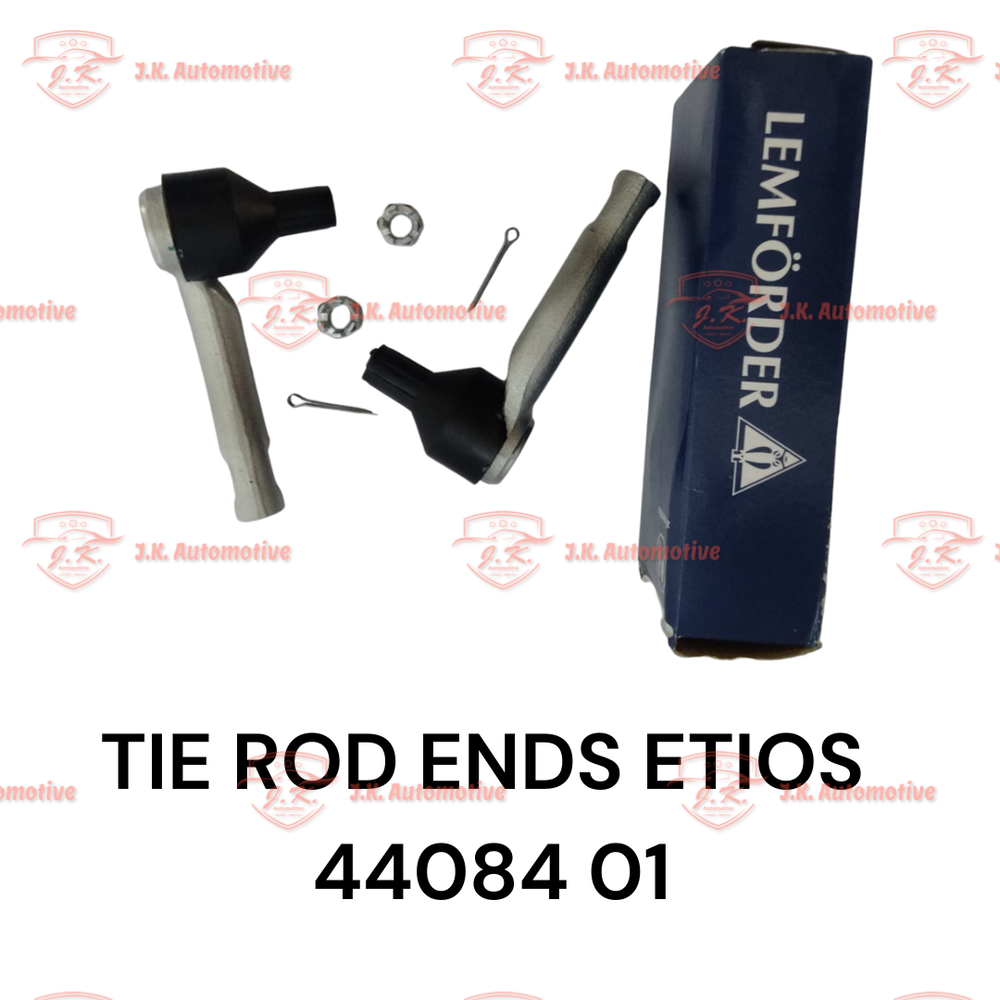
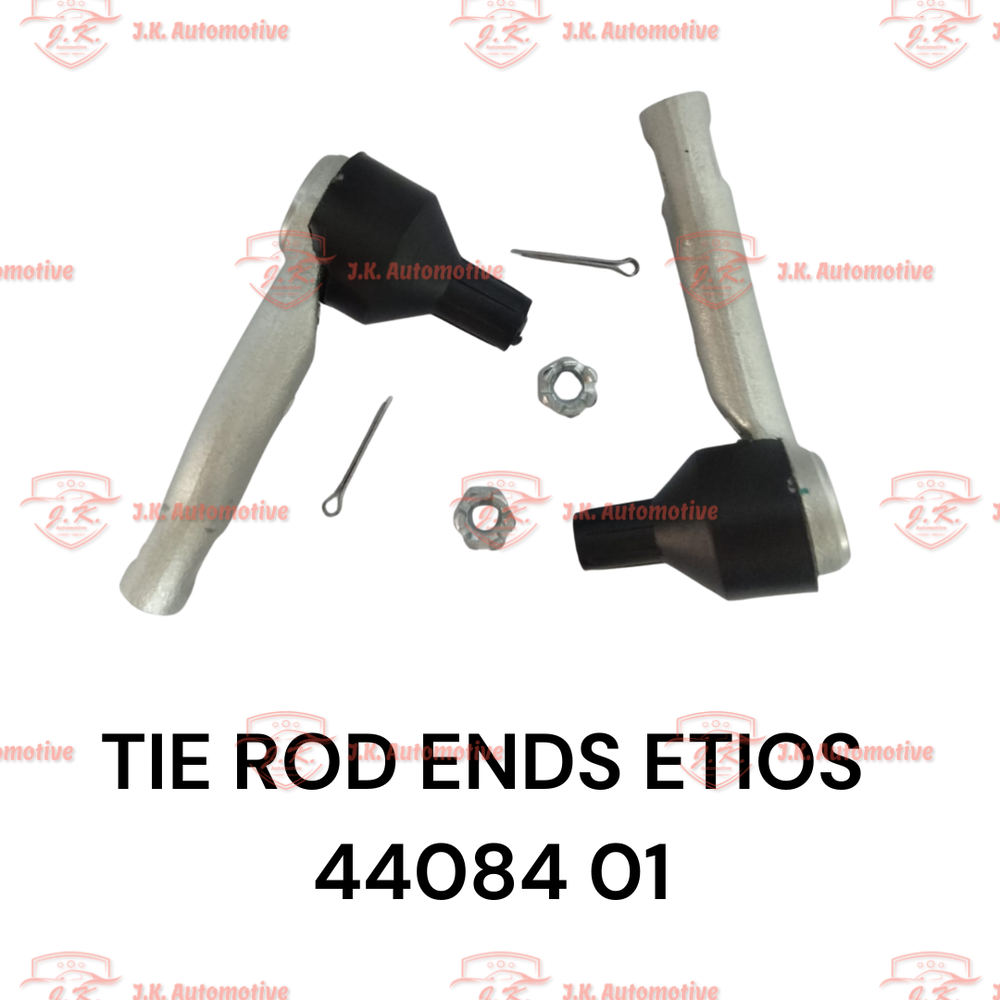
The Toyota Etios Liva Tie Rod End Set of 2 Lemforder 4408401 is supplied for the stated Toyota Etios Liva 2010–2020 application and forms an important connection within the vehicle’s front steering system. Tie rod ends transfer steering movement through the steering linkage toward the wheel-side steering assembly, helping the front wheels respond to the driver’s steering input. Their articulated ball-and-socket construction permits controlled angular movement while the wheels turn and the suspension moves over changing road surfaces. These joints therefore operate repeatedly during parking, low-speed manoeuvring, cornering, braking, highway driving and normal suspension travel. Potholes, speed breakers, uneven roads, repeated steering cycles, vibration and accumulated mileage can gradually contribute to wear within the joint. Protective rubber boots help retain lubrication and restrict water, road dust, dirt and abrasive contamination from reaching the internal moving surfaces. A cracked, torn or displaced boot can allow lubricant to escape and contamination to enter, potentially accelerating deterioration. Possible symptoms of excessive wear include increased steering free movement, vague directional response, wandering, delayed steering reaction, an off-centre steering wheel, front-end knocking or abnormal tyre wear. These symptoms should not automatically be attributed to the tie rod ends because other steering and suspension components can produce similar behaviour. Control-arm bushes, other steering joints, suspension components, wheel bearings and steering-rack connections should also be inspected. Sway bar links, Sway links, Anti roll link rods and Stabiliser sway links should be examined when knocking or rattling occurs over uneven roads. Before ordering, exact Lemforder reference 4408401 should be checked against the required vehicle application, with VIN verification recommended whenever compatibility remains uncertain. The replacement components should also be physically compared with the parts removed from the vehicle before installation. Professional installation followed by wheel alignment is recommended because adjustment within the tie rod assembly directly influences front-wheel toe and steering-wheel centring.
Is Lemforder 4408401 suitable for Toyota Etios Liva 2010–2020?
Lemforder 4408401 is the supplied manufacturer reference for this Tie Rod End Set of 2 covering the stated Toyota Etios Liva 2010–2020 application, and the exact reference should remain an important part of the fitment-verification process. Vehicle model and year range provide useful application information, but a steering component should not be selected solely from the Toyota Etios Liva name, registration year or visual similarity with the currently fitted part. Tie rod ends that appear similar externally can differ in overall dimensions, threaded sections, thread diameter, thread pitch, mounting taper, ball-stud configuration, articulation or intended installation position. The manufacturer reference 4408401 should therefore be checked exactly when comparing product information, catalogues or replacement references. Useful identification searches can include Lemforder 4408401, Toyota Etios Liva 4408401, Etios Liva Lemforder 4408401 and 4408401 Tie Rod End. If exact compatibility remains uncertain, VIN-based verification provides an additional vehicle-specific check before ordering. Any identifying numbers visible on the components currently installed on the vehicle should also be compared where possible. Before installation, physically compare the replacement set with the removed components. Check overall length, threaded sections, thread diameter, thread pitch, mounting taper, ball-stud construction and intended mounting position. Threaded connections should engage naturally without forcing or cross-threading, and tapered mounting surfaces should seat correctly in their intended locations. Visual similarity should not be treated as proof that two steering components are interchangeable. An unsuitable steering component should never be drilled, ground, bent or otherwise modified merely to make it fit. Protective rubber boots should also be inspected before installation for cuts, cracks, deformation or other visible damage. If the vehicle is being repaired because of steering looseness, wandering, knocking or irregular tyre wear, inspect the surrounding front axle as well. Control-arm bushes, other steering joints, wheel bearings and steering-rack connections can produce overlapping symptoms. Sway bar links, Sway links, Anti roll link rods and Stabiliser sway links should also be checked when front-end noise is present.
What does Lemforder part number 4408401 mean for Toyota Etios Liva tie rod ends?
Lemforder 4408401 is the supplied manufacturer reference used to identify this Tie Rod End Set of 2 for the stated Toyota Etios Liva 2010–2020 application. An exact manufacturer reference is particularly useful when identifying steering components because searching only by vehicle model can produce multiple parts that appear similar but may have different dimensions or mounting specifications. Relevant searches can include Lemforder 4408401, Toyota Etios Liva 4408401, Etios Liva Lemforder 4408401, 4408401 Tie Rod End and Lemforder Etios Liva steering parts. The reference 4408401 should remain exactly as supplied when checking product listings, catalogues, invoices or fitment information because changing a digit may identify another component. Manufacturer-reference matching should still be combined with the stated vehicle application rather than relying exclusively on the part number or model year. VIN verification is recommended whenever there is uncertainty regarding the exact steering configuration fitted to a particular vehicle. Physical comparison provides another important verification stage before installation. Compare overall dimensions, threaded sections, thread diameter, thread pitch, mounting taper, ball-stud construction, articulation and intended installation position with the components removed from the vehicle. Threaded connections should engage naturally and the mounting taper should correspond correctly with its mating component. Small dimensional differences can matter even when two steering components look almost identical, so visual similarity alone should not be treated as proof of interchangeability. Protective rubber boots should also be inspected for cuts, cracks, deformation, displacement or visible lubricant leakage. If replacement is being considered because of steering looseness, wandering, knocking or irregular tyre wear, the complete front steering and suspension system should be inspected rather than diagnosing the vehicle from a single symptom. Control-arm bushes, other steering joints, suspension components, wheel bearings and steering-rack connections can produce similar behaviour. Sway bar links, Sway links, Anti roll link rods and Stabiliser sway links should also be inspected when knocking occurs over rough roads. After correct installation, professional wheel alignment is recommended because adjustment within the steering linkage directly affects front-wheel toe.
What are the symptoms of worn tie rod ends on a Toyota Etios Liva?
Possible symptoms of worn tie rod ends on a Toyota Etios Liva can include excessive steering free movement, vague directional response, wandering, delayed reaction to steering input, changes in steering-wheel centring, front-end knocking and irregular tyre wear. Tie rod ends contain articulated joints that must allow movement while maintaining a controlled mechanical connection within the steering linkage. As the internal joint surfaces wear, unwanted clearance can develop and steering response may gradually become less precise. The driver may notice that more frequent steering corrections are required to maintain a straight path or that the steering feels less direct around its centre position. These changes can become particularly noticeable during highway travel, lane changes, cornering or driving across uneven roads. Braking can also expose existing steering or suspension looseness because the loads acting through the front axle change as vehicle weight transfers forward. A worn joint may sometimes produce knocking or clunking when travelling across potholes, speed breakers, broken surfaces or road joints. Protective rubber boots should be examined because cracks, tears or displacement can allow lubrication to escape and permit water, dirt and abrasive contamination to enter the internal joint. Tyre condition can provide additional diagnostic information. Feathering across the tread, excessive inner-edge wear, outer-edge wear or noticeably different wear between the two front tyres may indicate that mechanical condition or wheel geometry requires inspection. However, none of these symptoms independently proves that Lemforder 4408401 is required or that the existing tie rod ends are the only worn components. Incorrect tyre pressure, unsuitable wheel geometry, worn control-arm bushes, other steering joints, suspension components, wheel-bearing play and steering-rack connections can produce overlapping symptoms. Sway bar links, Sway links, Anti roll link rods and Stabiliser sway links should also be inspected when knocking or rattling is the primary complaint. A professional technician should check for measurable steering play and identify the actual source before replacement. If replacement is required, reference 4408401 and the stated vehicle application should be verified before installation.
Should Toyota Etios Liva tie rod ends be replaced as a Set of 2?
Whether Toyota Etios Liva tie rod ends should be replaced together as a Set of 2 depends on the mechanical condition of both sides, accumulated mileage, road exposure, protective-boot condition, previous steering repairs and the results of a professional inspection. This Lemforder 4408401 product is supplied as a Set of 2 for the stated Toyota Etios Liva 2010–2020 application. Components working across the same front axle are generally exposed to similar mileage, steering cycles, road vibration and environmental conditions, although their wear rate does not necessarily remain identical. One side may deteriorate more quickly because of repeated pothole impacts, damaged road surfaces, contamination, previous repairs or differences in operating conditions. If excessive mechanical clearance, protective-boot damage, lubricant leakage or contamination is identified on one side, the corresponding joint on the opposite side should therefore also be inspected carefully. When both sides show measurable deterioration, replacing the required components during the same repair can address the affected steering connections together. The decision should nevertheless be based on actual mechanical condition rather than assuming that both joints must always be replaced simply because one side has developed wear. Before installation, Lemforder reference 4408401 should be verified against the required vehicle application, with VIN checking recommended whenever exact compatibility remains uncertain. Physically compare the replacement components with the parts removed from the vehicle, including overall dimensions, threaded sections, thread diameter, thread pitch, mounting taper, ball-stud construction and intended installation position. Protective rubber boots should be inspected before fitting for cuts, cracks, deformation or displacement. The surrounding steering and suspension system should also be examined because replacing the tie rod ends will not correct looseness originating elsewhere in the front axle. Control-arm bushes, other steering joints, wheel bearings and steering-rack connections should be checked for unwanted movement. Sway bar links, Sway links, Anti roll link rods and Stabiliser sway links should also be inspected when front-end knocking is present. After replacement, professional wheel alignment is recommended because the steering linkage adjustment directly affects front-wheel toe and steering-wheel centring.
Is wheel alignment necessary after replacing Toyota Etios Liva tie rod ends?
Yes, professional wheel alignment is strongly recommended after replacing Toyota Etios Liva tie rod ends because the threaded adjustment within the steering linkage directly influences front-wheel toe. This Lemforder 4408401 product is supplied as a Set of 2 for the stated Toyota Etios Liva 2010–2020 application. During replacement, the existing steering joints are disconnected and the effective tie rod adjustment position can change. A technician may mark the previous position, measure exposed threads or count rotations during removal, but these methods provide only an approximate installation reference and should not replace accurate wheel-alignment measurement. Even a relatively small difference in effective tie rod length can alter front-wheel toe. Incorrect toe can contribute to repeated steering corrections, an off-centre steering wheel, reduced directional consistency and accelerated tyre wear. Feathering across the tyre tread is particularly relevant when investigating a possible toe-related geometry problem. Before alignment, reference 4408401 and the required vehicle application should be confirmed, and installation should be completed correctly. The surrounding front steering and suspension system should also be inspected for remaining mechanical looseness because accurate alignment cannot remain consistent when another component permits uncontrolled movement. Control-arm bushes, other steering joints, suspension components, wheel bearings and steering-rack connections should therefore be checked. Sway bar links, Sway links, Anti roll link rods and Stabiliser sway links should also be inspected when front-end knocking or rattling is present. Tyre pressures should be corrected and tread condition examined before geometry measurements are taken. Professional alignment equipment can then be used to measure the applicable front-wheel geometry and adjust toe according to the appropriate vehicle specification. Steering-wheel centring should also be checked during the procedure. If correct geometry cannot be achieved, worn, bent, damaged or incorrectly installed surrounding components should be investigated instead of compensating through unsuitable adjustment. Reference verification, professional installation, complete front axle inspection and final wheel alignment therefore provide a more complete procedure after replacement.
How do worn tie rod ends affect the driving and handling of a Toyota Etios Liva?
Worn tie rod ends can affect steering response, directional stability and front-wheel control on a Toyota Etios Liva because these joints form an important mechanical connection within the steering linkage. When the joints remain in suitable mechanical condition, steering movement can be transferred toward the wheel-side steering assembly while the articulated connection accommodates movement during turning and suspension travel. As internal wear develops, unwanted clearance may appear within the joint and the driver can begin to notice increased free movement around the steering-wheel centre position. Steering response may feel less precise during small directional corrections, straight-road driving or highway use. The vehicle may require more frequent steering inputs to maintain its intended direction, while wandering or delayed directional response can become noticeable as mechanical clearance increases. Cornering and lane changes may also feel different because the front wheels depend on controlled steering connections to respond consistently to driver input. Braking can expose existing looseness because front axle loading changes as vehicle weight transfers forward. Knocking or clunking may sometimes occur when travelling across potholes, speed breakers, broken roads or uneven surfaces. Protective rubber boots should be inspected because they help retain lubrication and restrict water, dirt and abrasive contamination from entering the internal moving surfaces. Cracked, torn or displaced boots can contribute to accelerated joint deterioration. Tyre tread condition can also provide useful diagnostic information. Feathering, excessive inner-edge wear, outer-edge wear or noticeably different wear between the front tyres may indicate that steering condition or wheel geometry requires inspection. These symptoms do not independently confirm that Lemforder 4408401 requires replacement because control-arm bushes, other steering joints, suspension components, wheel bearings and steering-rack connections can create similar behaviour. Sway bar links, Sway links, Anti roll link rods and Stabiliser sway links should also be inspected when front-end knocking is the primary complaint. A professional technician should identify measurable play before deciding which components require replacement. If replacement is necessary, exact reference 4408401 and the stated Toyota Etios Liva 2010–2020 application should be verified before installation. Professional wheel alignment should follow the repair because tie rod adjustment directly influences front-wheel toe.
How can I confirm the correct Lemforder 4408401 Tie Rod End Set of 2 before ordering for Toyota Etios Liva?
The correct Lemforder 4408401 Tie Rod End Set of 2 should be confirmed using the exact manufacturer reference, the stated Toyota Etios Liva 2010–2020 application and VIN information where necessary rather than relying only on the vehicle name, registration year or appearance of the currently fitted steering components. Exact reference verification is particularly important because steering joints that appear almost identical can have differences in overall dimensions, threaded sections, thread diameter, thread pitch, mounting taper, ball-stud configuration, articulation or intended installation position. Useful identification searches include Lemforder 4408401, Toyota Etios Liva 4408401, Etios Liva Lemforder 4408401 and 4408401 Tie Rod End. The number 4408401 should remain exactly as supplied when checking catalogues, invoices, product listings or fitment information because even a small change in the manufacturer reference can identify another component. If identifying numbers remain visible on the existing steering parts, compare them with the replacement reference before ordering. VIN-based confirmation should be used whenever exact compatibility remains uncertain. Physical comparison provides another important verification stage before installation. Compare the overall length, threaded portions, thread diameter, thread pitch, mounting taper, ball-stud construction and intended mounting position with the components removed from the vehicle. Threaded connections should engage naturally without forcing or cross-threading, and tapered mounting surfaces should correspond correctly with their mating components. Visual similarity alone should not be treated as proof that two steering components are interchangeable. An unsuitable part should never be drilled, ground, bent or otherwise modified simply to make it fit. Protective rubber boots should also be checked before installation for cracks, cuts, deformation or displacement. If the vehicle is being repaired because of steering looseness, wandering, knocking or abnormal tyre wear, inspect surrounding components rather than assuming the steering joints are the only cause. Control-arm bushes, other steering joints, wheel bearings and steering-rack connections can produce overlapping symptoms. Sway bar links, Sway links, Anti roll link rods and Stabiliser sway links should also be examined when front-end noise is present. Exact reference matching, VIN confirmation where required, physical comparison and professional installation provide a more reliable method of selecting the correct component.
Can worn tie rod ends cause uneven tyre wear on a Toyota Etios Liva?
Worn tie rod ends can contribute to uneven tyre wear on a Toyota Etios Liva when excessive mechanical clearance permits unwanted movement within the steering linkage and prevents the front wheels from maintaining consistent positioning while the vehicle is being driven. Tie rod adjustment has a direct relationship with front-wheel toe, making the condition of these joints particularly important when diagnosing abnormal tyre wear together with steering symptoms. When internal joint clearance develops, steering, braking, cornering and suspension forces can allow small unwanted changes in wheel position. Over time, this can contribute to irregular contact between the tyre tread and road surface. Feathering across the tread is particularly relevant when investigating possible toe-related geometry problems. Excessive inner-edge wear, outer-edge wear or noticeably different wear between the two front tyres should also prompt inspection of steering condition and wheel alignment. The driver may simultaneously notice wandering, an off-centre steering wheel, increased steering corrections or less precise directional response. However, abnormal tyre wear alone does not establish that Lemforder 4408401 is required or that existing tie rod ends are responsible for the problem. Incorrect tyre pressures can produce significant tread wear even when steering components remain mechanically serviceable. Incorrect wheel alignment, damaged wheels, tyre defects, worn control-arm bushes, other steering joints, suspension components, wheel bearings and steering-rack connections should also be considered during diagnosis. Protective rubber boots on the steering joints should be examined for cracks, tears, deformation, lubricant leakage or contamination. Sway bar links, Sway links, Anti roll link rods and Stabiliser sway links should be inspected when abnormal tyre wear is accompanied by knocking or rattling from the front axle. A professional technician should check the steering linkage for measurable mechanical play before deciding which parts require replacement. If Lemforder 4408401 is selected, the exact reference and stated Toyota Etios Liva 2010–2020 application should be verified before fitting. After installation, professional wheel alignment should be performed so front-wheel toe and applicable geometry can be accurately measured and adjusted rather than relying on the previous threaded position.
Why is professional installation recommended for Toyota Etios Liva Lemforder 4408401 tie rod ends?
Professional installation is recommended for Toyota Etios Liva Lemforder 4408401 tie rod ends because these components operate directly within the front steering system and their installed adjustment can influence front-wheel toe, steering-wheel centring and directional response. This product is supplied as a Set of 2 for the stated 2010–2020 application. Before installation begins, exact manufacturer reference 4408401 should be verified against the required vehicle application, with VIN confirmation where necessary. The replacement components should then be physically compared with those removed from the vehicle. Overall dimensions, threaded sections, thread diameter, thread pitch, mounting taper, ball-stud configuration, articulation and intended installation positions should correspond correctly. Threaded connections should engage naturally without forcing or cross-threading, while tapered mounting surfaces should seat properly in their intended locations. An unsuitable steering component should never be drilled, ground, bent or otherwise modified merely to make it fit. Protective rubber boots should be checked before installation for cracks, cuts, deformation, displacement or other visible damage. Professional installation also provides an opportunity to inspect the surrounding front axle while the steering system is being repaired. Control-arm bushes, other steering joints, suspension components, wheel bearings and steering-rack connections should be examined for unwanted movement or deterioration. Sway bar links, Sway links, Anti roll link rods and Stabiliser sway links should also be checked when the driver reports knocking or rattling over rough roads. Tyre pressures and tread condition should be inspected because feathering or abnormal edge wear can provide evidence that steering condition or wheel geometry requires attention. A technician may count exposed threads, mark the previous adjustment or measure the old component position before removal, but these techniques provide only an approximate starting point. Even relatively small differences in effective tie rod adjustment can alter front-wheel toe. Accurate wheel-alignment equipment should therefore be used after installation to measure the applicable geometry, adjust toe correctly and check steering-wheel centring. If the required alignment cannot be achieved, worn, bent, damaged or incorrectly installed surrounding components should be investigated rather than compensating through unsuitable adjustment.
Why is Lemforder a suitable choice compared with FEBI, Meyle, TRW and other established brands for Toyota Etios Liva tie rod ends?
Lemforder is one established replacement-parts option for customers searching for Toyota Etios Liva tie rod ends, while FEBI, Meyle, TRW and other established manufacturers may also offer alternatives where their catalogues document compatibility with the required vehicle and steering application. For this particular product, the important identification point is the supplied Lemforder reference 4408401 for the stated Toyota Etios Liva 2010–2020 application. When comparing Lemforder with FEBI, Meyle, TRW or another manufacturer, exact fitment and manufacturer-reference verification should remain more important than selecting a component solely according to brand name or external appearance. Useful identification searches include Lemforder 4408401, Toyota Etios Liva 4408401, Etios Liva Lemforder 4408401 and 4408401 Tie Rod End. If an alternative manufacturer is being considered, its exact part number and documented cross-reference should be checked against the required vehicle application. Physical characteristics should also correspond correctly, including overall dimensions, threaded sections, thread diameter, thread pitch, mounting taper, ball-stud configuration, articulation and intended installation position. Visual similarity between components from different manufacturers should not automatically be interpreted as proof of interchangeability. Protective rubber boot construction and condition should also be checked because effective sealing helps retain lubrication and restrict water, road dust and abrasive contamination from reaching the internal joint surfaces. Claims regarding manufacturing origin, OE-supplier status, expected service life, durability or superiority should only be made when documented for the exact component being compared rather than inferred from general brand reputation. VIN-based verification is recommended whenever compatibility remains uncertain, and the replacement components should be physically compared with the removed parts before installation. The surrounding steering and suspension system should also be inspected because control-arm bushes, other steering joints, wheel bearings and steering-rack connections can produce symptoms similar to worn tie rod ends. Sway bar links, Sway links, Anti roll link rods and Stabiliser sway links should be examined when front-end knocking is present. Regardless of whether Lemforder 4408401 or another correctly cross-referenced alternative is selected, professional installation and final wheel alignment remain important because tie rod adjustment directly influences front-wheel toe.




Reviews
There are no reviews yet.