Why is part number combination A2233262800 and A2233204501 specifically required for rear axle stabilization on Mercedes-Benz W223 4MATIC models?
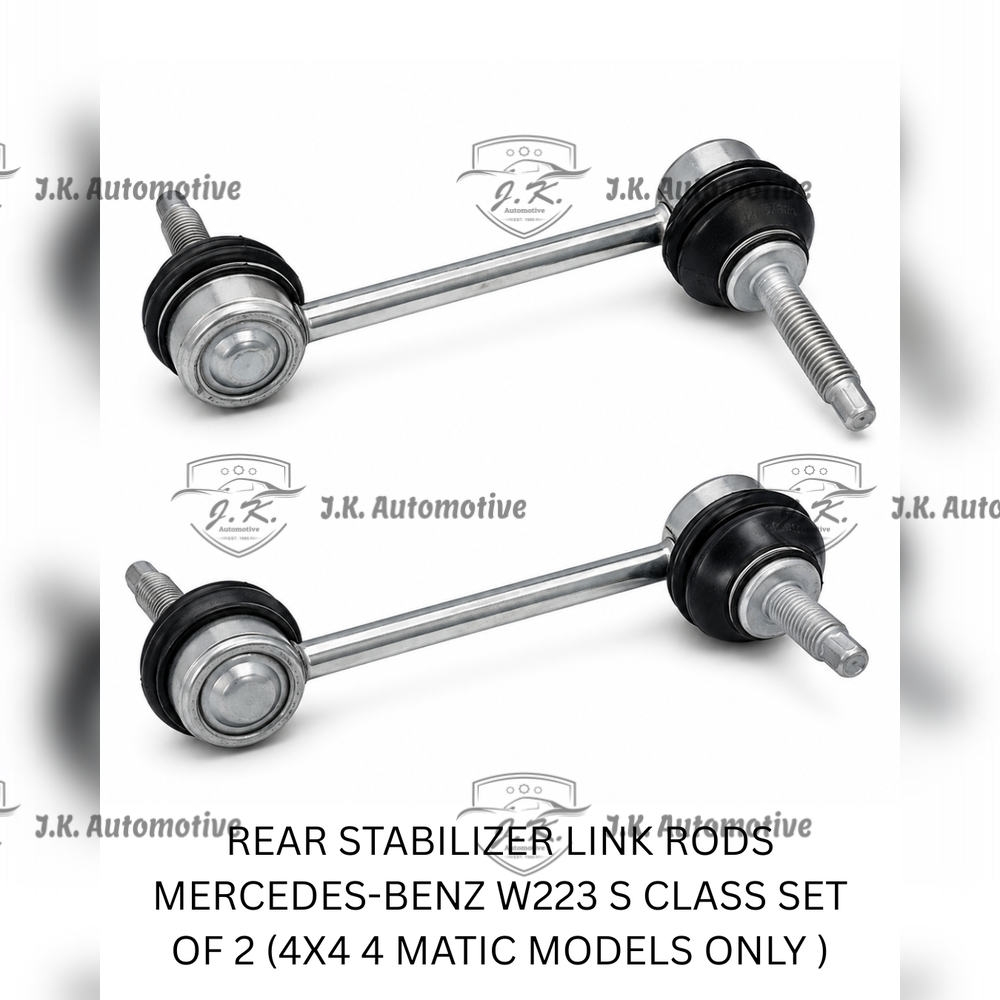
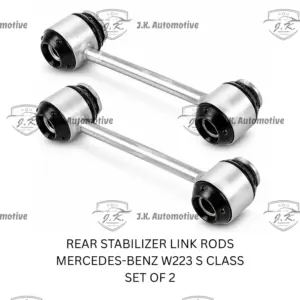
The luxury chassis geometry of the Mercedes-Benz S-Class W223 4MATIC relies on precise anti-roll bar linkages to manage body roll, high-speed stability, and ride comfort. Part numbers A2233262800 and A2233204501 represent the exact left and right rear stabilizer link rod configurations designed specifically for the W223 all-wheel-drive platform equipped with AIRMATIC air suspension and optional rear-axle steering systems. Unlike standard front-wheel-drive or rear-wheel-drive luxury sedans, the W223 4MATIC rear multi-link suspension subjects stabilizer links to multi-directional forces generated by continuous variable damping and active rear wheel articulation up to 10 degrees. These Stokes Germany stabilizer links feature high-tensile forged steel bodies engineered with exact stud-to-stud centers and articulated ball joint angles tailored to match OEM chassis mounting points without binding. Installing incorrect or generic sway bar links can cause bind against the rear axle subframe or trailing arm linkages during full suspension rebound or tight cornering, leading to harsh ride characteristics and potential damage to air suspension height sensors. Utilizing a dedicated set carrying part numbers A2233262800 and A2233204501 guarantees exact fitment, preserves active chassis balance, maintains factory suspension geometry, and ensures that the anti-roll bar transfers lateral cornering loads smoothly across both sides of the rear suspension.
What structural design and material features allow Stokes Germany rear stabilizer links to withstand heavy chassis loads on the W223 S-Class?
Stokes Germany rear stabilizer links for the Mercedes-Benz W223 S-Class are manufactured using heavy-duty engineering standards to handle the substantial curb weight and dynamic forces of the flagship 4MATIC saloon. The link rods are constructed from high-grade forged alloy steel treated with a corrosion-resistant electro-coating that protects against road salt, moisture, and road debris under extreme climate conditions. Inside the articulated end joints, precision-ground heat-treated ball studs rotate within low-friction synthetic polymer seats pre-lubricated with waterproof synthetic grease to ensure smooth articulation and long wear life. To maintain long-term joint integrity, each ball joint is protected by reinforced, flexible chloroprene rubber dust boots secured by high-tension metal retaining rings that prevent dust, grit, and moisture ingress. Protecting the internal ball joints from water contamination prevents corrosion and abrasive friction wear, which are the leading causes of joint play and knocking noises in luxury suspension systems. Furthermore, the threaded studs feature high-torque grade fasteners that retain clamp load against the sway bar and control arm flanges, eliminating micro-movement that could loosen hardware or damage mounting tabs under high lateral loads. This heavy-duty construction guarantees quiet, maintenance-free anti-roll bar operation and long-lasting stability across all road conditions.
What operational symptoms indicate worn rear stabilizer link rods on a Mercedes-Benz W223, and what risks arise if replacement is delayed?
When the rear stabilizer link rods on a Mercedes-Benz W223 4MATIC wear out due to high mileage, torn dust boots, or loss of internal lubrication, the driver will experience distinct mechanical symptoms and compromised chassis handling. The most noticeable symptom is a sharp metallic clunking, rattling, or knocking noise originating from the rear axle area when driving over speed bumps, uneven pavement, or potholes at low speeds. As ball joint play increases, the worn links fail to transfer anti-roll bar torsion immediately, resulting in increased body roll during highway cornering and a floaty, unstable feeling when changing lanes at higher speeds. On vehicles equipped with active AIRMATIC air suspension, excess play in worn sway bar links can cause subtle side-to-side body oscillations that confuse the suspension control module, leading to uneven tire wear across the rear axle. If loose or damaged stabilizer links are neglected, severe ball joint wear can result in complete joint separation from the socket under hard acceleration or evasive maneuvers. A disconnected sway bar link allows the stabilizer bar to float freely, potentially impacting surrounding suspension arms, brake lines, or air suspension height sensor linkages, resulting in expensive secondary damage and compromising vehicle handling safety during emergency maneuvers.
Why is it strongly recommended to replace rear stabilizer link rods in sets of two on the Mercedes-Benz S-Class W223 4MATIC?
Suspension components on luxury all-wheel-drive sedans like the Mercedes-Benz S-Class W223 experience identical stress cycles, mileage degradation, and thermal exposure across both left and right sides of the chassis. When one rear stabilizer link rod exhibits ball joint play, torn rubber boots, or clunking noises, the opposite side link rod has undergone the same mechanical wear and is approaching the end of its functional service life. Replacing only one side creates an imbalance in lateral anti-roll resistance, as the new link rod with stiff ball joints reacts slightly faster than the aged, loosened joint on the opposite side. This uneven resistance can introduce subtle chassis twisting or uneven body lean during high-speed cornering, compromising the smooth, composed driving dynamics expected from an S-Class. Installing the Stokes Germany Rear Stabilizer Link Rod Set of 2 ensures uniform sway bar tension, balanced joint articulation, and symmetrical body roll control across both sides of the rear axle. Additionally, replacing both sides simultaneously saves time and labor costs by performing the service in a single repair session, followed by a complete rear suspension inspection. Installing matching high-performance link rods on both rear corners restores original factory chassis tightness, eliminates suspension noise, and preserves the pristine driving refinement of your W223 4MATIC.
How do Stokes Germany rear stabilizer links accommodate the dynamic movement of the optional rear-axle steering system on the W223 S-Class?
The Mercedes-Benz S-Class W223 can be equipped with an advanced rear-axle steering system that turns the rear wheels by up to 4.5 or 10 degrees depending on driving speed and steering input. This active rear steering changes the physical geometry and angle between the rear control arms and the anti-roll bar constantly while the vehicle is in motion. Stokes Germany rear stabilizer link rods are engineered with high-articulation ball joints that provide extended angular travel without binding or pinching the internal components. Standard aftermarket sway bar links often lack the necessary rotational freedom, which causes the internal ball stud to bottom out against the housing wall when the rear axle steers at maximum lock. When a sway bar link binds due to extreme steering angles, it exerts intense leverage force directly onto the rubber dust boot, causing the boot to stretch, tear, or pull away from its retaining rings. Once the boot is compromised, road grit quickly destroys the internal ball joint, leading to premature failure and noise. The precision ball sockets in Stokes Germany link rods allow full multi-axis rotation across the entire steering sweep and suspension stroke, ensuring that vehicles equipped with rear-axle steering maintain full anti-roll bar functionality, smooth suspension movement, and reliable component durability under all driving maneuvers.
What installation practices should mechanics follow when replacing rear stabilizer links on a W223 AIRMATIC-equipped vehicle?
Replacing the rear stabilizer links on a Mercedes-Benz W223 requires careful adherence to specific mechanical procedures to avoid damaging the AIRMATIC air suspension system or the new link components. Before lifting the vehicle or unbolting suspension components, the technician should disable or lock the AIRMATIC air suspension system via the onboard MBUX menu to prevent automatic leveling adjustments while the car is on the hoist. When removing the old link rods, it is essential to hold the center stud flat or hex socket stationary with a hand tool while loosening the securing nut, preventing the ball stud from spinning inside its socket and damaging surrounding mounting brackets. When installing the new Stokes Germany link rods, mechanics must ensure that the mounting surfaces on both the sway bar and the control arm flanges are thoroughly cleaned of rust, road dirt, and flash burrs to guarantee flat contact. Final tightening of the securing nuts should ideally be performed with the vehicle lowered back onto its wheels or with the rear suspension loaded to normal ride height using a transmission jack. Torquing suspension fasteners at normal ride height prevents static twisting stress on the internal ball joint seats and ensures that the link rod rests in its neutral operating angle, maximizing service life and keeping the ride quiet and smooth.
How do environmental factors and extreme road conditions affect the longevity of rear stabilizer links on the W223 4MATIC?
While Stokes Germany rear stabilizer links are built to demanding OEM standards, environmental exposure and road conditions play a major role in determining their overall service life. Vehicles operated in cold northern climates are regularly exposed to road salt, chemical de-icers, and slush, which accelerate surface corrosion on bare metal parts if protective coatings are scraped off by flying gravel. Chemical contaminants can also attack lower-grade rubber materials over time, causing premature cracking or dry rot on ball joint dust boots. In contrast, driving frequently in extremely hot, dry climates subjects the synthetic rubber boots to high thermal degradation and UV exposure, which can cause the rubber to harden and lose its elastic sealing force against the metal stud. Furthermore, driving regularly on unpaved gravel roads, rough cobblestones, or through active construction zones forces the rear sway bar links to endure constant high-frequency vibration and impact loads. These severe road inputs accelerate the mechanical wear of internal ball seats and increase the likelihood of boot punctures from sharp stones. Inspecting the underside of your W223 during annual service visits allows technicians to check the condition of the rubber dust boots early, ensuring that any torn or leaking link rods are replaced before internal rust damages the anti-roll bar or surrounding suspension hardware.
How does replacing worn rear stabilizer link rods restore the factory ride comfort and noise insulation expected from an S-Class?
The Mercedes-Benz S-Class is globally recognized for its exceptional cabin quietness, smooth ride isolation, and effortless high-speed composure. Worn rear stabilizer link rods ruin this refined luxury experience by introducing harsh metallic clunking noises and microscopic vibrations that transfer directly into the passenger cabin through the rear subframe mounts. Even minor looseness in a sway bar link ball joint can produce loud knocking sounds over small road imperfections because the anti-roll bar acts like an acoustic amplifier, echoing mechanical play throughout the underside of the vehicle. By replacing loose or degraded link rods with a fresh Stokes Germany set, you eliminate mechanical play at the sway bar connections, stopping clunks instantly and restoring silent suspension operation. Beyond noise suppression, fresh stabilizer links restore immediate lateral stiffness during cornering, preventing the delayed body roll and unsettling chassis sway that occurs when loose joints absorb initial torsion. The crisp response of new, pre-greased ball joints allows the AIRMATIC suspension and adaptive dampers to manage body motions precisely without interference from sloppy hardware connections. Installing high-quality replacement link rods brings back the tight, effortless handling, whisper-quiet cabin environment, and regal ride quality that define the Mercedes-Benz W223 S-Class. Chemical contaminants can also attack lower-grade rubber materials over time, causing premature cracking or dry rot on ball joint dust boots. In contrast, driving frequently in extremely hot, dry climates subjects the synthetic rubber boots to high thermal degradation and UV exposure, which can cause the rubber to harden and lose its elastic sealing force against the metal stud.

Reviews
There are no reviews yet.