What is the Stokes Germany Rear Stabilizer Link Rod Set for Mercedes-Benz E-Class W214?
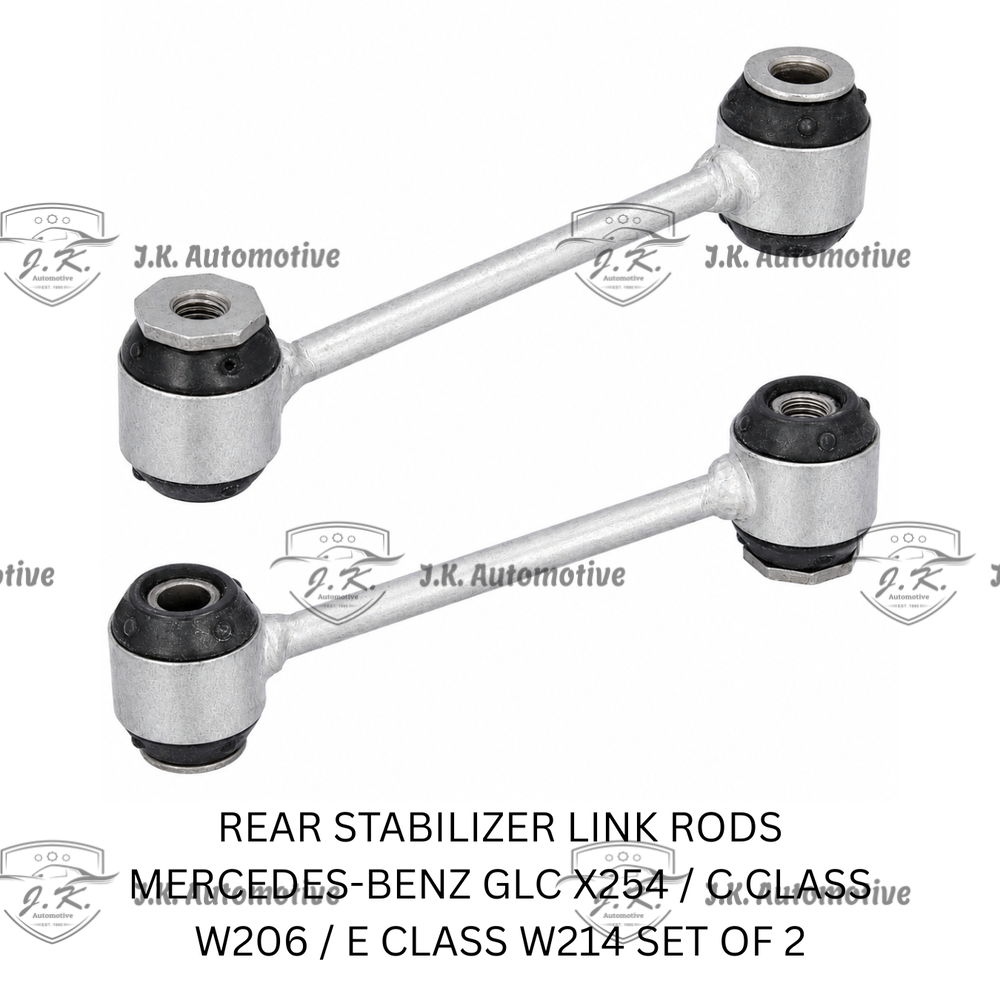
The Stokes Germany Rear Stabilizer Link Rod Set is a premium European-quality suspension replacement set designed for the applicable Mercedes-Benz E-Class W214 rear suspension. This product is supplied as a set of 2 rear stabilizer link rods and corresponds with OEM reference A2063260100. These components connect the relevant rear suspension parts with the anti-roll bar and allow the stabilizer system to operate while the suspension moves during everyday driving. They are also commonly known as sway bar links, sway links, anti roll link rods, anti-roll bar links and stabiliser sway links. The rear suspension of the E-Class W214 continuously moves as the wheels follow the road surface, even when the road appears reasonably smooth. When the vehicle passes over potholes, speed breakers, broken roads, road joints or uneven surfaces, the amount of suspension movement increases and the stabilizer links repeatedly move with it. They also work during cornering because suspension movement and mechanical loads can change between the left and right sides of the vehicle. The anti-roll bar forms an important part of the suspension system and helps manage excessive body movement, while the stabilizer link rods provide the mechanical connection required for this system to work with the moving suspension. Because these components operate whenever the suspension moves, they can perform thousands of movements during normal vehicle use. They are continuously exposed to road vibration, changing mechanical loads and impacts caused by poor road surfaces. Over extended mileage, the existing links can gradually develop joint wear and unwanted clearance. Once excessive play develops, worn links may contribute to knocking, clunking, tapping or rattling sounds from the rear suspension. These noises can become more noticeable while driving slowly over rough roads or speed breakers. Replacing genuinely worn links helps remove unwanted movement caused by those components and restores the proper mechanical connection within this section of the stabilizer system. Stokes Germany provides a premium replacement option for customers looking for European-quality suspension components with emphasis on dependable construction, accurate fitment and practical replacement value. Always verify OEM A2063260100 against the complete VIN and exact suspension specification before ordering or installation.
What are the common symptoms of worn rear stabilizer links on a Mercedes-Benz E-Class W214?
Worn rear stabilizer links on a Mercedes-Benz E-Class W214 can cause or contribute to several noticeable suspension symptoms, with knocking, clunking, tapping or rattling noises from the rear suspension being among the most common reasons to inspect these components. The sway bar links work whenever the rear suspension moves, so their joints repeatedly articulate during everyday driving. When the vehicle travels over potholes, speed breakers, broken roads, road joints or uneven surfaces, each rear wheel responds to the road and the links move as part of the suspension system. During cornering, the anti roll link rods also experience changing mechanical loads because the suspension on one side can move differently from the suspension on the opposite side. Over thousands of kilometres, repeated movement, road vibration and impacts can gradually create normal mechanical wear inside the joints. Once excessive clearance develops, a worn sway link may move slightly whenever the suspension changes position, direction or load. This unwanted movement can produce an audible knock or clunk from the rear of the vehicle. Smaller amounts of wear may sometimes create a lighter tapping or rattling sound. These noises can become easier to hear when driving slowly over small potholes, rough roads or speed breakers because individual suspension movements are more noticeable. However, hearing a rear suspension noise does not automatically mean that the stabilizer links are defective. The E-Class W214 rear suspension contains several other components that can create similar symptoms. Anti-roll bar bushes, suspension arms, suspension bushes, shock absorber or damper components, mountings and related hardware should also be inspected. A technician should physically check the stabiliser sway links for excessive joint play, damaged protective components, loose mounting points or other visible deterioration. If one link is badly worn, the opposite-side component should also be inspected because both normally experience similar mileage and road conditions. When both components show comparable wear, replacing them as a pair can be practical. Correct diagnosis remains important because installing new stabilizer links cannot correct a noise caused by another worn suspension component.
Which OEM number does this Stokes Germany rear stabilizer link set replace for Mercedes-Benz E-Class W214?
This Stokes Germany Rear Stabilizer Link Rod Set corresponds with Mercedes-Benz OEM reference A2063260100 for the applicable Mercedes-Benz E-Class W214 rear suspension. Independent suspension catalogues identify 2063260100 as a rear stabilizer link for the E-Class W214, and the application uses 2 links per vehicle. The OEM reference is important because Mercedes-Benz can use different suspension components according to the exact vehicle specification, production version and suspension configuration. For this reason, A2063260100 should remain exactly as provided and should be verified carefully before ordering. Customers may find the same type of suspension component under several different names depending on the workshop, manufacturer or parts catalogue. Common descriptions include rear stabilizer link, sway bar link, sway link, anti roll link rod, anti-roll bar link and stabiliser sway link. Because terminology can vary, checking the exact OEM reference is generally more reliable than choosing a replacement only from its general product description. These rear links provide a mechanical connection between the relevant suspension components and the anti-roll bar. They repeatedly move when the suspension responds to potholes, speed breakers, broken roads, road joints and uneven surfaces. During cornering, the components also operate under changing mechanical loads as the suspension responds to movement of the vehicle body. Correct dimensions, joint construction, mounting arrangement and overall physical configuration are therefore important for proper installation. Before ordering, the complete 17-character VIN should be checked through an appropriate Mercedes-Benz parts catalogue or provided to an experienced spare-parts specialist. If the original links are accessible, their OEM markings can also be compared wherever possible. A suspension component should never be selected only because it looks similar in an online photograph because different applications can use visually similar components. Correct VIN and OEM verification helps reduce incorrect orders, installation problems and unnecessary returns.
Should both rear stabilizer links be replaced together on a Mercedes-Benz E-Class W214?
Replacing both rear stabilizer links together on a Mercedes-Benz E-Class W214 can be practical when both components have covered similar mileage and show comparable mechanical wear, which is also why this Stokes Germany product is supplied as a set of 2. Technical catalogue data for OEM 2063260100 lists the component at the rear and specifies a quantity of 2 per vehicle. Both rear sway bar links operate within the same stabilizer system and generally experience the same overall vehicle mileage. Every time the Mercedes-Benz travels over potholes, speed breakers, broken roads, road joints or uneven surfaces, the rear suspension moves and the links repeatedly articulate. During cornering and directional changes, these components also experience changing mechanical loads as the suspension responds to vehicle body movement. Over extended use, repeated articulation, vibration and road impacts can gradually create wear inside the joints. If one link develops excessive play, deterioration or physical damage, the corresponding component on the opposite side should also be inspected because it has normally experienced similar mileage and road conditions. This does not mean that both links must automatically be replaced whenever only one component has a problem. The actual mechanical condition of both sides should determine the repair. However, when both stabiliser sway links show comparable deterioration, replacing them during the same repair can be practical and provides matching replacement components on both sides. During replacement, surrounding rear suspension components should also be inspected because anti-roll bar bushes, suspension arms, suspension bushes, dampers, mountings and related hardware can independently develop wear. These components can produce knocking, clunking, tapping or rattling sounds that may initially appear to come from the stabilizer links. Installing new sway links cannot correct a separate fault elsewhere in the suspension. A proper workshop inspection should therefore determine whether both components require replacement and whether any additional suspension work is necessary. Always verify OEM A2063260100 against the complete VIN before installation.
Can worn rear sway bar links cause knocking or clunking noises in a Mercedes-Benz E-Class W214?
Yes, worn rear sway bar links can be one possible cause of knocking, clunking, tapping or rattling sounds from the rear suspension of a Mercedes-Benz E-Class W214, particularly when the vehicle travels over potholes, speed breakers, broken roads, rough surfaces or uneven road joints. These suspension components need to move as the rear suspension articulates while maintaining a controlled mechanical connection with the anti-roll bar. When the links are in good mechanical condition, they allow the required suspension movement without excessive unwanted clearance. During everyday driving, however, the sway links repeatedly move as the rear wheels respond to changes in the road surface. Every pothole, speed breaker and road joint can create additional suspension movement, while cornering produces changing mechanical loads through the stabilizer system. After extended use, gradual wear can develop inside the joints or around their mounting areas. Once excessive clearance appears, an affected anti roll link rod may move slightly whenever the suspension changes direction or load. This unwanted movement can create an audible knock or clunk. A smaller amount of wear may sometimes produce a lighter tapping or rattling sound. These noises can become particularly noticeable while travelling slowly over rough roads because individual suspension movements are easier to hear. However, a knocking sound alone should never be considered definite proof that the stabilizer links have failed. Anti-roll bar bushes, suspension arms, suspension bushes, shock absorber or damper components, suspension mountings and loose hardware can all create similar symptoms. A technician should therefore inspect the complete rear suspension and physically check both stabiliser sway links for excessive play, damaged protective components, loose mounting points or other deterioration. If the links are confirmed to be worn, replacing them helps remove unwanted movement caused specifically by those components. Correct diagnosis is important because new rear stabilizer links cannot solve a suspension noise caused by another defective component.
Why should I choose Stokes Germany rear stabilizer link rods for my Mercedes-Benz E-Class W214?
Stokes Germany rear stabilizer link rods are designed as a premium European-quality replacement option for Mercedes-Benz E-Class W214 owners looking for correctly matched suspension components rather than unknown low-cost aftermarket alternatives. This product is supplied as a set of 2 and corresponds with OEM reference A2063260100. Your current JK Automotive listing identifies this exact Stokes Germany product for the Mercedes-Benz E-Class W214 2024–2026, while independent suspension catalogues also confirm OEM 2063260100 as a rear stabilizer-link application for the W214. Stabilizer links may be relatively small compared with suspension arms, springs or shock absorbers, but they perform an important function whenever the rear suspension moves. Their job is to maintain the required mechanical connection between the relevant suspension components and the anti-roll bar while allowing normal suspension articulation. Every pothole, speed breaker, broken road, road joint and uneven surface creates suspension movement, and the sway bar links repeatedly work with this movement. During cornering, the links also experience changing mechanical loads as the suspension responds to vehicle body movement. Over extended use, existing anti roll link rods can gradually develop joint wear and unwanted play, which may contribute to knocking, clunking, tapping or rattling noises from the rear suspension. When proper inspection confirms that the original components are worn, installing correctly matched replacement links helps restore the proper mechanical connection within this section of the stabilizer system. Stokes Germany positions its suspension range as a European-quality alternative for premium vehicles, with emphasis on dependable construction, accurate vehicle-specific fitment and practical replacement value. Correct compatibility verification remains essential because Mercedes-Benz can use different suspension configurations according to the exact vehicle specification. OEM A2063260100 should therefore always be checked against the complete VIN before ordering. During installation, anti-roll bar bushes, suspension arms, suspension bushes, damper components and mountings should also be inspected because these parts can develop their own wear and produce similar symptoms. For an E-Class W214 owner looking for a premium replacement rear stabilizer link set, this Stokes Germany set provides an appropriate option when OEM and VIN compatibility are confirmed.
What is the function of the rear stabilizer link rods in a Mercedes-Benz E-Class W214?
The rear stabilizer link rods in a Mercedes-Benz E-Class W214 are important suspension components that connect the relevant rear suspension parts with the anti-roll bar and help the stabilizer system work correctly while the vehicle is being driven. These components are also commonly known as sway bar links, sway links, anti roll link rods, anti-roll bar links and stabiliser sway links. During normal driving, the rear suspension continuously moves as the wheels follow changes in the road surface. Even a road that looks smooth contains small joints, bumps and surface changes that cause movement in the suspension. When the E-Class W214 travels over potholes, speed breakers, broken roads or uneven surfaces, the suspension movement becomes greater and the stabilizer links move with it. The links also work during cornering because the suspension on one side of the vehicle can move differently from the suspension on the other side. The anti-roll bar is designed to work as part of the suspension system to help manage excessive body movement, while the link rods provide an important mechanical connection between the bar and the moving suspension. For this reason, the stabilizer links are constantly working whenever the vehicle is driven. Their joints repeatedly move and experience changing loads, road vibration and impacts from poor road surfaces. Over extended mileage, these repeated movements can gradually create normal mechanical wear inside the joints. When the links become worn, excessive clearance or free play can develop. This unwanted movement may contribute to knocking, clunking, tapping or rattling sounds from the rear suspension. Such noises can become more noticeable when the vehicle is driven slowly over rough roads, small potholes or speed breakers. Replacing genuinely worn links helps remove the unwanted movement caused specifically by those components and restores the proper mechanical connection within this section of the stabilizer system. However, replacing the stabilizer links should not be considered a performance modification. Their purpose is to help restore the suspension system toward its intended working condition. Other components such as anti-roll bar bushes, suspension arms, suspension bushes, dampers and mountings should also be inspected when diagnosing rear suspension noises because they can create similar symptoms. For this E-Class W214 application, OEM A2063260100 is catalogued as a rear stabilizer link and two are specified per vehicle. Always verify the complete VIN before ordering.
How long do rear stabilizer link rods normally last on a Mercedes-Benz E-Class W214?
There is no single fixed mileage or number of years after which the rear stabilizer link rods on every Mercedes-Benz E-Class W214 must be replaced because their actual service life depends on road quality, driving conditions, vehicle mileage, driving style, suspension condition and the amount of impact experienced during everyday use. Stabilizer links should normally be replaced according to their actual mechanical condition rather than automatically after a particular mileage. A vehicle that spends most of its time on smooth highways may place less impact stress on its sway bar links than another E-Class that regularly travels over potholes, broken roads, rough surfaces and large speed breakers. Every time the rear wheels move upward or downward, the sway links articulate as part of the suspension system. During cornering, the anti roll link rods also experience changing mechanical loads because the suspension on one side of the vehicle can move differently from the suspension on the opposite side. This means the joints inside these components repeatedly work whenever the vehicle is driven. Road vibration, suspension movement and repeated impacts can gradually create mechanical wear. Dirt, moisture and deterioration around the protective sealing of the joints may also influence their long-term condition. For these reasons, two Mercedes-Benz E-Class W214 vehicles with similar mileage can have very different stabilizer-link conditions. One vehicle may still have links working correctly, while another may already have excessive joint clearance. Instead of assuming that replacement is necessary after a certain number of kilometres, the links should be physically inspected. Common reasons for inspection include knocking, clunking, tapping or rattling sounds from the rear suspension, especially while driving slowly over rough or uneven roads. A technician can inspect the joints for excessive movement, damaged protective components, loose mounting points or other visible deterioration. If one rear stabilizer link is badly worn, the component on the opposite side should also be inspected because both normally experience similar overall mileage and road conditions. When both components show comparable wear, replacing them as a pair can be practical. OEM A2063260100 is listed for the rear of the W214, with two required per vehicle.
Can replacing worn rear stabilizer links improve the handling and stability of a Mercedes-Benz E-Class W214?
Replacing genuinely worn rear stabilizer links can help restore normal suspension response in a Mercedes-Benz E-Class W214 when the existing components have developed excessive joint play, physical damage or mechanical deterioration, but replacement links should not be described as a performance upgrade. Their main purpose is to restore the mechanical connection required by the original suspension system. The anti-roll bar works together with the suspension to help manage excessive body movement, while the stabilizer links provide the connection between the bar and the relevant suspension components. When the E-Class is travelling in a straight line, the suspension is constantly responding to small changes in the road surface. When the vehicle enters a corner, weight naturally transfers and the suspension on one side can move differently from the suspension on the opposite side. The sway bar links work as part of this system and experience changing mechanical loads during these movements. When their joints are in good condition, they maintain the required connection while allowing normal suspension articulation. After extended use, however, repeated movement, vibration and road impacts can gradually create unwanted clearance inside the joints. If the anti roll link rods become badly worn, this excessive movement can reduce the consistency of the mechanical connection and may also contribute to knocking, clunking, tapping or rattling noises. Replacing genuinely worn links removes unwanted movement caused specifically by those components. As a result, the suspension may feel more solid or consistent if the old stabiliser sway links had significant wear. This should be understood as restoring lost suspension function rather than making the vehicle handle beyond its original design. If the existing links are already in good mechanical condition, replacing them with another standard set should not produce a major handling improvement. The overall stability of the Mercedes-Benz E-Class W214 depends on many components, including suspension arms, bushes, dampers, springs, tyres, wheels, tyre pressures and wheel alignment. Therefore, if the vehicle feels unstable, loose or unusual during cornering, the complete suspension system should be inspected rather than assuming that the rear stabilizer links are the only cause.
How can I confirm that Stokes Germany A2063260100 rear stabilizer links are correct for my Mercedes-Benz E-Class W214?
The best and safest way to confirm whether the Stokes Germany A2063260100 rear stabilizer links are correct for your Mercedes-Benz E-Class W214 is to check the OEM reference together with the complete 17-character VIN of your vehicle before placing the order, because the VIN gives the most accurate information about the exact vehicle specification, production details and suspension configuration. For this product, the important OEM reference is A2063260100, and this number should always be kept exactly as provided when checking compatibility. Independent suspension catalogues support this application: Teknorot identifies OEM 2063260100 as a rear suspension stabilizer bar link for the Mercedes-Benz E-Class W214 from 2023 onward and specifies a quantity of 2 per vehicle, while RIW also lists OEM 2063260100 as a rear stabilizer link for the Mercedes-Benz E-Class W214. This gives strong catalogue support for the basic W214 rear application, but the complete VIN should still be checked because choosing suspension parts only from the model name is not the best method. Mercedes-Benz vehicles can have different versions, engines, drivetrains, production specifications and suspension configurations, so the words “E-Class W214” alone should not be treated as the final fitment confirmation. Start by taking the complete 17-character VIN from the vehicle and use it with an appropriate Mercedes-Benz parts catalogue or provide it to an experienced Mercedes-Benz spare-parts specialist. Mercedes-Benz itself uses 17-digit VIN checking for compatibility on its genuine-parts system, which shows why VIN verification is important when selecting vehicle-specific replacement components. After the VIN is checked, compare the resulting original part reference with A2063260100. If A2063260100 is confirmed for the rear stabilizer link application on the individual vehicle, you have a much stronger basis for selecting this Stokes Germany replacement set. If the original rear links are still installed on the vehicle, the old components can also be inspected for an OEM number or identifying reference wherever it is visible. If A2063260100 or its equivalent Mercedes-Benz formatting 206 326 01 00 is found on the original application, that provides another useful confirmation. Customers should also understand that the same suspension component can have several different names in workshops, catalogues and online stores. A2063260100 may be described as a rear stabilizer link, rear sway bar link, sway link, anti roll link rod, anti-roll bar link or stabiliser sway link, so a difference in the general product name does not necessarily mean it is a different type of component. The OEM reference is therefore much more useful than relying only on the wording used in a product title. Technical catalogue data also identifies this application as a rear-position stabilizer link and specifies two pieces per vehicle, which matches this Stokes Germany product being offered as a set of 2. If the old components have already been removed from the vehicle, they can also be physically compared with the replacement parts before installation. The technician can compare the overall length, mounting arrangement, joint positions, thread design and general physical construction. Teknorot, for example, publishes technical data for its 2063260100 cross-reference including a rear position, quantity of two per vehicle, steel construction and dimensional information, which can provide another reference point during identification. However, physical appearance alone should never be the final method of confirming fitment because two suspension components can look almost identical while having different dimensions, mounting details or vehicle applications. This is particularly important with premium European vehicles where visually similar suspension components may be used across related platforms. You should also avoid confirming compatibility only because another Mercedes-Benz model uses the same-looking link. Always check the exact OEM reference and VIN for the individual vehicle. Your current JK Automotive catalogue lists the Stokes Germany Rear Stabilizer Link Rod Set of 2 for Mercedes-Benz E-Class W214 under OEM cross-reference A2063260100 and identifies the application as Mercedes-Benz E-Class W214 2024–2026. Therefore, a customer purchasing this product should ideally provide the complete VIN before ordering, especially if there is any uncertainty about the exact suspension specification. Once the VIN, OEM number and vehicle application all match, the chance of ordering the wrong suspension component becomes much lower. Correct verification is particularly important because fitting an incorrect stabilizer link can create installation problems and unnecessary workshop labour and may require the vehicle to be dismantled again. A professional technician should also inspect the old links and surrounding rear suspension before installation to make sure the diagnosed problem is actually related to the stabilizer links. Anti-roll bar bushes, suspension arms, suspension bushes, dampers, mountings and related hardware can sometimes create similar knocking or rattling noises. Therefore, the correct process is simple: first confirm that the vehicle is a Mercedes-Benz E-Class W214, then obtain the complete 17-character VIN, check the rear stabilizer-link OEM reference for that VIN, confirm that it corresponds with A2063260100, compare the original component where possible, and only then proceed with ordering and installation. When these checks confirm the application, the Stokes Germany A2063260100 Rear Stabilizer Link Rod Set of 2 can be selected as the corresponding replacement product for the applicable Mercedes-Benz E-Class W214 rear suspension.
Why is Stokes Germany a European-quality alternative to Lemförder, FAG, FEBI Bilstein and Meyle for Mercedes-Benz E-Class W214?
Reviews
There are no reviews yet.