What is the Stokes Germany Rear Stabilizer Link Rod Set of 2 for Mercedes-Benz C-Class W205 A2053260317 & A2053260417?
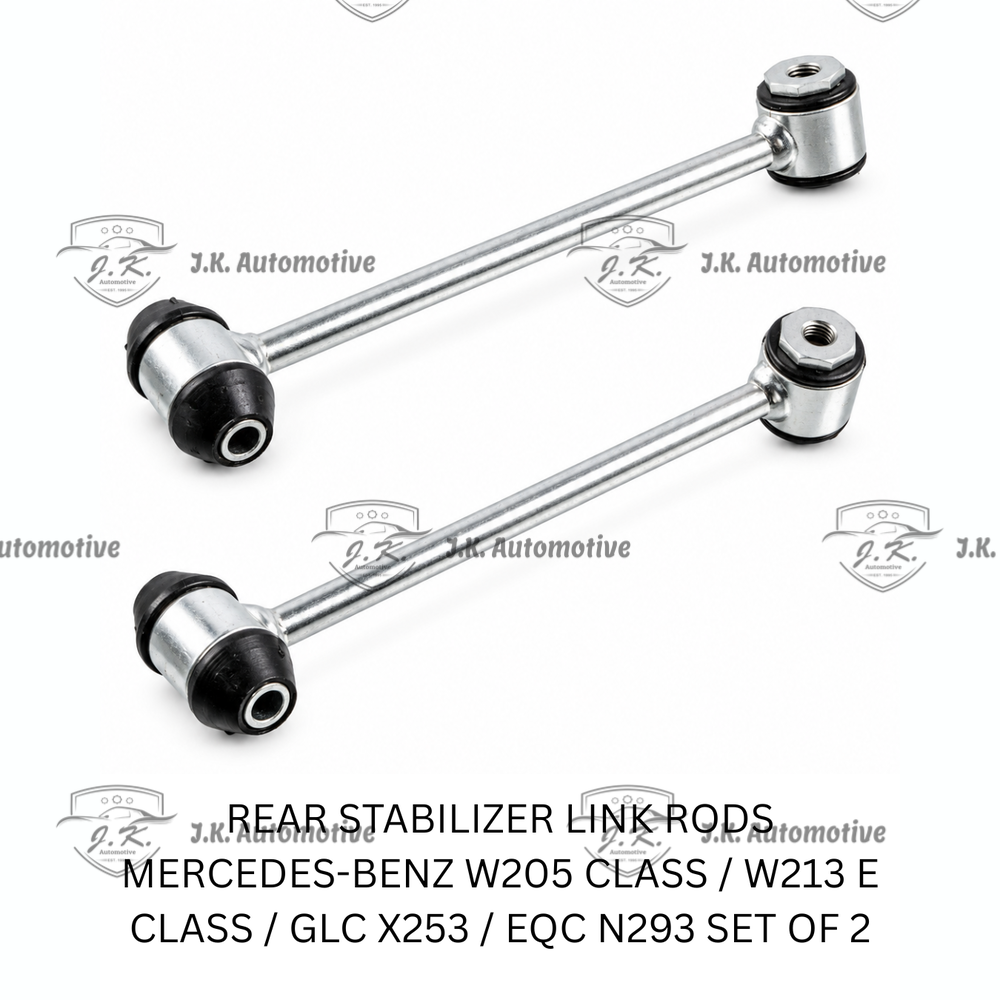
The Stokes Germany Rear Stabilizer Link Rod Set of 2 is a premium aftermarket suspension replacement designed for compatible Mercedes-Benz C-Class W205 models requiring OEM references A2053260317 and A2053260417. This product contains two rear stabilizer link rods for the corresponding sides of the rear suspension, making it convenient to replace the pair when both original components are worn or require attention. These suspension parts are commonly known as Sway bar links, Sway links, Anti roll link rods and Stabiliser sway links. Their main purpose is to provide an important mechanical connection between the rear suspension and the stabilizer or anti-roll bar system. During normal driving, the Mercedes-Benz C-Class W205 suspension continuously responds to cornering, braking, acceleration, potholes, speed breakers, road joints, parking ramps and uneven road surfaces. The Sway bar links work with these suspension movements and maintain the required connection with the stabilizer system. Although stabilizer links are comparatively small suspension components, they operate repeatedly whenever the suspension moves. Over extended vehicle use, constant joint movement, road vibration, pothole impacts, dirt, moisture and general ageing can gradually contribute to wear. When the Sway links become worn, excessive joint play, looseness or deterioration may develop inside the joints. This unwanted movement can contribute to knocking, tapping, rattling or clunking sounds from the rear suspension, particularly while travelling slowly over potholes, speed breakers or broken roads. Worn Anti roll link rods can also create excessive movement at the stabilizer connection points. Replacing confirmed worn Stabiliser sway links restores serviceable components at these particular suspension connections. The Stokes Germany set contains two rear links so the corresponding components can be renewed together when both require replacement. The purpose of replacing these links is to renew worn suspension linkage rather than alter the original ride height or factory suspension characteristics of the C-Class W205. Before ordering, OEM references A2053260317 and A2053260417 should be verified against the exact vehicle VIN, original components or professional Mercedes-Benz parts information. Once compatibility is confirmed and the original links are diagnosed as worn, the Stokes Germany set provides a practical replacement solution for maintaining the Mercedes-Benz C-Class W205 rear stabilizer system.
What do the rear stabilizer link rods do on the Mercedes-Benz C-Class W205?
The rear stabilizer link rods on the Mercedes-Benz C-Class W205 provide an important mechanical connection between the rear suspension and the stabilizer or anti-roll bar system. In simple words, these Sway bar links connect parts of the suspension with the stabilizer system so it can operate as the rear wheels move over different road surfaces. During everyday driving, the left and right rear wheels do not always move in exactly the same way. One wheel may travel over a pothole, speed breaker, broken section or road joint while the opposite wheel remains on a smoother surface. The rear suspension also moves when the C-Class W205 turns, changes direction, accelerates or brakes. The Sway links operate with these suspension movements while maintaining the required stabilizer connection. These components are also commonly called Anti roll link rods, Stabiliser sway links, coupling rods, drop links or stabilizer links. Different workshops, mechanics and automotive catalogues may use different terminology, but these terms describe the same general type of suspension component. When the links remain in serviceable condition, their joints allow the necessary movement while maintaining a controlled connection within the stabilizer system. Because these joints operate repeatedly, normal vehicle use can gradually cause wear. Rough roads, potholes, large speed breakers, road vibration, moisture, dirt and repeated suspension movement can contribute to deterioration. Once excessive clearance develops inside the Sway bar links, their joints may move more than intended. This unwanted movement may contribute to knocking, tapping, rattling or clunking noises from the rear suspension. Such noises may become more noticeable while travelling slowly over uneven roads or when one rear wheel moves differently from the opposite wheel. Replacing confirmed worn Sway links helps restore serviceable mechanical connections within the rear stabilizer system. However, stabilizer links should not automatically be replaced whenever a rear suspension noise appears. Stabilizer bushes, suspension arms, suspension bushes, shock absorbers, mounts and other joints can produce similar symptoms. A professional technician should therefore inspect the complete rear suspension before replacing parts. When A2053260317 and A2053260417 are confirmed for the exact Mercedes-Benz C-Class W205 and the original Anti roll link rods are diagnosed as worn, the Stokes Germany set provides the corresponding rear Stabiliser sway links for the required suspension repair.
What are the common symptoms of worn rear Sway bar links on a Mercedes-Benz C-Class W205?
One of the most common symptoms associated with worn rear Sway bar links on a Mercedes-Benz C-Class W205 is knocking, tapping, rattling or clunking noise coming from the rear suspension. The noise may not occur continuously and can become much easier to notice while travelling slowly over potholes, speed breakers, broken roads, parking ramps or uneven surfaces. The Sway links contain moving joints that operate whenever the rear suspension compresses or extends. When these joints remain in serviceable condition, they allow the required suspension movement while maintaining a controlled mechanical connection with the stabilizer or anti-roll bar system. After extended vehicle use, repeated suspension movement, vibration, pothole impacts, dirt, moisture and normal ageing can gradually contribute to deterioration. Once excessive clearance develops inside the Anti roll link rods, their joints can move more than intended. A small amount of unwanted movement may initially create a light tapping or rattling noise. As the wear increases, this sound can develop into a more noticeable knock or clunk. Worn Stabiliser sway links may become particularly noticeable when one rear wheel travels over an uneven section while the opposite wheel remains relatively level because the two sides of the rear suspension are moving differently. Drivers may also hear suspension noises when crossing a speed breaker at an angle, driving through a rough section of road or entering and leaving a parking ramp. However, a knocking sound from the rear suspension does not automatically prove that the Sway bar links have failed. The Mercedes-Benz C-Class W205 rear suspension contains several components that can create similar symptoms. Stabilizer bushes, suspension arm bushes, shock absorbers, shock mounts and other suspension joints should therefore be inspected at the same time. A professional technician can physically check the Sway links for excessive joint movement, looseness, damaged joint boots or other deterioration. If one rear link is badly worn, the corresponding link on the opposite side should also be inspected because both components generally experience similar vehicle mileage and operating conditions. When A2053260317 and A2053260417 are confirmed for the exact Mercedes-Benz C-Class W205 and the original links require replacement, the Stokes Germany set provides the corresponding pair. Replacing confirmed worn Sway links removes excessive movement from those specific stabilizer connection points and can help restore quieter suspension operation when the worn links are genuinely responsible for the unwanted noise.
Why should the rear Sway links on the Mercedes-Benz C-Class W205 be replaced as a set of 2?
Replacing the rear Sway links as a set of two can be a practical maintenance approach when both corresponding components on the Mercedes-Benz C-Class W205 are worn or approaching replacement condition. The two rear Sway bar links operate within the same stabilizer system and generally experience similar vehicle mileage, age and overall road conditions. Every time the C-Class W205 turns, travels through a pothole, crosses a speed breaker, enters a parking ramp or passes over an uneven road, the rear suspension moves and the Anti roll link rods operate with this movement. Because both components perform the same general function throughout the life of the vehicle, they may develop wear over a similar period. However, the two Stabiliser sway links do not necessarily wear at exactly the same rate. One side may experience stronger pothole impacts, greater contamination, different road loads or more severe operating conditions than the other. If one Sway link develops excessive joint play, looseness or deterioration, the corresponding component on the opposite side should therefore also be inspected. The Stokes Germany product is supplied as a set of two rear stabilizer link rods, making it convenient to renew the corresponding components during the same repair when both require replacement. Installing a complete pair provides serviceable Sway bar links at the corresponding rear stabilizer connection points rather than fitting one new component alongside another heavily used link that may already be developing wear. This can also reduce the possibility of another workshop visit shortly afterward if the opposite old link starts producing similar knocking, tapping, rattling or clunking noises. However, supplying the components as a set of two does not mean serviceable suspension parts should automatically be replaced. A professional technician should inspect both links individually and determine their actual mechanical condition. Stabilizer bushes, suspension arms, suspension bushes, shock absorbers, mounts and surrounding rear suspension components should also be inspected because replacing the Anti roll link rods cannot correct unrelated suspension wear. Correct fitment is equally important. OEM references A2053260317 and A2053260417 should be checked against the exact Mercedes-Benz C-Class W205 VIN or original components before installation. When compatibility is confirmed and both links require replacement, the Stokes Germany set provides a convenient solution for renewing the corresponding rear Stabiliser sway links.
Are A2053260317 and A2053260417 the correct rear stabilizer link references for the Mercedes-Benz C-Class W205?
A2053260317 and A2053260417 should be verified against the exact Mercedes-Benz C-Class W205 before ordering because correct stabilizer-link fitment can depend on the precise vehicle version, production specification and suspension equipment. These are the OEM references supplied for this Stokes Germany Rear Stabilizer Link Rod Set of 2, but the C-Class W205 model designation alone should not be treated as the final compatibility check. Mercedes-Benz can use different suspension components depending on the exact vehicle configuration, which makes VIN-based verification the safest method before purchasing Sway bar links. A professional Mercedes-Benz parts catalogue can be used to compare A2053260317 and A2053260417 against the vehicle identification number. If the original components are still installed, the OEM markings on the existing Sway links can also be checked when they are readable. Matching the original references with A2053260317 and A2053260417 provides another useful confirmation. Customers may find these components described using several different terms. One catalogue may call them rear stabilizer links, while another supplier or workshop may describe them as Sway bar links, Sway links, Anti roll link rods, Stabiliser sway links, coupling rods or drop links. The terminology can vary, but correct OEM matching remains more important than the name used to describe the component. Customers should also avoid selecting replacement links simply because they look similar to the original components. Stabilizer links can have very similar overall shapes while differing in length, thread specifications, joint dimensions, mounting arrangements or other technical details. A visually similar component can therefore still be incorrect for the vehicle. Once the OEM references have been confirmed, the workshop should also establish whether the original links genuinely require replacement. Rear knocking or rattling noises can also originate from stabilizer bushes, suspension arms, shock absorbers, mounts and other joints. Correct parts identification and proper mechanical diagnosis should therefore be completed together. When A2053260317 and A2053260417 are confirmed for the exact Mercedes-Benz C-Class W205 and the original Anti roll link rods are diagnosed as worn, the Stokes Germany Rear Stabilizer Link Rod Set of 2 can be selected for the corresponding replacement.
How can replacing worn rear Anti roll link rods help the Mercedes-Benz C-Class W205 suspension?
Replacing worn rear Anti roll link rods on a compatible Mercedes-Benz C-Class W205 can help restore serviceable mechanical connections within the rear stabilizer system when the original components have developed excessive joint play, looseness, deterioration or physical damage. The rear stabilizer system operates whenever the suspension responds to road surfaces and vehicle movement. Every time the C-Class W205 turns, crosses a speed breaker, travels through a pothole, enters a parking ramp or passes over an uneven road, the rear suspension moves and the Sway bar links operate as part of this movement. When these links remain in serviceable condition, their joints allow the required movement while maintaining a controlled connection between the suspension and the stabilizer or anti-roll bar system. After extended mileage, repeated suspension movement, vibration and impacts from rough road surfaces can gradually contribute to wear inside the Sway links. Once excessive clearance develops, their joints may begin moving more than intended. This unwanted movement can contribute to knocking, tapping, rattling or clunking sounds from the rear suspension, particularly while driving slowly over potholes, speed breakers and broken roads. Replacing confirmed worn Stabiliser sway links removes excessive play from those particular stabilizer connection points and restores serviceable linkage within the system. The purpose of replacement is not to change the C-Class W205 ride height, make the suspension unnecessarily harder or modify the vehicle's original factory handling characteristics. New Sway bar links simply replace worn linkage so the existing stabilizer system can continue operating through properly functioning mechanical connections. The Stokes Germany product contains two rear links corresponding with the specified A2053260317 and A2053260417 product application, making it convenient to renew both Sway links when required. Before installation, both OEM references should be verified against the exact Mercedes-Benz C-Class W205 VIN or original components. During replacement, the workshop should also inspect stabilizer bushes, suspension arms, bushes, shock absorbers, mounts and surrounding suspension components because new Anti roll link rods cannot correct noise or looseness caused by another worn part. When compatibility is confirmed and the original links are diagnosed as worn, replacing them with the Stokes Germany set can help restore serviceable rear Stabiliser sway links and support the controlled, stable and refined suspension operation expected from the Mercedes-Benz C-Class W205.
When should the rear stabilizer link rods be replaced on a Mercedes-Benz C-Class W205?
The rear stabilizer link rods on the Mercedes-Benz C-Class W205 should be inspected when the vehicle begins producing knocking, tapping, rattling or clunking noises from the rear suspension, especially while travelling slowly over potholes, speed breakers, broken roads, parking ramps or uneven surfaces. These Sway bar links operate whenever the rear suspension moves and provide an important connection between the suspension and the stabilizer or anti-roll bar system. During everyday driving, the rear wheels continuously move as the C-Class W205 responds to cornering, braking, acceleration and changing road surfaces. The Sway links move with the suspension and maintain the required connection with the stabilizer system. Over extended mileage, repeated movement, road vibration, pothole impacts, dirt, moisture and normal ageing can gradually contribute to wear inside the link joints. When excessive clearance develops, the Anti roll link rods may begin moving more than intended. This unwanted movement may initially create a light tapping or rattling noise, while greater joint wear can produce a stronger knocking or clunking sound. There is no single fixed mileage at which every Stabiliser sway link needs replacement because service life depends on road conditions, driving style, vehicle use and the condition of surrounding suspension components. A C-Class W205 frequently driven over rough roads, potholes and large speed breakers can place more repeated stress on the rear Sway bar links than a vehicle mainly driven on smooth highways. The actual mechanical condition of the links is therefore more important than mileage alone. A professional technician can inspect both Sway links for excessive joint play, looseness, damaged boots, deterioration or physical damage. If one rear link has substantial wear, the link on the opposite side should also be inspected because both components generally experience similar mileage. Stabilizer bushes, suspension arms, bushes, shock absorbers, mounts and other rear suspension parts should also be inspected because they can produce similar noises. Technical catalogues identify A2053260317 as the rear-left link and A2053260417 as the rear-right link for the W205. When these OEM references are confirmed for the exact vehicle and the original links are diagnosed as worn, replacing them with the Stokes Germany set can restore serviceable rear Stabiliser sway links and remove excessive movement from those particular stabilizer connection points.
Can worn rear Sway bar links cause knocking or rattling noises in the Mercedes-Benz C-Class W205?
Yes, worn rear Sway bar links can be one possible cause of knocking, tapping, rattling or clunking noises from the rear suspension of a Mercedes-Benz C-Class W205. These links contain moving joints that operate repeatedly whenever the suspension responds to changing road conditions. When the joints remain in serviceable condition, the Sway links allow the necessary movement while maintaining a controlled mechanical connection between the suspension and the stabilizer or anti-roll bar system. After extended use, repeated suspension movement, vibration, potholes, speed breakers, dirt, moisture and normal ageing can gradually contribute to joint wear. Once excessive clearance develops, the Anti roll link rods can move more than intended. This unwanted movement may initially create a light tapping or rattling noise. As the wear increases, the sound can develop into a stronger knock or clunk. The noise may become particularly noticeable while travelling slowly over potholes, broken roads, speed breakers, parking ramps or uneven surfaces. Worn Stabiliser sway links may also become easier to hear when one rear wheel travels over an uneven section while the opposite wheel remains relatively level because the two sides of the suspension are moving differently. However, every rear suspension noise should not automatically be blamed on the Sway bar links. The Mercedes-Benz C-Class W205 has several rear suspension components capable of producing similar symptoms. Stabilizer bushes, suspension arms, suspension bushes, shock absorbers, mounts and other joints can also develop wear. A professional workshop should therefore inspect the complete rear suspension before replacement. The technician can physically check both Sway links for excessive movement, loose joints, damaged boots or deterioration. A2053260317 and A2053260417 are documented as the corresponding rear-left and rear-right stabilizer-link references for W205 applications. When these OEM numbers match the exact vehicle and excessive movement is found in the original Anti roll link rods, replacing the worn components can remove unwanted play from those specific stabilizer connections. If the old links are genuinely responsible for the noise, fitting serviceable Stokes Germany Stabiliser sway links can help restore quieter and more controlled rear suspension operation.
Are A2053260317 and A2053260417 the correct rear stabilizer link references for the Mercedes-Benz C-Class W205?
Yes, A2053260317 and A2053260417 are documented rear stabilizer link references for compatible Mercedes-Benz C-Class W205 applications, and an important point is that these two numbers represent the two different sides of the rear suspension. A2053260317 is listed as the rear-left stabilizer link, while A2053260417 is listed as the rear-right stabilizer link. Multiple suspension catalogues independently show this same left-and-right arrangement for the Mercedes-Benz C-Class W205. RIW identifies A2053260317 as “Rear Left” and A2053260417 as “Rear Right,” while Teknorot likewise lists A2053260317 as the W205 rear-left stabilizer link and A2053260417 as the rear-right stabilizer link. In simple words, the Mercedes-Benz C-Class W205 uses these two references as a corresponding pair for compatible applications: A2053260317 for the left side and A2053260417 for the right side. These components are commonly called rear stabilizer links, but workshops and spare-parts suppliers may also describe them as Sway bar links, Sway links, Anti roll link rods, Stabiliser sway links, coupling rods or stabilizer rods. The terminology can change between catalogues, but the function remains essentially the same. These links form part of the rear stabilizer or anti-roll bar system and provide a mechanical connection between the stabilizer system and suspension. Teknorot's technical information specifically identifies A2053260317 as rear left and A2053260417 as rear right for the W205 platform, which supports using the two numbers together as the corresponding rear pair. The distinction between left and right is particularly important when ordering the set. A2053260317 and A2053260417 should not simply be treated as two alternative OEM numbers for one identical component. They identify handed components for opposite sides of the rear suspension. Talosa's Mercedes suspension catalogue independently confirms the same arrangement, describing A2053260317 as the rear-left stabilizer link and A2053260417 as the rear-right stabilizer link. Another steering and suspension catalogue also identifies A2053260317 as “LINK STABILIZER REAR LH” and A2053260417 as “LINK STABILIZER REAR RH” for the Mercedes C-Class W205. This means a product sold as “Stokes Germany Rear Stabilizer Link Rod Set of 2 for Mercedes-Benz C-Class W205 A2053260317 & A2053260417” is logically structured as a pair containing the corresponding left and right rear links for compatible W205 applications. Your product listing also currently identifies the same OEM cross-reference, A2053260317 & A2053260417, for the Mercedes-Benz C-Class W205. When both original Sway bar links require replacement, having the two corresponding references together makes it easier to renew the rear-left and rear-right components as a pair.These rear Sway links perform an important job during normal vehicle operation. As the Mercedes-Benz C-Class W205 travels over potholes, speed breakers, road joints, parking ramps and uneven surfaces, its suspension constantly moves. The Anti roll link rods work as part of the stabilizer system during this movement. When the vehicle changes direction or travels across a surface where the left and right wheels move differently, the stabilizer system helps manage the relationship between the two sides of the suspension. The Stabiliser sway links provide the required mechanical connection that allows this system to operate.Over extended mileage, the joints and connection points in the Sway bar links can develop wear. Rough roads, repeated suspension movement, vibration, pothole impacts, dirt and moisture can contribute to deterioration. When excessive play develops, a driver may notice knocking, tapping, rattling or clunking noises from the rear suspension, particularly when travelling slowly over uneven roads or speed breakers. These symptoms can indicate worn Sway links, but they should not be treated as automatic proof that the stabilizer links have failed because other suspension components can produce similar noises.For this reason, the vehicle should ideally be inspected before replacing A2053260317 and A2053260417. A technician can physically check the rear Anti roll link rods for excessive joint movement, looseness, damaged joint boots or other signs of wear. The stabilizer bushes, suspension arms, suspension bushes, shock absorbers, mounts and other related rear suspension components should also be inspected. If the links are confirmed as the source of excessive movement or noise, replacement of the worn components can restore serviceable connection points within the rear stabilizer system.
Why should the rear Anti roll link rods be replaced as a set of 2 on the Mercedes-Benz C-Class W205?
Replacing the rear Anti roll link rods as a set of two can be a practical maintenance approach when both corresponding components on the Mercedes-Benz C-Class W205 are worn or approaching replacement condition. In this application, the pair is particularly important because A2053260317 corresponds to the rear-left stabilizer link while A2053260417 corresponds to the rear-right stabilizer link. These two Sway bar links operate within the same rear stabilizer system and generally experience similar vehicle mileage, age and road conditions. Every time the C-Class W205 turns, travels through a pothole, crosses a speed breaker, enters a parking ramp or passes over an uneven road, the rear suspension moves and the Stabiliser sway links operate with that movement. Although both components perform the same general function, they do not necessarily wear at exactly the same speed. One side can experience stronger pothole impacts, more road contamination or different operating loads than the other. However, if one Sway link has developed significant joint wear after substantial mileage, checking the link on the opposite side is good workshop practice. When both links are worn, replacing the complete pair provides serviceable Sway bar links at both corresponding rear stabilizer connection points rather than fitting one new component next to another heavily used link. This can also reduce the possibility of another workshop visit shortly afterward if the opposite old link starts producing similar knocking, tapping, rattling or clunking noises. The Stokes Germany product contains the two corresponding rear links for the A2053260317 and A2053260417 application, making pair replacement convenient when both components require attention. Independent product data likewise sells these two references together as a rear-left and rear-right set for the C-Class W205. However, supplying a pair does not mean serviceable suspension components must always be replaced unnecessarily. A technician should inspect both Anti roll link rods individually and determine their actual condition. Stabilizer bushes, suspension arms, shock absorbers, mounts and surrounding components should also be checked because new Stabiliser sway links cannot correct unrelated suspension wear. When both links require replacement and the OEM numbers are confirmed for the exact vehicle, the Stokes Germany set provides a convenient solution for renewing both corresponding rear stabilizer connections.
Why is Stokes Germany a European-quality alternative to Lemförder, FAG, FEBI Bilstein and Meyle for Mercedes-Benz C-Class W205 rear stabilizer links?
Stokes Germany provides an aftermarket replacement option for Mercedes-Benz C-Class W205 owners and professional workshops looking for rear stabilizer links corresponding with OEM references A2053260317 and A2053260417. Lemförder, FAG, FEBI Bilstein and Meyle are established names in the European automotive aftermarket, so customers may naturally compare Stokes Germany with these brands when purchasing Sway bar links, Sway links and other suspension components. For this W205 application, correct OEM matching should always come first. Technical catalogues clearly identify A2053260317 as the rear-left stabilizer link and A2053260417 as the rear-right stabilizer link. When comparing replacement brands, customers should consider the correct OEM application, component dimensions, materials, joint construction, manufacturing consistency, durability, warranty terms, supplier support, availability and overall value. Whether the component is described as a Sway bar link, Sway link, Anti roll link rod, Stabiliser sway link, coupling rod or rear stabilizer link, its purpose remains to provide the required mechanical connection within the stabilizer system. Correct fitment and dependable construction are therefore more important than terminology. Modern European automotive aftermarket supply chains can involve manufacturing and sourcing across multiple automotive-production regions, but the specific manufacturing location can vary by brand, product family and production batch. For that reason, claims that Stokes Germany, Lemförder, FAG, FEBI Bilstein and Meyle use exactly the same factories or production lines for these specific W205 links should only be made when documented for those individual products. For the Mercedes-Benz C-Class W205, the correct approach is first to verify A2053260317 and A2053260417 against the exact vehicle VIN or existing components. Once compatibility is established and the original rear links are diagnosed as worn, the Stokes Germany set provides a practical replacement option for customers looking for the corresponding rear Sway bar links, Sway links, Anti roll link rods or Stabiliser sway links. This allows Stokes Germany to be considered alongside established European aftermarket brands when correct fitment, component quality, warranty support, availability and overall purchase value meet the customer's requirements.


Reviews
There are no reviews yet.