What is the Stokes Germany Rear Stabilizer Link Rod Set for Mercedes-Benz B-Class W247?
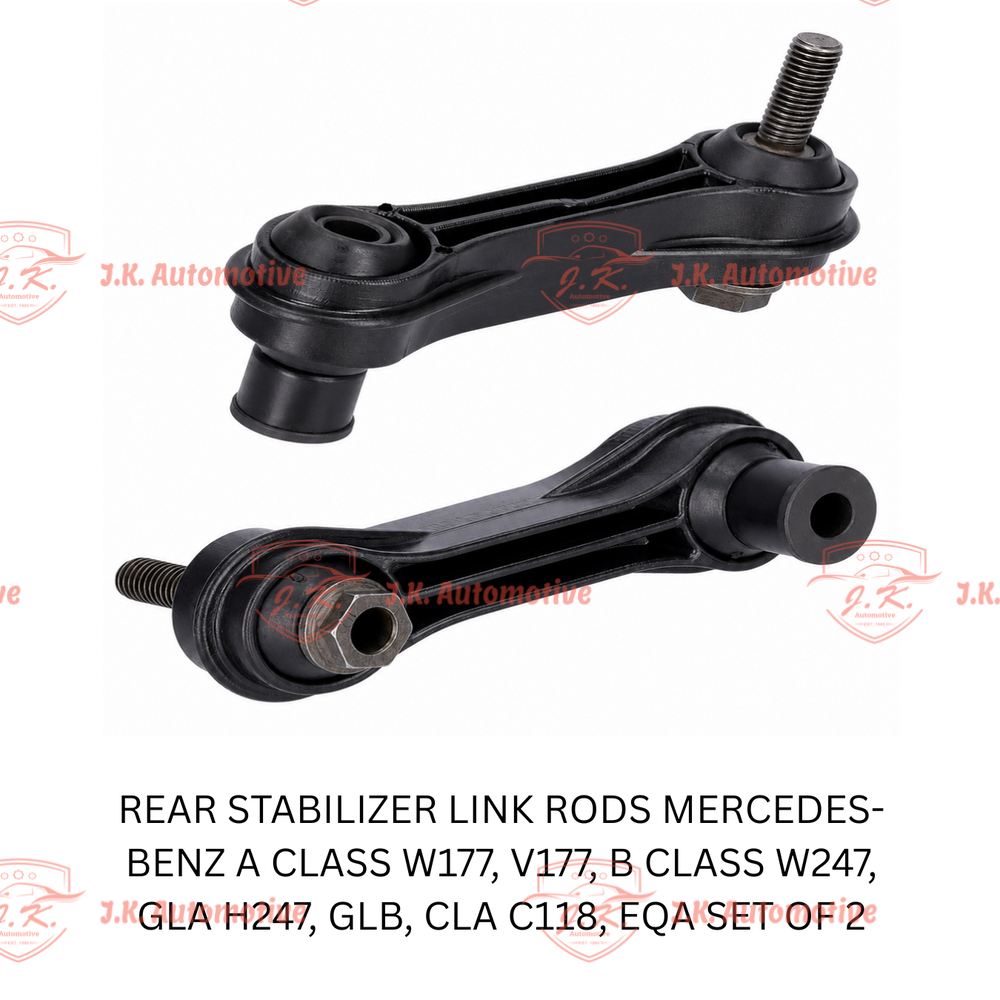
The Stokes Germany Rear Stabilizer Link Rod Set is a premium European-quality suspension replacement set of 2 designed for the applicable Mercedes-Benz B-Class W247 rear suspension and corresponds with OEM reference A2473205300. These rear stabilizer link rods provide the mechanical connection between the relevant rear suspension components and the anti-roll bar while allowing the suspension to move normally during everyday driving. They are also commonly known as rear sway bar links, sway links, anti roll link rods, anti-roll bar links and stabiliser sway links, so different workshops and spare-parts catalogues may use different names for the same general component. Every time the Mercedes-Benz B-Class W247 travels over potholes, speed breakers, road joints, broken roads or uneven surfaces, the rear suspension moves and the stabilizer links repeatedly articulate with it. The links also work during cornering because suspension movement and mechanical loads can differ between the left and right sides when the vehicle changes direction. The anti-roll bar works together with these links as part of the suspension system to help manage excessive body movement while maintaining the intended suspension operation. Because the links repeatedly move whenever the suspension operates, their joints experience thousands of movements throughout normal vehicle use. They are also exposed to road vibration, impacts, dirt, moisture and changing mechanical loads. Over extended mileage, these operating conditions can gradually create mechanical wear and unwanted clearance inside the original link joints. Once excessive joint play develops, worn rear stabilizer links may contribute to knocking, clunking, tapping or rattling noises from the rear suspension, particularly when driving slowly over rough roads, small potholes or speed breakers. Replacing genuinely worn components helps remove unwanted movement caused specifically by those links and restores the proper mechanical connection within this section of the rear stabilizer system. Stokes Germany provides a premium replacement option for Mercedes-Benz owners looking for European-quality steering and suspension components with emphasis on dependable construction, accurate vehicle-specific fitment and practical replacement value. Correct diagnosis is important because rear anti-roll bar bushes, suspension arms, suspension bushes, dampers, mountings and other suspension components can produce similar symptoms. Always verify OEM reference A2473205300 against the complete 17-character VIN and exact Mercedes-Benz B-Class W247 suspension specification before ordering or installation.
What are the common symptoms of worn rear stabilizer links on a Mercedes-Benz B-Class W247?
Worn rear stabilizer links on a Mercedes-Benz B-Class W247 can cause or contribute to several noticeable suspension symptoms, with knocking, clunking, tapping or rattling noises from the rear suspension being among the most common reasons to inspect these components. The rear sway bar links operate whenever the suspension moves, so their joints repeatedly articulate throughout normal everyday driving. When the Mercedes-Benz B-Class W247 travels over potholes, speed breakers, broken roads, road joints or uneven surfaces, each rear wheel responds to changes in the road and the stabilizer links move as part of the suspension system. During cornering, the sway links also experience changing mechanical loads because suspension movement can differ between the left and right sides of the vehicle. Over thousands of kilometres, repeated suspension movement, road vibration and impacts can gradually create mechanical wear inside the joints. Once excessive clearance develops, a worn anti roll link rod may move slightly whenever the suspension changes position, direction or load. This unwanted movement can produce a noticeable knocking or clunking sound from the rear suspension. Smaller amounts of joint wear may produce lighter tapping or rattling noises. These sounds can become particularly noticeable when the B-Class is driven slowly over rough roads, small potholes or speed breakers because individual suspension movements are easier to hear. The rear suspension may also begin to sound less solid or refined when significant joint wear has developed. However, hearing a knocking or rattling noise does not automatically prove that the stabiliser sway links are defective. Several other components within the Mercedes-Benz B-Class W247 rear suspension can create similar symptoms. Rear anti-roll bar bushes, suspension arms, suspension bushes, dampers, mountings and related hardware should therefore also be inspected. A technician should physically check both rear stabilizer links for excessive joint movement, damaged protective components, loose mounting points, deterioration, corrosion or other physical damage. If one link is badly worn, the corresponding component on the opposite side should also be inspected because both generally experience similar overall mileage and road conditions. This does not mean both links must automatically be replaced whenever only one develops a fault, but replacing the pair can be practical when both show comparable wear. Correct diagnosis remains important because fitting new rear sway links cannot correct a suspension noise caused by another defective component. This Stokes Germany product is supplied as a set of 2. Always verify OEM A2473205300 against the complete vehicle VIN before ordering.
Which OEM number does this Stokes Germany rear stabilizer link set replace for Mercedes-Benz B-Class W247?
This Stokes Germany Rear Stabilizer Link Rod Set corresponds with the provided Mercedes-Benz OEM reference A2473205300 for the applicable Mercedes-Benz B-Class W247 rear suspension, and this OEM reference should remain exactly as provided when preparing the product listing, checking compatibility or ordering the replacement components. OEM numbers are particularly important when identifying Mercedes-Benz suspension parts because vehicles belonging to the same model family can sometimes use different components according to production specification, engine, drivetrain, suspension configuration, equipment package or other vehicle-specific details. For this reason, simply knowing that the vehicle is a Mercedes-Benz B-Class W247 should not be treated as the only compatibility check. Customers may also see this component described using several different names depending on the manufacturer, workshop or spare-parts catalogue. Common descriptions include rear stabilizer link, rear sway bar link, sway link, anti roll link rod, anti-roll bar link and stabiliser sway link. Because terminology can vary, checking OEM reference A2473205300 provides a stronger method of identifying the required replacement component than relying only on the general product description. Before purchasing this Stokes Germany set, the complete 17-character VIN should ideally be checked through an appropriate Mercedes-Benz electronic parts catalogue or provided to an experienced Mercedes-Benz spare-parts specialist. The rear stabilizer-link reference returned for that exact vehicle should then be compared carefully with A2473205300. If the original links remain installed, their identifying markings can also be checked wherever visible. If the original components have already been removed, the workshop can additionally compare their overall dimensions, mounting arrangement, joint positions, thread details and physical construction with the replacement links before installation. However, visual appearance alone should never be treated as final compatibility confirmation because two suspension components can appear very similar while having different dimensions, mounting details or applications. If A2473205300 has been revised or superseded for a particular vehicle specification, that relationship should also be confirmed using vehicle-specific parts data rather than assumed. Correct VIN and OEM verification helps reduce incorrect orders, unnecessary returns, additional workshop labour and installation problems. Therefore, retain A2473205300 exactly as supplied and verify it against the exact Mercedes-Benz B-Class W247 before installation.
Should both rear stabilizer link rods be replaced together on a Mercedes-Benz B-Class W247?
Replacing both rear stabilizer link rods together on a Mercedes-Benz B-Class W247 can be a practical repair when both existing components have covered similar mileage and show comparable mechanical wear, which is also why this Stokes Germany product is supplied as a set of 2. The left and right rear sway bar links operate within the same stabilizer system and generally experience the same overall vehicle mileage, although their exact condition can differ depending on pothole impacts, road quality, driving conditions and previous suspension repairs. Every time the B-Class W247 travels over potholes, speed breakers, broken roads, road joints or uneven surfaces, the rear suspension moves and the stabilizer links repeatedly articulate. During cornering and directional changes, the anti roll link rods also experience changing mechanical loads because suspension movement can differ between the left and right sides. Over extended use, repeated articulation, vibration and road impacts can gradually create mechanical wear inside the joints. If one link develops excessive joint play, damaged protective components, deterioration or another mechanical problem, the component on the opposite side should also be inspected because it has generally experienced similar mileage and operating conditions. This does not mean that both stabiliser sway links must automatically be replaced every time only one component becomes defective. The actual mechanical condition of both sides should determine the repair. However, when both components show noticeable wear or have covered substantial mileage together, replacing them during the same repair can be practical. Installing a matching pair means both sides receive replacement components at the same time rather than leaving one heavily used link beside one new component. During replacement, the technician should also inspect the rear anti-roll bar bushes because worn bushes can create knocking or rattling noises similar to worn stabilizer links. Suspension arms, suspension bushes, dampers, mountings and related hardware should also be checked for excessive movement, deterioration or damage. If another suspension component is responsible for the noise, installing new rear sway links alone will not solve the problem. Correct installation is equally important, and all mounting points and related hardware should be properly inspected and secured. For this Stokes Germany set, the supplied OEM reference is A2473205300. Always verify this reference against the complete VIN and exact Mercedes-Benz B-Class W247 suspension specification before installation.
Can worn rear sway bar links cause knocking or clunking noises in a Mercedes-Benz B-Class W247?
Yes, worn rear sway bar links can be one possible cause of knocking, clunking, tapping or rattling noises from the rear suspension of a Mercedes-Benz B-Class W247, particularly when the vehicle travels over potholes, speed breakers, broken roads, rough surfaces or uneven road joints. The rear sway links have to articulate as the suspension moves while maintaining the required mechanical connection with the anti-roll bar. When their joints remain in good mechanical condition, they allow the necessary suspension movement without excessive unwanted clearance. During everyday driving, however, these components repeatedly move as the rear wheels respond to changes in the road surface. Every pothole, speed breaker and uneven road section can create additional suspension movement, while cornering creates changing mechanical loads through the stabilizer system. Over extended mileage, this repeated movement can gradually create mechanical wear inside the joints. Once excessive clearance develops, an affected anti roll link rod can move slightly whenever the suspension changes direction, position or load. This unwanted movement can create an audible knock or clunk from the rear suspension. Smaller amounts of wear may produce lighter tapping or rattling noises instead. These sounds can become particularly noticeable when the B-Class is driven slowly over uneven surfaces because individual suspension movements are easier to hear. However, a knocking sound alone should never be treated as definite proof that the stabilizer links have failed. Several other components in the Mercedes-Benz B-Class W247 rear suspension can produce similar symptoms. Rear anti-roll bar bushes can develop wear and allow unwanted movement. Suspension-arm bushes and joints can also develop clearance. Damper components and their mountings may create noises, while loose suspension hardware can produce knocking even when the major components remain usable. A technician should therefore inspect the complete rear suspension before deciding which components require replacement. Both stabiliser sway links should be physically checked for excessive joint play, damaged protective components, loose mounting points, corrosion or other deterioration. If the links are confirmed as the source of the problem, replacing them helps remove unwanted movement caused specifically by those components. This Stokes Germany set provides 2 rear stabilizer link rods corresponding with OEM reference A2473205300. Correct OEM and VIN verification should always be completed before ordering or installation.
Why should I choose Stokes Germany rear stabilizer link rods for my Mercedes-Benz B-Class W247?
Stokes Germany rear stabilizer link rods are positioned as a premium European-quality replacement option for Mercedes-Benz B-Class W247 owners who want dependable suspension components with accurate vehicle-specific fitment rather than unknown low-cost aftermarket alternatives. This product is supplied as a set of 2 rear stabilizer link rods and corresponds with OEM reference A2473205300. Stabilizer links may appear relatively small compared with suspension arms, springs or dampers, but they perform an important function whenever the rear suspension moves. Their job is to maintain the required mechanical connection between the relevant suspension components and the anti-roll bar while allowing normal suspension articulation. Every time the Mercedes-Benz B-Class W247 travels over a pothole, speed breaker, broken road, road joint or uneven surface, the rear suspension moves and the sway bar links repeatedly articulate. During cornering, the sway links also experience changing mechanical loads as the suspension responds to movement of the vehicle body. Over extended use, the existing anti roll link rods can gradually develop joint wear and unwanted clearance, which may contribute to knocking, clunking, tapping or rattling noises from the rear suspension. When proper inspection confirms that the original components are worn, installing correctly matched replacement links helps restore the mechanical connection within this section of the stabilizer system. Stokes Germany focuses on premium steering and suspension replacement components for European vehicles, with emphasis on dependable construction, accurate fitment and practical replacement value. According to the manufacturing and sourcing information provided for Stokes Germany, the brand works with established manufacturing sources across Germany, Poland, Russia, Turkey and England, supporting its European-quality positioning. Customers searching for rear sway bar links, sway links, anti roll link rods, anti-roll bar links or stabiliser sway links can therefore consider Stokes Germany as a premium replacement choice. Selecting a quality replacement component is only one part of a correct suspension repair, so the existing links should first be confirmed as worn and the anti-roll bar bushes, suspension arms, suspension bushes, dampers and mountings should also be inspected. Correct installation is equally important for dependable operation. For this Mercedes-Benz B-Class W247 application, the supplied OEM reference is A2473205300. This number should remain unchanged and should always be checked against the complete VIN and exact vehicle specification before ordering. When the OEM reference and VIN confirm compatibility, this Stokes Germany set provides a premium European-quality replacement solution for the applicable Mercedes-Benz B-Class W247 rear stabilizer-link application.
What is the function of rear stabilizer link rods in a Mercedes-Benz B-Class W247?
The rear stabilizer link rods in a Mercedes-Benz B-Class W247 perform an important function within the rear suspension system because they provide the mechanical connection between the relevant suspension components and the rear anti-roll bar while allowing normal suspension movement during everyday driving. These components are also commonly known as rear sway bar links, sway links, anti roll link rods, anti-roll bar links and stabiliser sway links. When the Mercedes-Benz B-Class W247 travels over normal roads, potholes, speed breakers, broken roads, road joints or uneven surfaces, the rear wheels move according to changes in the road and the stabilizer links repeatedly articulate as part of the suspension system. During cornering, suspension movement can differ between the left and right sides of the vehicle, creating changing mechanical loads through the stabilizer system. The anti-roll bar works as part of the suspension to help manage excessive body movement, while the stabilizer links provide the mechanical connection required for the bar to work together with the moving suspension. Because the rear sway bar links operate whenever the suspension moves, their joints experience thousands of repeated movements throughout normal vehicle use. They are also exposed to road vibration, pothole impacts, dirt, moisture and changing mechanical loads. Over extended mileage, these operating conditions can gradually create wear inside the joints or connecting points. Once excessive clearance develops, the links may no longer maintain the same controlled mechanical connection they provided when in good condition. This unwanted movement may contribute to knocking, clunking, tapping or rattling noises from the rear suspension, especially when the B-Class is driven slowly over rough roads, small potholes or speed breakers. Replacing genuinely worn anti roll link rods helps remove unwanted movement caused specifically by these components and restores the proper mechanical connection within this section of the rear stabilizer system. Replacement should be viewed as restoring normal suspension operation rather than modifying the original handling characteristics of the vehicle. Rear anti-roll bar bushes, suspension arms, suspension bushes, dampers, mountings and related hardware should also be inspected because they can produce similar symptoms. Mercedes-Benz identifies A2473205300 as a rear left/right component, and independent suspension catalogues specifically list it for the B-Class W247 rear axle. Always verify the exact OEM reference against the complete 17-character VIN before ordering.
How long do rear stabilizer link rods normally last on a Mercedes-Benz B-Class W247?
There is no single fixed mileage, number of years or universal replacement interval for the rear stabilizer link rods on every Mercedes-Benz B-Class W247 because their actual service life depends on road quality, total vehicle mileage, driving conditions, driving style, suspension condition, environmental exposure and the amount of impact the suspension experiences during normal use. Rear stabilizer links should therefore normally be treated as condition-based suspension components rather than parts that automatically require replacement after a predetermined number of kilometres. A Mercedes-Benz B-Class W247 mainly driven on smooth highways may place less impact stress on its rear sway bar links than another vehicle regularly driven over potholes, broken city roads, rough surfaces and large speed breakers. Every time a rear wheel moves upward or downward, the sway link moves as part of the stabilizer system. During cornering, the anti roll link rods also experience changing mechanical loads because suspension movement on one side can differ from movement on the opposite side. This means these components repeatedly operate whenever the vehicle is driven. Over thousands of kilometres, road vibration, repeated suspension movement and pothole impacts can gradually create mechanical wear. Dirt, moisture and deterioration around the component can also influence long-term service life. This explains why two Mercedes-Benz B-Class W247 vehicles with similar mileage can have very different stabilizer-link conditions. One vehicle may still have links in acceptable mechanical condition while another may already have developed excessive clearance or deterioration. Mileage alone should therefore not determine whether replacement is necessary. Physical inspection provides a much better indication of component condition. Common reasons for inspecting the rear links include knocking, clunking, tapping or rattling sounds from the rear suspension, particularly when travelling slowly over potholes, rough roads or speed breakers. A technician should physically check the links for unwanted movement, damaged components, loose mounting points, deterioration, corrosion or physical damage. If one component shows significant wear, the opposite-side link should also be inspected because both generally experience similar overall mileage. When both show comparable deterioration, replacing them as a pair can be practical. The surrounding rear suspension should also be inspected because anti-roll bar bushes, suspension arms, suspension bushes, dampers and mountings can independently produce similar noises. Therefore, actual mechanical condition rather than an assumed mileage interval should determine replacement.
Can replacing worn rear stabilizer links improve the handling and stability of a Mercedes-Benz B-Class W247?
Replacing genuinely worn rear stabilizer links can help restore normal suspension response and handling consistency in a Mercedes-Benz B-Class W247 when the existing components have developed excessive clearance, deterioration or physical damage, but standard replacement stabilizer links should not be considered a performance upgrade because their primary purpose is to restore the mechanical connection required by the original suspension system. The rear anti-roll bar works as part of the vehicle's suspension system, while the rear sway bar links provide the connection between the bar and the relevant suspension components. During normal driving, the rear suspension continuously responds to changes in the road surface. When the vehicle enters a corner, vehicle weight naturally transfers and suspension movement on one side can differ from movement on the opposite side. The anti-roll bar works as part of the suspension system to help manage excessive body movement, while the sway links provide the mechanical connection required for this system to operate. When the links remain in good mechanical condition, they maintain this connection while allowing the required suspension movement. After extended use, however, repeated articulation, vibration and road impacts can gradually create unwanted clearance or wear. A badly worn anti roll link rod may therefore reduce the consistency of this mechanical connection and may contribute to knocking, clunking, tapping or rattling noises from the rear suspension. If inspection confirms that the stabiliser sway links are genuinely worn, replacing them removes unwanted movement caused specifically by those components. As a result, the rear suspension may feel more solid or consistent compared with how it felt when significant link wear was present. This should be understood as restoring lost suspension function rather than increasing the Mercedes-Benz B-Class W247's handling capability beyond its intended specification. If the existing links remain mechanically sound, simply replacing them with another standard set should not create a major handling improvement. Overall handling and stability also depend on suspension arms, bushes, dampers, springs, tyres, wheels, steering components and wheel alignment. Therefore, if the B-Class feels unstable, loose or unusual during cornering, the complete suspension should be inspected instead of automatically assuming that the rear stabilizer links are the only cause. For this application, A2473205300 is catalogued as a rear stabilizer link for the B-Class W247.
How can I confirm that Stokes Germany A2473205300 rear stabilizer links are correct for my Mercedes-Benz B-Class W247?
The safest way to confirm whether Stokes Germany A2473205300 rear stabilizer links are correct for your Mercedes-Benz B-Class W247 is to verify the OEM reference together with the complete 17-character VIN and exact suspension specification before ordering, because selecting Mercedes-Benz suspension components only from the model name, production year or product photograph is not sufficiently precise. First confirm that your vehicle is a Mercedes-Benz B-Class W247 and obtain the complete VIN from the vehicle or registration documentation. The VIN should then be checked through an appropriate Mercedes-Benz electronic parts catalogue or provided to an experienced Mercedes-Benz spare-parts specialist. The rear stabilizer-link reference returned for the exact vehicle should then be compared carefully with A2473205300. There is strong catalogue support for this application: Teknorot lists A2473205300 as a rear suspension stabilizer bar link for the Mercedes-Benz B-Class W247 and specifies a quantity of two per vehicle, while Sidem identifies OE reference A2473205300 as a rear-axle stabilizer link and includes the B-Class W247 in its application list. Mercedes-Benz's own parts catalogue also identifies A2473205300 as a rear left-and-right torsion-bar linkage and includes the B-Class among the listed model families, although that particular Mercedes catalogue entry displays series 246 in its summary, making exact VIN checking especially useful for a W247 vehicle. If the original links remain installed, their identifying markings can also be checked wherever visible. If the old components have already been removed, a technician can additionally compare their dimensions, mounting arrangement, thread details and physical construction with the replacements. Visual comparison should only be an additional check because two suspension components can look very similar while having different specifications. Customers may also find this component described as a rear stabilizer link, rear sway bar link, sway link, anti roll link rod, anti-roll bar link or coupling rod. Different terminology does not automatically mean it is a different part. Therefore, the correct confirmation process is to identify the W247 vehicle, check its complete VIN, confirm the rear suspension specification and match the required OEM number against A2473205300 before ordering or installation.
Why is Stokes Germany a European-quality alternative to Lemförder, FAG, FEBI Bilstein and Meyle for Mercedes-Benz B-Class W247?


Reviews
There are no reviews yet.