What is the Stokes Germany Rear Stabilizer Link Rod Set of 2 for Jaguar XJ X351?
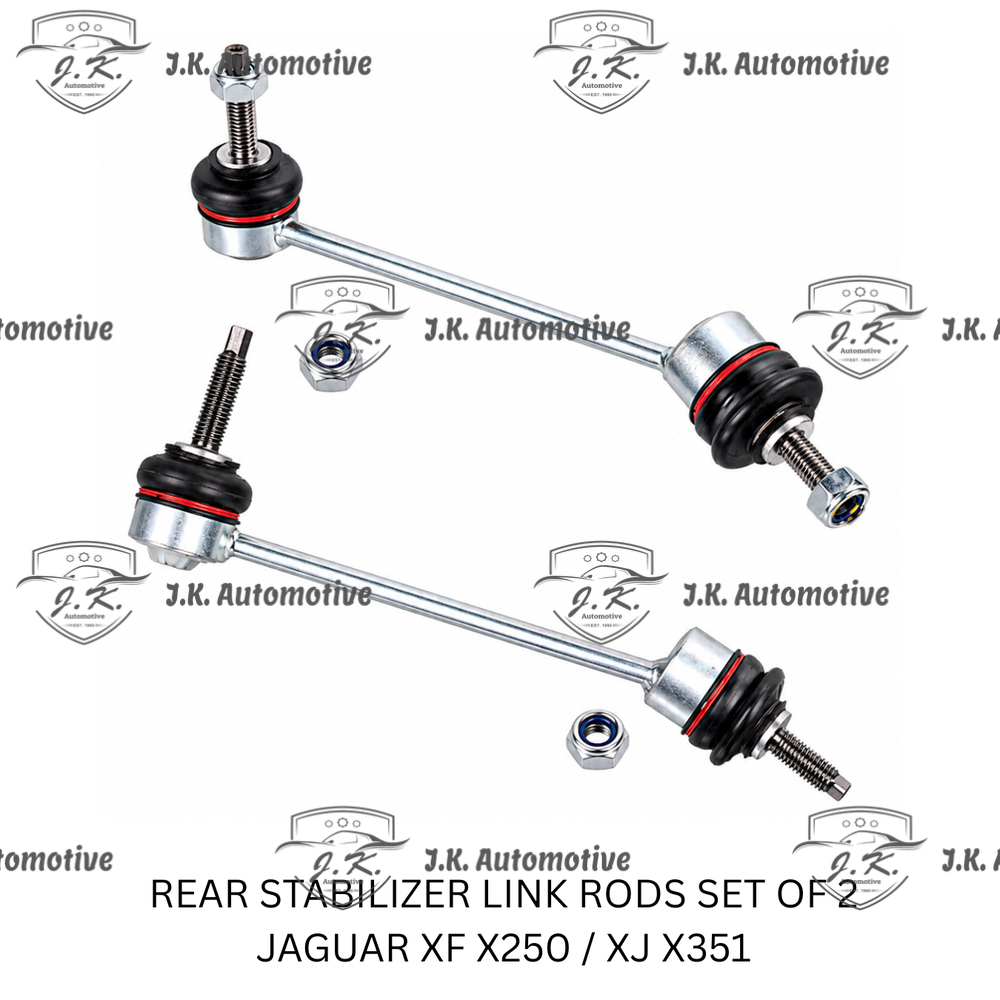
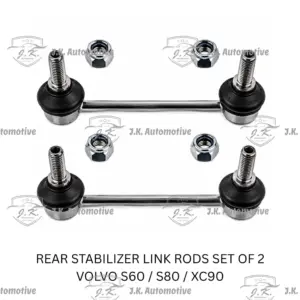
The Stokes Germany Rear Stabilizer Link Rod Set of 2 for Jaguar XJ X351 is a premium aftermarket suspension replacement pair designed for compatible Jaguar XJ X351 applications requiring rear stabilizer-link references C2C18572 / XR81693 and C2C18571 / XR81692, with the complete set providing the corresponding rear-left and rear-right components required within the vehicle's rear stabilizer or anti-roll-bar arrangement. The supplied references are side-specific rather than four alternative numbers for one universal component: C2C18572 and XR81693 correspond to the rear-left stabilizer link, while C2C18571 and XR81692 correspond to the rear-right stabilizer link. RIW specifically lists C2C18572 / XR81693 for its Jaguar XJ X351 rear-left link and C2C18571 / XR81692 for its rear-right link, with XJ X351 2010–2019 included in both applications. MEYLE independently confirms the same arrangement, identifying C2C18572 / XR81693 as Rear Axle Left and C2C18571 / XR81692 as Rear Axle Right for the XJ X351 application, while recommending replacement in pairs. These suspension components are commonly called Sway bar links, Sway links, Anti roll link rods, Stabiliser sway links, rear drop links, anti-roll bar links, coupling rods or stabilizer end links, so workshops and customers may use several different names for this type of component. The rear Sway bar links form part of the XJ X351's rear stabilizer arrangement and repeatedly articulate as the suspension responds to cornering, potholes, speed breakers, broken roads, uneven surfaces and differences in vertical movement between the rear wheels. If the rear-left wheel enters a pothole while the rear-right wheel remains on comparatively smooth pavement, the two sides of the suspension experience different vertical movement and the Sway links articulate within the stabilizer arrangement. Crossing a speed breaker diagonally creates another common operating condition because one rear wheel reaches the raised surface before the opposite wheel. Uneven parking ramps, expansion joints, damaged road edges and broken pavement can produce similar repeated articulation. The Anti roll link rods therefore complete a very large number of movement cycles throughout normal vehicle operation while simultaneously experiencing road vibration and changing suspension loads. Because the Stabiliser sway links are mounted underneath the vehicle, they are additionally exposed to road dirt, dust, moisture, water and changing environmental conditions. Over extended service, deterioration can gradually develop within the joints, protective components or mounting interfaces. Excessive joint clearance may eventually permit unwanted movement and can contribute to tapping, rattling, knocking or clunking noises from the rear suspension. However, such noises should not automatically be diagnosed as stabilizer-link failure because stabilizer-bar bushes, rear control-arm bushes, suspension joints, shock absorbers, shock mounts and mounting hardware can produce similar symptoms. When inspection confirms that both links require replacement, the Stokes Germany set of 2 provides the corresponding side-specific rear pair. Your existing product listing also uses this exact reference combination for Jaguar XJ X351 2010–2019. Exact fitment should still be confirmed using the VIN, original installed references and vehicle suspension specification before ordering.
What do the rear Sway bar links do on the Jaguar XJ X351?
The rear Sway bar links on the Jaguar XJ X351 provide the mechanical connections required within the vehicle's rear stabilizer or anti-roll-bar arrangement and repeatedly articulate as the suspension responds to cornering, potholes, speed breakers, broken roads and differences in vertical movement between the rear-left and rear-right wheels, making these relatively compact suspension components an important working part of the overall rear suspension system. These components are also commonly known as Sway links, Anti roll link rods, Stabiliser sway links, rear drop links, anti-roll bar links, coupling rods and stabilizer end links. During everyday driving, the two rear wheels do not always move vertically by exactly the same amount at exactly the same time. If one rear wheel enters a pothole while the opposite wheel remains on smoother pavement, the two sides of the rear suspension experience different vertical movement. Crossing a speed breaker diagonally creates another common example because one rear wheel reaches the raised section before the other. Uneven parking ramps, expansion joints, broken pavement and damaged road edges can create similar suspension articulation. The Sway bar links articulate within the stabilizer arrangement while maintaining the necessary mechanical connections as these suspension movements occur. During cornering, the rear suspension also experiences changing loads, and the anti-roll-bar system works as part of the complete chassis arrangement to help manage body movement. The Sway links themselves should not be viewed as components that independently control every aspect of vehicle handling; rather, they are mechanical connections within the broader stabilizer system. The Anti roll link rods therefore need to accommodate repeated articulation while remaining mechanically secure and without excessive unwanted joint clearance. Over thousands of kilometres, these links can complete an extremely large number of movement cycles. Their position underneath the Jaguar also exposes them to continuous road vibration, dirt, dust, moisture and water. If deterioration gradually develops within the joints or protective components, excessive clearance can eventually permit unwanted movement. This may contribute to tapping, rattling, knocking or clunking noises from the rear suspension, especially when driving slowly across repetitive uneven surfaces. Nevertheless, similar symptoms can originate from stabilizer-bar bushes, control-arm bushes, suspension joints, shock absorbers, shock mounts or loose mounting hardware, so proper diagnosis remains important. For this Jaguar XJ X351 application, the Sway links are handed components rather than one universal component used interchangeably on both sides. C2C18572 / XR81693 corresponds to the rear-left position, while C2C18571 / XR81692 corresponds to the rear-right position. Orjin's XJ X351 suspension catalogue independently lists C2C18572 as the rear-left stabilizer link and C2C18571 as the rear-right stabilizer link. RIW provides the additional XR cross-references and confirms both links for XJ X351 2010–2019. Therefore, when both links require replacement, the Stokes Germany set of 2 provides the corresponding left-and-right Sway bar links for the applicable rear stabilizer arrangement.
What are the common symptoms of worn rear stabilizer links on the Jaguar XJ X351?
Common symptoms that may be associated with worn rear stabilizer links on the Jaguar XJ X351 include tapping, clicking, rattling, knocking or clunking noises from the rear suspension, particularly when travelling slowly across potholes, speed breakers, broken roads, expansion joints, uneven parking ramps or repetitive road irregularities, although these symptoms should always be properly diagnosed because several other rear suspension components can create very similar noises and replacing the Sway bar links without confirming actual wear may not resolve the underlying problem. The rear Sway bar links repeatedly articulate as the XJ X351 suspension responds to differences in vertical movement between the rear wheels and changes in road conditions. When the Sway links remain mechanically serviceable, their joints accommodate the required articulation while maintaining the corresponding stabilizer connections without excessive unwanted clearance. As the vehicle accumulates mileage, repeated articulation, continuous vibration and environmental exposure can gradually contribute to deterioration within the joints, protective components or mounting interfaces of the Anti roll link rods. During the early stages of wear, the driver may notice only a relatively light tapping or rattling sound while travelling slowly across smaller road irregularities. The same vehicle may seem considerably quieter on smooth roads because the suspension experiences fewer abrupt movements and normal tyre or road noise can mask smaller mechanical sounds. As unwanted joint clearance increases, a light tapping sound can potentially become a more noticeable knocking or clunking noise. Unequal movement between the rear wheels can make these symptoms easier to notice because the stabilizer arrangement articulates whenever one wheel moves differently from the opposite wheel. For example, if the rear-left wheel enters a pothole while the rear-right wheel remains on smoother pavement, the difference in vertical movement creates articulation within the rear suspension and its Stabiliser sway links. Crossing a speed breaker diagonally produces another common operating condition because both rear wheels do not reach the raised surface simultaneously. However, a knocking sound should never automatically be blamed on the stabilizer links. Worn stabilizer-bar bushes, control-arm bushes, suspension joints, shock absorbers, shock mounts and loose mounting hardware can generate similar symptoms. A technician should therefore inspect the complete rear suspension and physically check each Sway link for excessive joint play, looseness, damaged protective components or abnormal movement around the mounting points. If excessive play is confirmed within one Anti roll link rod, replacement renews that particular stabilizer connection. The opposite link should also be inspected because both components have accumulated broadly similar overall vehicle mileage, although individual road impacts can cause one side to deteriorate earlier. When both Stabiliser sway links require replacement, the Stokes Germany set of 2 provides the corresponding side-specific pair. For the XJ X351, C2C18572 / XR81693 identifies the rear-left link and C2C18571 / XR81692 identifies the rear-right link. MEYLE, RIW and Gepard catalogue data all support this side assignment. Therefore, rear suspension noise should be treated as a reason for proper inspection rather than automatic confirmation that the stabilizer links themselves are defective.
Are C2C18572 / XR81693 and C2C18571 / XR81692 the correct rear stabilizer link references for the Jaguar XJ X351?
Yes, C2C18572 / XR81693 and C2C18571 / XR81692 are supported rear stabilizer-link references for the Jaguar XJ X351, and multiple independent suspension catalogues confirm not only their compatibility but also their correct side assignments: C2C18572 / XR81693 corresponds to the rear-left stabilizer link, while C2C18571 / XR81692 corresponds to the rear-right stabilizer link. RIW directly lists C2C18572 and XR81693 among the OEM codes for its rear-left Jaguar XJ X351 link and lists C2C18571 and XR81692 for its corresponding rear-right link, with XJ X351 2010–2019 explicitly included in both application lists. MEYLE independently lists C2C18572 / XR81693 for its Rear Axle Left coupling rod and C2C18571 / XR81692 for its Rear Axle Right coupling rod, and its application information includes Jaguar XJ X351. MEYLE also provides later cross-references C2D49529 for the left component and C2D49528 for the right component. Orjin Automotive's XJ X351 catalogue likewise identifies C2C18572 as the rear-left stabilizer link and C2C18571 as the rear-right stabilizer link. Gepard's steering and suspension catalogue gives the same side-specific application, identifying C2C18572 / XR81693 as rear LH and C2C18571 / XR81692 as rear RH for the XJ X351. Therefore, the four numbers in the product title should not be interpreted as four separate components. Instead, C2C18572 and XR81693 form the reference group for the rear-left Sway bar link, while C2C18571 and XR81692 form the reference group for the rear-right Sway link. This distinction is particularly important for automotive e-commerce because customers may identify the required Anti roll link rods using different numbers depending on the original component, parts catalogue, workshop quotation or supplier database. One customer may search for C2C18572 Jaguar XJ X351, while another may search for XR81693 Jaguar XJ. A customer requiring the opposite side may search for C2C18571 Jaguar XJ X351 or XR81692 Jaguar XJ. Customers without an exact reference may instead search for Jaguar XJ X351 rear stabilizer link, Jaguar XJ rear Sway bar links, Jaguar XJ Sway links, Jaguar XJ Anti roll link rods, Jaguar XJ Stabiliser sway links, Jaguar XJ rear drop links or Jaguar XJ anti-roll bar links. Keeping all four supplied references naturally within the product page therefore provides useful exact-reference and semantic search coverage. Your existing JK Automotive listing also identifies this exact Stokes Germany set for Jaguar XJ X351 2010–2019 with the same OEM cross-reference combination. Therefore, the product title can retain C2C18572 / XR81693 & C2C18571 / XR81692 exactly as supplied, while final fitment should still be verified using the vehicle VIN and original installed references.
Which side does C2C18572 / XR81693 fit and which side does C2C18571 / XR81692 fit on the Jaguar XJ X351?
For the Jaguar XJ X351 rear stabilizer-link application, C2C18572 / XR81693 fits the rear-left side, while C2C18571 / XR81692 fits the rear-right side, and this side-specific arrangement is consistently supported by multiple independent steering and suspension catalogues. RIW specifically identifies C2C18572 / XR81693 as OEM references for the XJ X351 rear-left stabilizer link and C2C18571 / XR81692 as OEM references for the corresponding rear-right stabilizer link. MEYLE independently identifies C2C18572 / XR81693 as Rear Axle Left and C2C18571 / XR81692 as Rear Axle Right and lists Jaguar XJ X351 within the application information for both components. Gepard's suspension catalogue provides the same side assignment, describing C2C18572 / XR81693 as rear LH and C2C18571 / XR81692 as rear RH for Jaguar XJ X351. This distinction is important because the Stokes Germany product is supplied as a complete set of 2 containing one corresponding rear-left and one rear-right Sway bar link. The two components perform the same general type of function within their respective sides of the stabilizer arrangement, but they should not be treated as universally interchangeable because they are handed components. These parts may also be called Sway links, Anti roll link rods, Stabiliser sway links, rear drop links, anti-roll bar links, coupling rods or stabilizer end links. During everyday driving, both links repeatedly articulate as the XJ X351 rear suspension responds to cornering, potholes, speed breakers, uneven roads and differences in vertical movement between the rear wheels. Because both Anti roll link rods operate on the same vehicle, they accumulate broadly similar overall mileage and experience similar environmental exposure involving road vibration, dirt, dust, moisture and water. However, they do not necessarily deteriorate at exactly the same rate because the rear-left and rear-right wheels may experience different road impacts. One wheel may repeatedly encounter deeper potholes, broken road edges or damaged surfaces while the opposite wheel experiences comparatively smoother conditions. Therefore, if only one Stabiliser sway link develops excessive joint clearance, the opposite component should still be inspected rather than automatically assumed to be in identical condition. When both components require replacement, the Stokes Germany set supplies the correct corresponding pair. For the clearest product specification, use Rear Left: C2C18572 / XR81693 and Rear Right: C2C18571 / XR81692. Later reference information may also help with identification because MEYLE groups C2D49529 with the rear-left component and C2D49528 with the rear-right component. Maintaining the supplied references together with their correct side positions makes the product page technically clearer and reduces the possibility of customers or workshops confusing the left and right components.
Why is it useful to replace the Jaguar XJ X351 rear stabilizer links as a set of 2?
When should the rear stabilizer link rods be replaced on the Jaguar XJ X351?
The rear stabilizer link rods on the Jaguar XJ X351 should be considered for replacement when a proper suspension inspection confirms excessive joint play, looseness, deterioration, damaged protective components, abnormal movement, worn mounting points or another mechanical problem affecting one or both rear stabilizer-link connections, rather than replacing them automatically at a fixed mileage because the actual service life of these components depends heavily on road conditions, driving environment, vehicle mileage, suspension condition, driving style and the frequency of impacts from potholes, speed breakers and damaged roads. These suspension components are commonly referred to as Sway bar links, Sway links, Anti roll link rods, Stabiliser sway links, rear drop links, coupling rods, anti-roll bar links or stabilizer end links. During normal driving, both rear links repeatedly articulate whenever the Jaguar XJ X351 suspension responds to changes in the road surface or differences in vertical movement between the rear-left and rear-right wheels. For example, if the rear-left wheel enters a pothole while the rear-right wheel remains on comparatively smooth pavement, the two sides of the suspension move by different amounts and the Sway bar links articulate within the stabilizer arrangement. Crossing a speed breaker diagonally creates another common operating condition because one rear wheel reaches the raised surface before the opposite wheel. Broken roads, uneven parking ramps, expansion joints, damaged road edges and repetitive surface irregularities create similar movement. The Sway links therefore complete a very large number of articulation cycles during normal vehicle operation while simultaneously experiencing road vibration and changing suspension loads. Because the Anti roll link rods are positioned underneath the vehicle, they are also exposed to road dirt, dust, moisture, water and environmental changes. Over extended use, deterioration may gradually develop within their joints, protective components or mounting interfaces. During the early stages of wear, the driver may notice only a relatively light tapping, clicking or rattling noise from the rear suspension while travelling slowly over smaller road irregularities. As unwanted joint clearance increases, this may develop into a more noticeable knocking or clunking sound during stronger suspension articulation. However, these symptoms should never automatically be attributed to the Stabiliser sway links because stabilizer-bar bushes, rear control-arm bushes, suspension joints, shock absorbers, shock mounts and loose mounting hardware can produce similar noises. A technician should therefore inspect the complete rear suspension and physically check both stabilizer links before recommending replacement. For this XJ X351 application, the links are side-specific: C2C18572 / XR81693 corresponds to the rear-left position, while C2C18571 / XR81692 corresponds to the rear-right position. Catalogue evidence specifically identifies both references for the XJ X351 and confirms the left/right arrangement. If only one link is confirmed worn, the opposite component should still be inspected because both links have accumulated broadly similar vehicle mileage, although different road impacts can cause one side to deteriorate earlier. When both links require renewal, the Stokes Germany set of 2 provides the corresponding left-and-right pair. Exact compatibility should always be confirmed through the Jaguar XJ X351 VIN, original installed references and exact suspension specification before ordering.
Can worn rear Sway bar links cause knocking or rattling noises in the Jaguar XJ X351?
Yes, worn rear Sway bar links can be one possible cause of tapping, clicking, rattling, knocking or clunking noises from the Jaguar XJ X351 rear suspension when excessive clearance develops within their joints or mounting interfaces, although suspension noise alone should never be treated as definite confirmation that the links are defective because several other suspension components can create similar symptoms. During everyday driving, the rear Sway bar links repeatedly articulate as the Jaguar XJ X351 suspension responds to cornering, potholes, speed breakers, broken roads and differences in vertical movement between the rear-left and rear-right wheels. When the Sway links remain mechanically serviceable, their joints accommodate the required articulation while maintaining the corresponding stabilizer connections without excessive unwanted free movement. Over time, repeated movement, continuous vibration and environmental exposure can gradually contribute to deterioration within the joints, protective components or mounting interfaces of the Anti roll link rods. During the early stages of deterioration, a driver may notice only a relatively light tapping or rattling noise while travelling slowly across small potholes, expansion joints or repetitive surface irregularities. The vehicle may appear considerably quieter while travelling on smooth roads because the suspension experiences less abrupt articulation and normal tyre and road noise can mask smaller mechanical sounds. As unwanted joint clearance becomes greater, a minor tapping noise can potentially become a clearer knocking or clunking sound. Unequal movement between the rear wheels can make these symptoms particularly noticeable because the stabilizer arrangement articulates whenever one wheel moves differently from the opposite wheel. For example, if the rear-left wheel enters a pothole while the rear-right wheel remains on smoother pavement, the difference in vertical movement creates articulation through the rear stabilizer arrangement and its Stabiliser sway links. Crossing a speed breaker diagonally creates another similar operating condition. Nevertheless, worn stabilizer-bar bushes, control-arm bushes, suspension joints, shock absorbers, shock mounts and loose mounting hardware can create very similar noises. A technician should therefore physically inspect both Sway links for excessive joint play, looseness, damaged protective components or abnormal movement before replacement. The side-specific reference information is particularly important during diagnosis and ordering because C2C18572 / XR81693 corresponds to the rear-left component and C2C18571 / XR81692 corresponds to the rear-right component. Gepard's suspension catalogue specifically lists the XJ X351 with C2C18572 / XR81693 as rear LH and C2C18571 / XR81692 as rear RH. If excessive clearance is specifically confirmed within one Anti roll link rod, the corresponding side can therefore be correctly identified through these references, while the opposite link should also be inspected. When both Stabiliser sway links require replacement, the Stokes Germany set of 2 provides the corresponding rear-left and rear-right pair. Therefore, knocking or rattling from the XJ X351 rear suspension should be treated as a reason for proper suspension diagnosis rather than automatic confirmation that the stabilizer links themselves require replacement.
Are C2C18572 / XR81693 and C2C18571 / XR81692 the correct rear stabilizer link references for the Jaguar XJ X351?
Yes, C2C18572 / XR81693 and C2C18571 / XR81692 are supported rear stabilizer-link references for the Jaguar XJ X351, and importantly these references are side-specific: C2C18572 / XR81693 corresponds to the rear-left stabilizer link, while C2C18571 / XR81692 corresponds to the rear-right stabilizer link. This application is supported by multiple independent suspension catalogues. Gepard lists C2C18571 / XR81692 for the XJ X351 rear-right link and C2C18572 / XR81693 for the rear-left link. RIW independently lists the XJ X351 2010–2019 among the applications for C2C18572 / XR81693 on the rear-left side and C2C18571 / XR81692 on the rear-right side. MEYLE provides further confirmation by listing C2C18572 / XR81693 / C2D49529 for its Rear Axle Left coupling rod and C2C18571 / XR81692 / C2D49528 for the corresponding Rear Axle Right component, with Jaguar XJ X351 included in the application information and replacement in pairs recommended. Orjin Automotive also identifies C2C18572 as the rear-left stabilizer link and C2C18571 as the rear-right link for the XJ X351. Therefore, the four numbers shown in the Stokes Germany product title should not be interpreted as four separate stabilizer links. Instead, C2C18572 and XR81693 form the reference group for the rear-left Sway bar link, while C2C18571 and XR81692 form the reference group for the rear-right Sway link. This distinction is particularly important for automotive e-commerce because customers may identify their required Anti roll link rods through different numbers depending on the reference printed on an existing component, the workshop quotation, the supplier database or the catalogue being used. One customer may search for C2C18572 Jaguar XJ X351, while another may search for XR81693 Jaguar XJ. A customer searching for the opposite side may use C2C18571 Jaguar XJ X351 or XR81692 Jaguar XJ. Customers who do not know an exact reference may instead search for Jaguar XJ X351 rear stabilizer link, Jaguar XJ rear Sway bar links, Jaguar XJ Sway links, Jaguar XJ Anti roll link rods, Jaguar XJ Stabiliser sway links, Jaguar XJ rear drop links or Jaguar XJ anti-roll bar links. Keeping all four supplied references naturally within the product information therefore provides useful exact-reference and semantic search coverage. Later cross-references can also assist identification because MEYLE associates C2D49529 with the rear-left link and C2D49528 with the rear-right link. These later numbers do not require removing the supplied references from your product title. Your current product catalogue also lists this exact Stokes Germany set for Jaguar XJ X351 2010–2019 with C2C18572 / XR81693 & C2C18571 / XR81692. The product title can therefore retain all supplied references exactly, while final compatibility should still be checked against the VIN and original installed components.
Which side does C2C18572 / XR81693 fit and which side does C2C18571 / XR81692 fit on the Jaguar XJ X351?
For the Jaguar XJ X351 rear stabilizer-link application, C2C18572 / XR81693 fits the rear-left side, while C2C18571 / XR81692 fits the rear-right side, and this side-specific arrangement is consistently supported by multiple independent steering and suspension catalogues. RIW lists the XJ X351 2010–2019 application for C2C18572 / XR81693 and identifies that component as Rear Left, while its corresponding C2C18571 / XR81692 component is identified as Rear Right. Gepard independently identifies C2C18572 / XR81693 as the XJ X351 rear LH link and C2C18571 / XR81692 as rear RH. MEYLE provides further confirmation by listing C2C18572 / XR81693 / C2D49529 as Rear Axle Left and C2C18571 / XR81692 / C2D49528 as Rear Axle Right, with each component identified as the paired article of the other. Therefore, the clearest technical specification for the Stokes Germany product is Rear Left: C2C18572 / XR81693 and Rear Right: C2C18571 / XR81692. The complete Stokes Germany set contains both corresponding Sway bar links required across the applicable rear axle. These components may also be described as Sway links, Anti roll link rods, Stabiliser sway links, rear drop links, coupling rods, anti-roll bar links or stabilizer end links. Although the two components perform the same general type of function within the rear stabilizer arrangement, they are handed components and should not be treated as universally interchangeable between the two sides. This is why maintaining the correct reference-to-side relationship on the product page is particularly important for customers, mechanics and workshops. During everyday driving, both links repeatedly articulate as the XJ X351 rear suspension responds to potholes, speed breakers, uneven roads, cornering and differences in vertical movement between the rear wheels. Both links therefore accumulate broadly similar overall vehicle mileage and environmental exposure, but they do not necessarily deteriorate at exactly the same rate because the two sides of the vehicle can experience different road impacts. If one Sway link develops excessive joint clearance, the opposite component should still be inspected for wear. When both Anti roll link rods require replacement, supplying the side-specific components as a set of 2 provides a convenient complete-pair repair solution. Teknorot additionally identifies C2C18572 / XR81693 as a rear-left XJ X351 stabilizer-link application and identifies a corresponding handed rear-right part, further supporting the handed configuration. Do not describe C2C18572 / XR81693 as the rear-right references or C2C18571 / XR81692 as the rear-left references because the available catalogue evidence establishes the opposite arrangement. Final installation should always be compared with the original components and verified against the vehicle VIN and exact suspension specification where appropriate.
Why is Stokes Germany a European-quality alternative to Lemförder, FEBI, Meyle and other established brands for Jaguar XJ X351?
Stokes Germany can be considered a premium aftermarket replacement option for Jaguar XJ X351 owners, mechanics, workshops and automotive spare-parts buyers looking for rear Sway bar links, Sway links, Anti roll link rods or Stabiliser sway links corresponding to C2C18572 / XR81693 on the rear-left side and C2C18571 / XR81692 on the rear-right side, particularly when the customer wants an alternative to established suspension brands such as Lemförder, FEBI, Meyle and other recognised aftermarket manufacturers while still focusing on correct application, component construction, dimensional suitability, joint design, protective sealing, material selection, mounting configuration, warranty support, product availability and overall replacement value. Correct application matching is especially important for the Jaguar XJ X351 because these rear stabilizer links are handed components rather than one universal link used interchangeably on both sides. Multiple independent catalogues confirm C2C18572 / XR81693 for the rear-left position and C2C18571 / XR81692 for the rear-right position. MEYLE's catalogue is particularly useful as an established-brand comparison because it lists the same Jaguar reference groups for its corresponding rear links, identifies the left and right pieces as paired components and recommends replacement in pairs. The Sway bar links repeatedly articulate as the Jaguar XJ X351 rear suspension responds to cornering, potholes, speed breakers, broken roads and differences in vertical movement between the rear wheels, so appropriate joint construction and mechanical integrity are important characteristics when evaluating any replacement link. Because the Sway links operate underneath the vehicle, they also experience road vibration, dirt, dust, moisture, water and changing environmental conditions, making component construction and protective sealing relevant considerations. Customers comparing Stokes Germany with Lemförder, FEBI, Meyle or another established manufacturer should therefore evaluate whether the replacement correctly matches the required references, whether the left and right geometry is appropriate, whether the complete pair is supplied, what warranty support is available and whether the overall purchase provides suitable replacement value. The Stokes Germany set-of-2 configuration is convenient because the corresponding rear-left and rear-right components are supplied together, reducing the need to source each handed Stabiliser sway link separately when both require replacement. Your current catalogue identifies this Stokes Germany product specifically for Jaguar XJ X351 2010–2019 using C2C18572 / XR81693 & C2C18571 / XR81692. Established aftermarket manufacturers also use these same OE reference families for their corresponding XJ X351 links, demonstrating that the supplied references are appropriate cross-reference identifiers for this application. However, any specific claim that this exact Stokes Germany product is manufactured in the same factory, on the same production line or to exactly the same specification as Lemförder, FEBI, Meyle or another manufacturer should only be published when documentation exists to substantiate that particular claim. Stokes Germany can instead be positioned as a premium European-quality aftermarket alternative based on correct application coverage, a complete left-and-right set, warranty support, competitive replacement value and availability for the applicable Jaguar XJ X351 suspension. Final compatibility should always be confirmed through the Jaguar XJ X351 VIN, original installed references and exact suspension specification before ordering or installation.
Reviews
There are no reviews yet.