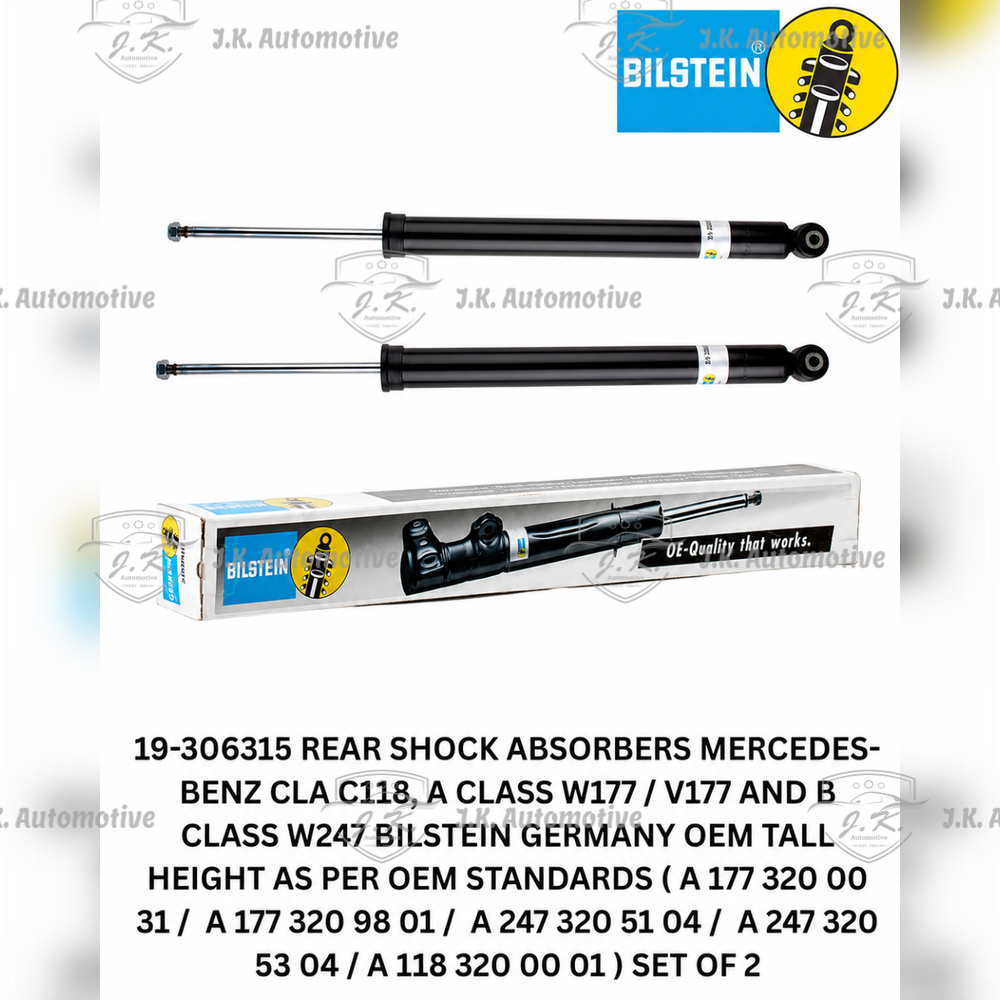
What are Bilstein B4 19-306315 rear shock absorbers and what do they do on the Mercedes-Benz B-Class W247?
What are the common signs that the rear dampers on a Mercedes-Benz B-Class W247 may need replacement?
Common signs of worn rear dampers can include excessive bouncing after crossing a bump, increased body movement, reduced ride comfort, unusual suspension noises, a less settled feeling on rough roads or changes in the way the vehicle responds during braking and cornering. One simple example is what happens after travelling over a speed breaker. A properly controlled suspension should compress and then settle progressively, whereas significantly worn damping components may allow the rear of the vehicle to continue moving more than expected. The driver may also notice that rough or broken roads feel less controlled because wheel and body movement is not being regulated effectively. During braking, acceleration or lane changes, increased chassis movement may become more noticeable. However, none of these symptoms should be used alone to conclude that part number 19-306315 must be replaced. Springs, bushes, mountings, suspension links, wheel bearings, tyres and wheels can produce similar symptoms when damaged or worn. Unusual noises, for example, can originate from a mounting or bush rather than the damper itself. Irregular tyre wear can indicate a suspension or wheel-alignment problem, but it can also result from incorrect tyre pressure or other geometry-related issues. A visual inspection can sometimes reveal physical deterioration or leakage around an existing component, but diagnosis should consider the complete suspension system rather than relying on appearance alone. The condition of both sides of the rear axle should also be assessed because this product is supplied as a Set of 2. If replacement is confirmed, compare Bilstein 19-306315 with the existing components and verify the supplied references A1773200031 / A1773209801 / A2473205104 / A2473205304 / A1183200001. The vehicle’s Tall Height suspension specification and exact VIN should also be checked before ordering. Correct diagnosis helps prevent unnecessary replacement and ensures that other worn chassis components are not overlooked.
How can worn rear shock absorbers affect ride comfort and bouncing on the Mercedes-Benz B-Class W247?
Worn rear shock absorbers can affect ride comfort because their purpose is to control the repeated movement produced by the springs as the wheels travel across changing road surfaces. When a wheel passes over a pothole, speed breaker or raised section of road, the spring compresses and then releases stored energy. A correctly functioning damper regulates this movement so the suspension returns toward its normal position progressively. If damping performance has deteriorated significantly, the spring and body can continue moving for longer than intended, which may be experienced by the occupants as repeated bouncing or an unsettled ride. On a road with several bumps close together, poor damping can become more noticeable because the suspension has less opportunity to settle before encountering the next disturbance. The rear of the vehicle may therefore feel less composed, particularly when carrying passengers or luggage, although the exact behaviour depends on the overall condition of the chassis. Ride comfort should not be confused with simply having a soft suspension. Effective suspension control means allowing enough movement to absorb road irregularities while preventing unnecessary oscillation afterwards. Bilstein B4 components are positioned as OE-style replacement dampers for applicable configurations, making them suitable where the objective is to restore controlled everyday suspension behaviour when the application matches. Nevertheless, replacing dampers will not correct every possible ride-quality problem. Worn springs, damaged bushes, deteriorated mountings, faulty links, wheel-bearing problems, incorrect tyre pressures or damaged tyres can also make the vehicle feel uncomfortable or unstable. These components should therefore be inspected as part of diagnosis. For this Tall Height listing, part number 19-306315 is supplied as a pair and carries references A1773200031 / A1773209801 / A2473205104 / A2473205304 / A1183200001. The supplied numbers and exact vehicle VIN should be checked before installation to ensure that the replacement pair corresponds with the original suspension specification.
How do Bilstein B4 rear dampers help with stability during braking, cornering and lane changes?
Rear dampers contribute to stable chassis behaviour by controlling the rate and amount of suspension movement when vehicle weight shifts during normal driving. During braking, weight transfers toward the front of the vehicle and the rear suspension changes position in response. During acceleration, the direction of weight transfer changes again. Cornering introduces lateral forces, while a lane change can produce rapid movement from one side of the chassis to the other. The springs allow the suspension to respond to these changing loads, but the dampers help control the speed and continuation of that movement. When damping performance is appropriate, the vehicle can settle more progressively instead of continuing to oscillate after the initial weight transfer. This does not mean that shock absorbers alone determine handling or braking performance. Tyres, springs, control components, bushes, stabilizer-related parts, steering components, wheel alignment and overall chassis condition all contribute to how a vehicle behaves. Therefore, if a B-Class W247 feels unstable or excessively unsettled, the complete suspension and tyre system should be inspected rather than immediately assuming that one pair of dampers is responsible. Tyre pressure and tread condition are particularly important because the tyres provide the actual contact with the road. Worn bushes or damaged springs can also change chassis behaviour even when the dampers remain serviceable. When inspection confirms deterioration of the existing rear damping components, Bilstein B4 19-306315 provides a replacement option for the specified Tall Height application. The product is supplied as a Set of 2, helping both sides of the rear axle receive matching replacement components where appropriate. Before fitting, references A1773200031 / A1773209801 / A2473205104 / A2473205304 / A1183200001 should be checked against the original parts, together with the exact VIN and suspension specification. Correct fitment and professional installation are important for achieving the intended suspension behaviour.
How do I confirm Bilstein 19-306315 is suitable for my Mercedes-Benz B-Class W247 Tall Height?
The best way to confirm whether Bilstein 19-306315 is suitable is to verify the exact vehicle and suspension specification rather than purchasing only because the car is identified as a Mercedes-Benz B-Class W247. This listing specifically states a Tall Height application, and that detail should be treated as an important fitment requirement. Begin by checking the identification information on the existing rear suspension components where accessible. Compare the original references with the supplied numbers A1773200031 / A1773209801 / A2473205104 / A2473205304 / A1183200001 and confirm Bilstein part number 19-306315 through an appropriate parts catalogue, supplier or workshop system. The exact vehicle VIN should also be used for verification because it provides more precise vehicle identification than the model name alone. Suspension configuration can vary between vehicles, so two cars that appear similar should not automatically be assumed to use identical replacement components. The physical appearance of a shock absorber is also not sufficient evidence of compatibility. Dimensions, mounting arrangements, damping calibration and application specifications can differ even when components look broadly similar. This listing is supplied as a Set of 2 for the rear axle, so the installation position and quantity should also be confirmed. If previous suspension repairs have been performed, check whether the vehicle still carries components corresponding with its original specification. Do not modify mounting points or use an incorrect component simply because it can physically be installed. Before ordering, the safest process is to verify 19-306315, the Tall Height requirement, the supplied OEM references and the exact VIN together. If any of these details do not correspond with the existing vehicle, compatibility should be confirmed before purchase. This approach reduces the risk of incorrect fitment and helps ensure that the replacement pair works as intended with the remaining suspension system.
What other suspension components should be checked when replacing Bilstein B4 19-306315 on a Mercedes-Benz B-Class W247?
When replacing the rear damping pair, the surrounding suspension should be inspected because new shock absorbers cannot compensate for unrelated wear or damage elsewhere in the chassis. Start by checking the rear springs for visible damage, deterioration or abnormal condition because the springs support the vehicle and work directly with the dampers to manage suspension movement. Relevant mountings should also be inspected because worn or damaged mounting components can produce noises, movement or vibration that may be incorrectly blamed on the shock absorber. Bushes and suspension links should be checked for cracking, deterioration, looseness or excessive movement where applicable. Wheel bearings should be considered if there is humming, roughness or play around the wheel area. Tyres are equally important and should be checked for correct inflation pressure, physical damage, tread condition and irregular wear patterns. Uneven wear may indicate an existing alignment or suspension issue that should be investigated rather than assuming new dampers will solve it. Wheels should be inspected for damage when the vehicle has suffered a significant pothole or kerb impact. Fasteners and mounting points associated with the repair should also be examined for abnormal wear, damage or corrosion where applicable. Because this listing supplies part number 19-306315 as a Set of 2, both sides of the rear suspension can be assessed together, which is useful for identifying differences in wear between the left and right sides. References A1773200031 / A1773209801 / A2473205104 / A2473205304 / A1183200001 should be compared with the existing components before installation, and the Tall Height specification must be confirmed. After fitting, an appropriate road test can help verify that the vehicle settles correctly over road disturbances and that no abnormal suspension noises remain. If irregular tyre wear, vehicle pull or other geometry-related symptoms are present, wheel alignment should also be checked. A complete suspension inspection helps ensure that the replacement pair is not being installed alongside another worn component that could continue causing poor ride quality or abnormal chassis behaviour.
Why is professional installation recommended for Bilstein B4 19-306315 on Mercedes-Benz B-Class W247 Tall Height?
Professional installation is strongly recommended for Bilstein B4 19-306315 because a correct suspension repair involves much more than removing the old rear dampers and installing new ones. A qualified technician should first confirm that the existing components are actually responsible for the symptoms being experienced, because excessive bouncing, poor ride comfort, unusual noises or unstable road behaviour can also be caused by worn springs, bushes, mountings, links, wheel bearings, tyres or other chassis components. Once replacement has been confirmed, the technician should compare Bilstein part number 19-306315 with the original components and verify the supplied references A1773200031 / A1773209801 / A2473205104 / A2473205304 / A1183200001. The Tall Height specification is particularly important because suspension configurations can differ, and a visually similar component should never be assumed to be suitable simply because it appears to fit the same model. The exact vehicle VIN should therefore be used as an additional fitment check before installation. A professional workshop can safely raise and support the vehicle, remove the existing components using suitable equipment and inspect the mounting areas before fitting the replacement pair. Springs should be examined for damage or deterioration, while bushes, links and relevant mountings should be checked for excessive wear, cracking or movement where applicable. The condition of fasteners and mounting points should also be assessed during the repair. Because 19-306315 is supplied as a Set of 2, both sides of the rear axle can be replaced together when required, helping maintain balanced damping behaviour rather than combining one new unit with another significantly worn component. Correct fitting procedures and appropriate tightening practices are also important because incorrect installation can cause noise, premature wear or poor suspension behaviour. Once installation is complete, the surrounding chassis should be inspected again to make sure nothing has been left loose or incorrectly positioned. Tyres should also be checked for pressure, physical condition and unusual wear patterns because these can reveal additional suspension or alignment issues. An appropriate road test should then be performed to confirm that the vehicle settles progressively after bumps, maintains comfortable road behaviour and does not produce abnormal suspension noises. If warning signs remain after installation, further diagnosis should be performed rather than assuming that new dampers will automatically correct every chassis-related problem. Professional fitting therefore provides three important benefits: correct product verification, correct physical installation and an opportunity to identify other suspension problems that could otherwise reduce the effectiveness or service life of the new Bilstein B4 pair.
Can worn rear shock absorbers cause uneven tyre wear or affect other suspension components on a Mercedes-Benz B-Class W247?
Worn rear shock absorbers can contribute to poor suspension control and may be associated with irregular tyre behaviour, but uneven tyre wear should never be attributed to the dampers without inspecting the complete chassis, tyres and wheel alignment first. The springs allow the wheels to move vertically as the vehicle travels over potholes, speed breakers, expansion joints and uneven roads, while the dampers control how quickly that movement takes place and how effectively the suspension settles afterwards. When damping performance deteriorates significantly, the wheel and body can continue moving for longer than intended after a road disturbance, making the rear of the vehicle feel less settled. On rough roads, repeated uncontrolled movement can reduce the consistency of suspension behaviour and may contribute to abnormal tyre loading when combined with other mechanical or geometry problems. However, irregular tyre wear has many possible causes. Incorrect tyre pressure, damaged tyres, worn bushes, wheel-alignment problems, damaged suspension links, wheel-bearing issues, wheel damage or previous impact can all produce unusual wear patterns. For this reason, replacing the dampers alone should not be treated as an automatic solution for every tyre-wear problem. A technician should examine the tread across the full width of both rear tyres and compare the wear patterns from side to side. Tyre pressures should be corrected before diagnosis, and the wheels should be inspected if there is vibration or evidence of pothole or kerb impact. Springs, bushes, mountings and related suspension links should also be examined for deterioration or excessive movement where applicable. Worn damping components do not necessarily directly damage every surrounding suspension part, but excessive chassis movement can increase the working demands placed on other components and can make existing wear more noticeable. Similarly, a damaged spring or deteriorated mounting can create symptoms that may initially appear to be caused by the shock absorbers. When replacement is confirmed, Bilstein B4 19-306315 is supplied as a Set of 2 for the specified Tall Height rear application, with references A1773200031 / A1773209801 / A2473205104 / A2473205304 / A1183200001. These numbers should be compared with the existing components, and the exact VIN should be used to help confirm compatibility. After installation, any existing irregular tyre wear should continue to be monitored because new suspension components cannot reverse tread damage that has already occurred. If the wear pattern indicates a geometry problem, wheel alignment should be checked separately. A complete diagnosis therefore provides a better repair than replacing one component based only on a symptom, because it identifies whether the problem originates from damping performance, tyre condition, alignment or another part of the rear suspension.
Does Mercedes-Benz B-Class W247 need wheel alignment after installing Bilstein B4 19-306315 rear dampers?
Wheel alignment is not automatically required solely because conventional rear dampers have been replaced, provided the installation procedure does not disturb wheel-locating components, adjustable geometry points or other parts that determine wheel position. This distinction is important because shock absorbers and wheel alignment perform different functions. The dampers primarily control spring and suspension movement, while wheel alignment concerns the geometric relationship between the wheels and the vehicle. Therefore, simply replacing a conventional rear damping component does not necessarily change the primary alignment settings. However, whether an alignment check is advisable depends on what was disturbed during the repair and on the condition of the vehicle before installation. If control arms, suspension links, bushes or other wheel-locating components are loosened, removed, adjusted or replaced during the job, checking the alignment afterwards is a sensible step. Alignment should also be considered when the vehicle already shows irregular tyre wear, steering pull, an off-centre steering wheel, unusual handling behaviour or evidence of previous pothole, kerb or accident impact. The condition of the tyres should therefore be inspected before and after suspension work. If the inner or outer edges of a tyre are wearing significantly faster than the rest of the tread, the underlying reason should be investigated rather than assuming that new dampers will correct the problem. Likewise, damaged bushes, bent suspension components or worn wheel bearings should be repaired before attempting to solve mechanical faults through alignment adjustment. For the specified Tall Height application, Bilstein part number 19-306315 is supplied as a Set of 2 for the rear axle. Supplied references A1773200031 / A1773209801 / A2473205104 / A2473205304 / A1183200001 should be verified against the original components and exact vehicle VIN before fitting. During installation, the technician should note whether any geometry-related components were disturbed. Once the repair is complete, an appropriate road test should confirm that the vehicle behaves normally, settles properly after road disturbances and does not show unusual pulling or instability. If the vehicle tracks correctly, tyre wear is normal and no wheel-locating parts were disturbed, alignment may not be necessary solely because the rear dampers were changed. On the other hand, if geometry-related components were loosened or replaced, or if existing symptoms indicate an alignment problem, a professional alignment check is advisable. This condition-based approach avoids unnecessary work while still protecting tyre life and overall chassis performance.
Why is Bilstein B4 19-306315 a premium replacement choice for Mercedes-Benz B-Class W247 Tall Height?
Bilstein B4 19-306315 is a strong premium replacement choice for the specified Mercedes-Benz B-Class W247 Tall Height application because the B4 range is positioned around OE-style replacement damping for applicable vehicle configurations, making it particularly relevant when the objective is to restore controlled everyday suspension behaviour rather than dramatically change the original character of the vehicle. To understand why this matters, it helps to consider the job performed by the rear suspension. The springs carry vehicle load and allow the wheels to move when they encounter potholes, speed breakers, expansion joints and changing road surfaces, while the dampers control the resulting movement so the chassis can settle progressively instead of continuing to bounce. When the existing components have deteriorated, the driver may experience excessive movement, reduced ride comfort or a less composed feeling on rough roads. Replacing genuinely worn units with correctly matched components can help restore proper damping control. Bilstein part number 19-306315 is supplied as a Set of 2, which allows both sides of the rear axle to receive matching replacement components when pair replacement is appropriate. This is preferable to combining one new damper with another significantly worn unit because damping performance across the axle should remain reasonably balanced. The supplied references A1773200031 / A1773209801 / A2473205104 / A2473205304 / A1183200001 provide important identification information that should be checked against the original components before purchase. The stated Tall Height configuration must also be confirmed because suspension specification is a critical part of correct fitment. Bilstein's established specialization in suspension and damping technology makes the B4 range a logical premium consideration for customers seeking a recognized replacement brand. However, brand reputation should never replace correct application verification. The exact VIN, original component identification and supplied references should still be checked before ordering. Likewise, installing premium dampers cannot compensate for damaged springs, worn bushes, deteriorated mountings, faulty suspension links, wheel-bearing problems, damaged tyres or incorrect alignment. These areas should be inspected as part of the repair. When diagnosis confirms that the existing rear damping components require replacement and all supplied application details correspond with the vehicle, the B4 pair provides a well-positioned OE-style replacement solution focused on restoring controlled movement, predictable road behaviour and comfortable everyday use without making unsupported claims that the product changes the vehicle beyond its intended suspension specification.
Why are Bilstein B4 shock absorbers considered one of the best replacement options for Mercedes-Benz B-Class W247 compared with Sachs?
Bilstein and Sachs are both established manufacturers in the suspension and damping industry, and either brand can be a strong replacement choice when the exact component correctly matches the individual vehicle, so the comparison should be based on product application, suspension specification, availability, warranty, intended repair and fitment rather than claiming that one manufacturer is universally superior. Bilstein has a strong specialization in shock absorbers and suspension systems, and its B4 range is positioned as an OE-style replacement solution for applicable configurations. This makes B4 particularly relevant to customers who want to restore controlled everyday damping while retaining a road-oriented suspension character. For this specific application, Bilstein part number 19-306315 is supplied as a Set of 2 for the rear axle and is stated for the Mercedes-Benz B-Class W247 Tall Height configuration. Supplied references include A1773200031 / A1773209801 / A2473205104 / A2473205304 / A1183200001, all of which should be checked against the original components and exact VIN before purchase. Sachs is also a highly respected suspension and damping manufacturer and may provide an excellent alternative when an exact compatible Sachs part is available for the same vehicle and suspension specification. Therefore, customers should avoid choosing solely on the basis of brand name. The first priority should always be correct fitment. The vehicle model, W247 chassis, rear installation position, Tall Height specification, original component numbers and VIN should all correspond with the intended replacement. After compatibility is established, practical considerations such as warranty coverage, seller support, product availability, price and the intended ride characteristics can help determine the final choice. Bilstein B4 can be especially attractive where a buyer specifically wants a recognized damping specialist and an OE-style replacement approach for everyday road use. Sachs can likewise be a suitable premium alternative when its corresponding application is correctly matched. Regardless of which brand is selected, the surrounding suspension should be inspected during replacement because even high-quality new dampers cannot correct faults caused by worn springs, bushes, mountings, links, wheel bearings, damaged wheels, incorrect tyre pressures or alignment problems. Replacing the rear units as an axle pair where appropriate can also help maintain balanced damping behaviour. If 19-306315 and references A1773200031 / A1773209801 / A2473205104 / A2473205304 / A1183200001 correctly match the original application, the Bilstein Set of 2 represents a strong premium replacement choice. The best final decision between Bilstein and Sachs is therefore the correctly matched component that meets the vehicle's exact suspension requirements, repair objective, availability and ownership priorities rather than an unsupported claim that either manufacturer is always better in every application.



Reviews
There are no reviews yet.