What is the Rear Electric Shock Absorber Set 37126799911 for BMW X3 F25 and what does it do?
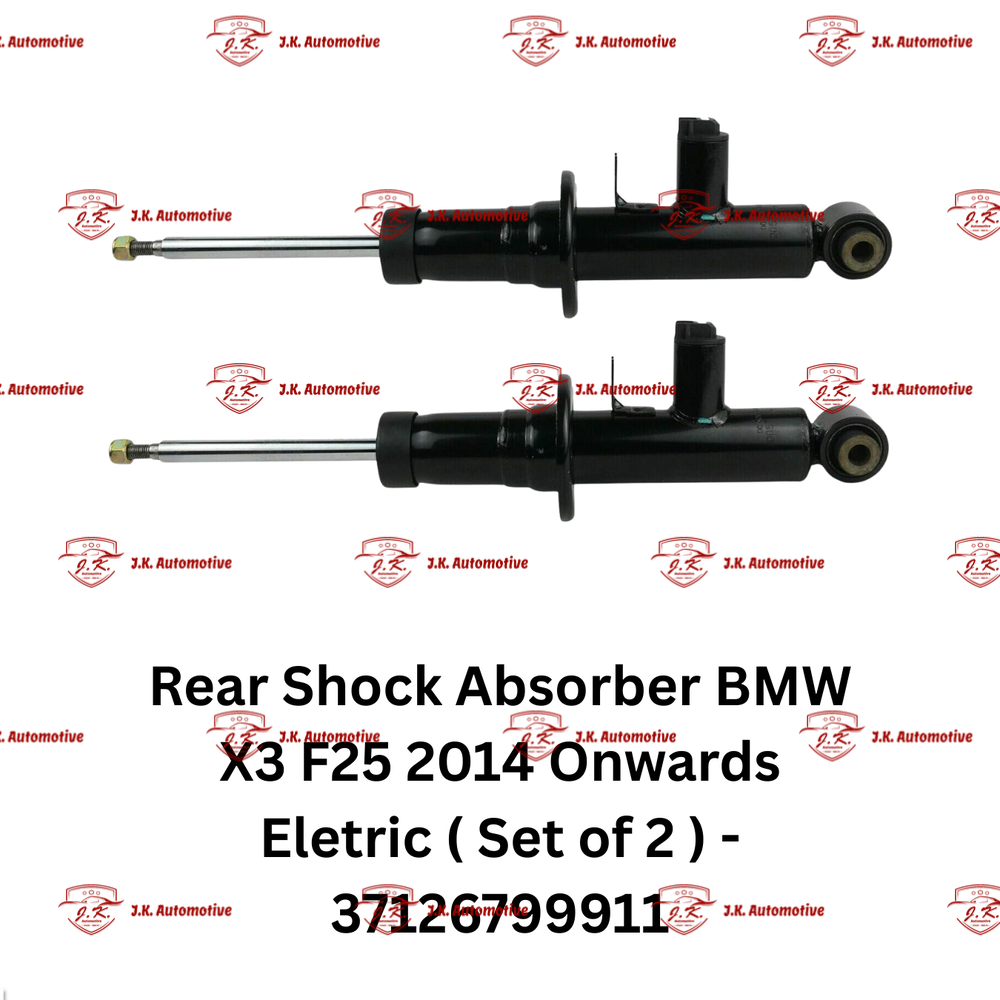
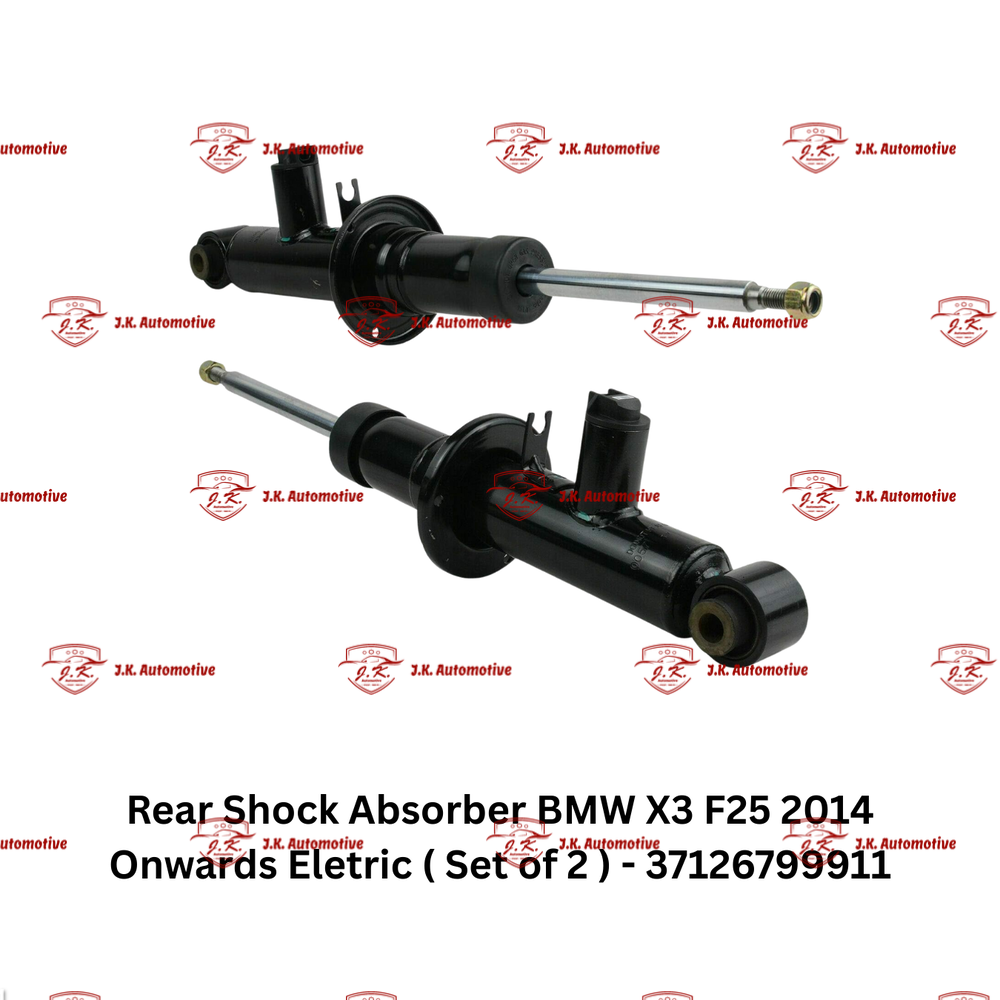
The Rear Shock Absorber BMW X3 F25 2014 Onwards Electric Set of 2 with reference 37126799911 is a pair of rear damping components for the stated BMW X3 F25 Electric application, and their primary function is to control rear suspension compression and rebound as the wheels travel vertically over bumps, dips, potholes, expansion joints and changing road surfaces. Shock absorbers work together with the springs and surrounding suspension components to regulate wheel and body movement so the suspension can progressively settle after a road disturbance rather than continuing to bounce excessively. During compression, the rear damper controls the rate at which suspension movement occurs when the wheel encounters a road irregularity, while during rebound it regulates the return movement as the suspension extends again. This damping action is also important during acceleration, braking and cornering because vehicle weight transfer creates suspension movement that must be controlled for consistent road behaviour. If rear damping performance deteriorates, the vehicle may develop excessive bouncing, increased rear body movement, reduced control over repeated road disturbances or noticeable changes in suspension response. Because this product is specified as Electric, compatibility should not be determined only from the BMW X3 F25 model designation or general physical dimensions of the shock absorbers. The applicable electrical connectors, wiring provisions and electronic damping configuration should correspond with the suspension equipment installed on the vehicle. Reference 37126799911 provides an important identification point for this Set of 2 and should remain unchanged during online searches and compatibility checking. Mechanical deterioration can produce symptoms such as excessive suspension movement, unusual response after bumps, visible damper-fluid leakage or abnormal rear-end behaviour, while an electrical or control-related concern may require inspection of connectors, wiring and relevant suspension-control information. Other components including mounts, springs, control arms, bushes, stabiliser components, wheel bearings and tyres can also produce symptoms that overlap with worn shock absorbers. Before replacement, reference 37126799911, the Electric specification, physical construction, mounting arrangement and applicable electrical connections should be compared with the installed components, with VIN-based verification used whenever precise compatibility remains uncertain.
Is 37126799911 the correct Rear Electric Shock Absorber reference for BMW X3 F25?
37126799911 is the exact reference supplied for this Rear Shock Absorber Set of 2 for the stated BMW X3 F25 2014 Onwards Electric application with the additional supplied year range 2011–2017, and this complete reference should remain an important identification point when checking the required rear suspension components. Broad searches such as BMW X3 rear shock absorber, BMW X3 F25 electric shock, BMW X3 electronic rear damper or BMW X3 rear suspension shock can return several related products that may appear generally similar while potentially differing in reference, suspension specification, electrical connector arrangement, mounting configuration or intended application. More specific search variations can include BMW X3 F25 37126799911, BMW X3 Electric Shock 37126799911, BMW X3 Rear Shock 37126799911, 37126799911 Rear Shock Absorber, 37126799911 Electric Shock, 37126799911 Electric Damper, BMW X3 F25 Rear Electric Shock Absorber Set and BMW X3 F25 Electronic Rear Damper. The complete reference should remain exactly as supplied because removing, changing or transposing individual digits can lead to incorrect component identification. Because this product is supplied as a Set of 2 under the supplied reference, both replacement units should be compared carefully with the components removed from the rear axle rather than assuming compatibility only from the vehicle model or year. Physical verification should include overall shock construction, upper and lower mounting arrangements, brackets, electrical connectors, cable-routing provisions where applicable and other installation characteristics. Electrical compatibility is particularly important because a conventional non-electric shock absorber should not automatically be treated as an equivalent replacement for the stated Electric application simply because its physical dimensions appear similar. Identification on the existing components should be compared wherever readable, and VIN-based compatibility verification should be used whenever exact fitment cannot be established confidently. The replacement units should correspond naturally with the existing suspension arrangement without drilling, grinding, forced mounting, electrical connector alteration or improvised adaptation. Correct component identification should also remain separate from diagnosis because matching reference 37126799911 does not automatically establish that the currently installed rear shock absorbers are responsible for the vehicle's suspension symptoms.
What are the symptoms of worn Rear Electric Shock Absorbers on a BMW X3 F25?
Symptoms that may justify inspecting the Rear Electric Shock Absorbers on a BMW X3 F25 include excessive bouncing after bumps, increased rear body movement, reduced damping control over uneven roads, a less settled rear suspension response, unusual movement during acceleration or braking, noticeable changes in cornering behaviour, suspension noise, visible damper-fluid leakage, irregular tyre wear or abnormal behaviour associated with the applicable electronically controlled damping system, although these symptoms should be treated as diagnostic indicators rather than automatic confirmation that the rear shock absorbers have failed. Shock absorbers regulate suspension compression and rebound, so internal deterioration can allow the rear suspension to move more freely than intended. After the wheels encounter a road disturbance, worn dampers may permit additional oscillation before the suspension settles, producing a less controlled response over repeated bumps or irregular surfaces. During acceleration, braking or directional changes, reduced damping performance can become more noticeable because the suspension is required to control changes in vehicle body movement and wheel position. Because this application is specified as Electric, diagnosis should extend beyond mechanical damper condition. Applicable electrical connectors, wiring and connection points should be inspected where appropriate, while relevant suspension-control information should be reviewed if warning messages or unusual electronically controlled damping behaviour are present. The surrounding rear suspension should also be examined because worn mounts, springs, control arms, bushes, stabiliser components, wheel bearings or tyres can create symptoms that overlap with shock absorber deterioration. Sway bar links, sway links, anti roll link rods and stabiliser sway links should be checked when knocking or unwanted movement is present over uneven surfaces. Tyre condition, inflation and wear patterns should also be considered because tyre-related problems can influence ride quality and handling response. Visible damper-fluid leakage can support a diagnosis but should still be evaluated alongside actual damping behaviour. Both rear units should be assessed because this product is supplied as a Set of 2 and a substantial difference in damping performance across the rear axle can affect suspension behaviour. Reference 37126799911 should be verified before replacement together with the stated BMW X3 F25 Electric application and supplied product details.
Why should both Rear Electric Shock Absorbers on a BMW X3 F25 be inspected together?
Both Rear Electric Shock Absorbers should be inspected together because the left and right rear suspension positions perform corresponding damping functions on the same axle, and this product is specifically supplied as a Set of 2 with reference 37126799911 for the stated BMW X3 F25 Electric application. Both rear dampers generally operate through similar vehicle mileage, acceleration and braking loads, cornering forces, passenger and cargo loads, road impacts and suspension cycles, although their exact rates of deterioration may not always be identical. If one rear shock has experienced significant internal deterioration or reduced damping performance, the condition of the corresponding unit should also be evaluated rather than automatically assuming it remains unaffected. A substantial difference in damping behaviour between the two rear sides can create inconsistent suspension response because one wheel position may control compression and rebound differently from the other. This difference can become noticeable during acceleration, braking, directional transitions and travel over repeated uneven surfaces. Pair replacement can therefore be appropriate when diagnosis confirms significant deterioration and both units are applicable to the same repair, but the replacement decision should still follow inspection rather than assumption. Because these shock absorbers are specified as Electric, both mechanical damping performance and applicable electronic connections should be considered during diagnosis. Electrical connectors, wiring and relevant suspension-control information should be inspected so that an electrical fault is not left unresolved after mechanical replacement. Reference 37126799911 should be verified carefully with the installed components, while both replacement units should be compared with the removed rear shocks for overall construction, mounting points, brackets, electrical connector arrangement and other installation characteristics. Surrounding suspension components should also be inspected while access is available, including mounts, springs, control arms, bushes, stabiliser components, wheel bearings and tyres. Sway bar links, sway links, anti roll link rods and stabiliser sway links should be checked where applicable because their wear can contribute to rear suspension noise and unwanted movement. Following professional installation, applicable electrical connections should be secured correctly and the rear suspension checked for controlled damping response and relevant electronic suspension operation.
What does reference 37126799911 mean when searching for BMW X3 F25 Rear Electric Shock Absorbers?
Reference 37126799911 provides a highly specific identification and online search term for the stated BMW X3 F25 Rear Electric Shock Absorber Set of 2 and can help narrow product searches beyond broad phrases such as BMW X3 rear shock absorber, BMW X3 F25 Electric suspension, BMW X3 electronic rear damper or BMW X3 rear suspension parts. Exact reference searching is useful because different suspension specifications or component variants can potentially use shock absorbers with different electrical provisions, mounting arrangements or identification numbers even when the components appear generally similar. Relevant search combinations can include BMW X3 F25 37126799911, BMW X3 Electric Rear Shock 37126799911, BMW X3 Rear Shock Absorber 37126799911, 37126799911 Rear Shock Absorber, 37126799911 Electric Shock, 37126799911 Rear Electric Damper, BMW X3 F25 Rear Electric Shock, BMW X3 F25 Electronic Rear Damper and BMW X3 F25 Electric Shock Set. The complete reference should remain unchanged during online searches, catalog entry and compatibility checking because altering even a single digit can increase the possibility of selecting an incorrect suspension component. Reference matching should be combined with the stated BMW X3 F25 application, 2014 Onwards description, Electric specification, Set of 2 configuration and supplied 2011–2017 year range. If readable identification remains on the installed rear components, compare it directly with 37126799911 before installation. VIN-based verification should be used whenever precise compatibility cannot be established confidently from the available information. Physical comparison should include overall construction, upper and lower mounting arrangements, brackets, electrical connectors, cable-routing provisions where applicable and other installation features. Because these are specified as Electric shock absorbers, electronic compatibility should remain an important part of component selection. A conventional rear damper should not automatically be considered interchangeable simply because its external dimensions or mounting arrangement appear similar. The correct reference provides strong identification information, but final compatibility should combine the reference, vehicle specification, Electric suspension configuration, physical comparison and VIN information where necessary.
What should be checked before replacing the Rear Electric Shock Absorber Set 37126799911 on a BMW X3 F25?
Before replacing the Rear Electric Shock Absorber Set 37126799911 on a BMW X3 F25, the rear suspension and applicable electronic damping system should be inspected systematically so worn shock absorbers can be distinguished from mechanical or electrical faults elsewhere in the suspension that may produce similar symptoms. Begin by evaluating how the rear suspension responds to bumps, dips, repeated road disturbances, acceleration, braking and cornering, looking for excessive bouncing, uncontrolled rear movement, unusual settling behaviour, abnormal suspension noise or noticeable differences between the two rear sides. Both shock absorber bodies should be inspected for physical damage, deterioration and evidence of fluid leakage. Because this application is specified as Electric, inspect the applicable electrical connectors, wiring and connection points associated with the rear dampers and review relevant suspension-control information if warning messages or electronically controlled damping concerns are present. The surrounding rear suspension should also be checked carefully, including mounts, springs, control arms, bushes, stabiliser bars and their links, wheel bearings and other components that can influence suspension behaviour. Sway bar links, sway links, anti roll link rods and stabiliser sway links should be inspected where applicable because looseness or wear in these components can create noises or movement that may be incorrectly attributed to the shock absorbers. Tyres should be examined for uneven wear, damage and appropriate inflation because tyre condition can influence ride quality and handling response. Reference 37126799911 should then be verified against the stated BMW X3 F25 Electric application while preserving your supplied 2014 Onwards description and 2011–2017 year range. Compare identification on the installed units wherever readable and use VIN-based compatibility verification whenever precise fitment remains uncertain. Before fitting the replacement Set of 2, compare overall component construction, mounting points, brackets, applicable electrical connector arrangements and other installation characteristics with the removed units. The components should install naturally without forced modification. Following professional installation, secure all applicable electrical connections correctly, inspect the complete rear suspension assembly, verify controlled compression and rebound behaviour and check applicable electronic suspension operation before returning the vehicle to regular use.
How can worn Rear Electric Shock Absorbers affect the ride and handling of a BMW X3 F25?
Worn Rear Electric Shock Absorbers can affect the ride, handling and overall rear suspension behaviour of a BMW X3 F25 because the dampers are responsible for controlling the rate of compression and rebound as the rear wheels travel over bumps, dips, potholes, expansion joints and uneven road surfaces, while also helping regulate suspension movement during acceleration, braking, cornering and changes in vehicle load. When damping performance is operating correctly, the rear suspension should respond to a road disturbance and progressively settle rather than continuing to oscillate excessively. As the shock absorbers deteriorate internally, their ability to control this movement can reduce, potentially producing increased bouncing, excessive rear body movement, a less settled feeling over repeated bumps or noticeable changes in suspension response during directional transitions. Reduced damping can become particularly noticeable when travelling across a sequence of uneven surfaces because the suspension may not settle as effectively between individual road disturbances. Because this BMW X3 F25 application is specified as Electric, diagnosis should also consider the applicable electronic damping arrangement rather than treating the units as purely conventional mechanical shock absorbers. Electrical connectors, wiring and relevant suspension-control information should be inspected where applicable because an electrical or control-related fault can potentially influence damping behaviour even when the physical shock absorber does not show obvious external damage. Visible damper-fluid leakage can provide another indication of deterioration, although the complete rear suspension should still be evaluated before replacement. Suspension noise or poor road behaviour should not automatically be attributed to the shocks because mounts, springs, control arms, bushes, stabiliser components, wheel bearings and tyres can produce overlapping symptoms. Sway bar links, sway links, anti roll link rods and stabiliser sway links should also be checked when diagnosing knocking or unwanted movement over irregular surfaces. Tyre condition, inflation and wear patterns can further influence ride behaviour and perceived suspension response. Both rear units should be assessed because this product is supplied as a Set of 2 and a substantial difference in damping performance across the rear axle can create inconsistent suspension behaviour. If diagnosis identifies the Electric rear dampers as the relevant worn components, reference 37126799911 should be verified against the stated BMW X3 F25 application before professional replacement.
How can I confirm whether 37126799911 is the correct Rear Electric Shock Absorber for my BMW X3 F25?
To confirm whether 37126799911 is the correct Rear Electric Shock Absorber reference for a particular BMW X3 F25, the complete number should be checked together with the stated Electric suspension specification, Set of 2 configuration, supplied 2014 Onwards description, supplied 2011–2017 year range, identification from the currently installed components wherever readable, physical mounting arrangement, applicable electrical connector configuration and VIN-based compatibility information whenever precise fitment remains uncertain. Searching only for a BMW X3 rear shock absorber is not sufficiently specific because different suspension configurations or component variants can potentially use dampers with different references, electrical provisions or installation characteristics. More targeted searches can include BMW X3 F25 37126799911, BMW X3 Rear Shock 37126799911, BMW X3 Electric Shock 37126799911, BMW X3 F25 Rear Electric Shock, 37126799911 Rear Shock Absorber, 37126799911 Electric Shock, 37126799911 Rear Damper, 37126799911 Electric Damper and BMW X3 F25 Electronic Rear Shock Absorber. The complete reference should remain unchanged during online searches and compatibility checking because even a single altered digit can result in incorrect component identification. Because this product is supplied as a Set of 2, both replacement units should be compared carefully with the corresponding components removed from the rear suspension. Physical inspection should include overall shock-body construction, upper and lower mounting points, bracket locations, applicable electrical connector arrangement, cable-routing provisions where present and other relevant installation features. Electrical compatibility is particularly important because the stated product is Electric and physical similarity alone should not be used to establish interchangeability with another shock absorber. If identification remains readable on the installed units, compare the existing reference directly with 37126799911. VIN-based verification should be used whenever the available reference or vehicle information does not provide sufficient certainty. The replacement components should correspond naturally with the existing installation without drilling, grinding, connector modification, forced alignment or improvised adaptation. Correct component identification should also remain separate from fault diagnosis because establishing that 37126799911 is the required reference does not automatically prove that the currently installed rear shock absorbers are responsible for the vehicle's suspension symptoms.
Can faulty Rear Electric Shock Absorbers cause suspension warnings or abnormal damping on a BMW X3 F25?
Faulty Rear Electric Shock Absorbers can potentially be associated with abnormal damping behaviour and, depending on the applicable vehicle suspension-control configuration and the nature of the fault, relevant suspension warnings may require investigation, but a warning should not automatically be interpreted as proof that the rear shocks identified by reference 37126799911 have mechanically failed. An Electric shock absorber application can involve both mechanical damping operation and an electrical connection associated with the applicable suspension-control arrangement, so diagnosis should evaluate both areas systematically. Mechanical deterioration can produce symptoms such as excessive bouncing, increased rear body movement, reduced control after bumps, unusual suspension movement during acceleration or braking and noticeable changes in road response. Electrical concerns may instead involve connectors, wiring, connection integrity or another element of the applicable damping-control system. If the vehicle displays a suspension-related warning, relevant diagnostic information should be reviewed before components are replaced because the issue may relate to an electrical connection, wiring condition, control input or another component rather than the shock absorber itself. Visual inspection should check both rear dampers for physical damage and evidence of fluid leakage while also examining applicable electrical connectors for secure engagement and visible deterioration. Wiring around the suspension should be inspected for damage, inappropriate tension or conditions that could interfere with a reliable electrical connection. The mechanical rear suspension should be assessed at the same time because worn mounts, springs, control-arm bushes, stabiliser components, wheel bearings or tyres can create ride symptoms even when no electrical problem is present. Controlled road behaviour can provide useful diagnostic information by showing whether the rear suspension settles normally after bumps or continues moving excessively. If the shocks appear mechanically worn while electrical connections remain intact, damping deterioration may still be present. Conversely, if mechanical damping appears normal but a relevant warning remains, electrical and control-system diagnosis becomes particularly important. Reference 37126799911 should only be selected after the applicable suspension configuration has been confirmed. Following replacement, electrical connections and relevant suspension-control information should be rechecked so any remaining issue can be identified rather than assuming mechanical replacement alone has resolved every suspension concern.
How should the Rear Electric Shock Absorber Set 37126799911 be installed on a BMW X3 F25?
The Rear Electric Shock Absorber Set 37126799911 should be installed professionally because the repair involves major rear suspension damping components together with applicable electrical connections associated with the stated Electric suspension configuration, and correct component identification, safe suspension handling, secure mounting, appropriate electrical engagement and thorough post-installation inspection are important for consistent operation. Before removing the existing shocks, the original suspension concern should already have been diagnosed so worn mounts, control arms, bushes, stabiliser components, tyres, electrical wiring or another suspension-related fault is not incorrectly attributed to the dampers. Reference 37126799911 should be verified against the stated BMW X3 F25 Electric application while preserving the supplied 2014 Onwards description and 2011–2017 year range. Identification on the existing units should be compared wherever readable, while VIN-based compatibility checking should be used whenever precise fitment remains uncertain. The replacement components should be compared physically with the removed shocks before installation, including overall construction, upper and lower mounting arrangements, brackets, electrical connector positions and other installation characteristics. Applicable electrical connectors should be handled carefully and should not be stretched, damaged, contaminated or forced into an incompatible connection. Wiring should follow the appropriate routing so it cannot become trapped, excessively tensioned or exposed to inappropriate contact with moving suspension components. The surrounding rear suspension should be inspected while access is available, including mounts, springs, control arms, bushes, sway bar links, sway links, anti roll link rods, stabiliser sway links, wheel bearings and other relevant components. Replacement shocks should mount naturally without drilling, grinding, connector modification or improvised adaptation. After installation, all mounting hardware and applicable electrical connections should be checked for correct engagement according to the appropriate repair procedure. Relevant electronic suspension functions should be checked where applicable, followed by controlled road testing to evaluate compression, rebound, rear suspension stability and abnormal noise. Any additional suspension-geometry inspection required by the repair procedure or other disturbed suspension components should also be completed before normal vehicle use.
How do I know if the Rear Electric Shock Absorbers are bad on my BMW X3 F25?
Rear Electric Shock Absorbers on a BMW X3 F25 may require investigation when the vehicle begins bouncing excessively after bumps, takes longer than expected to settle after road disturbances, develops increased rear body movement, feels less controlled on uneven roads, exhibits unusual movement during acceleration or braking, develops noticeable changes in cornering response, produces rear suspension noises, shows visible damper-fluid leakage, develops irregular tyre wear or displays abnormal behaviour associated with the applicable electronically controlled damping system, although no single symptom should automatically be treated as confirmation that both rear shock absorbers have failed. A useful first step is to distinguish mechanical damping deterioration from faults elsewhere in the rear suspension or applicable electrical system. Shock absorbers control compression and rebound, so a worn damper may allow the wheel and vehicle body to continue moving after the initial road disturbance rather than progressively settling. Both rear sides should be evaluated because this product is supplied as a Set of 2 and a substantial difference in damping condition between the two sides can affect rear axle behaviour. Visual inspection should check the units associated with reference 37126799911 for physical damage, deterioration and evidence of fluid leakage. Because the product is specified as Electric, applicable electrical connectors and wiring should also be examined carefully for damage, contamination, poor engagement or other visible problems. Relevant diagnostic information should be reviewed if the vehicle displays a suspension warning or abnormal electronic damping behaviour. The rest of the rear suspension should also be inspected because worn mounts, springs, control-arm bushes, stabiliser components, wheel bearings and tyres can produce symptoms that resemble weak shock absorbers. Sway bar links, sway links, anti roll link rods and stabiliser sway links should be checked where appropriate when noises occur over uneven surfaces. Tyre condition, inflation and wear patterns should also be considered because they can affect ride quality and handling response. If systematic inspection confirms that the rear dampers have lost effective damping performance or that the applicable Electric shock assemblies require replacement, reference 37126799911 should be verified against the stated BMW X3 F25 Electric application. Professional replacement should then be followed by secure electrical connection checks, rear suspension inspection, applicable diagnostic checks and controlled road testing to confirm appropriate suspension behaviour.


Reviews
There are no reviews yet.