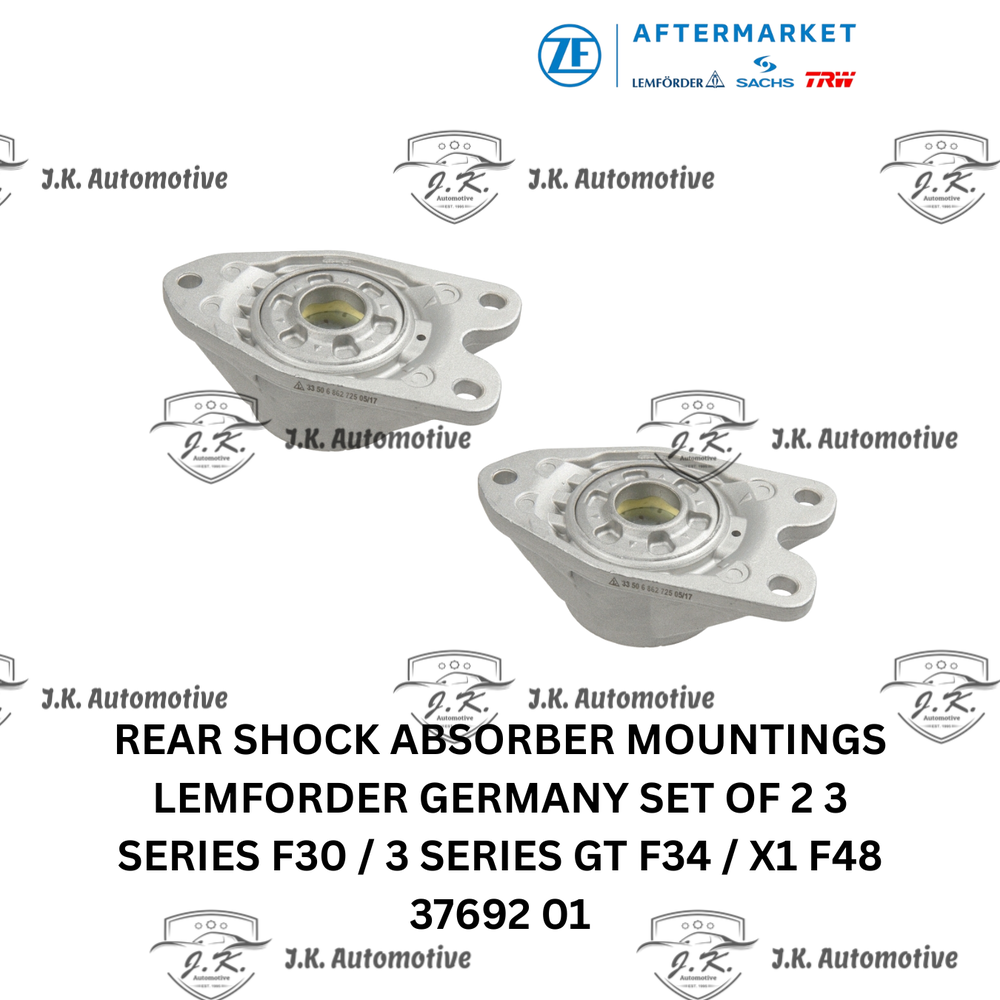
What are Lemförder 37692 01 Rear Shock Absorber Mountings for BMW 3 Series GT F34?
Lemförder Rear Shock Absorber Mountings 37692 01 are supplied as a Set of 2 for the stated BMW 3 Series GT F34 2013–2019 application and are used at the rear suspension to provide the mounting interface associated with the rear shock absorbers, helping locate and secure the relevant damper connection to the vehicle structure while accommodating the movement and forces generated as the rear suspension repeatedly compresses and rebounds during driving. The supplied product information identifies the brand as Lemförder, the reference as 37692 01, the quantity as Set of 2 and the product as Rear Shock Absorber Mountings, and these details should remain unchanged during compatibility verification. Rear shock absorbers continuously respond to wheel movement as the vehicle travels over bumps, depressions, road joints, uneven surfaces, speed breakers and changes in road level. As the rear wheel moves vertically, the shock absorber compresses and rebounds, creating repeated forces through its mounting interfaces. The mounting components therefore operate under repeated mechanical loading rather than simply functioning as static brackets. Their condition can influence how securely the rear damper is located and how suspension movement is transferred through the mounting area. When a rear shock mounting becomes worn, damaged, loose or deteriorated, symptoms can potentially include knocking, clunking, rattling or movement from the rear suspension area, particularly when travelling over irregular road surfaces. However, rear suspension noise should not automatically be attributed to the shock mount because several nearby components can produce similar symptoms. The rear shock absorbers themselves should be inspected for deterioration or leakage where applicable, and their upper and lower attachment points should be checked. Rear suspension arms, bushes and related joints should also be inspected for excessive movement. Sway bar links, sway links, anti roll link rods and stabiliser sway links should be examined where knocking occurs because wear in these parts can create noises that may be mistaken for shock mounting deterioration. Before ordering, compare the existing mounting components with the replacement set for overall design, dimensions, attachment arrangement and physical interfaces. Where available, vehicle-specific or VIN-based parts information can provide an additional compatibility check. Because this product is supplied as a Set of 2, it is intended to provide two rear mounting components for the stated application rather than a single mounting. Correct product identification should preserve Lemförder 37692 01, Rear Shock Absorber Mountings, Set of 2, BMW 3 Series GT F34 and the supplied 2013–2019 application.
What is the function of rear shock absorber mountings on BMW 3 Series GT F34?
Rear shock absorber mountings on the stated BMW 3 Series GT F34 provide an important mechanical interface between the rear shock absorbers and the corresponding vehicle mounting structure, helping secure the damper in its intended position while transferring the repeated forces generated as the rear suspension compresses and rebounds over changing road conditions. During normal driving, each rear wheel moves vertically in response to bumps, depressions, road joints, uneven surfaces and changing vehicle loads. The shock absorber regulates the speed of this suspension movement by controlling compression and rebound, and the forces produced during this process must pass through its mounting points. The rear shock mounting therefore experiences repeated loading whenever the suspension moves. During acceleration, braking, cornering and travel over uneven roads, the forces acting through the rear suspension continuously change, placing repeated demands on the damper and its mounting interfaces. A correctly functioning mounting helps keep the shock absorber securely positioned and allows the assembly to operate through its intended range of movement. When a mounting becomes worn, loose, cracked, deformed or otherwise deteriorated, additional movement may develop at the attachment point, potentially producing knocking, clunking or rattling from the rear suspension area. The precise symptoms depend on the nature and severity of the deterioration, so diagnosis should be based on physical inspection rather than noise alone. This product is supplied as Lemförder 37692 01, Set of 2, for the stated BMW 3 Series GT F34 2013–2019 application. When inspecting the mountings, the rear shock absorbers themselves should also be examined because a worn damper can place different operating forces through the mounting area, while a damaged mounting can allow movement even when the damper itself remains serviceable. Inspect the relevant upper and lower shock attachment points and surrounding suspension structure for damage or looseness. Rear suspension arms and bushes should also be checked where noise or movement is present. Sway bar links, sway links, anti roll link rods and stabiliser sway links can produce similar knocking over smaller road irregularities and should therefore be included in a complete diagnosis. Tyres should be checked for physical condition and irregular wear when the complaint includes handling changes. Correct installation of the replacement mountings requires proper seating, secure attachment and verification that the shock absorber is located correctly. The function of these components is therefore directly connected to secure damper mounting and controlled rear suspension operation rather than simply serving as cosmetic or non-functional hardware.
What are the symptoms of worn rear shock absorber mountings on BMW 3 Series GT F34?
Worn rear shock absorber mountings on the stated BMW 3 Series GT F34 can potentially produce symptoms such as knocking, clunking, rattling or other unusual noises from the rear suspension area, especially when driving over broken roads, road joints, small bumps, speed breakers or uneven surfaces, and in more advanced cases excessive movement at the shock absorber mounting point may become visible during inspection, but these symptoms should not automatically be treated as proof that Lemförder 37692 01 mountings are required because several nearby suspension components can generate very similar noises and movement. A useful diagnosis begins by identifying when the noise occurs. If the sound is most noticeable when one rear wheel moves over a small road irregularity, inspect the shock absorber mounting and nearby suspension joints for looseness or deterioration. If the noise occurs during larger suspension movements, inspect both the mounting and shock absorber attachment points carefully. The vehicle should be inspected using a safe workshop procedure so the rear suspension and mounting area can be examined properly. Look for visible deterioration, cracking, deformation, looseness or abnormal movement in the existing mountings. Check the relevant mounting hardware and the areas where the damper connects to the vehicle. The rear shock absorber itself should also be inspected because damper deterioration, physical damage or looseness at another attachment point can create symptoms that appear similar to a failed mounting. Rear suspension arms and bushes should be checked for excessive movement or deterioration. Sway bar links, sway links, anti roll link rods and stabiliser sway links are particularly important to inspect when knocking is present because wear in these components commonly creates noise over smaller bumps and road joints. Other mounting points and relevant suspension joints should also be examined rather than replacing the first component suspected from the sound alone. Compare the left and right rear suspension where practical because differences in mounting movement or visible condition can provide useful diagnostic information. Tyre condition and rear suspension geometry should also be considered if the complaint includes instability or irregular tyre wear rather than noise alone. This product is supplied as a Set of 2, so if replacement is confirmed, both supplied mounting components should be installed according to the intended rear suspension application. Before ordering, verify BMW 3 Series GT F34, supplied 2013–2019 application, Lemförder reference 37692 01, Set of 2 and the actual mounting configuration on the vehicle. Correct diagnosis helps distinguish worn shock mountings from shock absorber deterioration and other rear suspension problems, reducing unnecessary replacement of components that are still serviceable.
Should both rear shock absorber mountings be replaced together on BMW 3 Series GT F34?
When servicing the rear shock absorber mountings on the stated BMW 3 Series GT F34, both sides should be inspected carefully because the left and right rear mounting components operate under broadly similar vehicle age, mileage, road exposure and suspension movement, and this particular Lemförder 37692 01 product is supplied as a Set of 2, allowing both corresponding rear mounting positions to be addressed when replacement of the pair is appropriate for the vehicle's condition and repair plan. A failure or deterioration on one side does not automatically prove that the opposite mounting has reached exactly the same condition, so the actual state of both components should still be evaluated. Inspect the left and right mounting areas for cracking, deformation, looseness, deterioration and abnormal movement. Compare the condition of the mounting interfaces and inspect the associated hardware. If one mounting shows significant deterioration while the opposite component has been subjected to similar operating conditions for the same period, replacing the pair may provide a consistent approach to rear suspension service, particularly when both rear shock absorbers are being removed or serviced at the same time. The condition of the shock absorbers should also be considered because the mountings and dampers operate together mechanically. Inspect both rear dampers for physical damage, deterioration and any signs that justify further diagnosis. Check their lower mounting points and surrounding suspension components. Rear suspension arms and bushes should be inspected for excessive movement because looseness elsewhere in the suspension will not be corrected merely by replacing shock mountings. Sway bar links, sway links, anti roll link rods and stabiliser sway links should also be inspected when the vehicle has a rear knocking complaint. If only one mounting is confirmed damaged due to an isolated event while the opposite side remains in suitable condition, the repair decision should be based on proper inspection and workshop judgement rather than assuming that every situation requires identical replacement. However, because the supplied product is specifically identified as a Set of 2, both components should be accounted for during the repair planning and compatibility check. Confirm the existing mount design and attachment arrangement before installation. Where available, VIN-based information can provide an additional fitment check. After replacement, verify secure installation on both sides and ensure the shock absorbers are correctly located. A suitable road test should then be performed to check for remaining rear suspension noise. Correct identification should preserve Lemförder 37692 01, Set of 2, BMW 3 Series GT F34 and the supplied 2013–2019 application.
How do I confirm Lemförder 37692 01 Rear Shock Absorber Mountings fit my BMW 3 Series GT F34?
To confirm whether Lemförder 37692 01 Rear Shock Absorber Mountings are suitable for the stated BMW 3 Series GT F34, compatibility should be checked using the exact supplied manufacturer reference, vehicle model and chassis, rear installation location, quantity, supplied 2013–2019 application and the physical configuration of the existing mounting components rather than relying only on a general BMW 3 Series description. Begin with the exact supplied reference Lemförder 37692 01 and preserve the spacing and number format during product identification because changing the manufacturer reference can make compatibility checking less reliable. Confirm that the vehicle is the BMW 3 Series GT F34 specified in the product information rather than another 3 Series body or chassis. The product is specifically described as Rear Shock Absorber Mountings and is supplied as a Set of 2, so verify that the required repair concerns the rear damper mounting positions and that two mounting components are required for the intended service. The supplied year range is 2013–2019 and should remain unchanged unless the application is independently verified through appropriate vehicle-specific information. Where available, VIN-based parts information can provide an additional compatibility check. Physical comparison is also important because the existing and replacement mountings should correspond in overall design, dimensions, attachment points, central shock interface and relevant mounting geometry. The replacement should fit the intended mounting position naturally without drilling, cutting, reshaping or improvised adaptation. If the vehicle has undergone previous suspension repairs or modifications, inspect the components currently fitted because they may differ from the expected configuration. The associated rear shock absorbers should also be inspected to ensure the mounting interface corresponds correctly. Examine surrounding rear suspension components at the same time, including suspension arms, bushes and relevant joints. Sway bar links, sway links, anti roll link rods and stabiliser sway links should be inspected if the vehicle has a knocking complaint because these components can produce symptoms similar to worn shock mountings. Inspect mounting hardware and the vehicle-side attachment area for damage or deformation that could prevent correct installation. If there is uncertainty about fitment, compare the existing part physically and use suitable vehicle-specific parts information before ordering. Correct compatibility should ultimately preserve Lemförder 37692 01, Rear Shock Absorber Mountings, Set of 2, BMW 3 Series GT F34 and the supplied 2013–2019 application.
What should be checked before installing Lemförder 37692 01 Rear Shock Absorber Mountings on BMW 3 Series GT F34?
How do Lemförder 37692 01 Rear Shock Absorber Mountings work on BMW 3 Series GT F34?
Lemförder 37692 01 Rear Shock Absorber Mountings for the stated BMW 3 Series GT F34 2013–2019 application work as the relevant mechanical mounting interfaces associated with the rear shock absorbers, helping locate and secure the dampers to the corresponding vehicle mounting areas while transferring the repeated forces generated whenever the rear suspension compresses and rebounds during normal driving. The supplied product information identifies these components as Rear Shock Absorber Mountings, Set of 2, with Lemförder reference 37692 01, and these details should remain unchanged during compatibility checking. As the vehicle travels over bumps, depressions, road joints, speed breakers and uneven surfaces, each rear wheel moves vertically in relation to the vehicle body. The rear shock absorber controls the speed of compression and rebound movement, and the forces created during this process are transmitted through its mounting interfaces. The rear mounting therefore operates continuously under repeated mechanical loading rather than functioning merely as a stationary attachment bracket. During acceleration, braking and cornering, load distribution across the vehicle also changes, creating different forces through the rear suspension and associated mounting points. A correctly functioning shock mounting helps keep the damper securely located while allowing the suspension assembly to operate through its intended movement. If a mounting becomes worn, damaged, loose or deteriorated, additional movement may develop at the shock attachment point and can potentially produce knocking, clunking or rattling from the rear suspension area. However, a rear noise should not automatically be diagnosed as a failed shock mounting because other suspension components can produce similar symptoms. The rear shock absorbers should be inspected for physical deterioration and their lower mounting points should also be checked. Rear suspension arms, bushes and relevant joints should be examined for excessive movement. Sway bar links, sway links, anti roll link rods and stabiliser sway links should be inspected where knocking is present because wear in these parts can create noises that may initially seem to come from the shock absorber mounting area. The vehicle-side attachment surfaces and mounting hardware should also be examined for damage, looseness or previous repair. Because this product is supplied as a Set of 2, both corresponding rear mounting positions can be inspected and serviced as part of the same repair where appropriate. Before installation, physically compare the existing and replacement components for design, dimensions and attachment arrangement. Where available, VIN-based information can provide an additional compatibility check. After installation, both rear shock absorbers should be securely located, relevant hardware should be checked and a suitable road test should be performed to confirm that the rear suspension operates without abnormal movement or noise. Correct product identification should preserve Lemförder 37692 01, Rear Shock Absorber Mountings, Set of 2, BMW 3 Series GT F34 and the supplied 2013–2019 application.
Can worn rear shock absorber mountings cause knocking or clunking on BMW 3 Series GT F34?
Worn rear shock absorber mountings can potentially cause knocking, clunking, rattling or other mechanical noises from the rear suspension area of the stated BMW 3 Series GT F34 because deterioration or looseness at the mounting interface can allow additional movement where the shock absorber connects to the vehicle, but rear suspension noise should always be diagnosed systematically because several different suspension components can create very similar sounds over bumps, road joints and uneven surfaces. A useful diagnosis begins by identifying when and where the noise occurs. If the sound is most noticeable when one rear wheel passes over a small bump, road joint or uneven section, inspect the corresponding shock absorber mounting and surrounding suspension joints for looseness or deterioration. If the noise becomes more noticeable during larger suspension movements, inspect the complete shock absorber attachment arrangement, including the relevant upper and lower mounting areas. The vehicle should be inspected using a safe workshop procedure so that both rear suspension positions can be examined carefully. Look for visible deterioration, cracking, deformation, looseness or abnormal movement around the existing shock mountings. Check the mounting hardware and vehicle-side attachment areas for damage or previous repair. The rear shock absorbers themselves should also be inspected because damper deterioration, looseness at another mounting point or physical damage can produce noises that appear similar to a worn upper mounting. Rear suspension arms and bushes should be examined for excessive movement because deterioration in these components can create clunking during suspension travel or changes in vehicle load. Sway bar links, sway links, anti roll link rods and stabiliser sway links deserve particular attention when the noise occurs over smaller road irregularities because wear in these components commonly produces knocking or rattling. Compare the left and right rear suspension positions because differences in component movement or condition may help identify the source of the noise. Tyre condition should also be checked when the complaint includes changes in handling or irregular wear. This product is supplied as Lemförder 37692 01 Rear Shock Absorber Mountings, Set of 2, for the stated BMW 3 Series GT F34 2013–2019 application. If the mountings are confirmed to be deteriorated, verify the replacement components against the existing parts for design, dimensions and mounting interfaces before installation. Replacing the shock mountings should not be expected to eliminate a noise caused by a worn suspension arm, bush, sway link or shock absorber. After installation, secure all relevant mounting hardware according to an appropriate workshop procedure and perform a suitable road test. If the original noise remains, continue diagnosis rather than replacing additional parts without confirming the fault.
Can worn rear shock absorber mountings affect ride quality or handling on BMW 3 Series GT F34?
Worn rear shock absorber mountings can potentially influence rear suspension behaviour on the stated BMW 3 Series GT F34 if deterioration or excessive movement at the mounting interface prevents the shock absorber from remaining securely located during compression and rebound, but changes in ride quality or handling should not automatically be attributed to the mountings because shock absorber deterioration, suspension-arm wear, damaged bushes, tyre problems and wheel-geometry concerns can produce similar symptoms. The rear shock absorber regulates the speed of suspension compression and rebound as the rear wheel moves over changing road surfaces, and the mounting provides the mechanical interface through which the damper is secured to the corresponding vehicle structure. If excessive movement develops at this interface, the shock absorber may no longer be supported as intended at the mounting point, potentially creating noise or additional movement during suspension operation. The exact effect depends on the severity and type of deterioration. A minor mounting concern may initially be noticed primarily as a knocking or rattling noise, while more significant looseness should receive prompt mechanical inspection. If the vehicle feels less controlled over uneven roads, continues moving excessively after bumps or shows increased rear body movement, inspect the shock absorbers themselves because these symptoms can indicate reduced damping performance rather than a mounting problem alone. Rear suspension arms and bushes should also be inspected because excessive movement in these components can influence wheel control and vehicle behaviour. Sway bar links, sway links, anti roll link rods and stabiliser sway links should be checked when knocking accompanies the handling complaint. Inspect the tyres for correct pressure, physical condition and irregular wear because tyre problems can significantly influence ride and handling independently of the suspension mountings. Wheel geometry should also be considered where irregular tyre wear, steering behaviour or stability concerns are present. This product is supplied as Lemförder 37692 01, Set of 2, for the stated BMW 3 Series GT F34 2013–2019 application, and both rear mounting positions should be inspected before replacement. Compare the existing and replacement mountings for physical configuration and attachment interfaces. The rear shock absorbers should be checked while the mounting area is accessible so that a worn damper is not reinstalled without evaluation. After fitting the new mountings, confirm that both dampers are securely located and that no abnormal movement or interference is present. A suitable road test should then evaluate suspension noise and vehicle behaviour. Correct diagnosis is important because replacing mountings alone will not correct unrelated damper, bush, suspension-arm, tyre or geometry problems.
What should be inspected together with Lemförder 37692 01 Rear Shock Absorber Mountings on BMW 3 Series GT F34?
When inspecting or replacing Lemförder 37692 01 Rear Shock Absorber Mountings on the stated BMW 3 Series GT F34, the complete rear damper mounting arrangement and surrounding suspension should be evaluated because a knocking, rattling, clunking or handling complaint can originate from multiple components and replacing the mountings alone will not correct an independent problem elsewhere in the rear suspension. Begin with both rear shock absorbers and inspect them for physical damage, deterioration and any conditions that justify further damper diagnosis. Examine the relevant upper and lower shock attachment points and check associated hardware for looseness, damage or previous modification. Inspect the vehicle-side areas where the rear mountings attach and look for deformation, damaged threads, corrosion or evidence of previous repair that could prevent the replacement components from seating correctly. Compare the left and right mounting areas because differences can help identify abnormal movement or deterioration. Rear suspension arms should be inspected and their bushes checked for cracking, deterioration or excessive movement using an appropriate workshop procedure. Relevant suspension joints should also be checked where applicable. Sway bar links, sway links, anti roll link rods and stabiliser sway links should be included in the inspection when knocking occurs over smaller bumps or road joints because wear in these components can easily be mistaken for shock-mounting noise. Inspect the springs and their relevant seating areas as part of a broader rear suspension check where accessible. Check both rear tyres for pressure, physical condition and irregular wear patterns. If the vehicle has a handling complaint, wheel geometry should also be evaluated because a shock mounting replacement will not correct an unrelated alignment or geometry concern. This product is supplied as a Set of 2, so both corresponding rear mounting positions should be considered during the repair. Before installation, compare Lemförder 37692 01 with the existing components for overall design, dimensions, attachment arrangement and shock interface. Where available, VIN-based parts information can provide an additional compatibility check. If the vehicle has undergone previous suspension repairs or modifications, inspect the components currently installed rather than relying only on expected configuration. During installation, ensure that the mountings seat naturally and that the shock absorbers are positioned correctly without forcing or improvised adaptation. Secure the relevant hardware according to an appropriate workshop procedure. After installation, check both sides for abnormal movement or interference and perform a suitable road test. If noise remains, continue diagnosis of the surrounding rear suspension rather than assuming the newly installed mountings are responsible. Correct product identification should preserve Lemförder 37692 01, Rear Shock Absorber Mountings, Set of 2, BMW 3 Series GT F34 and the supplied 2013–2019 application.
How do I know if the rear shock absorber mountings are bad on my BMW 3 Series GT F34?
The rear shock absorber mountings on the stated BMW 3 Series GT F34 may require inspection when knocking, clunking, rattling or unusual mechanical noise develops from the rear suspension area, particularly when driving over broken roads, small bumps, road joints, speed breakers or uneven surfaces, or when visible looseness, cracking, deformation or abnormal movement is found around the shock absorber mounting points, but these symptoms should be diagnosed carefully because worn shock absorbers, suspension arms, bushes, sway links and other rear suspension components can create similar noises. Start by identifying whether the noise appears to come from the left rear, right rear or both sides and note the road conditions under which it becomes most noticeable. A noise occurring during small, rapid suspension movements can originate from several joints and mounting components, so physical inspection is essential. Using an appropriate workshop procedure, inspect the existing rear shock absorber mountings for visible deterioration, cracking, deformation, separation, looseness or abnormal movement. Examine the relevant mounting hardware and vehicle-side attachment areas for damage or evidence of previous repair. Check whether the shock absorber remains securely located at its mounting interface and compare the left and right sides for differences. The rear shock absorbers themselves should be evaluated because a worn or damaged damper can also create poor suspension control or noise. Inspect the lower shock mounting points and associated hardware. Rear suspension arms and bushes should be checked for excessive movement because worn bushes can produce clunking as suspension load changes. Sway bar links, sway links, anti roll link rods and stabiliser sway links should also be inspected because these components can generate knocking over small bumps and are easily confused with shock mounting noise. Check the rear tyres for pressure, physical condition and unusual wear when the complaint includes handling changes. If the mountings are confirmed to be deteriorated, this product is supplied as Lemförder 37692 01 Rear Shock Absorber Mountings, Set of 2, for the stated BMW 3 Series GT F34 2013–2019 application. Before ordering, compare the existing components with the replacement set for physical design, dimensions and mounting arrangement, and use VIN-based information where available for additional compatibility verification. During installation, inspect both rear mounting positions and the shock absorbers while access is available. After replacement, ensure that both dampers are securely mounted and that there is no abnormal movement or interference. Perform a suitable road test over representative road conditions and confirm whether the original noise has been resolved. If knocking or rattling remains, continue inspecting other rear suspension components rather than replacing additional parts by assumption.




Reviews
There are no reviews yet.