What are Stokes Germany Front Lower Control Arms for Mercedes-Benz EQB X243 and what is their function?
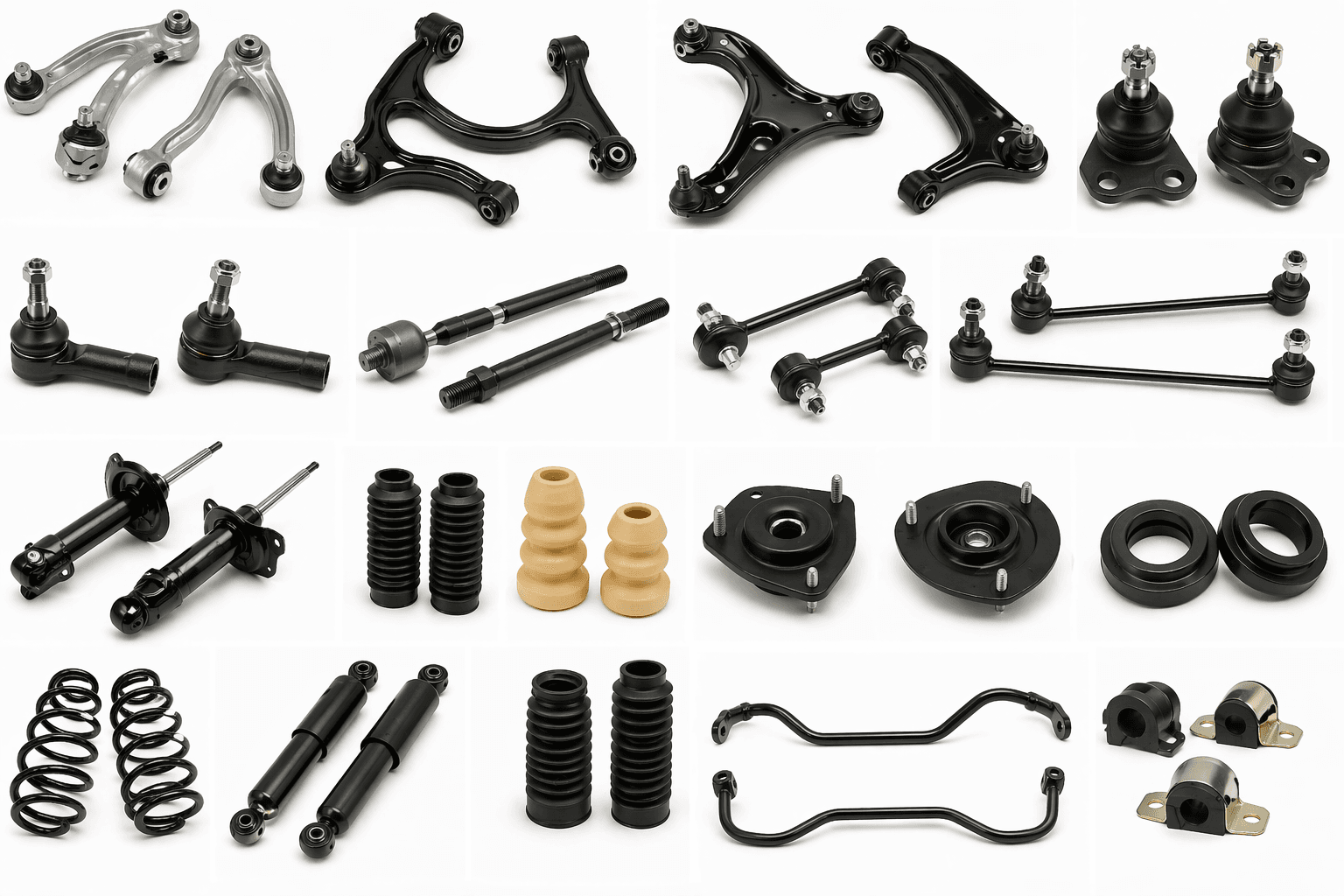
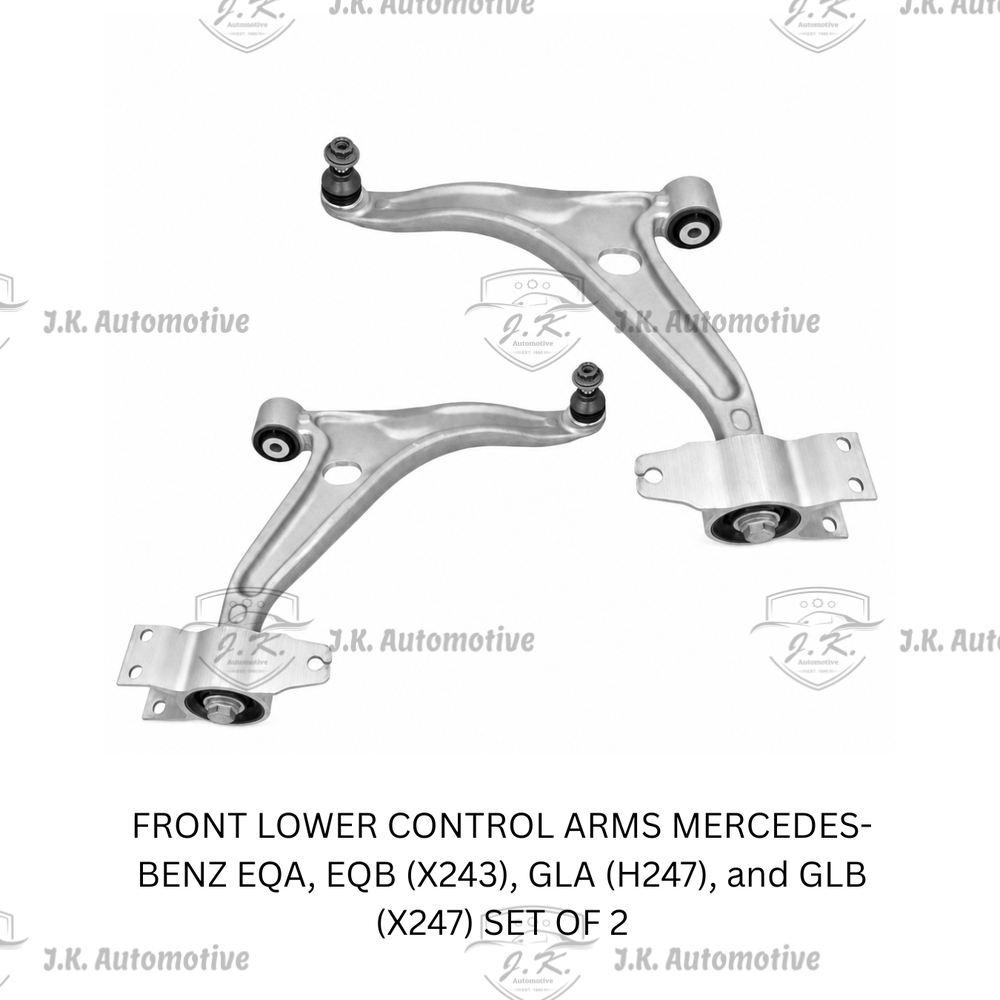
Mercedes-Benz EQB X243 Front Lower Control Arms are important components of the front suspension system that help guide the front wheel assemblies, control suspension movement and maintain the designed position of the wheels relative to the vehicle chassis while driving. This Stokes Germany replacement package is supplied as a set of 2 with A2473308702 / A2473305500 for the corresponding front-left position and A2473308802 / A2473305600 for the corresponding front-right position. Independent suspension catalogue information identifies these components as suspension control-arm and ball-joint assemblies, confirming their role within the front suspension system. The lower arms continuously operate whenever the vehicle is moving because the front wheels need to travel vertically as the suspension responds to changing road conditions while remaining properly guided relative to the chassis. When the Mercedes-Benz EQB X243 travels over potholes, speed breakers, broken roads or uneven surfaces, forces pass through the tyres and wheels into the suspension assembly. The lower control arms help guide the wheel assemblies through this movement while their bushes and joints permit the required suspension articulation. During braking, additional forces are transferred through the front tyres, wheels and suspension components. During cornering, lateral loads pass through the tyres and suspension as the vehicle changes direction. Correctly functioning lower suspension arms therefore contribute to controlled wheel positioning, predictable steering behaviour and stable suspension operation. These arms do not operate independently; they work together with steering tie rod ends, suspension bushes, ball joints, shock absorbers, wheel bearings and stabilizer components. Over time, repeated movement, mileage, ageing and impacts from poor road surfaces can contribute to deterioration of bushes, joints or mounting areas. If excessive wear develops, unwanted movement can occur within the suspension. The driver may notice knocking or clunking from the front end, particularly while travelling over rough roads or speed breakers. Steering may feel less precise, and significant suspension play can sometimes contribute to vibration or irregular tyre wear. However, these symptoms should always be professionally diagnosed because several other steering and suspension components can produce similar problems. Steering tie rod ends and other ball joints should be inspected for excessive play. Shock absorbers should be checked for leakage, physical damage or reduced damping. Wheel bearings should be examined when unusual noise, vibration or wheel movement is present. Sway bar links, Sway links, Anti roll link rods and Stabiliser sway links should also be inspected when knocking or rattling occurs over uneven roads because worn stabilizer components can create similar noises. Tyres and wheels should be checked for damage, incorrect pressure, abnormal tread wear and balancing problems. If inspection confirms excessive wear in the applicable lower arms, replacing the diagnosed components can remove unwanted movement associated with those worn parts. Before ordering this Stokes Germany pair, A2473308702 / A2473305500 & A2473308802 / A2473305600 should be verified against the VIN, original components and exact vehicle specification. Professional installation followed by a wheel alignment check is recommended after replacement.
Are A2473308702 / A2473305500 & A2473308802 / A2473305600 suitable for Mercedes-Benz EQB X243?
A2473308702 / A2473305500 & A2473308802 / A2473305600 are applicable control-arm references for Mercedes-Benz EQB X243 front suspension applications, with catalogue data identifying A2473308702 / A2473305500 for the front-left position and A2473308802 / A2473305600 for the front-right position. Teknorot lists both assemblies for Mercedes EQB X243, while Mercedes-Benz parts information separately identifies 247-330-55-00 as the left-front transverse control arm and 247-330-56-00 as the front-right transverse control arm on a documented EQB application. This Stokes Germany package therefore uses meaningful OEM cross-reference numbers for identifying the corresponding front lower suspension components, but customers should still verify compatibility using the VIN before ordering because the model designation alone should not be considered sufficient for every vehicle configuration. The exact Mercedes-Benz EQB X243 variant, production specification, drivetrain and suspension equipment can influence component applicability. This makes OEM-number verification especially important when purchasing steering and suspension parts. Customers should compare A2473308702 / A2473305500 & A2473308802 / A2473305600 with the original components or obtain a VIN-based parts check before placing an order. The physical mounting arrangement and suspension specification should also be checked when necessary because visually similar suspension arms can have application differences. Correct left- and right-side positioning is equally important because these are handed suspension components rather than two identical arms. The front-left and front-right components have corresponding geometry for their respective installation positions. Once compatibility is established, the next consideration is whether replacement is actually required. A knocking sound from the front suspension does not automatically mean the lower control arms are defective. Worn bushes or joints within the arms can create knocking, but similar sounds can come from other suspension components. Steering tie rod ends, other ball joints and suspension bushes should be inspected for excessive play. Shock absorbers should be examined for leakage, damage or reduced damping. Wheel bearings should be checked when humming, vibration or excessive wheel movement is present. Sway bar links, Sway links, Anti roll link rods and Stabiliser sway links should also be inspected because worn stabilizer components can create knocking or rattling over rough surfaces. Tyres should be checked for uneven tread wear, damage and correct pressure, while wheels should be inspected for physical damage or balancing problems. If professional diagnosis confirms wear in both corresponding lower suspension arms and the VIN confirms these references for the specific vehicle, this Stokes Germany set of 2 can be considered for the repair. Correct installation procedures and tightening specifications should be followed, and a professional wheel alignment check is recommended after replacement to verify the final suspension geometry.
Why does this Mercedes-Benz EQB X243 Front Lower Control Arm package come as a set of 2?
This Mercedes-Benz EQB X243 Front Lower Control Arms package comes as a set of 2 because it supplies the corresponding left- and right-side lower suspension components together, with A2473308702 / A2473305500 corresponding with the front-left position and A2473308802 / A2473305600 corresponding with the front-right position. The left/right relationship is supported by suspension catalogue data, which identifies the two assemblies as handed paired components with one required for each corresponding side. Supplying the components as a pair can be convenient when professional inspection confirms that both lower arms require replacement. The two arms work within the same front suspension system and experience repeated mechanical movement throughout the vehicle's operating life. Every time the EQB X243 travels over a pothole, speed breaker, broken road or uneven surface, the tyres and wheels transmit movement and impact forces through the suspension. During braking, additional longitudinal forces pass through the front suspension, while cornering generates lateral loads as the vehicle changes direction. The control arms and their bushes or joints therefore operate continuously while helping to guide the wheel assemblies. Although the corresponding left and right arms experience similar vehicle mileage, they do not necessarily wear at exactly the same rate. One side can experience more pothole impacts or road-edge loading, and an individual bush or joint can deteriorate earlier than the corresponding component on the other side. Therefore, the fact that this package is supplied as a set of 2 does not mean that both arms must automatically be replaced whenever only one component develops a fault. The correct replacement decision should be based on professional inspection and the condition of both components. When both corresponding arms show excessive bush, joint or mounting-area deterioration, replacing the pair during the same repair can bring those components to a more consistent mechanical condition. A complete pair can also simplify parts sourcing because the corresponding left and right suspension arms are supplied together. When both sides are already significantly worn, completing the repair together may also reduce the possibility of returning shortly afterwards for another closely related control-arm replacement. Replacing worn lower arms can address unwanted suspension movement when deteriorated bushes or joints are responsible for knocking, clunking or steering looseness. However, the complete front suspension should still be inspected because new control arms cannot correct a separate problem elsewhere. Steering tie rod ends and other ball joints should be checked for excessive play. Shock absorbers should be inspected for leakage or reduced damping, and wheel bearings should be checked if noise or wheel movement is present. Sway bar links, Sway links, Anti roll link rods and Stabiliser sway links should also be examined when suspension knocking occurs. Tyres and wheels should be inspected for irregular wear, damage and balancing problems. Before ordering the set, the VIN and all supplied OEM references should be verified. Once compatibility and the need for replacement are confirmed, professional installation followed by a wheel alignment check provides a more complete approach to the suspension repair.
What are the common symptoms of worn front lower control arms on Mercedes-Benz EQB X243?
Common symptoms of worn Mercedes-Benz EQB X243 Front Lower Control Arms can include knocking or clunking from the front suspension, vague or inconsistent steering response, vibration, excessive suspension movement and irregular tyre wear, although the exact symptoms depend on which bush, joint or mounting area has deteriorated and how advanced the wear has become. The lower control arms operate whenever the vehicle is driven because they help guide the front wheel assemblies as the suspension responds to changes in the road surface. When the tyres pass over potholes, rough roads or speed breakers, vertical and impact forces are transmitted through the wheels into the suspension components. The bushes and joints associated with the control arms allow the required movement while helping limit unwanted movement. Over time, normal mileage, repeated suspension movement, ageing and road impacts can contribute to deterioration. One of the first symptoms may be an occasional knock or clunk from the front suspension when travelling over an uneven road. As play increases, this noise can become more noticeable or more frequent. Worn suspension bushes can allow the wheel assembly to move differently under braking or cornering, which may make the steering feel less precise. Some drivers may notice additional steering correction or vibration, although vibration has several possible causes and should not automatically be blamed on the control arms. Significant suspension wear can also influence wheel positioning and may contribute to irregular tyre wear when geometry is affected. A tyre may begin wearing more heavily on one section of its tread, but tyre wear can also result from incorrect pressure, alignment problems or other suspension faults. Professional diagnosis is therefore important before replacement. Steering tie rod ends should be inspected because excessive play can affect steering response. Other ball joints and suspension bushes should also be checked. Shock absorbers should be examined for leakage, physical damage and reduced damping performance because a damping problem can make the front suspension feel less controlled. Wheel bearings should be inspected when humming, vibration or wheel play is present. Sway bar links, Sway links, Anti roll link rods and Stabiliser sway links should also be checked because worn stabilizer joints can create knocking or rattling that may be mistaken for control-arm wear. Tyres and wheels should be examined for damage, pressure problems, abnormal wear and balancing issues. The current Stokes Germany set uses A2473308702 / A2473305500 for the left-side application and A2473308802 / A2473305600 for the right-side application, and these references are supported for EQB X243 applications by independent catalogue data. If professional inspection confirms excessive wear in these components, replacement can address unwanted movement associated with the deteriorated arms. Correct VIN verification should be completed before purchase, and professional installation followed by a wheel alignment check is recommended.
What are the benefits of replacing Mercedes-Benz EQB X243 Front Lower Control Arms as a set of 2?
Replacing Mercedes-Benz EQB X243 Front Lower Control Arms as a set of 2 can be beneficial when professional inspection confirms significant deterioration in both corresponding lower suspension components because the left- and right-side arms can then be renewed during the same front suspension repair. This Stokes Germany package combines A2473308702 / A2473305500 for the corresponding front-left position with A2473308802 / A2473305600 for the front-right position, providing both handed components together. Both lower arms operate within the same suspension system and experience repeated movement whenever the vehicle is driven. Potholes, speed breakers and uneven surfaces create vertical movement and impact loading through the tyres and wheels. Braking produces additional longitudinal forces through the front suspension, while cornering creates lateral loads as the vehicle changes direction. The bushes and joints associated with the lower arms therefore experience repeated mechanical movement throughout the vehicle's operating life. Although both sides cover the same vehicle mileage, their actual wear can differ. One side may experience more road impacts, and individual bushes or joints may deteriorate at different rates. For this reason, replacing both arms should be based on inspection rather than automatically replacing a serviceable component because one side has developed wear. When both corresponding components have significant deterioration, however, replacing the pair together can bring them to a more consistent mechanical condition. It can also simplify the repair because both required lower suspension arms are available in one package. When both sides are already worn, completing the work together may reduce the possibility of another closely related suspension repair shortly afterwards. Replacing worn lower control arms can help remove excessive movement associated with deteriorated bushes or joints. When that movement is responsible for knocking, steering looseness or abnormal suspension behaviour, correctly specified replacement arms can address the mechanical source of those symptoms. However, replacing the pair should form part of a proper suspension inspection rather than being treated as a solution for every front-end problem. Steering tie rod ends and other ball joints should be inspected for excessive movement. Shock absorbers should be checked for leakage, damage or reduced damping. Wheel bearings should be examined when unusual noise or wheel play is present. Sway bar links, Sway links, Anti roll link rods and Stabiliser sway links should also be inspected when knocking or rattling occurs over uneven roads. Tyres should be checked for existing irregular wear because suspension repairs cannot reverse tyre damage that has already occurred. Wheels should also be checked for damage and balancing problems. Before ordering the set, A2473308702 / A2473305500 & A2473308802 / A2473305600 should be verified against the specific vehicle VIN and original components. Once fitment and the need for replacement are confirmed, professional installation and a wheel alignment check are recommended to complete the repair.
Why choose Stokes Germany Front Lower Control Arm Set of 2 for Mercedes-Benz EQB X243?
Why are Mercedes-Benz EQB X243 Front Lower Control Arms important for steering, suspension and road stability?
Mercedes-Benz EQB X243 Front Lower Control Arms are important components of the front suspension because they help guide the front wheel assemblies, control unwanted suspension movement and maintain the designed relationship between the wheels and vehicle chassis while driving. This Stokes Germany replacement package is supplied as a set of 2 using A2473308702 / A2473305500 for the corresponding front-left position and A2473308802 / A2473305600 for the front-right position. The left and right applications of these references are supported by independent suspension catalogue information, while Mercedes-Benz parts data identifies 247-330-55-00 as left front and 247-330-56-00 as front right. The lower control arms perform an important mechanical function because the front wheels need to move vertically as the suspension responds to changing road surfaces while remaining properly guided relative to the chassis. When the Mercedes-Benz EQB X243 travels over potholes, speed breakers, rough roads or broken surfaces, forces pass through the tyres and wheels into the suspension assembly. The lower arms help guide this movement while the associated bushes and joints allow the suspension to articulate through its intended operating range. During braking, additional longitudinal forces are transferred through the front tyres, wheel assemblies and suspension components. During cornering, lateral loads pass through the tyres and suspension links as the vehicle changes direction. Correctly functioning lower control arms therefore contribute to controlled wheel positioning, predictable steering response and stable suspension behaviour. These components work together with steering tie rod ends, ball joints, suspension bushes, shock absorbers, wheel bearings and other suspension links rather than operating independently. Over time, normal mileage, repeated suspension movement, ageing and road impacts can contribute to deterioration in the bushes, joints or mounting areas associated with the lower arms. When excessive wear develops, unwanted movement may occur within the suspension. One possible symptom is knocking or clunking from the front end, particularly while travelling over potholes, speed breakers or uneven roads. Steering may also begin to feel less precise, and significant suspension play can sometimes contribute to vibration, steering correction or irregular tyre wear. These symptoms should always be diagnosed professionally because several other steering and suspension components can create similar problems. Steering tie rod ends and other ball joints should be checked for excessive play. Shock absorbers should be inspected for leakage, damage or reduced damping performance, while wheel bearings should be examined when unusual noise, vibration or wheel movement is present. Sway bar links, Sway links, Anti roll link rods and Stabiliser sway links should also be inspected when knocking or rattling occurs over rough roads because worn stabilizer components can produce similar suspension noises. Tyres and wheels should be checked for abnormal tread wear, damage, incorrect pressure and balancing problems. When professional diagnosis confirms wear in the corresponding lower control arms, replacing the affected components can address excessive movement associated with those worn parts. Before ordering, A2473308702 / A2473305500 & A2473308802 / A2473305600 should be verified against the VIN and original suspension components. Professional installation and a wheel alignment check are recommended after replacement.
Is wheel alignment required after replacing Stokes Germany Front Lower Control Arms on Mercedes-Benz EQB X243?
A professional wheel alignment check is recommended after replacing Mercedes-Benz EQB X243 Front Lower Control Arms because these components form part of the suspension system responsible for locating and guiding the front wheel assemblies relative to the vehicle chassis. This Stokes Germany set contains the corresponding left and right lower suspension components represented by A2473308702 / A2473305500 & A2473308802 / A2473305600. Mercedes-Benz parts data identifies the earlier 247-330-55-00 and 247-330-56-00 references as the left-front and right-front transverse control arms respectively, while suspension catalogue information cross-references the later numbers with the same corresponding positions. When bushes or joints within the original control arms become excessively worn, unwanted movement can develop in the suspension and wheel positioning may become less consistent. Installing correctly specified replacement arms removes the excessive movement associated with those worn components, but installation alone does not confirm that the final wheel geometry is within specification. A professional alignment check uses dedicated measuring equipment to evaluate relevant wheel angles and determine whether permitted adjustments are necessary. Correct wheel geometry is important because the tyres need to remain appropriately positioned relative to the road during straight-line driving, braking and cornering. If alignment is outside the required specification, the steering wheel may not remain correctly centred while travelling straight, the vehicle may require additional steering correction or the tyres may begin wearing unevenly. Irregular tyre wear can reduce tyre life even when newly installed suspension components are functioning correctly. Wheel alignment should therefore be considered an important final check after significant front suspension work. Before alignment is carried out, the remaining steering and suspension components should also be inspected because excessive play elsewhere can interfere with accurate measurements. Steering tie rod ends and ball joints should be checked carefully. Other suspension bushes should be examined for deterioration, while shock absorbers should be inspected for leakage, damage or reduced damping performance. Wheel bearings should be checked when unusual noise, vibration or wheel movement is present. Sway bar links, Sway links, Anti roll link rods and Stabiliser sway links should also be inspected if knocking or rattling is reported. Tyre pressures should be corrected and existing tread wear should be evaluated before final alignment measurements are considered. Wheel balancing should not be confused with wheel alignment because the two procedures address different problems. Wheel balancing concerns the rotational mass distribution of the tyre and wheel assembly, whereas alignment concerns wheel geometry relative to the vehicle. If steering vibration occurs mainly at particular road speeds, tyre or wheel balancing may therefore require separate investigation. Correct installation procedures are equally important. Suspension mounting hardware should be inspected, and vehicle-specific tightening procedures and torque specifications should be followed. After correct fitment and installation of the control arms, a professional wheel alignment check helps complete the repair and supports straight-line stability, predictable steering response and balanced tyre wear.
What problems can occur if worn Mercedes-Benz EQB X243 Front Lower Control Arms are not replaced?
Worn Mercedes-Benz EQB X243 Front Lower Control Arms can contribute to progressively increasing suspension noise, unwanted wheel movement, vague steering response, vibration, reduced directional stability and irregular tyre wear when significantly deteriorated bushes, joints or mounting areas remain in service. The lower control arms continuously operate whenever the vehicle is moving because they help guide the front wheel assemblies as the suspension responds to changes in the road surface. Every pothole, speed breaker and uneven road section produces forces that travel through the tyres and wheels into the suspension system. During braking, additional longitudinal loads are transferred through the front suspension, while cornering creates lateral forces as the vehicle changes direction. These repeated forces place continuous mechanical demands on the control arms, their bushes and their joints. Over time, deterioration can allow the suspension arm or wheel assembly to move more than intended. One of the first noticeable symptoms may be an occasional knock or clunk from the front suspension while travelling over an uneven road. As wear increases, the noise may become more frequent or more noticeable. Steering can also begin to feel vague or inconsistent because excessive movement within a suspension component can affect how precisely the wheel responds to steering input. Some drivers may notice vibration through the steering wheel or additional steering correction while travelling straight. Significant suspension play can also influence wheel positioning and may contribute to irregular tyre wear if geometry is affected. Continuing to use a vehicle with a substantially deteriorated suspension component can allow the associated symptoms to become more severe and can make the vehicle's steering behaviour less predictable. However, knocking, vibration or tyre wear should never automatically be treated as proof that the lower arms are defective because several other components can produce overlapping symptoms. Steering tie rod ends can develop excessive play and affect steering response. Other ball joints and suspension bushes can create unwanted wheel movement. Shock absorbers can lose damping performance and make the suspension feel less controlled. Wheel bearings can produce humming, vibration or wheel play. Sway bar links, Sway links, Anti roll link rods and Stabiliser sway links can create knocking or rattling, particularly over smaller road imperfections. Tyres can develop irregular wear because of incorrect pressure, alignment problems or physical damage, while wheel imbalance or wheel damage can contribute to vibration. A professional inspection is therefore important before replacement parts are ordered. For this application, A2473308702 / A2473305500 correspond with the left-side control arm and A2473308802 / A2473305600 with the right-side control arm in independent catalogue data. If inspection confirms excessive wear in these components, replacement should be carried out using the correctly matched parts. VIN and OEM-number verification should be completed before purchase, followed by professional installation and a wheel alignment check.
Why is replacing both Mercedes-Benz EQB X243 Front Lower Control Arms together beneficial when both sides are worn?
Replacing both Mercedes-Benz EQB X243 Front Lower Control Arms together can be beneficial when professional inspection confirms significant deterioration in both corresponding lower suspension components because the affected left- and right-side arms can then be renewed during the same suspension repair. This Stokes Germany package supplies A2473308702 / A2473305500 for the corresponding front-left application and A2473308802 / A2473305600 for the front-right application. Independent catalogue data identifies these components as paired handed suspension control-arm and ball-joint assemblies, with one required for each corresponding side. Both arms operate within the same front suspension system and experience repeated mechanical loading throughout the vehicle's operating life. Potholes and broken road surfaces can create sudden impact forces through the tyres, wheels and suspension. Speed breakers move the suspension through a larger range, while normal road imperfections generate continuous smaller movements. Braking places additional longitudinal loads through the front axle, and cornering produces lateral forces through the suspension links. Although both corresponding arms experience the same overall vehicle mileage, they do not necessarily deteriorate at exactly the same rate. One side may encounter more pothole impacts, road-edge loading or other operating conditions. An individual bush or joint may therefore become worn before the corresponding component on the opposite side. For this reason, replacing both arms should be based on professional inspection rather than automatically replacing a serviceable arm simply because one side has developed a fault. When both corresponding components have significant wear, however, replacing the pair during the same workshop repair can bring those components to a more consistent mechanical condition. It can also simplify parts sourcing because the required left- and right-side arms are supplied together. When both sides are already approaching or beyond their serviceable condition, completing the work together can reduce the possibility of carrying out one control-arm replacement and then returning shortly afterwards for the corresponding side. Replacing worn lower arms can help remove excessive movement associated with deteriorated bushes or joints. When that movement is responsible for knocking, steering looseness or abnormal wheel behaviour, correctly specified replacement arms can address the mechanical source of the problem. The surrounding suspension should still be inspected because new lower control arms cannot correct unrelated wear elsewhere. Steering tie rod ends and other ball joints should be checked for excessive movement. Shock absorbers should be examined for leakage or reduced damping, and wheel bearings should be inspected when noise or wheel play is present. Sway bar links, Sway links, Anti roll link rods and Stabiliser sway links should also be checked when suspension knocking occurs. Tyres should be examined for existing abnormal wear because suspension replacement cannot reverse tyre damage that has already occurred. Before purchasing the pair, A2473308702 / A2473305500 & A2473308802 / A2473305600 should be verified against the VIN and original components. Once correct fitment and the need for replacement are confirmed, professional installation followed by a wheel alignment check provides a complete approach to the repair.
Why is Stokes Germany a European-quality alternative to Lemförder, FEBI, Meyle and other established brands for Mercedes-Benz EQB X243?
Reviews
There are no reviews yet.