What are Mercedes-Benz A-Class W176 Front Lower Arms and what is their function?
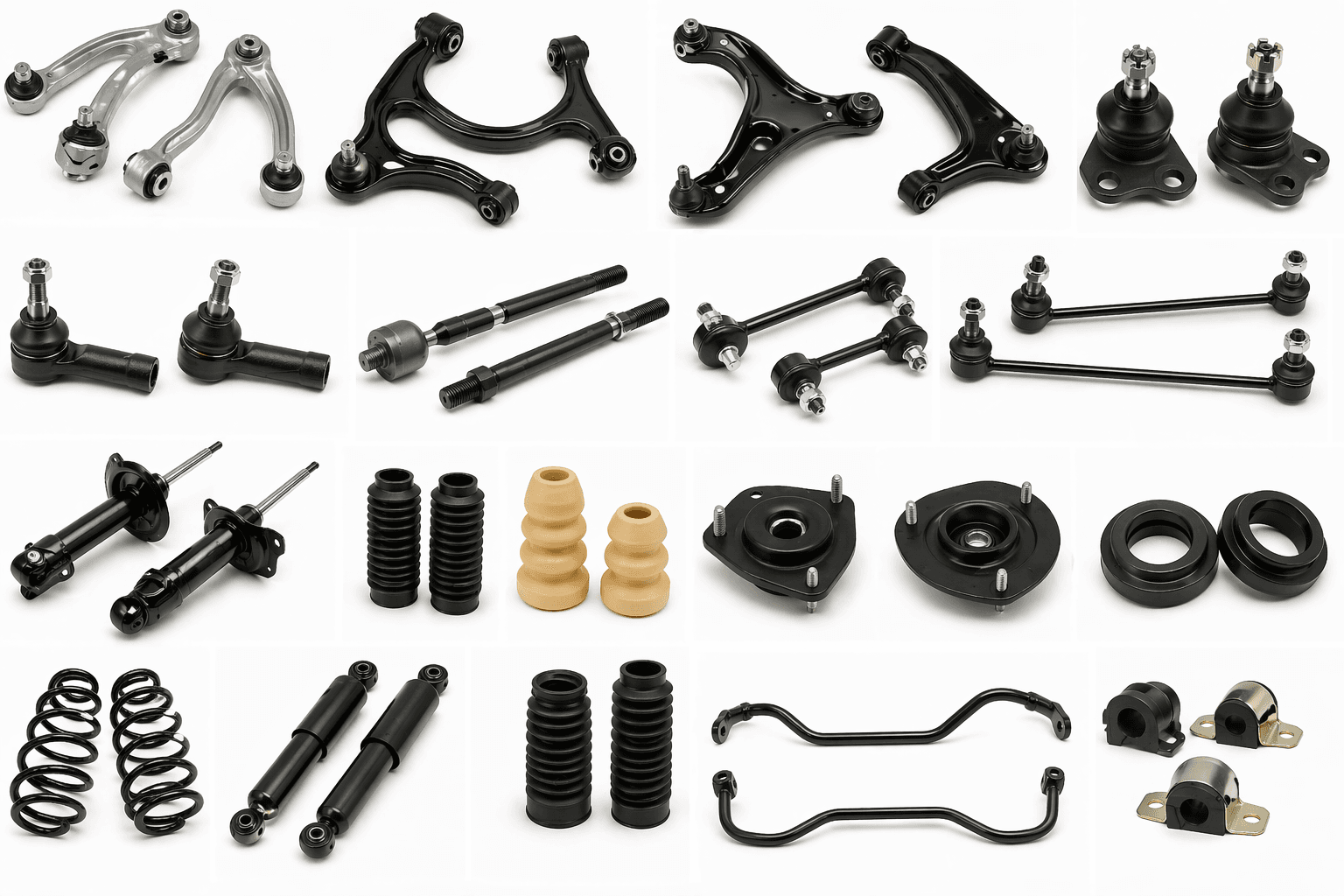
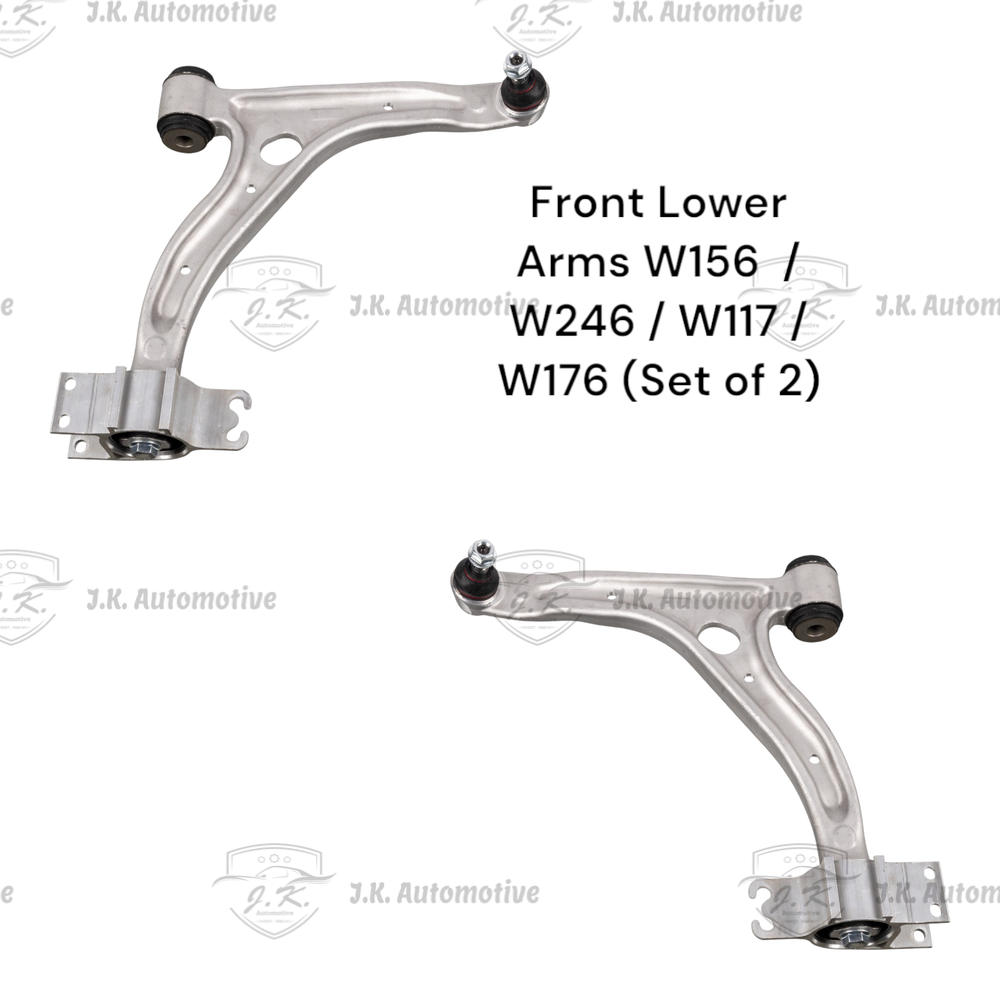
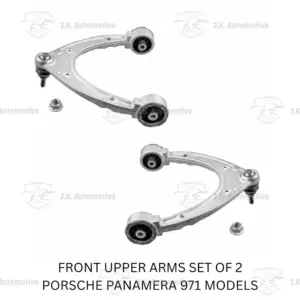
Mercedes-Benz A-Class W176 Front Lower Arms are major wheel-locating components of the front suspension system, supplied here as a Set of 2 for the Mercedes-Benz A-Class W176 from 2012–2018 with OEM references A2463304700 / A2463301707 / A2423300700 & A2463304800 / A2463301807 / A2423300800. The left-hand arm is associated with A2463304700 / A2463301707 / A2423300700, while the corresponding right-hand application uses A2463304800 / A2463301807 / A2423300800. Suspension catalogues identify these components as front lower control-arm and ball-joint assemblies, with the A2463304700 / A2463301707 / A2423300700 family specifically identified for the front lower left position. The principal function of the lower control arms is to connect and locate the front wheel assemblies relative to the vehicle structure while allowing controlled suspension travel. When the Mercedes-Benz A-Class W176 passes over potholes, speed breakers, broken roads or uneven surfaces, the suspension must allow vertical wheel movement without permitting uncontrolled longitudinal or lateral movement. The lower control arms therefore contribute directly to suspension geometry, wheel positioning and predictable handling. During braking, significant forces are transmitted through the front suspension, and healthy lower arms help keep the wheel assemblies correctly positioned instead of allowing excessive movement through deteriorated bushes or joints. During acceleration and cornering, the arms similarly help maintain consistent wheel control and tyre contact. This is important for steering precision because the steering system cannot perform correctly if worn suspension components allow the wheel to move independently of the intended geometry. The control-arm bushes also help isolate road vibration while allowing the limited movement required for normal suspension operation. Over time, these bushes and associated joints can deteriorate due to mileage, age, road impacts and repeated suspension loading. When wear becomes excessive, possible symptoms include knocking or clunking, vague steering, vibration, unstable braking behaviour and irregular tyre wear. However, these symptoms should not automatically be attributed to the lower arms because tie rod ends, wheel bearings, shock absorbers, strut mounts, ball joints, sway bar links, sway links, anti roll link rods and stabiliser sway links can produce overlapping symptoms. A professional suspension inspection is therefore recommended before replacement. When the corresponding front lower arms are confirmed worn, replacing the Set of 2 can help restore more consistent left-to-right suspension behaviour. The exact OEM references should be checked against the original components or vehicle identification before ordering. After installation, the suspension should be inspected again and wheel alignment should be checked to help establish correct geometry. Properly functioning Mercedes-Benz A-Class W176 Front Lower Arms can support precise steering, controlled braking, predictable cornering, consistent tyre contact, balanced tyre wear and the refined driving behaviour expected from a premium Mercedes-Benz compact car.
Which Mercedes-Benz A-Class W176 models are compatible with A2463304700 / A2463301707 / A2423300700 & A2463304800 / A2463301807 / A2423300800?
This Front Lower Arms Set of 2 is listed for the Mercedes-Benz A-Class W176 from 2012–2018 and carries the exact OEM reference groups A2463304700 / A2463301707 / A2423300700 & A2463304800 / A2463301807 / A2423300800. The current JK Automotive product listing specifies Mercedes-Benz A-Class W176 compatibility and the 2012–2018 supplied year range, while independent suspension catalogues also associate the A2463304700 / A2463301707 / A2423300700 reference family with the W176 platform. The different numbers grouped together for each side are important because automotive manufacturers can revise or supersede component references during a vehicle's production life. For this product, the first reference group A2463304700 / A2463301707 / A2423300700 corresponds to one side, while A2463304800 / A2463301807 / A2423300800 corresponds to the opposite side. RIW independently identifies 2463301707 and 2463304700 as front lower left references and 2463301807 and 2463304800 as front lower right references for the W176. Nevertheless, fitment should not be confirmed only because a vehicle is called an A-Class or because its registration year falls within the supplied range. The chassis code should be W176, and the original OEM references should ideally be compared with the numbers supplied in this product listing. Where any uncertainty remains, VIN-based parts-catalogue verification is recommended before ordering. This is particularly useful because Mercedes-Benz vehicles can have differences according to production date, engine, drivetrain and suspension specification. Correct compatibility is important because the front lower control arms determine wheel position and form part of the vehicle's suspension geometry. Installing an incorrect arm could result in mounting or geometry problems even if the component looks visually similar. Once compatibility is established, the Set of 2 provides corresponding components for both sides of the front axle. Replacing both sides can be beneficial when both original arms have developed comparable age-related wear, although replacement should always follow inspection rather than being based solely on mileage. During inspection, technicians should assess bush condition, ball-joint play, mounting points and the physical condition of the arms. Related components including tie rod ends, shock absorbers, strut mounts, wheel bearings, sway bar links and suspension bushes should also be examined. Tyres should be checked for irregular wear because excessive inner-edge or outer-edge wear may indicate suspension or alignment issues. After fitting the correct arms, a wheel-alignment check is recommended. Accurate OEM-reference matching, professional installation and correct alignment together provide the best approach to restoring Mercedes-Benz A-Class W176 front suspension performance.
What do OEM numbers A2463304700 / A2463301707 / A2423300700 and A2463304800 / A2463301807 / A2423300800 mean?
A2463304700 / A2463301707 / A2423300700 and A2463304800 / A2463301807 / A2423300800 are the OEM reference groups supplied with this Mercedes-Benz A-Class W176 Front Lower Arms Set of 2, and these numbers are valuable for identifying the correct suspension components before purchase. The first group, A2463304700 / A2463301707 / A2423300700, corresponds to the front lower left control-arm application, while A2463304800 / A2463301807 / A2423300800 represents the corresponding opposite-side application. Independent suspension catalogues confirm A2463304700, A2463301707 and A2423300700 as references for a front left lower suspension control-arm and ball-joint assembly, while RIW identifies 2463301807 and 2463304800 for the front lower right position. Multiple references associated with one component can occur because manufacturers introduce engineering revisions, production changes or superseding part numbers over the service life of a vehicle. For a customer, the practical advantage is that these references provide a much more precise way to identify a suspension component than relying only on photographs or general descriptions such as “A-Class front lower arm.” This product retains the exact reference sequence A2463304700 / A2463301707 / A2423300700 & A2463304800 / A2463301807 / A2423300800 and is listed for the Mercedes-Benz A-Class W176 from 2012–2018. Before ordering, customers or workshops should compare these numbers with the original component, a reliable parts catalogue or VIN-specific vehicle information. This is particularly important because the same Mercedes-Benz model family can contain different suspension configurations. Correct OEM-reference matching helps reduce the risk of ordering a component with the wrong mounting arrangement or suspension geometry. Once installed, these front lower arms form an important structural connection between the front wheel assemblies and the chassis. They allow suspension travel while helping prevent unwanted wheel movement during braking, acceleration and cornering. Their bushes help absorb vibration and manage suspension loads, while the joint arrangement permits controlled articulation as the wheels move and steer. If the bushes or joints become worn, the suspension geometry can change dynamically while the vehicle is moving, even if a static alignment measurement initially appears close to specification. This can contribute to vague steering, knocking, braking instability or tyre wear. For this reason, correct part identification should be combined with professional diagnosis and installation. Related components such as ball joints, tie rods, wheel bearings, shocks, mounts and stabilizer links should also be checked. After replacement, wheel alignment should be inspected to ensure that the suspension is operating with appropriate geometry and to help protect the tyres from premature wear.
What are the symptoms of worn Front Lower Arms on a Mercedes-Benz A-Class W176?
Worn Mercedes-Benz A-Class W176 Front Lower Arms can produce several symptoms involving suspension noise, steering precision, braking stability, wheel movement and tyre wear, although a professional inspection is necessary because many front suspension components can create similar symptoms. One common warning sign is knocking or clunking from the front suspension when travelling over potholes, speed breakers or broken road surfaces. The lower control arms contain bushes and joint assemblies that allow controlled movement while keeping the front wheels correctly located, and excessive wear can permit movement beyond the intended tolerance. This unwanted movement can generate noise as suspension loads change. Another possible symptom is vague or imprecise steering. The steering system depends on the suspension holding the wheel assembly in a predictable position, so worn lower-arm bushes or joints can allow the wheel to shift slightly under braking, acceleration or cornering loads. A driver may notice that the Mercedes-Benz A-Class W176 requires more steering correction than before or feels less planted on uneven roads. Changes during braking are another possible indication because substantial forces pass through the front suspension as weight transfers forward. Excessive control-arm movement can make the vehicle feel less settled under braking even when the brake discs and pads themselves are functioning correctly. Irregular tyre wear should also prompt suspension inspection. Inner-edge wear, outer-edge wear, feathering or unusually rapid tyre deterioration can indicate that the wheel is not maintaining the intended geometry during driving. However, tyre wear can also result from incorrect tyre pressure, wheel alignment or other suspension faults, so it should not be treated as proof that the lower arms require replacement. The correct replacement Set of 2 for this application uses OEM references A2463304700 / A2463301707 / A2423300700 & A2463304800 / A2463301807 / A2423300800 and is listed for the Mercedes-Benz A-Class W176 from 2012–2018. When symptoms are present, technicians should inspect the control-arm bushes, ball joints and mounting areas for excessive movement, cracking or physical damage. Tie rod ends, steering components, shock absorbers, strut mounts and wheel bearings should be inspected simultaneously. Sway bar links, sway links, anti roll link rods and stabiliser sway links are particularly important to check when the main complaint is knocking over rough roads because worn stabilizer joints can produce similar noises. The tyres should also be examined across the full tread width. If the lower arms are confirmed worn, replacing the required components and subsequently checking wheel alignment can help restore steering precision, stable wheel positioning and consistent tyre contact.
Why is it beneficial to replace both Mercedes-Benz A-Class W176 Front Lower Arms as a Set of 2?
Replacing both Mercedes-Benz A-Class W176 Front Lower Arms as a Set of 2 can provide a more balanced front suspension repair when inspection confirms significant wear on both corresponding sides. The left and right lower control arms operate on the same front axle and experience many of the same influences, including vehicle mileage, road impacts, braking loads, cornering forces, heat, contamination and age-related deterioration of rubber components. This product is supplied as a Set of 2 using OEM references A2463304700 / A2463301707 / A2423300700 for one side and A2463304800 / A2463301807 / A2423300800 for the opposite side, with the listing specifying Mercedes-Benz A-Class W176 2012–2018 compatibility. If one original control arm has developed severe bush deterioration, the opposite arm may have experienced similar service conditions, although its actual condition should still be checked rather than assumed. When both sides are worn, replacing the pair can provide more consistent bush stiffness and suspension response across the front axle. Leaving one heavily aged component alongside a new control arm could allow different amounts of movement from side to side. A balanced repair can therefore help support predictable steering, braking and cornering behaviour. Complete control-arm replacement also addresses more of the assembly than simply replacing an isolated bush when the arm or joint assembly itself has additional wear or damage. Independent catalogues describe the relevant A2463304700 / A2463301707 / A2423300700 application as a suspension control-arm and ball-joint assembly. Nevertheless, replacing both arms should not be considered mandatory in every situation solely because one component is damaged. For example, if one arm has suffered isolated impact damage while the opposite arm is confirmed to be in excellent condition, the workshop should determine the appropriate repair based on inspection and manufacturer procedures. When both arms show age-related deterioration, however, the Set of 2 provides a convenient comprehensive solution. During replacement, technicians should inspect related suspension and steering components because fitting new lower arms will not correct problems originating from worn tie rod ends, damaged shock absorbers, wheel bearings or stabilizer components. Sway bar links, sway links, anti roll link rods and stabiliser sway links should also be inspected. Tyres should be checked for irregular wear and correct pressure. After the suspension repair is completed, wheel alignment should be checked because the lower control arms influence wheel positioning and suspension geometry. A correctly repaired and aligned front suspension can help provide balanced tyre wear, stable braking, predictable cornering and refined Mercedes-Benz A-Class W176 handling.
Is wheel alignment required after replacing Mercedes-Benz A-Class W176 Front Lower Arms?
How do worn Mercedes-Benz A-Class W176 Front Lower Arms affect steering, handling and ride quality?
Worn Mercedes-Benz A-Class W176 Front Lower Arms can noticeably affect steering accuracy, front suspension stability, braking behaviour, tyre contact and overall ride quality because these arms are responsible for locating the front wheels while allowing controlled suspension movement. The Set of 2 uses OEM references A2463304700 / A2463301707 / A2423300700 for the front left side and A2463304800 / A2463301807 / A2423300800 for the front right side; parts catalogues confirm the left/right positioning and W176 application of these reference families. When the control-arm bushes and ball-joint assemblies remain serviceable, they help keep the wheels positioned according to the intended suspension geometry while the vehicle accelerates, brakes, corners and travels over uneven roads. As the bushes or joints deteriorate, unwanted movement can develop between the wheel assembly and vehicle structure. This can make steering feel less direct because steering input is no longer translated into wheel movement with the same consistency. The vehicle may feel vague around the straight-ahead position, require additional steering correction or feel unsettled when changing lanes. During braking, worn lower arms can allow excessive wheel movement as weight transfers towards the front axle, potentially reducing the planted and controlled feeling expected from the Mercedes-Benz A-Class W176. Cornering behaviour may also deteriorate because accurate wheel positioning is important for maintaining consistent tyre contact and predictable handling. Drivers can sometimes experience knocking or clunking when driving over potholes, speed breakers or rough surfaces, particularly when worn bushes or joints move under changing suspension loads. Ride refinement can also decline as deteriorated suspension components transmit movement or noise that would normally be controlled by healthy bushes and joints. Uneven tyre wear is another reason to inspect these components because excessive suspension movement can influence dynamic wheel geometry. Inner-edge wear, outer-edge wear or feathering should therefore prompt a complete suspension and alignment inspection. However, the lower arms should not automatically be blamed for every steering or suspension symptom. Tie rod ends, strut mounts, shock absorbers, wheel bearings, steering joints, sway bar links, sway links, anti roll link rods and stabiliser sway links can produce overlapping symptoms. A professional technician should inspect the entire front suspension before deciding which components require replacement. If the front lower control arms are confirmed worn, replacing the corresponding components can help restore more controlled wheel movement and provide a sound mechanical foundation for accurate alignment. Correctly functioning Mercedes-Benz A-Class W176 Front Lower Arms support steering precision, stable braking, predictable cornering, balanced tyre wear and the refined driving characteristics expected from this premium compact Mercedes-Benz.
Can worn Mercedes-Benz A-Class W176 Front Lower Arms cause uneven tyre wear and wheel alignment problems?
Yes, worn Mercedes-Benz A-Class W176 Front Lower Arms can contribute to uneven tyre wear and unstable wheel geometry because the lower control arms help locate the front wheels relative to the vehicle structure. This Set of 2 corresponds to OEM references A2463304700 / A2463301707 / A2423300700 & A2463304800 / A2463301807 / A2423300800, with parts catalogues identifying A2463304700 as the front lower left arm and A2463304800 as the corresponding front lower right arm for W176 applications. The suspension geometry of a vehicle depends not only on adjustment settings but also on the mechanical condition of the components that hold each wheel in position. When control-arm bushes and joints are healthy, they permit the intended suspension articulation while restricting unwanted movement. As bushes deteriorate or ball joints develop excessive play, the wheel can potentially shift under acceleration, braking and cornering loads. This means that a vehicle can sometimes display acceptable geometry while stationary on an alignment machine but experience undesirable geometry changes when the suspension is loaded on the road. One result can be irregular tyre wear. The driver may notice increased wear along the inner shoulder, outer shoulder or particular areas of the tread. Feathering across the tread blocks can also indicate that alignment or suspension condition requires attention. Rapid deterioration of one front tyre compared with the opposite side should likewise lead to a mechanical inspection. However, uneven tyre wear does not automatically mean the lower control arms are defective. Incorrect tyre pressure, damaged wheels, worn tie rod ends, faulty wheel bearings, damaged suspension components and incorrect wheel alignment can produce similar symptoms. The complete front suspension should therefore be inspected before replacing parts. The technician should check the bushes and ball joints incorporated into the control-arm assemblies, along with shock absorbers, strut mounts, steering joints, tie rod ends and related hardware. Sway bar links, sway links, anti roll link rods and stabiliser sway links should also be examined, particularly if suspension noise is present. If excessive control-arm wear is confirmed, replacing the affected Mercedes-Benz A-Class W176 Front Lower Arms helps remove unwanted movement before final alignment is performed. The tyres should then be checked for condition and pressure, and severely unevenly worn tyres may require replacement even after the mechanical fault has been corrected. A professional wheel alignment check following control-arm replacement helps establish the appropriate suspension geometry and identify any remaining problems. Maintaining healthy front lower arms, accurate wheel geometry and serviceable tyres together supports predictable steering, balanced tyre life, stable road contact and safe, refined Mercedes-Benz A-Class W176 handling.
What other suspension components should be checked when replacing Mercedes-Benz A-Class W176 Front Lower Arms?
When replacing Mercedes-Benz A-Class W176 Front Lower Arms, the workshop should inspect the complete front steering and suspension system because several components work together to control wheel movement, steering response, ride comfort and suspension geometry. The supplied Set of 2 uses OEM references A2463304700 / A2463301707 / A2423300700 & A2463304800 / A2463301807 / A2423300800. The A2463304700 reference is catalogued as a front axle left lower control arm supplied with a ball joint and bushing, illustrating that the assembly incorporates several wear-sensitive elements rather than functioning as a simple rigid link. The corresponding right-hand reference A2463304800 is likewise identified for the front right lower position. Before installation, technicians should inspect the control-arm mounting points and associated hardware for damage, corrosion or deformation. Tie rod ends should be checked because excessive steering-joint play can produce vague steering, knocking and abnormal tyre wear similar to control-arm problems. Shock absorbers should be examined for leakage, damage and reduced damping performance, while strut mounts and bearings should be assessed for noise or excessive movement. Wheel bearings are another important inspection point because bearing play can affect wheel stability and can sometimes be mistaken for suspension or steering looseness. The stabilizer system should also receive attention. Sway bar links, sway links, anti roll link rods and stabiliser sway links connect the suspension to the anti-roll system and can develop joint wear that produces knocking or rattling over rough roads. Stabilizer bushes should also be inspected for deterioration. Steering components should be examined for free play, damaged boots or other signs of wear. The front tyres provide additional diagnostic information and should be inspected across their entire tread width for inner-edge wear, outer-edge wear, feathering, cupping or other irregular patterns. Wheel damage and tyre pressure should also be checked. If the vehicle has been subjected to a severe pothole or impact, the workshop should ensure that no suspension mounting point, wheel or associated component has been bent. A comprehensive inspection is valuable because replacing only the lower control arms cannot correct a separate fault elsewhere in the suspension. Once all diagnosed worn components have been replaced, the complete assembly should be checked for correct installation and unrestricted suspension movement. A professional wheel alignment should then be performed. This systematic approach helps the new Mercedes-Benz A-Class W176 Front Lower Arms operate as intended and supports steering precision, suspension stability, balanced tyre wear and refined ride quality.
Why should Mercedes-Benz A-Class W176 Front Lower Arms be professionally installed and aligned after replacement?
Professional installation of Mercedes-Benz A-Class W176 Front Lower Arms is strongly recommended because these components directly locate the front wheels and therefore have an important influence on suspension geometry, steering behaviour and vehicle stability. The Set of 2 uses the exact OEM reference groups A2463304700 / A2463301707 / A2423300700 & A2463304800 / A2463301807 / A2423300800. Independent catalogues identify these as corresponding left and right front lower suspension control-arm applications, with the left assembly described as a forged-aluminium control-arm and ball-joint assembly. Correct installation requires more than simply removing the old arms and installing new components. The vehicle must be safely supported, the correct fasteners must be removed and installed according to the appropriate repair procedure, and surrounding components must not be damaged during the work. Control-arm bushes are designed to operate within a particular movement range, so correct installation procedure and fastener tightening are important for bush service life and suspension operation. The technician should also examine the mounting points and hardware for damage before fitting replacement components. Once installed, the new arms restore a more controlled mechanical connection between the wheel assemblies and chassis, but wheel geometry still needs to be checked. If the vehicle was previously driven with deteriorated bushes or excessive joint movement, its tyres may have developed irregular wear and its previous alignment condition may no longer represent the geometry of the repaired suspension. A professional alignment check allows the technician to measure the wheel geometry after the mechanical work has been completed. If readings remain abnormal, this can also help identify another worn, bent or incorrectly installed component requiring investigation. The tyres should be inspected before final alignment because severe wear, damage or incorrect inflation can affect vehicle behaviour even when the suspension is mechanically sound. Related components such as tie rod ends, steering joints, wheel bearings, shock absorbers and strut mounts should also be checked. Sway bar links, sway links, anti roll link rods and stabiliser sway links should be inspected for joint play and damaged boots. After installation and alignment, the vehicle should have controlled wheel movement without abnormal noises or looseness. A properly repaired front suspension helps maintain straight-line stability, predictable braking, steering precision and consistent tyre contact. Professional installation and wheel alignment therefore help ensure that the replacement Mercedes-Benz A-Class W176 Front Lower Arms provide the intended suspension performance while reducing the likelihood of premature tyre wear or poor handling caused by incorrect geometry.
Why is Stokes Germany a European-quality alternative to Lemförder, FEBI, Meyle and other established brands for Mercedes-Benz A-Class W176?


Reviews
There are no reviews yet.