What is the Stokes Germany Rear Castor Rod / Tie Rod End Assembly Set of 2 for Jaguar XF I X250?
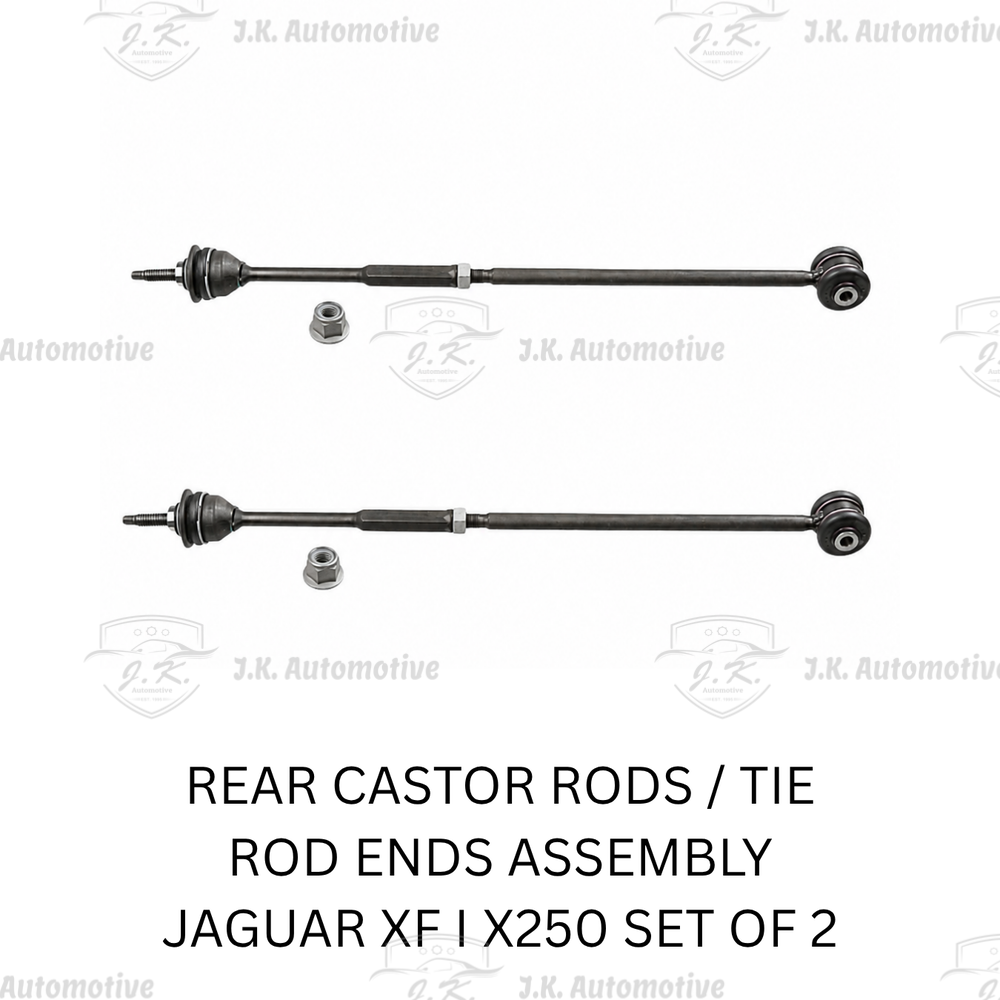
The Stokes Germany Rear Castor Rod / Tie Rod End Assembly Set of 2 for Jaguar XF I X250 is a premium aftermarket rear suspension and wheel-control component set designed for the Jaguar XF I X250 from 2009–2016. The Set of 2 corresponds to OEM references C2D5992 & C2D5993, and these exact references should be checked together with the vehicle model, chassis, year range and rear suspension position before ordering. Rear castor rods and related tie rod assemblies form part of the suspension-link system responsible for helping maintain controlled rear-wheel positioning as the suspension moves through its operating range. During acceleration, braking, cornering and travel over uneven roads, suspension links are continually subjected to changing forces and help maintain the intended relationship between the wheel assembly and vehicle chassis. This function is particularly important on a premium sports-luxury sedan such as the Jaguar XF I X250, where stable road behaviour, predictable handling, refined ride quality and accurate suspension geometry contribute directly to the driving experience. With increasing mileage, suspension joints, bushes and mounting points can deteriorate because of repeated movement, road impacts, potholes, speed breakers, environmental exposure and normal ageing. Excessive wear can contribute to rear suspension knocking, an unsettled feeling from the rear axle, reduced stability, changes in cornering behaviour and irregular tyre wear. When professional inspection confirms deterioration in the corresponding rear assemblies, replacing the required components with this Stokes Germany Set of 2 can help restore the mechanical foundation required for controlled rear-wheel movement and accurate suspension operation. The complete rear suspension should still be inspected because similar symptoms can originate from other components. Rear shock absorbers, wheel bearings, control arm bushes and mounting hardware should be examined for deterioration. Sway bar links, sway links, anti roll link rods and stabiliser sway links should also be checked for excessive movement or worn joints. Rear tyres should be inspected across their complete tread width for irregular wear, physical damage and correct inflation pressure. Professional installation followed by complete wheel alignment is recommended after replacement to support accurate suspension geometry, stable handling, consistent tyre contact, refined ride comfort and the premium driving dynamics expected from the Jaguar XF I X250.
Which Jaguar XF I X250 models are compatible with this Rear Castor Rod / Tie Rod End Assembly Set of 2?
This Stokes Germany Rear Castor Rod / Tie Rod End Assembly Set of 2 is specified for the supplied Jaguar XF I X250 application from 2009–2016 and corresponds to OEM references C2D5992 & C2D5993. Before purchasing the set, customers should verify the Jaguar XF I X250 model designation, supplied 2009–2016 year range, rear suspension position, Set of 2 configuration and both OEM references against the components required for their vehicle. Exact fitment verification is important with premium European suspension components because visually similar suspension links can have different dimensions, mounting arrangements, joint configurations or left/right applications. Buyers should therefore avoid choosing the product solely because its physical appearance resembles the component currently installed on the vehicle. The OEM references C2D5992 & C2D5993 provide an important basis for compatibility checking and should be preserved exactly during product identification. The rear suspension of the Jaguar XF I X250 contains multiple links that work together to maintain wheel position as the suspension responds to changing road conditions. Correctly functioning suspension links help support stable rear-wheel geometry, consistent tyre contact, predictable cornering and controlled vehicle behaviour. If the existing components develop excessive movement in their joints or bushes, the driver may experience knocking or clunking, unusual rear-axle movement, reduced handling precision or irregular tyre wear. These symptoms should be professionally diagnosed before replacement because several suspension components can produce similar behaviour. Rear shock absorbers, wheel bearings, remaining control arms, suspension bushes and mounting points should therefore be inspected. Sway bar links, sway links, anti roll link rods and stabiliser sway links should also be checked because wear in these components can produce rattling or knocking over uneven roads. Rear tyres should be examined for uneven tread wear, damage and correct inflation pressure. Once the Jaguar XF I X250 2009–2016 application and OEM references C2D5992 & C2D5993 have been verified, this Stokes Germany Set of 2 provides a premium aftermarket solution for the corresponding rear suspension repair. Professional installation and complete wheel alignment are recommended to help preserve the stable handling, refined ride quality and premium driving characteristics expected from the Jaguar XF I X250.
What are OEM numbers C2D5992 & C2D5993 for the Jaguar XF I X250?
OEM references C2D5992 & C2D5993 are the exact reference numbers supplied for this Stokes Germany Rear Castor Rod / Tie Rod End Assembly Set of 2 for the Jaguar XF I X250 from 2009–2016. These references are important when identifying the corresponding replacement suspension assemblies and should be checked together with the Jaguar XF I X250 chassis designation, supplied year range, rear suspension location and Set of 2 configuration before purchase. When shopping for Jaguar XF suspension parts, OEM-number matching provides a more precise method of product identification than relying only on a general description such as rear suspension arm, castor rod or tie rod end assembly. Customers searching for C2D5992 or C2D5993 should therefore compare both references with their required components and vehicle-specific parts information before ordering. The rear suspension links represented by these references help maintain controlled wheel positioning as the Jaguar responds to acceleration, braking, cornering and uneven road surfaces. Correct rear-wheel positioning is important because changes in suspension geometry can influence tyre contact, vehicle stability, cornering behaviour and tyre wear. On a premium vehicle such as the Jaguar XF I X250, maintaining accurate suspension operation also contributes to the refined ride quality and responsive road behaviour expected from the vehicle. If the corresponding existing components have developed worn joints, deteriorated bushes or excessive movement, replacement may be required after professional inspection. Possible symptoms can include knocking or clunking, unwanted rear-wheel movement, reduced rear-axle stability and irregular tyre wear. However, these symptoms do not prove that C2D5992 & C2D5993 components are the only parts requiring attention. A qualified technician should inspect the entire rear suspension before determining the repair. Rear shock absorbers, wheel bearings, other control arms, suspension bushes and mounting hardware should be checked. Sway bar links, sway links, anti roll link rods and stabiliser sway links should also be examined for wear. Tyres should be inspected for abnormal tread patterns that may indicate existing geometry problems. After replacing professionally diagnosed worn components, complete wheel alignment should be performed to support accurate suspension geometry, stable handling, consistent tyre performance and refined Jaguar XF I X250 driving dynamics.
What are the symptoms of worn Rear Castor Rod / Tie Rod End Assemblies on a Jaguar XF I X250?
Symptoms of worn Rear Castor Rod / Tie Rod End Assemblies on a Jaguar XF I X250 can include knocking or clunking from the rear suspension, an unsettled feeling from the rear axle, reduced directional stability, changes in cornering behaviour and irregular rear tyre wear. Suspension links help maintain the intended position of the rear wheels as the suspension responds to braking, acceleration, cornering and changing road surfaces. When the joints, bushes or mounting points associated with these assemblies develop excessive wear, the rear wheel may have more unwanted movement than intended under changing loads. The driver may notice that the Jaguar feels less planted during faster lane changes or cornering, particularly when road surfaces are uneven. Knocking or clunking can become more noticeable over potholes, broken surfaces and speed breakers because these conditions repeatedly load and unload the suspension. Tyre wear is another important reason to inspect the rear suspension. Inner-edge wear, outer-edge wear, feathering or uneven tread depth can develop when worn suspension components contribute to changes in wheel geometry or allow excessive movement while driving. This Stokes Germany Rear Castor Rod / Tie Rod End Assembly Set of 2 corresponds to OEM references C2D5992 & C2D5993 for the supplied Jaguar XF I X250 2009–2016 application. When professional diagnosis confirms wear in the corresponding assemblies, replacing the required components can help restore controlled rear-wheel positioning and provide the mechanical foundation necessary for accurate suspension geometry. However, suspension noise and irregular tyre wear should never be attributed automatically to one component. Rear shock absorbers, wheel bearings, other suspension links, control arm bushes and mounting hardware can produce overlapping symptoms and should be inspected. Sway bar links, sway links, anti roll link rods and stabiliser sway links are particularly important to check when knocking or rattling is present. Rear tyres should also be examined for physical damage and correct inflation pressure. Once all professionally diagnosed worn components have been repaired, complete wheel alignment should be carried out to support accurate geometry, predictable handling, consistent tyre contact, refined ride quality and the premium sports-luxury driving characteristics expected from the Jaguar XF I X250.
What are the benefits of replacing the Jaguar XF I X250 Rear Castor Rod / Tie Rod End Assemblies as a Set of 2?
Replacing the Jaguar XF I X250 Rear Castor Rod / Tie Rod End Assemblies as a Set of 2 can provide a comprehensive approach when professional inspection confirms deterioration in both corresponding rear suspension components. This Stokes Germany Set of 2 is specified for the supplied Jaguar XF I X250 2009–2016 application and corresponds to OEM references C2D5992 & C2D5993. Components operating on the same axle experience similar mileage, road conditions, suspension movement and vehicle loads, although the actual degree of wear can differ from one side to the other. When both corresponding components are confirmed worn, replacing the pair during the same repair can reduce the need for repeated suspension dismantling and provide a more complete foundation for restoring rear suspension performance. Serviceable suspension links help maintain controlled wheel positioning during acceleration, braking, cornering and vertical suspension travel. This controlled movement supports suspension geometry, consistent tyre contact, stable road behaviour and predictable handling. These characteristics are particularly important on the Jaguar XF I X250 because the vehicle combines luxury ride expectations with responsive driving dynamics. Excessive movement in worn rear suspension components can reduce this precision and may contribute to an unsettled rear axle, knocking noises or irregular tyre wear. Replacing professionally diagnosed worn C2D5992 & C2D5993 assemblies can therefore form an important part of restoring the vehicle's suspension condition. A Set of 2 should not, however, be treated as evidence that both components automatically require replacement without inspection. The complete suspension should first be assessed by a qualified technician. Rear shock absorbers, wheel bearings, remaining control arms, suspension bushes and mounting hardware should be checked at the same time. Sway bar links, sway links, anti roll link rods and stabiliser sway links should also be examined because worn stabiliser components can affect suspension behaviour and generate similar noises. Rear tyres should be checked across the full tread width for irregular wear and correct pressure. After the required components have been professionally installed, complete wheel alignment is recommended to support accurate rear-wheel geometry, consistent tyre performance, stable handling, refined ride comfort and premium Jaguar XF I X250 driving dynamics.
Is wheel alignment required after replacing the Rear Castor Rod / Tie Rod End Assembly Set of 2 on a Jaguar XF I X250?
Yes, complete professional wheel alignment is strongly recommended after replacing the Rear Castor Rod / Tie Rod End Assembly Set of 2 on a Jaguar XF I X250 because these components form part of the rear wheel-locating suspension system and replacement can influence wheel geometry. This Stokes Germany Set of 2 corresponds to OEM references C2D5992 & C2D5993 for the supplied Jaguar XF I X250 2009–2016 application. Suspension links are designed to maintain specific relationships between the wheel assembly and chassis, and removing and replacing them disturbs important mounting points within the rear suspension. Even relatively small changes in suspension position can influence wheel alignment and tyre behaviour. Complete alignment after installation helps verify that wheel geometry is within the appropriate vehicle specification and supports predictable handling, straight-line stability and consistent tyre contact. It is particularly important to inspect the tyres before alignment because existing inner-edge wear, outer-edge wear, feathering or other abnormal tread patterns can provide evidence of previous suspension or geometry problems. Before final alignment, the technician should ensure that all required replacement components have been correctly installed and that no significant looseness remains elsewhere in the suspension. Rear shock absorbers, wheel bearings, remaining control arms, suspension bushes and mounting hardware should therefore be checked. Sway bar links, sway links, anti roll link rods and stabiliser sway links should also be inspected for worn joints or excessive movement. If another significant suspension defect is present, it should normally be addressed before final alignment so that accurate and stable geometry can be achieved. A complete four-wheel alignment is preferable because it allows the relationship between the front and rear wheel geometry to be evaluated rather than treating the repaired rear suspension independently. On a premium sports-luxury sedan such as the Jaguar XF I X250, accurate suspension geometry contributes to steering confidence, rear-axle stability, predictable cornering, consistent tyre performance and refined road manners. Professional installation followed by complete wheel alignment therefore provides the appropriate finishing procedure after replacement of the Jaguar XF I X250 Rear Castor Rod / Tie Rod End Assembly Set of 2.
How do worn Rear Castor Rod / Tie Rod End Assemblies affect the handling and ride quality of a Jaguar XF I X250?
Worn Rear Castor Rod / Tie Rod End Assemblies can affect the handling, rear-wheel geometry, directional stability, tyre contact and refined ride quality of the Jaguar XF I X250 because these components form part of the rear suspension linkage responsible for controlling wheel position. Jaguar parts information associates C2D5992 and C2D5993 with the XF rear suspension, while aftermarket technical catalogues identify these references within rear tie rod or steering tie rod assembly applications. During acceleration, braking, cornering and suspension travel, these links are subjected to changing forces as the rear wheels move relative to the vehicle body. When joints, bushes or mounting areas develop excessive play, the wheel may no longer remain as precisely controlled under load. Drivers can experience an unsettled feeling from the rear axle, reduced confidence during faster lane changes, changes in cornering behaviour or increased sensitivity to uneven road surfaces. Knocking, clicking or clunking may also become noticeable as worn suspension components move under changing loads. Another important symptom is irregular rear tyre wear because deterioration in wheel-locating links can contribute to unwanted changes in rear suspension geometry. Inner-edge wear, outer-edge wear, feathering or accelerated tread wear should therefore prompt inspection of the complete suspension and alignment system rather than simply replacing the tyres. This Stokes Germany Rear Castor Rod / Tie Rod End Assembly Set of 2 is specified for the Jaguar XF I X250 2009–2016 application with OEM references C2D5992 & C2D5993. The complete rear suspension should still be professionally inspected because other components can produce similar symptoms. Rear shock absorbers, wheel bearings, control arms, bushes and mounting hardware should be examined for deterioration or excessive movement. Sway bar links, sway links, anti roll link rods and stabiliser sway links should also be inspected where applicable. Once professionally diagnosed worn components have been replaced, complete wheel alignment is recommended to help restore accurate rear-wheel geometry, consistent tyre contact, predictable cornering, refined ride comfort and the premium sports-luxury driving dynamics expected from the Jaguar XF I X250.
When should the Jaguar XF I X250 Rear Castor Rod / Tie Rod End Assembly Set of 2 be replaced?
The Jaguar XF I X250 Rear Castor Rod / Tie Rod End Assembly Set of 2 should be considered for replacement when professional inspection identifies excessive play, deterioration, damaged joints, deteriorated bushes, deformation or unwanted movement in the corresponding rear suspension links. There is no single replacement mileage that applies to every Jaguar XF I X250 because component service life depends on road conditions, vehicle mileage, pothole exposure, driving style, vehicle loading, environmental conditions and previous suspension repairs. Common indications that inspection is required include rear suspension knocking or clunking, irregular rear tyre wear, an unsettled rear axle, reduced directional stability and changes in handling during cornering. The relationship between these components and wheel alignment is particularly important because tie rod or adjustable suspension links can influence the position of the wheel relative to the chassis. Technical parts information describes related Jaguar rear tie rod assemblies under names including tie rod, adjust link and alignment camber/toe lateral link, demonstrating their relationship with rear suspension geometry. This Stokes Germany Set of 2 corresponds to OEM references C2D5992 & C2D5993 for the supplied Jaguar XF I X250 2009–2016 application. JK Automotive's current product information also lists the product as a Set of 2 for XF I X250 2009–2016 with these exact OEM references. If both corresponding assemblies have accumulated similar mileage and inspection confirms deterioration, replacing the required pair can provide a comprehensive approach to the repair. However, components should not be replaced solely because they are included as a pair; professional diagnosis should determine the actual condition of the suspension. Rear shock absorbers, wheel bearings, other control arms, suspension bushes and mounting hardware should also be examined. Sway bar links, sway links, anti roll link rods and stabiliser sway links should be checked for excessive movement or worn joints. Rear tyres should be inspected across their full tread width for abnormal wear and physical damage. Following installation of the required components, complete wheel alignment is recommended to support accurate geometry, stable handling, consistent tyre performance and the refined road behaviour expected from the Jaguar XF I X250.
What related suspension components should be inspected when replacing the Jaguar XF I X250 Rear Castor Rod / Tie Rod End Assembly Set?
When replacing the Jaguar XF I X250 Rear Castor Rod / Tie Rod End Assembly Set, the complete rear suspension should be inspected because these components operate as part of an interconnected suspension system rather than independently. The C2D5992 & C2D5993 references are associated with the Jaguar rear suspension/tie rod system, and technical aftermarket information identifies this type of component as a rear steering tie rod assembly with two units used per vehicle in relevant applications. Other rear suspension control arms and their bushes should be inspected for cracking, separation, deformation or excessive movement because deterioration elsewhere can continue to affect wheel positioning after new tie rod assemblies are installed. Rear shock absorbers and their mounting points should be examined because effective damping is necessary for controlling vertical wheel movement and maintaining consistent tyre contact. Wheel bearings should be checked for excessive play, roughness or abnormal noise because bearing deterioration can sometimes produce symptoms that resemble suspension problems. Sway bar links, sway links, anti roll link rods and stabiliser sway links should also be inspected for damaged boots, looseness or excessive joint movement, particularly when the original complaint includes knocking or rattling over uneven surfaces. Stabiliser bar bushes and mounting areas should also be examined where applicable. Suspension bolts, nuts and other mounting hardware should be inspected and handled according to the appropriate vehicle-specific workshop procedure. Rear tyres are equally important during diagnosis because unusual tread patterns can reveal existing suspension or alignment problems. Inner-edge wear, outer-edge wear, feathering or inconsistent tread depth should be investigated before the vehicle returns to service. This Stokes Germany Rear Castor Rod / Tie Rod End Assembly Set of 2 corresponds to OEM references C2D5992 & C2D5993 for the supplied Jaguar XF I X250 2009–2016 application. After all professionally diagnosed worn components have been repaired, complete four-wheel alignment should be carried out. This is particularly important because related Jaguar rear tie rod components are also described as alignment camber/toe lateral links in parts catalogues. A comprehensive inspection and accurate final alignment help support suspension geometry, consistent tyre contact, predictable handling, rear-axle stability and the premium ride quality expected from the Jaguar XF I X250.
Why is professional installation important for the Jaguar XF I X250 Rear Castor Rod / Tie Rod End Assembly Set of 2?
Professional installation is strongly recommended for the Jaguar XF I X250 Rear Castor Rod / Tie Rod End Assembly Set of 2 because these components are associated with rear wheel positioning and suspension geometry, meaning installation can directly influence handling and alignment. The Stokes Germany Set of 2 corresponds to OEM references C2D5992 & C2D5993 and is specified for the supplied Jaguar XF I X250 2009–2016 application. A qualified suspension technician can correctly raise and support the vehicle, identify the required suspension positions, remove the existing assemblies using appropriate equipment and inspect the surrounding mounting areas before installing the replacement components. Correct component identification is important because Jaguar parts catalogues show C2D5992 and C2D5993 within the rear suspension system, while technical catalogues classify C2D5992 as a tie rod application. Relevant suspension bolts, nuts and mounting hardware should be inspected and tightened according to appropriate workshop procedures. Professional installation also allows the technician to identify other worn components that could prevent the repair from delivering the intended improvement. Rear control arms, suspension bushes, wheel bearings, shock absorbers and mounting points should therefore be inspected. Sway bar links, sway links, anti roll link rods and stabiliser sway links should also be checked because worn stabiliser components can produce noises similar to those generated by deteriorated suspension links. Rear tyres should be inspected for irregular tread wear because pre-existing tyre wear can provide evidence of geometry problems. Once the new components and any other professionally diagnosed worn parts have been installed, the suspension should be checked for correct operation before alignment. A complete four-wheel alignment is then strongly recommended because rear tie rod or adjustable lateral-link replacement can alter wheel geometry. Accurate alignment helps support predictable cornering, rear-axle stability, consistent tyre contact and more uniform tyre wear. For a premium sports-luxury sedan such as the Jaguar XF I X250, professional installation combined with accurate alignment is important for maintaining steering confidence, refined ride comfort, controlled suspension movement and the responsive driving characteristics associated with the vehicle.
Why is Stokes Germany a European-quality alternative to Lemförder, FEBI, Meyle and other established brands for Jaguar XF I X250?



Reviews
There are no reviews yet.