What is the Stokes Germany Rear Lower Control Arm Set of 4 for Audi Q7 4L?
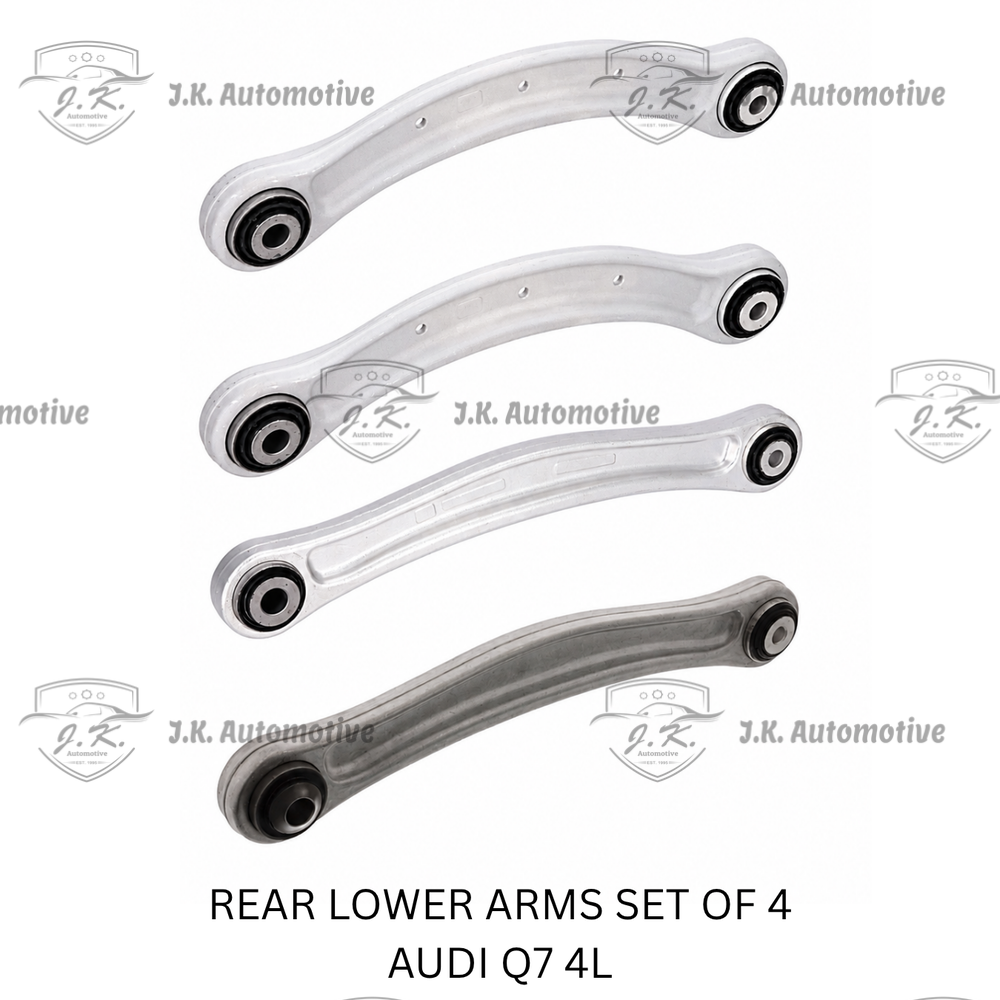
The Stokes Germany Rear Lower Control Arm Set of 4 for Audi Q7 4L is a premium aftermarket rear suspension replacement package designed for Audi Q7 4L models from 2006–2015 with OEM references 7L0505397, 7L0505398 and 7L0505323A. This Set of 4 combines the specified rear lower control arms required for a more comprehensive suspension repair when professional inspection confirms wear across the corresponding components. Rear lower control arms are important wheel-locating parts of the Audi Q7 suspension system because they help control the position and movement of the rear wheels while the suspension responds to acceleration, braking, cornering, vehicle load and changing road surfaces. On a large premium SUV such as the Audi Q7 4L, maintaining serviceable suspension arms and bushes is particularly important for stable road behaviour, refined ride quality, predictable handling and consistent tyre contact. The suspension continuously experiences substantial mechanical loads during normal driving, and potholes, speed breakers, rough roads, heat, moisture, mileage and material ageing can gradually deteriorate control arm bushes and related components. When excessive wear develops, drivers may experience knocking or clunking noises from the rear suspension, unwanted rear-wheel movement, reduced stability, vibration, changes in cornering behaviour or irregular rear tyre wear. The Stokes Germany Set of 4 provides the specified rear lower suspension arms together, making it suitable when several corresponding components require replacement during the same repair. Before ordering, customers should verify Audi Q7, 4L designation, 2006–2015 supplied year range, rear lower suspension position, Set of 4 quantity and OEM references 7L0505397, 7L0505398 and 7L0505323A. Parts should not be selected solely according to visual appearance because similar suspension arms can have different dimensions, mounting points, bush configurations or installation positions. A qualified technician should inspect the complete rear suspension before replacement. Shock absorbers, wheel bearings, additional suspension bushes and mounting hardware should be checked for deterioration. Sway bar links, sway links, anti roll link rods and stabiliser sway links should also be inspected because worn joints can create suspension noises similar to control arm wear. After professional installation of the Set of 4, wheel alignment is recommended to help maintain accurate suspension geometry, stable handling, consistent tyre performance and the refined driving characteristics expected from the Audi Q7 4L.
Which Audi Q7 4L models are compatible with this Rear Lower Control Arm Set of 4?
The Stokes Germany Rear Lower Control Arm Set of 4 is specified for Audi Q7 4L models from 2006–2015 requiring the supplied combination of OEM references 7L0505397, 7L0505398 and 7L0505323A. Correct compatibility should always be verified before ordering because the Audi Q7 rear suspension contains multiple control arms, links, bushes and wheel-locating components, and visually similar suspension parts are not necessarily interchangeable. For this product, the essential identification details are Audi manufacturer, Q7 model, 4L chassis designation, 2006–2015 supplied year range, rear lower control arm application, Set of 4 quantity and OEM references 7L0505397, 7L0505398 and 7L0505323A. Matching these details is particularly important when purchasing Audi Q7 suspension parts online because different suspension arms can use different dimensions, mounting arrangements or bush configurations. The Set of 4 is intended to provide the specified group of rear lower suspension arms together rather than requiring each component to be sourced individually. These arms help locate the rear wheels and control their movement as the suspension responds to braking, acceleration, cornering and road irregularities. Their condition can influence suspension geometry, rear stability, tyre contact and overall driving behaviour. As the original suspension components age, rubber bushes and related joints may develop cracking, deformation, separation or excessive movement. Drivers may notice rear suspension knocking, vibration, a less settled feeling during cornering or irregular rear tyre wear. However, symptoms alone should not be used to determine fitment or decide that every arm requires replacement. A professional technician should inspect the existing suspension and compare the required components with the supplied OEM references. Rear shock absorbers should also be checked for leakage or reduced damping performance, while wheel bearings should be inspected for abnormal noise or unwanted movement. Additional bushes and suspension mounting points should be examined for deterioration. Sway bar links, sway links, anti roll link rods and stabiliser sway links should also be checked because worn joints can create similar knocking noises. When Audi Q7 4L, 2006–2015, rear lower application, Set of 4 and OEM references 7L0505397, 7L0505398 and 7L0505323A are confirmed, this Stokes Germany package provides a comprehensive premium aftermarket solution for the specified rear suspension repair.
What are OEM numbers 7L0505397, 7L0505398 and 7L0505323A and why are they important for Audi Q7 4L?
OEM references 7L0505397, 7L0505398 and 7L0505323A are the supplied identification references associated with this Stokes Germany Rear Lower Control Arm Set of 4 for Audi Q7 4L models from 2006–2015. These references are important when identifying the required suspension components because the Audi Q7 uses multiple arms and links within its rear suspension system, and different components may appear broadly similar while having different dimensions, mounting locations, bush designs or suspension functions. Customers searching for Audi Q7 rear control arms, Audi Q7 suspension parts or Audi spare parts online India should therefore verify OEM references together with the vehicle model, chassis designation, supplied year range, installation position and set quantity. For this product, the complete identification information is Audi Q7 4L, 2006–2015, rear lower control arms, Set of 4 and OEM references 7L0505397, 7L0505398 and 7L0505323A. The individual rear lower control arms work as part of the wheel-locating suspension system and help guide the rear wheel assemblies as they move through their suspension travel. This controlled movement is important during acceleration, braking, cornering and travel over uneven surfaces because suspension geometry and tyre contact need to remain appropriately controlled under changing loads. As the vehicle ages, bushes and associated joints can deteriorate from repeated articulation, road impacts, environmental exposure and normal wear. Excessive movement may contribute to suspension noise, reduced rear stability, vibration or irregular tyre wear. However, an OEM reference is primarily a component identification tool and should not be considered a diagnosis of a suspension problem. Professional inspection is recommended before replacement. The technician should inspect the control arms and their bushes for cracking, deformation, separation, physical damage or excessive movement. Shock absorbers, wheel bearings and additional suspension bushes should also be examined. Sway bar links, sway links, anti roll link rods and stabiliser sway links should be inspected for joint wear because they may produce similar knocking noises. Tyres should be checked for abnormal tread wear and correct pressure. Once OEM references 7L0505397, 7L0505398 and 7L0505323A and the Audi Q7 4L 2006–2015 application are confirmed, the Stokes Germany Set of 4 provides the specified combination of rear lower control arms for a comprehensive suspension repair.
What are the symptoms of worn rear lower control arms on an Audi Q7 4L?
Worn rear lower control arms on an Audi Q7 4L can produce several noticeable symptoms because these components help control rear-wheel positioning, suspension geometry and movement under changing driving loads. One common symptom is knocking, clunking or other abnormal noise from the rear suspension when driving over potholes, speed breakers, broken roads or uneven surfaces. As the control arm bushes or associated joints deteriorate, they can allow greater movement than intended, making suspension noise more noticeable when the wheel rapidly moves through its suspension travel. Drivers may also notice that the rear of the Audi Q7 feels less stable or composed during cornering, braking or lane changes. On a premium SUV, deterioration in wheel-locating suspension components may reduce the refined and controlled feeling expected from the chassis. Increased vibration, reduced directional stability, changes in handling or the need for additional steering correction can indicate that the suspension requires professional inspection. Irregular rear tyre wear is another important warning sign because excessive movement in worn suspension components can influence wheel positioning and tyre contact. Inner or outer tread wear should therefore be investigated rather than being attributed only to the tyres themselves. However, these symptoms do not automatically prove that the rear lower control arms are defective because shock absorbers, wheel bearings, stabiliser components and other suspension bushes can produce similar symptoms. A qualified technician should inspect each rear lower control arm, its bushes, joints and mounting points for cracking, deformation, separation, excessive play or physical damage. Rear shock absorbers should be checked for leakage, damage and reduced damping performance, while wheel bearings should be inspected for unwanted movement or abnormal noise. Additional suspension bushes and mounting hardware should also be examined. Sway bar links, sway links, anti roll link rods and stabiliser sway links deserve particular attention when diagnosing knocking noises because their worn joints can create similar sounds. If professional inspection confirms deterioration in the components corresponding to OEM references 7L0505397, 7L0505398 and 7L0505323A, the Stokes Germany Rear Lower Control Arm Set of 4 provides a comprehensive replacement option for Audi Q7 4L models from 2006–2015. Professional installation followed by wheel alignment is recommended to help maintain accurate suspension geometry and consistent tyre performance.
What are the benefits of replacing the Audi Q7 4L rear lower control arms as a Set of 4?
Replacing the Audi Q7 4L rear lower control arms as a Set of 4 can provide a more comprehensive approach to rear suspension repair when professional inspection identifies significant deterioration across several corresponding wheel-locating components. The Stokes Germany Rear Lower Control Arm Set of 4 is designed for Audi Q7 4L models from 2006–2015 with OEM references 7L0505397, 7L0505398 and 7L0505323A. Suspension components operating on the same vehicle are exposed to similar mileage, vehicle loads, road conditions, heat cycles, environmental exposure and repeated suspension movement, although individual arms and bushes may still wear at different rates. When multiple components are found to have excessive bush or joint movement, replacing the affected rear lower control arms during the same repair can provide a more complete suspension overhaul and may reduce the need for repeated dismantling as other similarly aged components require attention. The Set of 4 also simplifies parts sourcing by supplying the specified group of rear lower control arms together. Serviceable control arms help maintain controlled wheel movement, rear suspension geometry, stable road behaviour and consistent tyre contact. This is especially important on a large premium SUV such as the Audi Q7 4L, where suspension components must manage vehicle weight while supporting ride comfort and predictable handling. Replacing worn components can help reduce excessive movement associated with deteriorated bushes or joints and support more controlled rear-wheel positioning. However, a Set of 4 should be installed according to actual suspension condition rather than assuming that all components require replacement solely because they are packaged together. A qualified technician should inspect the complete rear suspension first. Shock absorbers should be checked for leakage and damping performance, wheel bearings should be inspected for excessive movement or noise, and remaining suspension bushes and mounting points should be examined. Sway bar links, sway links, anti roll link rods and stabiliser sway links should also be checked for joint wear. Rear tyres should be inspected for abnormal tread wear, physical damage and correct pressure. When a comprehensive repair is appropriate, the Stokes Germany Set of 4 provides the specified rear lower suspension components corresponding to OEM references 7L0505397, 7L0505398 and 7L0505323A. Professional installation and wheel alignment can help support suspension geometry, refined ride quality, stable handling and consistent tyre performance.
Is wheel alignment required after replacing the Rear Lower Control Arm Set of 4 on an Audi Q7 4L?
Yes, professional wheel alignment is strongly recommended after replacing the Rear Lower Control Arm Set of 4 on an Audi Q7 4L because rear control arms are wheel-locating suspension components and their replacement can relate directly to wheel position and suspension geometry. The Stokes Germany Set of 4 is specified for Audi Q7 4L models from 2006–2015 with OEM references 7L0505397, 7L0505398 and 7L0505323A. Rear lower control arms guide the wheel assemblies as the suspension responds to acceleration, braking, cornering, changing vehicle loads and uneven road surfaces. Worn bushes or joints can allow excessive movement and may contribute to inconsistent wheel positioning, reduced rear stability or irregular tyre wear. Replacing deteriorated suspension arms addresses the mechanical wear, but the relevant wheel geometry should still be measured after the new components are installed. This becomes particularly important when several wheel-locating suspension components are replaced simultaneously as part of a Set of 4. Professional wheel-alignment equipment allows a workshop to measure relevant geometry and make adjustments where applicable according to appropriate vehicle specifications. Before alignment, the technician should inspect the remaining suspension because unresolved wear elsewhere may compromise the alignment result. Shock absorbers should be checked for leakage, physical damage and damping condition, while wheel bearings should be inspected for unwanted movement or abnormal noise. Other rear suspension bushes, joints and mounting hardware should also be examined. Sway bar links, sway links, anti roll link rods and stabiliser sway links should be checked, especially if knocking or rattling remains after the control arms are replaced. Rear tyres should be inspected for uneven tread wear, physical damage and correct inflation pressure because wheel alignment cannot reverse wear that has already occurred. Correct installation is equally important, and suspension hardware should be fitted according to appropriate vehicle-specific workshop procedures. Before installation, verify Audi Q7 4L, 2006–2015, rear lower control arm application, Set of 4 and OEM references 7L0505397, 7L0505398 and 7L0505323A. Combining correct fitment, professional installation and wheel alignment helps support accurate suspension geometry, stable rear-wheel behaviour, consistent tyre contact, premium ride comfort and the balanced handling expected from the Audi Q7 4L.
How do worn rear lower control arms affect the handling and ride quality of an Audi Q7 4L?
Worn rear lower control arms can noticeably affect the handling, ride quality, rear-wheel stability and suspension geometry of an Audi Q7 4L because these components help locate the rear wheels and control their movement under different driving loads. The Stokes Germany Rear Lower Control Arm Set of 4 is designed for Audi Q7 4L models from 2006–2015 with OEM references 7L0505397, 7L0505398 and 7L0505323A. During acceleration, braking, cornering and travel over uneven roads, the rear suspension arms continuously manage forces while allowing the wheels to move through their intended suspension travel. On a premium SUV such as the Audi Q7 4L, these suspension components also work under substantial vehicle weight, making their condition important for controlled handling and refined ride quality. As the bushes or associated joints deteriorate, unwanted movement can develop between the suspension arms and their mounting points. This may reduce the suspension's ability to maintain stable wheel positioning as vehicle loads change. Drivers can experience knocking or clunking from the rear suspension, vibration, reduced rear-end stability, less predictable cornering or a general feeling that the vehicle is no longer as composed over uneven roads. The Audi Q7 may also require greater steering correction at higher speeds if rear suspension geometry becomes inconsistent because of excessive component movement. Irregular rear tyre wear is another important warning sign because worn wheel-locating suspension components can influence tyre contact and geometry. However, similar symptoms can also result from other suspension faults, so professional diagnosis is important. A technician should inspect the rear lower control arms, bushes, mounting points and associated joints for cracking, deformation, separation, excessive movement or physical damage. Rear shock absorbers should be checked for leakage and reduced damping performance, while wheel bearings should be inspected for unwanted play, roughness or abnormal noise. Other suspension bushes and mounting hardware should also be examined. Sway bar links, sway links, anti roll link rods and stabiliser sway links should be checked because worn joints in these components can create knocking or rattling noises that may resemble control arm deterioration. Tyres should be inspected for abnormal tread wear, damage and correct pressure. If professional inspection confirms wear across the corresponding components, the Stokes Germany Set of 4 provides a comprehensive premium aftermarket solution for the Audi Q7 4L rear suspension. Professional installation followed by wheel alignment can help support accurate geometry, stable handling, consistent tyre contact and refined driving performance.
When should the Audi Q7 4L Rear Lower Control Arm Set of 4 be replaced?
The Audi Q7 4L Rear Lower Control Arm Set of 4 should be considered for replacement when professional inspection identifies significant deterioration, excessive bush movement, damaged joints, bent suspension arms or other physical wear in the corresponding rear lower suspension components. There is no single fixed mileage at which every Audi Q7 rear control arm must automatically be replaced because suspension life depends on vehicle mileage, driving conditions, road quality, vehicle loading, driving style and environmental exposure. The Stokes Germany Rear Lower Control Arm Set of 4 is intended for Audi Q7 4L models from 2006–2015 with OEM references 7L0505397, 7L0505398 and 7L0505323A. As a large premium SUV, the Audi Q7 places substantial loads on its suspension during acceleration, braking, cornering and travel over irregular roads. Continuous articulation of the control arm bushes, combined with potholes, speed breakers, broken surfaces, heat, moisture and normal material ageing, can gradually reduce their ability to control unwanted movement. Common warning signs include rear suspension knocking or clunking, vibration, reduced rear stability, changes in cornering behaviour and irregular rear tyre wear. The rear of the vehicle may feel less composed during higher-speed driving or sudden lane changes, and the driver may notice that the vehicle requires more steering correction than previously. These symptoms indicate that a suspension inspection is necessary but do not automatically prove that all four control arms require replacement. A qualified technician should examine each relevant rear suspension arm and assess the bushes, joints, mounting points and surrounding components. Where multiple corresponding arms have developed significant wear, replacing them during the same repair can provide a more comprehensive suspension overhaul and reduce repeated dismantling of the same area. Rear shock absorbers should also be checked for leakage, damage and reduced damping performance. Wheel bearings should be examined for unwanted movement or abnormal noise, while other suspension bushes and mounting hardware should be inspected for deterioration. Sway bar links, sway links, anti roll link rods and stabiliser sway links should also be checked for joint wear. Rear tyres should be inspected carefully because abnormal tread wear can indicate existing suspension geometry or wheel-alignment problems. When professional diagnosis confirms replacement is required, the Stokes Germany Set of 4 corresponding to OEM references 7L0505397, 7L0505398 and 7L0505323A provides a comprehensive option for Audi Q7 4L rear suspension repair.
What related suspension components should be inspected when replacing the Audi Q7 4L Rear Lower Control Arm Set?
When replacing the Audi Q7 4L Rear Lower Control Arm Set of 4, surrounding suspension components should also be professionally inspected because wheel positioning, ride comfort, handling stability, suspension geometry and tyre performance depend on multiple interconnected components working correctly together. The Stokes Germany Set of 4 is specified for Audi Q7 4L models from 2006–2015 with OEM references 7L0505397, 7L0505398 and 7L0505323A. The remaining rear suspension bushes and wheel-locating components should be inspected first because excessive movement elsewhere in the suspension can continue to affect wheel positioning even after the specified rear lower control arms are replaced. Rear shock absorbers should also be checked carefully because their damping performance controls suspension oscillation and helps keep the tyres appropriately controlled against the road surface. Leakage, physical damage or reduced damping performance can negatively affect ride quality and vehicle stability independently of control arm condition. Wheel bearings should be examined for unwanted movement, roughness or abnormal noise because bearing deterioration can influence wheel stability and may sometimes produce symptoms confused with suspension wear. Suspension mounting hardware and attachment points should also be inspected for deterioration or damage. Sway bar links, sway links, anti roll link rods and stabiliser sway links deserve particular attention because worn joints can create knocking or rattling noises over rough roads and speed breakers. Stabiliser bar bushes should also be checked where applicable because they contribute to the operation of the anti-roll system. Tyres are another important part of the inspection. The technician should examine the rear tyres across their full tread width for irregular wear patterns and should also check pressure and physical condition. Uneven tyre wear can be associated with incorrect wheel geometry or excessive movement in wheel-locating suspension components. If significant tread wear has already occurred, replacing the suspension arms and correcting alignment cannot restore the tyre material already lost. Because the Audi Q7 4L is a premium SUV with substantial vehicle mass, a comprehensive suspension inspection is particularly valuable when several components are being replaced simultaneously. The objective should be to ensure that unrelated wear elsewhere does not compromise the performance of the newly fitted control arms. Once the Stokes Germany components corresponding to OEM references 7L0505397, 7L0505398 and 7L0505323A have been installed, professional wheel alignment should be performed to check relevant suspension geometry and help support consistent tyre contact, stable rear-wheel behaviour, refined ride quality and predictable Audi Q7 handling.
Why is professional installation important for the Audi Q7 4L Rear Lower Control Arm Set of 4?
Professional installation is important for the Audi Q7 4L Rear Lower Control Arm Set of 4 because these components form part of the wheel-locating rear suspension system and can directly influence suspension geometry, wheel position, tyre contact, ride comfort and vehicle handling. The Stokes Germany Set of 4 is designed for Audi Q7 4L models from 2006–2015 with OEM references 7L0505397, 7L0505398 and 7L0505323A. Replacing several rear suspension arms requires the vehicle to be safely raised and supported, the appropriate suspension mounting points to be accessed and each component to be fitted in its correct position. A qualified technician can first diagnose the existing suspension before removing components, helping determine whether the reported symptoms originate from the control arms or from another part of the suspension system. During removal, the technician can inspect bushes, joints, fasteners, mounting points and surrounding hardware for additional deterioration. Correct component positioning is essential because each rear suspension arm has a defined function and installation location within the suspension system. Appropriate workshop procedures should also be followed when installing and tightening suspension hardware. Incorrect installation can compromise the performance of new components and may contribute to unnecessary bush stress, unwanted movement or suspension noise. Professional installation also allows related suspension components to be inspected while the vehicle is raised. Rear shock absorbers should be examined for leakage, damage and reduced damping performance. Wheel bearings should be checked for excessive play, roughness or abnormal noise, while remaining suspension bushes and mounting hardware should also be inspected. Sway bar links, sway links, anti roll link rods and stabiliser sway links should be examined because worn joints can create noises that may remain even after the new control arms are fitted. Rear tyres should be checked for irregular tread wear, damage and correct inflation pressure. Before installation, compatibility should be confirmed using Audi Q7, 4L designation, 2006–2015 supplied year range, rear lower suspension position, Set of 4 quantity and OEM references 7L0505397, 7L0505398 and 7L0505323A. Following installation, professional wheel alignment is strongly recommended because replacing wheel-locating suspension arms can influence relevant suspension geometry. Correct fitment, professional installation and wheel alignment together help support stable handling, consistent tyre contact, refined ride quality and the premium driving characteristics expected from the Audi Q7 4L.
Why is Stokes Germany a European-quality alternative to Lemförder, FEBI, Meyle and other established brands for Audi Q7 4L?

Reviews
There are no reviews yet.