What is Lemförder 4579101 Upper & Lower Suspension Ball Joint Kit Set of 4 for Toyota Innova Crysta?
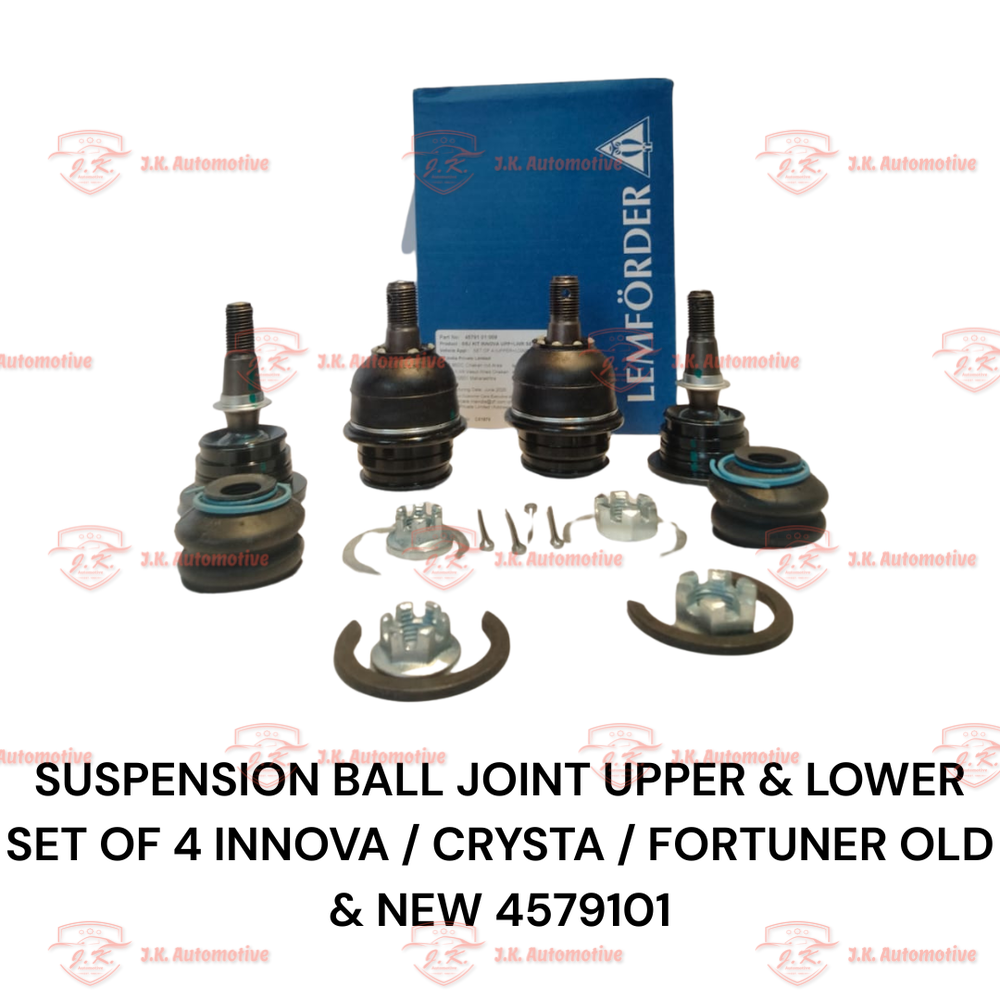
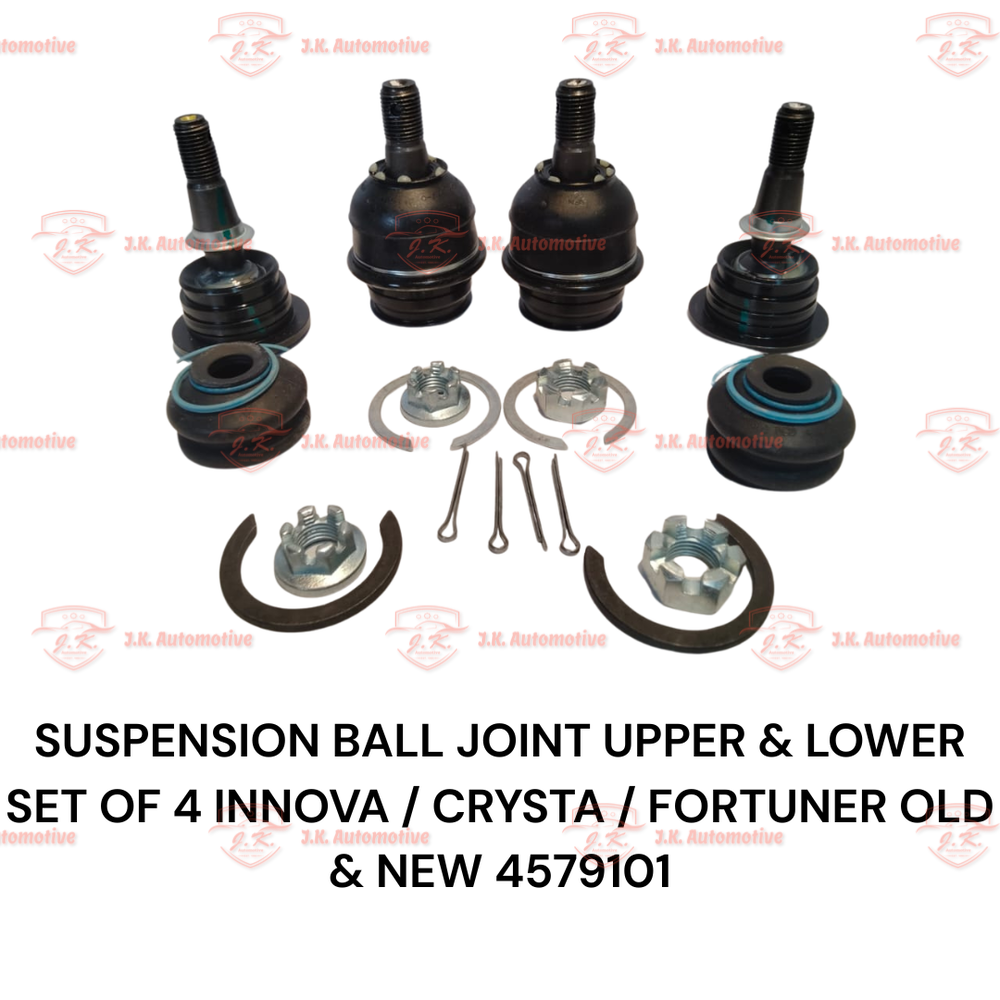
Lemförder 4579101 Upper & Lower Suspension Ball Joint Kit Set of 4 is a suspension replacement package for the stated Toyota Innova Crysta 2016–2026 application, containing components intended for the relevant upper and lower suspension ball-joint positions and supplied together as a complete Set of 4. Suspension ball joints are articulated mechanical connections that allow connected suspension components to move through changing angles while maintaining the relationship required between the wheel-side assembly and suspension as the vehicle responds to steering, braking, cornering and vertical wheel travel. During everyday driving, the suspension constantly responds to potholes, speed breakers, road joints, broken surfaces, depressions and other changes in road height, requiring the ball joints to articulate as the wheels move vertically relative to the vehicle body. Steering input creates additional angular movement because the wheel assemblies need to change direction, while braking and cornering alter the magnitude and direction of loads transmitted through the suspension. The upper and lower joint positions therefore operate repeatedly as part of the wider suspension arrangement rather than functioning as isolated components. This product carries the exact Lemförder manufacturer reference 4579101, providing an important identification point when checking the required replacement kit. Customers and workshops may encounter search descriptions such as Toyota Innova Crysta ball joint kit, Innova Crysta upper ball joint, Innova Crysta lower ball joint, upper and lower ball joint set, suspension ball joint kit, suspension joint kit or Set of 4 ball joints. If deterioration, physical damage or excessive clearance develops within an existing joint, possible symptoms can include knocking or clunking from the suspension, unwanted movement around the wheel assembly, changes in steering behaviour or abnormal tyre wear. These symptoms are not exclusive to ball joints because control-arm bushes, steering tie rod ends, relevant inner steering joints, wheel bearings, stabilizer links, stabilizer-bar bushes, shock absorbers and mountings can create overlapping complaints. A proper suspension inspection should therefore identify the actual source before replacement. Because this product combines the relevant upper and lower components as a Set of 4, each supplied component should be matched carefully with its intended position. Before installation, compare physical dimensions, joint geometry, mounting arrangement, orientation and attachment interfaces with the components currently fitted and use VIN-based parts information where available as an additional compatibility check for the stated Toyota Innova Crysta 2016–2026 application.
What is the function of upper and lower suspension ball joints in a Toyota Innova Crysta?
Upper and lower suspension ball joints in the stated Toyota Innova Crysta application provide articulated connections within the suspension system, allowing connected suspension and wheel-side components to move through the angles required during vertical wheel travel and steering while maintaining the mechanical relationship necessary for controlled suspension operation. The wheels constantly move relative to the vehicle body during normal driving because road surfaces contain potholes, speed breakers, broken sections, road joints, depressions and other variations in height. The suspension must accommodate this movement, and the ball-joint connections articulate as the relevant components change position. Steering introduces another movement requirement because the wheel assemblies need to turn while the suspension continues to move vertically, meaning the joints must accommodate more than one type of motion during vehicle operation. Braking, acceleration and cornering also alter the forces transmitted through the suspension and wheel-side components, so the joints repeatedly operate under changing mechanical loads. The upper and lower positions each form part of the overall suspension arrangement and should be inspected according to their actual mechanical condition when wear is suspected. Excessive clearance within an existing joint can potentially contribute to knocking, clunking or unwanted movement, while deterioration may also be associated with changes in steering behaviour or abnormal tyre wear. However, these symptoms should not automatically be attributed to a ball joint because other suspension and steering components can produce similar complaints. Control-arm bushes can allow unwanted movement, steering tie rod ends and relevant inner steering joints can contribute to steering looseness, wheel bearings can produce wheel or hub movement, and shock absorbers or their mountings can contribute to suspension noise and changes in vehicle behaviour. Stabilizer links and stabilizer-bar bushes can also produce knocking over rough roads. Tyre pressure, tyre condition and wheel alignment should therefore be considered where directional symptoms or abnormal tyre wear are present. This replacement package carries Lemförder manufacturer reference 4579101 and is supplied as an Upper & Lower Suspension Ball Joint Kit Set of 4 for the stated Toyota Innova Crysta 2016–2026 application. Before fitting, every supplied joint should be identified according to its intended position and compared with the corresponding existing component for physical dimensions, joint geometry, mounting arrangement, orientation and attachment interfaces. Manufacturer reference 4579101 and VIN-based parts information where available should remain part of final compatibility verification.
What are the common symptoms of worn Toyota Innova Crysta upper or lower suspension ball joints?
Possible symptoms of worn upper or lower suspension ball joints on the stated Toyota Innova Crysta can include knocking or clunking from the suspension, unwanted movement around the wheel assembly, changes in steering response, unusual suspension behaviour or abnormal tyre wear, although these symptoms should be treated as reasons for a detailed mechanical inspection rather than automatic confirmation that one or more ball joints require replacement. Suspension ball joints contain articulated connections that repeatedly move as the wheels travel vertically and respond to steering input. If deterioration, physical damage or excessive clearance develops within an existing joint, movement beyond the intended condition can potentially occur when the suspension changes direction or loading. Knocking or clunking may become noticeable over potholes, speed breakers, broken roads or repeated small surface irregularities because the suspension is moving rapidly through changing positions. Steering-related symptoms can also justify inspection because the wheel-side suspension and steering arrangements operate together as the wheels change direction. Abnormal tyre wear should prompt inspection of the suspension and wheel geometry, but tyre wear alone cannot identify a worn ball joint because incorrect tyre pressure, wheel alignment, deteriorated control-arm bushes, steering-joint wear or other mechanical conditions can produce similar patterns. The relevant upper and lower joint positions should therefore be checked using an appropriate workshop inspection method. Control arms and their bushes should be examined for deterioration, cracking or unwanted movement, while steering tie rod ends and relevant inner steering joints should be checked where steering looseness is reported. Stabilizer links and stabilizer-bar bushes should also be inspected where the complaint involves knocking over rough surfaces. Wheel bearings should be evaluated if unwanted wheel or hub movement exists, while shock absorbers and their mountings should be checked according to the original complaint. Tyres should be inspected for pressure, physical condition and abnormal wear. This product provides Lemförder 4579101 Upper & Lower Suspension Ball Joint Kit Set of 4 for the stated Toyota Innova Crysta 2016–2026 application. Before replacement, compare each supplied upper and lower component directly with its corresponding existing position for dimensions, joint geometry, mounting configuration, orientation and attachment interfaces. Keep manufacturer reference 4579101 throughout compatibility verification and use VIN-based parts information where available as an additional application check before installation.
Can worn Toyota Innova Crysta ball joints cause knocking, steering movement and uneven tyre wear?
Worn suspension ball joints can potentially contribute to knocking, clunking, unwanted suspension or steering movement and abnormal tyre wear on the stated Toyota Innova Crysta if excessive clearance, deterioration or physical damage develops within the relevant joint, although each of these symptoms can also be caused by other steering, suspension, wheel or tyre components and should therefore be investigated systematically before parts are replaced. A ball joint provides an articulated mechanical connection that must move through changing angles as the wheel travels vertically and responds to steering input. When the vehicle encounters potholes, speed breakers, broken roads, road joints or repeated surface irregularities, suspension movement changes rapidly and the loads acting through the relevant joints also change. If excessive clearance exists, unwanted mechanical movement can potentially occur and may be heard as knocking or clunking. Steering concerns can justify inspection because the wheel-side suspension arrangement contributes to maintaining the intended position of the wheel as steering inputs are applied. Abnormal tyre wear can indicate a broader suspension or wheel-geometry concern, but the wear pattern should not be used alone to identify a defective ball joint because incorrect inflation pressure, wheel alignment, worn control-arm bushes, steering tie rod ends, relevant inner steering joints, wheel bearings or other mechanical conditions can also influence tyre wear. The relevant upper and lower ball-joint positions should therefore be inspected and compared. Control arms and their bushes should be checked for deterioration or unwanted movement, while steering joints should be evaluated where looseness or directional symptoms are present. Stabilizer links and stabilizer-bar bushes should be considered where knocking occurs over rough roads, and shock absorbers and their mountings should be inspected according to the original complaint. Wheel bearings should be checked where wheel or hub movement is detected. This Lemförder replacement package carries manufacturer reference 4579101 and is supplied as an Upper & Lower Suspension Ball Joint Kit Set of 4 for the stated Toyota Innova Crysta 2016–2026 application. Before installation, compare every replacement joint with its corresponding existing component for physical dimensions, joint geometry, mounting arrangement, orientation and attachment interfaces. VIN-based parts information should be used where available as an additional compatibility check, and wheel alignment or suspension geometry should be evaluated where appropriate after repair.
Should Toyota Innova Crysta upper and lower suspension ball joints be replaced together?
The upper and lower suspension ball joints on the stated Toyota Innova Crysta should be inspected together as part of a complete suspension assessment when ball-joint deterioration or unwanted movement is suspected, particularly because Lemförder 4579101 is supplied as an Upper & Lower Suspension Ball Joint Kit Set of 4, although the decision to replace components should still be based on confirmed mechanical condition, compatibility and the applicable repair requirements rather than assuming that every joint necessarily wears at exactly the same rate. Each suspension position experiences repeated movement and changing loads as the vehicle travels over different road surfaces and responds to steering, braking and cornering, but actual wear can vary according to road conditions, vehicle usage, loading, previous impact history, earlier suspension repairs and the condition of surrounding components. One joint may therefore show greater clearance or deterioration than another. Inspecting all relevant upper and lower positions during the same assessment makes it possible to compare their condition and identify differences in movement, physical deterioration or previous repair history. Because the supplied package contains four components, the intended position of each component should be established before installation rather than assuming that every piece is interchangeable. Control arms and their bushes should also be inspected because deterioration in these components can create unwanted movement or noise that overlaps with ball-joint symptoms. Steering tie rod ends and relevant inner steering joints should be evaluated where steering looseness is present, while stabilizer links and stabilizer-bar bushes should be checked where knocking occurs over rough roads. Wheel bearings should be inspected if unwanted wheel or hub movement is detected, and shock absorbers and their mountings should be evaluated according to the original complaint. Tyres should be checked for pressure, physical condition and abnormal wear, while wheel alignment or suspension geometry should be assessed where appropriate. Manufacturer reference 4579101 should remain central to product identification. Before fitting the complete Set of 4, compare each replacement component with its corresponding upper or lower joint for dimensions, joint geometry, mounting arrangement, orientation and attachment interfaces and use VIN-based parts information where available as an additional compatibility check for the stated Toyota Innova Crysta 2016–2026 application.
What should be checked before installing Lemförder 4579101 Ball Joint Kit on a Toyota Innova Crysta?
Before installing Lemförder 4579101 Upper & Lower Suspension Ball Joint Kit on the stated Toyota Innova Crysta 2016–2026 application, verify the exact manufacturer reference 4579101, Set of 4 quantity, intended upper and lower positions, physical dimensions, joint geometry, mounting arrangement, orientation and attachment interfaces while also inspecting the surrounding suspension and steering components so that compatibility concerns or additional mechanical faults can be identified before the repair is completed. Begin by comparing each replacement component directly with its corresponding existing upper or lower joint rather than relying only on the Toyota Innova Crysta model name, stated model years or appearance in an online product photograph. Confirm that each component corresponds with the intended suspension position and that the attachment arrangement matches the part currently installed. Keep manufacturer reference 4579101 throughout the compatibility-verification process and use VIN-based parts information where available as an additional application check. The relevant control arms and their bushes should be inspected for cracking, deterioration, physical damage or unwanted movement because replacing ball joints cannot correct an independent control-arm or bush problem. Steering tie rod ends and relevant inner steering joints should be evaluated where steering looseness, directional movement or related symptoms are present. Stabilizer links and stabilizer-bar bushes should also be inspected where the original complaint involves knocking or rattling over rough roads. Wheel bearings should be checked if unwanted wheel or hub movement is detected, while shock absorbers and their relevant mountings should be evaluated according to the original complaint. Tyres should be inspected for correct inflation pressure, physical damage and abnormal wear because tyre condition can affect steering behaviour and can indicate the need for a broader suspension or wheel-geometry inspection. Relevant suspension attachment areas and fasteners should also be examined according to the appropriate repair procedure. Professional installation should ensure that every upper and lower joint is correctly positioned and secured. After installation, suspension movement and surrounding clearances should be checked before an appropriate road test is carried out. Wheel alignment or suspension geometry should also be checked where required by the repair procedure or where components influencing geometry have been disturbed. Final compatibility verification should retain the exact Lemförder 4579101 reference, Set of 4 configuration and stated Toyota Innova Crysta 2016–2026 application.
How do Lemförder 4579101 Upper and Lower Suspension Ball Joints work in the Toyota Innova Crysta suspension?
Can worn Toyota Innova Crysta upper and lower ball joints affect steering, suspension stability and wheel alignment?
Worn upper or lower suspension ball joints can potentially affect steering behaviour, suspension movement and wheel geometry on the stated Toyota Innova Crysta if excessive clearance, deterioration or physical damage develops within a relevant joint, although any steering, stability or alignment concern should be diagnosed systematically because control-arm bushes, steering joints, wheel bearings, shock absorbers, tyres and other suspension components can produce overlapping symptoms. Ball joints provide articulated connections within the wheel-side suspension arrangement and must permit movement through changing angles as the wheels travel vertically and respond to steering input. When the joints remain in suitable mechanical condition, they allow the required articulation while maintaining the intended relationship between connected suspension components. If excessive unwanted clearance develops, movement beyond the expected condition may become possible and can potentially contribute to knocking, clunking or changes in how the wheel-side assembly responds to road and steering inputs. Wheel alignment becomes particularly relevant because suspension geometry depends on the position and condition of several interconnected components rather than one individual part. Unwanted movement in a suspension joint can therefore justify checking alignment and related geometry, but an incorrect alignment reading does not independently prove that a ball joint is defective. Control-arm bushes can permit changes in component position under load, steering tie rod ends and relevant inner steering joints can influence steering movement and toe behaviour, while wheel bearings can create unwanted wheel or hub movement. Shock absorbers and their mountings should also be inspected where the complaint involves excessive suspension movement, instability or noise. Stabilizer links and stabilizer-bar bushes should be considered where knocking occurs over rough roads because these components can produce sounds that may initially appear to originate from a ball joint. Tyres should be checked for inflation pressure, physical condition and abnormal wear because tyre-related issues can significantly influence steering response and directional behaviour. Both sides of the suspension should be compared, and all relevant upper and lower joint positions should be inspected because this product is supplied as a complete Set of 4. The exact Lemförder manufacturer reference is 4579101 for the stated Toyota Innova Crysta 2016–2026 application. Before installation, each replacement joint should be compared directly with the corresponding existing component for physical dimensions, joint geometry, mounting arrangement, orientation and attachment interfaces. After confirmed replacement, wheel alignment or suspension geometry should be checked where required by the repair procedure or where components influencing geometry have been disturbed. VIN-based parts information should also be used where available for additional application verification.
When should Lemförder 4579101 Upper and Lower Ball Joints be replaced on a Toyota Innova Crysta?
Lemförder 4579101 Upper and Lower Suspension Ball Joints should be considered for replacement on the stated Toyota Innova Crysta when an appropriate suspension inspection confirms excessive clearance, deterioration, physical damage or another mechanical condition affecting one or more of the existing joints, rather than replacing them only because the vehicle has reached a particular age or mileage without first assessing their actual condition. Ball-joint service life can vary considerably because road quality, vehicle usage, loading, driving conditions, impact history, previous suspension repairs and the condition of surrounding components are different from one vehicle to another. Frequent operation over potholes, broken roads, speed breakers, road joints, depressions and uneven surfaces causes the suspension to articulate continuously and repeatedly changes the forces acting through the joints. Steering adds angular movement, while braking and cornering create additional changes in load direction and magnitude. Over time, these operating conditions can contribute to wear, but the actual condition should still be confirmed through mechanical inspection. Possible symptoms that justify checking the joints include knocking or clunking from the suspension, unwanted movement around the wheel assembly, changes in steering response or abnormal tyre wear. These symptoms should be treated as diagnostic clues rather than proof of ball-joint failure because other components can create similar complaints. Control-arm bushes can deteriorate and permit unwanted movement, steering tie rod ends and relevant inner steering joints can contribute to looseness or directional concerns, stabilizer links and stabilizer-bar bushes can generate knocking over uneven surfaces, wheel bearings can create movement around the hub, and shock absorbers or their mountings can contribute to suspension noise or changes in vehicle behaviour. Tyres and wheel alignment should also be evaluated when abnormal wear or steering symptoms are present. All relevant upper and lower positions should be inspected and compared because wear does not necessarily develop at exactly the same rate in every joint. One position may have experienced different impacts, previous repairs or operating conditions from another. This replacement package is supplied as an Upper & Lower Suspension Ball Joint Kit Set of 4 with Lemförder manufacturer reference 4579101 for the stated Toyota Innova Crysta 2016–2026 application. Before replacement, identify the intended position of each supplied component and compare it with the corresponding existing joint for dimensions, joint geometry, mounting configuration, orientation and attachment interfaces. Keep reference 4579101 throughout compatibility verification and use VIN-based parts information where available before ordering or installing the complete kit.
What other suspension and steering components should be inspected when replacing Toyota Innova Crysta upper and lower ball joints?
When replacing upper and lower suspension ball joints on the stated Toyota Innova Crysta, the surrounding suspension, steering, wheel and tyre components should also be inspected because knocking, clunking, unwanted wheel movement, steering looseness, abnormal tyre wear or changes in vehicle behaviour can originate from several interconnected parts, and replacing the ball joints alone cannot correct an independent fault elsewhere in the suspension or steering system. The relevant control arms should receive particular attention because the ball joints operate as part of the wheel-side suspension arrangement, while control-arm bushes should be examined for cracking, deterioration, deformation or unwanted movement. Steering tie rod ends should be inspected because they transfer steering movement toward the wheel assemblies and can develop clearance that contributes to looseness, knocking or changes in steering response. Relevant inner steering joints should also be evaluated where steering movement or directional concerns are reported. Stabilizer links and stabilizer-bar bushes should be inspected because wear in the anti-roll system can produce knocking over potholes, speed breakers and rough surfaces that may initially be mistaken for ball-joint noise. Wheel bearings should be checked where unwanted wheel or hub movement is detected because bearing clearance can sometimes complicate diagnosis of suspension movement. Shock absorbers and their relevant mountings should be evaluated for condition, particularly when the original complaint involves excessive suspension movement, noise or changes in vehicle behaviour over uneven roads. Tyres should be checked for correct inflation pressure, physical damage and abnormal tread wear, while wheel condition should also be considered if the vehicle has experienced significant road impacts. Both sides of the suspension should be compared because differences between corresponding components can provide useful diagnostic information. Relevant suspension mounting areas and fasteners should be inspected according to the appropriate repair procedure before new components are fitted. This replacement package is supplied as Lemförder 4579101 Upper & Lower Suspension Ball Joint Kit Set of 4 for the stated Toyota Innova Crysta 2016–2026 application. Every replacement component should be matched with its intended upper or lower position and compared directly with the corresponding existing joint for dimensions, joint geometry, mounting arrangement, orientation and attachment interfaces. Following installation, suspension movement, mounting security and surrounding clearances should be checked before a suitable road test is performed. Wheel alignment or suspension geometry should be checked where required by the repair procedure or where components influencing geometry have been disturbed. Manufacturer reference 4579101 and VIN-based parts information where available should remain part of final application verification.
Why is Lemförder considered one of the best suspension brands for Toyota Innova Crysta compared with Meyle, FEBI, Bilstein and FAG?


Reviews
There are no reviews yet.