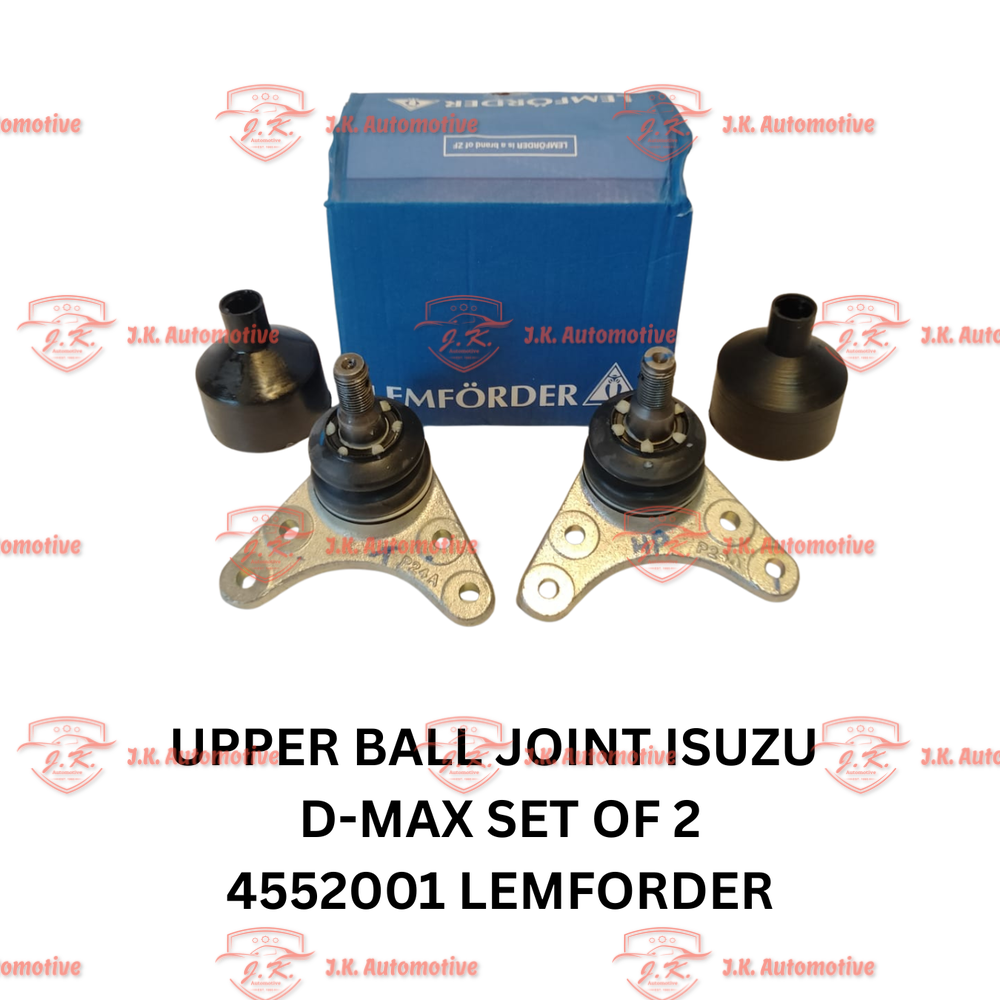
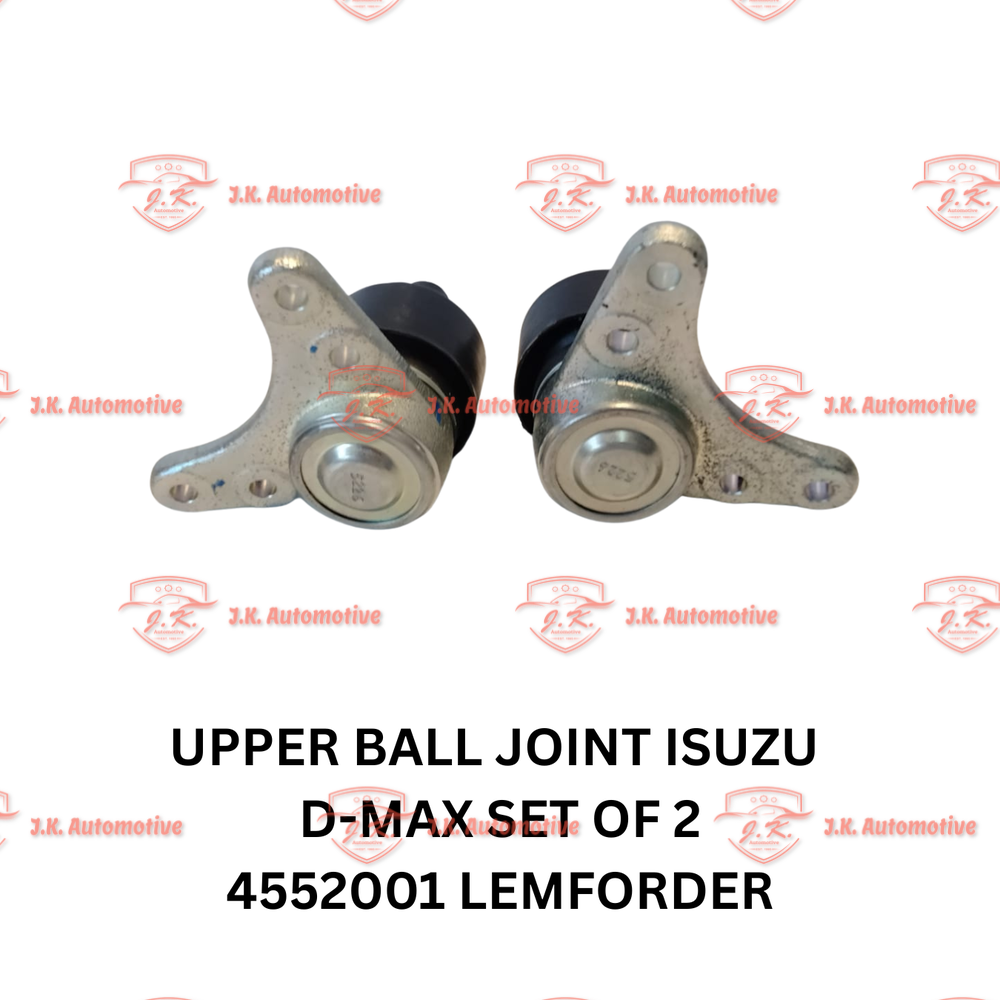
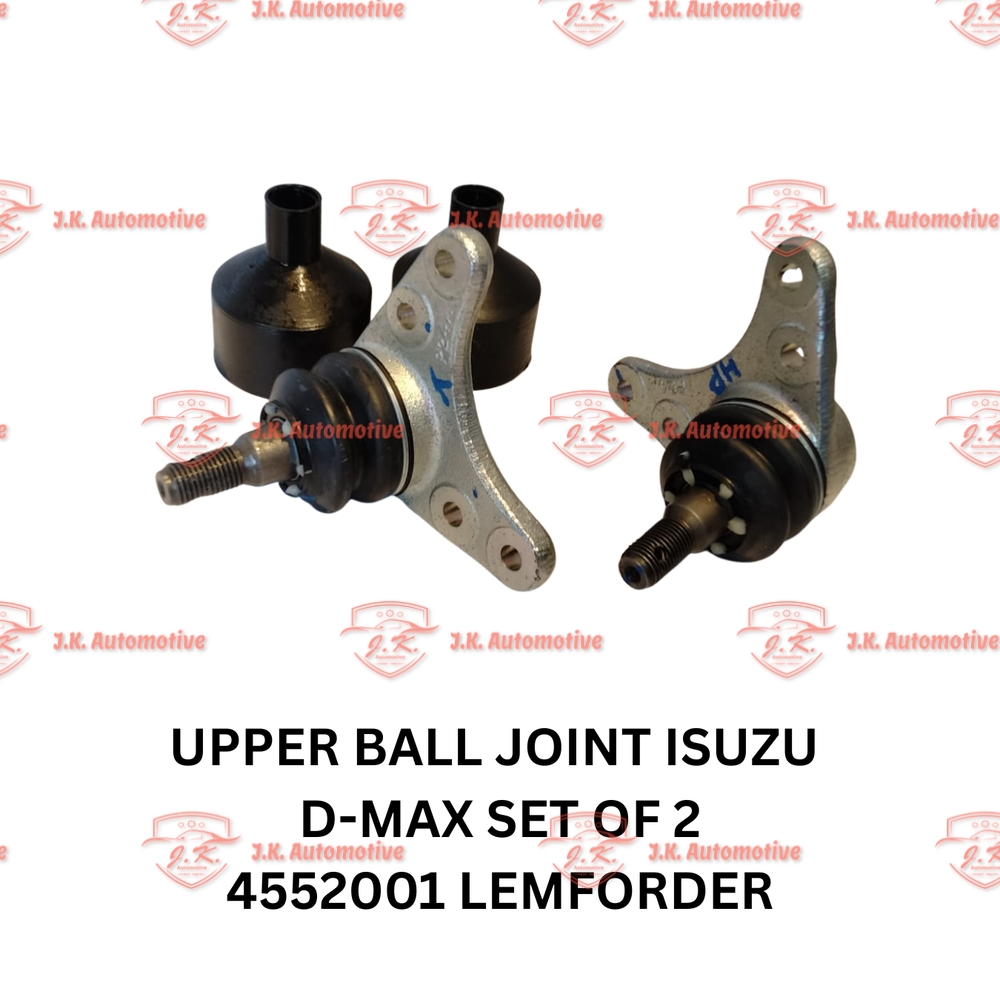
What is Lemförder 4552001 Upper Ball Joint Set of 2 for Isuzu D-Max?
Lemförder 4552001 Upper Ball Joint Set of 2 is an upper suspension joint replacement set for the stated Isuzu D-Max 2012–2026 application, designed to provide articulated mechanical connections at the relevant upper front suspension positions while allowing controlled angular movement as the wheels steer and the suspension travels over changing road surfaces. The supplied product information identifies Lemförder as the manufacturer, 4552001 as the exact manufacturer reference, Upper Ball Joint as the component type and Set of 2 as the supplied quantity. An upper ball joint operates as an articulated connection within the front suspension because the wheel assembly must be able to move vertically with suspension travel while simultaneously changing direction according to steering input. During everyday driving, the front wheels continuously respond to potholes, speed breakers, road joints, broken surfaces, depressions, uneven roads and changes in surface height. Steering changes the angular relationship between relevant suspension components, while braking transfers additional loading toward the front axle and cornering introduces lateral forces as the vehicle changes direction. The upper joint must accommodate these changing movements while maintaining the required mechanical connection between the relevant suspension parts. Customers and workshops may search for this component using terms such as upper ball joint, front upper ball joint, suspension ball joint, upper suspension joint or front suspension joint, while the exact manufacturer number 4552001 provides another useful identification point. Over extended use, an existing joint can require inspection if excessive clearance, deterioration or physical damage develops. Possible symptoms requiring investigation can include knocking or clunking from the front suspension, unwanted wheel-side movement, steering-related changes or abnormal tyre wear, although none of these symptoms should automatically be treated as confirmation of a worn upper joint because other suspension and steering components can produce similar behaviour. Upper control-arm components and their bushes, lower ball joints, lower control arms, steering tie rod ends, relevant inner steering joints, shock absorbers, mountings, stabilizer links, stabilizer-bar bushes and wheel bearings should therefore be considered during diagnosis according to the symptoms present. Both relevant front positions should be inspected and compared because this product is supplied as a Set of 2. Before installation, compare Lemförder 4552001 directly with the components currently installed for dimensions, joint geometry, mounting configuration, orientation and attachment interfaces. Preserve the exact manufacturer reference during identification and use VIN-based parts information where available as an additional compatibility check for the stated Isuzu D-Max 2012–2026 application.
What is the function of upper ball joints in the Isuzu D-Max front suspension?
Upper ball joints in the stated Isuzu D-Max application function as articulated suspension connections that allow the relevant upper suspension and wheel-side components to change angle as the front wheels steer and move vertically through suspension travel while maintaining the mechanical relationship required within the front suspension geometry. The front wheels do not remain in one fixed position during driving because every steering input changes wheel direction while potholes, speed breakers, road joints, depressions and uneven surfaces create vertical suspension movement. The upper joint must accommodate these changing angles as connected suspension components move relative to one another. During braking, vehicle load shifts toward the front axle and changes the forces passing through the suspension, while cornering introduces lateral loading as the tyres generate forces against the road and the vehicle changes direction. The articulated joint therefore operates repeatedly under combinations of vertical movement, steering movement and changing road loads. Maintaining controlled movement at this connection is important because unwanted clearance can permit movement beyond the intended relationship between connected suspension components. If deterioration develops, possible symptoms can include knocking or clunking, unwanted wheel-side movement, steering-related changes or unusual tyre wear. These symptoms are not exclusive to the upper ball joint and should always be investigated through a broader front suspension and steering inspection. Upper control-arm bushes and relevant mounting areas should be checked because deterioration there can permit unwanted movement. Lower ball joints and lower control-arm bushes should also be inspected because they operate within the same wheel-side suspension system and can create similar symptoms. Steering tie rod ends and relevant inner steering joints should be evaluated where steering looseness is present. Shock absorbers and their relevant mountings should be inspected according to the original complaint, while stabilizer links and stabilizer-bar bushes should be considered where knocking or rattling occurs over uneven surfaces. Wheel bearings should be evaluated where unwanted wheel or hub movement exists, and tyres should be checked for pressure, physical condition and abnormal wear. This replacement product is supplied as a Set of 2 with the exact Lemförder reference 4552001 for the stated Isuzu D-Max 2012–2026 application. Before fitting, compare the new components directly with the currently installed joints for dimensions, geometry, mounting arrangement, orientation and attachment interfaces, and use VIN-based parts information where available for additional compatibility verification.
What are the common symptoms of worn Isuzu D-Max upper ball joints?
Possible symptoms that can justify inspection of the upper ball joints on the stated Isuzu D-Max include knocking or clunking from the front suspension, unwanted movement at the wheel-side suspension connection, changes in steering behaviour and abnormal tyre wear, although these symptoms should be considered diagnostic indicators rather than automatic confirmation that an upper ball joint is defective because several suspension, steering, wheel and tyre conditions can create similar behaviour. The joint repeatedly articulates as the front wheel moves vertically with suspension travel and changes angle according to steering input. Potholes, speed breakers, broken roads, road joints and uneven surfaces create changing vertical loads, while braking and cornering introduce additional forces through the front suspension. If excessive clearance develops within an existing upper joint, rapid changes in suspension loading can potentially allow unwanted movement and may contribute to audible knocking or clunking. A technician may also investigate the joint if movement is detected during a wheel and suspension inspection. Steering-related symptoms require broader diagnosis because steering tie rod ends, relevant inner steering joints, control-arm bushes, wheel bearings, tyres and wheel alignment can all influence directional behaviour. Abnormal tyre wear also has multiple potential causes, including incorrect inflation pressure, alignment concerns, suspension-bush deterioration and unwanted movement elsewhere in the front suspension. Both relevant upper joints should therefore be inspected and compared. The condition of their protective areas and attachment points should be checked where accessible, while the upper control-arm arrangement and relevant bushes should be examined for deterioration or unwanted movement. Lower ball joints should also be checked because they provide additional articulated connections within the wheel-side suspension. Lower control arms and bushes should be evaluated, together with steering linkage, shock absorbers and relevant mountings. Stabilizer links and stabilizer-bar bushes should be considered when the complaint includes knocking or rattling over uneven surfaces. Wheel bearings should be inspected when unwanted wheel or hub movement is present. The supplied replacement is Lemförder 4552001 Upper Ball Joint Set of 2 for the stated Isuzu D-Max 2012–2026 application. Before replacement, compare the new joints directly with the components removed from the vehicle for dimensions, joint geometry, mounting configuration, orientation and attachment interfaces, retaining manufacturer reference 4552001 throughout compatibility verification.
Can worn upper ball joints cause knocking, steering movement or uneven tyre wear on an Isuzu D-Max?
Worn upper ball joints can potentially contribute to knocking or clunking, unwanted movement within the front suspension connection, steering-related changes and abnormal tyre wear if excessive clearance, deterioration or physical damage develops within an existing articulated joint, but these symptoms should be investigated through a complete suspension and steering diagnosis because they are not unique to the upper joint and replacing a component without confirming the actual source of the problem may leave the original complaint unresolved. The upper joint operates at a suspension connection where controlled angular movement must occur as the wheel responds to steering input and vertical suspension travel. When the vehicle passes over potholes, speed breakers, broken surfaces or road joints, the wheel moves relative to the body and the articulated joint changes angle with the suspension. Steering introduces another direction of movement, while braking transfers load toward the front axle and cornering generates lateral forces through the tyres and suspension. If unwanted clearance develops, changes in load direction can potentially produce audible movement such as knocking or clunking. However, front-end noise can also originate from upper control-arm bushes, lower ball joints, lower control-arm bushes, shock absorbers, mountings, stabilizer links, stabilizer-bar bushes or other attachment areas. Steering looseness can be related to tie rod ends, inner steering joints, wheel bearings or other steering-system components. Uneven tyre wear can result from tyre-pressure problems, wheel alignment, suspension geometry or deterioration in several different suspension components. For these reasons, diagnosis should include both relevant upper joints as well as the surrounding front suspension. Upper control-arm areas and bushes should be inspected, and the lower joints should also be checked for excessive movement. Steering linkage should be evaluated where directional symptoms are present, while wheel bearings should be considered when unwanted wheel movement is detected. Tyres should be checked for pressure, physical condition and tread-wear patterns. If replacement is confirmed, this product provides Lemförder 4552001 Upper Ball Joints as a Set of 2 for the stated Isuzu D-Max 2012–2026 application. Compare the replacement components directly with the existing joints for dimensions, geometry, mounting arrangement, orientation and attachment interfaces before installation, and retain reference 4552001 during compatibility verification.
Should both Isuzu D-Max upper ball joints be replaced together?
Both relevant upper ball joints on the stated Isuzu D-Max should be inspected during the same front suspension assessment because the left and right components perform corresponding articulated functions and can both be exposed to repeated suspension travel, steering movement, road impacts, braking loads and cornering forces, while the supplied Lemförder 4552001 replacement product contains a Set of 2 for the stated 2012–2026 application. This does not mean that both existing joints must always have identical wear or that a confirmed problem on one side automatically proves that the opposite component is defective. Actual operating conditions can differ significantly between the two sides because one wheel may repeatedly encounter potholes, broken road edges, drainage covers or other road irregularities that the opposite wheel avoids. Previous suspension repairs can also mean that components on the two sides have different ages, manufacturers or service histories. Both positions should therefore be evaluated individually for excessive movement, deterioration, physical damage and attachment condition. Comparing the left and right sides during the same inspection can help identify meaningful differences. Upper control-arm components and relevant bushes should also be inspected because deterioration at these mounting locations can create unwanted movement independent of the ball joint itself. Lower ball joints should be evaluated because they operate within the same wheel-side suspension assembly and may contribute to similar symptoms. Lower control arms and their bushes should also be examined. Steering tie rod ends and relevant inner steering joints should be checked where steering looseness is reported. Shock absorbers and their mountings should be inspected according to the original complaint, while stabilizer links and stabilizer-bar bushes should be considered when knocking or rattling occurs over rough roads. Wheel bearings should be evaluated if unwanted wheel or hub movement is detected, and tyres should be inspected for correct pressure, physical damage and abnormal wear. Where replacement of both upper joints is confirmed as appropriate, the Set of 2 configuration provides components for the corresponding positions. Before installation, compare each replacement joint with the component currently installed for dimensions, joint geometry, mounting arrangement, orientation and attachment interfaces. Preserve Lemförder manufacturer reference 4552001 and use VIN-based parts information where available as an additional compatibility check.
What should be checked before installing Lemförder 4552001 Upper Ball Joints on Isuzu D-Max?
Before installing Lemförder 4552001 Upper Ball Joints on the stated Isuzu D-Max, verify the exact manufacturer reference 4552001, Set of 2 quantity, relevant upper suspension position, supplied 2012–2026 application, component dimensions, joint geometry, mounting configuration, orientation and attachment interfaces, while also inspecting the surrounding front suspension and steering components so that compatibility concerns or additional mechanical faults can be identified before completing the repair. Begin by comparing the replacement joints directly with the components currently installed rather than relying only on the vehicle model, model year, online photographs or general visual similarity. Check the physical configuration carefully and confirm that the relevant mounting and attachment areas correspond correctly. Compare joint geometry, dimensions and orientation, and investigate any meaningful difference before attempting installation. Keep the exact Lemförder 4552001 reference throughout compatibility verification and use VIN-based parts information where available as an additional identification method. Upper control-arm components and their relevant bushes should be inspected for deterioration, physical damage or unwanted movement because replacing the articulated joint cannot correct excessive movement elsewhere within the upper suspension arrangement. Lower ball joints should also be checked because unwanted movement at the lower suspension connection can create overlapping symptoms. Lower control arms and their bushes should be inspected, while steering tie rod ends and relevant inner steering joints should be evaluated where steering-related symptoms are present. Shock absorbers and relevant mountings should be checked according to the original complaint. Stabilizer links, sway links, anti roll link rods and stabilizer-bar bushes should be considered where knocking or rattling occurs over uneven roads. Wheel bearings should be inspected where unwanted wheel or hub movement is detected, and both front tyres should be checked for inflation pressure, physical condition and abnormal wear. Both relevant sides should be assessed because the supplied package contains two replacement components. Installation should follow the appropriate repair procedure with correct positioning and securing of the relevant connections. After fitting, suspension movement and surrounding clearances should be checked and a suitable road test performed. Wheel alignment or suspension geometry should also be checked or corrected where required by the repair procedure or vehicle condition. Final compatibility verification should retain the exact Lemförder 4552001 reference, Upper Ball Joint Set of 2 configuration and supplied Isuzu D-Max 2012–2026 application.
How do Lemförder 4552001 Upper Ball Joints work in the Isuzu D-Max front suspension?
Lemförder 4552001 Upper Ball Joints work as articulated mechanical connections at the relevant upper front suspension positions of the stated Isuzu D-Max 2012–2026 application, allowing controlled angular movement between connected suspension components while the front wheels respond simultaneously to steering input, vertical suspension travel, braking forces, cornering loads and changing road conditions. The front wheels cannot remain at one fixed angle during driving because steering continuously changes their direction while potholes, speed breakers, road joints, broken surfaces, depressions and uneven roads create vertical suspension movement. The upper ball joint accommodates these changing angles while maintaining the mechanical relationship required between the relevant upper suspension and wheel-side components. When a front wheel moves over a bump or depression, the suspension changes position relative to the vehicle body and the articulated joint moves with this travel. Steering input introduces another change in angular relationship as the wheel changes direction. Braking transfers additional load toward the front axle, while cornering creates lateral forces as the tyres generate grip and the vehicle changes direction. The joint therefore works through continuously changing combinations of movement and load during normal city driving, highway use and travel over uneven surfaces. Customers and workshops may describe this component as an upper ball joint, front upper ball joint, suspension ball joint, upper suspension joint or front suspension joint, while manufacturer reference 4552001 provides an additional identification point. If excessive clearance develops within an existing joint, unwanted movement can potentially occur at a suspension connection that is intended to remain controlled. Possible symptoms can include knocking or clunking, unwanted wheel-side movement, steering-related changes or unusual tyre wear. These symptoms are not unique to the upper joint and should therefore be investigated through a broader suspension inspection. Upper control-arm components and bushes should be checked, while lower ball joints and lower control-arm bushes should also be evaluated. Steering tie rod ends and relevant inner steering joints should be inspected where steering looseness is present. Shock absorbers and mountings should be checked according to the complaint, while stabilizer links and stabilizer-bar bushes should be considered when noise occurs over uneven surfaces. Wheel bearings and tyres should also be assessed where appropriate. This replacement package contains a Set of 2 with the exact Lemförder manufacturer reference 4552001. Before installation, compare the replacement joints directly with the currently installed components for dimensions, geometry, mounting arrangement, orientation and attachment interfaces, and use VIN-based parts information where available as an additional compatibility check.
Can worn Isuzu D-Max upper ball joints affect steering, wheel stability and suspension performance?
Worn upper ball joints can potentially affect the consistency of steering and wheel-side suspension control on the stated Isuzu D-Max if excessive clearance, deterioration or physical damage develops within the articulated connections, because these components help maintain the intended relationship between the relevant upper suspension and wheel-side parts while still allowing the angular movement required for steering and vertical suspension travel. During normal driving, each joint repeatedly changes angle as the wheel moves over potholes, speed breakers, road joints, broken surfaces and changes in road height. Steering input creates additional angular movement, while braking transfers load toward the front axle and cornering generates lateral forces through the tyres and suspension. If an existing joint develops unwanted clearance, movement beyond the intended mechanical relationship can potentially occur. Depending on the actual condition and severity, a driver or technician may notice knocking, clunking, unwanted wheel movement, steering-related changes or unusual tyre wear. However, steering or directional behaviour should never be attributed automatically to the upper ball joint because other components can create similar symptoms. Upper control-arm bushes and mounting areas can permit unwanted movement when deteriorated. Lower ball joints and lower control-arm bushes can also affect wheel-side suspension control. Steering tie rod ends and relevant inner steering joints should be checked where steering looseness is reported. Wheel bearings should be considered where unwanted wheel or hub movement exists. Shock absorbers and their relevant mountings can influence suspension control, while tyre pressure, tyre condition and wheel alignment can significantly affect steering response and directional behaviour. Stabilizer links and stabilizer-bar bushes can contribute to front-end noise even when they are not responsible for steering looseness. Both relevant upper joints should therefore be inspected and compared rather than diagnosing the vehicle from one symptom alone. The supplied replacement contains two Lemförder 4552001 components for the stated Isuzu D-Max 2012–2026 application. Before fitting, compare dimensions, joint geometry, mounting configuration, orientation and attachment interfaces with the parts currently installed. Retain manufacturer reference 4552001 during identification and use VIN-based parts information where available as an additional compatibility check. A systematic inspection of the complete front suspension and steering system is preferable to replacing one component solely on the basis of noise or vehicle feel.
When should Lemförder 4552001 Upper Ball Joints be replaced on an Isuzu D-Max?
Lemförder 4552001 Upper Ball Joints should be considered for replacement on the stated Isuzu D-Max when an appropriate front suspension inspection confirms excessive joint clearance, deterioration, physical damage or another condition affecting the ability of the existing components to maintain their intended articulated suspension connections, rather than replacing the joints solely because the vehicle has reached a particular age or mileage without first checking their actual mechanical condition. Service life can vary substantially because road conditions, vehicle usage, loading, impact history, previous suspension repairs and surrounding component condition are not identical between vehicles. A vehicle regularly driven over potholes, broken roads, speed breakers and uneven surfaces can subject its suspension joints to different operating loads than one primarily driven on smoother roads. The upper joint also repeatedly articulates whenever steering angle or vertical suspension position changes, while braking and cornering introduce additional loads through the front suspension. Possible reasons for inspection include knocking or clunking, unwanted wheel-side movement, steering-related changes or abnormal tyre wear. None of these symptoms confirms an upper ball-joint fault by itself. Upper control-arm bushes and relevant mounting areas can create unwanted movement, while lower ball joints and lower control-arm bushes can produce overlapping symptoms. Steering tie rod ends and relevant inner steering joints can contribute to steering looseness or directional concerns. Shock absorbers and mountings can create front suspension noise, while stabilizer links and stabilizer-bar bushes can produce knocking or rattling over rough roads. Wheel bearings can contribute to wheel-side movement, and tyre-pressure or alignment problems can affect steering and wear patterns. Both relevant upper joints should therefore be inspected and compared. Protective joint areas and relevant attachment points should be checked where accessible, and surrounding components should be assessed according to the symptoms present. The supplied replacement is a Lemförder 4552001 Upper Ball Joint Set of 2 for the stated Isuzu D-Max 2012–2026 application. Before installation, compare the replacement components directly with the existing joints for dimensions, geometry, mounting arrangement, orientation and attachment interfaces. Keep the exact 4552001 manufacturer reference throughout compatibility verification and use VIN-based parts information where available as an additional identification method.
What other suspension and steering components should be inspected when replacing Isuzu D-Max upper ball joints?
When replacing upper ball joints on the stated Isuzu D-Max, the surrounding upper and lower suspension, steering, wheel and tyre components should also be inspected because knocking, clunking, unwanted wheel movement, steering looseness, directional changes or abnormal tyre wear can originate from multiple components, and replacing the upper joints alone will not correct an independent fault elsewhere within the front suspension or steering system. Begin with the relevant upper control-arm arrangement and inspect associated bushes, mounting points and attachment areas for deterioration, physical damage or unwanted movement because these components operate directly around the upper suspension connection. Lower ball joints should also be inspected for excessive clearance because they provide additional articulated connections within the same wheel-side suspension assembly. Lower control arms and their bushes should be checked for unwanted movement, particularly where the vehicle displays knocking, geometry changes or unusual tyre wear. Steering tie rod ends should be inspected because they transfer steering movement toward the wheel assemblies, while relevant inner steering joints should also be evaluated where looseness or inconsistent steering response is present. Shock absorbers should be inspected for condition and relevant mounting security, while upper and related mounting areas should be examined according to the suspension design and symptoms. Stabilizer links, sway bar links, sway links, anti roll link rods and stabilizer-bar bushes should be considered where knocking or rattling occurs over uneven surfaces because deterioration within the anti-roll arrangement can produce noises that may be confused with ball-joint symptoms. Wheel bearings should be evaluated when unwanted movement is detected at the wheel or hub. Both front tyres should be checked for correct inflation pressure, physical damage and abnormal tread wear. Wheel alignment and suspension geometry should be considered when directional or tyre-wear concerns are present. Comparing the left and right suspension positions can help identify differences in component condition or previous repairs. This replacement package contains two Lemförder 4552001 Upper Ball Joints for the stated Isuzu D-Max 2012–2026 application. Before fitting, compare the replacements directly with the existing components for dimensions, joint geometry, mounting arrangement, orientation and attachment interfaces. Preserve manufacturer reference 4552001 during verification and use VIN-based information where available. Following installation, check suspension movement and surrounding clearances and perform wheel-alignment or geometry checks where required by the repair procedure or vehicle condition.
Why is Lemförder considered one of the best suspension brands for Isuzu compared with Meyle, FEBI, Bilstein and FAG?
Reviews
There are no reviews yet.