What is the Air Suspension Valve Block Assembly for Porsche Cayenne 92A, 9PA?
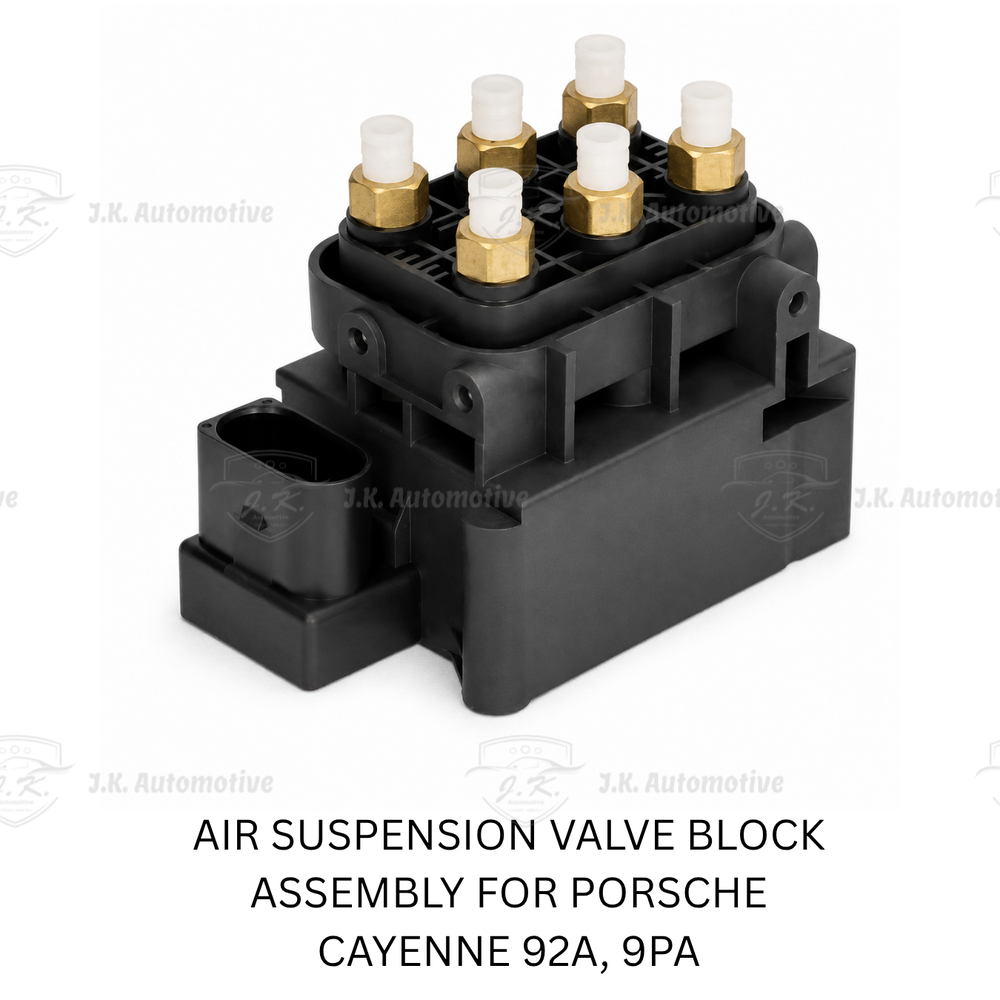
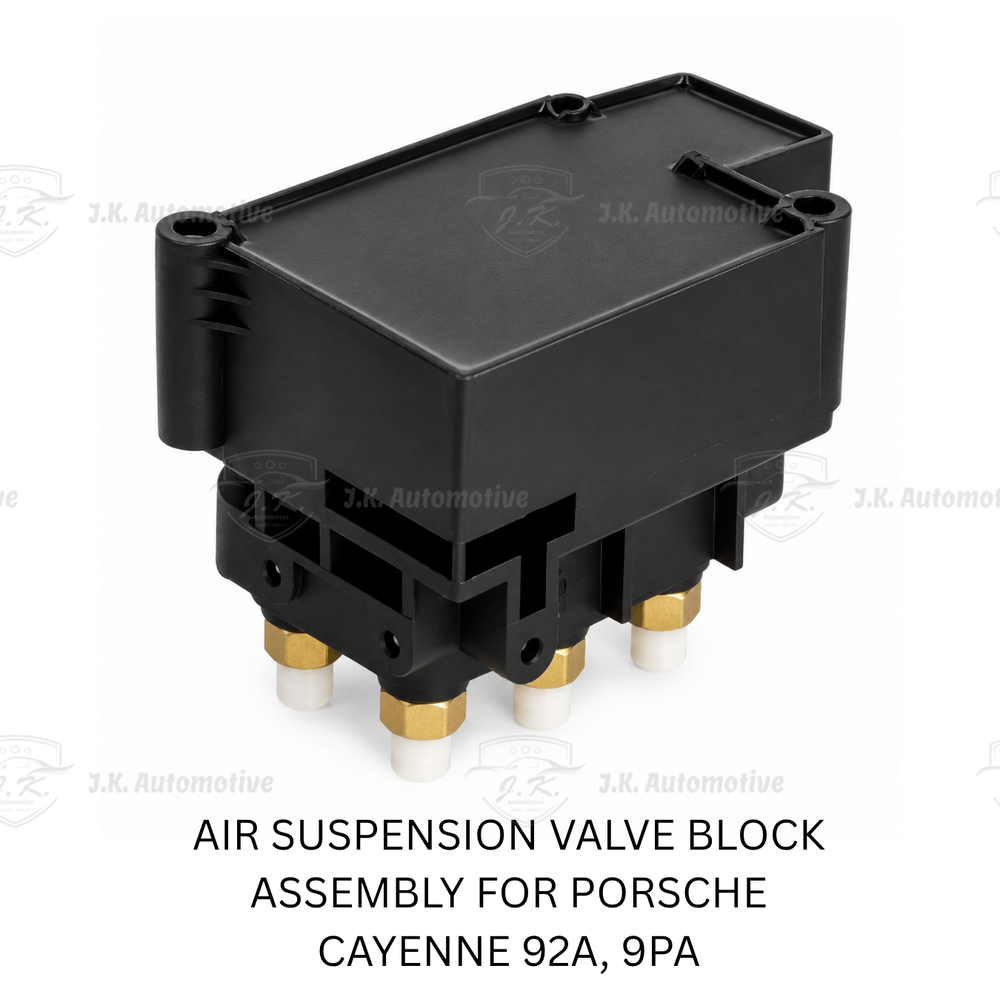
The Air Suspension Valve Block Assembly for Porsche Cayenne 92A, 9PA is an important pneumatic control component within the vehicle’s air suspension system, identified by OEM reference numbers 7P0698014 / 7L0698014. The valve block works as a distribution and control unit for compressed air moving between the air suspension compressor, air reservoir and individual air suspension circuits connected to the vehicle’s air springs or air struts. During normal operation, the air suspension control system may need to raise the vehicle, lower the vehicle, compensate for changes in passenger or luggage load, or maintain a predetermined ride height, and the valve block helps direct compressed air toward or away from the appropriate suspension circuit. Internally controlled pneumatic passages and solenoid-operated valves regulate airflow according to commands from the vehicle’s suspension management system. A correctly functioning valve block is therefore important for maintaining balanced vehicle height and predictable operation of the air suspension system. If an internal valve begins leaking, sticking or failing to seal correctly, compressed air may move between circuits when it should remain isolated, potentially contributing to uneven suspension height, gradual lowering after parking, abnormal raising or lowering behaviour or excessive compressor operation. Because several air suspension components can create similar symptoms, the valve block should not automatically be replaced solely because the vehicle is sitting low. The air compressor, air springs, air struts, pneumatic pipes, connectors, reservoir, ride-height sensors, electrical connections and suspension control system should also be inspected. Professional diagnostic equipment can be particularly useful for checking stored suspension fault codes, commanded ride-height changes and system behaviour. Before ordering this Air Suspension Valve Block Assembly for Porsche Cayenne 92A, 9PA, customers should compare OEM references 7P0698014 / 7L0698014 with the existing component and verify exact vehicle compatibility where required. Physical comparison of the pneumatic ports, electrical connector, mounting points and overall valve-block configuration is also recommended before installation. Correct diagnosis and professional installation help ensure that the replacement component addresses the actual source of the air suspension problem rather than masking another leak or system fault.
What are OEM numbers 7P0698014 and 7L0698014 used for?
OEM references 7P0698014 and 7L0698014 are important identification numbers associated with the Air Suspension Valve Block Assembly for the stated Porsche Cayenne 92A, 9PA application, and these references should be used as key compatibility checkpoints when selecting a replacement component. Automotive air suspension systems can use components that appear visually similar while differing in pneumatic connections, internal valve configuration, electrical connections, mounting arrangements or vehicle application, which makes reference-number verification especially important. Customers searching for a replacement may use terms such as Porsche Cayenne 7P0698014, Porsche Cayenne 7L0698014, 7P0698014 Air Suspension Valve Block, 7L0698014 Air Suspension Valve Block, Cayenne Air Suspension Valve Block or Cayenne Air Suspension Valve Block Assembly. When checking compatibility, the complete reference should be compared carefully rather than relying only on a partial sequence of numbers. If the original valve block remains installed on the vehicle, its identification markings should be inspected wherever accessible and compared with the replacement component. Depending on vehicle configuration and parts-catalogue information, superseded or cross-referenced numbers can sometimes exist, so VIN-based verification is recommended whenever there is uncertainty about exact application. The physical component should also be compared before installation, including the number and position of pneumatic ports, electrical connector configuration, mounting locations, body shape and other application-specific characteristics. The supplied OEM references should never be altered simply to make a component appear compatible with another application. Air suspension parts require particularly careful identification because installing an incorrect pneumatic control component can prevent proper system operation and may lead to diagnostic faults or incorrect air distribution. Professional workshops can additionally use the vehicle identification number and electronic parts information to confirm the appropriate component. For this product, the supplied references are 7P0698014 / 7L0698014, and these numbers should remain central to the compatibility check. Customers buying Porsche Cayenne air suspension parts online in India should therefore confirm the OEM reference, vehicle model, physical valve-block configuration and, where necessary, VIN information before ordering or installing the replacement assembly.
What are the symptoms of a faulty Porsche Cayenne air suspension valve block?
Possible symptoms of a faulty Porsche Cayenne air suspension valve block can include uneven vehicle height, one section of the vehicle sitting lower than expected, gradual suspension lowering after the vehicle has been parked, irregular raising or lowering, delayed height adjustment, repeated air compressor operation or an air suspension warning appearing in the instrument cluster. The exact symptom depends on the nature and location of the pneumatic or electrical fault, and these symptoms should be treated as reasons for diagnosis rather than automatic proof that the valve block has failed. Inside the valve block are controlled pneumatic passages that help distribute and isolate compressed air within different parts of the suspension system. If an internal valve does not seal correctly, air may escape from a circuit or move where it is not intended to move, potentially allowing the corresponding suspension section to lose height. If a solenoid or internal passage does not operate correctly, the system may also have difficulty performing commanded height adjustments. However, leaking air springs, leaking air struts, damaged pneumatic lines, loose connectors, a weak compressor, reservoir leakage, faulty ride-height sensors, wiring problems or suspension control faults can create similar behaviour. A vehicle that drops overnight, for example, should be checked systematically to determine exactly where pressure is being lost rather than immediately replacing the valve block. Excessive compressor operation is particularly important to investigate because the compressor may be attempting to compensate for an unresolved pneumatic leak elsewhere in the system. Continued operation under these conditions can place additional load on the compressor. Diagnostic procedures may include scanning the suspension control module for fault codes, observing live ride-height information, checking compressor performance, inspecting pneumatic connections and testing the system for pressure loss. The Air Suspension Valve Block Assembly identified by 7P0698014 / 7L0698014 should be considered for replacement when diagnosis indicates that the existing valve block is leaking internally, sticking or otherwise failing to control airflow correctly. After installation, the complete system should be checked for correct operation and any required diagnostic procedures should be performed according to the vehicle’s repair requirements.
Can a faulty valve block cause a Porsche Cayenne to lower while parked?
A faulty air suspension valve block can potentially contribute to a Porsche Cayenne lowering while parked if an internal pneumatic valve fails to isolate a suspension circuit correctly and allows compressed air to escape or migrate through the system, but lowering while parked can also be caused by several other air suspension faults. When the vehicle is switched off and parked, the air suspension system is expected to maintain vehicle height within the operating characteristics of the system. If one corner, one axle or a larger section of the vehicle gradually lowers, pressure may be escaping somewhere in the pneumatic circuit. The valve block is one possible leakage point because it controls airflow between multiple suspension circuits, but an air spring, air strut, pneumatic hose, fitting, connector or another sealing point may also be responsible. The pattern of height loss can sometimes help technicians narrow the diagnostic area, although it should not be used as the sole basis for component replacement. A vehicle that becomes lower after several hours or overnight should ideally be measured on a level surface so changes in ride height can be compared accurately. Technicians may then inspect the system for external leaks, evaluate the valve block, check stored suspension fault codes and monitor system pressure or ride-height information where appropriate. Repeatedly allowing the compressor to restore lost height without repairing the underlying leak can increase compressor operating time and may contribute to premature compressor wear. If testing identifies internal leakage within the valve block, replacement with the correctly matched Air Suspension Valve Block Assembly may restore proper isolation and distribution of compressed air. For the stated Porsche Cayenne 92A, 9PA application, OEM references 7P0698014 / 7L0698014 provide important identification information for the replacement valve block. Exact fitment should still be verified before installation because air suspension configurations can vary. Customers should compare the original component, pneumatic port arrangement, electrical connector and supplied references, and use VIN verification whenever necessary. Following replacement, the system should be checked for remaining leaks and correct ride-height operation so that another unresolved pneumatic fault is not mistaken for a defective replacement valve block.
Can a faulty air suspension valve block make the compressor run too often?
A faulty air suspension valve block can contribute to excessive air suspension compressor operation when internal leakage or incorrect airflow control causes the system to lose pressure and repeatedly request additional compressed air to restore the required vehicle height. The compressor is designed to generate compressed air for the suspension system, while the valve block helps distribute that air to the appropriate pneumatic circuits. If a valve within the block does not seal correctly, stored pressure may gradually be lost or transferred between circuits, potentially causing the suspension control system to command the compressor more frequently than under normal conditions. Drivers may notice the compressor operating repeatedly, the vehicle taking longer to achieve the selected ride height, the suspension lowering after parking or the compressor appearing to work soon after the vehicle is started. However, frequent compressor operation does not prove that the valve block itself is defective. Air leaks from an air spring, air strut, pneumatic pipe, fitting, reservoir or another sealing point can produce a similar pressure-loss condition. A compressor that has already become weak can also require longer operating periods to generate sufficient system pressure. For this reason, replacing the compressor without locating a pneumatic leak can result in the new compressor being subjected to the same excessive workload, while replacing the valve block without confirming internal leakage may leave the original problem unresolved. A systematic air suspension diagnosis should therefore include inspection of pneumatic lines and fittings, leakage testing, air spring and air strut inspection, compressor performance evaluation, valve-block assessment and electronic diagnosis of the suspension control system. If the valve block is confirmed as the source of pressure loss or incorrect airflow control, the Air Suspension Valve Block Assembly with references 7P0698014 / 7L0698014 may be the appropriate replacement for the stated Porsche Cayenne 92A, 9PA application after exact fitment verification. Once replacement is completed, technicians should confirm that the vehicle reaches and maintains the correct ride height and that compressor operating behaviour has returned to normal. Any remaining leaks should be repaired promptly to protect the compressor and support reliable long-term air suspension operation.
How should I confirm fitment of 7P0698014 / 7L0698014 before ordering?
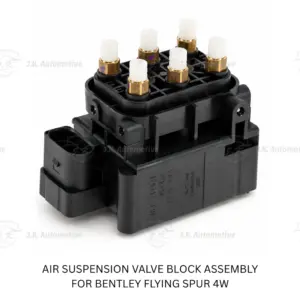
Fitment of the Air Suspension Valve Block Assembly 7P0698014 / 7L0698014 should be confirmed through a combination of OEM reference matching, vehicle identification, physical comparison and VIN verification whenever required rather than relying only on the product’s general appearance. Start by checking the identification information on the existing valve block and compare the complete OEM or manufacturer reference with 7P0698014 / 7L0698014. Reference numbers should be compared character by character because even small differences can indicate another specification, revision or application. Next, confirm that the vehicle is within the stated Porsche Cayenne 92A, 9PA application and determine whether its particular suspension configuration corresponds with the replacement component. Because vehicle parts can differ according to production specification, market, chassis configuration and equipment, the model name alone should not always be considered sufficient confirmation. VIN-based checking is recommended when there is any uncertainty, particularly for vehicles produced around application changes or fitted with different suspension specifications. Before installation, place the replacement valve block alongside the removed component and compare the overall body configuration, pneumatic port count, port positions, pneumatic connection arrangement, electrical connector, mounting points and other visible characteristics. Do not drill, grind, modify, bend or adapt the replacement component to force installation if its configuration does not correspond with the original assembly. Pneumatic connections should also be handled carefully because contamination, damaged lines or incorrectly seated fittings can create leaks after installation and may incorrectly suggest that the new valve block is defective. The existing air suspension system should ideally be diagnosed before ordering so that a leaking air spring, damaged line, weak compressor, faulty sensor or another suspension problem is not mistaken for valve-block failure. For customers buying Porsche Cayenne air suspension parts online in India, supplying the vehicle VIN and existing part reference to the parts specialist can provide an additional compatibility check. The key identification references for this product are 7P0698014 / 7L0698014, and these should remain unchanged throughout the ordering, compatibility and installation process.
Does replacing the Porsche Cayenne air suspension valve block require programming or calibration?
Replacing the Air Suspension Valve Block Assembly for Porsche Cayenne 92A, 9PA with references 7P0698014 / 7L0698014 is primarily a pneumatic and mechanical repair, but the vehicle should still undergo proper diagnostic checks after installation to confirm that the complete air suspension system is operating correctly. The valve block itself controls the distribution of compressed air between different sections of the suspension system, and replacement normally involves disconnecting the pneumatic lines and electrical connection, removing the existing valve assembly and installing the correctly matched replacement component. The exact post-installation procedure can depend on the vehicle configuration and the diagnostic state of the suspension system. If suspension-related fault codes were stored before replacement, these should be read and addressed rather than simply ignored. The technician should check whether the vehicle reaches its intended ride height, whether all corners respond correctly to height commands and whether the suspension remains level after the system has stabilised. Where the vehicle has previously been operated with an air leak, incorrect ride height or another suspension fault, diagnostic equipment may be required to inspect measured ride-height values and determine whether any additional calibration or adaptation procedure is necessary. Ride-height sensors should also be inspected because incorrect sensor information can cause the control system to command inappropriate raising or lowering even when the valve block itself is functioning correctly. The pneumatic system should be checked carefully for leaks after installation, particularly around the lines and connections disturbed during replacement. A leaking connection can produce symptoms similar to a defective valve block and can result in repeated compressor operation. The compressor, air reservoir, air springs, air struts and associated pneumatic lines should therefore be considered as part of the complete system rather than treating the valve block as an isolated component. Professional installation is recommended, and specialist suppliers of these valve blocks also advise installation by trained workshop personnel. The references 7P0698014 and 7L0698014 are documented for Porsche Cayenne air-suspension valve-block applications, but exact vehicle fitment should still be verified before installation.
Can the Air Suspension Valve Block 7P0698014 / 7L0698014 be replaced without replacing the compressor?
Yes, the Air Suspension Valve Block 7P0698014 / 7L0698014 can generally be replaced as an individual air suspension component when diagnosis confirms that the valve block is defective and the existing air suspension compressor remains serviceable. The compressor and valve block perform related but different functions within the pneumatic suspension system. The compressor generates compressed air, while the valve block controls and distributes that compressed air through the suspension circuits. Therefore, failure of one component does not automatically mean that the other component must also be replaced. If the valve block develops internal leakage, sticks or fails to distribute air correctly, replacing the valve block may address the fault without requiring compressor replacement. However, the compressor should still be evaluated during diagnosis because a long-standing pneumatic leak can cause it to operate more frequently and for longer periods than intended. This additional workload may contribute to compressor deterioration over time. Before deciding which component to replace, technicians should determine whether the compressor can generate adequate pressure, whether the system can maintain pressure, whether the valve block is sealing and distributing air correctly and whether any air spring, air strut, reservoir, hose or pneumatic connection is leaking. If the compressor produces sufficient pressure but the vehicle still experiences irregular air distribution or pressure loss traced to the valve block, replacement of the valve block alone may be appropriate. Conversely, if the compressor cannot generate the necessary pressure, replacing only the valve block will not correct the underlying compressor problem. The 7P0698014 / 7L0698014 references are associated with air suspension valve-block applications and are separately identified as valve-block components by specialist suppliers. After replacement, the vehicle should be raised and lowered through the appropriate suspension functions and inspected for leaks, abnormal compressor cycling and uneven ride height. This diagnostic approach helps prevent unnecessary replacement of expensive air suspension components and reduces the risk of a remaining leak placing excessive demand on a serviceable or newly replaced compressor.
Why is my Porsche Cayenne still dropping after replacing the air suspension valve block?
If a Porsche Cayenne continues to drop after replacing the air suspension valve block, another pneumatic or electronic fault may still be present and the complete air suspension system should be diagnosed rather than assuming that the replacement valve block is defective. The valve block is only one component within a system containing the air suspension compressor, air reservoir, air springs or air struts, pneumatic pipes, fittings, ride-height sensors, wiring and electronic suspension controls. A leak in an air spring or air strut can gradually release compressed air while the vehicle is parked, resulting in one corner or one axle becoming lower. Pneumatic lines and connectors can also leak, particularly if a line has been damaged, incorrectly inserted or disturbed during previous repairs. Connections around a newly installed valve block should therefore be inspected carefully after replacement. If a pneumatic line is not seated correctly, the resulting pressure loss may appear immediately or develop gradually over several hours. The compressor should also be checked because insufficient compressor output can prevent the system from restoring the required pressure efficiently. Ride-height sensors and their linkages should be inspected for damage or incorrect readings because the suspension control module depends on these signals when determining vehicle height. Diagnostic fault codes can provide additional information about pressure, compressor operation, electrical circuits and level-control behaviour. Measuring the vehicle’s height at each wheel before parking and checking the measurements again after several hours can help identify the pattern of suspension loss. A consistent drop at one corner can suggest a different diagnostic path from a vehicle that lowers more uniformly, although physical leak testing is still necessary before reaching a conclusion. The Air Suspension Valve Block Assembly references 7P0698014 / 7L0698014 are documented for Porsche Cayenne applications, including 9PA and 92A listings from specialist suppliers. If the replacement valve block has been correctly matched and installed, continued lowering should prompt inspection of the remaining pneumatic system, connections and suspension-control components so the actual pressure-loss path can be located and repaired.
What should be checked during installation of the Porsche Cayenne 7P0698014 / 7L0698014 valve block?
During installation of the Porsche Cayenne Air Suspension Valve Block Assembly 7P0698014 / 7L0698014, technicians should first verify that the replacement component corresponds with the removed valve block before connecting the pneumatic system. The OEM references, overall configuration, electrical connector, pneumatic port positions, mounting arrangement and associated fittings should be compared carefully. The pneumatic lines should be identified before removal so that each line returns to its correct connection on the replacement assembly. Incorrectly connecting air lines can interfere with proper suspension operation and complicate subsequent diagnosis. Pneumatic pipes should be inspected for damage, deformation, contamination or deterioration around the connection areas, and fittings should be handled carefully to avoid creating new leaks. Dirt and foreign material should not be allowed to enter open pneumatic lines or valve-block ports during installation because contamination can interfere with pneumatic sealing and internal operation. Electrical connections should be inspected for damaged terminals, corrosion or insecure engagement before being reconnected. The mounting hardware should secure the valve block correctly without placing unnecessary stress on pneumatic lines or electrical wiring. Once installation is complete, the pneumatic system should be pressurised according to appropriate workshop procedures and inspected for leakage around every disturbed connection. The vehicle should then be checked for balanced ride height and correct response to suspension height commands. Any stored suspension fault codes should be diagnosed and handled appropriately. If the vehicle previously suffered from repeated compressor operation, the compressor should also be assessed to determine whether prolonged operation has affected its performance. Air springs, air struts, reservoir connections and other pneumatic components should be inspected if the system continues to lose pressure. Specialist air-suspension suppliers identify 7P0698014 and 7L0698014 among the reference numbers associated with these valve-block assemblies, while also recommending professional workshop installation. Correct installation should therefore be approached as a complete pneumatic-system repair rather than simply exchanging one component, with final leak testing and operational checks performed before the vehicle is returned to regular use.



Reviews
There are no reviews yet.