What is the Air Suspension Valve Block Assembly 4N0616013 for Audi E-Tron and how does it work?
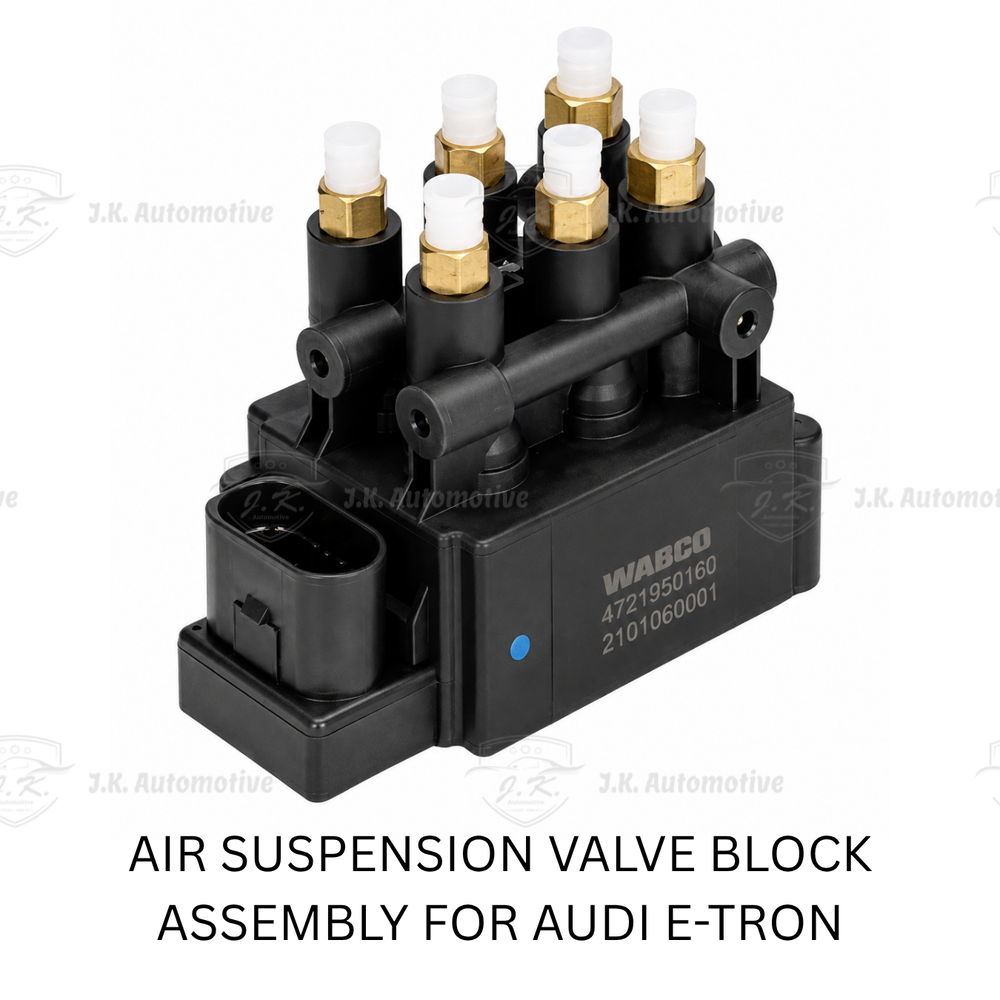
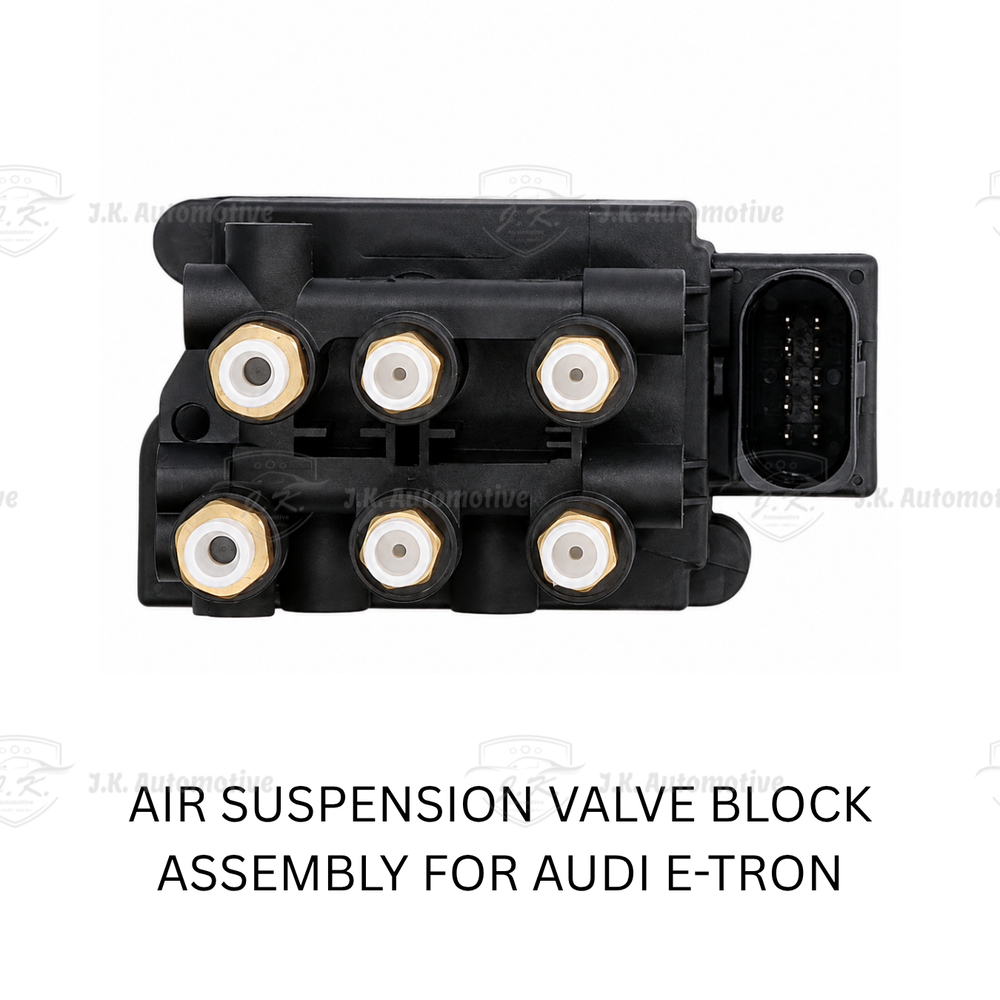
The Air Suspension Valve Block Assembly 4N0616013 for Audi E-Tron is a pneumatic control component within the applicable air suspension system that helps manage the distribution, isolation and release of compressed air between the relevant suspension circuits. The air suspension system operates through interconnected components including the air compressor, pneumatic suspension units, pressure lines, connectors, ride-height sensors, electrical controls and valve assemblies. The compressor generates compressed air required for suspension operation, but this pressure must travel through the correct pneumatic pathways before reaching the required suspension circuit and must remain contained where necessary to maintain the intended vehicle height. Internal passages and controlled valves within the valve block participate in directing this pressure according to suspension-system requirements rather than allowing compressed air to move freely between different circuits. When the suspension system requests an applicable ride-height adjustment or pressure correction, compressed air can be supplied to or released from the relevant pneumatic circuit. Once the required suspension position has been achieved, pressure must be retained correctly so the vehicle can maintain a consistent standing height. Reference 4N0616013 provides an important identification point when searching for, ordering or checking the required valve assembly and should remain exactly as supplied throughout catalog entry, inventory management and compatibility verification. If an internal valve begins sticking, an internal sealing surface deteriorates or pressure starts moving through a pathway that should remain isolated, suspension behaviour may become inconsistent. Possible symptoms can include one corner sitting lower than another, one axle lowering, gradual vehicle lowering after parking, slow suspension adjustment, repeated ride-height corrections or unusually frequent compressor operation. These symptoms do not automatically confirm valve-block failure because leaking pneumatic suspension units, damaged pressure lines, loose fittings, compressor deterioration, electrical problems or ride-height sensor conditions can produce similar behaviour. Proper diagnosis should therefore include pneumatic leak testing around the suspension units, pressure lines, connectors and accessible fittings. Compressor performance should be evaluated if suspension adjustment becomes unusually slow, while electrical connections and relevant suspension-control information should also be inspected where appropriate. If systematic diagnosis identifies the valve assembly as the problem, reference 4N0616013 should be confirmed against the exact Audi E-Tron configuration before professional installation, followed by pneumatic leak testing and complete suspension-function verification.
Is 4N0616013 the correct Air Suspension Valve Block for Audi E-Tron?
4N0616013 is the exact reference supplied for this Air Suspension Valve Block Assembly for the stated Audi E-Tron application and should therefore be retained as the primary identification number when searching for, cataloging or checking the required pneumatic suspension component, although compatibility with an individual vehicle should still be confirmed before installation. Exact reference-number searches are particularly useful because generic searches such as Audi E-Tron valve block, Audi E-Tron air suspension valve, E-Tron pneumatic valve, Audi suspension valve or Audi air suspension control valve can return components with similar descriptions or appearances that may potentially differ in pneumatic-port arrangement, electrical connector design, housing construction, mounting arrangement or intended application. Useful search variations include Audi E-Tron 4N0616013, Audi E-Tron Valve Block 4N0616013, Audi E-Tron Air Suspension Valve 4N0616013, Audi E-Tron Air Suspension Valve Block 4N0616013, Audi 4N0616013, 4N0616013 Valve Block, 4N0616013 Air Suspension Valve, 4N0616013 Air Suspension Valve Block, 4N0616013 Pneumatic Valve and 4N0616013 Suspension Valve. The supplied reference should remain exactly as written throughout product catalog entry, inventory management, invoicing and compatibility searches because changing, omitting or transposing a character can increase the possibility of incorrect component identification. If readable identification remains on the valve assembly currently installed on the vehicle, compare it directly with the proposed replacement. VIN-based verification should be used whenever precise compatibility cannot be established confidently from available information. Physical comparison should also include the pneumatic-port arrangement, electrical connector configuration, housing design, mounting locations and overall construction. Existing pressure lines should correspond naturally with their intended connections without forced routing, drilling, grinding or improvised adapters. Compatibility verification should remain separate from fault diagnosis because establishing that 4N0616013 corresponds to the required valve assembly does not prove that the existing component is responsible for a suspension problem. An Audi E-Tron that lowers while parked, sits unevenly, raises slowly or operates its compressor frequently can have pressure leakage or faults elsewhere in the pneumatic suspension system. Once both the actual fault and exact component compatibility have been established, professional installation should be followed by pneumatic leak testing and complete suspension-operation checks.
What does part number 4N0616013 mean when searching for an Audi E-Tron Air Suspension Valve Block?
Part number 4N0616013 provides a highly specific identification and search reference for the stated Audi E-Tron Air Suspension Valve Block Assembly, making it useful when buyers, workshops or automotive parts professionals need to distinguish the required pneumatic component from other suspension valves that may have similar descriptions or physical appearances. Broad searches such as Audi E-Tron air suspension parts, Audi E-Tron valve block, E-Tron pneumatic valve, Audi pneumatic suspension valve or Audi suspension valve can return numerous suspension-related components, whereas searches containing the complete supplied reference help narrow the results toward the intended valve assembly. Useful search combinations include Audi E-Tron 4N0616013, Audi E-Tron Valve Block 4N0616013, Audi E-Tron Air Suspension Valve 4N0616013, Audi E-Tron Air Suspension Valve Block 4N0616013, Audi 4N0616013, 4N0616013 Valve Block, 4N0616013 Air Suspension Valve, 4N0616013 Air Suspension Valve Block, 4N0616013 Pneumatic Valve and 4N0616013 Suspension Valve Block. The supplied reference should remain exactly as written because changing digits, adding an incorrect suffix or incorrectly formatting the number can increase the possibility of selecting an unsuitable component. Reference-number matching, however, should not be the only compatibility check before installation. The exact Audi E-Tron configuration should also be considered, with VIN-based verification used whenever precise fitment remains uncertain. If identification remains readable on the installed valve assembly, it should be compared directly with the proposed replacement. A physical comparison should confirm the pneumatic-port arrangement, electrical connector, housing design, mounting locations and overall construction. The existing pressure lines should correspond naturally with the replacement assembly rather than requiring forced routing or physical modification. The reference number is also useful for repair documentation, inventory management and online catalog searches because it creates a more precise identification path than broad product descriptions alone. Nevertheless, identifying the required component should not be confused with diagnosing the suspension fault. Uneven standing height, overnight lowering, slow suspension adjustment and frequent compressor activity can originate from leaking suspension units, pressure lines, fittings, compressor problems, electrical conditions or ride-height sensor issues. Proper diagnosis should therefore be completed before replacement, followed by professional installation and pneumatic-system testing when the valve block has been confirmed as the relevant component.
What are the common symptoms of a bad Air Suspension Valve Block on an Audi E-Tron?
Common symptoms that may justify investigating the Air Suspension Valve Block on an Audi E-Tron include uneven standing height, one corner sitting noticeably lower than another, one axle gradually dropping, the vehicle lowering after being parked, slow ride-height adjustment, inconsistent suspension response, repeated automatic height corrections or unusually frequent air-compressor operation, although these symptoms should be considered diagnostic clues rather than automatic proof of valve-block failure. The valve assembly helps control how compressed air moves between applicable pneumatic suspension circuits, and an internal valve or sealing problem can potentially interfere with the system's ability to distribute, isolate or retain pressure correctly. If a pneumatic pathway does not close or isolate correctly, compressed air may move away from a circuit that should retain pressure, potentially allowing the associated suspension position to gradually lower. However, a leaking pneumatic suspension unit can create nearly identical behaviour. Damaged pressure lines, loose connectors, leaking fittings or other sealing problems can also allow compressed air to escape. If the suspension takes unusually long to raise, the cause may involve significant pneumatic leakage, reduced compressor performance, restricted pressure flow or another suspension-system condition rather than the valve block itself. Frequent compressor operation can indicate that the system is repeatedly attempting to restore lost pressure, but it does not identify where the pressure is escaping. A useful diagnostic procedure is to record the standing height at each wheel position and compare the measurements after the vehicle remains parked for a controlled period. If the same position repeatedly lowers more than the others, the corresponding pneumatic circuit deserves closer examination. If an entire axle changes height, shared pneumatic components and relevant circuits should also be investigated. Leak testing should include suspension units, pressure lines, connectors and accessible fittings. Compressor performance should be evaluated when the vehicle raises unusually slowly, while electrical connections, ride-height sensor information and relevant suspension-control data should also be investigated where appropriate. If systematic testing indicates incorrect pneumatic distribution or pressure isolation through the valve assembly, reference 4N0616013 should be confirmed against the exact Audi E-Tron configuration before professional replacement.
Why does my Audi E-Tron lower overnight, and can the 4N0616013 Valve Block be the cause?
An Audi E-Tron that lowers overnight may be experiencing pneumatic pressure loss somewhere within its air suspension system, and the valve block identified by reference 4N0616013 can potentially be one of the components involved if an internal valve or sealing condition allows compressed air to move through a circuit that should remain isolated, although the valve assembly should not be replaced solely because the vehicle lowers while parked. When the vehicle is stationary, the applicable pneumatic suspension circuits need to retain sufficient pressure to maintain the intended standing height. If compressed air escapes through a leaking pneumatic suspension unit, damaged pressure line, connector, fitting or another sealing point, the affected corner or axle may gradually drop. Internal pressure movement through a pneumatic valve assembly can potentially create similar behaviour because the required circuit may no longer remain properly isolated. The pattern of vehicle lowering can provide useful diagnostic information. If the same corner repeatedly drops while other positions remain relatively stable, the pneumatic circuit associated with that position should be investigated carefully. If one complete axle lowers, shared components or pneumatic pathways may require additional attention. If several suspension positions change height, a broader pneumatic-system investigation may be appropriate. Standing height can be measured at each wheel position before parking and compared again after several hours under similar conditions. This helps establish whether the lowering is repeatable and which area changes most significantly. Pneumatic suspension units, pressure lines, connectors and accessible fittings should then be checked systematically for leakage. Compressor behaviour after the vehicle is operated again should also be observed because prolonged or repeated compressor activity can indicate that pressure lost while parked is being replenished. However, compressor activity alone does not identify the leaking component. Compressor performance should be evaluated if suspension recovery becomes unusually slow. Electrical connections, ride-height sensors and relevant suspension-control information should also be investigated where appropriate. If external leakage and other system faults have been evaluated and testing points toward incorrect pressure isolation through the valve assembly, reference 4N0616013 should be confirmed against the exact Audi E-Tron configuration before replacement, followed by professional installation, leak testing and another controlled standing-height check.
What should be checked before replacing the 4N0616013 Air Suspension Valve Block on an Audi E-Tron?
Before replacing the 4N0616013 Air Suspension Valve Block on an Audi E-Tron, the applicable pneumatic suspension system should be inspected systematically because several other components can produce symptoms that closely resemble a defective valve block, and replacing the valve assembly without identifying the actual cause may leave the original suspension problem unresolved. Begin by observing the vehicle's standing height and determine whether the issue affects one corner, one axle or multiple suspension positions. If the vehicle lowers while parked, record the standing height at each wheel position before leaving the vehicle and compare the measurements after a controlled period. This can help identify whether pressure loss repeatedly affects the same pneumatic circuit. Suspension behaviour should also be observed during applicable ride-height adjustments to determine whether movement is normal, slow, uneven or inconsistent. Pneumatic suspension units should then be checked for leakage, followed by pressure lines, connectors, fittings and accessible sealing points. Even a relatively small air leak can cause gradual lowering and repeated compressor operation, creating symptoms similar to an internal valve problem. Compressor performance should be evaluated if the suspension takes unusually long to achieve the required height because insufficient compressor output can cause slow suspension response even when the valve assembly remains functional. Electrical connectors should be checked for secure engagement, contamination, corrosion or visible damage where applicable. Ride-height sensor information and relevant suspension-control fault data should also be evaluated with suitable diagnostic equipment when necessary. If diagnosis indicates that the valve assembly requires replacement, reference 4N0616013 should be checked carefully against the exact Audi E-Tron configuration. VIN-based verification should be used whenever precise compatibility remains uncertain. Identification on the existing component should be compared with the proposed replacement wherever readable. Before installation, compare the pneumatic-port arrangement, electrical connector configuration, housing construction, mounting locations and overall physical design. Pneumatic lines should connect naturally to their intended locations without forced routing, drilling, grinding or improvised modification. Open air lines should remain protected from dirt, moisture and contamination during the repair. Following professional installation, disturbed pneumatic connections should be leak-tested and the suspension operated through its applicable functions. Vehicle standing height, pressure retention, ride-height response and compressor behaviour should then be monitored to confirm that the original suspension condition has been properly resolved.
How can a faulty 4N0616013 Air Suspension Valve Block affect the ride height of an Audi E-Tron?
A faulty 4N0616013 Air Suspension Valve Block can potentially affect the ride height of an Audi E-Tron because this pneumatic component helps control how compressed air is distributed, isolated and released between the applicable suspension circuits. The air compressor generates the compressed air required for suspension operation, but that pressure must travel through the correct pneumatic pathways toward the relevant suspension units and remain contained once the intended vehicle height has been achieved. Internal passages and controlled valves within the valve block participate in directing this pressure according to suspension-system requirements. If an internal valve does not open or close correctly, an internal sealing surface deteriorates or compressed air begins moving through a circuit that should remain isolated, one or more suspension positions may not receive or retain pressure as intended. The vehicle may consequently develop uneven standing height, one corner may sit lower than another, one axle may gradually drop, the vehicle may lower after being parked or ride-height adjustment may become slow or inconsistent. The suspension system may also make repeated corrections while attempting to maintain the intended position. Repeated pressure loss can potentially result in more frequent compressor operation because the system continually attempts to restore the pressure required for suspension operation. However, these symptoms do not automatically prove that the valve block is defective. A leaking pneumatic suspension unit can produce similar ride-height behaviour, while damaged pressure lines, loose connectors, leaking fittings or reduced compressor performance can interfere with normal suspension operation. Electrical connections, ride-height sensors and relevant suspension-control conditions should therefore be investigated alongside the pneumatic components. Diagnosis can begin by recording standing height at each wheel position and comparing the measurements after the vehicle remains parked for a controlled period. If one position repeatedly changes more than the others, the corresponding pneumatic circuit deserves closer examination. Suspension units, pressure lines, connectors and accessible fittings should then be checked systematically for leakage. Compressor performance should be evaluated when suspension adjustment becomes unusually slow or compressor activity appears excessive. Suitable diagnostic equipment can also help investigate relevant suspension fault information, ride-height sensor data and electrical operation where applicable. If external leakage, compressor performance and relevant electrical or sensor conditions have been evaluated and testing indicates incorrect pneumatic distribution or isolation through the valve assembly, reference 4N0616013 should be confirmed against the exact Audi E-Tron configuration before professional replacement, followed by leak testing and complete suspension-function verification.
How can I confirm whether 4N0616013 is the correct Air Suspension Valve Block for my Audi E-Tron?
To confirm whether 4N0616013 is the correct Air Suspension Valve Block for a particular Audi E-Tron, the complete supplied reference should be checked together with the exact vehicle application, identification information from the currently installed component where readable, VIN-based compatibility information whenever necessary and a detailed physical comparison before installation. Exact reference-number searches are particularly useful because generic searches such as Audi E-Tron valve block, Audi E-Tron air suspension valve, E-Tron pneumatic valve, Audi air suspension control valve or Audi suspension valve can return components that may appear generally similar while potentially differing in pneumatic-port arrangement, electrical connector configuration, housing construction, mounting positions or intended application. Useful search variations include Audi E-Tron 4N0616013, Audi E-Tron Valve Block 4N0616013, Audi E-Tron Air Suspension Valve 4N0616013, Audi E-Tron Air Suspension Valve Block 4N0616013, Audi 4N0616013, 4N0616013 Valve Block, 4N0616013 Air Suspension Valve, 4N0616013 Air Suspension Valve Block, 4N0616013 Pneumatic Valve and 4N0616013 Suspension Valve Block. The reference should remain exactly as supplied throughout product catalog entry, inventory management, invoicing and online searches because changing, omitting or transposing individual characters can increase the possibility of incorrect component identification. If readable identification remains on the valve assembly removed from the vehicle, compare it directly with the proposed replacement. VIN-based verification should be used whenever precise compatibility cannot be established confidently from available information. A physical comparison should include the number and arrangement of pneumatic ports, electrical connector configuration, housing design, mounting points and overall construction. Existing pneumatic lines should correspond naturally with their intended connections without forced routing, drilling, grinding, improvised adapters or other physical modifications. It is equally important to separate compatibility verification from fault diagnosis because identifying 4N0616013 as the required reference does not prove that the existing valve assembly is responsible for the suspension problem. Uneven standing height, overnight lowering, slow suspension adjustment or frequent compressor operation can originate from other pneumatic components or control-system conditions. Once the actual fault and exact component compatibility have both been established, professional installation should be followed by pneumatic leak testing, ride-height observation and complete suspension-operation checks.
Can a faulty 4N0616013 Valve Block cause frequent compressor operation or slow suspension lifting on an Audi E-Tron?
A faulty 4N0616013 Valve Block can potentially contribute to frequent compressor operation or slow suspension lifting on an Audi E-Tron if compressed air is not being distributed, isolated or retained correctly within the applicable pneumatic circuits, but these symptoms can also result from external pressure leakage, reduced compressor performance or other pneumatic and suspension-control conditions and therefore require systematic diagnosis. The air compressor generates the pressure required for suspension operation, while the valve assembly participates in directing compressed air toward the applicable suspension circuits and controlling pressure movement between them. If an internal valve does not operate correctly or an internal sealing condition allows unwanted pressure movement, the suspension system may repeatedly require additional compressed air to restore or maintain the intended vehicle height. This can potentially cause the compressor to operate more frequently than expected. If compressed air cannot reach the required pneumatic circuit efficiently, suspension lifting may also become slower or inconsistent. However, leaking pneumatic suspension units can produce very similar behaviour because the compressor must repeatedly replace air escaping from the system. Damaged pneumatic lines, loose connectors and leaking fittings provide additional potential pressure-loss points. A compressor with reduced output can also make suspension adjustment slow even when the valve assembly itself remains functional. Compressor activity should therefore be treated as an important diagnostic clue rather than direct confirmation of valve-block failure. A technician can observe how quickly the suspension responds during applicable ride-height adjustments and whether the different suspension positions move consistently. Once the intended height is achieved and compressor operation stops, the vehicle can be monitored to determine whether that height remains stable. Pneumatic leak testing should include suspension units, pressure lines, connectors and accessible fittings. Compressor performance should be evaluated when suspension adjustment remains unusually slow, while electrical connections, ride-height sensor information and relevant suspension-control data should also be investigated where appropriate. If external leaks and compressor problems are ruled out but compressed air still cannot be distributed or retained correctly within the required circuits, the valve assembly becomes a stronger diagnostic suspect. Reference 4N0616013 should then be verified against the exact Audi E-Tron configuration before professional replacement and subsequent pneumatic-system testing.
How should the Audi E-Tron Air Suspension Valve Block 4N0616013 be installed and checked after replacement?
Installation of the Audi E-Tron Air Suspension Valve Block 4N0616013 should be performed professionally because the component forms part of a pressurized pneumatic suspension system and correct component identification, clean pneumatic connections, proper line routing, secure electrical engagement and post-installation testing are important for reliable suspension operation. Before removing the existing assembly, the actual suspension fault should already have been diagnosed so that another leak, compressor problem, electrical condition or ride-height sensor issue is not mistaken for valve-block failure. Reference 4N0616013 should be verified against the exact vehicle configuration, with identification on the existing component compared wherever readable and VIN-based verification used whenever precise compatibility remains uncertain. Before fitting the replacement, compare its pneumatic-port arrangement, electrical connector configuration, housing construction, mounting points and overall physical design with the removed component. Pneumatic lines and their corresponding connection positions should be identified carefully so that each line returns to its intended port rather than being incorrectly routed. Open pneumatic lines should remain protected against dirt, moisture and other foreign material because contamination introduced during installation can potentially affect sealing and pneumatic operation. Connections should fit naturally and should not require drilling, grinding, forced routing or improvised adapters. The electrical connector should engage correctly and the valve assembly should be mounted securely in its intended position. After installation, disturbed pneumatic joints and accessible connections should be inspected for pressure leakage. The suspension should then be operated through its applicable ride-height functions while observing whether vehicle movement is smooth and consistent. Compressor behaviour should also be monitored because excessive running after replacement may indicate remaining pneumatic leakage or another unresolved system problem. Vehicle standing height can be recorded at each wheel position and checked again after a controlled parking period to confirm pressure retention. Relevant suspension fault information and ride-height sensor data should also be reviewed where suitable diagnostic equipment is available. Replacing the valve block should not be considered the end of the repair until the pneumatic system has been tested and the original complaint has been reassessed. If the Audi E-Tron continues to lower, raises slowly or remains uneven after replacement, the remaining suspension units, pressure lines, compressor, electrical system and ride-height sensing components should be investigated rather than automatically assuming the newly installed valve assembly is responsible.
How do I know if the Air Suspension Valve Block is bad on my Audi E-Tron?
An Air Suspension Valve Block on an Audi E-Tron may require investigation when the vehicle repeatedly lowers after parking, one corner sits noticeably lower than the others, one axle develops an inconsistent standing height, suspension lifting becomes unusually slow, repeated ride-height corrections occur or the air compressor operates more frequently than expected, but these symptoms should be treated as diagnostic clues rather than automatic confirmation that the valve block is defective. One useful initial check is whether the vehicle maintains a consistent standing height after being parked. Record the height at each wheel position before leaving the vehicle for several hours and compare the measurements later under similar conditions. If the same corner repeatedly lowers, compressed air may be escaping from or moving through the pneumatic circuit associated with that suspension position. If an entire axle consistently lowers, a shared pneumatic pathway or another pressure-loss point may require investigation, although the lowering pattern by itself cannot identify the failed component. Leaking pneumatic suspension units, damaged air lines, loose connectors or fittings can produce essentially the same behaviour as an internal valve problem, so these areas should be systematically leak-tested before the valve block is considered the confirmed fault. Compressor behaviour provides another useful diagnostic clue because frequent compressor operation may indicate that the system is repeatedly replacing lost compressed air. Slow suspension lifting can indicate reduced compressor output, significant pneumatic leakage, restricted pneumatic flow or another suspension-system condition. Electrical connections, ride-height sensor information and relevant suspension-control fault data should also be investigated when pneumatic testing does not fully explain the symptoms. If external pressure leaks, obvious compressor problems and relevant electrical or sensor conditions are ruled out but compressed air still cannot be distributed or retained correctly between the required suspension circuits, the valve assembly becomes a stronger diagnostic suspect. Before replacement, reference 4N0616013 should be verified against the exact Audi E-Tron configuration, with VIN-based verification used whenever precise compatibility remains uncertain. The replacement should correspond with the removed component in pneumatic-port configuration, electrical connector, housing design and mounting arrangement. After professional installation, pneumatic leak testing, suspension-function testing and a controlled parking check should be performed to confirm that the original ride-height or pressure-retention problem has actually been resolved.


Reviews
There are no reviews yet.