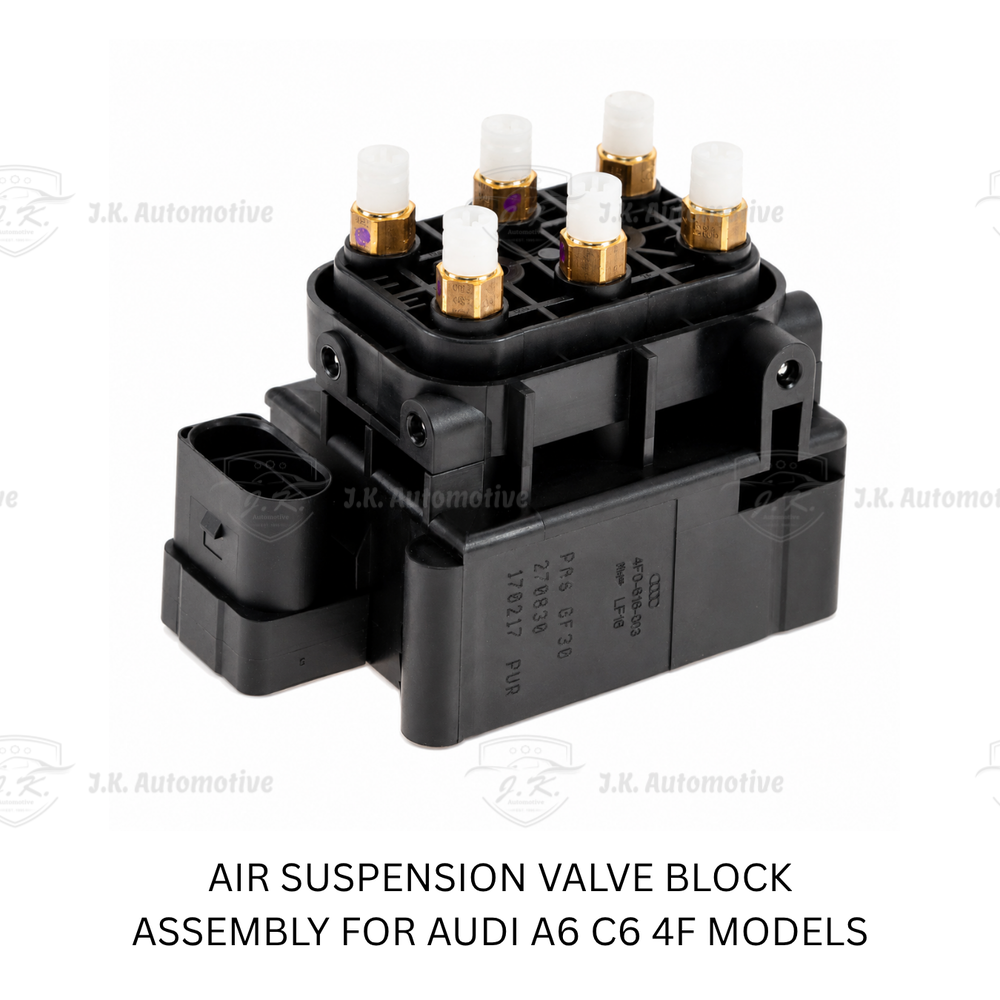
What is the Air Suspension Valve Block Assembly for Audi A6 C6 4F 4F0616013?
The Air Suspension Valve Block Assembly for Audi A6 C6 4F with reference 4F0616013 is a pneumatic control and air-distribution component used within the vehicle’s air suspension system to regulate the movement of compressed air between different suspension circuits. The valve block works together with the air suspension compressor, pressure reservoir, air springs or air struts, pneumatic lines, ride-height sensors and electronic suspension control system to help the vehicle achieve and maintain the required ride height. When the suspension system requests the vehicle to raise, lower or make a height correction, compressed air must be routed accurately to the appropriate suspension circuit. The internal valves and pneumatic passages within the assembly control this distribution according to commands from the suspension system. Once the required vehicle height has been reached, the pneumatic system must also retain pressure effectively so that the suspension remains stable rather than continuously requiring correction. This means the valve unit operates repeatedly under changing pressure conditions as vehicle load, passengers, luggage, road conditions and suspension commands change. Over time, internal sealing surfaces, pneumatic passages or valve mechanisms can potentially become affected by normal operating cycles, contamination, moisture or deterioration elsewhere within the air suspension system. A pressure-distribution problem may contribute to symptoms such as one corner of the vehicle sitting lower, an axle dropping, uneven ride height, overnight sagging, slow suspension raising or lowering, repeated height corrections or unusually frequent compressor operation. These symptoms do not automatically mean that 4F0616013 is faulty because an air spring or air strut leak, damaged pneumatic line, loose fitting, reservoir leakage, weak compressor, ride-height sensor problem or electrical fault can create similar behaviour. Professional diagnosis should therefore evaluate the complete air suspension system before replacing the pneumatic control unit. Pressure generation, pressure retention, individual suspension circuits and compressor performance should be inspected where appropriate. Reference 4F0616013 provides an important identification point when selecting the replacement, but the existing component, physical configuration, pneumatic port arrangement, electrical connector and VIN should also be checked where necessary before ordering.
What does reference 4F0616013 mean for the Audi A6 C6 4F air suspension valve block?
Reference 4F0616013 is the supplied identification number for this air suspension valve block application for the Audi A6 C6 4F and provides an important reference when searching for, comparing or confirming the required pneumatic suspension component. Customers and workshops may search for the same type of component using descriptions such as Audi A6 C6 Air Suspension Valve Block, Audi A6 4F Valve Block, Audi A6 Pneumatic Valve, Audi A6 Air Distribution Unit, Audi A6 Suspension Control Valve, Audi A6 Level Control Valve, 4F0616013 Valve Block, 4F0616013 Air Suspension Valve or Audi A6 Pneumatic Control Unit. These search variations describe the product category in different ways, but reference 4F0616013 should remain unchanged when identifying the component supplied in this listing. Air suspension valve units can sometimes appear very similar externally while having different intended applications, pneumatic port configurations, connectors or internal arrangements. Visual appearance alone should therefore not be used as the final fitment confirmation. The existing component reference should be checked wherever possible, and the physical housing, electrical connector, pneumatic line positions and mounting arrangement should correspond with the required replacement. VIN verification is recommended whenever exact compatibility remains uncertain. The valve unit itself forms part of a larger pneumatic system and controls the routing of compressed air between the pressure source and suspension circuits. Depending on the suspension command, internal valves open or close to direct air toward the required air spring or air strut or manage pressure during lowering and height correction. A reference match helps identify the component, but it does not prove that the existing valve block is responsible for a suspension fault. Overnight sagging, uneven height, slow raising and frequent compressor operation can also result from leaking air springs, damaged pneumatic pipes, loose fittings, reservoir pressure loss, compressor weakness, sensor faults or electrical problems. A workshop should therefore confirm the source of the pressure-control problem before replacement. Once the pneumatic distribution unit is diagnosed as faulty, reference 4F0616013, the Audi A6 C6 4F application, physical configuration and VIN information where necessary provide important checks before ordering.
What are the symptoms of a faulty Audi A6 C6 4F air suspension valve block?
Possible symptoms of a faulty Audi A6 C6 4F air suspension valve block can include uneven vehicle height, one corner sitting lower than the others, the front or rear suspension dropping, gradual sagging after the vehicle remains parked, slow raising or lowering, repeated ride-height corrections and unusually frequent air suspension compressor operation. The valve block controls the distribution and isolation of compressed air between different pneumatic circuits, so internal leakage or incorrect valve operation can interfere with how pressure reaches or remains within individual suspension components. In one situation, the vehicle may reach its normal ride height after starting but gradually become lower after several hours of parking. In another situation, one side or axle may respond differently when the system attempts to adjust suspension height. Frequent compressor activity can also occur if pressure is repeatedly lost and the suspension control system continually attempts to restore the requested height. Slow raising can be another symptom if compressed air is not being distributed efficiently, although compressor performance itself must also be considered. These symptoms are useful diagnostic indicators but should never be treated as automatic confirmation that reference 4F0616013 requires replacement. An air spring or air strut can develop a pneumatic leak and cause an individual corner to sag. A damaged air pipe, leaking connector or loose fitting can allow pressure to escape from another part of the system. A weak compressor may take longer than normal to generate sufficient pressure, while reservoir leakage can reduce available stored air. Ride-height sensor problems can cause the electronic suspension system to receive inaccurate information about the actual position of the vehicle. Electrical wiring or connector faults can also affect suspension operation. A professional diagnosis should therefore examine both pneumatic and electronic components. Measuring vehicle height at consistent points before and after an appropriate parking period can help identify the pattern of pressure loss. Technicians can also inspect pneumatic lines and fittings, evaluate compressor operation and use suitable diagnostic equipment to check suspension-related faults and available sensor information. If testing confirms that the pneumatic valve unit is responsible, reference 4F0616013 should be verified together with the Audi A6 C6 4F application and physical configuration before replacement.
Why does my Audi A6 C6 4F air suspension sag or lower overnight?
An Audi A6 C6 4F that sags or becomes lower after being parked overnight may be losing compressed air somewhere within the air suspension system, and the valve block is one possible source of that pressure loss, but the actual leaking component should be identified before replacement. The air suspension system supports and controls vehicle height using compressed air stored and distributed through a network of pneumatic components. After the vehicle reaches its required ride height and is parked, the relevant suspension circuits should retain sufficient pressure to maintain the vehicle’s position. If air escapes gradually, one corner, one side, one axle or multiple areas of the vehicle may become lower over several hours. Internal leakage through the pneumatic distribution unit can potentially allow pressure to escape from or move between suspension circuits, which is why reference 4F0616013 may be considered during diagnosis. However, overnight sagging is not unique to valve block failure. An ageing or damaged air spring or air strut can leak directly at one corner. Pneumatic pipes can develop damage, while fittings and connectors can lose their ability to seal correctly. Pressure reservoir connections should also be considered where appropriate. The pattern of height loss can provide useful diagnostic information. If one corner consistently drops while the remaining corners remain relatively stable, the air spring, air strut, pneumatic line and connections associated with that corner should receive particular attention. If an entire axle or several corners change height, shared pneumatic components and pressure-routing behaviour may become more relevant to the diagnosis. Measuring all four corners at consistent reference points before parking and checking them again later can help establish the actual pattern rather than relying only on visual appearance. Compressor behaviour after the vehicle is restarted can provide another clue. If the compressor repeatedly needs to restore significant lost height, the source of the leak should be corrected rather than allowing the compressor to compensate continuously. Suitable pressure-retention and leak-detection procedures can then be used to narrow the fault. If the valve assembly is confirmed as the source, reference 4F0616013, physical configuration, connector arrangement and VIN where necessary should be verified before installation.
Can a faulty Audi A6 C6 4F valve block cause the air suspension compressor to run frequently?
Yes, a faulty Audi A6 C6 4F air suspension valve block can potentially contribute to frequent compressor operation when internal leakage or incorrect pressure routing causes the suspension system to lose compressed air and repeatedly request height corrections, but frequent compressor cycling can also result from several other pneumatic faults. The air suspension compressor generates the compressed air required by the system, while the pressure reservoir can store air and the pneumatic distribution unit directs pressure to the appropriate suspension circuits. Under normal conditions, once sufficient pressure has been generated and the requested ride height has been achieved, the system should not need to continuously rebuild substantial amounts of lost pressure. If an internal valve cannot seal effectively, pressure may gradually escape or migrate between circuits. The vehicle may then become lower while parked or repeatedly move away from its requested height. When the suspension control system detects this change, additional compressor operation may be requested to restore the vehicle. Repeated cycles of pressure loss and pressure restoration can increase compressor operating time, workload and temperature. However, replacing reference 4F0616013 solely because the compressor runs frequently is not recommended. A leaking air spring or air strut can release pressure continuously from an individual suspension corner. Damaged pneumatic pipes, poorly sealing fittings or reservoir leakage can also result in repeated pressure loss. A compressor that has become mechanically weak may run for longer simply because it requires additional time to build pressure. Ride-height sensor problems or incorrect electronic signals can cause unnecessary suspension corrections even when the pneumatic system is otherwise capable of retaining air. Diagnosis should therefore determine whether the compressor can generate pressure correctly and whether the system can retain that pressure after compressor operation stops. Technicians can measure vehicle height, inspect individual corners for sagging, check pneumatic lines and connections, evaluate compressor performance and review suspension-related diagnostic information. If pressure is generated normally but repeatedly lost through the pneumatic distribution system, the valve unit becomes a stronger diagnostic consideration. Once confirmed faulty, reference 4F0616013 should be checked against the Audi A6 C6 4F application, existing component and VIN where necessary before replacement.
How do I confirm fitment of Air Suspension Valve Block Assembly for Audi A6 C6 4F 4F0616013 before ordering?
Fitment of Air Suspension Valve Block Assembly for Audi A6 C6 4F 4F0616013 should be confirmed using the supplied reference number, exact vehicle application, existing component identification, physical configuration and VIN verification where necessary rather than selecting the replacement only because it looks similar to the original component. Begin by confirming that the vehicle corresponds with the supplied Audi A6 C6 4F application. Reference 4F0616013 should then be compared carefully with the available identification information on the existing pneumatic control unit or relevant vehicle parts information. The replacement should correspond with the required housing design, mounting arrangement, electrical connector and pneumatic port layout. Air suspension valve blocks can share a similar external appearance across different applications, but differences in port configuration, connectors or intended system arrangement can affect compatibility. For this reason, photographs alone should not be used as the final fitment method. VIN verification should be used whenever exact compatibility remains uncertain or the original reference cannot be confirmed clearly. Physical comparison with the removed unit is also useful during repair, particularly for checking pneumatic connections and mounting details. The correct component should install according to the intended factory-style arrangement without drilling, grinding, machining, bending or other physical modification. Pneumatic line positions should be identified carefully before disconnection because each line serves a specific suspension circuit and incorrect reconnection can produce abnormal suspension behaviour. Fitment confirmation should also remain separate from diagnosis. Even when reference 4F0616013 is confirmed as compatible, this does not prove that the existing valve unit is responsible for sagging, uneven height or frequent compressor operation. Air springs or air struts, pneumatic lines, fittings, the compressor, pressure reservoir, ride-height sensors and electrical components should be investigated according to the symptoms. Once the pneumatic control unit has been diagnosed as faulty, the supplied Audi A6 C6 4F application, reference 4F0616013, physical port configuration, electrical connection and VIN information where necessary should be used together to confirm the correct replacement. Professional installation and post-repair leak and ride-height checks are recommended.
Does the Audi A6 C6 4F Air Suspension Valve Block Assembly 4F0616013 require programming or calibration after replacement?
Replacing the Audi A6 C6 4F Air Suspension Valve Block Assembly 4F0616013 does not necessarily mean that the pneumatic valve unit itself requires separate programming in every repair situation, because its primary function is to control and distribute compressed air between the different suspension circuits, but vehicle-specific diagnostic checks, basic settings or ride-height procedures may be required depending on the repair performed and the condition of the suspension system. The valve block operates as part of a complete air suspension network that includes the compressor, pressure reservoir, air springs or air struts, pneumatic lines, ride-height sensors, electrical connections and electronic suspension control system. When the control system requests a height change, the pneumatic unit directs compressed air toward or away from the required suspension circuits. After installing the replacement, technicians should therefore verify much more than whether the vehicle simply rises from a lowered position. The pneumatic lines must first be connected to their correct ports because incorrect routing can result in abnormal suspension behaviour. All connections should be checked for secure seating and pressure leakage. The vehicle should then be allowed to reach its normal operating ride height, and all four corners should be compared to determine whether the suspension is balanced. Raising and lowering behaviour should be checked where applicable, while compressor operation should be observed to confirm that it is not repeatedly compensating for unresolved pressure loss. Suitable diagnostic equipment can be used to read suspension-related fault information and examine available ride-height sensor data. If the applicable vehicle repair procedure requires basic settings, level checks, ride-height calibration or another adaptation procedure following the work performed, that process should be completed correctly. However, calibration should never be used as a substitute for repairing an actual pneumatic leak. If the vehicle remains low on one corner or continues to sag after installation, technicians should inspect the relevant air spring or air strut, pneumatic line, fitting, pressure reservoir and other related components. A weak compressor should also be considered when raising remains unusually slow. Before replacement, reference 4F0616013 should be verified against the Audi A6 C6 4F application, with the existing component, electrical connector, pneumatic port configuration and VIN checked where necessary. Professional installation followed by pneumatic and diagnostic verification provides the most reliable method of confirming correct system operation.
Why can a faulty Audi A6 C6 4F air suspension valve block make the compressor run frequently?
A faulty Audi A6 C6 4F air suspension valve block can potentially make the compressor run frequently if internal pressure leakage or incorrect pneumatic distribution causes the system to repeatedly lose compressed air and request additional pressure to restore the required ride height. The compressor is responsible for generating compressed air, while the pressure reservoir can store part of that air and the pneumatic distribution unit controls where pressure is directed within the suspension system. Once the requested ride height and system pressure have been achieved, the compressor should not need to operate continuously simply to compensate for substantial ongoing leakage. If an internal pneumatic valve cannot seal correctly, pressure may gradually escape from a suspension circuit or migrate between circuits after the compressor stops. The affected area of the vehicle may then become lower, causing the suspension control system to request another correction. The compressor operates again, restores pressure and may then be required to repeat the same process if the pressure loss continues. This repeated cycle can increase compressor operating time and thermal workload. However, frequent compressor activity should not automatically be attributed to reference 4F0616013. An air spring or air strut with a small leak can produce exactly the same cycle because the system continually replaces the air escaping from the affected corner. Pneumatic pipes can become damaged, while connectors or fittings can develop leaks that are difficult to identify visually. Pressure reservoir leakage can reduce stored air availability, and a mechanically weak compressor may operate for longer because it requires more time to generate sufficient pressure. Ride-height sensors and electronic control information should also be checked because inaccurate height information can result in unnecessary suspension adjustments. Diagnosis should therefore establish whether the compressor is capable of building pressure correctly and whether that pressure remains stable after compressor operation stops. Measuring the vehicle at consistent reference points before and after an appropriate parking period can reveal which corners or axles are losing height. Pneumatic leak testing and diagnostic information can then help isolate the affected circuit. If adequate pressure is produced but cannot be retained because of internal leakage through the pneumatic control unit, replacement may be justified. Reference 4F0616013, physical configuration and VIN where necessary should then be confirmed before installation.
Why does my Audi A6 C6 4F still sag after replacing the Air Suspension Valve Block Assembly 4F0616013?
If an Audi A6 C6 4F continues to sag after replacing the Air Suspension Valve Block Assembly 4F0616013, another component in the pneumatic suspension system may be leaking or malfunctioning, the original diagnosis may have been incorrect, or an installation-related pressure leak may need to be investigated. The valve unit is only one part of the complete air suspension system, so replacing it cannot correct a leak that originates from an air spring, air strut, pneumatic pipe, fitting, pressure reservoir or another component. The pattern of vehicle-height loss should be examined carefully because it can provide useful information about where the problem may be located. If one corner consistently becomes lower after parking while the other corners remain relatively stable, the air spring or air strut, pneumatic pipe and connections serving that corner should receive particular attention. If an entire axle or several corners lose height together, technicians may need to investigate shared pneumatic circuits and pressure-distribution components. Connections disturbed during replacement should also be checked carefully because an incorrectly seated pneumatic line can introduce a new leak even when the replacement unit is functioning correctly. Each line must be connected to its intended port because incorrect routing can produce unusual raising, lowering or pressure-retention behaviour. The compressor should be evaluated if the vehicle takes an excessive amount of time to return to normal height after starting. A compressor that has previously operated repeatedly because of a long-term leak may already have experienced additional wear. Pressure reservoir condition and associated connections should also be considered where system behaviour indicates a storage-pressure problem. Ride-height sensors and electrical controls require attention when the actual physical height of the vehicle does not correspond with the information being interpreted by the suspension system. A useful diagnostic method is to allow the vehicle to reach normal height, measure all four corners at consistent reference points and repeat the measurements after an appropriate parking period. This provides objective information about which suspension circuits are losing height. If 4F0616013 was replaced without confirming internal valve leakage first, continued sagging may indicate that the original valve unit was not the actual cause. Professional pressure-retention and leak testing should therefore be performed before replacing additional parts. The newly installed component, pneumatic ports, connections and electrical connector should also be rechecked to confirm correct installation.
What precautions should be followed when installing Audi A6 C6 4F Air Suspension Valve Block Assembly 4F0616013?
Installation of Audi A6 C6 4F Air Suspension Valve Block Assembly 4F0616013 should be carried out carefully because the component contains multiple pneumatic circuits and an electrical connection, and incorrect line routing, contamination, damaged pipe ends or poor sealing can create suspension faults even when the replacement component itself is correct. Before removing the existing unit, reference 4F0616013 should be compared with the required application and the replacement should be checked against the original component. Housing design, mounting arrangement, electrical connector and pneumatic port positions should correspond correctly, with VIN verification used where exact compatibility remains uncertain. Pneumatic lines should be identified before disconnection so that every circuit can be returned to its correct location during assembly. Photographing or otherwise recording the original arrangement according to workshop practice can help prevent incorrect routing. Air lines should be handled carefully and should not be crushed, kinked, excessively bent or damaged during removal. Once disconnected, open pneumatic pipes and valve ports should be protected from moisture, dust, oil and workshop contamination. Pipe ends should be inspected for scratches, cracks, deformation or damage that could prevent effective sealing after reconnection. Fittings and sealing areas should also be checked rather than assuming that every previously used connection remains serviceable. The electrical connector should be inspected for corrosion, damaged terminals, broken locking features or insecure engagement. The replacement unit should install in its intended position without grinding, drilling, machining, bending or other modification. If the physical configuration does not correspond correctly, fitment should be verified again instead of forcing installation. After all pneumatic lines are connected, the system should be allowed to build pressure and every disturbed connection should be checked for leakage. Vehicle height should be compared at all four corners, and normal raising and lowering behaviour should be confirmed where applicable. Compressor operation should also be observed because excessive cycling after replacement can indicate that a pressure leak remains elsewhere. Suitable diagnostic equipment can be used to check suspension-related fault information and available sensor data. Applicable vehicle-specific basic settings or ride-height procedures should be performed where required by the repair. Professional installation is recommended because correct pneumatic routing, clean handling and post-repair pressure testing are essential to reliable air suspension operation.
How do I know if the Audi A6 C6 4F air suspension valve block is faulty?

Reviews
There are no reviews yet.