Why should you choose the Stokes Germany Cabin Air Filter for Mercedes-Benz A-Class W176 A 180 (2012–2018)?
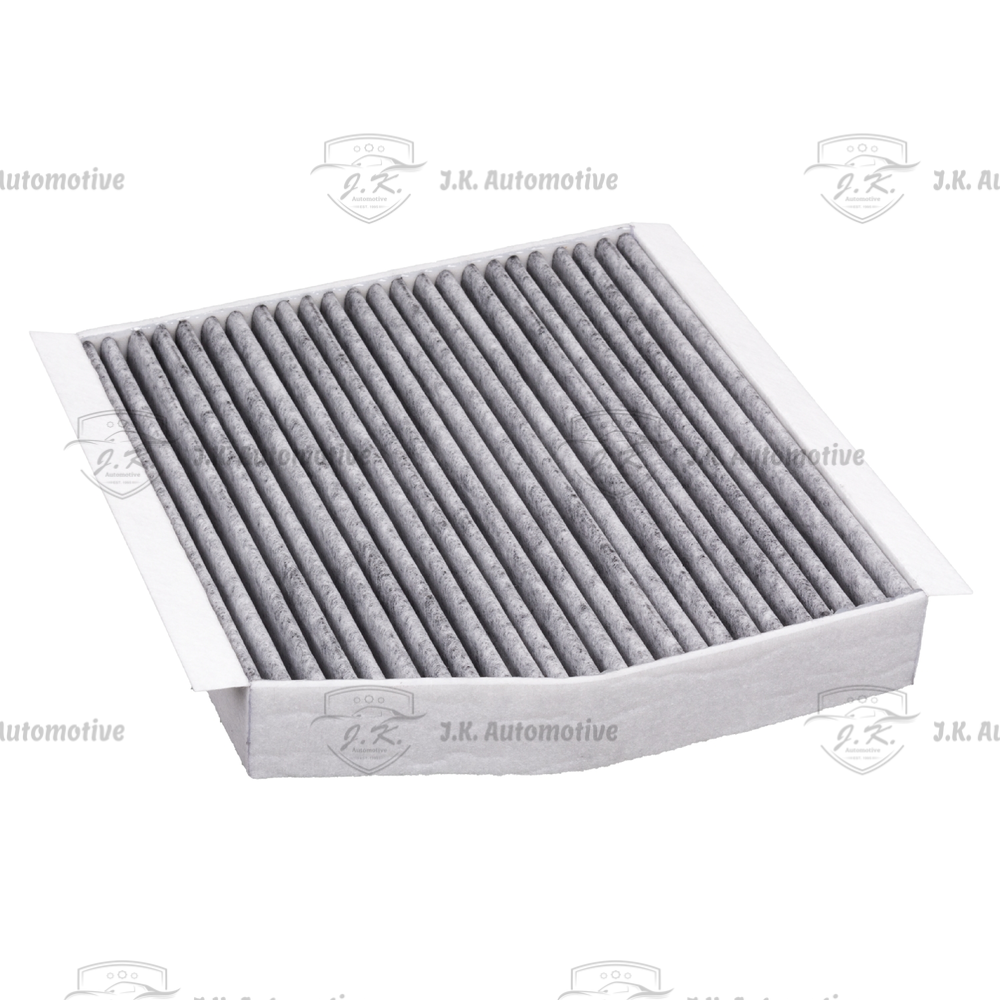
The Stokes Germany Cabin Air Filter for Mercedes-Benz A-Class W176 A 180 is a replacement filtration option for owners looking to maintain cleaner air inside their vehicle while supporting the proper operation of the cabin ventilation system. The Mercedes-Benz A-Class W176 is a premium compact vehicle designed to provide a comfortable driving experience, and maintaining its interior air filtration system is an important part of routine servicing. A cabin air filter helps capture airborne particles entering the passenger compartment through the heating, ventilation, and air conditioning system. These particles may include dust, pollen, road debris, and other airborne contaminants that can accumulate during everyday driving. Over time, the existing cabin filter can become dirty or obstructed, particularly when the vehicle is frequently driven through polluted urban environments, heavy traffic, construction areas, or dusty roads. A heavily restricted filter may reduce airflow through the dashboard ventilation outlets and place additional resistance on the blower system. Replacing the filter at an appropriate service interval helps restore airflow where the previous filter has become clogged. The Stokes Germany cabin filter is marketed as an option for Mercedes-Benz owners searching for a replacement using specific vehicle and part-number references. For the Mercedes-Benz A 180 (176.042), customers should verify the required filter dimensions and original equipment reference before ordering. The product listing includes Mercedes-Benz OEM reference A2468300018 along with 27277-5DA0A and 27277-5DA2A, but those references should not be treated as confirmed interchangeable numbers without catalogue verification. Choosing the correct cabin air filter is especially important because an incorrectly sized component may not seal properly inside the filter housing. Poor sealing can allow unfiltered air to bypass the filter media and reduce filtration effectiveness. A correctly fitted cabin filter helps the ventilation system operate as intended while contributing to passenger comfort. Drivers who frequently use their vehicle's air conditioning system should include the cabin filter in regular maintenance inspections. A clean and correctly installed filter can also help reduce the amount of dust entering through the fresh-air ventilation intake. Filter replacement may be particularly useful before long journeys or during periods of increased pollen and pollution. However, a cabin filter is not intended to replace an engine air filter, and the two components perform completely different functions. Customers purchasing this Stokes Germany product should confirm whether their vehicle requires a standard particulate filter or a specific activated-carbon configuration. The exact filtration capabilities depend on the supplied filter media and construction. Installation should follow the vehicle manufacturer's service procedure and the airflow direction indicated on the filter. The existing filter housing should also be inspected for dust, debris, and damaged seals during replacement. An improperly installed replacement may result in unnecessary airflow restriction or unfiltered air entering the cabin. Mercedes-Benz owners searching online for a cabin filter for A-Class W176, an A 180 AC filter, or a replacement for OEM A2468300018 can use these specifications to identify the relevant product listing. JK Automotive provides this product as part of its automotive replacement-parts catalogue. Buyers should match the vehicle's model designation, production details, and original filter specifications before completing their purchase. Selecting a verified compatible filter and replacing it when necessary can support consistent ventilation performance, a cleaner cabin environment, and a more comfortable everyday driving experience.
How does the Stokes Germany Cabin Air Filter help maintain air-conditioning performance in the Mercedes-Benz A-Class W176?
The cabin air filter is an important component of the heating, ventilation, and air conditioning system in the Mercedes-Benz A-Class W176 because it filters incoming air before that air circulates through the vehicle's interior ventilation passages. During everyday driving, outside air may contain dust, pollen, soot particles, and airborne debris, particularly in busy cities and industrial areas. As fresh air enters the vehicle's ventilation intake, the filter media is designed to capture particles within its filtration capability. This helps reduce the amount of particulate contamination entering the passenger compartment through the HVAC system. The condition of the existing cabin filter can influence the volume of air delivered through the dashboard vents. As dirt accumulates inside the filter media, airflow resistance may increase, making it more difficult for the blower to move air through the system. In more severe cases, passengers may notice weaker ventilation even when the blower is operating at a higher speed. Replacing a heavily clogged filter can help restore normal airflow, assuming the filter was responsible for the restriction. Better airflow allows the HVAC system to distribute conditioned air more effectively throughout the vehicle interior. However, changing a cabin filter does not increase the cooling capacity of the air-conditioning compressor or repair refrigerant-related faults. If the air conditioner is producing insufficiently cold air, other components such as the compressor, evaporator, condenser, refrigerant circuit, or control system may require inspection. The Stokes Germany Cabin Air Filter for Mercedes-Benz A 180 W176 is intended to serve as an air-filtration replacement component rather than a mechanical air-conditioning repair. Its contribution to ventilation performance depends on correct compatibility, installation, filter condition, and the design of the supplied filter media. The cabin filter also forms part of preventive vehicle maintenance because excessive dirt accumulation can interfere with normal airflow. Owners who drive regularly in traffic congestion or dusty conditions may need more frequent inspections than drivers operating in relatively clean environments. The filter should be inspected during periodic servicing and replaced according to the manufacturer's recommendations or earlier when its condition requires attention. Drivers may notice that airflow from the vents becomes more consistent after replacing a severely restricted filter. Nevertheless, weak airflow can also result from blower faults, blocked air intakes, damaged ducts, or malfunctioning air-distribution doors. Therefore, the filter should not automatically be blamed for every HVAC complaint. A clean cabin filter can support efficient air circulation within the limitations of the original ventilation system. For the Mercedes-Benz A-Class W176 A 180 (176.042), selecting the correct filter is essential to prevent sealing and installation problems. Customers can refer to Mercedes-Benz OEM A2468300018 as a search reference while checking the required vehicle application. The additional numbers 27277-5DA0A and 27277-5DA2A appearing in the product title should be independently validated before being used as equivalents. The filter's dimensions, frame construction, and airflow orientation must match the vehicle's housing requirements. When replacing the filter, technicians should remove accumulated debris from the accessible filter housing without forcing dirt into the HVAC system. The replacement filter should sit correctly within the housing and allow its cover to close without distortion. Regular inspection of the cabin filtration system is a practical maintenance measure for drivers who want consistent ventilation performance in their Mercedes-Benz. Customers looking to buy a Stokes Germany cabin filter for Mercedes-Benz A-Class W176 can review the product specifications through JK Automotive and confirm vehicle compatibility before ordering.
What are the signs that the cabin air filter needs replacement in a Mercedes-Benz A-Class A 180 W176?
Several symptoms may indicate that the cabin air filter in a Mercedes-Benz A-Class W176 A 180 requires inspection or replacement. One of the most common warning signs is reduced airflow from the air-conditioning and ventilation outlets. If the blower motor is operating normally but the quantity of air entering the passenger compartment has noticeably decreased, a clogged cabin filter is one possible cause. The filter gradually collects airborne particles during vehicle operation, and excessive accumulation may obstruct the passage of air through its media. Drivers who frequently travel on dusty roads or in heavily polluted environments may experience faster filter contamination. Another possible symptom is an unusual musty smell when the air-conditioning or ventilation system is switched on. An old or damp filter can sometimes contribute to unwanted odours, although evaporator contamination, standing moisture, and blocked drains can produce similar symptoms. The presence of unpleasant smells should therefore prompt an inspection of the broader HVAC system rather than an assumption that filter replacement alone will solve the problem. Visible dust and debris on the removed filter are additional reasons to evaluate its condition. A filter that appears heavily contaminated, damaged, wet, or deformed should be assessed for replacement according to the vehicle manufacturer's guidance. Drivers may also notice that the ventilation system becomes less effective at clearing moisture from the windows when airflow is severely restricted. Nevertheless, windshield misting can result from multiple conditions, including weather, interior humidity, air recirculation settings, and air-conditioning faults. Persistent window misting should be investigated thoroughly for safe driving visibility. A clean cabin filter is important for normal airflow, but it cannot eliminate every form of interior air contamination. The exact ability of a filter to capture particles depends on its media, efficiency, construction, and sealing. An ordinary particulate cabin filter should not be assumed to remove gases or odours in the same way as a specified activated-carbon filter. When inspecting the Stokes Germany Cabin Air Filter application for the Mercedes-Benz A-Class W176, customers should confirm that the replacement matches the original filter configuration. The vehicle designation A 180 (176.042) and the supplied model-year range of 2012–2018 can be used as starting points for a compatibility check. Mercedes-Benz OEM reference A2468300018 may also assist with part identification when it matches the original component or a verified parts catalogue. Exact fitment is more important than choosing a component based only on the general A-Class vehicle name. Before replacing the cabin filter, the technician should locate the correct filter housing using the model-specific service procedure. The existing filter should be removed carefully to avoid releasing accumulated dirt into the surrounding ventilation passages. If the housing contains substantial debris, it should be cleaned appropriately before inserting the new filter. The replacement filter must be installed in the correct direction and seated without gaps or distortion. After installation, the ventilation system can be tested at several blower speeds to assess airflow. If airflow remains weak or unusual smells continue, further HVAC diagnosis may be necessary. Routine inspection of the cabin filter is particularly worthwhile before seasonal changes and periods of heavy air-conditioning use. Replacing a contaminated filter when required helps maintain the ventilation system's intended performance. JK Automotive customers searching for a Mercedes A 180 cabin filter replacement, A-Class W176 AC filter, or Stokes Germany cabin air filter should check the product specifications against their existing filter before purchasing.
Is the Stokes Germany Cabin Air Filter compatible with Mercedes-Benz A-Class W176 A 180 (176.042), and how can OEM A2468300018 help identify the correct replacement?
Determining cabin air filter compatibility requires more than matching the name of a car manufacturer or vehicle series. Mercedes-Benz vehicles may use different filtration components depending on the model variant, production period, equipment configuration, and original parts specification. The product title identifies the Stokes Germany Cabin Air Filter as a replacement option for the Mercedes-Benz A-Class W176 A 180 (176.042), with the supplied vehicle year range of 2012–2018. This information is useful for narrowing a product search, but it should be verified against a reliable parts catalogue before confirming fitment. The original equipment manufacturer reference is often one of the most important identifiers when selecting a replacement automotive component. In this listing, Mercedes-Benz OEM A2468300018 is provided as a reference associated with the product. Customers can compare that number with their existing filter, vehicle-specific parts information, or the manufacturer's approved replacement catalogue. An OEM reference allows buyers to search for compatible aftermarket components without depending entirely on generic product descriptions. However, the appearance of an OEM number in a product title does not independently establish that all listed models use that component. Some vehicle applications may have different cabin filter assemblies or updated part numbers. Therefore, checking the vehicle identification number can help resolve uncertainty where a catalogue supports VIN-based identification. Customers should also evaluate whether their vehicle requires a standard cabin particulate filter or an activated-carbon filter. These configurations may have different filtration characteristics and should not be considered interchangeable without manufacturer confirmation. The physical dimensions of the filter are another critical compatibility factor. If a filter is too small, air may bypass the filtration media through gaps around the housing. If it is too large or incorrectly shaped, installation may be difficult or the housing cover may not close properly. The shape of the filter frame, sealing edges, orientation, and airflow direction should all be consistent with the original component. The product title also includes the additional references 27277-5DA0A and 27277-5DA2A. Because the relationship between these references and Mercedes-Benz OEM A2468300018 has not been independently established here, buyers should not assume that the three numbers identify the same interchangeable part. A reliable cross-reference should confirm the replacement relationship rather than merely repeat a product listing. This precaution is especially important for online automotive parts ordering because incorrect filter selection can result in returns, installation difficulties, or poor ventilation performance. Owners of the Mercedes-Benz A-Class W176 may find online search results using several phrases, including Mercedes A 180 cabin air filter, Mercedes-Benz W176 pollen filter, and A-Class AC filter replacement. Although these terms can describe the same general component category, the correct part must still be determined from the vehicle's actual specifications. The year range 2012–2018 should be retained as stated in the supplied listing rather than expanded to other models without evidence. Customers searching for Stokes Germany cabin filters through JK Automotive should verify their vehicle variant and original component reference before ordering. Accurate identification helps ensure that the replacement can be installed correctly and performs the intended filtration function. If a customer is uncertain, they should obtain a verified catalogue match before completing the purchase.
Where can you buy the Stokes Germany Cabin Air Filter for Mercedes-Benz A-Class W176 A 180 online in India?
Customers searching for a Stokes Germany Cabin Air Filter for Mercedes-Benz A-Class W176 A 180 in India can explore the automotive replacement-parts catalogue available through JK Automotive. The company's online website provides a convenient starting point for buyers looking for automotive filters and other vehicle maintenance components. The Stokes Germany product listing identifies the Mercedes-Benz A-Class W176 A 180 (176.042) and includes the year range of 2012–2018. It also displays OEM reference A2468300018 together with the additional part references 27277-5DA0A and 27277-5DA2A. These identifiers can help buyers locate the advertised product, but compatibility should be confirmed through verified parts data before an order is placed. Searching with a complete component reference is generally more precise than searching only for a generic cabin filter. For example, customers may search for Mercedes A-Class W176 cabin filter A2468300018, Stokes Germany Mercedes cabin filter, or Mercedes A 180 AC filter online. Such long-tail searches reflect an intention to identify a specific replacement component rather than obtain general vehicle information. Buyers should first compare the replacement filter's catalogue details with their vehicle and existing filter. Checking the exact model designation is particularly important for premium European vehicles, where components may vary between different versions. Customers should also examine the available product specifications, including the filtration type, filter construction, and physical dimensions where provided. An accurate fit is necessary to ensure that the replacement is positioned and sealed properly inside the cabin filter housing. Before ordering, buyers should confirm whether the selected component is intended for their vehicle's original ventilation filter arrangement. They should also check the current product price, stock status, applicable delivery options, and returns policy on the seller's website. These commercial details can change and should not be assumed from older product information. If more than one filter appears to match a vehicle, the correct selection should be established through the original part reference or verified vehicle-specific catalogue data. Buyers should avoid relying on unconfirmed aftermarket cross-reference numbers. For Mercedes-Benz A-Class owners performing routine maintenance, the cabin air filter is a practical component to inspect because its condition can affect airflow through the HVAC system. Replacing a heavily contaminated filter helps the ventilation system operate without the additional restriction created by accumulated debris. It can also help reduce incoming particulate contamination within the capability of the replacement filtration media. However, buyers should not expect a cabin filter to repair unrelated air-conditioning or electrical faults. Proper installation is important for achieving the intended performance of the new component. The technician should ensure that the filter is installed in the correct orientation and that the housing is secured properly. Customers who prefer professional installation can arrange for a qualified workshop to inspect the existing filter and fit a verified compatible replacement. JK Automotive's website,
https://jkautomotive.co.in/, can be used to browse its automotive products and locate the relevant listing. A correct vehicle-specific part identification should always be completed before purchase. Selecting the appropriate Stokes Germany cabin filter can form part of a sensible preventive maintenance routine for Mercedes-Benz A-Class W176 owners who want to maintain consistent cabin ventilation and driving comfort.
Why is Stokes Germany considered an alternative cabin air filter brand for Mercedes-Benz compared with MANN-FILTER, MAHLE, HENGST, FEBI and MEYLE?
When selecting a replacement cabin air filter for a Mercedes-Benz A-Class W176 A 180, vehicle owners may encounter several automotive aftermarket brands, including Stokes Germany, MANN-FILTER, MAHLE, HENGST, FEBI and MEYLE. Each brand offers automotive replacement parts, but their product ranges, manufacturing arrangements, filtration technologies, and vehicle applications may differ. The Stokes Germany Cabin Air Filter is listed as a replacement option for the Mercedes-Benz A-Class W176 A 180 (176.042), covering the supplied model-year range of 2012–2018. Its primary purpose is to support passenger-compartment air filtration by capturing airborne particles entering through the vehicle's heating, ventilation, and air conditioning system. MANN-FILTER is a recognised filtration brand offering cabin filters for a wide range of passenger vehicles, including standard particulate filters and activated-carbon products. MAHLE is another established filtration manufacturer with automotive cabin filtration products designed for different vehicle applications. HENGST also supplies automotive filtration solutions, including cabin air filters for selected European vehicles. FEBI and MEYLE offer extensive aftermarket replacement-parts catalogues that include filtration and vehicle maintenance components. However, the presence of these brands in the same product category does not mean every filter offers identical specifications or performance. Actual filtration efficiency depends on factors such as filter media, particle retention capability, airflow resistance, pleat construction, sealing design, and any additional filtration layers. A standard particulate filter should not automatically be considered equivalent to an activated-carbon filter because activated carbon can provide additional adsorption of certain gaseous contaminants and odours. Similarly, premium filtration claims should be supported by relevant manufacturer specifications or recognised testing rather than assumed from a brand name. Stokes Germany can be evaluated as an aftermarket replacement option when its part number, filter dimensions, configuration, and fitment have been verified for the intended Mercedes-Benz application. The product title provides Mercedes-Benz OEM A2468300018 and the additional references 27277-5DA0A and 27277-5DA2A. These numbers require reliable catalogue confirmation before they can be treated as interchangeable references. When comparing Stokes Germany with MANN-FILTER, MAHLE, HENGST, FEBI or MEYLE, customers should first identify the exact cabin filter required by their vehicle. A correctly fitting replacement with suitable filtration specifications is more important than choosing a product based solely on popularity or marketing terminology. Buyers should also consider the difference between filtration effectiveness and airflow restriction because an unsuitable filter may affect ventilation performance. Filter service life depends on environmental conditions, driving habits, contamination levels, and manufacturer recommendations. Mercedes-Benz owners operating in congested cities or dusty environments may need to inspect their cabin filters more frequently. Purchasing from an automotive parts supplier that provides accurate specifications and supports compatibility checks can make the selection process easier. JK Automotive lists automotive maintenance products for customers searching for replacement filters online in India. Customers looking for a Mercedes A 180 cabin air filter, Mercedes-Benz W176 pollen filter, or Stokes Germany AC filter should compare the original component reference before purchasing. No reliable conclusion that Stokes Germany outperforms MANN-FILTER, MAHLE, HENGST, FEBI or MEYLE can be established without product-specific comparative test data. Instead, the appropriate purchasing decision should be based on verified compatibility, suitable filter construction, product authenticity, availability, and value for the intended application.
What is the difference between a regular cabin air filter and an activated-carbon cabin filter for Mercedes-Benz A-Class W176?
A regular cabin air filter and an activated-carbon cabin air filter are both designed to help improve the quality of air passing through the vehicle's ventilation system, but they may offer different filtration capabilities. A standard particulate cabin filter generally uses fibrous filtration media to capture airborne particles such as dust, pollen, and other debris within its specified efficiency range. This type of filter is widely used in passenger vehicles to help reduce particulate contamination entering the interior through the fresh-air intake. An activated-carbon cabin filter incorporates an additional carbon-containing layer or other construction intended to adsorb certain gaseous contaminants and odour-causing compounds. This added capability can be useful for vehicles frequently driven in congested urban environments where exhaust fumes and external odours may be present. However, activated carbon does not remove every gas or eliminate all unpleasant smells, and its adsorption capacity is finite. The performance of either filter depends on its design, media quality, filtration efficiency, airflow resistance, and correct installation. For Mercedes-Benz A-Class W176 A 180 owners, selecting between these filter types should begin with identifying the specification required for their particular vehicle. The supplied Stokes Germany Cabin Air Filter listing identifies the Mercedes-Benz A 180 (176.042) and the years 2012–2018, but the title alone does not establish whether the supplied product contains activated carbon. Therefore, customers should check the manufacturer's product specification before describing or purchasing it as an activated-carbon filter. A standard particulate filter should not be advertised as a carbon filter without confirmation. The filter also needs to match the original component's dimensions, shape, sealing design, and airflow direction. An incorrectly installed cabin filter may allow air to bypass the filter media, reducing the effectiveness of either configuration. The Mercedes-Benz OEM reference A2468300018 can be used as an identification reference when supported by the relevant vehicle parts catalogue. The additional numbers 27277-5DA0A and 27277-5DA2A should not be assumed to represent the same application without cross-reference verification. During routine maintenance, the condition of the existing cabin air filter should be inspected for heavy contamination, moisture damage, deformation, or other signs of deterioration. A severely clogged particulate filter or carbon filter may restrict air passing through the HVAC system. Replacing it with a verified compatible product can help restore airflow when the restriction was caused by the old filter. However, replacing a cabin filter does not automatically repair poor refrigeration performance or other mechanical air-conditioning problems. Different cabin filtration products may also have different replacement recommendations depending on the manufacturer's specifications. Drivers operating in dusty areas may need more frequent checks regardless of whether their vehicle uses a particulate or activated-carbon design. Customers searching for Mercedes-Benz A-Class W176 activated-carbon filters should carefully distinguish between products with documented carbon media and those advertised simply as cabin air filters. JK Automotive customers can use the vehicle model, original component reference, and available product details to narrow their selection. Choosing the correct filtration type helps maintain the intended operation of the vehicle's ventilation system while addressing the driver's specific filtration requirements.
How frequently should the cabin air filter be replaced in a Mercedes-Benz A-Class W176 A 180?
The replacement frequency of a cabin air filter in a Mercedes-Benz A-Class W176 A 180 depends on the vehicle manufacturer's maintenance recommendations, driving environment, filter construction, and actual condition of the installed component. Cabin air filters are designed to capture airborne particles entering the passenger compartment through the heating, ventilation, and air conditioning system. During regular driving, dust, pollen, road particles, and other contaminants gradually accumulate within the filter media. The rate of contamination varies significantly between vehicles because different drivers encounter different environmental conditions. A vehicle operating mainly on clean suburban roads may experience a different contamination pattern from one regularly driven through construction sites, heavy traffic, or industrial areas. In Indian cities, airborne dust and traffic-related particulate pollution can make periodic filter inspection especially worthwhile. Many general maintenance guides discuss annual cabin filter replacement or mileage-based service intervals, but these should not be treated as the confirmed Mercedes-Benz schedule for every W176 variant. The appropriate interval should be taken from the vehicle's applicable maintenance documentation and adjusted where operating conditions justify earlier inspection. A cabin filter may require replacement sooner if it becomes visibly contaminated, damaged, wet, or excessively restrictive. One common indication of possible restriction is reduced airflow from the ventilation outlets despite normal blower operation. Another possible symptom is an unusual smell when the HVAC system is switched on, although odours can also originate from contaminated evaporators, moisture accumulation, or other ventilation-system problems. Drivers should avoid assuming that every air-conditioning complaint is caused by the cabin filter. Periodic inspection helps identify whether the filtration element is still suitable for continued use. During replacement, the existing filter should be removed according to the vehicle-specific service procedure. The technician should avoid dislodging trapped dirt into the ventilation ducts and should inspect the filter housing for accumulated debris. The replacement unit must match the filter housing dimensions and required configuration. For the Mercedes-Benz A-Class W176 A 180 (176.042), the product listing identifies the supplied years as 2012–2018. Owners considering the Stokes Germany Cabin Air Filter should verify the required part before installation. The listed OEM reference A2468300018 may help with component identification when confirmed against the vehicle's original parts specification. Additional references should undergo the same cross-reference verification. Filter service life should not be judged solely by exterior appearance because some contamination may be embedded within the media. Likewise, a relatively clean-looking filter may still require replacement according to the manufacturer's maintenance schedule. Regular replacement using a suitable filter can help maintain airflow and reduce airborne particulate entry through the ventilation system. Customers should avoid attempting to wash or reuse disposable filters unless the filter manufacturer explicitly specifies that cleaning is permitted. Water exposure or aggressive cleaning can damage filtration media and affect performance. Mercedes-Benz owners planning routine service can include cabin filter inspection alongside other maintenance items. For customers searching to buy a Mercedes A-Class W176 cabin filter online, JK Automotive provides a catalogue through which the relevant product can be identified. Confirming part compatibility and following the applicable maintenance guidance are important steps toward maintaining reliable ventilation performance.
Can a clogged cabin air filter affect cooling, airflow and passenger comfort in the Mercedes-Benz A 180 W176?
A clogged cabin air filter can affect the performance of the ventilation system in a Mercedes-Benz A-Class W176 A 180 by increasing resistance to air moving through the filter housing. The cabin filter is installed within the vehicle's HVAC airflow path, where it helps capture particles before they enter the passenger compartment. Over time, accumulated dust, pollen, road debris, and other airborne contaminants may reduce the open area available for airflow through the filter media. When restriction becomes excessive, passengers may notice that the quantity of air delivered through the dashboard vents has decreased. This can happen even when the blower motor is operating at a relatively high speed. Restricted airflow may reduce the rate at which cooled or heated air is distributed throughout the cabin, which can affect perceived passenger comfort. During hot weather, weaker ventilation may make the interior feel slower to cool even if the refrigeration components are operating properly. Similarly, restricted ventilation airflow can affect the distribution of warm air during cooler conditions. However, the cabin air filter itself does not control refrigerant pressure, compressor operation, or the fundamental cooling capacity of the air-conditioning system. A dirty cabin filter should therefore be distinguished from other causes of poor cooling, such as refrigerant leakage, compressor faults, condenser problems, control-system issues, or evaporator restrictions. Replacing a severely obstructed cabin filter may improve airflow when the old filter was responsible for the restriction. It will not necessarily solve unrelated HVAC faults. Passenger comfort also depends on the quality of air entering through the ventilation system. A correctly specified particulate filter can help reduce certain airborne contaminants within its filtration capability. This can be valuable when driving through heavy traffic, dusty roads, or areas with elevated pollen levels. However, the ability of a cabin filter to remove fine particles, gases, or odours depends on its verified technical specifications. The Stokes Germany Cabin Air Filter for Mercedes-Benz A-Class W176 A 180 is presented as a replacement filtration component for the supplied model application. Its suitability should be confirmed by comparing the replacement specifications with the original vehicle requirements. The product title includes Mercedes-Benz OEM A2468300018 and references 27277-5DA0A and 27277-5DA2A, but their interchangeability remains subject to catalogue verification. A correctly sized filter must fit securely inside the designated housing to minimise unfiltered air bypass. The technician should also follow the airflow orientation specified for the component.
How can customers verify the correct Stokes Germany Cabin Air Filter using Mercedes-Benz OEM A2468300018 and their vehicle details?
Accurate part identification is essential when purchasing a replacement cabin air filter for the Mercedes-Benz A-Class W176 A 180 because an incorrect component may not fit or seal properly inside the original housing. Vehicle owners should begin by confirming the exact model and variant of their Mercedes-Benz rather than relying only on the general A-Class designation. The supplied Stokes Germany Cabin Air Filter title identifies the A-Class W176 A 180 (176.042), with the vehicle year range stated as 2012–2018. These details provide a starting point for identifying the intended vehicle application. However, vehicle manufacturers may introduce parts revisions, equipment variations, or model-specific configurations during a production cycle. The vehicle identification number can therefore be useful when checking compatibility through a reliable parts catalogue. Customers should also compare the original filter or the vehicle's confirmed OEM reference with the aftermarket product they intend to purchase. The listing contains the Mercedes-Benz OEM number A2468300018, which can be used as a search reference where its relationship to the vehicle is supported by catalogue data. An OEM number is particularly helpful because it may identify a specific original component more precisely than generic terms such as AC filter or pollen filter. Nevertheless, an OEM number printed in an advertisement should not be considered proof of fitment without verification. The product title also includes 27277-5DA0A and 27277-5DA2A. These references must be independently checked before treating them as equivalent to Mercedes-Benz OEM A2468300018. Cross-reference databases may contain errors or variations, so priority should be given to authoritative manufacturer catalogues and verified vehicle-specific parts information. Where possible, the customer should inspect the existing filter's label or obtain the original filter reference from a qualified technician. The physical dimensions of the replacement component should also match those of the required filter. Correct length, width, thickness, shape, and sealing-edge design are important for proper installation. Some cabin filters use different media configurations, including particulate or activated-carbon construction. The product specification should clearly indicate which filtration type is supplied, especially when the buyer is attempting to match the original configuration. The replacement filter must also be suitable for the intended airflow direction and filter housing design. An incorrectly shaped filter may create gaps through which unfiltered air can enter the HVAC system. A filter that is too large may become distorted during installation or prevent the housing cover from closing properly. Customers should avoid assuming that a replacement suitable for one Mercedes-Benz variant automatically fits all A-Class models. Even vehicles with similar body styles can require different service components. Checking the correct engine or model designation can help narrow the relevant catalogue results. Buyers should also confirm the manufacturer's product code for the actual Stokes Germany filter being supplied. If the aftermarket part number is absent, requesting it before purchase may help eliminate uncertainty. When shopping through JK Automotive, customers can use the complete product title and listed references to locate the relevant item. Before completing an order, the final compatibility decision should be based on verified specifications rather than search-result similarity alone. A correct replacement can be installed without modifying the original housing and should provide the intended filtration function. Careful part verification reduces the risk of ordering errors and makes maintenance more straightforward for Mercedes-Benz owners. Customers searching for a Mercedes-Benz A 180 W176 cabin air filter can therefore benefit from comparing the vehicle's exact identification details, original component specification, and the aftermarket filter's documented application before purchasing.

Reviews
There are no reviews yet.