How do severe winter weather, road-deicing chemical mist, and high atmospheric humidity interact to degrade the structural integrity and filtration media of air filter 31650021 on the Volvo S80 II (124) 4.4 V8 AWD?
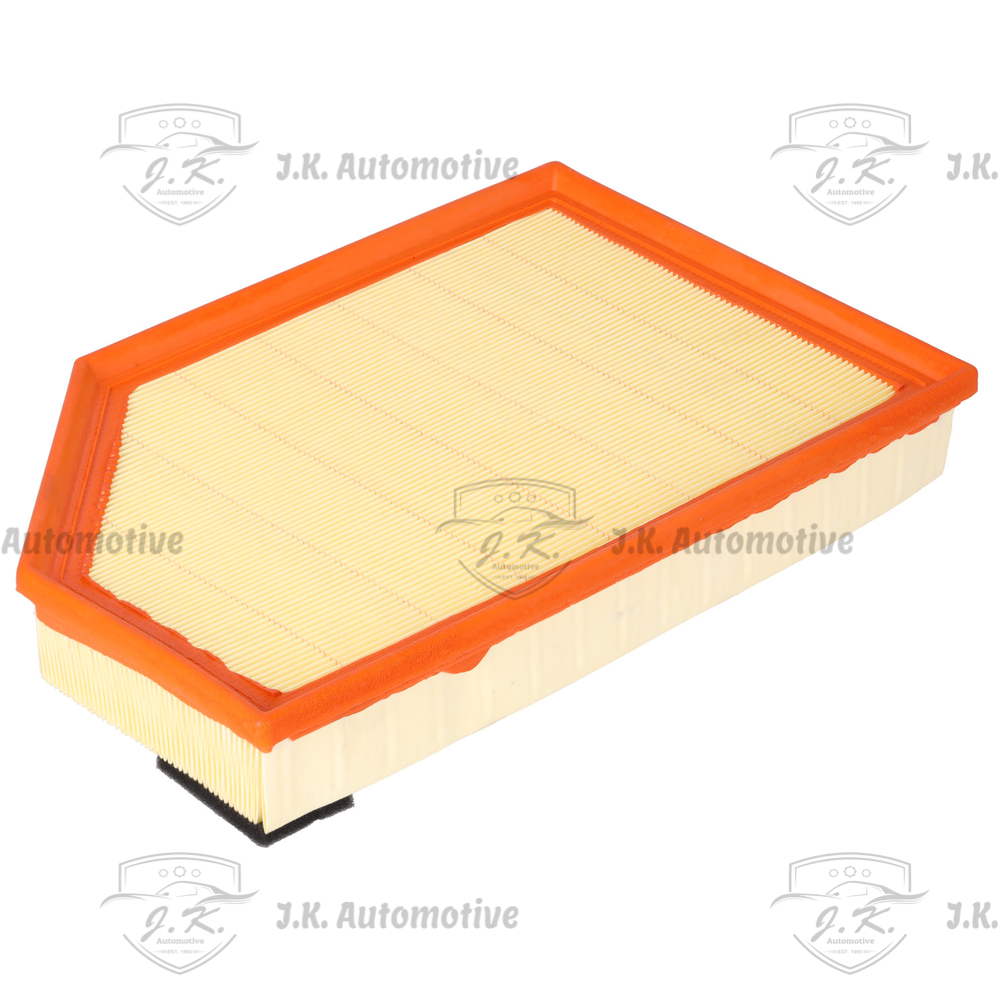
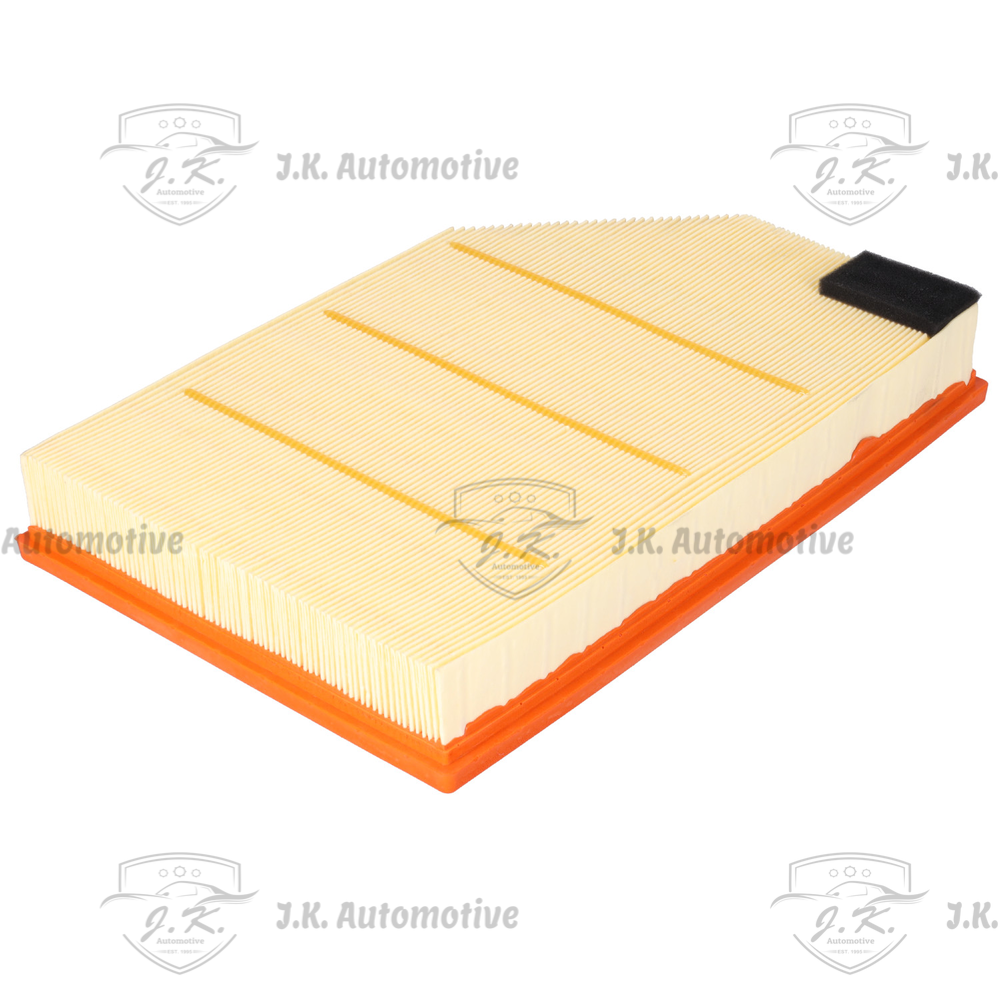
Operating a Volvo S80 II (124 chassis) 4.4 V8 AWD through severe winter climates, heavy road-salting spray, deep snow drifts, and high seasonal atmospheric humidity subjects engine air filter element 31650021 (and cross-references 31370161 / 30748212) to extreme physical and chemical degradation that far exceeds normal dry-dust loading parameters. When driving behind highway traffic on salted winter roads or forging through deep snow beds, the front-mounted intake ducting ingests a continuous aerosol spray containing liquid water, slush, road grime, and dissolved chemical de-icers such as sodium chloride ($text{NaCl}$) and calcium chloride ($text{CaCl}_2$). As damp intake air passes into the airbox housing, the synthetic microfiber media absorbs water droplets, causing individual pleats to swell, soften, and lose their structural bending stiffness under the high suction vacuum created by the naturally aspirated 4.4-liter B8444S 60-degree V8 engine. As ambient engine bay heat evaporates the liquid water component during sustained highway driving, dissolved road salts precipitate deep inside the microscopic pores of the media, forming hard crystalline salt crusts that permanently block air passages even after the filter paper appears visually dry. This repeated wetting, salt crystallization, and drying cycle causes the pleat pack to harden, shrink, and warp, creating microscopic tears in the filtration media and pulling the outer elastomeric perimeter gasket away from its plastic airbox seating channels. Once gasket seal integrity is lost, dirty road splash or wet mud bypasses the filter media entirely, entering the 4.4-liter V8 engine's intake ducting and dual-stage throttle body assembly directly. In severe winter, alpine, or coastal maritime driving environments, air filter element 31650021 must be visually inspected following the winter season and replaced if media stiffening or salt crusting is present, ensuring maximum volumetric efficiency, structural stability, and absolute intake protection regardless of harsh environmental exposure.
How does maintaining a fresh air filter 31650021 prevent Mass Air Flow (MAF) sensor contamination, prevent fuel trim imbalances, and eliminate low-speed engine stumbles in the Volvo S80 II (124) 4.4 V8 AWD?
The hot-wire Mass Air Flow (MAF) sensor positioned along the intake ducting in the Volvo S80 II (124) 4.4 V8 AWD utilizes an exposed, highly sensitive platinum sensing element to measure the mass, pressure, and temperature of air entering the 4.4-liter Yamaha-developed V8 engine. When engine air filter 31650021 is neglected, becomes saturated with fine trail dust, or suffers structural seal degradation along its outer elastomeric gasket, fine airborne silica particles, atmospheric soot, and oily road grime bypass the filter media and coat the delicate sensor grid with a sticky thermal barrier. This microscopic contamination layer insulates the heated wire from incoming airflow, preventing the sensor from accurately detecting changes in air density and causing it to transmit corrupted, lower-than-actual air mass signals to the Denso Engine Control Module (ECM). Believing that less air is entering the engine than is physically present in the intake plenum, the ECM artificially reduces fuel injection pulse widths across all eight cylinders, forcing the engine into an oxygen-starved, fuel-trimmed operating state during low-speed maneuvers, parking maneuvers, and stop-and-go city driving. This condition triggers erratic short-term and long-term fuel trim corrections, causes noticeable off-the-line throttle hesitation, induces low-speed idle stumbles, and eventually illuminates the Check Engine Light or displays Engine Service Required on the driver information module with diagnostic trouble codes such as ECM-P0101 (Mass Air Flow Circuit Range/Performance) or ECM-P2177 (System Too Lean Off Idle Bank 1). Replacing air filter 31650021 at recommended service intervals ensures that clean, balanced airflow passes over the MAF sensor grid, preserving accurate telemetry, stabilizing closed-loop injection trims across all eight cylinders, and eliminating low-speed engine stumbles under all driving conditions.
How do acoustic dampening, cabin refinement, and cold-air intake charge density differ between genuine OEM filter 31650021 and aftermarket open-element intake kits on the Volvo S80 II (124) 4.4 V8 AWD?
The Volvo S80 II (124) 4.4 V8 AWD is engineered as a luxury flagship executive sedan designed to deliver an exceptional balance of smooth 315 PS V8 power and long-distance acoustic refinement, protecting cabin occupants from harsh engine mechanical noise, valve train clatter, and low-frequency V8 induction rumble during highway cruising. Genuine OEM air filter part number 31650021 (along with cross-references 31370161 and 30748212) is specifically calibrated by Volvo acoustic engineers to act as a primary sound-dampening element inside the sealed factory airbox housing on the 124 chassis, where high-density synthetic microfiber pleats and elastomeric perimeter seals absorb harsh intake pulsation waves, throttle snap noise, and intake manifold resonance. In stark contrast, replacing the factory airbox with aftermarket open-element intakes or conical filters removes the sealed acoustic housing completely, introducing loud, unrefined induction roar, harsh throttle snap sounds, and engine bay vibration directly into the passenger cabin—disrupting the vehicle's luxury refinement—while also drawing warm, stagnant air directly from inside the crowded 4.4-liter V8 engine compartment rather than cool ambient air channeled straight through the front cold-air ducting. Ingesting heated engine bay air significantly reduces intake charge density, causing the ECM to alter ignition timing advance maps, retard intake valve timing, and reduce fuel injection quantities to prevent engine knocking and detonation, which results in severe thermal heat-soak power losses during warm weather or aggressive acceleration sessions, proving that choosing genuine filter 31650021 ensures optimal cabin quietness, maximum cold-air charge density, and consistent factory torque output under all operating conditions.
What exact step-by-step airbox housing sanitation, rubber drain valve inspection, and precision seating procedure are required when replacing air filter 31650021 on the Volvo S80 II (124) 4.4 V8 AWD?
Executing an error-free, factory-grade replacement of engine air filter element 31650021 on the Volvo S80 II (124) 4.4 V8 AWD requires a careful, step-by-step cleaning, inspection, and installation technique to guarantee that no fine sand, dirt, or debris enters the 4.4-liter V8 engine during service. First, park the vehicle on a level surface, turn off the ignition, engage the parking brake, open the hood, and allow the engine bay to cool completely before beginning work to prevent accidental thermal burns from hot engine components. Locate the plastic air filter housing box positioned in the front engine compartment, release the perimeter Torx housing retaining screws, and carefully lift the upper airbox lid without placing excessive tension or strain on the attached Mass Air Flow sensor wiring harness or flexible intake ducting. Gently lift out the spent filter element along its central axis, taking extreme care not to spill trapped sand, dried mud, leaves, or loose road grit from the dirty side into the clean throttle body inlet ducting. Before introducing the fresh filter, use a shop vacuum with a narrow crevice tool to thoroughly clean out all loose sand, gravel, and organic debris resting at the bottom of the lower airbox basin, and wipe the inner plastic walls with a clean, lint-free microfiber cloth to remove oily dirt films. Inspect the rubber flutter drain valve located at the lowest point of the lower airbox tray to ensure it is clean, pliable, and free of blockages, allowing ingested water or heavy rain spray to drain out freely without soaking the filter media. Finally, align fresh OEM air filter 31650021 into its housing tray, press its elastomeric perimeter gasket 100 percent flush into the sealing groove without twisting or binding, reassemble the airbox lid over its guide tabs, and secure all retaining screws evenly on the housing to establish a dust-tight, weather-resistant seal capable of withstanding demanding driving environments.
What specific fluid dynamic impact does a restricted air filter 31650021 have on Geartronic 6-speed shift schedules, calculated engine load vectors, and Haldex Gen3/Gen4 AWD power distribution in the Volvo S80 II (124) 4.4 V8 AWD?
The ECM, Transmission Control Module (TCM) governing the Aisin AW TF-80SC 6-speed Geartronic automatic transmission, and Differential Electronic Module (DEM) controlling the Haldex active AWD coupling operate in continuous closed-loop communication across the vehicle's high-speed Controller Area Network (CAN-bus). They rely on real-time mass airflow and manifold pressure telemetry supplied by the hot-wire Mass Air Flow (MAF) sensor grid to calculate instant engine load, calculated torque output, and precise shift points for the transmission and Haldex coupling. When air filter element 31650021 becomes restricted by heavy dirt accumulation, actual mass airflow passing through the intake ducting drops significantly below theoretical targets expected by the ECM for a given throttle valve angle and driver pedal request. Because the ECM calculates total engine torque vectors directly from MAF sensor readings, an under-calculated airflow signal causes the computer architecture to miscalculate actual engine load, underestimating total combustion torque delivery during driving. This calculated torque telemetry error severely corrupts the TCM's adaptive gear-shift algorithms, leading to gear hunting, delayed or harsh downshifts during transient acceleration, unnatural torque converter lockup engagement, and sluggish low-speed throttle response as the transmission struggles to reconcile physical vehicle momentum with artificial torque calculations. Furthermore, on AWD models, the Haldex controller relies on accurate engine torque data to pre-charge its hydraulic pump and apply clutch pack pressure before wheel slip occurs; an under-calculated torque vector causes delayed Haldex clutch engagement, leading to unexpected front wheel spin and intrusive traction control intervention on loose or wet surfaces. Installing a fresh, unrestricted OEM air filter under part number 31650021 restores linear airflow signals to the MAF sensor grid, enabling the ECM to calculate engine torque vectors with high precision, which immediately smoothes out Geartronic shift schedules, eliminates gear hunting, and optimizes Haldex AWD power distribution across both axles for sharp, predictable performance.
How do severe winter weather, road-deicing chemical mist, and high atmospheric humidity interact to degrade the structural integrity and filtration media of air filter 31650021 on the Volvo S80 II (124) 4.4 V8 AWD?
Operating a Volvo S80 II (124 chassis) 4.4 V8 AWD through severe winter climates, heavy road-salting spray, deep snow drifts, and high seasonal atmospheric humidity subjects engine air filter element 31650021 (and cross-references 31370161 / 30748212) to extreme physical and chemical degradation that far exceeds normal dry-dust loading parameters. When driving behind highway traffic on salted winter roads or forging through deep snow beds, the front-mounted intake ducting ingests a continuous aerosol spray containing liquid water, slush, road grime, and dissolved chemical de-icers such as sodium chloride ($text{NaCl}$) and calcium chloride ($text{CaCl}_2$). As damp intake air passes into the airbox housing, the synthetic microfiber media absorbs water droplets, causing individual pleats to swell, soften, and lose their structural bending stiffness under the high suction vacuum created by the naturally aspirated 4.4-liter B8444S 60-degree V8 engine. As ambient engine bay heat evaporates the liquid water component during sustained highway driving, dissolved road salts precipitate deep inside the microscopic pores of the media, forming hard crystalline salt crusts that permanently block air passages even after the filter paper appears visually dry. This repeated wetting, salt crystallization, and drying cycle causes the pleat pack to harden, shrink, and warp, creating microscopic tears in the filtration media and pulling the outer elastomeric perimeter gasket away from its plastic airbox seating channels. Once gasket seal integrity is lost, dirty road splash or wet mud bypasses the filter media entirely, entering the 4.4-liter V8 engine's intake ducting and dual-stage throttle body assembly directly. In severe winter, alpine, or coastal maritime driving environments, air filter element 31650021 must be visually inspected following the winter season and replaced if media stiffening or salt crusting is present, ensuring maximum volumetric efficiency, structural stability, and absolute intake protection regardless of harsh environmental exposure.
How does maintaining a fresh air filter 31650021 prevent Mass Air Flow (MAF) sensor contamination, prevent fuel trim imbalances, and eliminate low-speed engine stumbles in the Volvo S80 II (124) 4.4 V8 AWD?
The hot-wire Mass Air Flow (MAF) sensor positioned along the intake ducting in the Volvo S80 II (124) 4.4 V8 AWD utilizes an exposed, highly sensitive platinum sensing element to measure the mass, pressure, and temperature of air entering the 4.4-liter Yamaha-developed V8 engine. When engine air filter 31650021 is neglected, becomes saturated with fine trail dust, or suffers structural seal degradation along its outer elastomeric gasket, fine airborne silica particles, atmospheric soot, and oily road grime bypass the filter media and coat the delicate sensor grid with a sticky thermal barrier. This microscopic contamination layer insulates the heated wire from incoming airflow, preventing the sensor from accurately detecting changes in air density and causing it to transmit corrupted, lower-than-actual air mass signals to the Denso Engine Control Module (ECM). Believing that less air is entering the engine than is physically present in the intake plenum, the ECM artificially reduces fuel injection pulse widths across all eight cylinders, forcing the engine into an oxygen-starved, fuel-trimmed operating state during low-speed maneuvers, parking maneuvers, and stop-and-go city driving. This condition triggers erratic short-term and long-term fuel trim corrections, causes noticeable off-the-line throttle hesitation, induces low-speed idle stumbles, and eventually illuminates the Check Engine Light or displays Engine Service Required on the driver information module with diagnostic trouble codes such as ECM-P0101 (Mass Air Flow Circuit Range/Performance) or ECM-P2177 (System Too Lean Off Idle Bank 1). Replacing air filter 31650021 at recommended service intervals ensures that clean, balanced airflow passes over the MAF sensor grid, preserving accurate telemetry, stabilizing closed-loop injection trims across all eight cylinders, and eliminating low-speed engine stumbles under all driving conditions.
How do acoustic dampening, cabin refinement, and cold-air intake charge density differ between genuine OEM filter 31650021 and aftermarket open-element intake kits on the Volvo S80 II (124) 4.4 V8 AWD?
The Volvo S80 II (124) 4.4 V8 AWD is engineered as a luxury flagship executive sedan designed to deliver an exceptional balance of smooth 315 PS V8 power and long-distance acoustic refinement, protecting cabin occupants from harsh engine mechanical noise, valve train clatter, and low-frequency V8 induction rumble during highway cruising. Genuine OEM air filter part number 31650021 (along with cross-references 31370161 and 30748212) is specifically calibrated by Volvo acoustic engineers to act as a primary sound-dampening element inside the sealed factory airbox housing on the 124 chassis, where high-density synthetic microfiber pleats and elastomeric perimeter seals absorb harsh intake pulsation waves, throttle snap noise, and intake manifold resonance. In stark contrast, replacing the factory airbox with aftermarket open-element intakes or conical filters removes the sealed acoustic housing completely, introducing loud, unrefined induction roar, harsh throttle snap sounds, and engine bay vibration directly into the passenger cabin—disrupting the vehicle's luxury refinement—while also drawing warm, stagnant air directly from inside the crowded 4.4-liter V8 engine compartment rather than cool ambient air channeled straight through the front cold-air ducting. Ingesting heated engine bay air significantly reduces intake charge density, causing the ECM to alter ignition timing advance maps, retard intake valve timing, and reduce fuel injection quantities to prevent engine knocking and detonation, which results in severe thermal heat-soak power losses during warm weather or aggressive acceleration sessions, proving that choosing genuine filter 31650021 ensures optimal cabin quietness, maximum cold-air charge density, and consistent factory torque output under all operating conditions.
What exact step-by-step airbox housing sanitation, rubber drain valve inspection, and precision seating procedure are required when replacing air filter 31650021 on the Volvo S80 II (124) 4.4 V8 AWD?
Executing an error-free, factory-grade replacement of engine air filter element 31650021 on the Volvo S80 II (124) 4.4 V8 AWD requires a careful, step-by-step cleaning, inspection, and installation technique to guarantee that no fine sand, dirt, or debris enters the 4.4-liter V8 engine during service. First, park the vehicle on a level surface, turn off the ignition, engage the parking brake, open the hood, and allow the engine bay to cool completely before beginning work to prevent accidental thermal burns from hot engine components. Locate the plastic air filter housing box positioned in the front engine compartment, release the perimeter Torx housing retaining screws, and carefully lift the upper airbox lid without placing excessive tension or strain on the attached Mass Air Flow sensor wiring harness or flexible intake ducting. Gently lift out the spent filter element along its central axis, taking extreme care not to spill trapped sand, dried mud, leaves, or loose road grit from the dirty side into the clean throttle body inlet ducting. Before introducing the fresh filter, use a shop vacuum with a narrow crevice tool to thoroughly clean out all loose sand, gravel, and organic debris resting at the bottom of the lower airbox basin, and wipe the inner plastic walls with a clean, lint-free microfiber cloth to remove oily dirt films. Inspect the rubber flutter drain valve located at the lowest point of the lower airbox tray to ensure it is clean, pliable, and free of blockages, allowing ingested water or heavy rain spray to drain out freely without soaking the filter media. Finally, align fresh OEM air filter 31650021 into its housing tray, press its elastomeric perimeter gasket 100 percent flush into the sealing groove without twisting or binding, reassemble the airbox lid over its guide tabs, and secure all retaining screws evenly on the housing to establish a dust-tight, weather-resistant seal capable of withstanding demanding driving environments.


Reviews
There are no reviews yet.