How does engine panel air filter 30745344 specifically interact with the 3.2-liter SI6 B6324S engine architecture, Variable Intake Manifold (VIM), Cam Profile Switching (CPS), and Denso ECM in the Volvo S80 II (124)?
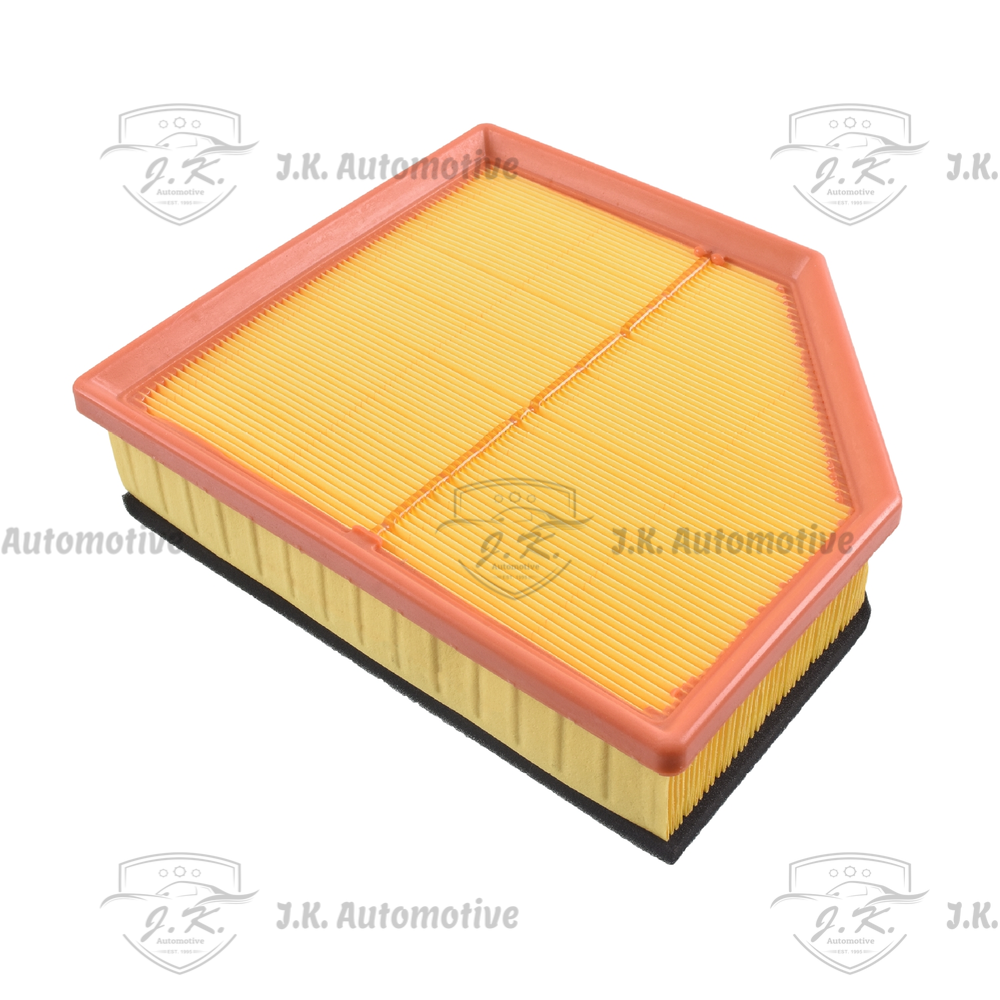
The second-generation Volvo S80 (124 chassis) produced from 2006 through 2016 equipped with the naturally aspirated 3.2-liter Short Inline 6 (SI6) B6324S / B6324S5 engine relies on engine panel air filter part number 30745344 to supply clean, high-density airflow to its complex dual-stage Variable Intake Manifold (VIM) and Cam Profile Switching (CPS) valvetrain system. Because the 3.2L SI6 engine utilizes dynamic intake plenum runners to optimize volumetric efficiency across both low-RPM torque demand and high-RPM power generation, uniform airflow velocity is paramount. Part number 30745344 features deep-pleated synthetic microfiber media encased in a rigid structural composite frame with a flexible elastomeric perimeter gasket. This construction maintains structural integrity against high intake depression vacuum during wide-open throttle transitions, preventing pleat collapse or media deformation. The elastomeric gasket compresses 100 percent flush into the plastic airbox channels, forming a dust-tight compression seal that prevents unmetered road dust, fine silica sand, and atmospheric soot from bypassing the media into the intake throttle body. Delivering clean, laminar airflow across the intake ducting prevents thermal and voltage telemetry drift on the Mass Air Flow (MAF) sensor, preserves target fuel-air mixture ratios, and enables the Denso Engine Control Module (ECM) to execute precise closed-loop fuel injection timing and ignition advance through the Aisin AW TF-80SC 6-speed Geartronic automatic transmission and Haldex AWD system without risking premature mechanical wear.
What advanced live parameter shifts, diagnostic trouble codes, and driving symptoms signal severe intake air restriction on air filter 30745344 in the Volvo S80 II (124) 3.2?
Diagnosing a restricted, saturated, or physically compromised engine air filter element under part number 30745344 on a Volvo S80 II 3.2 requires evaluating physical driving characteristics alongside real-time live parameter logs using Volvo VIDA or advanced OBD-II scan tools. Airborne silica dust, highway soot, pollen, and road debris progressively clog the synthetic microfiber pleats, increasing static suction resistance across the airbox over extended service intervals. Mechanically, because the naturally aspirated 3.2L engine relies entirely on atmospheric pressure and engine vacuum to draw intake air into the combustion chambers, a clogged filter causes noticeable off-the-line throttle hesitation, sluggish transient mid-range acceleration, engine surging under load, and elevated fuel consumption as the driver depresses the accelerator further to compensate for reduced airflow. Diagnostically, the Denso ECM continuously monitors measured air mass via the MAF sensor relative to intake manifold absolute pressure (MAP) and engine speed. When measured air mass falls below expected theoretical targets for a given throttle valve angle, the ECM adjusts short-term and long-term fuel trims. Sustained restriction will illuminate the Check Engine Light or display "Engine Service Required" on the driver information module (DIM) while storing diagnostic trouble codes such as ECM-P0101 (Mass Air Flow Circuit Range/Performance), ECM-P0102 (Mass Air Flow Circuit Low Input), or ECM-P2177 (System Too Lean Off Idle Bank 1), signaling the technician to inspect and replace filter 30745344 immediately.
How does replacing air filter 30745344 protect the hot-wire Mass Air Flow sensor, intake valve stems, and Positive Crankcase Ventilation (PCV) oil-trap in the Volvo S80 II (124) 3.2?
Maintaining an unrestricted, high-flow air filter element under part number 30745344 plays a critical role in protecting sensitive induction, fuel metering, and crankcase ventilation hardware on the 3.2-liter SI6 engine. When the air filter is neglected and becomes choked with fine dirt, high suction vacuum created by the six pistons pulls microscopic airborne silica dust through micro-gaps or degraded housing seals at high velocities. These abrasive particles strike the exposed platinum wire grid of the Mass Air Flow (MAF) sensor, leaving a sticky thermal barrier coating that insulates the sensor wire from incoming airflow, resulting in corrupted signal outputs to the ECM. Downstream, severe intake vacuum downstream of a clogged filter places an abnormal suction load on the Positive Crankcase Ventilation (PCV) oil-trap diaphragm integrated inside the valve cover assembly, stretching or tearing the internal rubber membrane and pulling raw oil mist directly out of the crankcase into the intake manifold. This oil mist mixes with recirculated airborne particulates, forming heavy carbon sludge along the intake runners, swirl flaps, and intake valve stems, which leads to sticky valve movement, rough idling, and loss of compression. Routinely replacing filter element 30745344 prevents sensor wire fouling, protects PCV membranes from rupture, and keeps intake valves clean.
How do severe winter weather, road-deicing chemical mist, and high atmospheric humidity interact to degrade the structural integrity and filtration media of air filter 30745344 on the Volvo S80 II (124) 3.2?
Operating a Volvo S80 II (124) 3.2 through severe winter climates, heavy road-salting spray, deep snow, and high atmospheric humidity subjects engine air filter element 30745344 to extreme physical and chemical degradation that far exceeds normal dry-dust loading parameters. When driving behind highway traffic on salted winter roads, the front-mounted intake ducting ingests a continuous aerosol spray containing liquid water, slush, road grime, and dissolved chemical de-icers such as sodium chloride ($text{NaCl}$) and calcium chloride ($text{CaCl}_2$). As damp intake air passes into the airbox housing, the synthetic microfiber media absorbs water droplets, causing individual pleats to swell, soften, and lose their structural bending stiffness under engine suction vacuum. As ambient engine bay heat evaporates the liquid water component during sustained driving, dissolved road salts precipitate deep inside the microscopic pores of the media, forming hard crystalline salt crusts that permanently block air passages even after the filter paper appears visually dry. This repeated wetting, salt crystallization, and drying cycle causes the pleat pack to harden, shrink, and warp, creating microscopic tears in the filtration media and pulling the outer elastomeric perimeter gasket away from its plastic airbox seating channels. Once gasket seal integrity is lost, dirty road splash bypasses the filter media entirely, entering the engine's intake throttle body directly. In severe winter or coastal maritime driving environments, air filter element 30745344 must be visually inspected following the winter season and replaced if media stiffening or salt crusting is present.
What exact step-by-step airbox housing sanitation, rubber drain valve inspection, and precision seating procedure are required when replacing air filter 30745344 on the Volvo S80 II (124) 3.2?
Executing a factory-grade replacement of engine air filter element 30745344 on the Volvo S80 II (124) 3.2 requires a careful, step-by-step cleaning, inspection, and installation technique to guarantee that no sand, dirt, or debris enters the intake manifold during service. First, park the vehicle on a level surface, turn off the ignition, engage the parking brake, open the hood, and allow the engine bay to cool completely before beginning work. Locate the plastic air filter housing box in the engine compartment, release the perimeter Torx housing retaining screws, and carefully lift the upper airbox lid without placing excessive tension or strain on the attached MAF sensor wiring harness or flexible intake ducting. Gently lift out the spent filter element along its central axis, taking extreme care not to spill trapped sand, dried mud, leaves, or loose road grit from the dirty side into the clean intake ducting. Before introducing the fresh filter, use a shop vacuum with a narrow crevice tool to thoroughly clean out all loose sand, gravel, and organic debris resting at the bottom of the lower airbox basin, and wipe the inner plastic walls with a clean, lint-free microfiber cloth to remove oily dirt films. Inspect the rubber flutter drain valve located at the lowest point of the lower airbox tray to ensure it is clean, pliable, and free of mud blockages, allowing ingested water or heavy rain spray to drain out freely without soaking the filter media. Finally, align fresh OEM air filter 30745344 into its housing tray, press its elastomeric perimeter gasket 100 percent flush into the sealing groove without twisting or binding, reassemble the airbox lid over its guide tabs, and secure all retaining screws evenly on the housing to establish a dust-tight, weather-resistant seal.
How does engine panel air filter 30745344 specifically interact with the 3.2-liter SI6 B6324S engine architecture, Variable Intake Manifold, Cam Profile Switching, and Denso ECM in the Volvo S80 II (124)?
The second-generation Volvo S80 (124 chassis) produced from 2006 through 2016 equipped with the naturally aspirated 3.2-liter Short Inline 6 (SI6) B6324S / B6324S5 engine relies on engine panel air filter part number 30745344 to supply clean, high-density airflow to its complex dual-stage Variable Intake Manifold (VIM) and Cam Profile Switching (CPS) valvetrain system. Because the 3.2L SI6 engine utilizes dynamic intake plenum runners to optimize volumetric efficiency across both low-RPM torque demand and high-RPM power generation, uniform airflow velocity is paramount across all engine operating states. Part number 30745344 features deep-pleated synthetic microfiber media encased in a rigid structural composite frame with a flexible elastomeric perimeter gasket. This construction maintains structural integrity against high intake depression vacuum during wide-open throttle transitions, preventing pleat collapse, fluttering, or media deformation. The elastomeric gasket compresses 100 percent flush into the plastic airbox channels, forming a dust-tight compression seal that prevents unmetered road dust, fine silica sand, and atmospheric soot from bypassing the media directly into the intake throttle body. Delivering clean, laminar airflow across the intake ducting prevents thermal and voltage telemetry drift on the Mass Air Flow (MAF) sensor, preserves target fuel-air mixture ratios, and enables the Denso Engine Control Module (ECM) to execute precise closed-loop fuel injection timing and ignition advance through the Aisin AW TF-80SC 6-speed Geartronic automatic transmission and Haldex AWD system without risking premature mechanical wear or throttle response delays.
What advanced live parameter shifts, diagnostic trouble codes, and driving symptoms signal severe intake air restriction on air filter 30745344 in the Volvo S80 II (124) 3.2?
Diagnosing a restricted, saturated, or physically compromised engine air filter element under part number 30745344 on a Volvo S80 II 3.2 requires evaluating physical driving characteristics alongside real-time live parameter logs using Volvo VIDA or advanced OBD-II diagnostic scan tools. Airborne silica dust, highway soot, pollen, and environmental debris progressively pack the synthetic microfiber pleats, increasing static suction resistance across the airbox housing over extended service intervals. Mechanically, because the naturally aspirated 3.2L engine relies entirely on atmospheric pressure and engine vacuum to draw intake air into the combustion chambers, a clogged filter causes noticeable off-the-line throttle hesitation, sluggish transient mid-range acceleration, engine surging under heavy load, and elevated fuel consumption as the driver depresses the accelerator pedal further to compensate for reduced airflow. Diagnostically, the Denso ECM continuously monitors measured air mass via the MAF sensor relative to intake manifold absolute pressure (MAP) and engine speed. When measured air mass falls below expected theoretical targets for a given throttle valve angle, the ECM adjusts short-term and long-term fuel trims. Sustained intake restriction will illuminate the Check Engine Light or display Engine Service Required on the driver information module (DIM) while storing diagnostic trouble codes such as ECM-P0101 (Mass Air Flow Circuit Range/Performance), ECM-P0102 (Mass Air Flow Circuit Low Input), or ECM-P2177 (System Too Lean Off Idle Bank 1), signaling the technician to inspect and replace filter 30745344 immediately.
How does maintaining a fresh air filter 30745344 protect the Positive Crankcase Ventilation oil-trap diaphragm, intake valve stems, and cylinder wall hone patterns in the Volvo S80 II (124) 3.2?
Maintaining an unrestricted, high-flow air filter element under part number 30745344 plays a critical role in protecting internal engine mechanical components, crankcase ventilation hardware, and valvetrain assemblies on the 3.2-liter SI6 engine. When the air filter is neglected and becomes choked with fine dust, the high suction vacuum created by the six pistons pulls microscopic airborne silica sand particles through micro-gaps or degraded housing seals at extreme velocities. Downstream, severe intake vacuum downstream of a clogged filter places an abnormal, continuous suction load on the Positive Crankcase Ventilation (PCV) oil-trap diaphragm integrated inside the valve cover assembly, stretching or tearing the internal rubber membrane and pulling raw oil mist directly out of the crankcase into the intake manifold. This oil mist mixes with recirculated airborne particulates, forming heavy carbon sludge along the intake runners, swirl flaps, and intake valve stems, which leads to sticky valve movement, carbon build-up, and potential engine misfires. Furthermore, any microscopic silica particles that bypass a torn or ill-fitted filter enter the combustion chambers, embedding into oil films on cylinder walls where they act as abrasive grinding compounds that wear down cross-hatch hone patterns, damage piston rings, and accelerate oil consumption. Routinely replacing filter element 30745344 prevents PCV membrane rupture, eliminates carbon accumulation across the intake plenum, and protects internal cylinder walls from micro-abrasive wear over high mileages.
What specific fluid dynamic impact does a restricted air filter 30745344 have on Geartronic 6-speed shift schedules, calculated engine load vectors, and Haldex AWD power distribution in the Volvo S80 II (124) 3.2?
The ECM, Transmission Control Module (TCM) governing the Geartronic 6-speed automatic transmission (Aisin AW TF-80SC), and Differential Electronic Module (DEM) controlling the Haldex active AWD coupling operate in continuous closed-loop communication across the vehicle's high-speed Controller Area Network (CAN-bus). They rely on real-time mass airflow and manifold pressure telemetry supplied by the hot-wire Mass Air Flow (MAF) sensor grid to calculate instant engine load, calculated torque output, and precise shift points for the transmission and active AWD coupling. When air filter element 30745344 becomes restricted by heavy dirt accumulation, actual mass airflow passing through the intake ducting drops significantly below theoretical targets expected by the ECM for a given throttle valve angle and driver pedal request. Because the ECM calculates total engine torque vectors directly from MAF sensor readings, an under-calculated airflow signal causes the computer architecture to miscalculate actual engine load, underestimating total combustion torque delivery during driving. This calculated torque telemetry error severely corrupts the TCM's adaptive gear-shift algorithms, leading to gear hunting, delayed or harsh downshifts during transient acceleration, unnatural torque converter lockup engagement, and sluggish low-speed throttle response as the transmission struggles to reconcile physical vehicle momentum with artificial torque calculations. Furthermore, on AWD models, the Haldex controller relies on accurate engine torque data to pre-charge its hydraulic pump and apply clutch pack pressure before wheel slip occurs; an under-calculated torque vector causes delayed Haldex clutch engagement, leading to unexpected front wheel spin and intrusive traction control intervention on loose or wet surfaces. Installing a fresh, unrestricted OEM air filter under part number 30745344 restores linear airflow signals to the MAF sensor grid, enabling the ECM to calculate engine torque vectors with high precision, which immediately smoothes out Geartronic shift schedules, eliminates gear hunting, and optimizes Haldex AWD power distribution across both axles for sharp, predictable performance.

Reviews
There are no reviews yet.