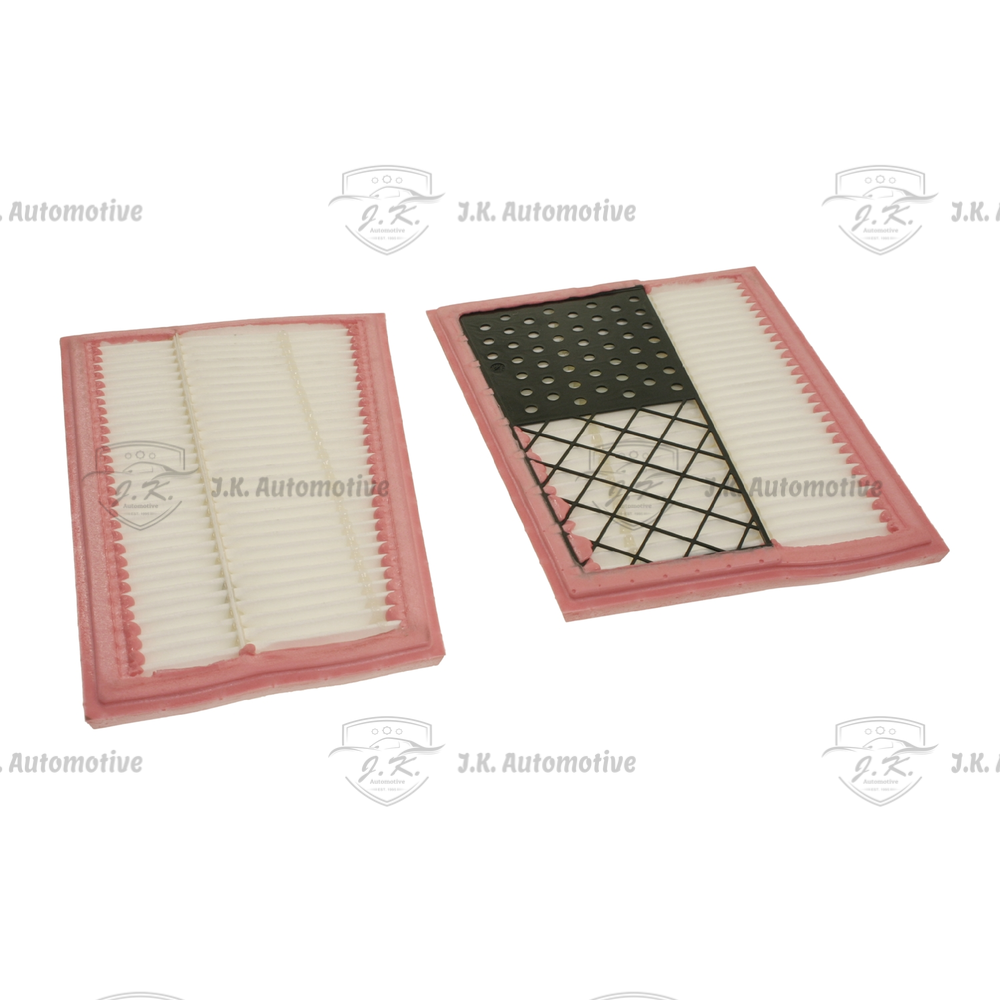
Why are there multiple OEM part numbers (A 642 094 30 04, A 642 094 22 04, A 642 094 03 04, A 642 094 02 04) associated with this single air filter set?
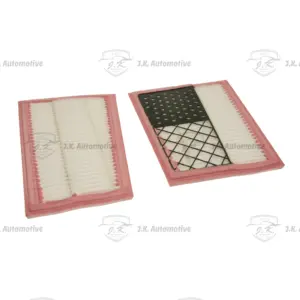
The existence of multiple original equipment part numbers for this specific filter set is the direct result of Mercedes-Benz’s ongoing technical revisions, factory supersessions, and individual element packaging codes implemented throughout the production lifecycle of the 3.0L OM642 V6 Turbo Diesel engine. Over time, Mercedes-Benz continuously refined the synthetic filter media, internal pleat adhesive stability, and perimeter elastomeric sealing materials to enhance micro-particle retention and structural rigidity under heavy turbocharger boost pressures. As these engineering improvements were introduced, older component numbers like A 642 094 02 04 and A 642 094 03 04 (which originally designated individual left-hand and right-hand filter elements inside factory assembly lines) were officially superseded by intermediate codes such as A 642 094 22 04, before eventually being unified under primary set part numbers like A 642 094 30 04. Because all of these listed reference numbers share identical mounting tabs, trapezoidal dimensions, and airbox sealing tolerances designed specifically for the dual intake tract on the W164 chassis from 2005 to 2011, they are 100% physically interchangeable and functionally cross-compatible. Installing an OEM filter kit carrying any of these verified reference numbers guarantees direct-fit installation into your vehicle's factory air housings without risking unfiltered "air bypass" past the housing lips. Furthermore, having cross-references for these numbers allows auto repair facilities, fleet operators, and spare parts distributors to easily verify compatibility across international Mercedes-Benz electronic parts catalogs (EPC) and aftermarket inventory databases. Whether your owner manual, dealership invoice, or workshop diagnostic software displays the older component codes or the newest supersession numbers, purchasing this filter set ensures seamless integration into your vehicle's factory intake tract. Maintaining exact factory dimensions across all these part numbers protects delicate downstream engine electronics—such as the sensitive hot-film Mass Air Flow (MAF) sensors—from abrasive dust contamination. Ultimately, these interchangeable part numbers provide complete peace of mind, ensuring that your high-torque V6 diesel engine maintains optimal thermal efficiency, rapid turbo spooling, and consistent air-fuel ratios under demanding driving conditions.
Why does the W164 ML 300 CDI use a dual air filter design, and why must both filter elements be replaced simultaneously?
The Mercedes-Benz W164 ML 300 CDI relies on a dual air filter intake architecture specifically engineered to fulfill the massive volumetric airflow requirements of the high-torque 3.0-liter OM642 V6 Turbo Diesel engine. Because a turbocharged diesel engine requires vast quantities of clean, uninhibited ambient air to maintain efficient fuel combustion and power the permanent 4-Matic all-wheel-drive system, utilizing a single conventional panel filter would create excessive suction resistance and choke engine performance. To bypass this restriction, Mercedes-Benz engineers designed two separate air intake channels—located on opposite sides of the engine bay—that feed into dual filter housings before converging directly at the central turbocharger inlet. This balanced split-intake configuration doubles the active surface area of the filtration media, significantly reducing air velocity across the pleats while increasing overall dust-holding capacity for extended service life. Replacing only one air filter or failing to swap both units simultaneously introduces a severe operational pressure imbalance across the engine's dual intake banks, which negatively disrupts the engine control unit (ECU) calculations. Modern OM642 engines utilize delicate twin Mass Air Flow (MAF) sensors installed immediately downstream of each filter box to independently measure incoming air volume and density for each cylinder bank. If a clean, unrestricted filter is installed on one side while a clogged, aged filter remains on the other, the resulting differential in intake vacuum creates conflicting air mass signals between the two sensors. The ECU flags this variance as a system fault, triggering an illuminated Check Engine Light (MIL), putting the vehicle into protective "Limp Home Mode," and causing uneven cylinder combustion that increases engine vibration and exhaust soot. Replacing both filters as a matched pair during every service guarantees equal airflow resistance, preserves precise sensor balance, protects turbo blades from strain, and maintains smooth, efficient power output across all driving modes.
What are the main symptoms of restricted air filters on the OM642 engine, and what mechanical risks occur if replacement is delayed?
When the dual air filters on a Mercedes-Benz W164 ML 300 CDI become contaminated with road dust, soot, and environmental debris, the engine suffers from severe intake air starvation that manifests through clear operational symptoms and severe long-term mechanical risks. The most immediate sign experienced by the driver is a noticeable loss of throttle responsiveness, where the SUV feels sluggish during acceleration and exhibits delayed turbo boost response during high-speed overtaking or towing. As intake restriction increases, the engine computer compensates for lower incoming air density by adjusting fuel injection timing and turbocharger vane geometry, resulting in reduced fuel efficiency and higher diesel fuel consumption per kilometer. On OM642 engines, restricted air intake leads to incomplete diesel fuel burn in the combustion chambers, producing heavy black exhaust smoke under acceleration. This unburned carbon soot travels directly into the exhaust system, accelerating clogging of the Diesel Particulate Filter (DPF) and forcing the ECU to trigger frequent, unwanted active DPF regenerations that further waste fuel. If dirty filters are left unserviced, the intense vacuum generated by the turbocharger can cause low-quality or weakened media to structurally deform, collapse, or tear away from its perimeter rubber frame. Once the filter media tears, raw, unfiltered ambient air containing coarse dust and silica sand is drawn directly into the high-speed turbocharger inlet, eroding the delicate aluminum compressor wheel blades ("turbo dusting"). Additionally, fine particulate matter bypassing compromised filters forms a grime coating over the sensitive hot-film elements of the downstream MAF sensors, causing erratic sensor readings, stalling, and premature component failure. In severe cases, extreme airflow discrepancies between actual intake levels and ECU targets trigger diagnostic trouble codes (e.g., P2237 / P0101 range), forcing the engine into emergency limp mode to prevent major internal damage.
Why is an "Air Filter Adaptation Reset" using diagnostic tools strongly recommended after changing filters on this vehicle?
Performing an electronic "Air Filter Adaptation Reset" using a Mercedes-Benz STAR/XENTRY diagnostic system or a professional-grade OBD2 scanner is a vital technical step after installing new air filters on a W164 ML 300 CDI. The engine control unit (ECU) governing the OM642 V6 diesel engine utilizes adaptive, self-learning software routines that continuously track and compensate for the gradual, natural restriction of the air filters as dirt accumulates over thousands of kilometers. As air intake resistance slowly climbs, the ECU incrementally recalibrates its stored compensation tables for Mass Air Flow (MAF) sensor thresholds, fuel injection timing, exhaust gas recirculation (EGR) rates, and turbocharger boost control to maintain smooth engine operation. If you replace heavily dirty air filters with brand-new, unrestricted filter elements without clearing these stored adaptation values from the computer's memory, the ECU continues operating under out-of-date high-restriction parameters. This mismatch between physical unrestricted airflow and old electronic calibration data confuses the engine management system, leading to erratic idling, hesitation upon pressing the gas pedal, abnormal automatic transmission shift points, and momentary power surges. In many cases, the sudden increase in fresh air volume detected by the sensitive MAF sensors exceeds the ECU's pre-programmed variance window for aged filters, causing the computer to falsely register an airflow implausibility error and illuminate the Check Engine light. Performing an air filter adaptation reset clears out these old adaptation tables, forcing the ECU to establish new baseline reference values for maximum airflow capacity and immediately recalculate air-to-fuel ratios across all engine speeds. This digital reset ensures that the engine instantly adapts to restored intake airflow, allowing the turbocharger to spool up smoothly, improving fuel combustion efficiency, and maximizing throttle response right away. Skipping this crucial electronic procedure often leads to misdiagnosed fault codes and false customer complaints after routine maintenance, making it a standard practice for professional technicians working on modern Mercedes-Benz CDI diesel vehicles.
What premium construction materials distinguish these OM642 filters from cheap alternatives, and what is the recommended service interval?
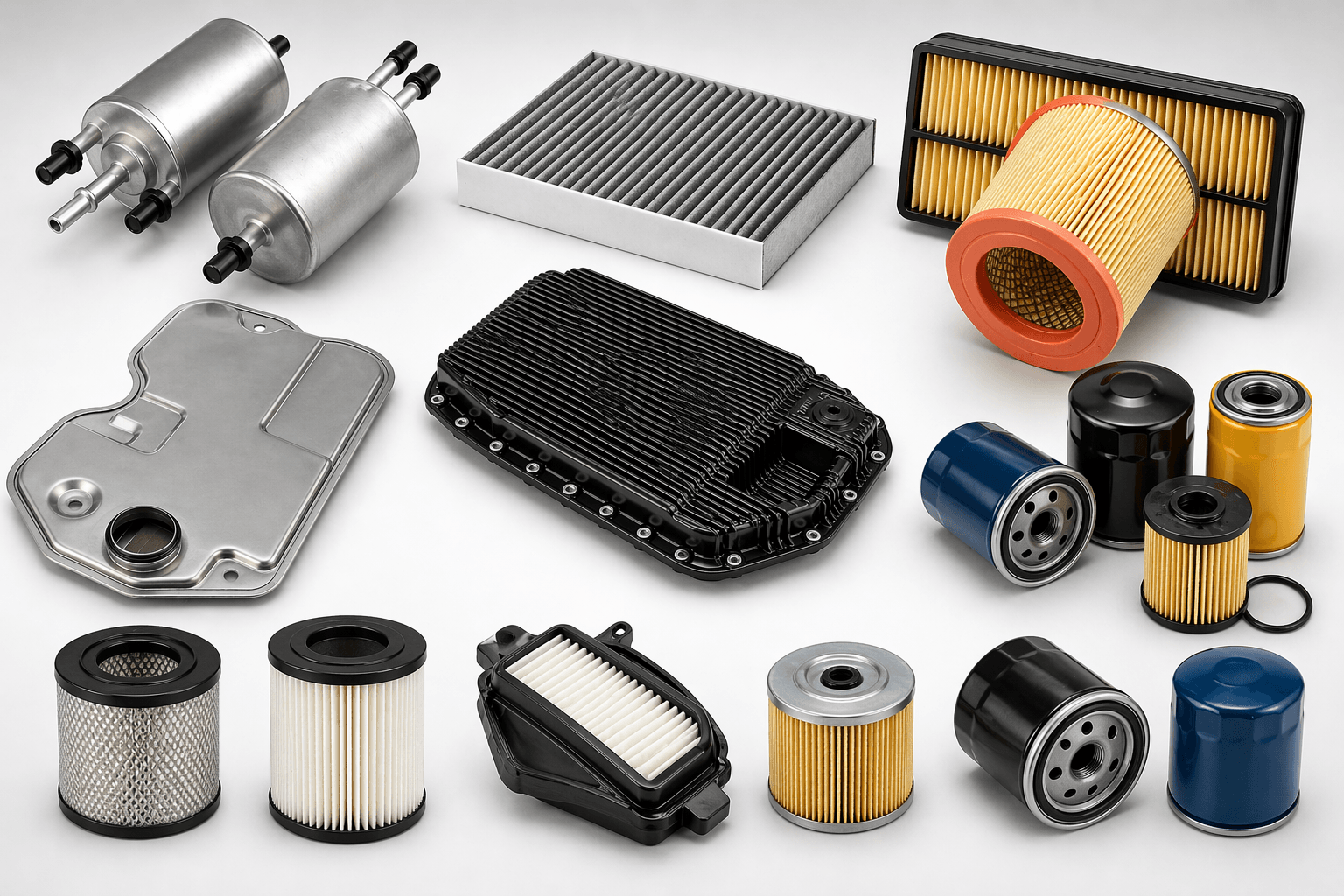
These heavy-duty air filter elements designed for the Mercedes-Benz W164 ML 300 CDI are manufactured using multi-layered synthetic micro-fiber media engineered to withstand the intense intake suction, high temperatures, and severe pressure drops of a turbocharged V6 diesel engine bay. Unlike cheap aftermarket filters that rely on low-grade paper media susceptible to moisture absorption, tearing, and pleat collapse under high turbo boost, these premium filters utilize rigid synthetic pleats capable of trapping micro-contaminants down to 3 microns while maintaining low airflow resistance. The pleats are held in place by hot-melt adhesive stability beads applied along the filter body, preventing pleat bunching and deformation during sudden throttle applications. Surrounding the filtration core is a reinforced polyurethane frame with a flexible elastomer sealing lip that forms an airtight, vibration-proof seal against the airbox housing, eliminating any risk of unfiltered air bypassing the filter media. The standard factory-recommended replacement interval for these dual air filters under normal driving conditions is every 60,000 kilometers (approx. 37,500 miles) or every 3 to 4 years, usually coinciding with a major Service B maintenance schedule. However, operating the vehicle in dusty environments, unpaved roads, heavy stop-and-go urban traffic filled with diesel soot, or high-humidity regions significantly accelerates media clogging. Under severe service conditions, it is strongly advised to inspect the air filters every 15,000 to 20,000 kilometers and replace the complete pair every 30,000 kilometers to prevent performance loss and internal engine wear. Because high-torque CDI diesel engines rely heavily on clean, uninhibited airflow to maintain cooler turbo temperatures, reduce DPF soot buildup, and optimize fuel economy, adhering to strict replacement intervals with high-quality filter sets is one of the most cost-effective ways to ensure long-term engine reliability. Investing in structurally reinforced filter units rather than budget options provides essential protection for costly downstream components like turbochargers, MAF sensors, and emission control systems.
How does driving with clean air filters impact the thermal management and operational lifespan of the Diesel Particulate Filter (DPF) on the W164 ML 300 CDI?
Operating the Mercedes-Benz W164 ML 300 CDI with clean, unrestricted air filters plays a direct and critical role in controlling exhaust gas temperatures and maintaining the longevity of the Diesel Particulate Filter (DPF). The 3.0-liter OM642 diesel engine requires a precise stoichiometric air-to-fuel ratio to complete clean combustion inside the cylinders; when air filters become restricted by dust and debris, the available oxygen level in the intake charge decreases, leading to rich combustion. Rich combustion produces excessive unburned carbon particulate matter (soot), which flows downstream through the exhaust system and settles within the fine ceramic honeycomb channels of the DPF, causing the filter to saturate at an accelerated rate. To burn off this accumulated soot, the engine control unit (ECU) must frequently initiate active DPF regeneration cycles, which inject extra diesel fuel into the cylinders during the exhaust stroke to raise exhaust gas temperatures to over 600°C (1112°F). Frequent, unneeded active regenerations subject the DPF catalyst, turbocharger housing, and exhaust manifold gaskets to severe thermal stress, leading to premature thermal shock cracking of the ceramic core and degradation of the internal precious metal washcoats (platinum and palladium). Furthermore, extra fuel injected during frequent regenerations can wash past the piston rings into the engine crankcase, diluting the engine oil with raw diesel fuel, breaking down oil viscosity, and causing severe internal engine bearing wear. By replacing the dual air filters on schedule, you ensure that the engine receives maximum clean air volume, which minimizes initial soot creation, reduces DPF backpressure, drastically reduces the frequency of high-temperature regeneration cycles, and prevents costly DPF replacement or oil dilution issues. Maintain clean airflow to keep your vehicle's emission control system operating at peak thermal efficiency without triggering premature DPF backpressure fault codes or engine limp mode.
What are the common installation errors when changing the OM642 dual air filters, and how can DIY mechanics avoid damaging the plastic airbox and seals?
Replacing the air filters on the Mercedes-Benz OM642 V6 diesel engine appears straightforward, but several common installation mistakes can lead to severe air leaks, housing cracks, and damaged intake sensors if proper procedures are not followed. One of the most frequent errors is failing to thoroughly clean the inside of the lower air filter housing boxes before dropping in the new filter elements; small rocks, dried mud, or debris left in the bottom of the housing can prevent the new filter frame from sitting completely flush against the mounting perimeter. Another critical mistake is improperly aligning the rubber sealing lip around the filter frame; if the seal becomes pinched or folded underneath the plastic cover during reassembly, unfiltered ambient air ("air bypass") will be pulled straight past the filter into the turbocharger intake, carrying destructive silica dust directly onto the compressor wheel blades. Mechanics must also exercise extreme caution when removing and reinstalling the air intake ducting and the Torx screws securing the filter covers. The plastic housing materials on older W164 vehicles become brittle over time from heat cycles, and using excessive torque on the plastic housing screws can easily strip the plastic threads, snap the retention tabs, or crack the housing body, leading to permanent vacuum leaks downstream. Additionally, care must be taken not to exert force on or disconnect the delicate Mass Air Flow (MAF) sensor electrical connectors roughly, as bending the internal pins or damaging the sensor housing will immediately throw diagnostic trouble codes. To ensure a flawless installation, always vacuum out the lower airbox cavity, carefully press the new filter down uniformly along all edges, hand-tighten the housing screws evenly in a criss-cross pattern without over-torquing, inspect all intake duct boots for tight seals, and perform a diagnostic air filter adaptation reset upon completion.

Reviews
There are no reviews yet.