What diagnostic fault codes, live data parameters, and vehicle behaviors signal a restricted or degraded air filter 13718518111 / 13718510239 on an F25 X3 30d?
Recognizing a restricted or degraded air filter element under part number 13718518111 or 13718510239 on a BMW X3 (F25) xDrive 30d requires observing physical driving performance alongside digital diagnostic parameters using factory software like ISTA. When the synthetic filtration media becomes saturated with fine particulate dust, road soot, or environmental debris, the N57 3.0L turbo diesel engine suffers from intake air starvation under boost. Mechanically, the driver will notice increased turbocharger spool lag, sluggish low-end torque delivery, minor hesitations during hard acceleration, and a noticeable drop in overall fuel efficiency. Diagnostically, as intake airflow becomes restricted, the Digital Diesel Electronics (DDE) ECU detects lower-than-expected air mass readings via the Mass Air Flow (MAF) sensor. To prevent incomplete combustion and excessive black exhaust soot production, the DDE trims fuel injection quantities, directly restricting engine torque output. Persistent restriction will trigger check engine illumination, logging specific diagnostic trouble codes such as 4501 or 4507 (EGR mass air flow plausibility) or codes relating to charging pressure control deviations and MAF sensor signal range issues. Additionally, if an inferior perimeter gasket fails due to thermal fatigue, unmetered dirty air bypasses the filter media, causing boost pressure fluctuations, erratic idling, and potential Drivetrain Malfunction alerts on the iDrive screen.
What structural engineering advantages does panel air filter 13718518111 / 13718510239 offer over low-cost aftermarket alternatives for the N57 TwinPower Turbo inline-six diesel engine in the BMW X3 (F25) xDrive 30d?
The structural engineering of genuine panel air filter 13718518111 / 13718510239 provides critical operational advantages over budget aftermarket filters when installed in the high-demand N57 3.0-liter 6-cylinder turbo diesel engine environment of the F25 X3 xDrive 30d. Premium synthetic-blend filtration media utilized in this OEM specification is treated with specialized hydrophobic compounds that allow the filter pleats to retain full structural integrity even when driving through heavy rainstorms, dense fog, or high-humidity coastal climates. Cheaper aftermarket paper filters lack this moisture resistance, causing their pleats to absorb atmospheric water vapor, swell, and buckle inward under heavy variable-geometry turbocharger suction. When low-grade filter paper collapses, the available surface area for air passage drops drastically, starving the high-displacement N57 diesel engine of clean oxygen needed for complete, efficient combustion. Furthermore, the rigid polyurethane perimeter frame on part number 13718518111 maintains its precise elasticity and dimensional memory across thousands of extreme thermal expansion and contraction cycles inside the F25 engine compartment. This ensures that the frame gasket does not shrink, crack, or harden over time, preventing dangerous high-vacuum air leaks along the perimeter channels of the airbox. Preventing unmetered, unfiltered silica dust from bypassing the air filter is paramount for protecting the six individual cylinder walls, piston rings, and delicate variable-geometry turbocharger compressor blades from accelerated mechanical wear under high boost operation. Utilizing authentic OEM specification filters guarantees balanced, uninhibited airflow into the intake tract, maintaining responsive 560 Nm torque delivery and ensuring consistent engine performance across all driving environments.
How do severe urban driving environments, high-altitude travel, and aggressive driving cycles alter the actual replacement interval for air filter 13718518111 / 13718510239 on the BMW X3 (F25) xDrive 30d?
While factory maintenance schedules generally recommend replacing the air filter element on the BMW X3 (F25) xDrive 30d every 30,000 to 40,000 kilometers, real-world operational demands frequently necessitate earlier replacement to preserve engine performance. Midsize luxury crossover vehicles operated regularly in dusty arid regions, rural agricultural areas, or heavy urban construction zones ingest high concentrations of airborne particulate matter, fine silica sand, and road soot that fill the deep pleat valleys much faster than standard highway cruising. Similarly, vehicles driven in mountainous regions or high-altitude environments place unique volumetric demands on the induction system; because high-altitude air is less dense, the 3.0L turbocharged N57 diesel engine must pull significantly higher volumes of ambient air to achieve equivalent oxygen mass for combustion, drawing a higher total mass of airborne debris through the filtration pack over a given distance. Additionally, frequent stop-and-go city driving or aggressive driving styles dramatically increase total engine air consumption per minute, accelerating debris accumulation across the synthetic micro-fiber media. To safeguard the variable-geometry turbocharger compressor wheel, EGR valve assembly, and high-pressure common-rail fuel systems, drivers subjecting their X3 to severe duty conditions should visually inspect the filter element every 15,000 kilometers or during every annual oil service. If the filter media exhibits heavy discoloration, packed debris in the pleat folds, or signs of moisture distortion, replacing the element immediately restores uninhibited engine breathing, protects valvetrain components, and preserves maximum torque delivery.
How does maintaining a clean air filter under part number 13718518111 / 13718510239 prevent compressor wheel dusting and turbocharger shaft imbalance on the N57 engine of the F25 X3 30d?
The variable-geometry turbocharger assembly on the N57 engine in the BMW X3 (F25) xDrive 30d operates at rotational speeds exceeding 150,000 RPM under full boost conditions. At these immense rotational velocities, the aluminum alloy compressor wheel is extremely sensitive to any microscopic solid contaminants present in the incoming airstream. When a compromised or low-quality air filter allows fine silica dust and sand particles to pass into the intake tract, the high-speed impact of these particles causes severe mechanical erosion on the leading edges of the compressor blades, a destructive phenomenon known as turbocharger dusting. Over time, blade erosion alters the complex aerodynamic profile of the compressor wheel, reducing boost efficiency, increasing intake charge temperatures, and causing the turbocharger to work harder to maintain target manifold pressures. Furthermore, uneven blade erosion disrupts the ultra-precise dynamic balance of the rotating compressor assembly, leading to high-frequency shaft vibrations. These microscopic vibrations place severe radial loads on internal journal bearings and dynamic oil seals, accelerating bearing wear, causing oil leaks into the charge air pipes, and ultimately leading to catastrophic turbocharger failure. Installing a fresh OEM-specification air filter under part number 13718518111 / 13718510239 ensures complete particle retention down to 3 microns, preserving the aerodynamic integrity of the compressor blades, maintaining dynamic shaft balance, and extending the operational lifespan of expensive turbocharger hardware.
Why is replacing a dirty air filter critical for preventing premature soot loading in the F25 X3 30d Diesel Particulate Filter (DPF) and EGR valve?
The Diesel Particulate Filter and Exhaust Gas Recirculation valve on the BMW X3 (F25) xDrive 30d N57 engine are highly sensitive emissions control components whose longevity depends directly on maintaining clean air intake filtration. Turbocharged diesel engines rely on precise air-to-fuel ratios calculated by the Digital Diesel Electronics ECU; when a restricted or dirty air filter starves the engine of fresh oxygen, fuel combustion inside the 6 cylinder chambers becomes incomplete. Incomplete fuel combustion produces excessive amounts of unburned carbon soot, which flows directly out of the cylinder head into the exhaust system. This heavy soot concentration travels first through the EGR valve, causing sticky carbon deposits to build up on the internal valve mechanism and intake manifold runners, which leads to valve sticking, rough idling, and engine fault codes. Furthermore, excess exhaust soot enters the DPF substrate, rapidly filling the porous wall-flow channels and forcing the ECU to initiate frequent active DPF regeneration cycles to burn off the trapped soot. Frequent DPF regenerations increase overall fuel consumption, subject the turbocharger and exhaust system to elevated thermal stress, and accelerate engine oil dilution with unburned diesel fuel. Installing a fresh OEM-specification air filter under part number 13718518111 / 13718510239 every 30,000 kilometers ensures full combustion oxygen saturation, minimizes unburned soot production, keeps the EGR system clean, and extends the operational life of the expensive DPF assembly.
Is this air filter specifically engineered to meet the stringent requirements of the BMW X3 (F25) xDrive 30d engine, and what is the definitive process for verifying compatibility with my vehicle’s unique VIN and OEM part numbers?
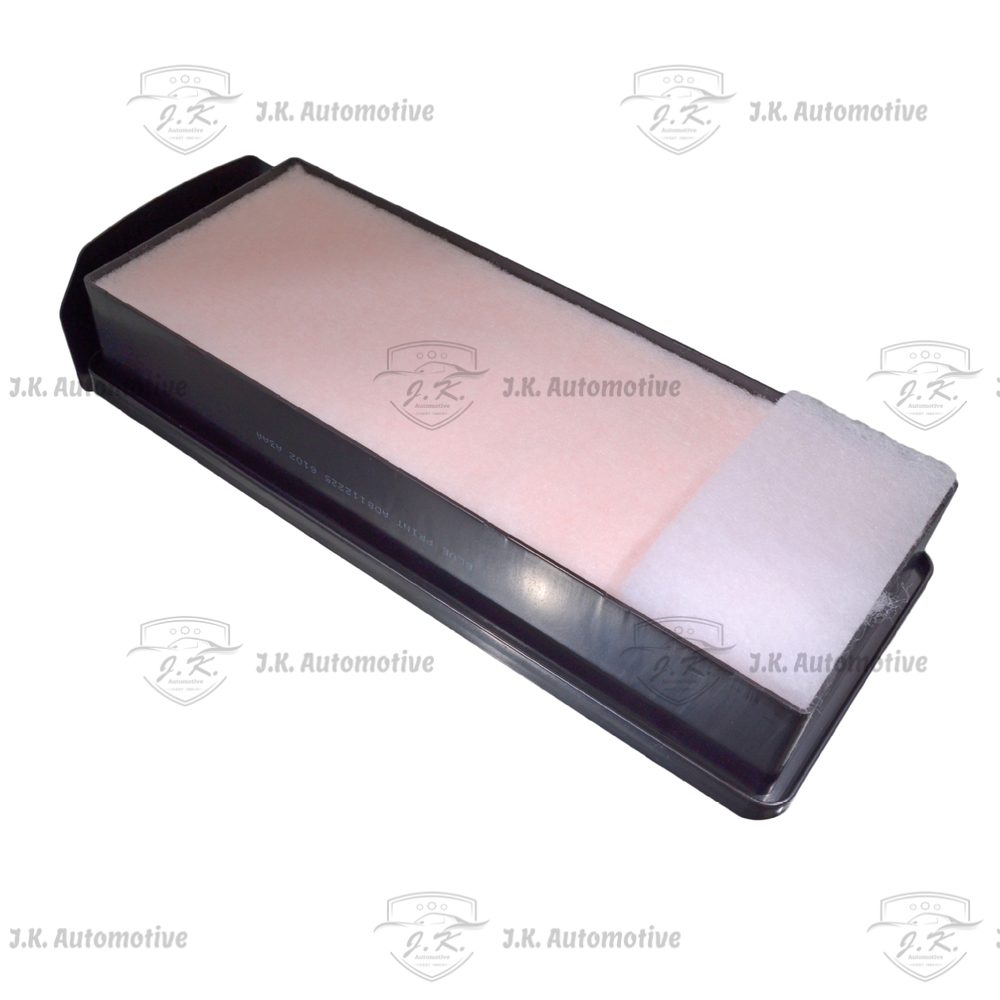
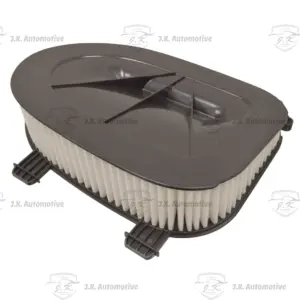
The JK Automotive air filter for the BMW X3 (F25) xDrive 30d is not merely a generic aftermarket substitute; it is a high-precision instrument of filtration engineered specifically to align with the sophisticated air-intake architecture of the 3.0L N57 turbocharged straight-six diesel engine. This filter serves as the primary defense system for your engine, acting as a direct-fit replacement for BMW OEM part numbers 13718518111 and 13718510239, which are the standard specifications for the F25 chassis produced between 2011 and 2017. To verify that this is the absolute correct component for your specific vehicle, we recommend cross-referencing your Vehicle Identification Number (VIN) within our database or checking the existing part number stamped on your current filter housing, as BMW occasionally utilized different airbox configurations based on the specific manufacturing plant or the regional emission package (such as Euro 5 vs. Euro 6 standards). Because the xDrive 30d utilizes a high-pressure turbocharging system that creates a significant vacuum force, the structural integrity of the filter frame is paramount; our filter features a reinforced polyurethane perimeter that ensures a 100% airtight seal against the airbox walls. This prevents "unmetered air"—air that has not been scanned by the Mass Air Flow (MAF) sensor—from entering the combustion chamber, which is critical because even a microscopic gap can lead to incorrect fuel-trim data, resulting in a "Check Engine" light, erratic idling, or a noticeable loss in the smooth, linear power delivery that defines the BMW driving experience. By choosing JK Automotive, you are ensuring that every cubic centimeter of air entering your engine is scrubbed of abrasive particulates while maintaining the exact pressure drop parameters required by BMW’s original engine management software.
How does the JK Automotive air filter utilize advanced material science to enhance the volumetric efficiency, torque output, and overall throttle response of the BMW X3 xDrive 30d's N57 diesel engine?
The performance philosophy behind the JK Automotive air filter centers on optimizing "volumetric efficiency," which is the ratio of the volume of air actually drawn into the cylinder compared to the theoretical volume it could hold; for a high-performance diesel like the xDrive 30d, maximizing this ratio is the key to unlocking hidden torque and improving responsiveness. Our filter utilizes a proprietary multi-layered synthetic microfiber media that is pleated with extreme precision to provide nearly double the effective surface area of lower-quality, budget-tier filters found in standard auto parts stores. This expanded surface area reduces "intake restriction," allowing the N57's turbocharger to pull in a higher volume of oxygen-rich air with significantly less mechanical effort, which is particularly noticeable during the "spool-up" phase of the turbo, effectively reducing "turbo lag" and providing a more immediate "shove-in-the-seat" feeling when you depress the accelerator. Furthermore, the specialized fiber structure is designed to maintain a "laminar" (smooth) airflow pattern as the air transitions from the filter into the intake tract, which minimizes turbulence before the air reaches the compressor wheel of the turbocharger. This high-velocity, low-turbulence air stream ensures that the diesel combustion process is as complete as possible, which not only sharpens the throttle response across the entire RPM range but also helps the engine maintain its peak 560 Nm of torque during heavy-load scenarios like towing or steep mountain climbing, ensuring your BMW X3 continues to perform as a high-performance "Ultimate Driving Machine" throughout its entire lifespan.
What is the scientifically recommended service interval for this filter under various global driving conditions, and why is regular replacement particularly vital for the long-term health of the BMW 30d’s DPF and EGR systems?
While many general maintenance schedules suggest a broad window for air filter replacement, JK Automotive recommends a more nuanced approach for the BMW X3 xDrive 30d, typically advocating for a fresh filter every 15,000 to 20,000 miles, or at every second oil service, though this interval can fluctuate dramatically based on your specific environmental variables. For drivers operating in "severe" conditions—which include heavily congested urban environments with high levels of soot and brake dust, or arid regions with fine suspended silica (sand)—the filter’s microscopic pores can become saturated much faster, potentially requiring a replacement as early as every 10,000 miles to prevent engine "suffocation." This is of paramount importance for the BMW 30d diesel engine because a restricted air filter forces the engine to operate with a "rich" air-to-fuel ratio, meaning there isn't enough oxygen to fully burn the diesel fuel; this incomplete combustion creates excessive soot and carbon particulates that travel directly into the Exhaust Gas Recirculation (EGR) valve and the Diesel Particulate Filter (DPF). Over time, a neglected air filter will lead to rapid "soot loading" of the DPF, triggering more frequent and higher-temperature regeneration cycles that can eventually lead to a "clogged DPF" error, which is an extremely expensive repair involving thousands of dollars in parts and labor. By proactively replacing your JK Automotive air filter, you are not just protecting the engine’s intake, but you are also actively extending the functional life of these sensitive emission components, ensuring that your exhaust back-pressure remains within factory limits and your fuel economy remains at its theoretical maximum.




Reviews
There are no reviews yet.