How does OEM air filter 13717556961 specifically interact with the N54 3.0-liter Twin-Turbo inline-six engine in the BMW Z4 Roadster (E89) sDrive 35i / 35is?
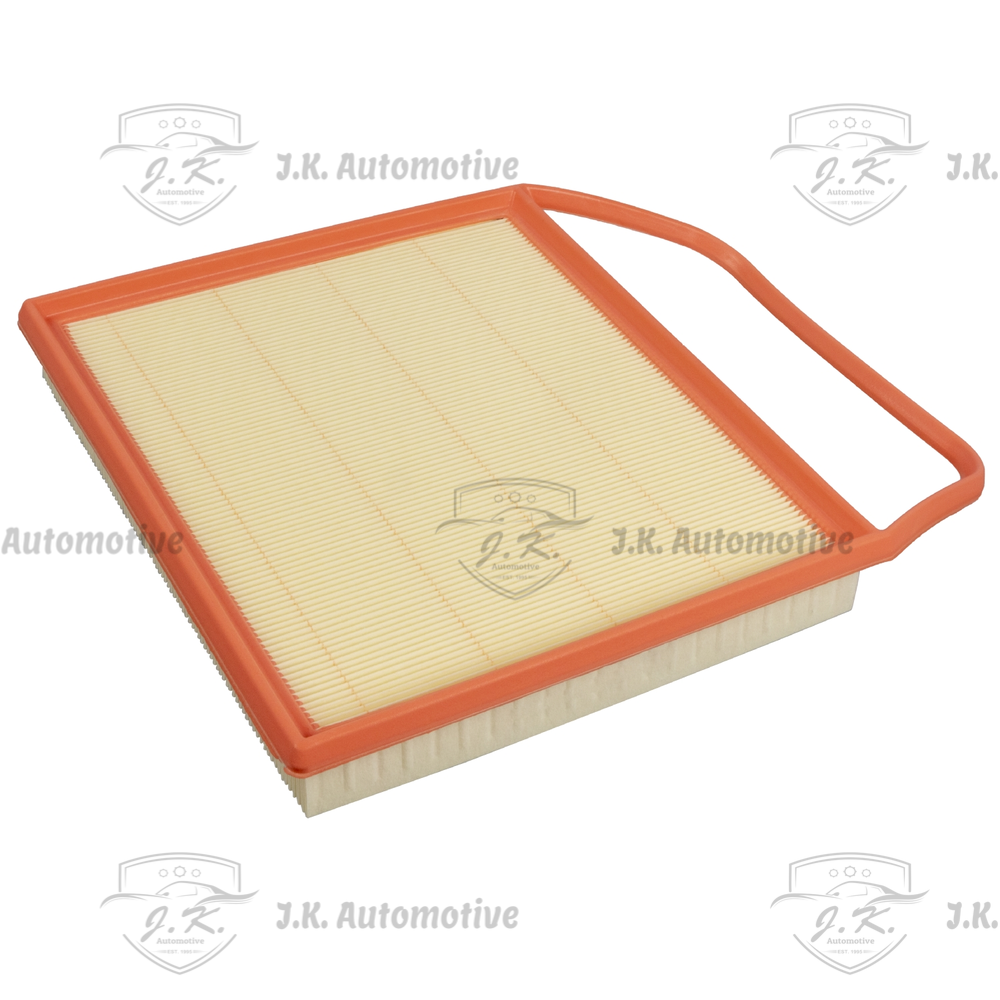
The second-generation BMW Z4 Roadster (E89) sDrive 35i and 35is produced between 2009 and 2016 are powered by the iconic N54B30 3.0-liter inline-six twin-turbocharged engine, producing 306 hp (35i) and up to 340 hp (35is) with 500 Nm of overboost torque. Utilizing twin small low-inertia turbochargers operating in parallel, High Precision Direct Injection operating at fuel pressures up to 200 bar, and Double-VANOS variable valve timing, this legendary power unit demands continuous, highly stable, and high-volume intake airflow to achieve rapid boost spool-up without lag. OEM air filter part number 13717556961 specifies the unique panel element with an integrated plastic positioning handle engineered specifically for the compact E89 roadster airbox housing. Under heavy wide-open throttle acceleration and twin-turbo boost demand, the N54 engine creates intense induction suction vacuum within the sealed intake tray. Part number 13717556961 is constructed with high-density synthetic micro-fiber filtration media reinforced with hot-melt adhesive stabilization beads applied across the pleat pack to maintain strict pleat geometry, preventing media flexing or pleat collapse under peak differential pressure. Furthermore, the heat-resistant elastomeric polyurethane perimeter frame creates an airtight, vibration-dampened seal against the plastic housing channel, eliminating the risk of unmetered, unfiltered raw air bypassing the media and entering the twin turbocharger compressor inlets.
What advanced diagnostic fault codes, live data parameters, and physical vehicle behaviors indicate severe restriction or seal degradation of air filter 13717556961 on an E89 Z4 35i?
Recognizing a restricted or degraded air filter element under part number 13717556961 on a BMW Z4 Roadster (E89) sDrive 35i requires monitoring physical driving performance alongside digital diagnostic parameters using factory software like ISTA. When the synthetic filtration media becomes saturated with fine particulate dust, road grit, or environmental debris, the twin-turbo N54 engine suffers from severe intake air starvation under boost. Mechanically, the driver will experience sluggish low-end throttle response, increased twin-turbo spool lag, minor hesitations during hard acceleration, and a noticeable drop in top-end pulling power. Diagnostically, as intake air restriction increases, the Digital Motor Electronics (DME) ECU detects reduced airflow velocity via the Mass Air Flow (MAF) / Manifold Absolute Pressure (MAP) sensors, continuously adjusting fuel trims beyond factory tolerances. Live DME data will show short-term fuel trims (STFT) and long-term fuel trims (LTFT) shifting significantly positive as the engine computer attempts to compensate for restricted induction breathing. Persistent restriction will illuminate the check engine light and log diagnostic trouble codes such as P0171 / P0174 (System Too Lean Bank 1 / Bank 2) or codes relating to boost pressure plausibility and MAF range limits. If an inferior perimeter gasket fails due to heat, unmetered dirty air bypasses the filter media, causing boost pressure control deviations and potential Drivetrain Malfunction alerts on the iDrive screen.
What exact step-by-step cleaning, inspection, and installation procedures should be followed during the replacement of air filter 13717556961 on the BMW Z4 Roadster (E89) sDrive 35i?
Replacing engine air filter 13717556961 on the BMW Z4 Roadster (E89) sDrive 35i requires careful, systematic execution due to the tight clearances inside the N54 engine bay:
-
Safety & Preparation: Turn off the ignition, engage the electronic parking brake, and allow the hot N54 engine bay to cool down completely so plastic housing clips and airbox tabs remain flexible.
-
Accessing the Airbox: Locate the main intake airbox mounted on the driver side of the engine bay. Carefully release the perimeter spring retaining clips securing the upper airbox lid, taking care not to place excessive strain on connected intake ducting or vacuum control lines.
-
Removing the Old Element: Use the integrated plastic loop handle to lift and pull the old filter element straight up and out of the housing tray without shaking, preventing trapped leaves, sand, and loose debris from falling into the clean intake channel leading directly to the twin turbocharger compressor inlets.
-
Housing Sanitation: Vacuum out all accumulated dirt, sand, and organic debris from the bottom basin of the airbox housing using a shop vacuum equipped with a soft brush attachment, then wipe down all inner sealing channels and perimeter lip grooves with a clean, lint-free microfiber cloth dampened with isopropyl alcohol.
-
Installing New Filter: Unbox fresh OEM filter 13717556961 and inspect the polyurethane perimeter frame and loop handle to confirm they are undamaged. Using the handle for guidance, press the element evenly into the lower housing tray, verifying that all four corners and perimeter lips sit completely flush inside the designated channel without pinching, twisting, or binding.
-
Final Reassembly: Align and resecure the upper airbox lid, engaging all retaining clips firmly to guarantee a 100 percent airtight seal across the complete service interval.
What structural engineering advantages does panel air filter 13717556961 offer over low-cost aftermarket alternatives for the N54 twin-turbo engine in the BMW Z4 Roadster (E89) sDrive 35i?
The structural engineering of genuine panel air filter 13717556961 provides critical operational advantages over budget aftermarket filters when installed in the high-demand N54 twin-turbo engine environment of the E89 Z4 sDrive 35i / 35is. Premium synthetic-blend filtration media utilized in this OEM specification is treated with specialized hydrophobic compounds that allow the filter pleats to retain full structural integrity even when driving through heavy rainstorms, dense fog, or high-humidity coastal climates. Cheaper aftermarket paper filters completely lack this moisture resistance, causing their raw cellulose pleats to absorb atmospheric water vapor, swell, and buckle inward under heavy parallel twin-turbocharger suction during wide-open throttle acceleration. When low-grade filter paper collapses, the available surface area for air passage drops drastically, starving the 306+ hp N54 engine of clean oxygen needed for efficient, complete combustion. Furthermore, the rigid polyurethane perimeter frame on part number 13717556961 maintains its precise elasticity and dimensional memory across thousands of extreme thermal expansion and contraction cycles inside the compact roadster engine compartment. This ensures that the frame gasket does not shrink, crack, or harden over time, permanently preventing dangerous high-vacuum air leaks along the perimeter channels of the airbox. Halting unmetered, unfiltered silica dust from bypassing the air filter is paramount for protecting the six individual cylinder walls, piston rings, and delicate parallel twin-turbocharger compressor blades from accelerated mechanical wear under high boost operation.
How do severe urban driving environments, high-altitude travel, and aggressive driving cycles alter the actual replacement interval for air filter 13717556961 on the BMW Z4 Roadster (E89) sDrive 35i?
While factory maintenance schedules generally recommend replacing the air filter element on the BMW Z4 (E89) every 30,000 to 40,000 kilometers, real-world operational demands frequently necessitate earlier replacement to preserve engine performance. Open-top sports roadsters operated regularly in dusty arid regions, rural gravel roads, or heavy urban construction zones ingest high concentrations of airborne particulate matter, fine silica sand, and road soot that fill the deep pleat valleys much faster than standard highway cruising. Similarly, vehicles driven in mountainous regions or high-altitude environments place unique volumetric demands on the induction system; because high-altitude air is less dense, the twin-turbocharged N54 engine must pull significantly higher volumes of ambient air to achieve equivalent oxygen mass for combustion, drawing a higher total mass of airborne debris through the filtration pack over a given distance. Additionally, spirited driving in Sport/Sport+ modes or aggressive track day usage dramatically increases total engine air consumption per minute, accelerating debris accumulation across the synthetic micro-fiber media. To safeguard the twin-turbocharger compressor wheels, High Precision Injectors, and sensitive valvetrain components, drivers subjecting their Z4 35i / 35is to severe duty conditions should visually inspect filter 13717556961 every 15,000 kilometers or during every annual oil service. If the filter media exhibits heavy discoloration, packed debris in the pleat folds, or signs of moisture distortion, replacing the element immediately restores uninhibited engine breathing, protects valvetrain components, and preserves maximum top-end horsepower.
How does maintaining a clean air filter under part number 13717556961 prevent compressor wheel dusting and turbocharger shaft imbalance on the N54 engine of the E89 Z4 35i?
The twin parallel turbochargers on the N54 3.0L engine in the BMW Z4 (E89) sDrive 35i operate at rotational speeds exceeding 150,000 RPM under full boost conditions. At these immense rotational velocities, the forged aluminum alloy compressor wheels are extremely sensitive to any microscopic solid contaminants present in the incoming airstream. When a compromised, ill-fitting, or low-quality air filter allows fine silica dust and sand particles to pass into the intake tract, the high-speed impact of these particles causes severe mechanical erosion on the leading edges of the compressor blades—a destructive phenomenon known in forced-induction engineering as "compressor wheel dusting." Over time, blade erosion fundamentally alters the complex aerodynamic profile of both compressor wheels, drastically reducing boost efficiency, increasing intake charge temperatures, and causing the turbochargers to work significantly harder to maintain target manifold pressures. Furthermore, uneven blade erosion disrupts the ultra-precise dynamic balance of the rotating compressor assemblies, leading to high-frequency shaft vibrations. These microscopic vibrations place severe radial loads on internal journal bearings and dynamic oil seals, accelerating bearing wear, causing oil leaks into the charge air pipes, and ultimately leading to premature, catastrophic turbocharger failure. Installing a fresh OEM-specification air filter under part number 13717556961 ensures complete particle retention down to a strict 3 microns, preserving compressor blade aerodynamic integrity, maintaining dynamic shaft balance, and extending the operational lifespan of expensive turbocharger hardware.
Why is replacing a dirty air filter critical for preventing intake valve carbon accumulation and PCV system malfunction on the E89 Z4 35i N54 direct-injection engine?
The N54 engine powering the BMW Z4 Roadster (E89) sDrive 35i utilizes first-generation High Precision Direct Injection, where fuel is sprayed at high pressure directly into the combustion chambers rather than upstream over the intake valves. Because there is no fuel spray washing over the backsides of the intake valves, this direct-injection engine is inherently prone to carbon deposit buildup on the intake valve stems and runner ports over time. Maintaining a clean air filter under part number 13717556961 plays a direct, vital role in minimizing the rate of this carbon accumulation. When an air filter becomes dirty and restricted, the twin turbochargers create an abnormally high induction vacuum in the intake pipe between the airbox and the turbo compressor inlets. This excessive vacuum places elevated suction pressure on the crankcase ventilation (PCV) system breather lines integrated into the plastic cylinder head valve cover. As a result, excessive oil vapors and atomized oil droplets are pulled out of the internal oil separator and sucked directly into the intake tract. These oil vapors mix with recirculated blow-by gases and fine dust particles, baking onto the hot intake valves and forming thick, hard carbon crusts that disrupt cylinder filling, restrict airflow velocity, and cause engine misfires under heavy acceleration. Replacing the air filter every 30,000 kilometers prevents abnormal PCV vacuum spikes, drastically reduces oil vapor carryover into the intake tract, keeps the intercooler clean, and significantly slows down intake valve carbon loading.

Reviews
There are no reviews yet.