How does cylindrical air filter 8R0 133 843 C interact with the EA188 / EA288 2.0 TDI Common Rail engine, VGT turbocharger, and Torsen Quattro platform?
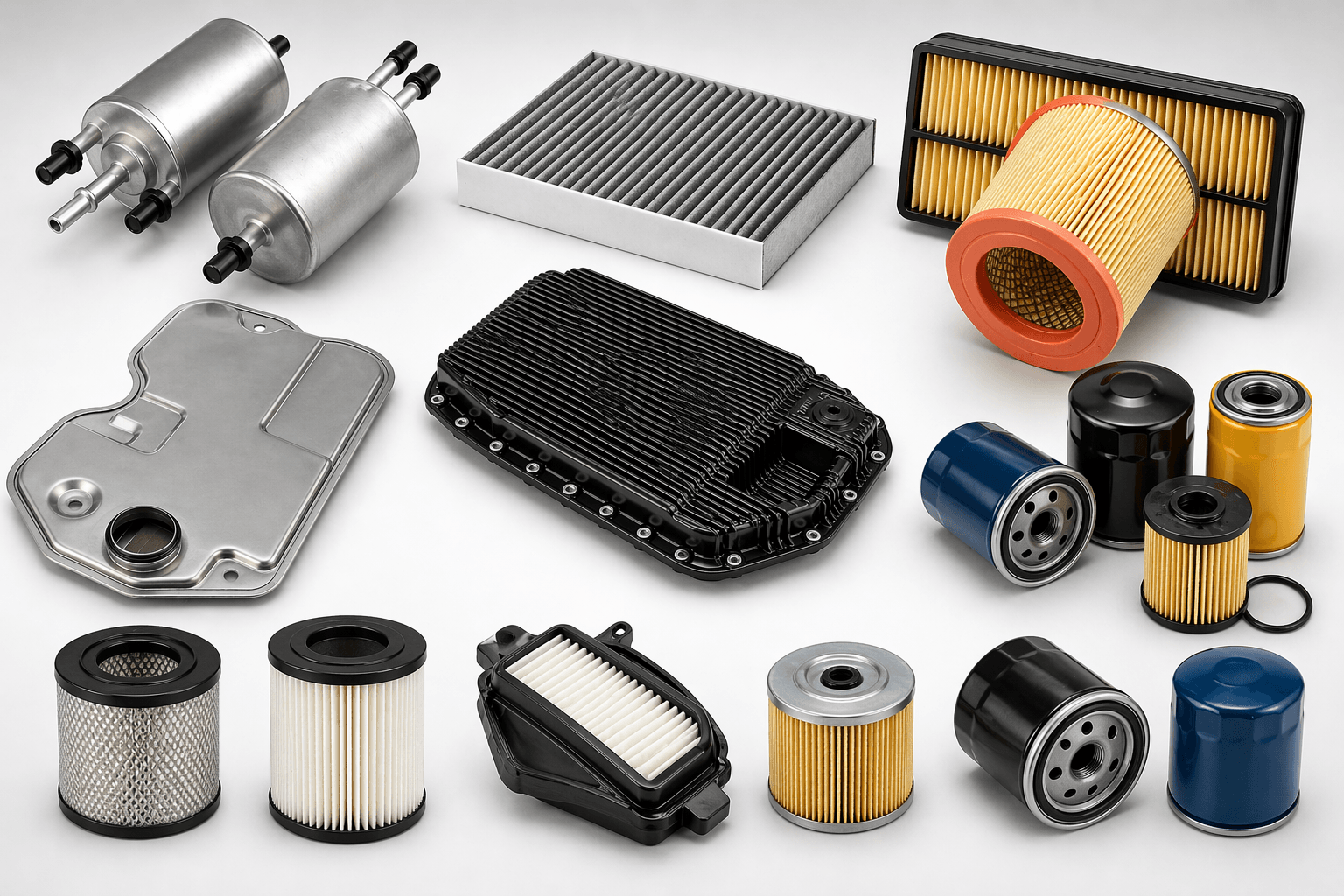
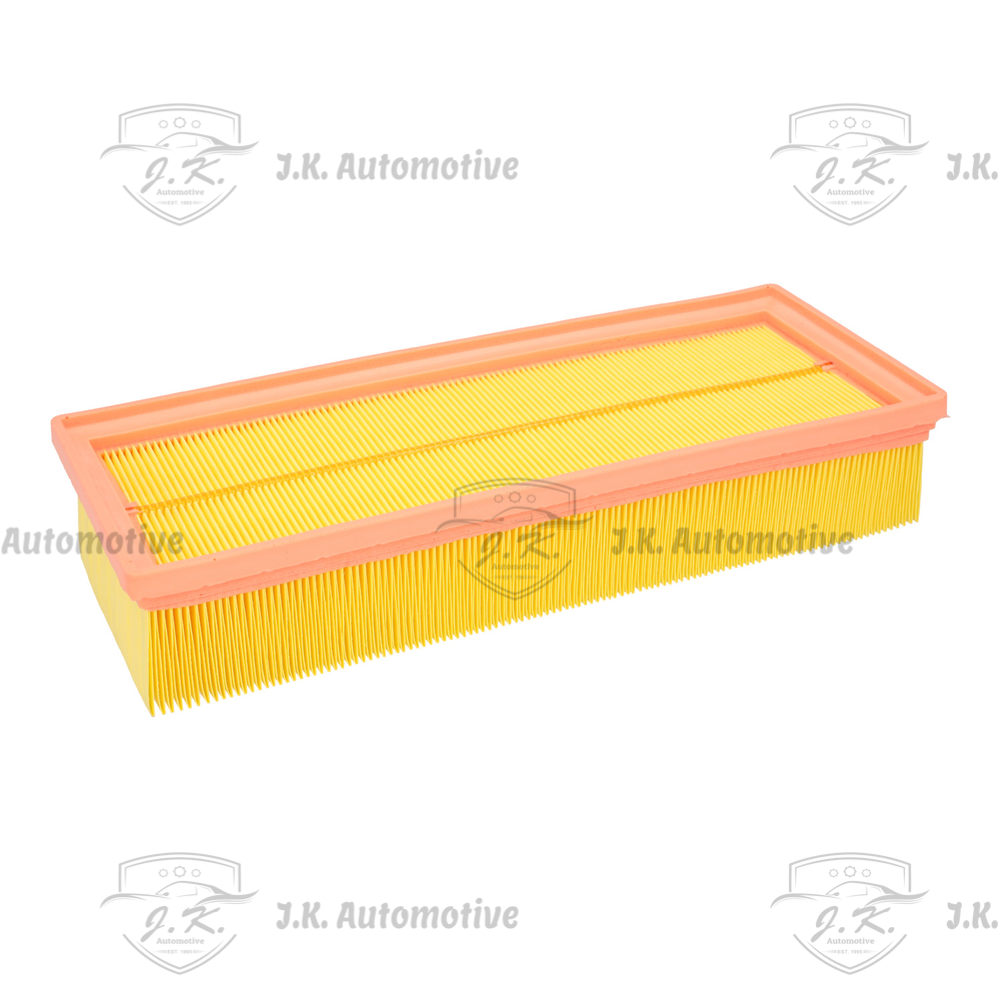
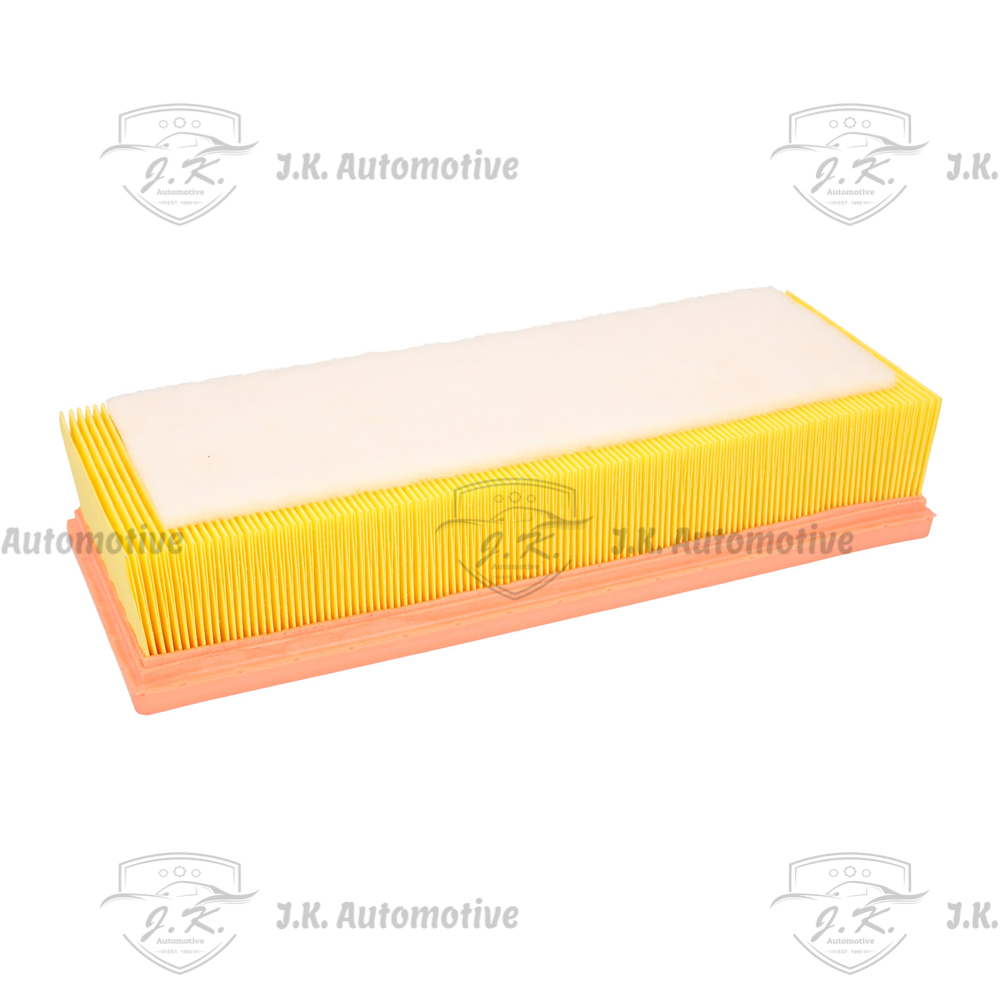
The Audi Q5 (8RB) produced between 2008 and 2017 equipped with the longitudinal 2.0-liter TDI inline-four common-rail turbodiesel engine (delivering 143 PS, 170 PS, or 177 PS variants) relies on an uninterrupted, non-turbulent column of induction air to feed its electronically controlled variable-geometry turbocharger (VGT), high-pressure common-rail injection system operating up to 2,000 bar, and Torsen mechanical center differential Quattro platform. Because the Modular Longitudinal Platform (MLP) layout places the intake assembly on the right side of the engine bay, this filter utilizes a specialized 360-degree cylindrical canister design rather than a flat panel element. OEM part numbers 8R0 133 843 C, 8K0 133 843 E, 8R0 133 843 K, 8K0 133 843 M, 8K0 133 843 A, and 8R0 133 843 D specify deep radial synthetic microfiber pleats supported by internal structural metal mesh, transverse hot-melt bead lines, and molded elastomeric end-cap seals. Under heavy acceleration when the VGT turbocharger spools up to deliver target boost pressure under mechanical Torsen loading, this rigid cylindrical construction prevents pleat flexing and structural deformation under heavy intake depression vacuum. Its precision elastomeric end caps form a 100 percent dust-tight compression seal against the factory airbox housing, preventing unmetered road grit, silica sand, and environmental soot from bypassing the media. By delivering clean, uniform airflow into the turbocharger compressor inlet, filter 8R0 133 843 C prevents high-speed compressor blade tip erosion, avoids thermal sensor drift on the downstream hot-film Mass Air Flow (MAF) sensor grid, preserves charge air intercooler heat transfer efficiency, and enables the Bosch EDC engine management system to execute precise closed-loop fuel injection, active DPF regeneration cycles, and linear Torsen Quattro torque delivery across all driving conditions.
What diagnostic trouble codes, live sensor parameters, and physical symptoms signal severe intake air restriction on filter 8R0 133 843 C in the Audi Q5 2.0 TDI Quattro?
Diagnosing a restricted, saturated, or physically compromised cylindrical air filter element under part numbers 8R0 133 843 C or 8K0 133 843 E on an Audi Q5 2.0 TDI Quattro involves checking both physical vehicle behavior and real-time live sensor data via VCDS or ODIS diagnostic tools. As airborne silica dust, highway soot, fine pollen, and organic debris progressively pack the 360-degree synthetic microfiber media over time, static suction resistance across the longitudinal airbox housing increases significantly, forcing the electronically controlled variable-geometry turbocharger to work significantly harder and spin at elevated shaft speeds to achieve target manifold boost pressures requested by the ECU. Mechanically, the driver will experience off-the-line throttle hesitation, pronounced turbo lag during mid-range transient acceleration, delayed boost buildup during highway overtaking under Torsen Quattro load, a loss of top-end torque near redline, and elevated diesel fuel consumption as the ECU attempts to compensate for airflow starvation. Diagnostically, the Bosch EDC engine control unit continuously monitors measured airflow mass via the hot-film MAF sensor grid relative to Manifold Absolute Pressure (MAP) sensor values, VGT vane position, throttle valve angle, and engine RPM. When measured air mass falls below expected theoretical targets during turbocharger spooling, the ECU automatically scales back diesel fuel injection pulse widths to maintain safe combustion stoichiometry and limit smoke, directly trimming engine torque output. Sustained intake restriction will illuminate the Glow Plug indicator, EPC lamp, or Check Engine Light and store diagnostic trouble codes such as P0101 (Mass Air Flow Sensor Signal Implausible), P0299 (Turbocharger Underboost Regulation Limit Not Reached), P2279 (Intake Air System Leak), or P2002 (Diesel Particulate Filter Efficiency Below Threshold), signaling the technician to inspect and replace filter element 8R0 133 843 C / 8K0 133 843 E immediately to restore factory performance.
How does replacing filter 8R0 133 843 C protect the Diesel Particulate Filter, EGR system, and Positive Crankcase Ventilation in the Audi Q5 2.0 TDI Quattro?
Maintaining an unrestricted, high-flow air filter under part number 8R0 133 843 C or 8K0 133 843 E directly safeguards the complex emissions control systems and forced-induction hardware on the Audi Q5 2.0 TDI Quattro. In modern common-rail turbodiesel engines, severe air restriction starves the combustion chambers of vital oxygen molecules, resulting in an overly rich air-fuel mixture that generates excessive black carbon soot during power strokes. This surplus soot travels directly through the Exhaust Gas Recirconulation (EGR) valve and gas cooler assembly before passing into the Diesel Particulate Filter (DPF), causing premature soot loading of the ceramic matrix, rapid differential pressure spikes, and frequent active regeneration cycles that dilute engine oil with unburned diesel fuel. Furthermore, when the air filter is severely clogged, the variable-geometry turbocharger generates an abnormally high intake depression vacuum inside the inlet pipe between the airbox and compressor inlet during acceleration. This extreme vacuum places an unnatural suction load on the Positive Crankcase Ventilation (PCV) pressure-regulating diaphragm integrated within the valve cover assembly, tearing internal rubber membranes and pulling liquid engine oil mist straight out of the crankcase into the charge air piping and intercooler. Excess oil coating the intercooler fins degrades thermal heat transfer efficiency, degrades rubber boost hoses, and bakes into sticky sludge when mixed with recirculated EGR gas vapors, emphasizing the critical importance of timely replacement of filter 8R0 133 843 C. Executing an error-free, factory-grade replacement of cylindrical air filter element 8R0 133 843 C / 8K0 133 843 E on the Audi Q5 (8RB) 2.0 TDI Quattro requires a meticulous multi-step cleaning, inspection, and seating procedure to prevent microscopic dust bypass and guarantee absolute intake tract sealing
How do OEM cylindrical filter 8R0 133 843 C and aftermarket open intakes differ in acoustic dampening and charge air thermal management on the Audi Q5 2.0 TDI Quattro?
The Audi Q5 (8RB) 2.0 TDI Quattro is engineered as a refined luxury compact crossover designed to isolate cabin occupants from unrefined 4-cylinder diesel clatter, high-frequency turbocharger spool whistle, diverter valve discharge noise, and low-frequency induction boom while delivering smooth, linear torque across all four wheels via its Torsen center differential. Genuine OEM air filter part numbers 8R0 133 843 C and 8K0 133 843 E are specifically calibrated by VAG acoustic engineers to act as primary noise-dampening elements inside the sealed longitudinal airbox housing, where high-density 360-degree synthetic microfiber pleats and elastomeric end-cap seals absorb high-frequency compressor blade flutter, intake pulsation waves, and valvetrain resonance. In stark contrast, replacing the factory airbox with an aftermarket open-element intake or conical filter removes the sealed acoustic housing completely, introducing loud, unrefined diesel induction roar, harsh turbocharger spooling sounds, and engine bay vibration directly into the passenger cabin—disrupting the crossover's luxury refinement. Furthermore, open-element filters lack the thermal shielding provided by the sealed factory airbox housing, drawing warm, stagnant air directly from inside the crowded longitudinal 2.0 TDI engine compartment rather than cool ambient air channeled straight through the front grille cold-air ducting. Ingesting heated engine bay air significantly reduces intake charge density, causing the Bosch EDC ECU to retard injection timing and reduce turbocharger boost targets to prevent excessive combustion thermal loads, which results in severe thermal heat-soak power losses during warm weather or heavy traffic driving conditions, proving that choosing genuine filter 8R0 133 843 C ensures optimal cabin quietness, maximum cold-air charge density, and consistent engine torque output under all operating conditions.
How does progressive microscopic boundary-layer restriction on cylindrical air filter 8R0 133 843 C / 8K0 133 843 E dynamically alter VGT turbocharger compressor aerodynamics, blade tip stall, and surge margin limits in the Audi Q5 (8RB) 2.0 TDI Quattro?
In the longitudinal engine layout of the Audi Q5 (8RB) 2.0 TDI Quattro, the cylindrical air filter element (part numbers 8R0 133 843 C, 8K0 133 843 E, 8R0 133 843 K, 8K0 133 843 M, 8K0 133 843 A, and 8R0 133 843 D) acts as the critical fluidic boundary regulating intake static pressure before ambient air enters the compressor inlet neck of the electronically controlled variable-geometry turbocharger (VGT), meaning that when the 360-degree radial synthetic microfiber matrix becomes progressively blinded by micro-fine silica dust, road soot, and organic micro-particulates, the fluid mechanics governing charge air compression shift dramatically as the compressor wheel draws incoming air through a chaotic, highly turbulent velocity profile rather than a smooth, uniform 360-degree radial boundary layer. As static depression vacuum inside the cylindrical housing exceeds factory tolerances during wide-open throttle acceleration, fluid pressure drops sharply while the air velocity profile inside the intake elbow degrades into chaotic micro-eddies, inducing localized boundary-layer separation across the suction face of the spinning aluminum compressor blades and shifting the turbocharger operating point on its thermodynamic map dangerously toward the left boundary—known as the compressor surge line—where during rapid off-throttle decelerations, gear shifts, or sudden load drops under Torsen Quattro mechanical engagement, the airflow velocity stalling across the compressor blade tips can momentarily reverse direction. This instigates violent aerodynamic compressor surge where high-pressure charge air downstream of the compressor discharge neck pulses backward across the spinning impeller, placing severe axial thrust shock loads on the turbocharger’s internal floating journal bearings, 360-degree thrust washers, and dynamic oil seals, which over extended driving cycles leads to compressor blade tip micro-erosion, rotor shaft deflection, dynamic unbalancing of the rotating assembly, and premature oil leakage into the charge air piping, demonstrating that maintaining an unrestricted, high-flow cylindrical filter element (8R0 133 843 C / 8K0 133 843 E) ensures stable compressor inlet velocity profiles, preserves critical aerodynamic surge margins, and protects the high-speed rotating assembly under peak engine load requests.
How do micro-structural alterations in the radial pore matrix of cylindrical filter 8R0 133 843 C / 8K0 133 843 E influence hot-film Mass Air Flow (MAF) sensor telemetry, fuel injection timing maps, and torque calculation vectors in the Bosch EDC system?
The Bosch EDC engine management system governing the Audi Q5 (8RB) 2.0 TDI Quattro relies on complex mathematical model vectors driven primarily by telemetry from the downstream hot-film Mass Air Flow (MAF) sensor grid mounted immediately after the cylindrical filter neck to calculate engine torque, common-rail diesel injection pulse widths, pilot-main-post injection timing split ratios, and active DPF regeneration cycles, but when a cylindrical air filter element matching part number 8R0 133 843 C or 8K0 133 843 E undergoes radial pleat distortion, media bowing, or localized pore clogging, the air column exiting the clean side of the cylindrical housing loses its uniform velocity distribution and forms localized high-velocity "jets" and low-velocity dead zones within the intake pipe. When these high-velocity jets or turbulent pressure oscillations pass over the MAF sensor's delicate heated platinum element, the sensor sends corrupted electrical voltage signals to the ECU regarding actual mass air density entering the cylinders, inducing immediate mathematical anomalies within the ECU’s closed-loop control algorithms where under-calculated air mass forces the ECU to restrict fuel injection pulse widths and retard injection timing (resulting in noticeable mid-range throttle lag, delayed turbocharger spooling, and sluggish acceleration), whereas over-calculated air mass causes the ECU to command aggressive diesel injection quantities that exceed the physical oxygen mass available during the rapid compression stroke, creating instantaneous local rich zones during flame propagation, spiking peak cylinder pressures, driving cylinder pressure rise rates ($dP/dtheta$) beyond structural limits, generating excessive black carbon soot, and driving exhaust gas temperatures (EGTs) beyond safe operational thresholds, which proves that installing a genuine OEM specification cylindrical filter element with transverse hot-melt pleat stabilization lines locks the radial media pleats at precise structural intervals, ensuring that the velocity and pressure profiles across the MAF sensor grid remain laminar and linear across the entire engine speed range.
What advanced thermodynamic and tribological mechanisms cause intake depression vacuum spikes from a clogged filter 8R0 133 843 C / 8K0 133 843 E to accelerate Positive Crankcase Ventilation (PCV) diaphragm rupture, oil mist pullover, and intercooler thermal degradation?
The crankcase ventilation architecture of the EA188 / EA288 2.0 TDI common-rail engine is a highly sensitive pressure-balanced system engineered to regulate blow-by gas extraction while recycling oil vapors back into the oil pan, utilizing a fine oil separator module integrated within the valve cover assembly that relies on a precise differential balance between internal crankcase pressure and intake manifold depression vacuum to operate its internal elastomeric regulating diaphragm. When progressive dust accumulation restricts cylindrical air filter part numbers 8R0 133 843 C or 8K0 133 843 E, the variable-geometry turbocharger draws air against an abnormally high depression vacuum inside the inlet pipe between the airbox output neck and the compressor inlet during heavy acceleration, transmitting this extreme vacuum directly to the exit port of the PCV oil separator valve assembly where continuous exposure to extreme differential vacuum forces the PCV rubber pressure-regulating diaphragm to flex far beyond its engineered mechanical stroke limits, accelerating membrane embrittling and tearing until the PCV system completely loses its ability to throttle crankcase vacuum. Once the diaphragm fails, turbocharger suction pulls raw liquid engine oil mist and blow-by vapors directly out of the cylinder head valve cover into the intake charge air piping, overwhelming the multi-stage cyclone oil separator channels and coating the inner walls of the air-to-air intercooler with liquid oil, which severely degrades the intercooler's thermal heat transfer efficiency, drives up manifold intake air temperatures under load, and slowly dissolves the synthetic fluoroelastomer lining of lower silicone/rubber boost hoses until structural blow-outs occur under high boost requests, demonstrating that replacing filter 8R0 133 843 C / 8K0 133 843 E at recommended service intervals maintains baseline intake depression vacuum, safeguarding internal PCV diaphragm integrity and preventing expensive charge air system oil contamination.


Reviews
There are no reviews yet.