How does OEM air filter 5Q0 129 620 C / 5QM 129 620 A specifically interact with the EA888 Gen 3B / EVO4 2.0 TFSI engine, B-cycle combustion process, IHI turbocharger, and electro-hydraulic Haldex Quattro load dynamics in the Audi Q3 Sportback (F3N)?
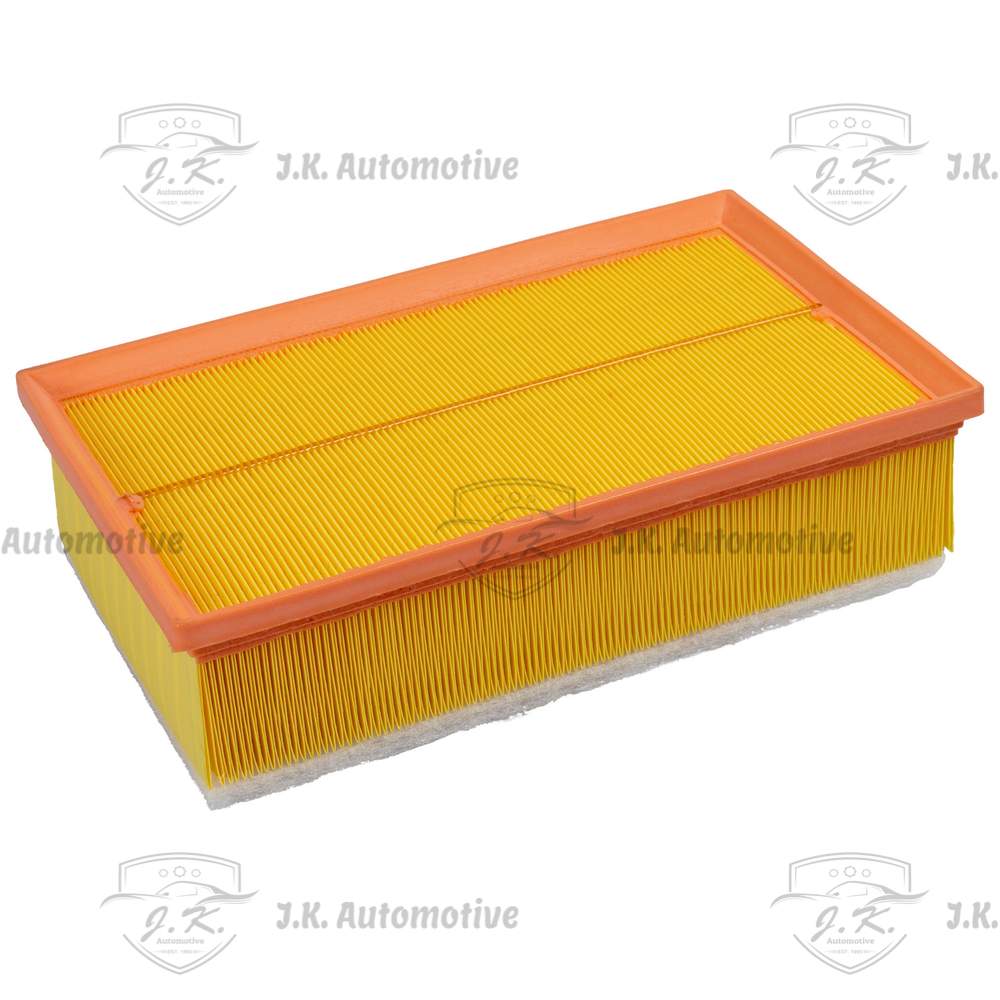
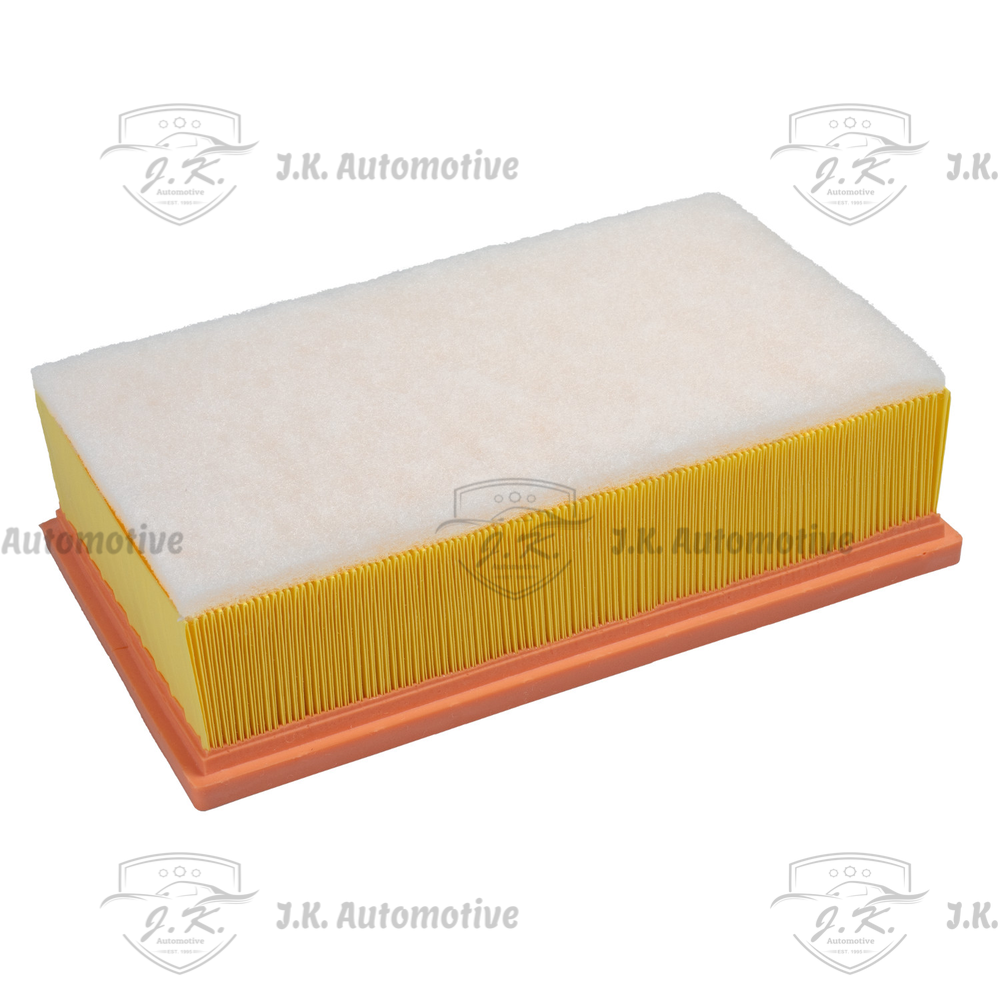
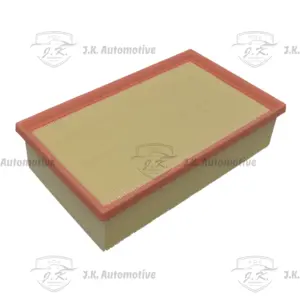
The Audi Q3 Sportback (F3N) produced between 2019 and 2026 featuring the 40 TFSI powertrain with the 2.0-liter turbocharged four-cylinder EA888 engine (delivering 190 PS / 140 kW) relies on an ultra-precise, non-turbulent column of induction air to feed its IHI turbocharger, dual-injection system (combining direct fuel injection with port fuel injection), advanced Audi Valvelift System (AVS), and Haldex Quattro all-wheel-drive platform. Because the MQB evo-based transverse engine utilizes the thermodynamic B-cycle (Budack cycle) combustion process—which features shortened intake valve opening durations during partial load to maximize fuel economy while switching to full lift under load—maintaining accurate intake manifold pressure and air mass density across the intake tract is essential for smooth torque handoffs. OEM air filter part numbers 5Q0 129 620 C, 5QM 129 620 A, and 2Q0 129 620 specify the heavy-duty rectangular panel element tailored specifically for the transverse MQB airbox housing, built with deep synthetic microfiber filtration media supported by transverse hot-melt stabilization lines and a flexible elastomeric polyurethane perimeter frame that prevents pleat flexing, structural deformation, or media collapse under intense differential suction pressure when the turbocharger spools up to deliver peak boost under Quattro traction load. Furthermore, its specialized elastomeric perimeter gasket compresses uniformly inside the airbox housing channel, forming a 100 percent dust-tight, vibration-isolated compression seal that prevents unmetered road grit, silica sand, and environmental soot from bypassing the media, thereby protecting the delicate aluminum compressor wheel blades from particle erosion, preventing thermal sensor drift on downstream pressure and airflow sensors, preserving intercooler thermal efficiency, and allowing the Bosch engine management system to execute precise closed-loop fuel injection, ignition timing maps, and Haldex torque vectoring across all driving conditions.
What advanced diagnostic trouble codes, live parameter shifts, and driving symptoms signal severe intake air restriction on air filter 5Q0 129 620 C / 5QM 129 620 A in the Audi Q3 Sportback 40 TFSI Quattro?
Diagnosing a restricted, saturated, or physically compromised air filter element under part numbers 5Q0 129 620 C, 5QM 129 620 A, or 2Q0 129 620 on an Audi Q3 Sportback 40 TFSI Quattro requires evaluating physical vehicle performance alongside real-time live parameter logs using VCDS, ODIS, or advanced diagnostic scan tools, as airborne silica sand, highway soot, fine pollen, and organic road debris progressively pack the synthetic microfiber pleats and increase static suction resistance across the airbox, forcing the electronically wastegated IHI turbocharger to work significantly harder and spin at elevated shaft speeds to achieve target manifold boost pressures requested by the ECU. Mechanically, the driver will notice off-the-line throttle hesitation, pronounced turbo lag during mid-range transient acceleration, jerky transitions during B-cycle intake valve cam phasing adjustments, a loss of top-end horsepower near high RPMs, and elevated fuel consumption as the ECU attempts to compensate for airflow starvation, while the engine control unit continuously monitors measured airflow mass and pressure vectors via MAP and calculated MAF sensor grids relative to throttle body angle, wastegate position, and engine RPM. When measured air mass falls below expected theoretical targets during turbocharger spooling, the ECU automatically scales back fuel injection pulse widths to maintain safe stoichiometry, directly trimming engine torque output, and sustained intake restriction will illuminate the EPC lamp or Check Engine Light and store diagnostic trouble codes such as P0101 (Mass Air Flow / Air Mass Signal Implausible), P0299 (Turbocharger Underboost Regulation Limit Not Reached), P2279 (Intake Air System Leak), or positive long-term fuel trim corrections such as P0171 (System Too Lean Bank 1), signaling the technician to inspect and replace filter element 5Q0 129 620 C / 5QM 129 620 A immediately to restore factory performance.
How do acoustic dampening, cabin refinement, and cold-air intake charge density differ between genuine OEM panel filter 5Q0 129 620 C / 5QM 129 620 A and aftermarket open-element intake kits on the Audi Q3 Sportback 40 TFSI Quattro?
The Audi Q3 Sportback (F3N) 40 TFSI Quattro is engineered as a stylish, premium compact crossover coupe designed to isolate cabin occupants from unrefined engine noise, high-frequency turbocharger spool whistle, diverter valve discharge noise, and low-frequency induction boom while delivering smooth, linear 2.0 TFSI torque across all four wheels, with OEM air filter part numbers 5Q0 129 620 C, 5QM 129 620 A, and 2Q0 129 620 specifically calibrated by VAG acoustic engineers to act as primary noise-dampening elements inside the sealed factory airbox housing, where high-density synthetic microfiber pleats and an elastomeric polyurethane perimeter frame absorb high-frequency compressor blade flutter, intake pulsation waves, and valvetrain resonance. In stark contrast, replacing the factory airbox with an aftermarket open-element intake or conical filter removes the sealed acoustic housing completely, introducing loud, unrefined intake induction roar, harsh turbocharger spooling sounds, and engine bay vibration directly into the passenger cabin—disrupting the crossover coupe's luxury refinement—while also lacking the thermal shielding provided by the sealed factory airbox housing and drawing warm, stagnant air directly from inside the crowded 2.0 TFSI engine compartment rather than cool ambient air channeled straight through the front grille cold-air ducting. Ingesting heated engine bay air significantly reduces intake charge density, causing the ECU to retard ignition timing and reduce turbocharger boost targets to prevent engine knock, which results in severe thermal heat-soak power losses during warm weather or heavy traffic driving conditions, proving that choosing genuine filter 5Q0 129 620 C ensures optimal cabin quietness, maximum cold-air charge density, and consistent engine torque output under all operating conditions.
How does progressive microscopic boundary-layer restriction on synthetic air filter 5Q0 129 620 C / 5QM 129 620 A / 2Q0 129 620 dynamically alter IHI turbocharger compressor aerodynamics, blade tip stall, and surge margin limits in the Audi Q3 Sportback (F3N) 40 TFSI Quattro?
In the forced-induction architecture of the EA888 Gen 3B / EVO4 2.0 TFSI engine powering the Audi Q3 Sportback (F3N) 40 TFSI Quattro, the engine air filter element (part numbers 5Q0 129 620 C, 5QM 129 620 A, and 2Q0 129 620) acts as the critical primary fluidic boundary regulating intake pressure differentials before ambient air enters the IHI turbocharger compressor inlet neck, meaning that when the deep-pleated synthetic microfiber matrix becomes progressively blinded by micro-fine silica dust, carbon soot, and environmental particulates, the fluid mechanics governing charge air compression shift dramatically as the compressor wheel draws incoming air through a chaotic velocity profile rather than a smooth laminar boundary layer. As static depression vacuum behind a restricted filter element exceeds factory tolerances, fluid pressure drops sharply while the air velocity profile inside the intake neck degrades into turbulent micro-eddies, inducing localized boundary-layer separation across the suction face of the spinning compressor impeller blades and shifting the turbocharger operating point on its thermodynamic performance map dangerously toward the left boundary—known as the compressor surge line—where during rapid off-throttle decelerations, sudden load drops, or high-load gear shifts under electro-hydraulic Haldex Quattro engagement, the airflow velocity stalling across the compressor blade tips can momentarily reverse direction. This instigates violent aerodynamic compressor surge where high-pressure charge air downstream of the compressor discharge neck pulses backward across the spinning impeller, placing severe axial thrust shock loads on the turbocharger’s internal floating journal bearings, 360-degree thrust washers, and dynamic shaft seals, which over extended driving cycles leads to compressor blade tip micro-erosion, rotor shaft deflection, dynamic unbalancing of the rotating assembly, and premature oil leakage into the charge air piping, emphasizing that maintaining an unrestricted, high-flow filter element (5Q0 129 620 C / 5QM 129 620 A) ensures stable compressor inlet velocity profiles, preserves critical aerodynamic surge margins, and protects the high-speed rotating assembly under peak engine load requests.
How do micro-structural alterations in the pore matrix of filter 5Q0 129 620 C / 5QM 129 620 A / 2Q0 129 620 influence manifold pressure sensor calibration drift, ignition timing maps, and torque calculation vectors in the Bosch Simos / MED engine management system?
The modern engine management platform governing the Audi Q3 Sportback 40 TFSI Quattro relies on complex mathematical model vectors driven by telemetry from Manifold Absolute Pressure (MAP) sensors, intake air temperature sensors, and electronic wastegate position feedback to calculate engine torque, direct/port fuel injection split ratios, and ignition timing advances, but when an air filter element matching part number 5Q0 129 620 C, 5QM 129 620 A, or 2Q0 129 620 undergoes structural pleat distortion, media bowing, or localized pore clogging, the air column exiting the clean side of the airbox loses its uniform velocity distribution and forms localized high-velocity "jets" and low-velocity dead zones within the intake pipe. When these high-velocity jets or turbulent pressure oscillations hit downstream pressure sensors, the engine control unit receives corrupted telemetry regarding actual mass air density entering the cylinders, inducing immediate mathematical anomalies within the ECU’s closed-loop control algorithms where under-calculated air density forces the ECU to restrict direct injection pulse widths and retard ignition timing (resulting in noticeable mid-range throttle lag, delayed turbocharger spooling, and sluggish acceleration), whereas over-calculated air density causes the ECU to command aggressive fuel injection quantities that exceed the physical oxygen mass available during the rapid intake valve closing phase of the B-cycle (Budack cycle), creating instantaneous local rich zones during flame propagation, spiking peak cylinder pressures, driving cylinder pressure rise rates ($dP/d\theta$) beyond structural limits, and inducing severe combustion knock that forces knock sensors to trigger aggressive ignition timing retardation across all four cylinders, which proves that installing a genuine OEM specification filter element with transverse hot-melt pleat stabilization beads locks the synthetic media pleats at precise structural intervals, ensuring that the velocity and pressure profiles across downstream engine sensors remain laminar and linear across the entire RPM band.
What advanced thermodynamic and tribological mechanisms cause intake depression vacuum spikes from a clogged filter 5Q0 129 620 C / 5QM 129 620 A / 2Q0 129 620 to accelerate Positive Crankcase Ventilation (PCV) diaphragm rupture, oil mist pullover, and intercooler thermal degradation?
The crankcase ventilation architecture of the EA888 Gen 3B / EVO4 2.0 TFSI engine is a highly sensitive pressure-balanced system engineered to regulate blow-by gas extraction while recycling oil vapors back into the oil pan, utilizing a fine oil separator module mounted on top of the aluminum cylinder head cover that relies on a precise differential balance between internal crankcase pressure and intake manifold depression vacuum to operate its internal elastomeric regulating diaphragm. When progressive dust accumulation restricts air filter part numbers 5Q0 129 620 C, 5QM 129 620 A, or 2Q0 129 620, the IHI turbocharger draws air against an abnormally high depression vacuum inside the inlet pipe between the airbox output neck and the compressor inlet during heavy acceleration, transmitting this extreme vacuum directly to the exit port of the PCV oil separator valve assembly where continuous exposure to extreme differential vacuum forces the PCV rubber pressure-regulating diaphragm to flex far beyond its engineered mechanical stroke limits, accelerating membrane embrittling and tearing until the PCV system completely loses its ability to throttle crankcase vacuum. Once the diaphragm fails, turbocharger suction pulls raw liquid engine oil mist and blow-by vapors directly out of the cylinder head valve cover into the intake charge air piping, overwhelming the multi-stage cyclone oil separator channels and coating the inner walls of the air-to-air intercooler with liquid oil, which severely degrades the intercooler's thermal heat transfer efficiency, drives up manifold intake air temperatures under load, and slowly dissolves the synthetic fluoroelastomer lining of lower silicone/rubber boost hoses until structural blow-outs occur under high boost requests, demonstrating that replacing filter 5Q0 129 620 C / 5QM 129 620 A / 2Q0 129 620 at recommended service intervals maintains baseline intake depression vacuum, safeguarding internal PCV diaphragm integrity and preventing expensive charge air system oil contamination.
How do environmental humidity cycles, road-salt mist crystallization, and hydrophobic synthetic media breakdown interact on part number 5Q0 129 620 C / 5QM 129 620 A / 2Q0 129 620 during severe winter operation in the Audi Q3 Sportback 40 TFSI Quattro?
Winter driving conditions in cold climates present a unique combination of chemical and physical stressors that degrade air filter media performance far faster than standard dry-dust testing parameters account for, as the front cold-air intake ducting on the Audi Q3 Sportback 40 TFSI Quattro—positioned directly behind the upper radiator grille to capture high-density ambient air—ingests a continuous spray of fine road-salt aerosol mist, melted slush, and high-density atmospheric fog during highway travel. Genuine OEM air filter elements (5Q0 129 620 C / 5QM 129 620 A / 2Q0 129 620) utilize a multi-layered synthetic microfiber matrix treated with a specialized hydrophobic resin binder where under initial exposure liquid road spray beads on the outer pleat tips and rolls down into the lower airbox basin to discharge through the spring-loaded lower drain flutter valve, but as damp air passes through the filter media during sustained driving, ambient engine bay heat evaporates the liquid water component while leaving behind dissolved sodium chloride ($\text{NaCl}$) and calcium chloride ($\text{CaCl}_2$) road salts that precipitate out of solution and form microscopic crystalline salt structures deep inside the 3-micron fiber pores. Over repeated wetting and drying cycles, these salt crystals expand and lock onto the synthetic fibers to blind the media matrix from the inside out, while simultaneous chemical exposure to aggressive road-deicing agents and freezing temperatures breaks down the synthetic hydrophobic resin coating, causing the microfiber pleats to absorb moisture directly, swell, lose their bending stiffness, and collapse under intake suction vacuum, which leads to immediate airflow restriction and proves that for vehicles operated in harsh winter regions, visual inspection of filter 5Q0 129 620 C / 5QM 129 620 A / 2Q0 129 620 every 15,000 kilometers is mandatory, with complete element replacement recommended immediately following the winter season to remove salt-bound media and preserve full intake volumetric efficiency.
What precise airbox sanitation, inspection, and seating alignment protocols must be strictly executed when replacing air filter 5Q0 129 620 C / 5QM 129 620 A / 2Q0 129 620 in the Audi Q3 Sportback 40 TFSI Quattro to ensure complete dust isolation?
Executing an error-free, factory-grade replacement of air filter element 5Q0 129 620 C / 5QM 129 620 A / 2Q0 129 620 on the Audi Q3 Sportback (F3N) 40 TFSI Quattro requires a meticulous multi-step cleaning, inspection, and seating procedure to prevent microscopic dust bypass and guarantee absolute intake tract sealing, beginning with unscrewing the perimeter Torx T25 fasteners securing the upper airbox housing lid and lifting the cover carefully to avoid straining the downstream sensor wiring harness while ensuring that loose road grit, trapped leaves, and heavy sand accumulated in the lower tray do not fall into the clean-air turbocharger inlet ducting. Before introducing the fresh element, the technician must thoroughly clean the interior lower airbox basin using a dedicated shop vacuum followed by a detailed wipe-down with a lint-free microfiber cloth lightened with a non-petroleum surface cleaner to remove residual oily films and fine silica particles, while simultaneously inspecting and clearing the base spring-loaded water drain flutter valve to guarantee condensed rainwater and highway slush spray drain freely rather than pooling and saturating the fresh filter media. Once the chamber is pristine, the fresh OEM element 5Q0 129 620 C must be lowered horizontally into the tray and pressed down evenly along its entire perimeter until the soft, elastomeric polyurethane gasket seats completely flush inside the plastic sealing channel without pinching, rolling, or binding at any corner, before guiding the upper airbox lid smoothly over its locator alignment tabs and closing it without forcing the filter frame out of alignment, followed by hand-threading and torquing all perimeter fasteners in a cross-diagonal pattern to 3.0 Nm (2.2 ft-lbs) to ensure uniform gasket compression, eliminate unmetered vacuum air leaks past downstream engine sensors, and fully protect the IHI turbocharger compressor wheel and EA888 engine cylinder walls from premature abrasive wear.

Reviews
There are no reviews yet.